Category Archives: Social issues

My Happy Place

My Happy Place

By Keira Kelly, age 17, Missouri.

The all-consuming monster that is anxiety has ruled over my mind for my entire life. Growing up “shy” is cute, but staying a quiet, on-edge shell of a person loses its charm with age.

“Just take deep breaths, count to ten,” my mother would say.

“Calm down, it’s nothing to get worked up about,” my father would say.

“You can’t avoid everything that makes you a little anxious, Keira,” my teachers would say.

Nothing they said worked; anxiety comes as naturally to me as breathing, and no amount of deep breaths or mental perseverance could calm the storm once it decided to hit; those who say otherwise have never experienced such a dreadful feeling.

I started therapy in my freshman year of high school, due to my parents growing worried when I was getting too old for the “cute, shy little girl” routine. Dr. McBride was the first to understand that my anxiety was a real disorder, not just a little emotion I had to overcome. I was prescribed medicine, and she gave me a place to talk about my issues. She understood me, more than anyone else. She listened to what I had to say and validated my emotions, and understood.

Then, she offered a coping mechanism that worked for me.

“Find your happy place.”

What a cliché. Just like the deep breaths and counting to ten, I assumed this to be another useless measure that others thought helped with anxiety, yet held no merit. The extent of my anxiety tended to cause depressive episodes, so, originally, my “happy place” was only my bed, where I could curl away and hide from the real world. Warm, cozy blankets surrounding me seemed like absolute bliss, when, realistically, they sprung me deeper and deeper down a lonely spiral.

“No, Keira, find the place. The place where worry does not exist, where it is impossible to feel unsafe or insecure. That’s your happy place.”

It took some time to think it over, but I soon came to the revelation that I was capable of being happy outside of my bed; in fact, I could be even happier.

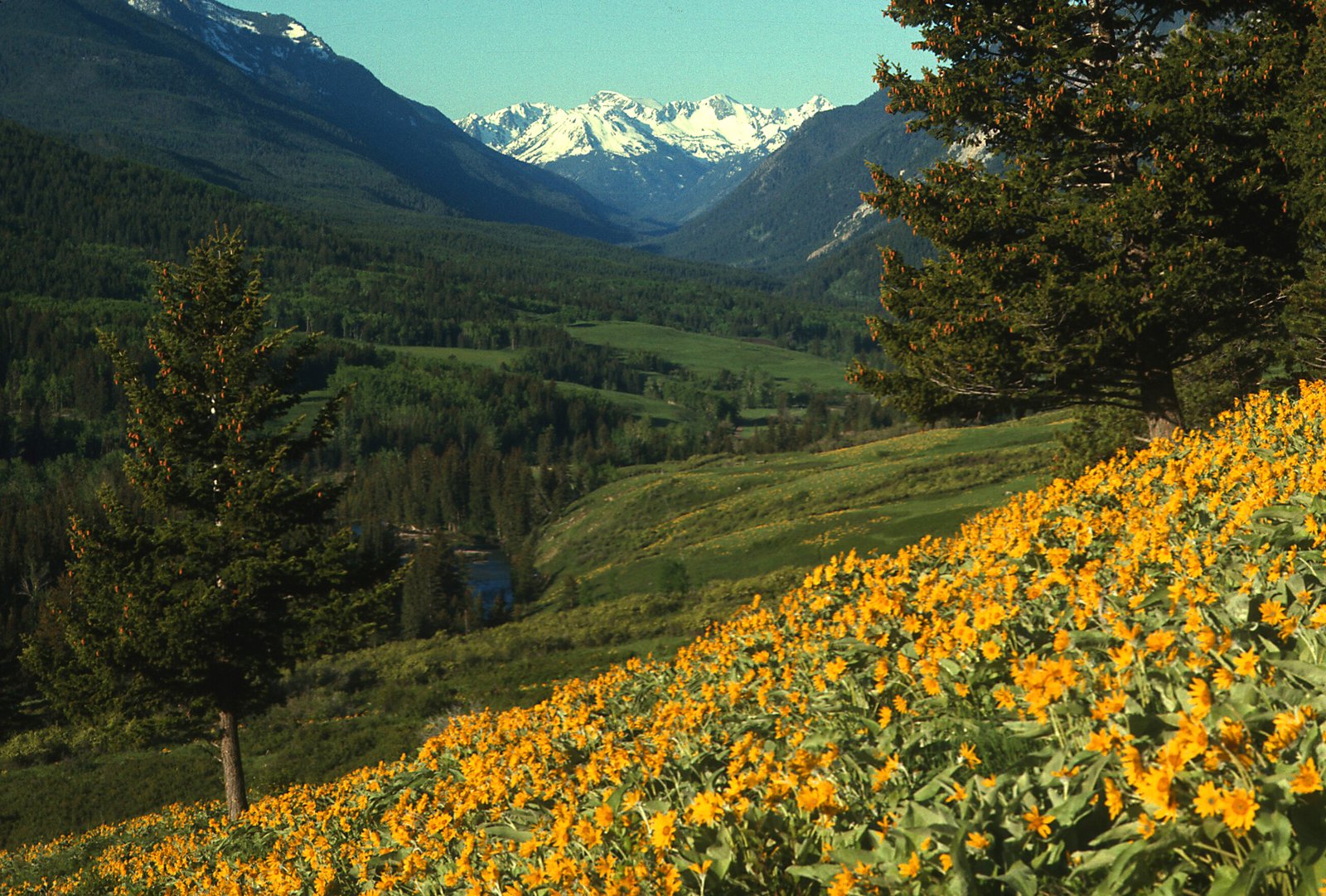
Ever since then, whenever I’ve gotten too stressed or worried or sickly anxious to cope with my everyday responsibilities, I take a moment to imagine myself in a field full of wildflowers, with birds chirping quiet songs in my ears, sunshine warming my skin, fresh flowers surrounding me. Around the field would always be a forest, which granted me a sense of safety, symbolizing that the unknown could surround me all it wanted, but I still had my beautiful space, one that belonged to me, and to me only.

West Boulder River Valley, with Absaroka Mountains in the Background, Montana. Photo by Paul Dix, Oregon.

The fictional safe haven I created in my imagination is represented by this image, which resonates deeply with me, granting an inherent sense of calm. I can imagine myself walking down the paved path, allowing my senses to absorb the beauty surrounding me, and the terrible monster inside of me dwindles.

One day, I’d like to visit my happy place. I have yet to find it in the real world, so, in the meantime, I can continue to travel there in my mind, living amongst nature and forgetting the horrors of reality.

—Keira Kelly, age 17, Missouri. She adds: “My goal… is to become a published author, hopefully one day, of a fiction novel. What I enjoy most about writing is the artistic creativity available in carefully choosing and stringing together words to create a beautiful piece. I’ve adored writing ever since I was little, and I am ecstatic to explore how far I can reach with this passion. I wish to continue Creative Writing programs in college, and depending on my success rate, pursue a career as a full-time author. Thank you for giving me the opportunity to begin my journey.”

A S.T.E.M. Woman from India

A S.T.E.M. Woman from India

By Saroj Pathak, originally from India, now lives in California.

My 50 years of professional life have been a series of challenges, failures, triumphs, and also a few shattered glass ceilings. I would like to share my experiences and describe some of the twists and turns, and the choices I made.

I grew up in Indore, Central India. We were six siblings growing up in a middle-class family. In the 1960s, my high school, St. Raphael H.S., did not offer math major to girls! I was exceptional in Math and wanted to pursue my passion. My father talked to Mrs. Jagdale, who was the head of a small public school nearby. Mrs. Jagdale, an early Women’s Rights pioneer, said, “If our girls want to take math, we have to start math classes.”
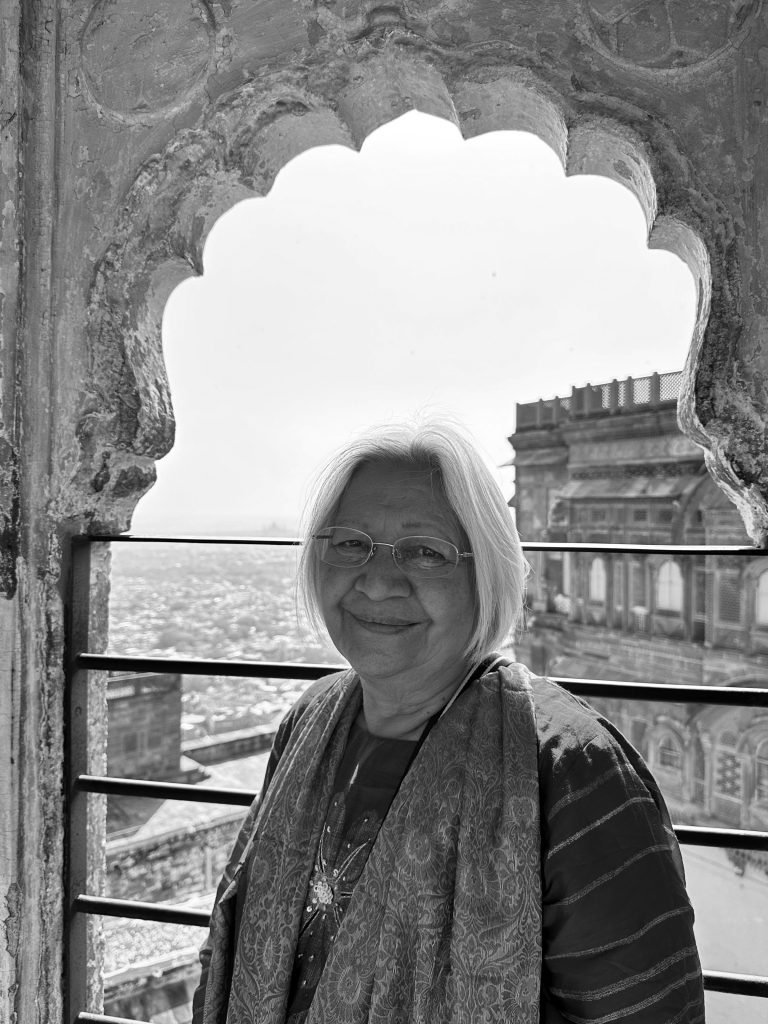
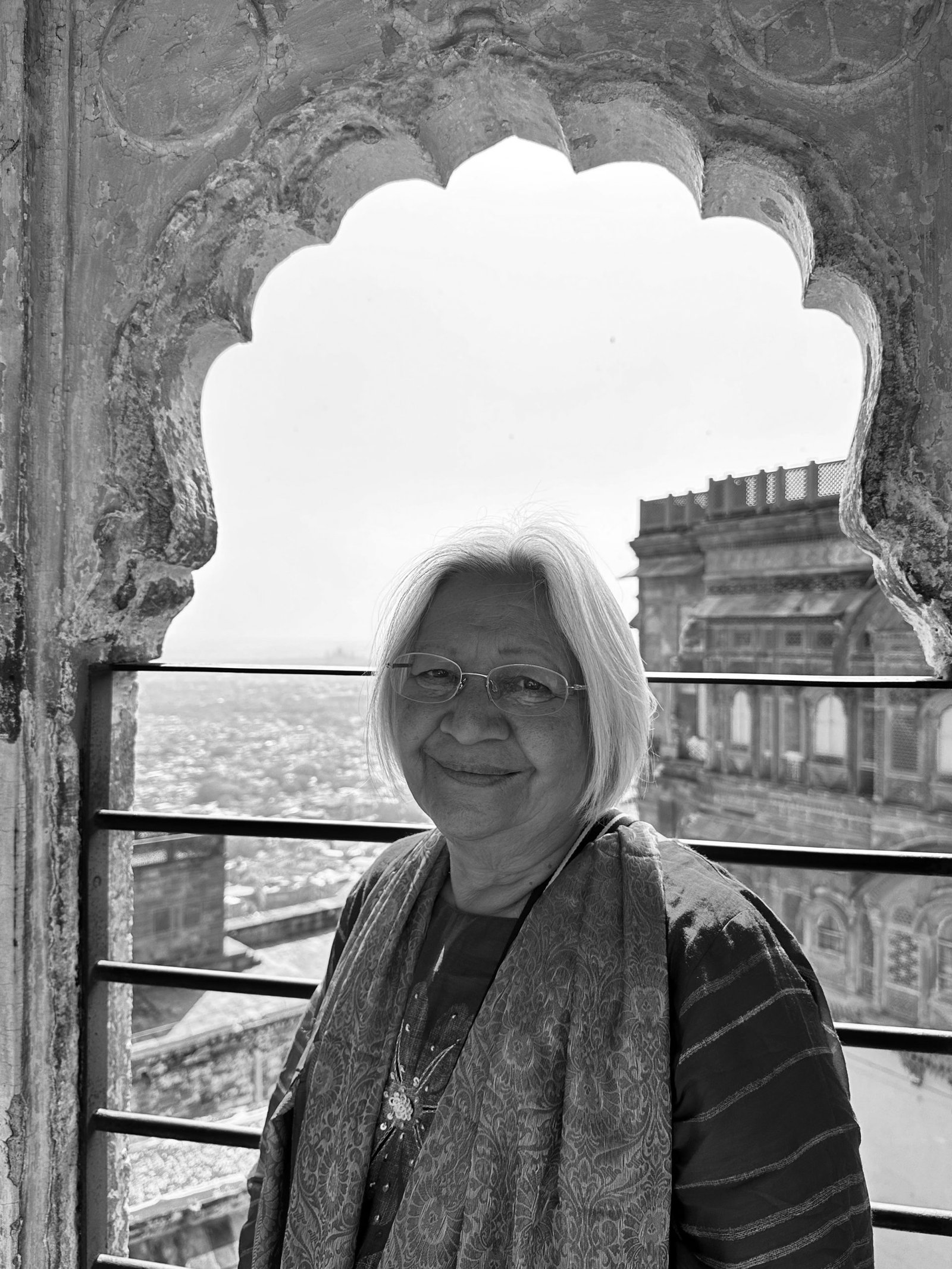
Now retired, Saroj Pathak Recently Visited the Historic Site of Mandu, near the city of Indore, Madhya Pradesh (Autumn 2023)

So my sister and I moved to Mrs. Jagdale’s school. In the nurturing environment of this small school, I ranked third in the state’s high school board examinations, an exceptional achievement!

From 1965 to 1969, I attended S.G.S.I.T.S., the only engineering college in Indore (M.P.). There were only five female students in the entire college. We had to fight for a small private bathroom and a tiny women’s room. I excelled in my chosen field of Electronics and Electrical Engineering and held the first rank in all branches of engineering throughout the four years. I was like a sponge; I absorbed everything offered. There was so much to learn from all my professors.

As graduation approached, I started looking for options for further studies. My parents were liberal but still would not send their daughter away for higher education out of state. And, I didn’t have the audacity to argue.

Dr. Dasgupta, the head of the college, recognizing my potential, and created an opportunity for me to pursue higher education in collaboration with the prestigious Indian Institute of Technology (I.I.T.) at Bombay (now, Mumbai), while working as a lecturer at G.S.I.T.S. in the Electronics Department. While satisfying my drive to excel, this enabled me to live at home. I taught for three years while completing my Master’s degree in Engineering in Control Systems from I.I.T. Although this experience was challenging, I wanted more.

I reached for a moonshot and applied for and was awarded a Rotary International Scholarship to study abroad. It was an easy decision to select University of California at Berkeley for further studies. I dared to dive head-on into the unknown, knowing only one person in America; a graduate student who had graduated from S.G.S.I.T.S. a few years ahead.

It was shocking for me to realize that I was the ONLY female student in the graduate school of electrical engineering, even at this prestigious university. The students and the professors were friendly and treated me with the utmost respect and kindness.

After graduating from U. C. Berkeley with a Master’s in Electrical Engineering and Computer Science, I worked as a semiconductor design and development engineer at American Microsystems in the Silicon Valley of California. When I came in for the job interview, the manager and engineers were shocked to see a female candidate. Women engineers were rare.

The Silicon Valley was full of type-A men, hungry for fame and wealth. It was a norm to “pull all-nighters.” All the engineers were transplants from somewhere else, and without family obligations; we worked hard and played harder. We created a family regardless of skin color or gender. We were on an endorphin high from the success of our innovations.

From 1975 to 1983, I worked with a small group of engineers at Intel Corporation; that’s where we invented and produced the first ‘non-volatile’ memory chips. These were the first chips that retained data (information) after unplugging the power supply. This was revolutionary! We published international papers, had numerous patents, and enjoyed the glory of success. I was a manager by this time and always felt respected and valued. My opinions counted, and I had the center seat at the table.

In 1983, I was offered a job at a Startup company to set up a non-volatile product line. My initial response was NO. I had an eight-month-old son and a three-year-old daughter. I was unwilling to work long hours. Since the company’s CEO wouldn’t take NO for an answer, we negotiated. I agreed to join the company, understanding that I could go home at 5 p.m. every day. The company provided flexibility, and I used my professional judgment to balance work and family needs.

Two years later, the room was packed with engineers from around the world when I presented a research paper on the First High-Speed Non-Volatile Memory at the International Solid-State Circuits Conference (ISSCC). My children sat in the front row. By then, I was confident and assertive enough to invite my children without asking.

When a Vice President position opened up, I did not consider it because I knew it meant working very long hours, and I did not want to sacrifice time with my children. Later, when the children were older and busy with school activities, I accepted a position as Director of a multinational research and development group in a different company. Most often, I was the only woman in the room where the decisions were made. Yet I also attended most of the swim meets, music lessons, cross-country running events and other activities with my children.

After 45 years in business, I decided to follow my lifelong goal of helping the younger generation in STEM field. I am passionate about the accessibility of primary science education to all children. To that end, I have started a non-profit that teaches science fundamentals to children of all socioeconomic statuses. I mentor through Stanford Mentorship Connections and other non-profit organizations. I am also the president of a local Kiwanis club whose mission is the education and well-being of children.

Advice to My Younger Self:

* Enjoy the ride. The trailblazing path is littered with obstacles, but there is no greater joy than facing challenges and finding solutions.

* Discover your core values and be true to them. Define your goals on your terms. Do not let others decide who you should become. Sort through the clutter of cultural baggage and embrace that which gives you joy.

* Be like a river flowing constantly towards the ocean, soft and flexible, but always focused on the destination. Change directions, detour if necessary, or carve a new valley, but keep flowing towards your goal.

* Be confident. You are stronger than you feel, smarter than you think, and braver than you know. Use any fear as motivation to be successful. That fear will then turn into confidence.”

* Educate yourself and acquire indispensable skills.

* Take chances. Inventions are just a step away from failure. Become comfortable with failure and learn from it.

* Dare to shatter glass ceilings, even if that means cuts and bruises. The pain of cuts and bruises is the price you pay to help your daughters and granddaughters.

* Most importantly, find a mentor. Find several mentors. Surround yourself with your cheerleaders. Find inspiration from the life stories of the pioneers who paved the path before you. From mythological women to recent ones, our (Indian) history is full of women who advanced humanity through their ingenuity, courage, and persistence.

* Be a mentor. You are standing on the shoulders of giants. Later, you can offer your shoulders to those following you.

* Be ready to choose. Most successful people have made difficult choices to get there.

* Find a supportive spouse. Sheryl Sandberg, author of “Lean In” and ex-CTO of Facebook, said, “The single most crucial decision you will make in your life is whom you marry, for this will determine the rest of your life.” She was talking to graduates of Harvard Law School.

* “Start the conversation before committing to marriage, not after.” Did you know that the Supreme Court Justice Ruth Bader Ginsburg credited her husband for her success?

In Conclusion, as a young adult in STEM fields, I would like you to be brave, explore, and take chances. Show up daily, sit at the table, and speak up in a firm, clear and compassionate voice. Act like the fate of humanity depends on you because it does.
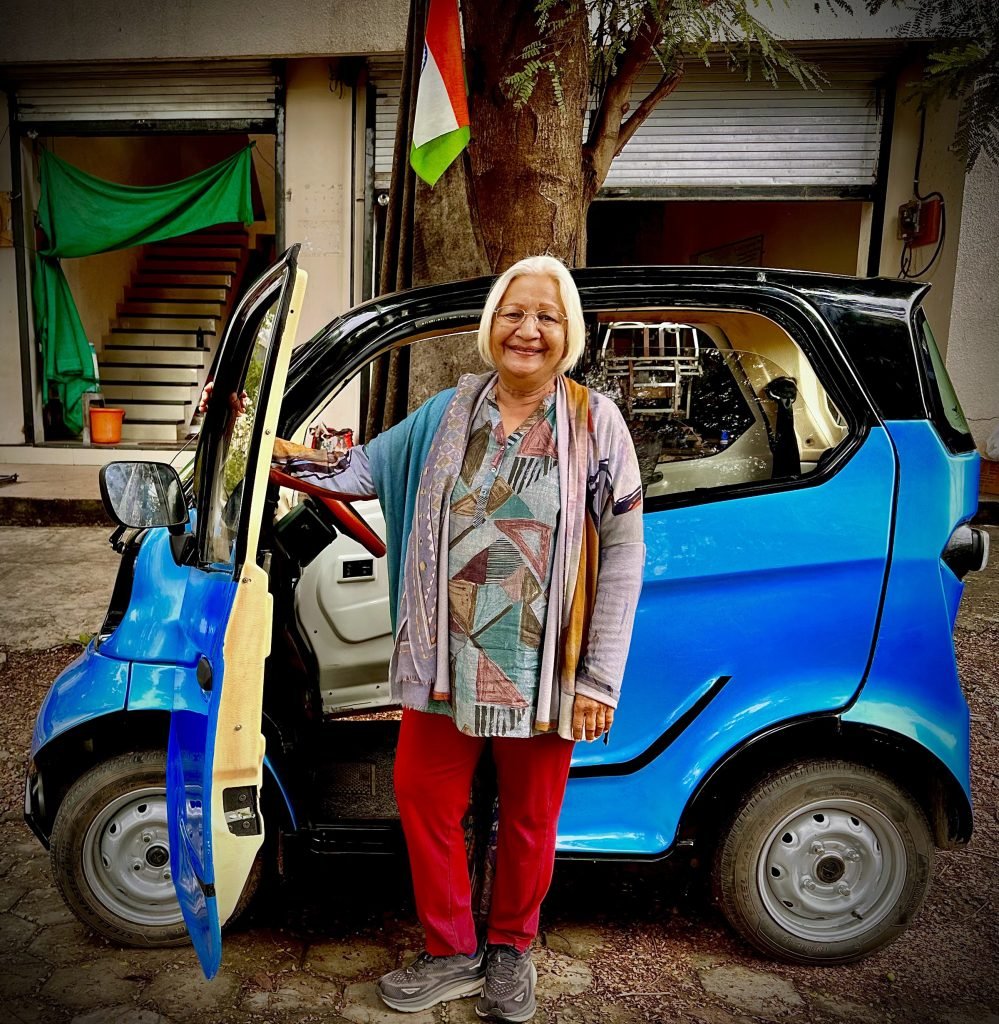
—Saroj Pathak, originally from India, lives in California. She shared this advice with engineering students at her Alma mater in Indore, India, in November 2023.

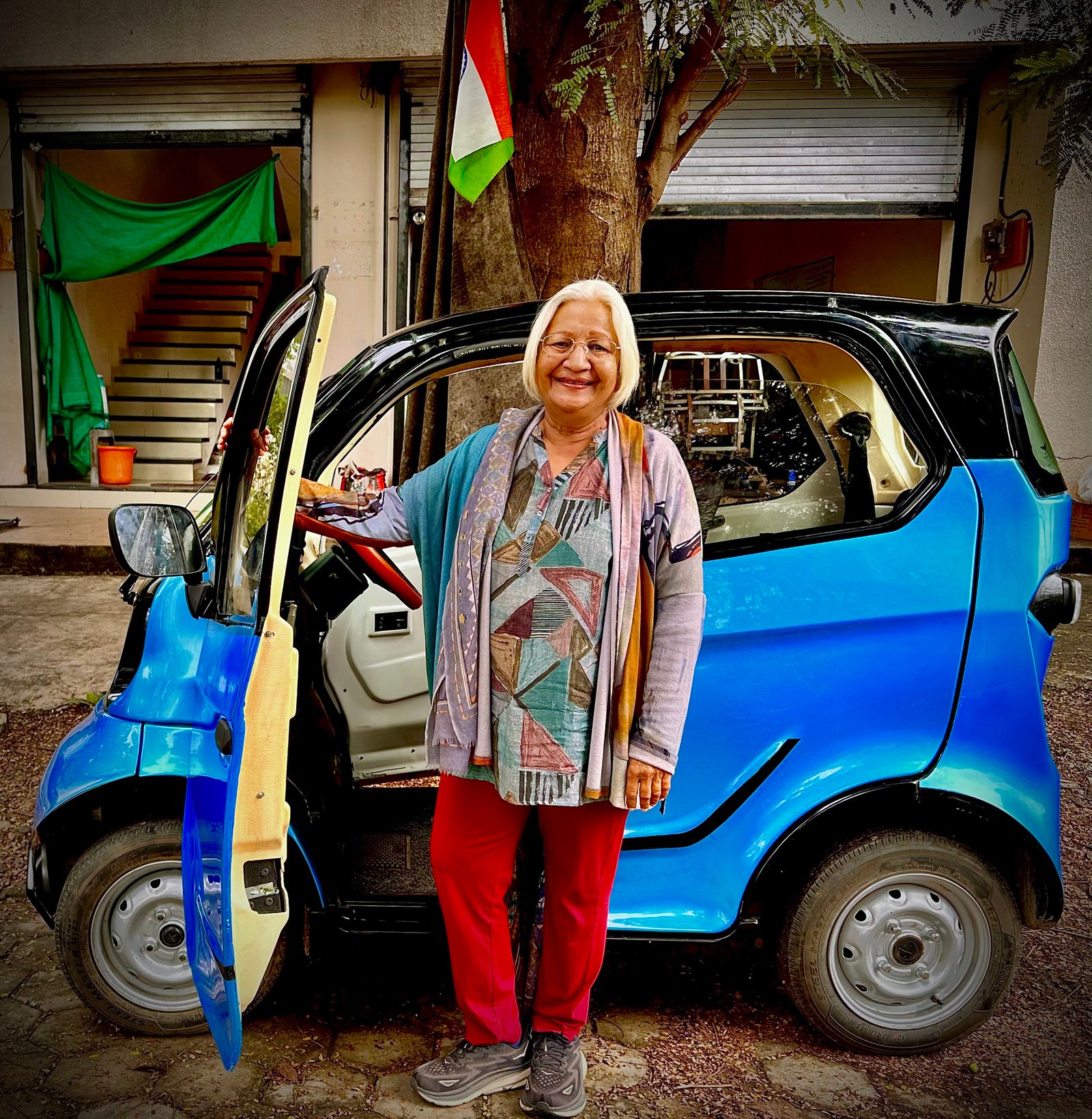
Photo: Saroj in Indore, Nov. 2023.

Butterfly

Butterfly

By Richard Siyi HE, 17, P. R. China
 
It’s the antennae, then the wings, then…flight.

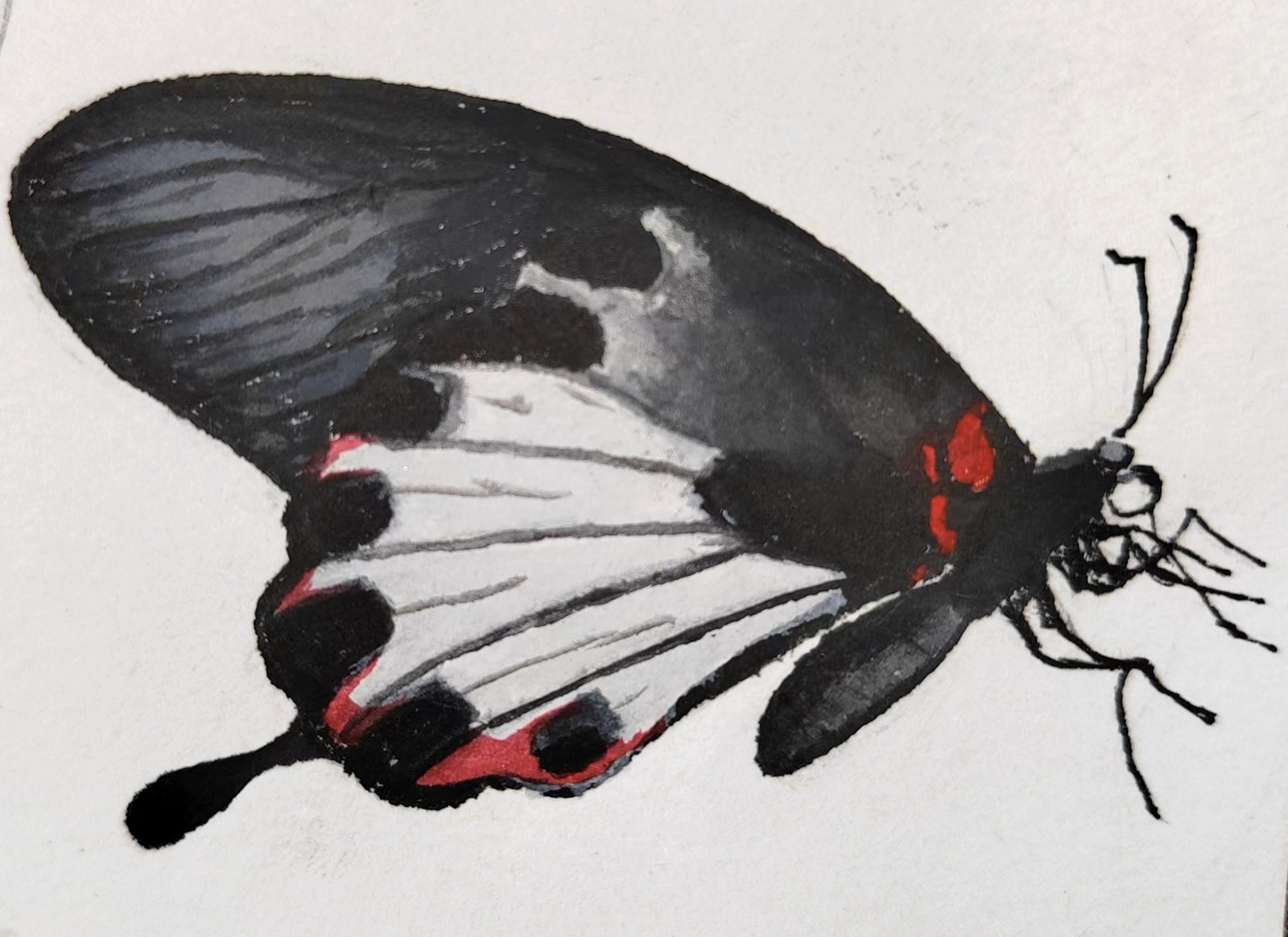
It slowly took off, the blue velvet-like sheen on its wings reflecting onto a large red enchanting flower below it, so intense; the obsidian-like eyes silently gazed at the sky that was inferior to its blue, disdainfully glanced at the flowers below, and slowly swayed in the soothing breeze.

“Hello, I should call you ‘Number 86’… Oh no, let’s call you ‘Flutterby’,” a young girl smiled at it. Her blonde hair and turquoise eyes blended in with the flowers, looking very natural and pretty.

“Oh, this blue-spangled butterfly turned out to have successfully emerged. I had thought it was a damaged butterfly. Having seen you take care of it day and night, I couldn’t bring myself to tell you.” Her father came to her side, “You know, in order to prevent these butterflies from becoming extinct, we can only evolve them into higher predators. Well, since those despicable interest-driven people have taken their habitat, on which they depend, away. But anyway, hopefully, we didn’t over-evolve them.”

“What does that mean?”

“Nothing, but we should go home for dinner. Let’s go!” The girl reluctantly followed her father out of the hexahedral simulated breeding greenhouse.

Not long after they left, Flutterby began to fly steadily. Its eyes slowly fixated on a praying mantis, which was also staring at it. As if provoked, the praying mantis pounced over with its sharp scythes waving fiercely. Flutterby took advantage of the airflow created by the scythes with just one slight flap of its seemingly frail and thin wings, dodged the fatal blow, and landed behind the mantis. It then plunged its proboscis into the head of the mantis and began sucking. The praying mantis twitched for a moment before falling to the ground, its scythes still swinging helplessly.

Soon, the first batch of butterflies was ready to be released into an artificially simulated natural environment. They came to a beautiful hillside and brought many newly emerged blue-spangled butterflies in boxes. “Don’t be nervous. This area has been equipped with a well-developed defense system. If the results are not satisfactory, we can easily eliminate them all. But the simulated environment here is no different from their habitat. Come on, let’s get started.”

The little girl nodded and prepared to gently open the lid with both hands, her palms sweating profusely. But just before opening the lid, she asked softly, “If the results are not satisfactory, is killing them all the only choice?”

“Oh, rather than saying we are killing them, let’s say it’s more like natural selection.”

The little girl reluctantly opened the lid, and the blue-spangled butterflies flew out continuously. In the company of sunlight and breeze, they flew towards the forest, lake, hillside, and stream. Up close they looked like slow-moving blue elves and from far away they looked like a large piece of blue silk rippling with the wind, slowly disappearing into the distance. The little girl smoothed her windswept hair and watched them leave.

“Oh, so sorry, I really didn’t expect to have such a massive outbreak of the butterflies. Hmm…Okay, I’ll be right there.” The little girl’s father hung up the phone and anxiously prepared to leave. The little girl asked curiously, “What’s wrong? Need my help?”

“Oh, the experiment results were terrible. They completely disrupted the ecological balance of that area. But it’s okay, you wait at home.” After that, he kissed her and left.

As soon as the little girl’s father arrived at the release site, he pressed the backup restart button. Time began to speed up, and then the butterflies began to reproduce in large numbers. Billions of blue-spangled butterflies densely covered every tree. The meteor shower made up of them in the sky searched for the trace of any prey. Whenever found, they would frantically wrap their prey. Their sharp proboscises pierced the prey’s body like needles and the blood that splattered on their wings made their wings full of blood-red eyes. Their larvae ate almost all of the leaves and dense black-red larvae wriggled together, even cannibalizing each other. But it didn’t take long for the reproduction rate of prey and host plants to slow down and a large number of butterflies starved to death…The blue-spangled butterflies were eliminated by natural selection. And this process only took a few minutes.

The little girl saw that her father’s face was very pale when he came back. Her father said weakly, “I’m sorry, we may have to terminate this experiment.” The little girl’s eyes welled up with tears. “Oh no, why? There must be a solution, right? Right? Please, please!”

“I’m sorry.” Both were silent, “Time to go to bed, okay?”

In the afternoon, when her father went out, the little girl quietly ran into the greenhouse to say a final goodbye to the butterflies. Flutterby gently stopped on her fingertip. It was so beautiful and charming, and then she was shocked to find that Flutterby was pregnant! The little girl bit her lip and took a deep breath, quietly taking it out of the greenhouse. “You can go. Although I don’t know if this is right.” But Flutterby didn’t leave, as if waiting for her to make a final decision, “Before I change my mind.”

Flutterby gently flew up and headed towards the sunset. Through her tearful eyes, the little girl seemed to see the blue light on the butterfly’s wings and the orange light reflected by the sunset meet to create a fireworks-like pattern of brilliant colors, dancing with the wind in search of light.

Underneath the angelic face of Flutterby, a devilish smile loomed.

—Richard Siyi HE, age 17, high school junior, People’s Republic of China. Richard adds: “I am obsessed with biology but also love writing. My favorite places are butterfly gardens all over the world (unfortunately, Beijing’s Colorful Butterfly Garden has gone). I am trying to breed butterflies and their host plants in the hope of protecting endangered butterflies.”

Fear of Failure

Fear of Failure

By Olivia Macy Leonard, age 15, New York.

It’s just a line
All you have to do is draw a line
A straight, plain, normal line
Nothing more
Just take your pen, pencil, marker
Doesn’t matter what you use
Doesn’t matter if it’s not perfect
Doesn’t matter what color
Doesn’t matter if it’s short or long
But you hesitate for a second 
And then a minute
Then 5 minutes
Now 10 minutes
And that turns into 30 minutes
Soon it’s been an hour
5 hours pass
You realize it’s been a day
Finally, it’s a week later
And you still haven’t drawn that one line
The simple line

Why?

All because you were scared
All because you didn’t want to mess up
All because you wanted it to be perfect

All because you didn’t want to fail.

—Olivia Macy Leonard, age 15, New York.

Mariana on the Night Shift

Mariana on the Night Shift

By Ann Malaspina, New Jersey


Mrs. Benton called out from the front of the classroom. “Are you with us, Mariana?”

Mariana lifted her head from her desk. She had fallen asleep in history class. How embarrassing!

“Sorry, Mrs. Benton,” she murmured, sitting up straight.

A boy giggled. Abby, who sat next to her, leaned over. “Don’t worry,” she whispered. “Everyone falls asleep at least once in this boring class.”

History class wasn’t boring to Mariana. She loved learning about the past. Mrs. Benton made history interesting by talking about ordinary people, not just presidents and other famous men. This week, they were learning about Dolores Huerta, the labor leader who helped farmworkers earn better pay and improve their living and working conditions.

The lunch bell rang, and Mariana walked slowly out of the classroom.

“Are you okay?” asked Abby, coming up from behind.

Abby lived down the street from Mariana’s uncle and aunt, Tia Luna and Tio Miguel. Mariana had been staying in their house since the summer.

Mariana yawned. “I guess so.”

“My dad said he saw you at the factory the other night,” Abby said. “Were you visiting your uncle?”

Mariana’s uncle worked at the cereal factory, just like Abby’s parents. Her mother worked in the office and her father drove a truck for them. Almost every family in town had someone who worked at the factory.

“Yes,” Mariana lied.

But she could hear her mother’s voice. “Never lie, mi hija. A lie always comes back to bite you, like a mosquito.” Suddenly, she missed Mami, who lived in Mexico City, many miles from Mariana.

The two girls sat at a picnic bench. Abby began eating her lunch, but Mariana wasn’t hungry. She took a deep breath.

“I wasn’t there to see my uncle,” she said. “I work the night shift.”

“The night shift?” Abby put down her sandwich. “You’re not even fourteen! My mom said I can’t work until I’m sixteen.”

“My uncle got me the job. I help pack the cereal on the line,” said Mariana. “It’s easy.”

“Easy” was another lie.

The first hours of her shift weren’t so bad. Mariana pushed bags of oat squares into cereal boxes as they traveled past her on the conveyor belt. An older worker helped Mariana if she fell behind. But, by 11 PM, her feet hurt. Her back ached. And her head pounded from the noisy machinery. She still had three hours to go.

Before Abby could ask more questions, Mrs. Benton walked up them.

“Can you come see me after school, Mariana? There’s a book I want you to read.”


When Mariana stepped into Mrs. Benton’s classroom, her teacher asked her to sit down.

“I hear that some of our students are working at the factory!”

It was true. Mariana had seen a half-dozen other children working the night shift. Mariana felt like she might cry. Her uncle had told her not to talk about her job to anyone, and she’d already told Abby.

Mrs. Benton quickly said, “You don’t have to answer. I just want you to know the facts. It’s not safe—or legal —for children your age to be working in a factory. There are labor laws that protect children. The laws were written to keep children safe from harm.”

Mariana looked down. Her right thumb was bruised from two nights ago. It had gotten caught under conveyor belt. She overheard someone say Mariana was too small for the job.

Mrs. Benton pulled a book from the shelf. On the cover, a girl stood at a conveyor belt like the one at the factory.

Mariana put the book in her backpack. Ever since she started working, Mariana could barely finish her homework, much less read extra books. Luckily, today was Friday, her day off.

That night, Mariana read stories from history about a farm girl who operated a loom in a cotton mill, a boy who worked in a coal mine, and a boy who sold newspapers in New York City. A shiver went up her back when she read about the girl catching her finger in the cotton loom. “Even though laws protecting children from unsafe work were passed in the 20th century, child labor continues to the present day,” she read.

Tio Miguel woke her up early on Saturday. “I got you a day shift today,” he said. “Hurry and eat your breakfast.”

Mariana sat down at the kitchen table. She stirred her scrambled eggs, thinking hard. Her teacher’s words —“It’s not safe or legal”—kept swirling in her head.

But the problem wasn’t so simple. Tia Luna had hurt her back while lifting heavy boxes at the factory. She hadn’t worked for a whole year. The family needed Mariana’s help to pay the bills. Still, there must be another solution.

Mariana put down her spoon. “I’m not allowed to work at the factory. I’m not old enough. It’s the law.”

“What?!” Tio Miguel’s coffee cup spilled. “I need you to work. Otherwise, you can’t stay here.” 

Mariana touched the angel on her necklace. Mami had given it to Mariana when she left home. The angel made her feel strong.  Maybe Mariana would be a writer when she grew up. A writer like the one who wrote about the mill worker, the coal miner, and the newspaper boy. To be a good writer, Mariana couldn’t fall asleep in history class.  

Tia Luna rushed into the kitchen. “What’s all the arguing about?” 

Mariana told her the same thing she had told her uncle. She added, “I fell asleep in class yesterday!”

Her aunt’s eyebrows went up. 

“She’s right, Miguel,” she said, briskly wiping up the spilled coffee. “Mariana is a smart girl. She needs to be awake at school. Anyway, my back feels a lot better. I’m ready to go back to work.”

Tio Miguel sighed deeply. “Life is not easy. All I want is to pay our bills.”

Tia Luna hugged Mariana. “We love having you here. We made a big mistake. From now on, your job is to go to school.”

There was a knock on the door.

Abby held her soccer ball under her arm. “Can you practice soccer in the park?” 

Mariana looked at her aunt and uncle. They smiled and nodded. 

Grabbing her cleats, Mariana ran out the door. “Yes, let’s go!”  

The End

—Ann Malaspina, author and educator, New Jersey. Ann has published many picture books and nonfiction books on social issues, including on the important issue of child labor. Please visit http://www.annmalaspina.com to learn more about her literary work.


Irwin Noparstak, Social Justice Advocate

Irwin Noparstak, Social Justice Advocate

Our long-time friend and social justice advocate, Dr. Irwin Noparstak, passed away in late October at the age of 84. He worked on mental health issues, and after retirement, he became involved in several interfaith organizations because he felt it was important for him to represent progressive Judaism in various settings. Over 200 people of various faith traditions attended the service. My friend, Marion Malcolm of the Community Alliance of Lane County, who worked with Irwin for several decades, spoke at the memorial service held for him at the Temple Beth Israel in Eugene. Here are a few excerpts from her talk:

“Irwin did an amazing job of educating, advocating and organizing on a range of social justice issues. I was among the many who were fortunate to work side by side with him. To all the causes that drew his energy he brought both passion, deep passion, but also precision. Precision is not always a hallmark of grassroots efforts, but the efforts Irwin was involved with benefited from his attention to detail and to his careful note-taking. He often circulated notes the same day a meeting happened. Irwin was never a passive participant. He always more than pulled his weight in any group that enjoyed his involvement.

Irwin opposed U.S. intervention in Central America, distressed by the parallels he saw to the Vietnam War in which he had served and which he had come to strongly oppose. Irwin would have traveled to El Salvador or Nicaragua on the delegations that were happening in those years, but he didn’t feel he could responsibly do that, as he was a single parent at that time, devoted to his adopted daughter, Jacquelyn.

Irwin’s values and political perspectives influenced his practice as a psychiatrist. He served many Vietnam veterans, helping them work through the impact of their wartime experiences on their lives. He was at the same time part of a community of anti-war veterans. He also worked for Alternatives to Militarism and became engaged in counter-recruitment work, challenging the hype of military recruiters and making sure that young people knew what they were getting into before they enlisted. We knew that young people received a barrage of glossy materials from all branches of the military about the time they turned 18, and that the military promised job skills, education, and travel. So, using lists of new drivers from the DMV (Dept. of Motor Vehicles) back when those were still publicly available, we developed a “birthday packet” that we sent to young people turning 18, pointing them to other ways to find jobs and to serve abroad, ways that did not involve militaristic intervention. I remember sitting at the table in the CALC office with Irwin, addressing those packets.

Irwin was a strong advocate for LGBTQ+ rights and a key activist in the Religious Response Network. The RRN existed to make sure that far right groups and congregations were not the only voices emanating from religious communities, that an interfaith community could send messages of acceptance and love, could offer safety and support.

Irwin opposed bigotry of all kinds. He and his wife Joan were partners with us, in founding the Understanding Antisemitism Project… It involved vulnerability and a bit of courage. And I know that Irwin often did not feel safe in Eugene as a Jew. I know that he felt haunted by the cross that used to stand on Skinners’ Butte, where KKK crosses once burned. He may not have felt safe, but that did not stop him.

I want to say a few words that go beyond all Irwin’s work for human rights and social justice, all his challenging of militarism and bigotry, to talk about the way he did the work, to talk about the comradeship he built among those he worked with, the way he became a sweet, thoughtful, supportive friend to his colleagues. If you collaborated with Irwin, you knew he saw you, you knew he cared about you. You probably received some of his personal notes on cards that he made with his photos. He lent his love and strength to many of us who were fortunate to become his friends. He helped us all keep going.”

I knew Irwin for about 25 years. We saw each other at our Interfaith Dialogue group every month. He was a strong supporter and contributor to Skipping Stones. Each year he gave gift subscriptions to many people he knew—young friends, educators, rabbis, and ministers. We will miss him dearly.

Irwin touched so many lives and we’re sure, saved some lives too. So, in sorrow but with deep gratitude, we want to say, “Irwin Noparstak, presente, presente, presente.” Irwin Noparstak is still with us, still with us, still with us.

—Marion Malcolm and Arun N. Toké, editor.

Oh, What A Sweet Girl!

Oh, What A Sweet Girl!

By Addison Townsend, age 16, Utah.

Oh, what a sweet girl. What an innocent, kind, happy girl.

I didn’t know of anything but the perfect life. School was perfect, my family was perfect, and even something as small as my fish was perfect. My life was filled with the joy of ignorance, where there was nothing wrong in the whole wide world. And, oh how happy I was when I looked in the mirror and saw only a body and not the calories from the apple I ate an hour ago. And how tragic it was when that apple mutated to a dark obsession, soon to take over my whole life.

Thin was the first-word people would use to describe me, and it never offended me. But, as I continued to age, there was an expectation forming. What would they think of me when I gained weight? How would they react when I wasn’t a bottomless pit of food anymore? When I was big?

What would I think when I was big?

I think the word ‘comparison’ should be changed to ‘that which is impossible to overcome’. Pictures of my face reminded me of chipmunks hoarding nuts for the winter, while I envied the girls with round and youthful faces, enhanced by their chubby cheeks. Lunch became a study session and dinner became an afterthought. I wanted to lose weight and I didn’t have much time for meals anyway so how easy it was when I stopped eating. And how addicting it was to see an inch off of my stomach. When you have the body people would die for, how could I not fall in love with my illness? Hunger became a friend, one I could rely on every day, every hour, every minute. When everyone else left, a twisting stomach was still there.

When they ask, “Are you going to eat all of that?” the translator in my head vomits it out as, “Go stick a toothbrush down your throat.” Eventually, the portion sizes became as small as nothing, but I could still look in the mirror and see more than a skeleton.

Long sleeves and layered clothing became a daily necessity. I was playing a game with my body, how long can you go without food and how well can you hide it? I didn’t mind the layers though, my body clenched and shivered without any insulation. But that’s okay, shivering means you’re winning. Those bruises on your spine and your hair falling out in clumps mean you’re winning. Passing out means you’re winning.

But nothing about my illness felt like winning.

My anorexia’s whispers became a deafening scream as the caloric calculator in my head lit up like a scoreboard at a basketball game. My stomach begged for more than water, but nothing felt better than how the cool water slipped down my throat and hit my stomach. My head pounded at me to wake up, but you can’t be hungry when you’re asleep. My teeth clenched for anything but the gum I had fed it for the last week, but gum was just so low in calories and mental unrest. Hallucinations of a younger Addy begged, why do you do this to yourself? My once-perfect life had managed to flip itself into a food-focused, dizzying black hole. My mindset went from me praising my anorexia, to me running from it like a killer ready to murder what little of me there was left. My diseased mind furied, like an ex who desperately wanted to get back together.

You know, there are perks of going to the hospital. The people are nice for the most part and the beds are adjustable, but my once secret friend became less of a secret and less of a friend. Bite by bite, my mind screamed at me, shrieking the most heart-wrenching and life-ruining things at me. They say, “I would die for a body like that,” I urge, “I am dying.” They say, “No. You’re an inspiration.”

Some days it’s easier to die than to take one more bite.

But some days, you remember why you’re still breathing, swallowing. Some days, you remember the sound of your violin, the way the orchestra comes alive as you close your eyes and peace fills your whole body. Some days, you remember what it’s like to hug your dog and to have him wiggle his booty as you come in the door, so excited to see you’re still fighting. Some days, you remember the joy of being able to kiss your girlfriend and that feeling of never wanting to let her go. Some days, you remember what it’s like to be happy.

Years later, I’m still re-learning that ice doesn’t count as dinner and the reflection in a passing window is not a measure of my worth. And even now, after years of recovery, I still cannot un-memorize the calories of a peppermint.

So, Anorexia, I wrote you a letter:

Dearest Anorexia,

I’m breaking up with you. And no, I’m not going to say, “It’s not you, it’s me.” because it was you. You stole five years of my life that I’ll never be able to get back. I wish I could say I loved you, but what we had was not love. Love is supposed to be beautiful and filling and satisfying, but you hollowed me out, turned me into an empty shell of a human. You taught me dependency is love, not desperation, and I believed you. It took me five whole years to realize food wasn’t the enemy, but it was the voice in my spinning head promising control, perfection. You built a shrine of my bones and diet pill bottles, forcing me to worship you.

So, Anorexia, you can loom over me and scar me and nip at my heels, but today I build an empire out of every word you used to destroy me. I tear down your temples made of my self-hatred and face you, saying, “Do your worst.” You whisper I’ll never be perfect, I say I know. You say I’m disgusting, I say I’m beautiful. You scream I’ll never be happy, I cry back, I already am.

By Addison Townsend, age 16, high school Junior, Utah. She adds: ” I wrote this narrative about my experience with disordered eating as I would like to create more of a space to talk about the struggles of Anorexia. For five years, Anorexia broke me and coming out the other side of recovery, it is incredibly important to me that I prevent this from happening to anyone in the future. This is the true reason I value publication and strive for attention from others.”