Category Archives: Social issues

Affirmative Action

Affirmative Action Was Never Enough

By Alexandra de Graeve, age 13, New York.

When affirmative action was struck down, the New York Times interviewed a bunch of high school students. Connor, from St. Peter High School in Minnesota, said, “I like the idea of having diverse campuses but not at the expense of hard work. I think that everyone is equal so everyone should be treated equally and given the same opportunities. I believe that colleges should look more at the hard work put in by the students than at race.”

I don’t completely disagree or agree with Connor. I agree that everyone should be treated the same way and given the same opportunities, and that colleges should reward hard work. But not everyone gets the same opportunities, which diminishes diversity on campuses. Black students often attend poorly-equipped elementary, middle or high schools. This causes Black students who need help to not get any, which makes it more difficult for them to get into elite colleges. The question is, what should we do to change this for the better? Affirmative action was a controversial solution, but it did help marginalized students have a better chance at getting into good colleges, and on June 29, 2023 the U.S. Supreme Court ended it.

Affirmative action tried to help historically marginalized groups have better chances at getting into good colleges. According to NPR (National Public Radio), when the Supreme Court ended affirmative action, it ended “…the ability of colleges and universities—public and private—to do what most say they needed to do: consider race as one of the many factors in deciding which of the qualified applicants should be admitted.” Unfortunately, lots of people thought that students with lower scores would get into schools over students with higher scores. But, the truth is, if two students had the same SAT scores and the same quality for their essay, affirmative action let colleges pick the student from a marginalized group.

A student named Hamid from Glenbard West High School in Illinois said, affirmative action “…is not picking a minority student over a white student simply on the basis of race. Affirmative action literally means “the practice or policy of favoring individuals belonging to groups regarded as disadvantaged or subject to discrimination, over similarly qualified non-minority individuals.” The idea wasn’t to disadvantage privileged kids, but help less privileged ones. This was important because it would start a chain reaction, allowing less wealthy students to get better jobs, which would also help their kids do better, and their kid’s kids do better because they would have more opportunities.

Ending Affirmative action was a controversial decision. NPR  said, “Indeed, the reality is that in those places where affirmative action has been eliminated, there has been a severe drop in minority, and particularly, African American, admissions.” In its job of increasing diversity at schools, it worked. Affirmative action let more minorities into colleges. But even with it, there was still a severe wealth gap in marginalized groups. Without it, the wealth gap will grow again. Speaking to the NY Times, Amalia, a student at RFHS in Colorado, said, “Increasing diversity in schools, jobs, and major positions of power starts in colleges. So we need to include race in college applications.” We need more diversity among powerful people. We can’t have a congress that only has white and/or rich people in it. While Amalia is right, we also need to consider education at every level. It helps to get into a good college if you go to a good high school; it helps to get into a good high school if you go to a good middle school; it helps to get into a good middle school if you go to a good elementary school; it helps to get into a good elementary school if you go to a good preschool. It’s important to have access to quality education at every stage. Even when you’re really young.

To help students from marginalized groups access higher education we need more than just affirmative action. Tobz, of Baker High School said, “Now, of course, ideally, we wouldn’t need affirmative action. It probably isn’t even that effective at curbing racial biases and inequalities due to how limited its application would be. But it’s not a negative for anyone, and it has a reasonable and logical justification for existing.” While affirmative action is helpful, it isn’t going to change everything. We need more than that. To do well in school, you need accessible teachers, healthcare, a supportive family, food, and a home. Snacks, living close to school, having someone at home to help you, and extra curricular activities are all also very helpful. The government should make sure everyone has what they need to have a good education.

Contrary to what Connor believes, diversity isn’t just going to happen. There are too many things working against people from marginalized groups. For a while, some members of historically marginalized groups had better chances of getting into colleges because of affirmative action. That’s why the Supreme Court’s decision to end it was highly controversial. The truth is, affirmative action was a step in the right direction, but it was not enough. Now that it’s gone, we need to share our resources much more equitably so that everyone has access to a good education.

—Alexandra de Graeve, age 13, grade 7, New York. “I live in New York City but both my parents come from Europe. I speak English and Dutch, and I am taking French and Latin at my school. I don’t know what I want to be when I’m older, but I want math to be a part of it. I was annoyed at my English teacher for talking about affirmative action in a careless way, and so I researched it to find out more.”

Dahu Park

Dahu Park

By Eason Lin, age 10, Taiwan

One Thursday, my classmates, teachers, and I went to Dahu Park to study nature. Dahu park’s moon bridge is one of the most famous places in the whole world. That’s because, at night, it shines bright like the moon! On the bridge, I saw something huge floating on top of the water. I wondered what it was, so I went down to look; when I saw what it was, I wished I hadn’t. There was a rotting, dead, ugly fish floating in the pond. My friend Jasper came over to see what I was looking at and he almost threw up. I asked him if he needed medicine, he said he needed me to get that fish as far away from him as possible. I poked it with a stick, I realized that it was hard and it’s eye was missing. I was totally disgusted. I lost my appetite. Our teacher, sensing what was about to happen, took us away from the pond.

We walked for a while, avoiding the lake and bridges. After a while, our appetites came back. We started to feel hungry when we arrived at the restaurant. After we ate, we kept exploring Dahu Park. As we crossed over a bridge, I tried not to look into the water.

Then, I saw three old men fishing. Two looked exasperated and nervous, the other was calm. They looked like they were competing. I got closer. One of them swore under his breath when a fish nibbled the bait and swam away. The calm one however, patiently waited for a fish to fall into the trap. He wore a hat that made him look like a cowboy and also had a lot of other fishing gear. When he finally caught a fish, I was so happy I could’ve jumped into the lake. But then, the fish managed to squirm out of the old man’s hand, falling back into the lake. I was so disappointed that I moaned in despair. After a while, he caught another one. This one was really small. I expected him to put it in a container or something, but no, he threw it to a nearby bird. It gobbled it up happily. The other birds looked at it with jealousy, then moved closer to the old man. I was shocked. He worked so hard and finally caught a fish, and he threw his first one to a bird!

I thought maybe the disgusting fish earlier had something to do with this old man’s actions. The fish he caught had been scrawny and looked sick. I was so close to him that I could hear him mutter something about the people polluting the water. That’s when I realized what he was talking about. The reason why we saw the dead fish earlier was because people were polluting the water. I noticed the fish he caught had the same black pattern on its scales as the dead fish. Those weren’t scales, those were the result of bad chemicals. I felt really bad for the fish. Maybe someone threw some trash with chemicals into the water. Then another person threw another piece of trash into the lake. Maybe when the two chemicals were mixed together, they created a new deadly substance that killed the fish. This doesn’t just affect the fish, it affects us too. If the smaller fish get poisoned, and the big fish eat them, the big fish will get poisoned. If we eat the poisoned fish, we will get poisoned. Then, Dahu park will not be famous for its moon bridge, it will be famous for it’s dead fish.

We, humanity, need to think about our actions before doing them. If we don’t stop littering, it will be our turn to become polluted and sick.

—Eason Lin, age 10, Taiwan. 

“I speak Chinese and English. I don’t care about anything else other than growing up healthily. I want to be an author when I grow up. My teacher and my classmates inspired me to write my submission. In my spare time, I like to read books. I like Taiwan because it’s peaceful and beautiful. So I wouldn’t want to damage it. I tell my classmates not to litter, or Taiwan will turn ugly.”


A Call for Action: Muslims and Jews Find Community in Nature

A Call for Action: Muslims and Jews Find Community in Nature

A Convergence of Islamic and Jewish Perspectives on the Environment

By Emily Maremont, age 17, California.

In my fifth grade gardening class, I shared a shovel with a girl who had recently immigrated to the United States from Yemen. Here we were—me a Jew, her a Muslim—passing that rusty shovel back and forth across a row of red clay pots. Little did I know at the time, the act of cultivating that rooftop garden followed what our ancestors had done for thousands of years. Ancient teachings from both Islam and Judaism stress the importance of caring for the natural world. In America, the birthplace of the modern interfaith and environmentalist movements, the fight to combat climate change has the potential to foster deeper cultural understanding between Muslims and Jews.

Environmentalist narratives are prominent throughout the Quran. According to Islamic teachings, the essential elements of nature—earth, water, fire, forests, light—belong to all living organisms, not just to the human race. Humans, the guardians of nature, are discouraged from abusing or destroying natural resources: “He is the One Who produces gardens…Eat of the fruit they bear and pay the dues at harvest, but do not waste. Surely, He does not like the wasteful.” Planting trees, purifying rivers, and digging wells are also considered charitable deeds. Preventing water pollution is particularly significant given the role of water in daily worship. In the performance of ablution before prayer, Muslims are expected to exercise moderation as they wash themselves. In Mecca and Medina, The Prophet established the first protected areas in history, known in Arabic as hima. Within the bounds of protected areas, natural resources considered sacred were off limits during certain periods, and logging and grazing were prohibited.

Similarly, the Hebrew principles of bal tashchit (“do not destroy” or “do not waste”) and tikkun olam (“repair the world”) connect to the values of moderation and the sacredness of natural resources found in Islam. Themes of guardianship over nature are also woven into Jewish holidays. During Sukkot, Jews dwell in temporary structures called sukkot (it is a plural of the word Sukkah). Jewish law commands that a sukkah must have a thatched roof made of organic material while allowing a view of the sky and for rain to penetrate. This practice allows Jews to appreciate their relationship to nature more directly. Tu BiShvat, another holiday nicknamed “the new year of the trees,” coincides with the blooming of almond trees after dormancy during winter. Sixteenth century Kabbalists began the tradition of a seder (ritual meal) for Tu BiShvat, in which symbolic nuts, fruits, juices, and wines are featured. In the Midrash Ecclesiastes Rabbah, G-d says: “Do not corrupt or desolate my world; for if you do, there will be no one to repair it after you.’” This line resembles the foreboding of many contemporary environmental activists and scientists.

Historically, the natural world has played a major role in the relationships between Muslims and Jews. The Muslim conquest of the Iberian Peninsula resulted in the introduction of new agricultural practices from the Middle East and ushered in an era of general religious tolerance. New crops such as sugarcane and rice became parts of the culture of all who lived there: Arabs, Jews, other Europeans, etc. Sustainable irrigation practices involving the noria (waterwheel) and qanat (underground water channel) increased water supply. Historians call this agricultural transformation the “Islamic Green Revolution.” Córdoba, the capital of the Islamic Umayyad Caliphate (c. 711-1031), became the center of Sephardic Jewish life. Jews from all over Europe migrated to Spain, where the land supported their growing population. There was widespread transculturation of Jewish and Arab cultures in the sciences, philology, and literature. Against the backdrop of a shared, flourishing natural environment, Muslims and Jews coexisted peacefully.

In recent years, many Muslim and Jewish grassroots organizations and individuals have moved to the forefront of environmental activism. Green Muslims uses solar water heaters to heat water for ablution that thousands of worshipers perform in Washington, DC. Other organizations, including Eco-Halal, Green Ramadan, and Green Haj, are working to make Muslim traditions more sustainable. In 2022, twenty major Jewish organizations formed the Jewish Climate Leadership Coalition, which is committed to taking action against the urgent threat of climate change.

Youth are also prominent voices in this movement. Muslim American climate activists like Saad Amer and Zahra Biabani are spreading their message through social media, leading protests at the White House, and speaking at the United Nations. The Jewish Youth Climate Movement has chapters across the United States. Young Jews for a Green New Deal incorporates Jewish music, poetry, and celebration into their activism to engage more people. In a variety of ways, American Muslims and Jews of every age are taking up their traditional mantles as stewards of the earth.

Meanwhile, when I am walking through my neighborhood, I never see Muslims and Jews interacting with each other. While there are annual interfaith events between Jews and Christians at my synagogue, I never see similar events between Muslims and Jews. As someone who from a young age has strived to learn and appreciate other faiths, I cannot sit with the prospect that tensions always have to exist between our communities—no more than I can fathom the idea that our efforts to stop climate change are futile. I believe that multicultural understanding springs from having hard conversations about the complex world we live in. What better way to have hard conversations than out in nature, which we all value and enjoy? Yet as the Earth continues to suffer from carbon emissions, pollution, and other issues created by humans, such opportunities for connection are lost before we even realize they exist.

Through climate-focused interfaith partnerships, Muslims and Jews can find common ground. By developing community projects, organizing protests, and lobbying the government, Muslims and Jews can learn about each other’s values and traditions. In the process, they can become more comfortable with being in the same place—passing shovels back and forth underneath the leaves we all pray will change color come autumn, as centipedes march past on the ground and eagles circle overhead.

By Emily Maremont, age 17, California. Emily adds: “I enjoy writing and learning about history in order to gain new perspectives on the world. In my essay, I use a memory from my childhood as a starting place to look at climate activism through an interfaith and multicultural lens.”


Bibliography

1. Bsoul, Labeeb, Amani Omer, Lejla Kucukalic, and Ricardo H. Archbold. “Islam’s Perspective on Environmental Sustainability: A Conceptual Analysis.” Social Sciences 11, no. 6 (May 24, 2022): 228. https://doi.org/10.3390/socsci11060228.

2. Fitzwilliam-Hall, A.H. “An Introductory Survey of the Arabic Books of Filāḥa and Farming Almanacs.” The Filāha Texts. Last modified October 2010.
http://www.filaha.org/introduction.html#top.

3. Islam, Md Saidul. “Old Philosophy, New Movement: The Rise of the Islamic Ecological Paradigm in the Discourse of Environmentalism.” Nature and Culture 7, no. 1 (Spring 2012): 72-94. https://www.jstor.org/stable/43303917.

4. Jackson, Joelle. “Repairing Our World: Jewish Environmentalism through Text, Tradition, and Activism.” Folklife Magazine, January 12, 2022. https://folklife.si.edu/magazine/jewish-environmentalism-text-tradition-activism.

5. O’Brien, Becky. “Major Jewish Organizations Form Coalition to Act on Climate Crisis; Issue Open Call for Jewish Organizations Everywhere to Join.” Boulder Jewish News (Boulder, CO), September 15, 2022. https://boulderjewishnews.org/2022/major-jewish-organizations-form-coalition-to-act-on-climate-crisis-issue-open-call-for-jewish-organizations-everywhere-to-join/.

6. “Spain Virtual History Tour.” Jewish Virtual Library. https://www.jewishvirtuallibrary.org/spain-virtual-jewish-history-tour.

7. Tirosh-Samuelson, Hava. “Nature in the Sources of Judaism.” Daedalus 130, no. 4 (Fall 2001): 99-124. https://www.jstor.org/stable/20027720.

8. Venkatraman, Sakshi. “As Eid and Earth Day coincide, young Muslims are driving the modern climate movement.” NBC News. Last modified April 23, 2023. https://www.nbcnews.com/news/asian-america/eid-earth-day-coincide-young-muslims-are-driving-modern-climate-moveme-rcna80485

Black History Month Poem: Resilience

Resilience

To observe the annual Black History Month, we are pleased to present “Resilience,” a poem by Arianna Shaprow Crain, age 12, a seventh grader in Nevada. Arianna was interviewed this morning and was asked to read her poem by KTNV News, on their ‘Good Morning Las Vegas’ show. The poem will also be published in our upcoming Spring 2024 issue (Mar. – Aug. 2024). You can also download the poem here.

“Resilience” explores the African Diaspora and chronicles the struggles of the vibrant, defiant members of my family. In the midst of our tragedies, my ancestors were able to find peace and navigate the rough terrain that lie ahead. They were slaves in Holly Springs, Mississipi. After the Emancipation Proclamation, they migrated to Chicago for more opportunities. In Chicago, they had to endure racism and segregation, which negatively impacted their employment. My great grandmother became a maid at a hotel and raised 13 children. She had to endure an endless cycle of poverty. Much of our history was lost, because we were stolen from our homeland. Even though our cultural identities were dismantled, my ancestors found comfort in music, stories, and our love for one another. We are resilient, and we are survivors. I know that I am a survivor, because I am here to tell you my story.

We were taken
from our homelands
our prosperity and sense of community
stolen from us
our families torn apart
cultural identities dismantled
forgotten…

forced to work all day
beneath the blistering hot sun
dehydrated and burned out
bruised knees, scraped elbows
wounded from whips
desperately yearning for a way out
but their cries were never heard

They locked us
in an endless loop of poverty
mental illness
disease
and depression

from Holly Springs, Mississippi
and the shackles of slavery
to Chicago
seeking independence
and “liberty”
this was the journey of my ancestors

We were never freed
after the Emancipation Proclamation
never freed
from generational trauma
and pain

rejected
from schools
unable to receive the education
that we deserved

Oppression
Segregation
Stereotypes
and racism
Poverty naturally followed
Haunting us…

A never-ending maze
with no exit
only dead ends.

My relatives suffered
rat bites and tuberculosis as babies
gunshot wounds and addiction as adults
no money for doctors
unstable living conditions
poor ventilation
never knowing
what’s next…

Surviving paycheck to paycheck
Food stamps, welfare
Evictions and discrimination
13 of my aunts and uncles
lived in a tiny apartment
5 slept on a single, soiled mattress
a drumline of tragedies

Many of them
broke the cycle
my grandmother became the first
African American female Assistant District Attorney
in El Paso, Texas
scholarships and hard work paved her way

My mother is a survivor
of PTSD and panic attacks
a single mother who cares for me
with unwavering love

We don’t know
much of our history
or where in Africa
we come from

The knowledge of our history
was stripped away from us
buried deep in our family’s past
it remains a mystery…
One thing that will never
be taken away from us
Is our culture
We have created
a rich culture
Through centuries of oppression
our coping mechanisms
soothed us
comforting melodies
gospel
jazz
blues
and soul

What do we have?
We have our imagination
We redefine and reframe
To make us sane

documents detail our ancestors’ stories
Defiant
And bold
full of vibrant characters
riveting music
and soulful dishes

When I am fearful
I remember to be courageous
I remember I have ancestors
who were beaten and lynched

My ancestors were
Slaves
Survivors
Refugees
Migrants

This is my lineage
This is my history
We are resilient
Resilient survivors

—Arianna Shaprow Crain, age 12, grade 7, Nevada.

It’s Time to Abandon War

It’s Time to Abandon War

By Kathy Beckwith, author and educator, Oregon

[These ideas were first shared by the author as a TED Talks program, at TEDxMcMinnville, Oregon, and we are now pleased to publish it for the benefit of Skipping Stones readers.  —Editors]

I grew up on a hog farm in western Oregon. I had my own pig. She was my 4-H project. But it was more fun to play in the woods with my brothers and sisters than train a pig, so she never got really tame. In spite of my lack of pig training skills, I still reaped the benefits of growing up on that hog farm—learning to swim in an irrigation pond, eating garbage that was collected for the pigs. Just kidding, well, sort of. What we ate were the “trimmings” from grocery stores, discarded produce that had begun to fade, that my dad had picked up on his route around town, gathering scraps to feed the hogs. So we ate artichokes, oranges, bananas, pomegranates—things too good to feed hogs that we wouldn’t get otherwise.

I never wondered if this was normal, but I don’t remember ever telling other kids at school about sharing the pigs’ trimmings. So maybe, it wasn’t totally normal, after all. I have not lost two minutes of sleep over the question of trimmings being normal

But there is something big, now, that we take as normal, that at times makes me cry from the cruelty of it, and other times makes me cry out against the injustice and the horrid destruction because of it. I’ve been learning more about how it comes to be considered normal.

Have you heard of the Green Frog in the lima bean pot? Green Frog hops into the pot where the lima beans are soaking overnight—in cold water—but in the morning, when the fire is lit in the cook stove under the pot, and the water starts to get hot, so does Green Frog—unaware. Because it’s his nature to adapt his body temperature to his surroundings. Sometime before boiling, Green Frog has to be startled into leaping from danger, or risk getting cooked.

It seems to me, that when considering war, many of us are quite like Green Frog. We’ve been adapting to our surroundings, to a culture that treats war as normal, and it’s getting hot.

I propose three things for your consideration:

  • War is not normal…
  • It is time to abandon war… and
  • It can be done.

Yet we do things ourselves that normalize war. We let assumptions take hold in our minds. Have you heard these?

  • War is inevitable. Things will never change.

Inevitable? Conflict is inevitable; but war is a choice, a decision that is made about how to respond to a conflict.

Things will never change? Dueling, to the death, was seen as an honorable way for gentlemen, including a man who became a U.S. President, to settle a rumor. Women, vote?! Ha! Things change!

There are other reasons we adapt to the “war is normal” lima bean pot.

  • Fear sells war, and we’re sold fear.
  • Carefully chosen words and PR (Public Relations) campaigns market wars such as
    “Rolling Thunder”, “Shock and Awe”, and “Operation Enduring Freedom.”
  • Kids watch the parades and ceremonies from toddler days on. They play with war toys bought for them, and—when older—with video games simulating war, normalizing war.
  • And then we put war in its own category and don’t challenge it like we would other things. If neighborhood problems were handled with the violence of war, we’d name it tragic, criminal—not heroic. If hometown parades included execution equipment from prisons past and present—electric chairs, firing squads, lethal injection kits—we’d say, “What in the world were they thinking, putting that stuff in a parade our kids watch?” But execution equipment of war—tanks…? “Wow!” If we heard teenagers down the street calling out the chants used in military training: “What makes the grass grow? Blood makes the grass grow. Who makes the blood flow? We do, we do. Blood, Blood, Blood!” … and “Kill, Kill!”—we’d call 9-1-1 for help. Never would we condone the “normals” of war in our communities!

But perhaps most normalizing of all, is the assumption that even though no one wants war, sometimes it’s necessary to protect human rights and our freedoms; that without war, we’d lose our freedom. The problem is, rarely do we finish that sentence. Our freedom to do what, exactly? What freedoms have our wars actually protected? Freedom to take land we wanted? To protect business investments in other countries?… To opt for war instead of using alternatives, over and over again. Our history is bleak, and sad. How many of us grow up believing that the horrendous killing and maiming of the American Civil War was necessary to get rid of slavery? We don’t learn to ask, “Why didn’t we join the rest of the world in eliminating slavery through moral and legal persuasion, instead of turning to war?” The more we learn about alternatives that were possible but not taken, the harder it is to accept war.

But wait. What about Hitler? I have been asked that question so many times, and heard Hitler used as justification for U.S. military acts so many times, that I’ve begun to wonder if maybe Hitler won the war, after all. Wasn’t he the one who believed that power and violence should be combined to reach one’s goals? That philosophy seems to have caught on.

When we discuss Hitler, let’s make sure we ask, and answer, because the answers are here, “What could have been done before and during Hitler’s rise to power that would have changed the course of that history? What could have been done to prevent Hitler’s brutality from being condoned?”

Never should we grant Hitler—or anyone—power over us to keep us from choosing alternatives that are wise, effective, humane, and that honor life and our precious Earth.

But are there alternatives that really work? That’s the good news! Alternatives abound. Education. Diplomacy. Negotiation, mediation, arbitration. Economic justice, crisis response teams, peace commissions—all are effective alternatives to war.

A more democratic United Nations could be used to advise wisely, instead of us bartering with its members to do our will.

Universities around the world have programs in international conflict resolution, and specialists ready to facilitate peace-making, as do religious and secular organizations, and the United States Institute of Peace.

People find ways! Women from Liberia barricaded men inside a hotel, preventing them from leaving until they got serious about negotiating the end to war.

Bulgaria was ordered by Hitler to ship the country’s Jews by rail to the death camps. The first group of 9,000 Jews were assembled at the railway station, in barbed wire fences, awaiting final orders for loading onto the trains. Members of parliament, students, and others from all walks of life, joined the clergy there, who said they would lie down on the tracks; these people must not be taken away. Those ready to give the orders, instead told the Jews to take their bags and go back home.

President Truman and the United States Air Force responded to the Soviet Union’s full blockade of West Berlin in 1948, not with a return to war or the threat of war, but with an airlift of supplies dropped into the city for months, until the Soviets recognized the futility of their actions.

The research of Maria Stephan and Erica Chenoweth (TEDxBoulder) presents us with dramatic truths: nonviolent civil resistance works, it works better than violence, and it more often results in democratic systems in place after the resistance. There is no excuse for saying war is necessary.

So what can WE do, personally, to help bring about the end of war?

We can question. We can ask, “What alternatives are possible in this situation?” Question what role U.S. military bases around the world, our weapons sales, military spending, our rhetoric—what role do these things play in perpetuating war. Question why the U.S. government insists on spending a trillion dollars to modernize nuclear weapons of unimaginable destruction, designed for the mass murder of populations, when so many nations are calling for them to be dismantled.

Question. And assign ourselves a history lesson: Learn about wars, and what they do to real people, including survivors, and soldiers who actually fight on the ground. So much of war, for so many of us, happens someplace else.

We can learn about alternatives, including nonviolent civil resistance, and teach that history to children and teens. We can teach kids how to mediate conflicts for each other at school, and bring that training home and into their future lives. We can hold family meetings, so kids grow up knowing how to facilitate a meeting and brainstorm solutions. We can encourage youth to explore service in the Peace Corps, or take six months (or more) to volunteer somewhere around the world, because their work and experiences in different cultures will make a difference. Prevention costs a fraction of military action. And as they help others, they will surely grow in compassion and understanding.

We can stop feeling powerless and join others to share ideas and take action. We can stop honoring war and honor its opposite: “creative problem-solving.”

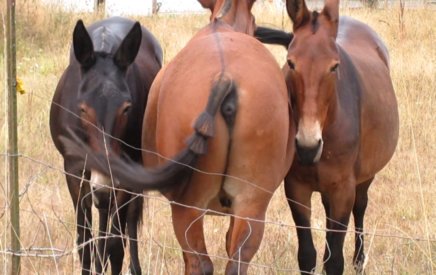
And if we wish, we can point out how mules cooperate—to swat flies.

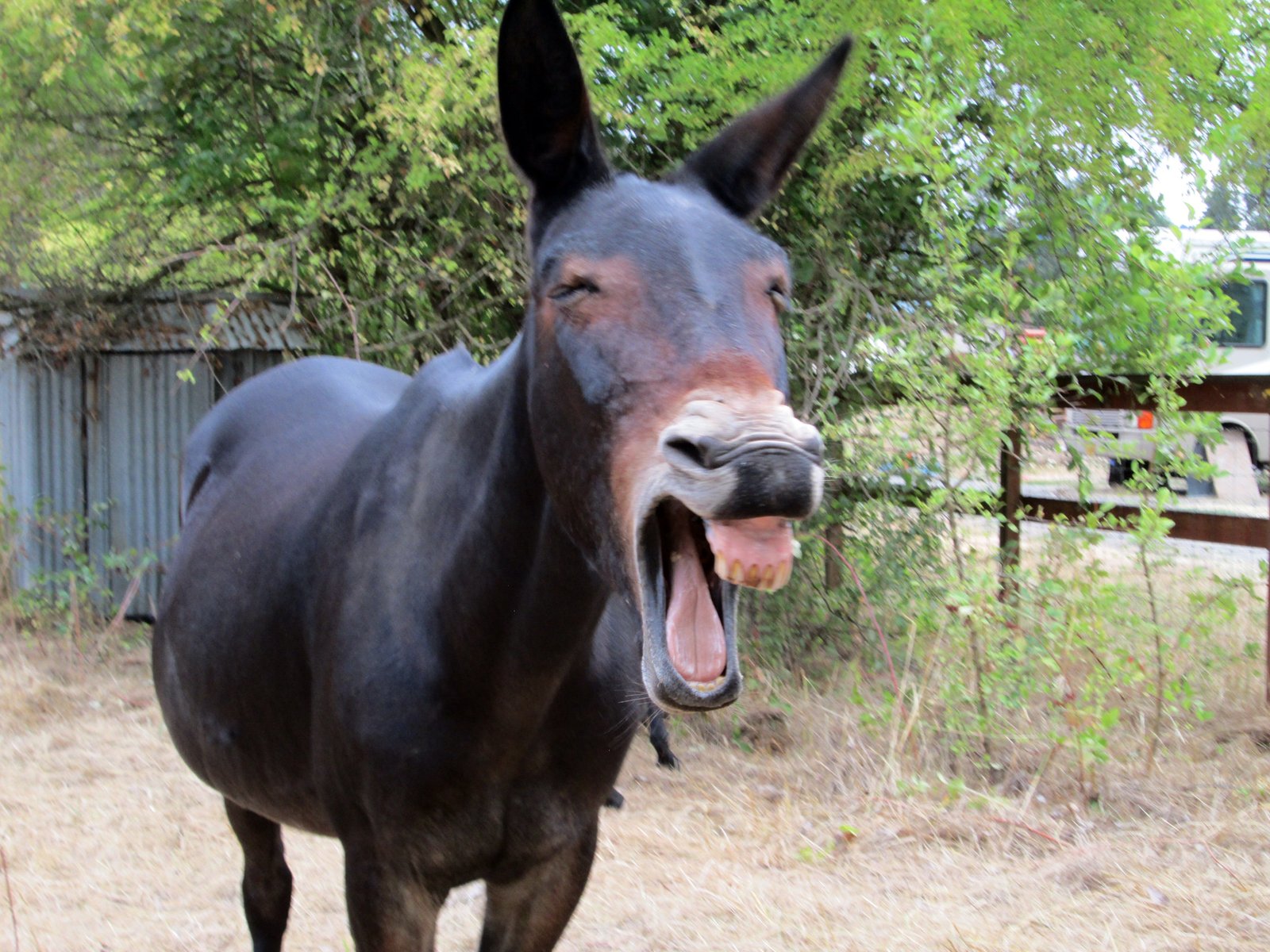
I was walking on our road and glanced into the field where our mules…(video) were standing rump to head, swishing their tails, brushing the flies off each other’s faces. I ran home, grabbed my camera, and when my husband got home, I told him, “Your mules are amazing.” “Yep, they are,” he said, “but they do that all the time. It’s normal!”

Well, if mules can normalize cooperation, people can too.

In January 1929, the US Senate advised ratification and President Coolidge signed into law the Kellogg Briand Pact outlawing the use of war as a means of resolving conflict. Millions and millions of Americans said we are ready for the end of war. They raised such a voice that those in government had to listen, and join the effort, and make it the law of the land—it’s still the law of the land—a law that we can reclaim, if we will seek out and use alternatives to war.

We’re lucky to have three awesome and exceedingly fun grandkids. I love them dearly. I want the best for these precious kids. Down deep I think we know what’s normal, what we come home to—the longing we all have, to give the children the very best we can. They don’t need to inherit our messes. War is a monstrous mess. It has been normalized, but it’s not the way, and we don’t have to accept it.

We can abandon war. There are alternatives. I extend to each one of you a personal invitation, and permission, to help make that happen.

About the Author:
Kathy Beckwith is a school mediation trainer from Dayton, Oregon. She also volunteers as a mediation coach. She is author of PLAYING WAR: A Story About Changing the Game (winner, 2006 Skipping Stones Honor Award); A MIGHTY CASE AGAINST WAR: What America Missed in U.S. History Class and What We (All) Can Do Now; and other books on problem-solving. Her latest work is a young adult novel, ENCOUNTER: When Religions Become Classmates—From Oregon to India and Back (winner, 2022 Skipping Stones Honor Award). She lives on a small farm with her husband (and his mules) and loves picking wild blackberries for summertime pies. She can be reached via her website at
www.kathybeckwith.com. Kathy’s TEDx Talk can be accessed online here.

The Secret

The Secret

By Hongwei Bao, United Kingdom.

Your secret is safe with me,” was Ming’s promise when I told him that I liked boys instead of girls.

Ming was my best friend at school. Wearing the same type of school uniform, Ming looked older and bigger, but we were the same age. We grew up together in the same neighbourhood and our parents knew each other well. Ming was always the first one to hear stories from me. I trusted him on everything and anything. One afternoon after school, we met at the balance bars on the school playground as usual. It was just the two of us. I mustered up courage and told him about my secret.

Ming seemed slightly surprised, but he soon smiled and agreed to keep it a secret for me, as he had done other times. We were best friends after all. After a few push-ups, we headed for our own homes.

The next morning, in the school corridor, just as I was about to wave at him and say hi, I noticed something was different. As soon as he saw me, he dropped his head and continued to walk on, avoiding eye contact with me. In the classroom, I couldn’t help casting frequent glimpses at his side—he wasn’t looking at me. In fact, he remained quiet all day. When the school bell rang, he picked up his schoolbag and left the classroom in a rush. Was it because of my secret? What did he do to my secret?

I ate very little that evening. Mum frowned when she saw the food I’d left in the bowl. Dad threw me a disapproving look and asked me how my day was. “It was OK,” I replied, “lots of homework to do.” I stood up, ready to leave the table.

“Wait!” Dad raised his hand and gestured me to sit down. His eyes looked serious.

After a few seconds of silence, he spoke: “We know it. Ming told his parents, and his dad told me about it.”

I could hear my own heartbeat.

”I’ve asked them to keep it a secret. They’ll make sure Ming doesn’t talk about it either,” Dad added.

A relief, followed by a profound sense of sadness.

“You should learn a lesson from this. Don’t talk about things you don’t understand.”

Horrified by these words, I nodded sheepishly.

“Ming will remain your friend, but he will need more time to understand this,” he consoled me.

I dropped my head, tears in my eyes.

The next morning, in the school corridor and in the classroom, I tried to avoid Ming. The day felt long, and the air was steaming hot. I couldn’t concentrate on the lessons. The words in the textbook jumped around and didn’t make much sense. I wished the Earth would crack open, and I could disappear into the hole. I felt ashamed for what I had done, and for who I was.

Near the end of a day, a small, folded paper ball landed on my desk. I picked it up and unwrapped slowly. Ming’s handwriting jumped into my eyes:

“Can we talk?”

There, on the playground, near the balance bars, Ming told me that he was confused the other day and didn’t know what to do. So he told his parents about it. They simply told him to shut up and keep quiet. But he couldn’t help thinking about it, and about me. He told me that he liked boys too.

—Hongwei Bao (he/him) grew up in China and now lives in Nottingham, UK. He uses short stories, poems, reviews and essays to explore queer desire, Asian identity, diasporic positionality, and transcultural intimacy. 


The Goal

The Goal

By Annie Laura Smith, Alabama.

Greg sat on the driveway of his home and rolled his papers for delivery on Monday afternoon. He pulled a rubber band neatly around each rolled paper and tossed it.

The shouts of his friends playing soccer in the schoolyard across the street caught his attention. He watched his neighbor, John, kick the ball into the goal as excited shouts came from his teammates.

Greg sighed and looked wistfully at the group. How he would love to be able to play soccer, too. But he had to deliver newspapers every afternoon, as well as before church on Sunday mornings. There just wasn’t enough time for playing soccer and doing his homework.

After filling his canvas bag with the rolled papers, Greg hoisted the heavy load on to the handlebars of his bicycle. As he pedaled down Willow Lane toward his paper route on Brookdale, he glanced back at the soccer game. The boys continued to play at a furious pace.

He eyed the Lambert’s yard warily as he approached the gate to throw their paper. Their Golden Retriever, Max, seemed to have a strong dislike for him. Greg tossed the paper on the porch and pedaled rapidly toward the next house.

Max bounded out of the Lambert’s driveway, barking furiously. He ran along side of Greg’s bicycle for the next block and continued barking. The dog stopped following him and quit barking only when Greg crossed the street.

His parents’ friend, Mrs. Morrison, was watering her flowers and gave Greg a friendly wave as he passed her house. Greg slowed his bike to be sure the paper landed in the proper spot at Mr. Adams’ house. When it missed the doormat, Greg stopped, got off his bike, and threw the paper directly in the center of the mat.

Mr. Adams opened the front door. “Well, young man, I’m glad you’ve finally learned how to deliver a paper properly,” he said.

Greg swallowed hard and said, “Yes, sir.”

He finished his route and quickly pedaled home. John met him in the Anderson’s driveway, bouncing his soccer ball.

“Hi, Greg. We sure miss you on our team. Wish it was the good old days when you were our goalie.”

Greg shook his head. “I just can’t do that now.”

“Why don’t you give up your paper route,” his friend said. “Then you’ll have time.”

Greg just shook his head again as his mother called to him.

“Boys, I have some freshly baked oatmeal cookies. How about a snack?”

John quickly followed Greg into the kitchen.

“Boy, your Mom’s a great cook!” John said as he downed his third cookie. “Let’s kick the ball around for a while,” he suggested as he finished his glass of milk. “You can be the goalie.”

The boys played soccer in Greg’s backyard until almost dark when Mrs. Anderson called to them that Greg’s dinner was ready.

Greg said goodbye to John and went to his room. As he cleaned up for dinner, he thought about his paper route. It had been necessary after his father suddenly lost his job. Greg saw his parents struggling to meet their bills. His mother had to go to work while his father looked for another job. Greg knew there must be some small way he could help, too. His friend Mark had a paper route, and Greg decided that he could get a paper route to help his parents.

“But, Greg, that won’t leave you enough time for sports and your homework too,” his mother had said.

“That’s OK, Mom,” Greg had told her. “The paper route will be fun!”

The paper route had not always been fun though. Especially, on the days when Max chased him barking for blocks. Or when Mr. Adams fussed at him for not throwing the paper on his front doormat every day. And he had not fully understood what it would be like not to be able to play soccer regularly with his friends. But the money he earned really had helped his family.

***

On Tuesday Greg stopped at the soccer field before he began his paper deliveries. John and his other friends were just beginning a game. John called to him, “Hey, Greg. Come play a quick game with us.”

Just as Greg started to say no, the soccer ball went out of play and rolled to a stop by his feet. He picked it up and tossed it back to Tim who was playing goalie.

Tim caught it and stepped aside. “I have to go home, Greg,” he said. “Here—the goal’s all yours.”

Greg took the ball from Tim and stood in front of the goal. He kicked the soccer ball to the waiting players and the thrill of playing soccer was back.

His friend John took the ball down field and scored a goal. They continued with the game until their team was ahead 3-0.

Greg didn’t realize how much time had gone by until he looked at his watch at the end of the third goal. It was almost 6:00 O’clock! His papers were all supposed to be delivered by 5:30.

He threw the ball to John and said, “I’ve got to go now.”

John caught the ball and said, “OK. I’ll see you later.”

When Greg got home, he found the canvas bag on his bike was empty, and his mother’s car was gone. Surely, Mom didn’t deliver my papers, he thought.

His mother drove into their driveway as he put his bike into the garage. She got out of the car and said, “Greg, just as I got home from work today, several of your subscribers called about not getting their papers. What happened?” She sat down on the porch steps as she spoke.

“I stopped by to see the guys playing soccer, Mom. I only meant to play for a little while.”

“Greg, I’m sorry you had to get a paper route and miss playing soccer, but it’s really helping us right now.”

Greg lowered his eyes and nodded his head.

“Dad will find work soon,” his mother said. “You’ll be able to resume your sports activities before very long.” She reached over and patted him on the arm. “And you’ll be the best goalie on Willow Lane again soon, too,” she said with a smile.

He looked up at his Mother whose weariness showed in spite of her smile. He realized that he had let his parents, and his subscribers down. All of them were counting on him.

“Thanks, Mom for delivering my papers,” Greg said. “You won’t have to do it again.”

His goal now would be to let his parents and his subscribers know they could depend on him. The soccer goal could wait until his Dad got another job. Greg hoped especially for his parents’ sake that it would be soon.

—Annie Laura Smith, M. Ed., Alabama. Annie was a Learning Skills Specialist at the University of Texas at Dallas. She has published numerous novels and nonfiction books.

We’re Getting Hotter by the Year!

A Happy New Year to all our readers, contributors, subscribers, and supporters, both here and abroad!

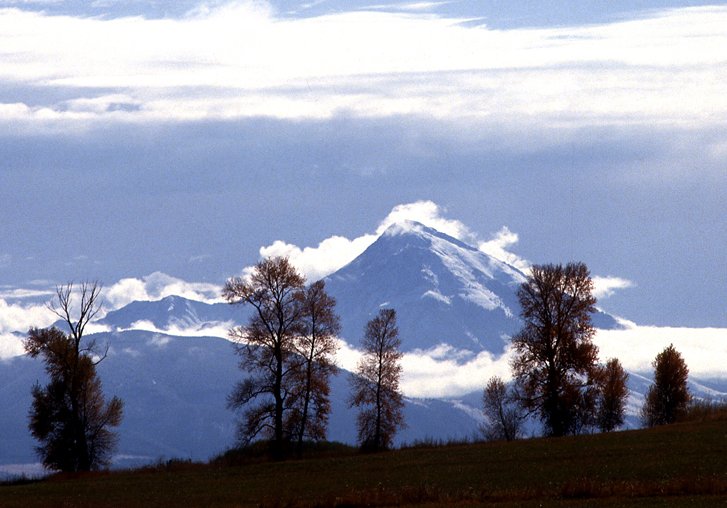
Photo of the Emigrant Peak, seen from Paradise Valley, Montana

Emigrant Peak, seen from Paradise Valley, Montana. Photo by Paul Dix.

Did you read that 2023 was the hottest year for as long as human beings have been on the planet? According to research 2023 was the HOTTEST year in at least the last 100,000 years! Don’t get confused just because there are a few regional cold spells—like the upcoming Deep Freeze in much of North America later this week and the recent Arctic Blasts in Scandinavia and Northern Europe!

Common Dreams and other news media reported (on January 9, 2024) that global average temperature in the year 2023 was 14.98°C—that’s 0.17°C warmer than 2016 (the previous warmest year), 0.60°C warmer than the 1991-2020 average, and 1.48°C warmer than the 1850-1900 (pre-industrial) level, according to the scientists at the European Union’s Copernicus Climate Change Service. And, the prediction is that this year, 2024, will be warmer than 2023! Why do scientists predict more of the same in 2024?

The global oceans paint a better picture of what is happening in the climate world because the heat gets absorbed in ocean waters. A study published on January 11th in Advances in Atmospheric Sciences states that the upper 2,000 meters of the global ocean was estimated to have an additional 15 zettajoules of energy in 2023 compared to the 2022 amount. The Chinese Academy of Sciences estimates that the world’s economy requires about half a zettajoule of energy to run every year, that means, the oceans gained 30 times the annual energy needs of the world. Fifteen zettajoules would be enough to boil 2.3 billion Olympic-sized swimming pools of water . About 90 % of the energy produced by global fossil fuels use is stored in the world’s oceans. Therefore, the ocean is warming consistently, year over year to new record levels, due to this increase in ocean heat content. The resulting increased ocean water temperatures fuel the weather systems bringing intense heat waves, hurricanes, and big storms—high winds and dump heavy precipitations.

The Paris COP agreement was to limit the global temperature rise to 1.5 °C over the pre-industrial levels. Obviously, most countries will not meet that target because we continue to depend greatly on the use of fossil fuels—coal, oil, natural gas (fracked gas).

Unfortunately, the recent COP 28 international conference (like most of the previous ones) was not much more than a hot air balloon, and the next one—COP 29 is likely to be no different. So disappointing! What can we expect when these climate conferences are dominated by oil producing countries and thousands of black gold lobbyists?

We need hundreds of thousands of nature educators, activists and nature protectors of all ages, like the late Rachel Carson (author and marine biologist, USA), Sir David Attenborough (of UK), Bill McKibben (Co-founder of 350.org, USA), Greta Thunberg (from Sweden), Ilyess El Korbi (from Ukraine, Morocco, and now Germany), Elizabeth Wathuti (of Kenya), Xiuhtezcatl Martinez (Native American from USA), Maria Reyes (of Mexico), Amma (from India), Tahsin Uddin (in Bangladesh) and Leah Namugerwa (of Uganda), people from all over the globe to wake us up from our slumber—to educate us and demand a change in the ways our industries, businesses, systems, people, and governments have been damaging and destroying the planet’s natural systems.

Won’t you become a change maker in your school, community, region or nation—wherever you are?

Presented by Arun N. Toké, editor. Based largely on several news reports published by Common Dreams (Jan. 9 and Jan. 11, 2024)

Perfect: A Seven Letter Word

Perfect: A Seven Letter Word

By Lila Ahitov, 15, California.

Perfect. Verb, “make (something) completely free from faults or defects, or as close to such a condition as possible.” Adjective, “having all the required or desirable elements, qualities, or characteristics; as good as it is possible to be” (Oxford Dictionary).

Perfect! Such a small, seemingly insignificant word! Worthless even, words can’t cause any real harm, right? Perfect is just a way that you can describe something. Wow, the weather really is perfect for swimming today! I’m just going to study a little bit longer; I want perfect grades. It’s a nice word, it describes things that are really good. Perfect is inspiration, it’s a standard you can hold yourself to. Honestly, what could be bad about trying to be perfect? It’s no different than trying to succeed at something, or than just trying to lessen the amount of flaws overall.

I want to be perfect. I want the perfect body. So, what if that means waking up at 5am every morning and going for a run? It really is no big deal to skip breakfast every day, and sometimes even lunch. To restrict sugar and carbs, and anything that will stop me from looking perfect. I want the perfect grades. Exchanging many emails with each of my teachers can only benefit my grades. Staying up late memorizing flashcards and completing countless practice worksheets will only further my understanding of the material. I hope that my report card will reflect that I am being perfect.

I want to be the perfect friend. Of course, I can help you with the homework! You’re feeling sad, I’m sorry, tell me about it, maybe I can help. You’re bored? Come over! Or we can just FaceTime. You don’t need to know when I’m feeling down, that wouldn’t be very cool from the funny, loyal, therapist friend that I am. I will not share the burden of my thoughts, as that would not be something a perfect friend would do. Concealer can hide the eye bags that deepen after every late night and early morning. A practiced smile can cover up the nervous facial twitch that I’ve developed. It’s all worth it, so I can be perfect.

A bad grade, a failed test, a blemish on my skin. All flaws that can be fixed. The judgment from everyone else, surely that would stop once I have become perfect, right? A teacher yelled at me last week because I was talking to my friend. Which do I prioritize? Be the perfect friend, or be the perfect student? What if when I stop laughing at their jokes or contributing to the conversation, they don’t want me as their friend anymore? What if I do think of the cleverest, the most perfect response to my friend’s comment, and after I say it the teacher catches me? Is it worth the bad reputation with my teacher for the good one with my friends? Is it worth the possibility of my friends liking me less or talking to me less so that the teacher thinks that I am perfect? Is it possible to do both? Candy, offered to the class, and I always take a piece. I don’t think of the repercussions of this, until the guilt that drowns me later. And yet, I never fail to take it when it is presented to me.

I cannot possibly choose which things I want to be perfect all the time. My friendships, my face, my body, my grades, my reputation, my mental health, my social life, my ability to handle being alone. My anxiety that will not settle for anything less than perfect. Which to prioritize when they contradict each other? Do I choose my mental health over my friendships and my schoolwork? I would allow myself to sleep in from time to time, and to submit mediocre work on a couple of the dozens of assignments that I get a week. I would choose to spend my Saturday night watching a movie and eating pizza. If I take that road, then my grades, my social life, and my friendships will suffer. On the other hand, if I don’t sleep, I could be irritable and rude, and then my friendships and my relationship with my parents will be hampered, but I will have enough time to do my homework. I play an instrument, I’m in clubs, I’m on the cheer team, I hang out with my friends, I spend time with my family, but choosing to do one thing stops the others from being perfect. And yet, while I agonize over what to do and the consequences of each, perfect people seem to be able to choose the perfect option, every single time. I don’t try to be selfish with my choices, but it isn’t possible to think through everything that ought to happen for me to be perfect. I say that it’s all worth it. And that a simple, seven letter word cannot possibly affect me, or my life. I ponder on that thought, and hope that my answer will be considered perfect.

—Lila Ahitov, age 15, California.
Lila writes: “Since a young age, I have loved writing and reading. Whether it was reading the French children’s books that my Parisian mother put me to bed with, or attempting the lyrics of my dad’s favorite Turkish song from his childhood, I always noticed words. “Lila,” my name, means purple, night, and beauty, and much more that I have yet to learn. Growing up in America with European parents allowed me to dabble in languages other than English, French being the one that mostly stuck. Staying close with my family and friends, and growing my cultural knowledge are continuously important to me. I am filled with gratitude for the freedom of choice in my future, which I hope to include writing, travel, and law. Heavy emotions and thoughts can sometimes be a burden, and writing things, like my submission, helps me release it.”