Category Archives: celebrations

The Knowing Smiles of the Devis

The Knowing Smiles of the Devis

By Anu Prabhala, Maryland

On the feminine divine, life’s transitions, and the strength we carry within

It was Navarathri, the nine-day Hindu festival celebrating Devi (Divine Mother or the feminine divine), and for the first time in years, I decided to light a lamp before the Devi’s altar in our home.
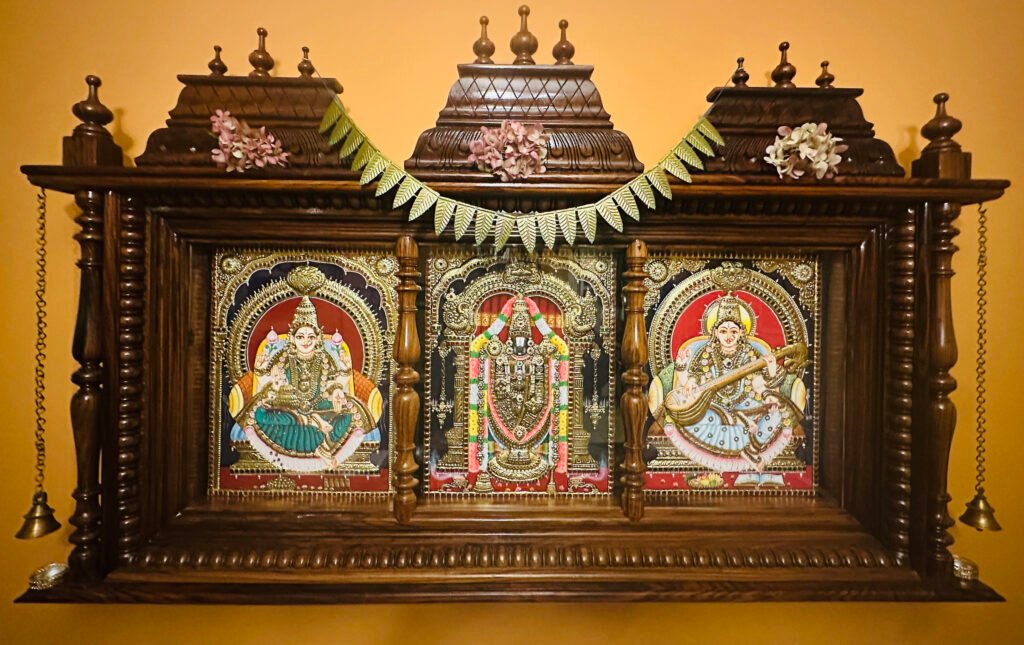
I usually light my lamp at the altar in the same room. But this year, something drew me toward our beautiful three-panel Tanjavur painting (see above), which has adorned our wall for ten years. Specially commissioned for us and shipped from Bengaluru, India, the painting shows Lakshmi, the goddess of spiritual wealth, on the left, and Saraswati, the goddess of knowledge, on the right.

As I lit the lamp, hoping the flame wouldn’t make the dainty bells dangling above it too hot, I found myself looking into their faces.

And something quite unexpected happened.

I felt compassion. Not so much for them as from them. Their gentle smiles and serene eyes seemed to hold a knowing understanding, almost as though they were saying, I know. I am here.

I had looked at these paintings countless times before. Why was I seeing them differently now?

Perhaps it had something to do with the transitions unfolding in my own life: an uncertain professional future; a book I had dreamed of writing for years finally taking shape; a son edging ever so close to the day when he would leave home and begin his own adventures; and my 88-year-old mother in India, with whom I’ve spent many wonderful years (and still yearn to spend much more time with).

So much to be grateful for, and yet so much to take in, anticipate, and occasionally worry about.

And here were these two women—goddesses, no less—looking back at me with expressions of such extraordinary tenderness.

I am hardly a scholar of Sanatana Dharma (a.k.a. Hinduism), and my knowledge of the many forms of the divine mother is limited. But at that moment, I wasn’t thinking about scriptures, symbolism, or theology.

I was thinking about the feminine divine. About the extraordinary capacity of women to absorb life’s uncertainties, to nurture, to persevere, to find strength when strength seems in short supply.

And about how comforting it was, for once, to feel that someone else was looking after me!

Women in the Seats of Power

In South India, during Navarathri, we worship three manifestations of the feminine divine: Durga, for her strength and courage; Lakshmi, for the material and spiritual wealth she represents; and Saraswati, for knowledge, wisdom, speech, and music.

How wonderful, I thought, to have women in the seats of power! Not political power, but something far more fundamental—the very source of strength, abundance, and knowledge.

And really, who’d be better than a woman to untangle a messy situation, knock some common sense into everyone involved, and steer things toward a happier outcome? 😉

But jokes aside, I began thinking about how much women take in.

We absorb other people’s anxieties, manage expectations, juggle responsibilities, hold families together, and somehow keep plowing ahead. We are mothers, daughters, wives, friends, professionals, caregivers—often several of these at once.

And somewhere amid all these roles, we must also find room for ourselves. For our own aspirations, disappointments, uncertainties, and dreams.

Perhaps that was why I felt so drawn to the Devis this year. I wasn’t looking at distant, impossibly perfect goddesses. I was beginning to recognize something of our own lives in what they represent.

Strength doesn’t always look like a tigress charging into battle. Although some of my oldest friends might disagree! Born on the second day of Navarathri, I was named Durga Annapurna. For decades, a group of friends, including my dear friend Bindi, have affectionately called me “Purni-Sherni”—Purni (total/complete?) the Tigress—for my reputation as a fierce go-getter. Bindi even gifted me a hand-painted tigress for one of my recent birthdays!

But lately, I have been discovering another kind of strength—one that is gentler and manifests more quietly. Sometimes it simply means getting up in the morning and carrying on, even when you aren’t quite sure what comes next.

And knowledge isn’t always about finding the right answer. Sometimes it is the wisdom to recognize that not everything needs to be resolved today—and to trust that we will find our way.

The Devis Among Us

During Navarahtri, I experienced another reminder of the feminine divine—this time, not in the gilded panels of a Tanjavur painting, but in a roomful of women gathered at my friend Manju’s home.
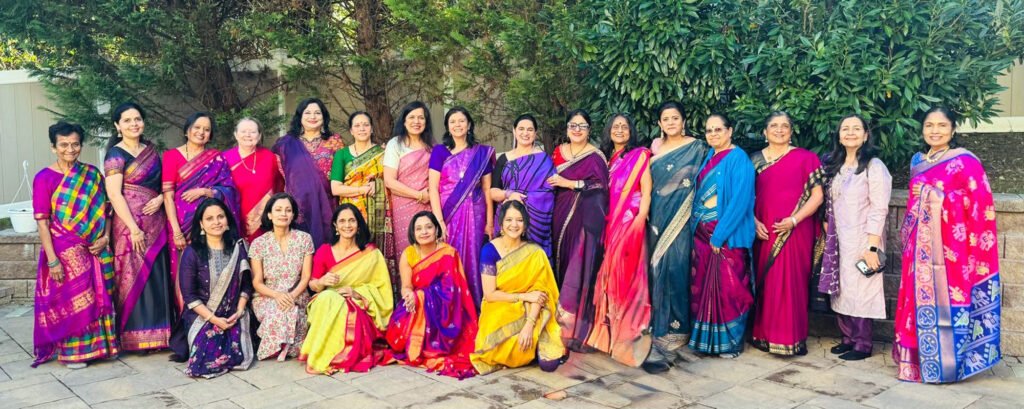
We sang bhajans (devotional songs) and chanted shlokas (sacred Sanskrit verses passed down over millennia that share eternal truth). We laughed, posed for pictures, ate sumptuous food, exchanged stories, gossiped a little (surely, the goddesses would forgive us!), and shared some of our worries and woes.

Manju explained the festival’s significance. Anju offered a Vedantic (from ancient Hindu scriptures) perspective. And Gabriela appeared resplendent in a sari, perhaps to the astonishment of her American husband and German family!

Wisdom, laughter, generosity, compassion, and strength filled that room. And, of course, plenty of good food.

As I looked around, I realized the Devis we worship aren’t so far removed from the women we are.

Each of us carries her own share of responsibilities, anxieties, hopes, disappointments, and dreams. Yet, for a few precious hours that evening, we set our responsibilities and worries aside. We were simply ourselves—women enjoying one another’s company, drawing strength from shared experiences, and finding joy in belonging.

But perhaps our evening had even offered us a kind of victory—over isolation, worries, and the little burdens that sometimes weigh down our spirits.

I arrived at Manju’s home to celebrate the Devis. I left feeling that I had spent the evening in their company.

And perhaps, in some small way, we had all rediscovered the Devis within ourselves.

These days, when I look at my Tanjavur painting (see the painting above), I still see those knowing smiles.

And I find myself smiling back.

—Anu Prabhala, originally from India lives in Maryland. She adds: “If these reflections resonate with you, subscribe to my weekly blog, Imperfectly Perfect, free at https://anuprabhala.substack.com/subscribe for more stories about life, its surprises, and the ways we learn to see.”

Note: The Navarathri festival was recently celebrated from Oct. 11-20; Oct. 20th being the Vijayadashami (or Dussehra). In 2027, Navarathri will be celebrated from Sept. 30th through Oct. 9th. On October 21st, the USPS released a new postal stamp to observe the annual five-day Hindu festival of lights, Diwali, which will be celebrated Nov. 7-11, 2026.
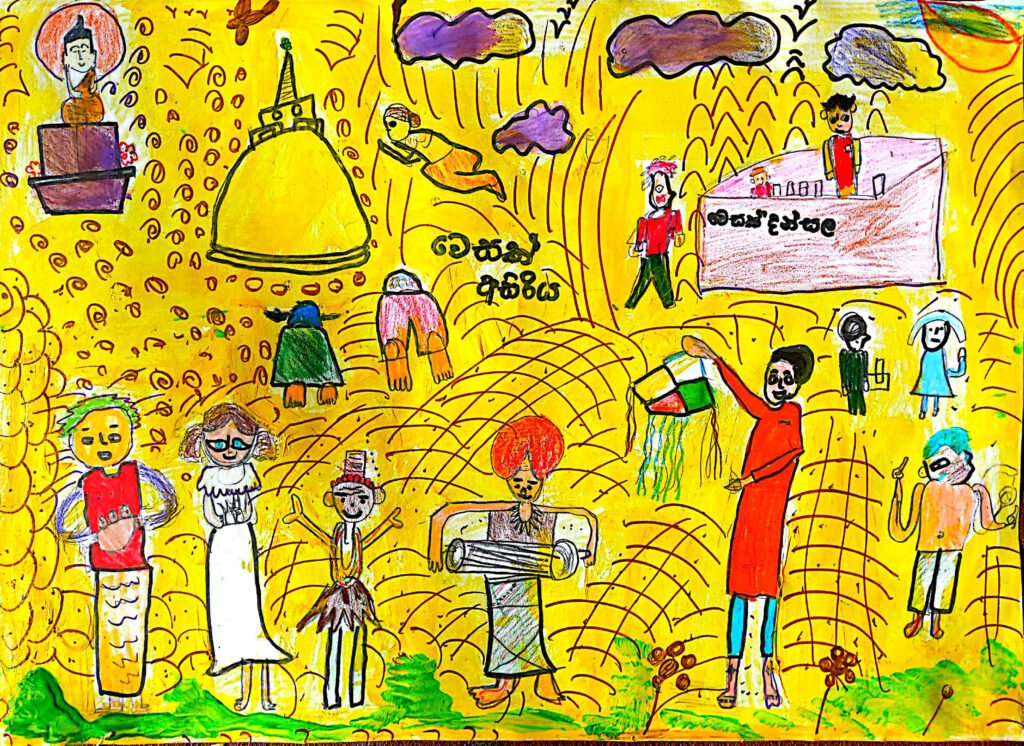
Vesak Celebrations

The Vesak Festival වෙසක් උත්සවය

By Saviru Bandara, age 11, Australia

My Vesak themed artwork (see above) shows how I celebrate my culture as a Sri Lankan Buddhist (who lives in Australia) during the Vesak festival.

The Vesak Festival (වෙසක් උත්සවය) is the most important and sacred celebration for Buddhists around the world. It takes place on the full‑moon day in May and marks three significant events in the life of Lord Buddha: his birth, his enlightenment, and his passing away. In 1999, the United Nations officially recognized Vesak as an International Day, showing its importance as a symbol of peace for the whole world.

Vesak is celebrated annually by all Buddhists around the world. Despite cultural differences, the central purpose of the festival remains the same everywhere—to honour the Buddha’s teachings of compassion, peace, and wisdom.

Just a few days before Vesak, I make Vesak lanterns (called Vesak kudu, in Sinhalese, our native language from Sri Lanka) with my friends at our community language school in Australia. Normally, each child makes one Vesak lantern. Then adults take it to our Buddhist temple to hang it on Vesak morning. In the evening, our Vesak lanterns are lighted.

On the Vesak Day, we go to temple and observe sill. During Sil programme, a Buddhist monks talk to us about Buddha’s teachings. Also, they teach us how to meditate. So, our mind becomes more peaceful.

When we go to the temple in the morning to celebrate Vesak we take flowers, incense sticks, and oil or wax lamps. These items have symbolic meanings: flowers remind us of the beauty (and the impermanence) of life, incense represents purity, and lamps symbolize enlightenment. I like watering the Bodhi tree on the day (Buddha received the enlightenment while meditating under a Bodhi tree).

On Vesak Day, grown-ups and kids can join in the Vesak Perahia or Vesak parade. Traditional dancers, drummers, and performers and devotees take part in the procession. In Sri Lanka, elephants decorated with beautiful colourful costumes also take part in the parade.

In the evening at our temple, we participate in giving free food or Dansala to people. We offer free tea, coffee or herbal drinks for the devotees visiting the temple. This opportunity teaches us collective work as well as the importance of donating.

Beyond the celebrations, the heart of Vesak lies in its message. It reminds people to be kind, peaceful, and mindful in their daily lives. The festival encourages everyone, regardless of their religion or background, to practice good deeds and bring happiness to others.

Vesak is a festival that combines joy, reflection, and compassion. It celebrates the life and teachings of the Buddha while inspiring people to become more thoughtful and caring. Vesak continues to spread a message of harmony and kindness that is meaningful for people everywhere. Also, Vesak helps me to preserve my Sri Lankan culture in my new home as an immigrant in Australia.

If you visit Sri Lanka, during the month of May, you can see and enjoy all of the Vesak celebrations and traditions. The festival is being celebrated this year in Sri Lanka (as in many other countries of the world) on May 30th. Because many Asian cultures still follow lunar calendar, in some communities, it might also be celebrated on May 1st.

By Saviru Bandara, age 11 Australia.


Imagine…

Imagine…

“Just a tiny candle we lit. It wasn’t much. But it was something.”
                                     —Gary Svee, an editor at the Billings Gazette, 1994.

The quote above appears on the cover of the new edition of my book, The Christmas Menorahs: How A Town Fought Hate.

The book recounts the true story of the extraordinary 1993 holiday season in Billings, Montana, when the town took a united, courageous stand against hate and bigotry. The citizens of Billings were perplexed by the national attention their actions received. “Just a tiny candle we lit,” said Gary Svee, an editor at the Billings Gazette.

And yet…imagine how different our country (and the world) would be if people in every community just “lit a tiny candle” against hate and injustice.

Now imagine if the actions of all young people, who “lit a tiny candle” were recognized and honored.

At a time when the problems and challenges of young people today are routinely discussed, imagine if the actions of young people who have shown moral courage and compassion on behalf of others could be routinely highlighted.

In December 2025, my town library in Montclair, New Jersey, presented a special holiday event that celebrated some of Montclair’s young Upstanders and featured a reading of portions of The Christmas Menorahs, along with an excerpt from the acclaimed 1995 PBS documentary, Not In Our Town, which cinematically tells this story of how the people of Billings took a strong stand against hate and bigotry.

The book reading and film were meant to inspire the audience. But much inspiration came from hearing about the actions of the young people who were being honored.

What makes a child or adolescent an Upstander? Is it a dramatic, brave, morally courageous act? Is it less dramatic, quieter acts of compassion and kindness towards others in need, or can being a true Upstander encompass both—or either?

The research shows that when children and adolescents stand up for—and take actions to help—others in need, it can help them as well by enhancing their self-esteem, lowering their stress and anxiety, and even improving their academic performance.

That’s why it’s important for communities (whether those communities are schools, houses of worship, or towns) to recognize and honor young Upstanders. This could be for actions taken on behalf of other Americans or on behalf of people around the world.

My book, Freedom Pancakes For Ukraine, published in 2024, tells the story of a Ukrainian refugee boy, displaced by the current war in his country, and an American girl who wanted to find a way to help the Ukrainian children.

One of the reasons I wrote it was to encourage American children and adolescents to realize that they can counteract their feelings of helplessness when hearing about war and injustice by taking positive action and making a difference, however small they may think that difference is.

Time magazine recently named its 2025 “Kid of the Year.” The winner featured on its cover, Tejasvi Manoj, used her exceptional computer skills and her “on-site” experts—her parents—to create an extraordinary website, Shield Seniors, which will help protect countless seniors from consumer scams.

My dream is to have a national movement to encourage young people to stand up and help others. They don’t have to possess exceptional skills or expertise since every young person has the ability to help another human being in some way. They may not end up on the cover of Time magazine, but their actions should be recognized and honored.

During these difficult, divisive times, let’s encourage thousands of “tiny candles” to be lit by young people on behalf of those in need. It will be good for them, as well as for the people they stand up for, and thus help make our world a better place for all.

You may also be interested in the article I have written for young people, in Skipping Stones magazine about Upstanders.

Dr. Janice Cohn is a psychotherapist and children’s book author. She can be contacted at: janice@drjanicecohn.com.  The Christmas Menorahs: How A Town Fought Hate, this 30th Anniversary edition was a winner of the 2025 Skipping Stones Book Awards. You can read a review of the book here.


A New Year’s Message, 2026

Amma’s New Year Message for 2026

Amma, the world-renowned spiritual teacher and a humanitarian leader from India, shared her thoughts on the current state of humanity as we welcome the new year. Her talk attended by several thousand residents and international visitors at her center in Kerala (South India) was broadcast live on YouTube. She included many illuminating stories and sublime points to help us grow spiritually, and to make our lives better. To conclude her remarks she urged everyone to follow these 12 suggestions, if we are serious about improving ourselves, our family life, and our the world. While she spoke in her native tongue of Malayalam, it was simultaneously translated in several European and Indian languages. We are pleased to share her suggestions (exhortations) with a few minor edits. 

—editor

1. Since time cannot be postponed or carried forward into the future, use it with the utmost care. Create a daily routine and adhere to it as much as possible, with discipline.

2. Write down your personal weaknesses and negative habits on paper. Dedicate one specific day each week to consciously work on overcoming each of them.

3. Strive to be more mature and refined today—at least in one aspect of life—than you were yesterday.

4. Spend a little time each day cultivating awareness of nature. In your imagination, embrace and love all of creation.

5. Awaken the selfless love within you. Let love express itself through you every day. Care for at least one plant with devotion each and every day. 

6. When praise or blame, victory or defeat comes your way, reflect deeply and remind yourself that your true Self transcends all of these.

7. Nurture the virtue of forgiveness. Generously forgive the mistakes of others—and learn to forget them as well. This will help both you and your relationships with others. 

8. Every day, devote at least a short period to performing your actions with complete awareness and presence.

9. Use all natural resources with mindfulness and care. In life, place greater emphasis on what you have been able to give, rather than on what you have received.

10. Cultivate humility and simplicity. Respect the opinions of others and move forward through cooperation and mutual understanding.

11. Meditate on the form of your Guru—your spiritual teacher (if you don’t have one, you can meditate on supreme consciousness or the flame of a candlelight)  for sometime each day. Then remain silent for a while, resting your attention in your own true nature.

12. Cultivate an attitude of gratitude for the blessings you have received in life. Also, learn to accept personal responsibility for your mistakes, sufferings, and losses—what could you have done differently to avoid them?

What we need is not a mind that revels in the little, but a mind that seeks the sublime. Awaken. Elevate yourself. And uplift others as well.

Poetry for Mother’s Day

Poetry for Mother’s Day

By Xiyuan Cheng, age 9, California.

We are pleased to share three poems for the Mother’s Day
(This year, it is being celebrated in the U.S. on Sunday, May 11th).
Happy Mother’s Day to you all!
—Editors

1.  When God Created Mothers

When God created mothers,
all lovely as can be,
he made one extra special,
and saved her just for me.

2.  My Heart is Gold

Your heart is silver, and my heart is gold.
You are so beautiful, it’s more than I can behold.
Your wonderful, so the legend is told.
Your heart is half, and so is mine.
Together are half-hearts shall combine.

3.  Mother’s Day End

Mother’s Day will always end,
but my mom will always be my best friend.
Our relationship might bend,
but we always know it will mend.

By Xiyuan Cheng, Age 9, California. Xiyuan has been writing since the age of eight, and her collection of six poems, Poetry for Mother’s Day, explores the themes of love, imagination, and appreciation for mothers. The three poems selected above reflect both her emotional sensitivity and growing creativity. Xiyuan is now 11 years old.

Holi: Chaotic Colours

Holi: Chaotic Colours*

By Elaine Elizabeth Jinto, age 14, India.

the scorching sun, burns out
all the bitter feelings as we
gather at the small maidan,**
at the end of our
busy street, a maidan which
is dusty, dirty, dry just
like how we feel after,
the chaotic year we had

the oldest clothes in each
household are donned today by
all, showcasing the chaotic year
that has just gone by

then we drench each other
with fresh water, washing away
all the pain, worries, grief
and sorrow, that has stuck
to us like the burrs
In the grass in our
little maidan, washing away the
last, chaotic year we had

then we grin, feeling much
better and get our Holi,
powdered colors and throw it
at each other and after
we are done with our
simple game, our clothes are
a riot of colour, and we
Are ready for the chaotic
year we will be having.

—Elaine Elizabeth Jinto, age 14, India. She adds: “I am originally from the Indian state of Kerala, but I was born and raised in Bengaluru, Karnataka, and I am going to 9th grade next year. I can speak Malayalam, Tamil, Hindi, and Kannada, along with English. I started writing in 3rd grade, beginning with a poem about a playground… I serve as the Editor-in-chief of our school magazine… I understand the impact writing has when it comes to spreading the right messages.

“…my poem is about the Holi festival in India. It is one of my favorite festivals, and it is a time when friends and foes enjoy splashing color and water on each other. It is a time of joy and new beginnings. I love playing Holi with my friends and family and eating pani puri at the end of the day. The poem is 29 lines long and has a challenging restraint. Each line has exactly 5 words.

“I love writing and reading about everyday things that I can relate to. I generally do not follow a strict form in my poems, because I get more room for creativity… Through my poems and prose, I like to give voices to those silent and mundane events that play a huge role in our everyday lives… I am so happy I am getting a chance to share them with the rest of the world.”

Editor’s Notes:
The festival of Holi celebrates the triumph of good over evil and it marks the arrival of spring and the end of winter in India. This year, it was celebrated on March 12th and 13th.
* In India, English words are generally written using British spellings; colour in place of color (in America), for example.
** Maidan: an open space in a city or neighborhood, usually it’s a bare or grassy ground, and it is used for sports, games or large gatherings.

World Environment Day, June 5

The World Environment Day, June 5

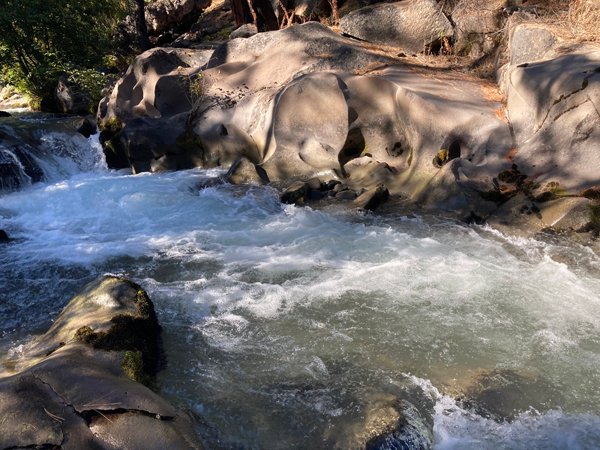
Snow-fed mountain streams bring us water year around. Photo taken in the Oregon Cascades by Arun N. Toké.

Greetings! We wish you all a very happy World Environment Day, being observed today (5 June 2024) around the world with the theme of Land restoration, desertification and drought resilience.

World Environment Day is one of the biggest international day for remembering our relationship to the environment. Led by the United Nations Environment Program (UNEP), and held annually since 1973, it has grown to be the largest global platform for environmental outreach (similar to the Earth Day that has been observed in the United States since 22 April 1970). It is celebrated by millions of people across the world.

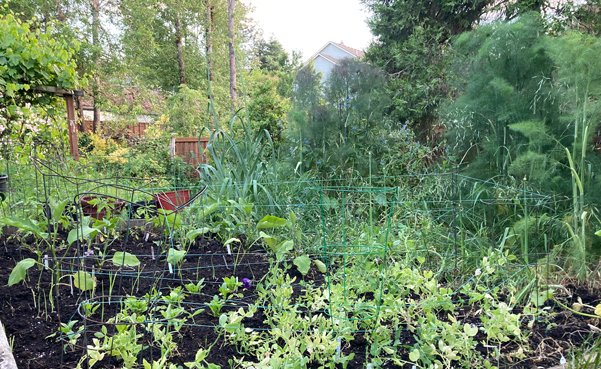
Our Backyard Garden. Photo: Arun N. Toké

Early this morning, as I began my day, I ventured out in our backyard garden, nibbled on a handful of berries that had ripened, and looked at how the garden was doing in the warm, late spring weather. Then later while I bicycled to work, I enjoyed the clean air that I breathed in and appreciated the shrubs and trees that enlivened my way to work. This daily, relaxed way of commuting to work gives me some time to think on what I need to focus on at work and to plan my day to achieve the needed tasks.

Without the natural environment (aka biosphere) that makes life on our precious Earth possible, we simply can’t exist. We owe Mother Nature our immense gratitude for this lifetime of opportunity to experience the incredible beauty and complexity of life.

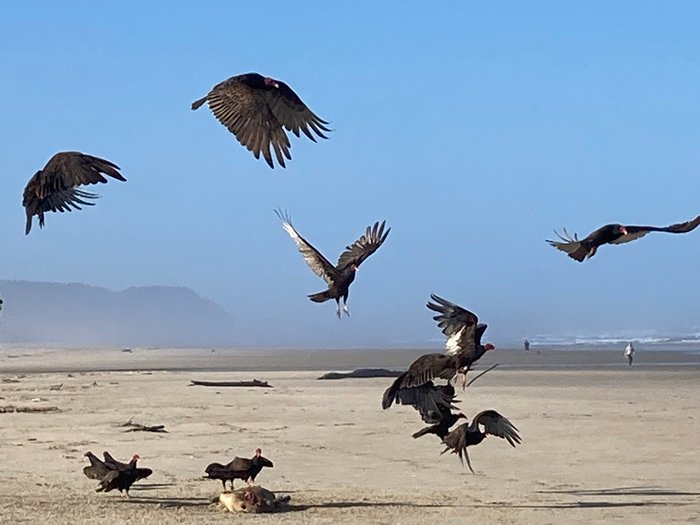
Vultures Devouring a Dead Seal on the Waldport Beach, Oregon. Photo: Arun N. Toké

Let us do everything humanly possible to keep the biosphere intact. Let’s appreciate what nature has sustained for millions of years. Human life has been around for just a small fraction of that time. True, with our intelligence and industry, we are able to alter the natural conditions in our surroundings for our temporary pleasures. And that is a big problem! We don’t see the long-term impact of what our technology and industry, economic and political systems, and greedy ways are able to do.

Land restoration is a key pillar of the UN Decade on Ecosystem Restoration (2021-2030), a rallying call for the protection and revival of ecosystems all around the world, which is critical to achieving the Sustainable Development Goals. Visit the World Environment Day website.

As we observe the World Environment Day, I would like to leave you with some images I carry with me on my cellphone. Whenever I look at them, I remember my immersions in nature—be it working in the garden, camping, hiking, and wandering through the woods, rafting in a river, kayaking in a quiet lake, or feeling tiny in the vicinity of the Pacific Ocean—that these moments represent.

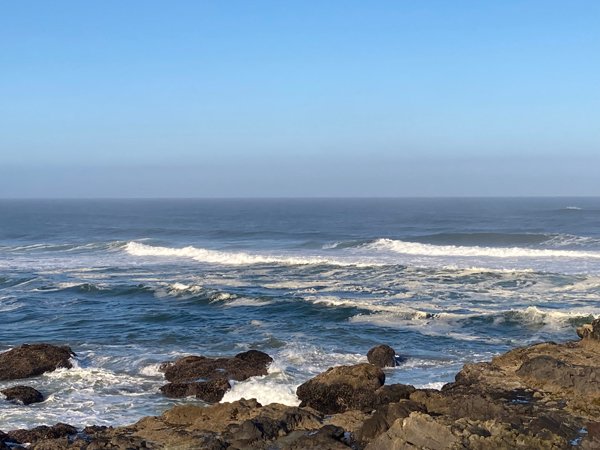
Pacific Ocean near Yachats, Oregon. Photo: Arun N. Toké

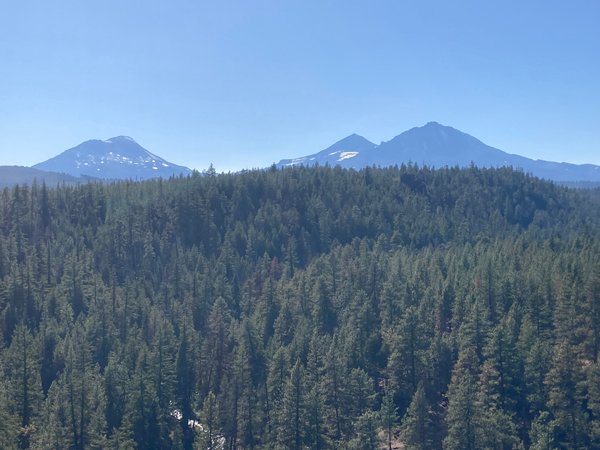
Three Sisters, Oregon Cascades. Photo: Arun N. Toké

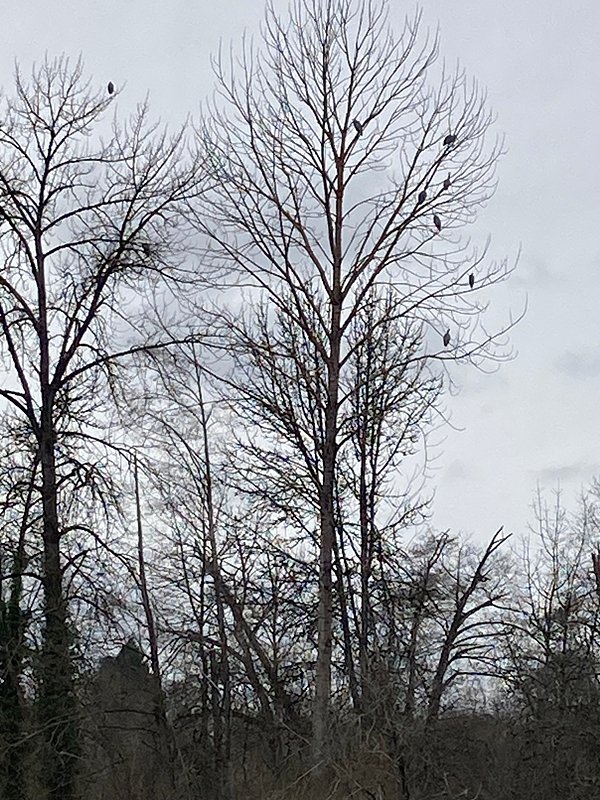
Many Great Blue Herons Enjoying a Winter Afternoon near the Delta Ponds, Eugene. Photo: Arun N. Toké

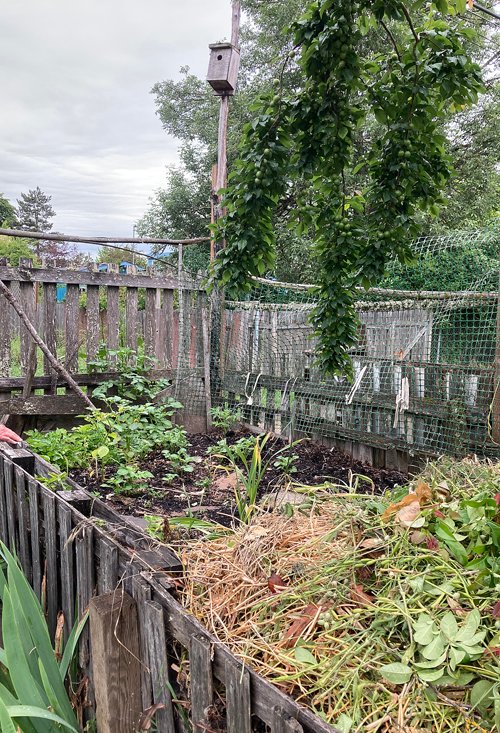
A Big Compost Bin in my Friend’s Backyard Produces Rich Soil for Garden. Photo: Arun N. Toké

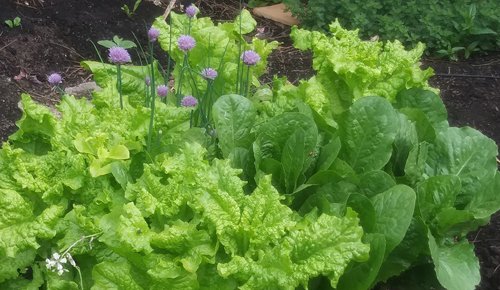
Paul Dix’s Lettuce and Chives Patch Produced Tasty Greens! Photo: Arun N. Toké

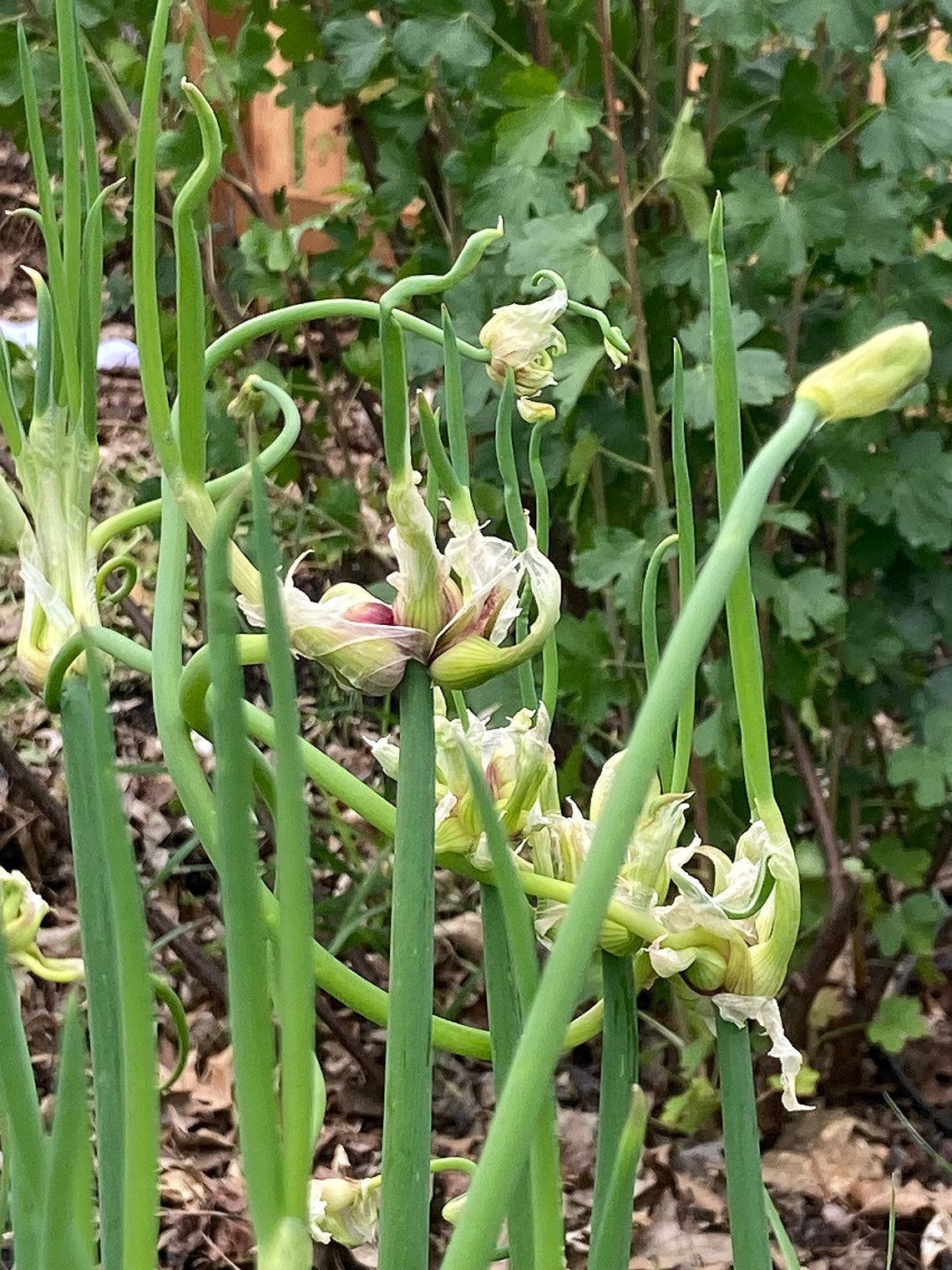
“Walking Onions” in Paul Dix’s Garden Provide Onions, Season after Season! Photo by Arun N. Toké.

Celebrating Earth Day!

Celebrating Earth Day!

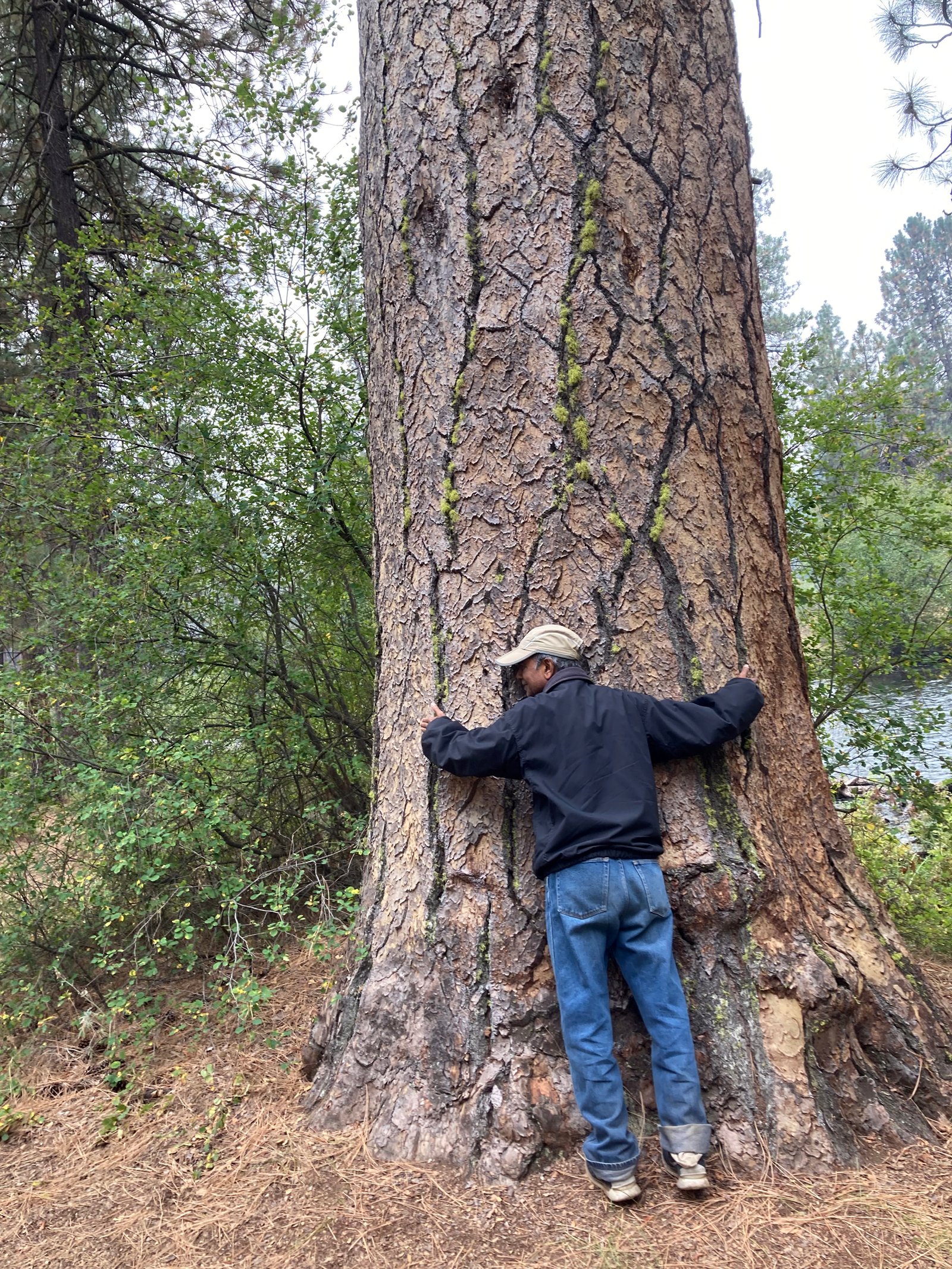
Hugging an Evergreen Tree on a hike in Central Oregon. Photo: Mel Bankoff, Oregon.

Earth Day Greetings!

As I bicycled to work this cool, breezy spring morning in the Pacific Northwest, I admired the many new shoots reaching for the sun, and spring flowers seeking bees and other insects along the bike trail and sidewalks. I vividly recalled my childhood in central India. We lived in an apartment building right in the middle of downtown in the city of Indore. There was no room for any backyard gardens. But we had a very small windowsill garden space for a couple of pots. I remember the excitement I felt as the garbanzo bean plants grew new leaves or when those beautiful red flowers appeared on another potted plant.

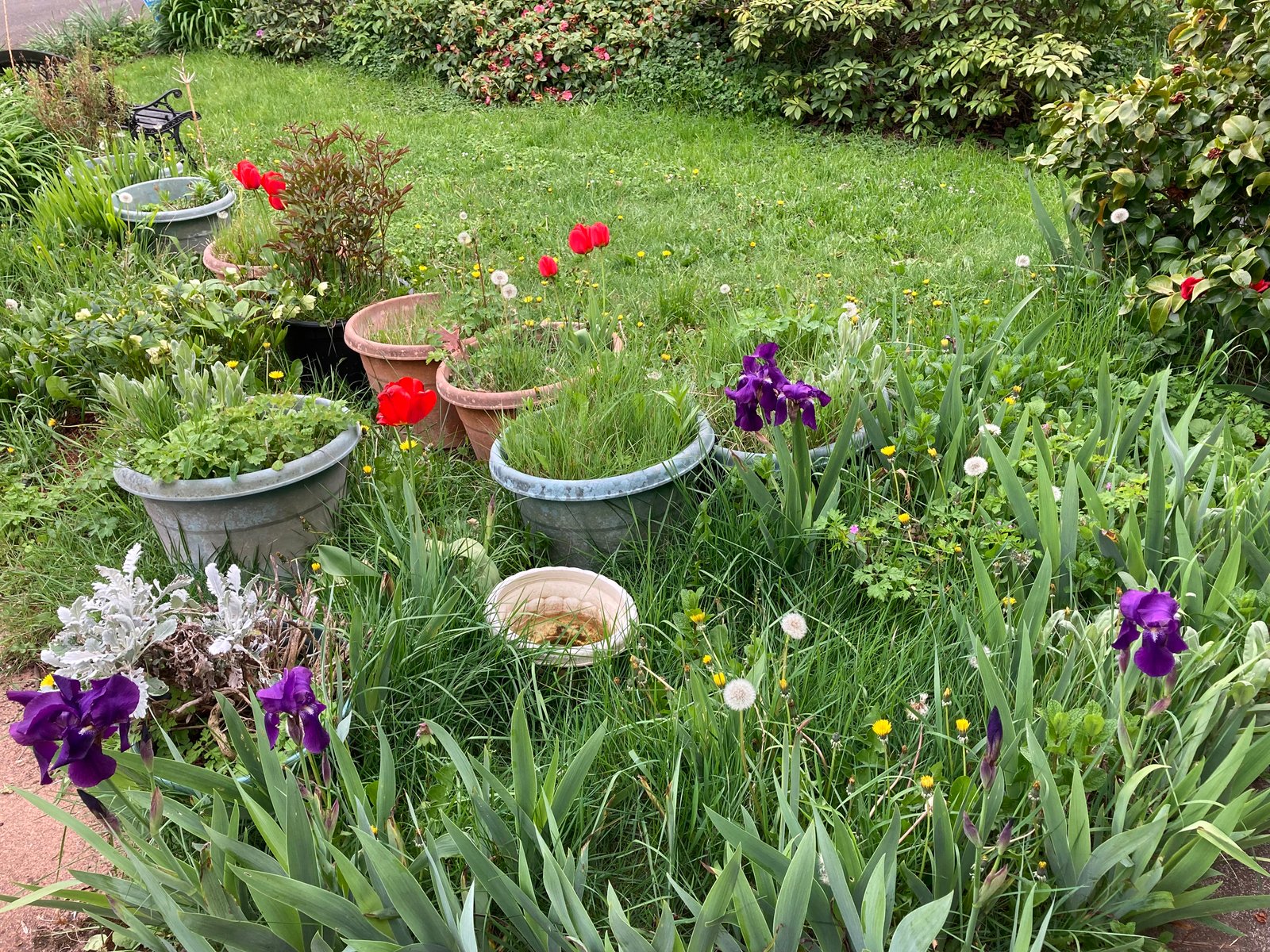
Almost Everything in the Garden is Growing Vibrantly.  Photo: Arun N. Toké

We have been enjoying spring flowers in our garden, and harvesting arugula, fennel shoots, green onions, etc. Apple trees and various berries are doing their usual spring growth with a promise of bountiful fruit harvest! And, various nature hikes in the area fill our hearts with a sense of appreciation and gratitude to Mother Nature.

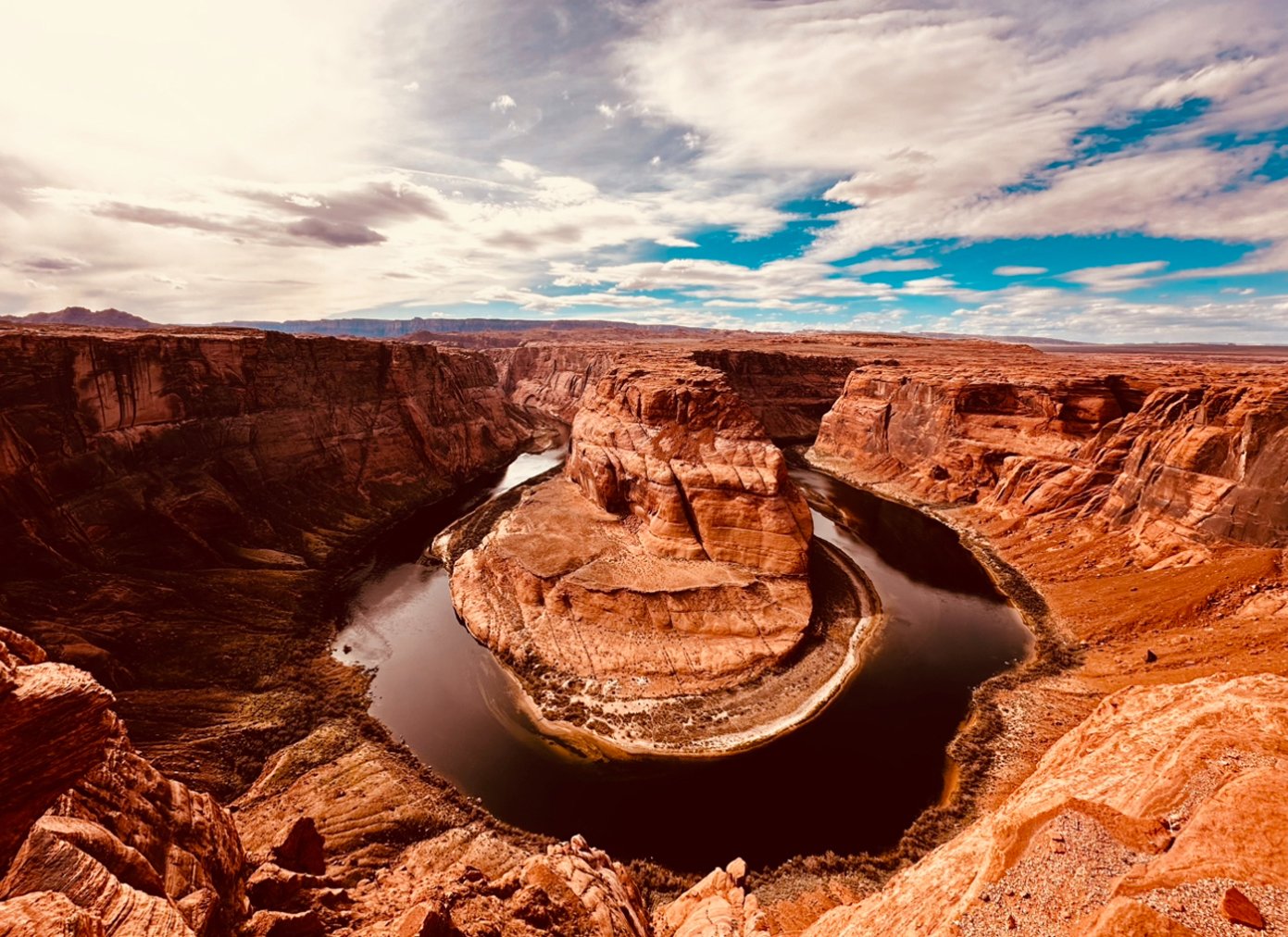
While many of us might be looking forward to visiting some special wonders of nature during school break this year—Denali, Yellowstone, Grand Canyon, Grand Titon, Redwoods or another beautiful place—like the Horseshoe Bend in Arizona, let us not forget that natural beauty can be found all around us, even in our backyard!

Horseshoe Bend, Arizona. Photo: Arianna Shaprow, age 13, Nevada.

Yet, I must share my deep sadness with you. Everyday, I am feeling the pain of countless children, mothers and fathers in places like the Gaza, Sudan, and Ukraine, where wars, climate change and droughts make living conditions dire for tens of millions. The military operations and environmental destruction responsible for human suffering go on unabated. Governments, including ours, are unresponsive to the needs of innocent, civilian victims. The human rights of millions of children, women and men are being violated. They are forced to live in subhuman conditions. Even in our own cities all across this so-called rich nation, countless homeless men and women live in less than desirable conditions. We are told there is no money for social programs, as the government spends close to a trillion dollars on feeding the war machines.

Skipping Stones, like any other socially responsible media outlet, has often shed light on the plight of suffering humanity around the world. While we don’t want to forget this pain and suffering, we also don’t want our readers to get depressed by the doom and gloom that’s all around us.

The list of issues we can and must face is long. It includes our ever-increasing use of plastics and forever-chemicals, the decimation of insect and bird populations, the climate change, disappearing glaciers, deforestation and destruction of natural habitats, over-fishing and overgrazing, mindless mining of fossil fuels, environmental pollution, groundwater contamination, land-use issues, nuclear weapons, environmental and social justice, and homelessness, poverty and hunger. You can add many more items to this list—both of local concern and global importance!

Our future survival and flourishing depends on how we respond to these problems we have created with our ever-increasing consumption of resources, economic systems, greed, privatization and exploitation of resources, for example.

You might like to ask yourself a few deep questions (see some examples below) and try to answer them honestly and at length:

What do we love about where we live?
How can we make a difference right where we are planted, in our communities?
How can we let Mother Earth know how much we love her?
What might we cultivate in our own backyard?
How can we help out our neighbors?
What small thing might we do today to heal the world and ourselves?
What is happiness?
What makes us really happy—happiness that might last for a really long while?
How much of material consumption is sufficient or plenty for our happiness?
What is the law of diminishing returns?
What is the difference between needs and wants?

And as a group of friends or community, we might ask:

Can an economy based on ever-increasing growth be sustained? 
Can we continue to use natural resources in an uncontrolled manner?
What can we as a community or society do to minimize our negative impact on nature?
As conscientious citizen and human beings, how can we respond constructively?

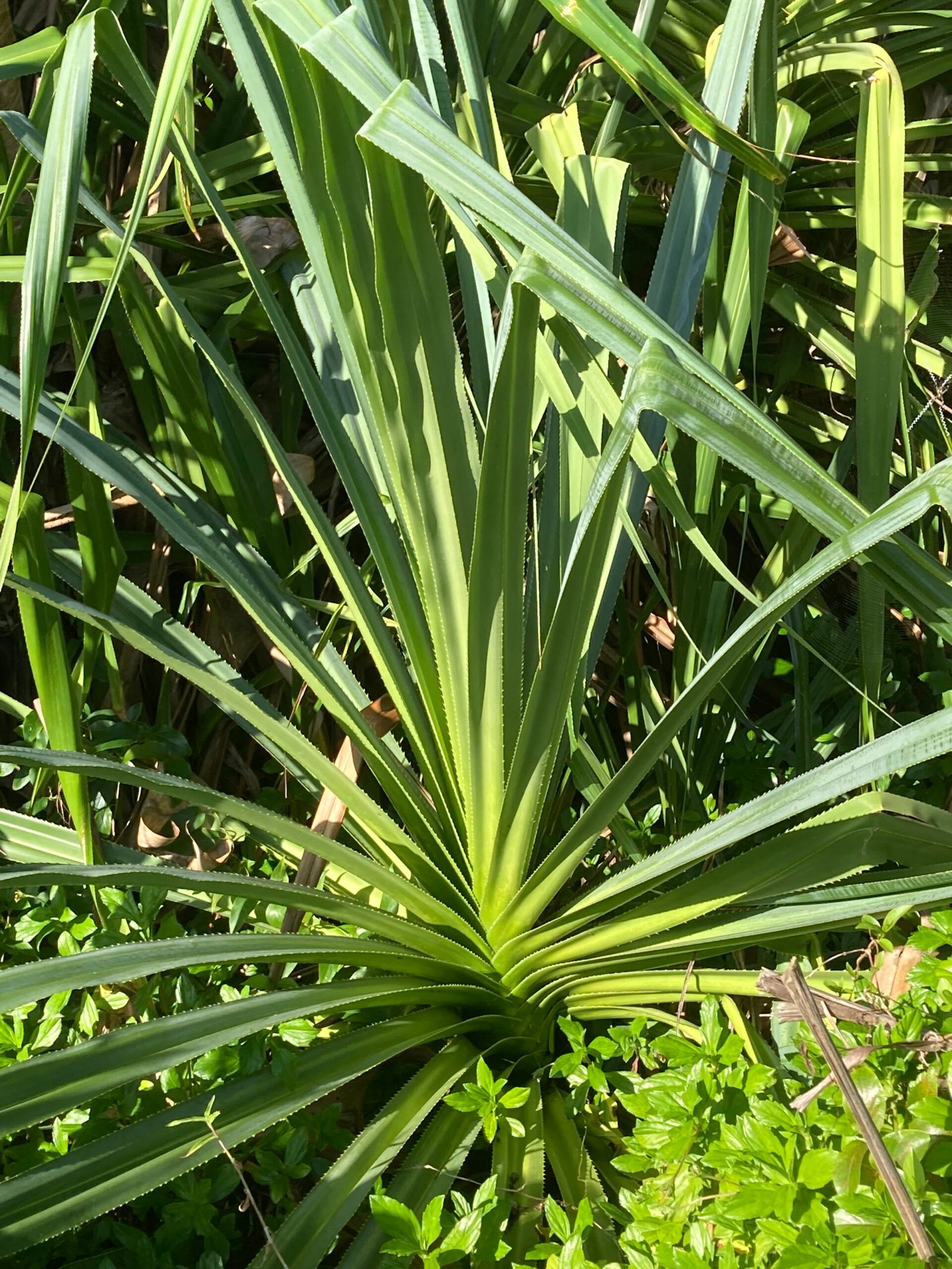
A Roadside Plant on the Big Island, Hawaii. Photo: Arun N. Toké.

Let us not abuse the gifts we have been granted by Mother Nature. Let us not knowingly degrade or destroy the very web of life of which we are an integral part. Human life cannot continue without this web of life—our biosphere. As “intelligent” species, we must address these issues that we have created collectively since industrialization.

Let us make an effort to appreciate the beauty around us, as we work to address these adversities. Let’s respect the many miracles of nature that surround us. Let us learn to enjoy even the smallest gifts that we receive everyday, be it listening to a bird song, fluttering of a butterfly or hummingbird, observing a cluster of green leaves or the multitude of seeds and fruits that plants produce.

Let us be grateful for the many blessings we have been granted. Let us live fully and let nature live—in all its glory! Let us commit ourselves to doing what we can to sustain these blessings, this beauty, for all future generations.

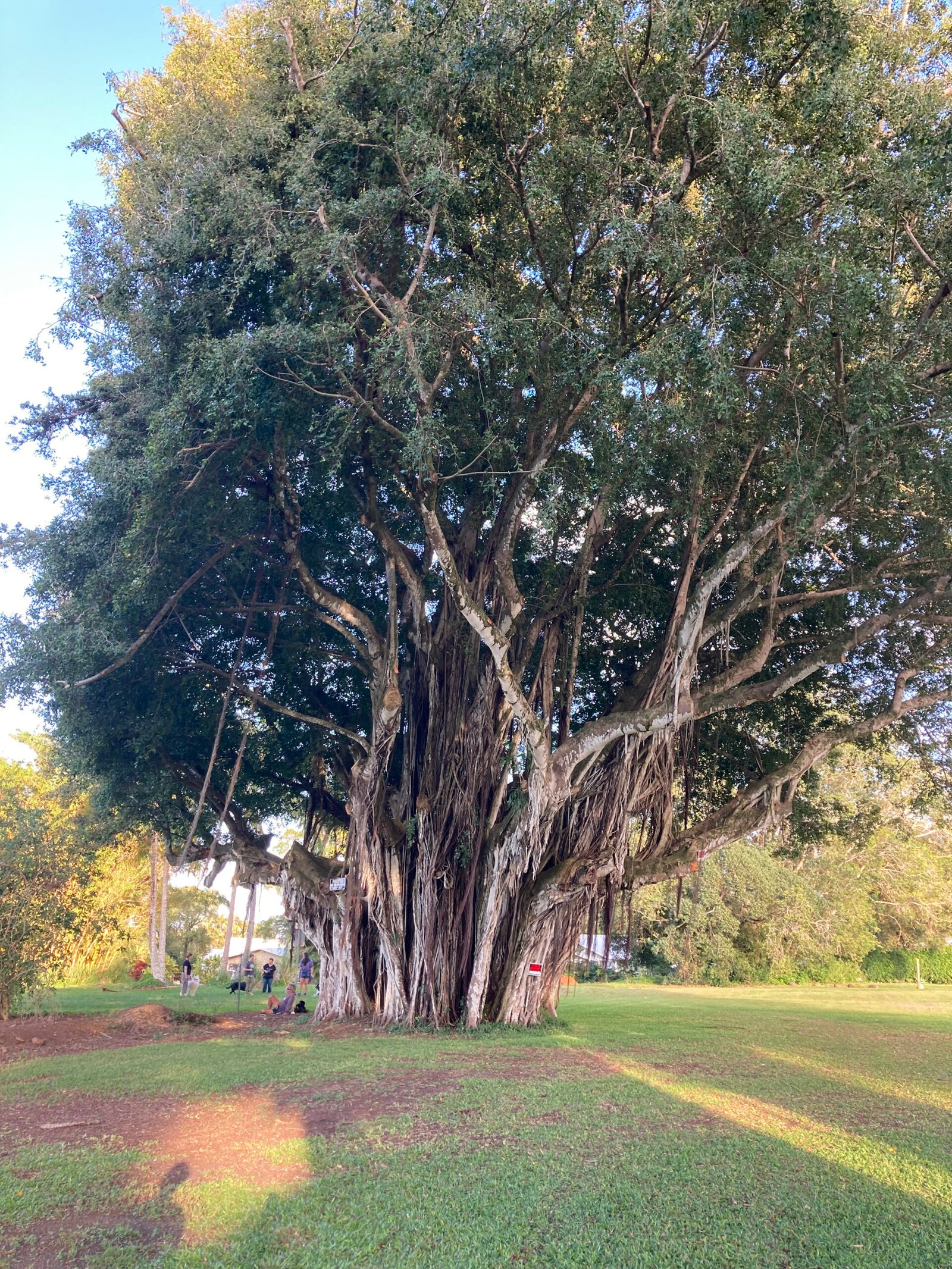
A Banyan Tree on the Big Island, Hawaii. Photo: Arun N. Toké

Dear fellow earthlings, let’s remember that Earth Day is not just April 22nd; we can observe it each and every day.

—Arun Narayan Toké, Skipping Stones editor.

A Call for Action: Muslims and Jews Find Community in Nature

A Call for Action: Muslims and Jews Find Community in Nature

A Convergence of Islamic and Jewish Perspectives on the Environment

By Emily Maremont, age 17, California.

In my fifth grade gardening class, I shared a shovel with a girl who had recently immigrated to the United States from Yemen. Here we were—me a Jew, her a Muslim—passing that rusty shovel back and forth across a row of red clay pots. Little did I know at the time, the act of cultivating that rooftop garden followed what our ancestors had done for thousands of years. Ancient teachings from both Islam and Judaism stress the importance of caring for the natural world. In America, the birthplace of the modern interfaith and environmentalist movements, the fight to combat climate change has the potential to foster deeper cultural understanding between Muslims and Jews.

Environmentalist narratives are prominent throughout the Quran. According to Islamic teachings, the essential elements of nature—earth, water, fire, forests, light—belong to all living organisms, not just to the human race. Humans, the guardians of nature, are discouraged from abusing or destroying natural resources: “He is the One Who produces gardens…Eat of the fruit they bear and pay the dues at harvest, but do not waste. Surely, He does not like the wasteful.” Planting trees, purifying rivers, and digging wells are also considered charitable deeds. Preventing water pollution is particularly significant given the role of water in daily worship. In the performance of ablution before prayer, Muslims are expected to exercise moderation as they wash themselves. In Mecca and Medina, The Prophet established the first protected areas in history, known in Arabic as hima. Within the bounds of protected areas, natural resources considered sacred were off limits during certain periods, and logging and grazing were prohibited.

Similarly, the Hebrew principles of bal tashchit (“do not destroy” or “do not waste”) and tikkun olam (“repair the world”) connect to the values of moderation and the sacredness of natural resources found in Islam. Themes of guardianship over nature are also woven into Jewish holidays. During Sukkot, Jews dwell in temporary structures called sukkot (it is a plural of the word Sukkah). Jewish law commands that a sukkah must have a thatched roof made of organic material while allowing a view of the sky and for rain to penetrate. This practice allows Jews to appreciate their relationship to nature more directly. Tu BiShvat, another holiday nicknamed “the new year of the trees,” coincides with the blooming of almond trees after dormancy during winter. Sixteenth century Kabbalists began the tradition of a seder (ritual meal) for Tu BiShvat, in which symbolic nuts, fruits, juices, and wines are featured. In the Midrash Ecclesiastes Rabbah, G-d says: “Do not corrupt or desolate my world; for if you do, there will be no one to repair it after you.’” This line resembles the foreboding of many contemporary environmental activists and scientists.

Historically, the natural world has played a major role in the relationships between Muslims and Jews. The Muslim conquest of the Iberian Peninsula resulted in the introduction of new agricultural practices from the Middle East and ushered in an era of general religious tolerance. New crops such as sugarcane and rice became parts of the culture of all who lived there: Arabs, Jews, other Europeans, etc. Sustainable irrigation practices involving the noria (waterwheel) and qanat (underground water channel) increased water supply. Historians call this agricultural transformation the “Islamic Green Revolution.” Córdoba, the capital of the Islamic Umayyad Caliphate (c. 711-1031), became the center of Sephardic Jewish life. Jews from all over Europe migrated to Spain, where the land supported their growing population. There was widespread transculturation of Jewish and Arab cultures in the sciences, philology, and literature. Against the backdrop of a shared, flourishing natural environment, Muslims and Jews coexisted peacefully.

In recent years, many Muslim and Jewish grassroots organizations and individuals have moved to the forefront of environmental activism. Green Muslims uses solar water heaters to heat water for ablution that thousands of worshipers perform in Washington, DC. Other organizations, including Eco-Halal, Green Ramadan, and Green Haj, are working to make Muslim traditions more sustainable. In 2022, twenty major Jewish organizations formed the Jewish Climate Leadership Coalition, which is committed to taking action against the urgent threat of climate change.

Youth are also prominent voices in this movement. Muslim American climate activists like Saad Amer and Zahra Biabani are spreading their message through social media, leading protests at the White House, and speaking at the United Nations. The Jewish Youth Climate Movement has chapters across the United States. Young Jews for a Green New Deal incorporates Jewish music, poetry, and celebration into their activism to engage more people. In a variety of ways, American Muslims and Jews of every age are taking up their traditional mantles as stewards of the earth.

Meanwhile, when I am walking through my neighborhood, I never see Muslims and Jews interacting with each other. While there are annual interfaith events between Jews and Christians at my synagogue, I never see similar events between Muslims and Jews. As someone who from a young age has strived to learn and appreciate other faiths, I cannot sit with the prospect that tensions always have to exist between our communities—no more than I can fathom the idea that our efforts to stop climate change are futile. I believe that multicultural understanding springs from having hard conversations about the complex world we live in. What better way to have hard conversations than out in nature, which we all value and enjoy? Yet as the Earth continues to suffer from carbon emissions, pollution, and other issues created by humans, such opportunities for connection are lost before we even realize they exist.

Through climate-focused interfaith partnerships, Muslims and Jews can find common ground. By developing community projects, organizing protests, and lobbying the government, Muslims and Jews can learn about each other’s values and traditions. In the process, they can become more comfortable with being in the same place—passing shovels back and forth underneath the leaves we all pray will change color come autumn, as centipedes march past on the ground and eagles circle overhead.

By Emily Maremont, age 17, California. Emily adds: “I enjoy writing and learning about history in order to gain new perspectives on the world. In my essay, I use a memory from my childhood as a starting place to look at climate activism through an interfaith and multicultural lens.”


Bibliography

1. Bsoul, Labeeb, Amani Omer, Lejla Kucukalic, and Ricardo H. Archbold. “Islam’s Perspective on Environmental Sustainability: A Conceptual Analysis.” Social Sciences 11, no. 6 (May 24, 2022): 228. https://doi.org/10.3390/socsci11060228.

2. Fitzwilliam-Hall, A.H. “An Introductory Survey of the Arabic Books of Filāḥa and Farming Almanacs.” The Filāha Texts. Last modified October 2010.
http://www.filaha.org/introduction.html#top.

3. Islam, Md Saidul. “Old Philosophy, New Movement: The Rise of the Islamic Ecological Paradigm in the Discourse of Environmentalism.” Nature and Culture 7, no. 1 (Spring 2012): 72-94. https://www.jstor.org/stable/43303917.

4. Jackson, Joelle. “Repairing Our World: Jewish Environmentalism through Text, Tradition, and Activism.” Folklife Magazine, January 12, 2022. https://folklife.si.edu/magazine/jewish-environmentalism-text-tradition-activism.

5. O’Brien, Becky. “Major Jewish Organizations Form Coalition to Act on Climate Crisis; Issue Open Call for Jewish Organizations Everywhere to Join.” Boulder Jewish News (Boulder, CO), September 15, 2022. https://boulderjewishnews.org/2022/major-jewish-organizations-form-coalition-to-act-on-climate-crisis-issue-open-call-for-jewish-organizations-everywhere-to-join/.

6. “Spain Virtual History Tour.” Jewish Virtual Library. https://www.jewishvirtuallibrary.org/spain-virtual-jewish-history-tour.

7. Tirosh-Samuelson, Hava. “Nature in the Sources of Judaism.” Daedalus 130, no. 4 (Fall 2001): 99-124. https://www.jstor.org/stable/20027720.

8. Venkatraman, Sakshi. “As Eid and Earth Day coincide, young Muslims are driving the modern climate movement.” NBC News. Last modified April 23, 2023. https://www.nbcnews.com/news/asian-america/eid-earth-day-coincide-young-muslims-are-driving-modern-climate-moveme-rcna80485

Ramadan For All

Ramadan for All

By Zanjabila Khadija, age 8, Indonesia.

Asif was going to fast in Ramadan month for the first time tomorrow. He was still five years old. Eating was usually fun for him, so the first fast was a tough challenge for him. That night, he was restless. He wondered what would happen if he didn’t eat his favorite food. Too tired to think about it, he fell asleep at 8 p.m., even though he usually went to bed at 9 p.m. He was too flustered, so he fell asleep early.

In his dream, he found himself in the land of giants. On that land, a lot of giant-sized foods can be enjoyed, such as candy, ice cream, vegetables, fish, fruit, chocolate, and so on. He was full after eating many different food dishes. He laid down when someone’s voice startled him. It turned out that it was not a human voice, but a giant talking candy!

When Asif fell asleep, his mom and dad discussed Asif’s fasting. They tried to find a way so that Asif could fast comfortably without feeling too hungry or bored. His dad said, “What if we bring him a new toy that he can play with and thus get distracted?”

However, his mom said, “No! Asif was bored with toys. What about a pet? Chickens, cats, or fish. Let him choose it by himself!”

Asif’s dad agreed. The next day, Asif woke up very early to eat his pre-fast meal because he was so excited about his first Ramadan. After finishing his meal, his mom and dad asked Asif to pray at dawn. Later in the morning, Asif and his dad went to Nana’s house, a short walk from their house. Nana was his aunt. Nana had eight cats. Some of them were Persian cats, and the others were domestic short-haired cats. Asif was amazed to see those cats. He wanted three cats. He asked Nana, “Aunty, can I keep these three cats?”

“Oh, sure,” said Nana without hesitation.

Asif was allowed to bring one Persian cat and two domestic cats. He forgot his hunger during the month of fasting. He loved them when they jumped around and chased his toys. Also, they did not find any mice at home anymore. Asif named his first domestic cat “Mimi the Nimble” because he was the most agile at catching mice. The second domestic cat was called “Mike the Great Climber.” He loved to climb all the trees in their backyard and bask for hours on the rooftop. The Persian cat was named “Lulu the Groomer.” Almost all day long, she combed her fur with her tongue.

One evening, Asif went to the mosque. The mosque committee would hold an iftar. All people who wanted to break the fast were invited to come. Arriving at the mosque, he saw many people gathered there. He sat in the mosque next to an old man he had never met. The old man told Asif that he was a traveler and was going to the next town by bike. Asif felt very happy every time he broke the fast together with other people at the mosque. He felt warmth even though he didn’t know those people. He saw that rich people would sit on the same floor as the poor. He also saw that all people got the same food. No matter what their ethnicity. He then remembered what his dad had once told him: “All people are equal before God, except for the good deeds they have done.”

When he ate his Iftar meal, he remembered his cats. He thought they should feel the joy of breaking the fast as well. He set aside his empal, a traditional meat dish, for his three cats. After breaking the fast and doing maghrib prayer—an evening prayer, Asif ran home carrying that large piece of empal. As he opened the door, all his cats ran toward him. Lulu and Mimi rubbed their bodies against his legs, while Mike climbed onto Asif’s shoulders. The three cats then partied happily with that meat!

—Zanjabila Khadija, age 8, Indonesia. She writes: “I love writing poetry and short stories.” She has won several literary competitions for young writers in Indonesia. In 2024, the Ramadan will begin on Sunday evening, March 10th and end on Tuesday, April 9, 2024 with the festival of Eid al-Fitr. The festival lasts for three days.
Editor’s Note: Islam follows a lunar calendar and hence the Ramadan dates fall on different dates each year. Did you know that in 2030, there will be two Ramadans? The first Ramadan will be in January 2030, and the second one will be observed in the month of December. Also, on Dec. 25, as the Christians celebrate Christmas, the Muslims will be celebrating the festival of Eid!