Category Archives: Social issues

Vaccinations and Our Disease of Doubt

Vaccinations and Our Disease of Doubt

By Adam Salgado, grade 10, Texas.

Since the first days of vaccination there has always been hesitancy in using such preventative measures, however now it has become a talking point for mainstream political candidates. Despite global successes and proven science, in recent decades anti-vaccination ideology has proliferated on a shocking scale. With multiple parties and religious groups attacking their use and credibility, we must ask ourselves how vaccines became such a widely debated issue, and as our government begins to take a hardened perspective on vaccination, we must prepare to curb this wave of medical misinformation.

History shows that it doesn’t take much to convince people that painful things are bad. Oftentimes an unrealistic fear of such things can be extremely harmful. We do not fear going to the gym, or exercising, but sometimes it feels daunting. The same is true for vaccines. However, with vaccines, it is much easier to employ the ever present doubt in the government. This doubt in the government, and medicine as a whole, was especially present in the late 1700s and the 1800s.

In Anti-vax: the history of a scientific problem by a psychology professor in Chile, Dr. Miguel Gallegos, et. al. (https://pmc.ncbi.nlm.nih.gov/articles/PMC9383768/) the authors write that “It is important to note that the anti-vaccination movement dates back to 1796 when the English doctor Edward Jenner introduced the smallpox vaccine. This vaccine reduced the number of deaths caused by smallpox,… and in 1979 the disease was officially eradicated.” During the 18th century medicine was particularly primitive, with the only vaccine literally being the (inactive) virus it warded against, so, it is natural that some members of the public might have developed a sense of dread surrounding vaccines. These hesitations were merited, in a time where illness could end up in death. However, In the modern day and age, we get to look back on history, with clear evidence that vaccines did work and they still continue to work.

The vaccines available these days are far more effective, as well as harmless, but this does not alter the fact that vaccines are nonetheless a widely-disputed issue. Also in Anti-vax, the authors write, “Until now, it is well known that immunizations are the world’s safest method to prevent diseases. People against immunizations represent a relevant part of the global population and examining the negative attitudes towards vaccines should be included in the world’s scientific agenda.”

A percentage of the population has always doubted vaccines, but recently vaccine requirements have become a widespread political issue. These confounding attitudes towards scientifically proven medicine are often baffling, and they make it important to study, and hopefully curtail the misinformation that has bred distrust of vaccines. This issue exploded during the Covid-19 pandemic, when after the release of the vaccine, President Trump began staunchly opposing the vaccine mandates. However, this opposition extended far beyond the U.S. borders and was a global phenomenon.

An opposition to mandatory vaccination requirements is understandable. In order to prepare for future pandemics, we must first understand what causes people to resist vaccination. Without changes in public mindset, their widespread use would be much more difficult.

Our current administration’s attitude towards vaccinations is particularly frightening, and will create a real danger to public health. American politics have significant influence over this issue, and key players in the anti-vaccine movement such as Robert F. Kennedy, Jr. are shaping up to have more sway than ever on vaccinations. According to Truthout, Dr. Jerome Adams, who served as Surgeon General during Trump’s first administration, said “If RFK has a significant influence on the next administration, that could further erode people’s willingness to get up to date with recommended vaccines.”

The anti-vaccine attitude of the current administration will have a negative impact on public health as a whole. If people do not get vaccinated, it will not only be an issue for the ones not taking them, but also for anybody around them who may be immunocompromised, making this dangerous and all the more worrisome. Truthout also reported that “…the Trump-Kennedy alliance has alluded to taking certain vaccines off the market. Both have made claims that vaccines are linked to autism, despite the fact that this has been repeatedly debunked in scientific studies across several decades. Nevertheless, Trump didn’t rule out the possibility of banning some vaccines in an interview with NBC News.”

This skewed perspective towards vaccines has left many worried—and not without reason. While vaccines may not be universally accepted, the idea of banning them, or making them less available for those who need them, can be more than enough to cause unease about the future of medical care in America.

Controversial though they may be, vaccines are widely accepted for a reason. It is not the place of our leaders—whomever they may be—to argue against centuries of proven success. Vaccines are as beneficial to human beings as bathing, and while it may seem trivial to some, the decision to vaccinate can mean life or death to some, especially the week, the elderly and the immunocompromised. The only real cure for the disease of doubt is awareness. During the next four years this awareness will be more important than ever, as vaccines are battered from all sides with misinformation and distrust.

—Adam Salgado, grade 10, Texas.

An Interfaith Prayer of the Upward Path

An Interfaith Prayer of the Upward Path

By Dennis Rivers, Oregon

May I use
this painful moment,
to love more deeply

May I use
this painful moment,
to see more clearly

May I use
this painful moment,
to act more creatively

That all may be lifted up.

Amen.

By Dennis Rivers, Oregon. He adds: “We have within us a power of love greater than we know and much larger than who we think we are. That deep love hidden within us, is the sacred gift that we were born to offer each painful situation into which we will be thrown.”

A Stronger, Happier Self through Teen Friendships

A Stronger, Happier Self through Teen Friendships

By Kayla C., California.

One Sunday last spring, my friends and I gathered at my house to work on the poster and decide the food for a cultural food festival at my school. We blasted music on our devices, screaming, laughing, and joking—having the time of our lives. Jolie kept slipping on the floor, causing us to all laugh, so I got her some slippers (she still tripped.) After Jolie came out of the bathroom, Elle knelt and proposed to her with a toy flower, and got rejected. (Elle married Leyla instead.) Later, we went for ice cream and drowned it in sprinkles. It was fun to spend time together and work on a project we all cared about. We could easily engage in conversation and have fun while doing so. Friendships like these make us feel wanted, supported, and free to be who we are. Teenage friendships are vital because they can help you become a better person.

Teens talk more about their social life with friends than their parents. They see them nearly every day at school, online, and outside of school. Teens spend more time going and being at school than they do at home. School is where teens make the most friends and their social life revolves around. The result is that they see their friends more than their family, allowing them to understand better and deepen their bonds. Teens and their friends’ type of humor, experiences, and age all affect how they interact with one another, so they feel more comfortable talking to one friend versus another based on how much they trust them. In the article, Having A Best Friend In Your Teenage Years Could Benefit You For Life, Chen writes, “…unwavering support acts as a kind of protective buffer against insults to your self-worth or feelings of depression. That can be especially beneficial during adolescence, a formative period when peer feedback has extra gravity.” (https://www.npr.org).

When someone requires reassurance and company, their friends act as supportive and protective beings that help them re-assess their self-esteem. The result is that teens feel more confident in themselves and trust their friends to be there for them when needed. They develop more trust in them and feel they can rely on them when they’re struggling, so teens often talk about their problems with their friends rather than family.

We need close friendships in middle and high school because quality friendships can help develop your self-confidence over time. “The significance of adolescent friendships seems to lie not in the number of friends a person has, but in the strength of a close friendship. Popularity isn’t important; it’s the true knowing and being known by another person that provides a teen with critical life skills that will serve him well for years to come.” (https://www.arnoldpalmerhospital.com).

A friendship is more important in quality than quantity. If you were to pick between having more friends but not as close versus only one friend whom you are very close to, it’s an obvious choice. Friends help teens realize they are recognized and loved for who they are and understand and accept their differences. “When the researchers evaluated the participants at the conclusion of the study, the ones who had close, emotional links showed improvement in their levels of anxiety, depression, and self-worth. In other words, they reported less depression and anxiety and more self-worth at 25 than they had at 15 and 16.”

Friends with close bonds lasted for not only a long time but helped both re-evaluate and boost their self-worth and confidence. The links they’ve formed kept them connected, allowing them to build trust and help each other through difficult times. Emotional support can guide a happier life and continued virtuous friendships. All that said, the question remains: how do we make the kind of friendships that change our lives for the better?

The most important part of having healthy, long-lasting friendships is effort. You must put in the work for the friendship to thrive because this is your friendship with your friends. Around Christmastime, my friend, Akhila, gave gifts to our whole friend group as a way to say, “Hey, I appreciate you, thank you for being my friend and making my day better every day.” It showed us that she cares, and it makes us feel happy when we’re in her presence. Each gift was different—she knew what we liked and spent her own time finding a gift for us. She paid attention to the little facts about us and found a gift that related to our interests or hobbies.

When it comes to friendships, race, gender, or cultural background don’t necessarily play a significant role in whom you can become friends with. As long as you find someone enjoyable, and comfortable and safe to be around, that’s considered a friend. One of my friends came out last year, and our friend group all accepted and supported them for who they are. Even our classmates outside of the friend group accepted them. To keep any friendships or relationships alive, you need to make sure everyone is cared for, and show that you are making an effort to sustain the friendship.

One of the greatest gifts in my life is my friends. They support me when I’m feeling low, are fun to have around and feel comfortable around me. During our teenage years, we grow more distant from our parents and feel more self-aware. Having good friends we can rely on can help us later in life because we will have less stress, anxiety, and increased confidence. Friends are important in our lives because they can encourage us to be our best selves.

—Kayla C., California. She adds: “… I can speak primarily English and Chinese. The most important aspects of my life are my friends, family, my pet, and the moments I share with them. I hope to live a fulfilling, but also simplistic lifestyle in the future. The people around me who look down on teen friendships and believe they can ruin relationships with your parents inspired me to write this piece.”

A Simple Act of Kindness

A Simple Act of Kindness

By Maya and Arjun Govindaraj, both aged 17, Chennai, India.


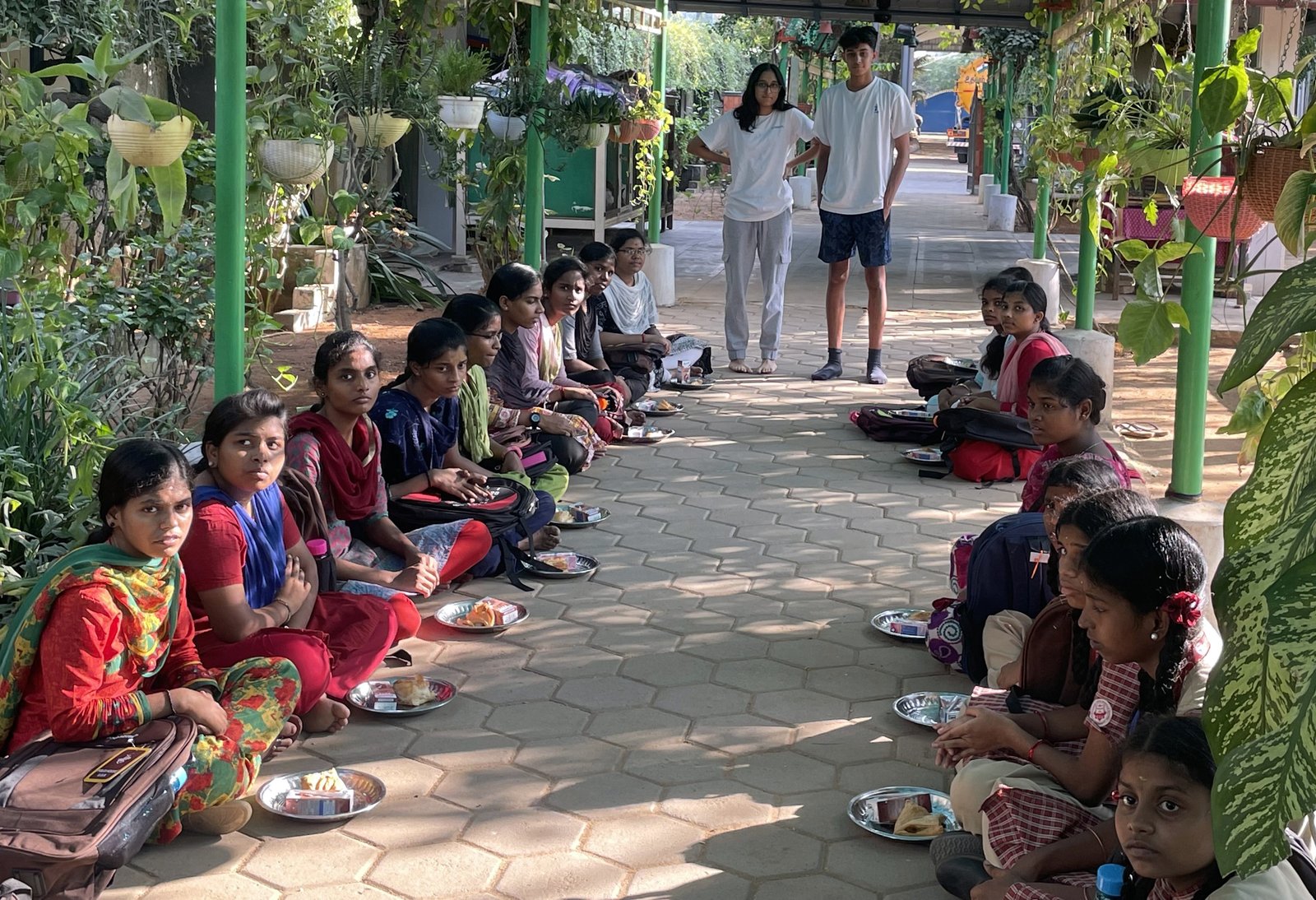
Our dad grew up in Chennai, India. He has always told us stories about how he struggled to reach great heights. When we were leaving the children’s home after serving dinner, we will never forget the way he looked at those kids with tears in his eyes and said in Tamil, the local language, “Study hard and you can be very successful someday.”

India is the second most populated country in the world with some 158 million children below the age of six. There are 30 million orphaned and abandoned children and according to figures published by SERUDS*, and the numbers have increased since 2020. Majority of these children are girls because they are considered a ‘burden’ in their communities. Less than 1% of the abandoned children are in childcare institutions, 91% of which are run by non-government organizations. Many end up living on the streets, begging for food, or are forced into child labor.

Our interest in community service started in Pre-K when we packed shoe boxes during Christmas, to send to kids in developing countries. Our parents always encouraged us to help people in need and took us to volunteer during school holidays. We moved to Chennai from Houston, Texas in January 2023 so my mom could care for her elderly parents, and during our time here, we have witnessed firsthand the harsh realities of poverty.

Our school involves us in many service activities that teach us about environmental and social issues and the value of collaboration, social awareness, respect, and empathy. We were able to interact with our host community through the Discovery Program and volunteer through the Seva (service) Program. Although we come from different backgrounds, teaching the local underprivileged children, and playing with them after school we developed a bond with them and realized how happy they were to spend time with us. All children need is unconditional love, opportunities to play and learn, and a sense of belonging.

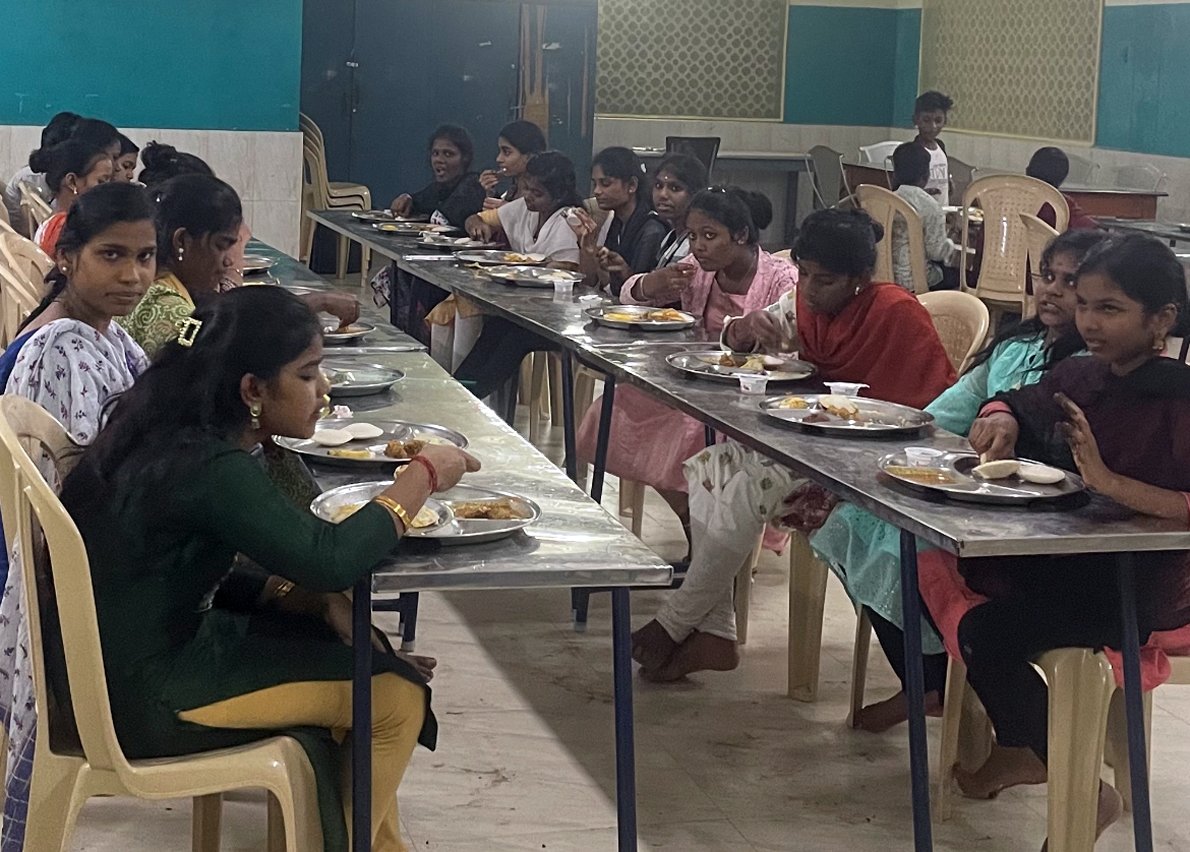
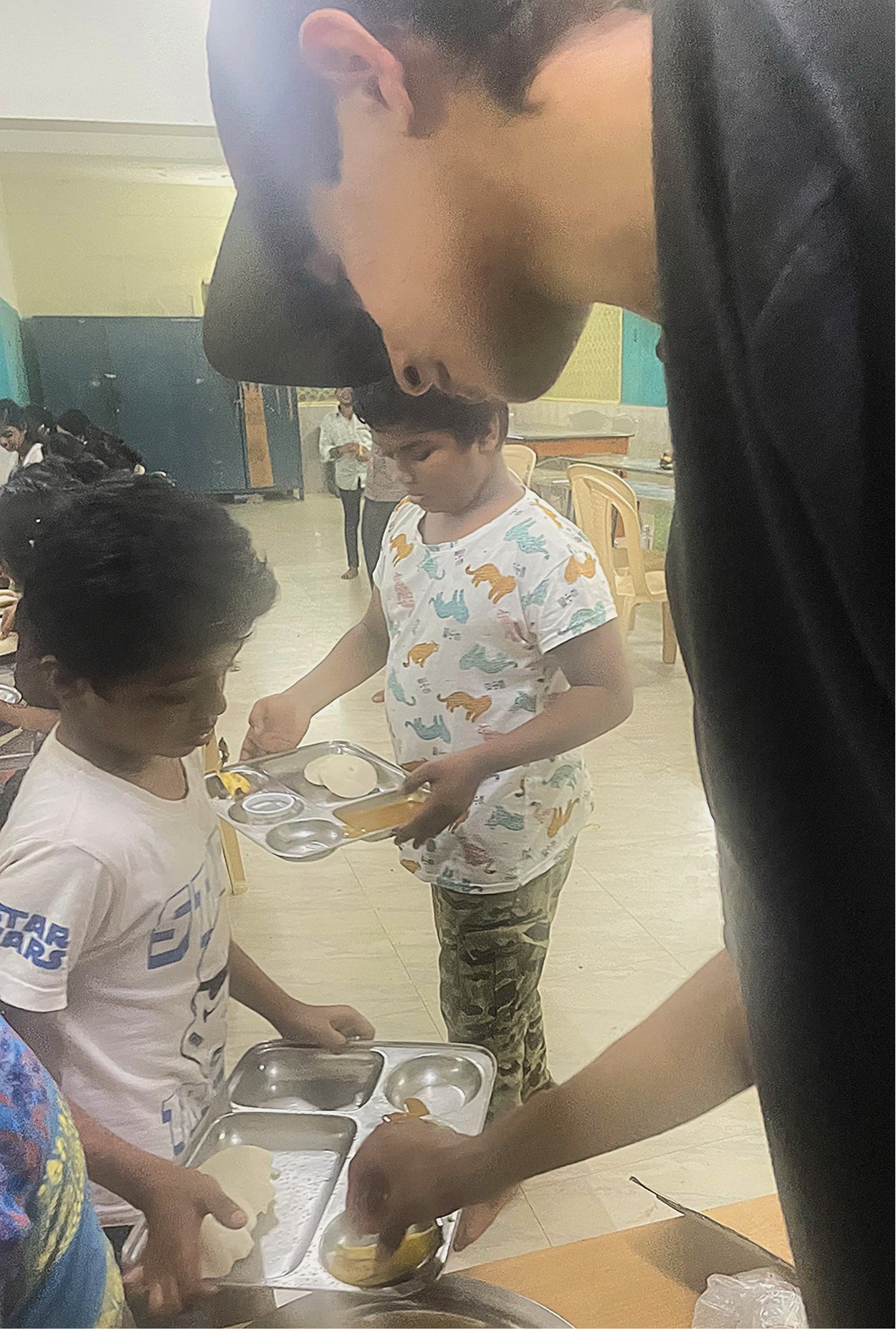
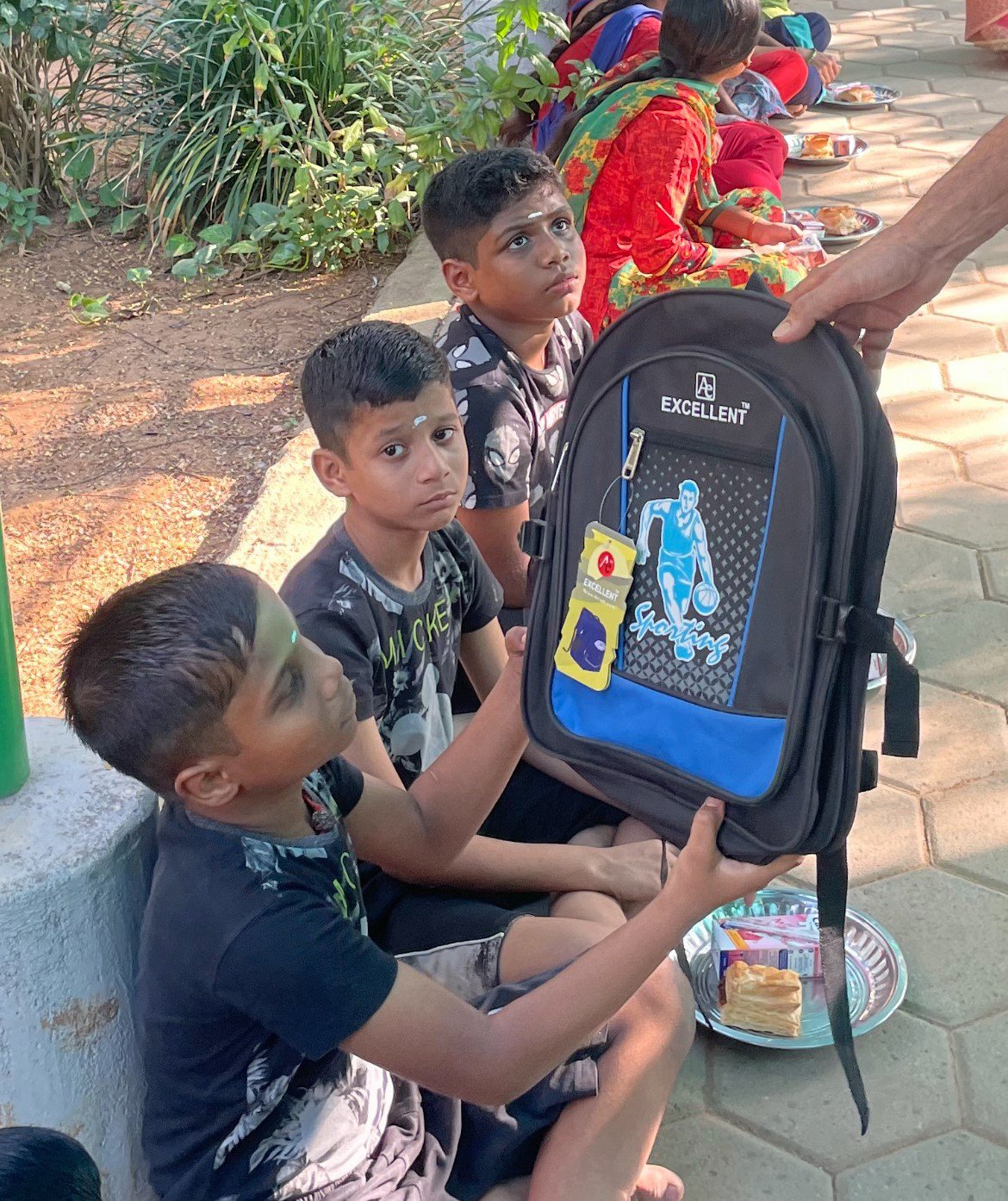
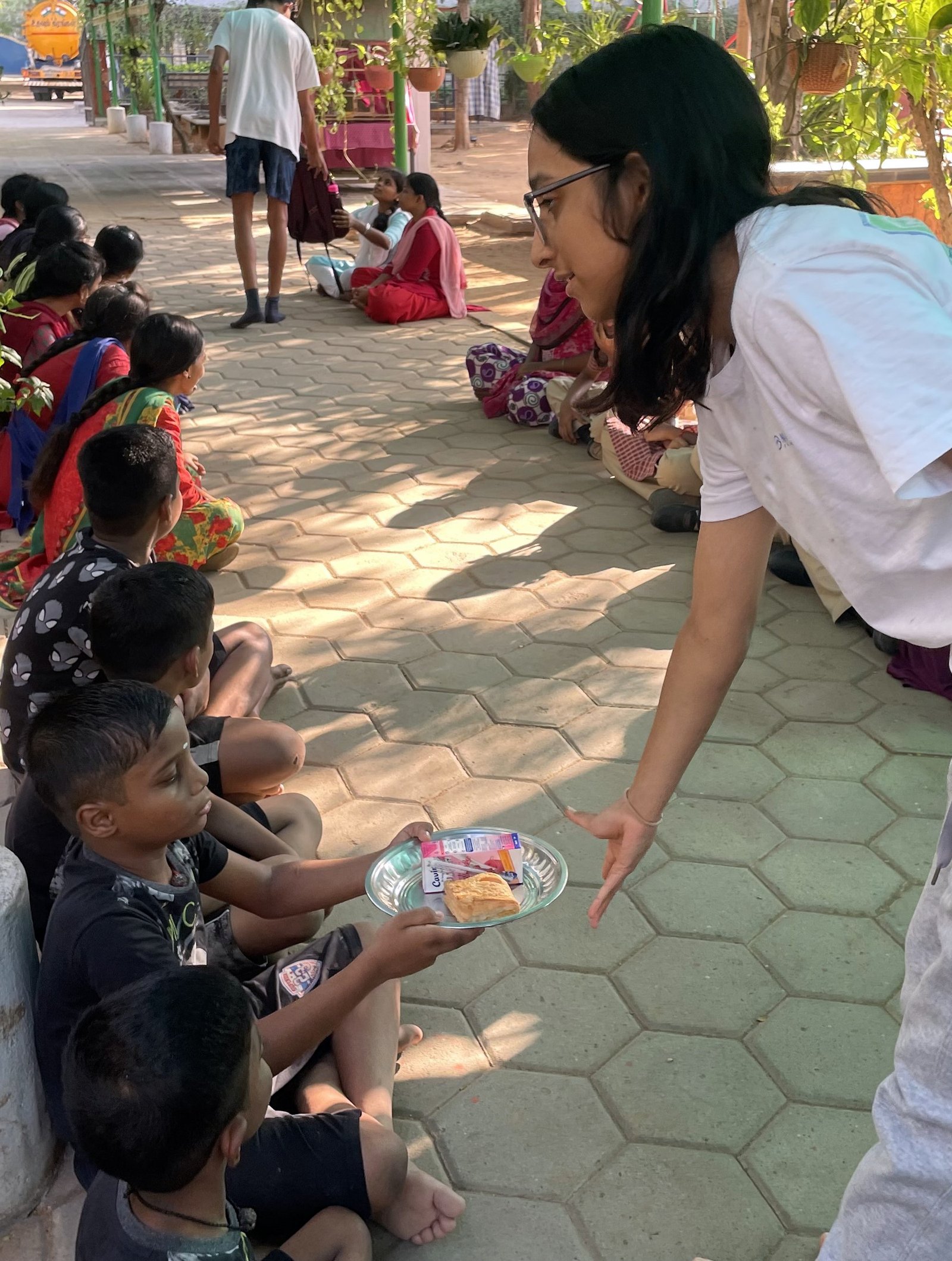
Seeing the amount of poverty that’s around us, and learning about the challenges these kids face in accessing a healthy meal and a good education inspired us to do something to show them that we do care. So, we bought backpacks, filled them with school supplies and gave them to 20 orphaned children along with evening snacks. We also served dinner to 60 children in a children’s home.

What we did were simple acts of kindness, but like Mother Teresa (the famous Nobel Peace Prize winning nun who lived and worked in and around Kolkata, India) had said, “We know only too well that what we are doing is nothing more than a drop in the ocean. But if the drop were not there, the ocean would be missing something.” To see the kids living alone without the love of parents and companionship of siblings is heartbreaking. Spending time with them we came to realize the privileges we take for granted and how fortunate we are to have a loving and caring family that meets all our needs.

The joy reflected in their eyes on receiving a simple backpack and the smile on seeing a small cup of ice cream made our hearts swell with pride, and although they have nothing, they were kind enough to offer us in return the power of their collective prayers as thanks.

We will be heading back to Houston, Texas soon, but what we have learned and experienced in the past two years in Chennai, will forever be etched in our minds, and we hope to continue to visit these children and share with them what we can.

As tech savvy Gen Z’s, it is our duty to use the power of social media to tell the stories of these children and to initiate global dialogues around the issues they face so we can find them the resources to face challenges and bounce back from adversity to fulfill their dreams of a better tomorrow.

* https://serudsindia.org/orphans-the-forgotten-children-of-india/ (From Sai Educational Rural & Urban Development Society, SERUDS) https://serudsindia.org 

—Maya and Arjun Govindaraj are Indian American siblings, both aged 17, and from Texas. They are currently studying at the American International School in Chennai, Tamil Nadu in South India.

Why I Hate Writing Essays

Why I Hate Writing Essays

By Neel Archis-Manish, age 17, Michigan.

It’s the fault of a rigid and purely grade-based public education system. I’m talking about why in today’s world, writings in schools have become a series of boring, formulative, information-stacked essays instead of genuine pieces of creations. I’m not blaming the public school teachers who simply mean well and are horribly underpaid. No, I blame historical education practices.

As a fourth year high school student in the US, I have written many essays in my ELA classes that respond to a specific prompt, include quoted sources, and require annotations on the side. All this basic system does is it makes me hate writing. I hate to say it, but it’s true.

I used to LOVE writing. I wrote poetry (it wasn’t great) and short stories (it was a laughing matter) and started writing my biography several times (I swear I’m going to get past Chapter 1 some day). But no matter how bad it all was, at least writing it didn’t kill my soul a little bit every time.

Language is a powerful tool that can be used to build empires and destroy them. Words are mightier than the sword not because nobody uses swords anymore, but because humans have the right to use words freely. High schoolers are so worried about their Grammarly scores and the 11:59 PM deadline that they often forget the importance of being present as a writer in their writings.

Quoted sources from all across the internet are great, and so are annotations. But neither helps an individual grow as an individual writer. The ‘classics’ we read in our English classes today weren’t classified as classics because they contained a well-researched bibliography, they were titled ‘classics’ because they were written from the deepest emotions from a true heart.

Formality kills humanity. Sure, you could decide to put on a fancy shirt and a suit and a tie and act like a functioning human being to charm yourself into some high-paying corporate job that covers dental insurance, but then what’s the difference between you and a slightly good-looking robot? Feelings are what humans have been doing best since the dawn of time. Let’s not forget our origins.

Love, respect, kindness, greed, envy, jealousy, selfishness, selflessness, humility, humanity, power, hunger, disgust, fear, sadness, anxiety, awkwardness, joy, pride, shame, disappointment, calmness, rage, confusions, desire, and so many more HUMAN emotions and feelings the world possesses. Why are adults teaching kids to bury all of them deep inside and instead turn to writing informative 2000-word essays about a global issue that then students pretend to care about for the sake of getting an A on a summative assessment?

I used to spend hours and hours reading books of mystery, fantasy, and historical fiction. I loved the feeling of being lost in a world where the real words ceased to exist. I loved the feeling of having to imagine, to create, and to be surprised. I used to come up with my own characters when reading stories about people. I used to make up landscapes and roam across Rome and Romania. I don’t do that anymore.

Writing based on information as opposed to human nature has killed the excited kid inside of me that once upon a time lived happily ever after. I’ve stopped reading books for fun. I’ve stopped being excited to enter a library and find a good book and open it in the middle and smell the smell of the fresh paper. I’ve stopped scribbling terrible poetry and weird short stories and unfinished memoirs on scraps of paper.

I once wanted to be one of those writers who wrote the first line of the first chapter of their first hit book on a napkin in a small bistro in a corner of a small town. I don’t want to do that anymore. Now, I just want to turn in my essay before 11:59 PM on the day of the submission deadline.

—Neel Archis-Manish, age 17, Michigan. He adds:

I was raised in Pune, Maharashtra, India in a house with two decent parents (they’re great!), a sister whom I hate passionately (it’s just a sibling relationship: I would give her my kidney, but not my phone charger), and a loving grandmother who’s cooking is, in one word, divine.

Growing up, I went to a Marathi-Medium school and learned Marathi (my mother tongue), Hindi, and English. When I was 15, my dad was fortunate to get an inter-company transfer. So in the midst of the Covid-19 Pandemic, our family relocated to Michigan in the United States of America.

I am currently enrolled at a good public school where I am able to make my Indian ancestors happy by performing well in academics, all while doing what I now love most: theatre. I am now the President of our school’s Drama Club. I participate (act, student direct, and head publicity and programs) in three productions each year, write and perform for our social justice theatre troupe, and have won numerous awards by doing forensics (competitive public speaking). Life is good.

I LOVE comedy. I have watched and re-watched and re-re-watched a ton of comedy sitcoms and TV shows. If you’re looking for someone to understand and laugh with you on niche Saturday Night Live references, I am your guy. Laughter is simply the best medicine, even when you’re not ill.

Currently, I’m looking at colleges and thinking about what I want to do. I’m at a point where ‘what do you want to be when you grow up’ is a legitimate question and not what an adult uses as an ice-breaker when talking to a child. Anyway, I’m fairly certain that I want to become a Secondary English Educator. Which led me to look into writing and publishing opportunities.

Save Them Bears

Save Them Bears

By Ya-Ting Yu, Taiwan

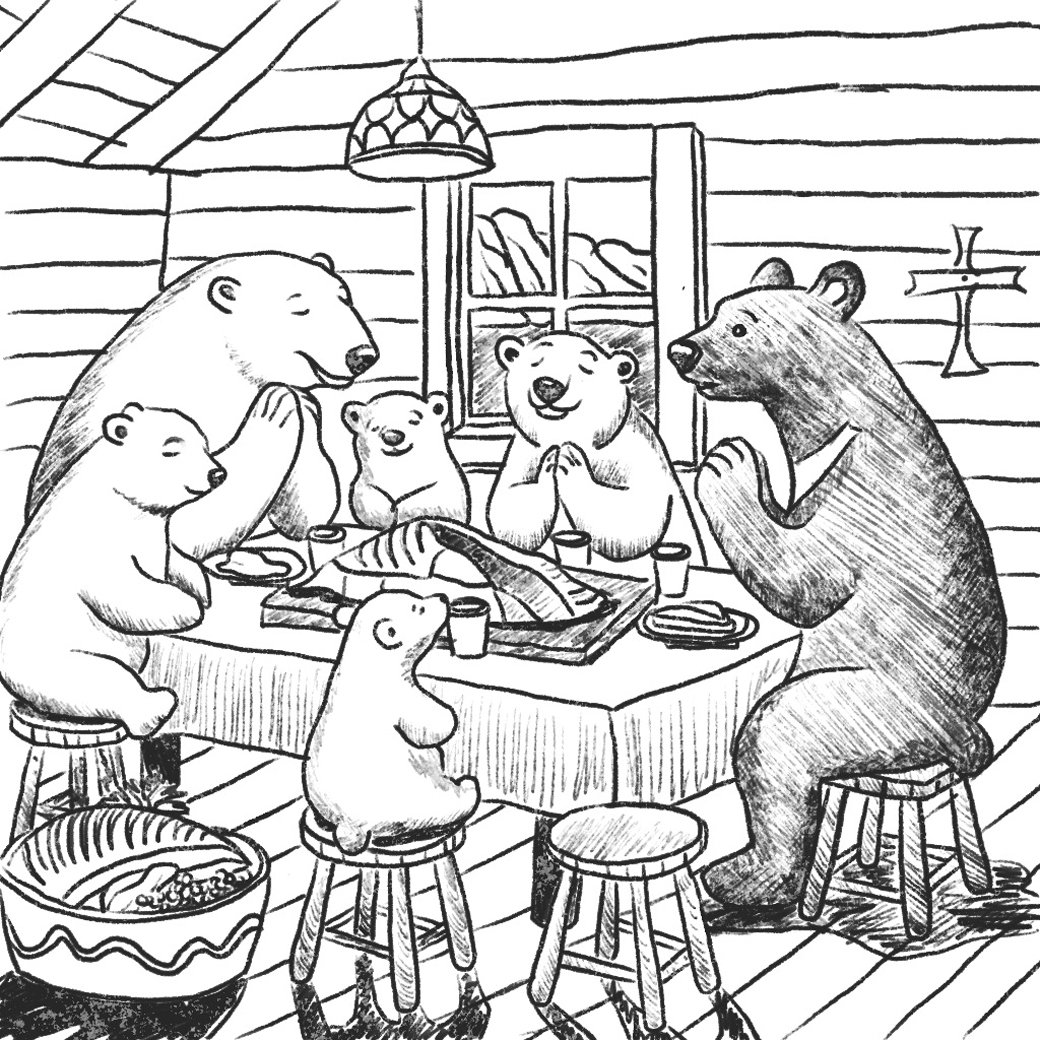
Black Bear recently moved north for climate change research. During the festive season, Black Bear’s colleague, Polar Bear, invited him to her family dinner. “No Bear should be alone on Christmas Eve,” she said when she heard the un-partnered Black Bear planned to hibernate in his cave. With no excuse to say no, Black Bear obliged.

That evening, Black Bear arrived at Polar Bear’s home with a basket of cloudberries in his paws. He’d agonized over the gift, unsure what to bring. Though he’d seen Polar Bear’s lunch boxes: ringed seals, whale carcasses, geese eggs, he still preferred chestnuts and persimmons. Honey and beetle larvae were rare treats he savoured after long hours of foraging through data at the lab, but to be inclusive, a value Polar Bear emphasized, he chose cloudberries, safe for vegans, vegetarians, and the nut-allergic.

Polar Bear’s family welcomed Black Bear warmly, hugging, kissing and thanking him profusely for the cloudberries. Flustered by the sudden physical contact, Black Bear forced a courteous smile and awkwardly patted Polar Bear’s Mom’s back, relieved when she finally let go of his paw. It was his first time receiving kisses from complete strangers. Where he came from, in the East, Bears rarely even shook paws, sniffing was usually as close as they got.

But their habitat differences didn’t stop there. For an occasion like Christmas Eve, Polar Bear’s family usually indulged in seal and whale fat. Vegetation was more for decoration, except for the hippie Cousin who’d recently turned vegan to combat the melting ice.

Before dinner, the family gathered in prayer positions, bowing their fluffy heads to say grace. Black Bear, unfamiliar with their faith, looked from left to right at the table and hurried to mimic their gestures.

“Amen,” Black Bear echoed, a pace too slow.

“Do Bears in your forest also celebrate Christmas?” Polar Bear’s Mom asked.

Black Bear scratched his ear. “I guess so? But it’s more of a time when Bears hunt for deals—shopping sprees, fancy meals. We don’t get the day off, you see. Lunar New Year, now that’s a feast worth hibernating in Taiwan.”

“Oh, are you from Taiwan?” Polar Bear’s Aunt leaned closer, her snout twitching. “My son volunteered to build homes for the poor children in rural parts of your forest. Right, Cubby? He, sorry—they have an igloo architectural license.”

Mortified, Polar Bear injected, “Auntie, Cousin went to Thailand, not Taiwan.” Her fur bristled as she glanced at Black Bear.

“That’s cool,” Black Bear said. “But igloos? My Sun Bear friend told me they melt once the volunteers take off. At the end, it seems easier for them to sleep in trees.”

“In trees!” Polar Bear’s Aunt gasped. “Son, you must go back and build them un-meltable igloos next time. The poor cubs. Just imagine—they don’t even have blackout curtains!” She sighed sympathetically and turned to Black Bear. “Do you have blackout curtains in Taiwan? Don’t tell me you also sleep in trees.”

“Oh no,“ Black Bear said with an uneasy laugh. ”Mostly caves or tree cavities. The only time I climb trees is when I’m hungry—for honey and bee larvae. Have you tried them?”

“Bee larvae? That sounds disgusting,” Polar Bear’s Cousin said, wrinkling their nose, unfazed by Polar Bear’s death glare across the table. “Thailand fed us Pad Thai and Green Curry every day.”

“Son,” Polar Bear’s Uncle rumbled as he lumbered over with a platter of barbecued seal fat. “Don’t you know Formosan Black Bears are battling Giant Pandas to protect their territory? What propaganda are you watching all day on TikTok? Read the news.”

Polar Bear’s Aunt sniffled. “I heard about that conflict. Is that why you left, Black Bear? It must be so dangerous back home. Don’t worry. Stay here in the Arctic as long as you want. We’ll sponsor you.”

No longer able to tolerate her extended family’s political incorrectness, Polar Bear tried to stir the conversation. “So, Black Bear, how’s your research? Any insights to share?”

“Yes, actually,” Black Bear said. “Before coming here, I thought Taiwan did a terrible job on climate change initiatives. Sure, we mostly rely on fossil fuels, but imagine squeezing Australia’s population into an area the size of Switzerland. Add typhoons and earthquakes to the mix. Our islands need to generate energy for millions and the semiconductor industry, which, by the way,” he added, fixing his gaze on Polar Bear’s Cousin, “powers your AI, EVs, solar panels, and wind turbines. Charity case, eh?”

A beat of silence followed as Polar Bear’s family exchanged looks. The Cousin shifted in their seat, ears flattening. Minutes passed. Polar Bear cleared her throat.

“Did you know Taiwan is smaller than many of our icebergs?” she asked, her voice tentative, like a kind schoolteacher. “Every Bear does what they can with what they have. And really, isn’t that what this is about? Climate change affects us all—even those big-headed humans. Here we are, just bears trying to adapt.”

She surveyed her family, looking each in the eye, and finally at Black Bear. “And if Black Bear can adapt to seal fat and bear kisses, maybe we can try a little harder too.”

For the first time that evening, Black Bear felt the tension in his shoulders ease, melting faster than glaciers. Maybe he didn’t fully belong in the Arctic yet, but any bear could find a caring companion who understood, even in this icy corner of the world. He leaned in to sniff the barbecue seal fat and said, “Hold up. Let me get my soy sauce.”

Story and illustration by Ya-Ting Yu is a Taiwanese writer based in Taipei, with roots stretching to Toronto and Edinburgh. Writing in English as her second language, she weaves themes of identity and belonging, drawing on her background in counseling and psychology to tell the stories of East Asian expatriates and international students.

Save Them Bears was inspired by my own experience as a Taiwanese expat, navigating the nuances of cultural assimilation and identity. I hope to highlight how cultural misunderstandings can be wrapped in well-meaning gestures. By anthropomorphizing the characters, I aim to create a story that is somewhat ‘trigger-free’ yet thought-provoking.

Lifestyle Medicine—The Six Pillars of Health

Lifestyle Medicine—The Six Pillars of Health

By Dr. Charlie Ross, Oregon

One of the youngest specialties in medicine, Lifestyle Medicine, places emphasis on the root causes of our chronic illnesses.

The Six Pillars of Lifestyle Medicine are:

  1. What we eat
  2. How we move throughout the day
  3. The chemicals we choose to consume
  4. How we deal with stress
  5. How we sleep  
  6. Our social connections

Of all premature deaths, 40% are attributable to these three factors: tobacco use, poor diet, and alcohol consumption

  1. Tobacco Use: 18.1% (About one in seven people still smoke.)
  2. Poor diet and physical activity: 16.6% (About three out of four people eat too little fruits and vegetables, and about four out of five people do not get enough exercise.)
  3. Alcohol consumption: 2.5%

Let’s explore how to focus more attention on the root causes of what brings us health or what leads to disease.

  1. What We Eat:  Looking around the world (especially, in the Blue Zones, where people are the healthiest and live the longest) the evidence points to eating a more unprocessed whole plant food diet as the healthiest choice. The healthiest diets incorporate fruits and vegetables, whole grains, legumes, and some nuts and seeds. Fiber in the food that allows our good bacteria (in our microbiome) to produce chemicals like butyrate (which decreases inflammation) and serotonin (that reduces anxiety and depression).

Did you know that FIBER is only found in plant foods? There is no fiber in animal foods. So, increasing the amount of whole plant foods in your diet will add to your overall health. To help you understand better the food choices and how to get a variety of plant foods in your diet, you might want to download the free app “Dr. Greger’s Daily Dozen” on your smartphone. Or you might choose to do the free “21-day Vegan kickstart” program suggested by Physicians Committee for Responsible Medicine, PCRM. (Visit: www.pcrm.org).
The best evidence-based book is How Not To Die, by Michael Greger MD.

  1. How We Move Throughout the Day—or the lack of physical activity—is the fourth leading risk factor for global mortality. There are several types of exercises for us to consider:
    • Aerobic/endurance exercise (large muscles movement for sustained period)—lowers risk of all-cause mortality
    • Strength or resistance exercise—muscles contract against an external resistance—with the goal of increasing lean body mass and muscle strength and endurance
    • Flexibility exercise—range of motion that is possible at a joint
    • Balance exercises—static and/or dynamic exercises—decrease in falls and injuries like fractures

Any amount of activity is better than no activity. A physically active person engages in at least 150 minutes per week of moderate to vigorous physical activity. Moderate exercise elevates your heart rate but allows you to comfortably talk whereas vigorous exercise makes it difficult for you to speak more than a few words at a time due to increased breathing effort. Sitting for prolonged periods of time leads to lessening of life expectancy. Keep your sitting times no longer than 50 to 60 minutes without a five-minute movement break. An excellent resource book on the benefits of exercise is: Spark, by John Ratey MD.

  1. The Chemicals We Choose to Consume: Tobacco, alcohol, and street drugs continue to take a toll on our health. Prescription drugs, like opioids and side effects from other prescription drugs also exact a toll. Toxins from the not-regulated supplements and even plastic material (endocrine disruptors) found in foods like fish are potentially health damagers. The book Salt, Sugar, Fat: How the Food Giants Hooked Us, by Michael Moss is a good read to help your understanding about why we choose what we choose.
  2. How We Deal with Stress: Stress can be helpful (if not overwhelming) or harmful. A stressor is a situation, circumstance, or stimulus that is perceived to be a threat. This threat alters homeostasis in the body.
    Categories of stressors: There are four types of streesors.

    Psychological: thoughts, beliefs, or perceptions;
    Physiological: illness, infection, disease, or hunger
    Social: major life changes, personal conflicts, or financial insecurity
    Bio-ecological: weather, pollution, food additives, or chemicals

  • Health effects of chronic stress: Impaired immune function, inflammation, decreased bone density, problems with memory, increased appetite, weight gain, abdominal fat deposition, insulin resistance, increased glucose, cholesterol, and triglycerides, increased blood clotting, Impaired wound healing, poor sleep, pain and fatigue, poor mood, adoption of less healthy habits, decreased longevity (telomere shortening), and etiology of many chronic diseases, including hypertension, type 2 diabetes, and heart disease.
  • How to Manage the Pathological Stress Response:
  • Breathing tools: Lengthening exhale breath, Abdominal breathing
  • Movement: Physical fitness, yoga, Tai chi, Qigong
  • Meditation
  • Connecting with Nature
  • Self-expression: Playing a musical instrument, singing, creating art, or dancing
  • Community Engagement: Volunteering for meaningful causes, quality time with family and friends, spiritual or religious activities
  • Reading self-help books and websites
  • Massage
  • Listening to music
  • Light therapy
  • Mental health and Nutrition: Fried foods, refined grains, and sugary products are associated with increased rates of major depression and anxiety disorders, A plant-based dietary pattern with no meat, fish, or eggs in a randomized, controlled trial showed a significant improvement in depression symptoms in just two weeks. Fruit and vegetable consumption has been associated with improvement in depression, anxiety, higher productivity, and higher optimism.
    A wonderful resource book to get started in this area is: The Mayo Clinic Guide to Stress-Free Living, by Amit Sood MD

5. How we sleep: Average sleep is 7 hours a day, but 20% adults sleep less than 6 hours. Short sleep duration has increased in all age groups. 60 million people in U.S. have frequent difficulty sleeping (but only 10% seek professional help)

  • Indirect costs of Insomnia: Presenteeism (people at work but not productive), Increased risk of long term disability, Mistakes, errors, and accidents
  • There is no recognized objective test for how much sleep a person needs
  • Healthy sleep duration and quality as well as circadian physiology promote improved health; Lower cortisol and glucose levels, greater insulin sensitivity, higher daytime leptin and reduced food-seeking behaviors, lower sympathetic tone, greater nighttime peripheral perfusion, increased stamina and faster cardiovascular recovery time.
    A Recommended Resource: Why We Sleep by Matthew Walker, PhD is a very good book resource on this topic.

6. Our Social Connections: A Harvard study concluded that our relationships matter! Our relationships and how happy we are in those relationships has a powerful influence on our health. Taking care of your body is important but tending to your relationships is a form of self-care also. Childhood nurturing plays a significant role in midlife thriving. Marital happiness and social connectedness moderate our health and happiness.

  • Social Networks: Being part of a social network improves longevity
  • Positive Psychology Interventions
    Counting our blessings everyday (e.g. thinking of three things you are thankful for)
    Expressing gratitude and appreciation (e.g. what challenges did you manage this week?)
    Savoring the pleasant things in life (e.g. taking five minutes a day to savor a particular activity)
    Writing down how we want to be remembered (I want people to remember me for…)
    Connecting and interacting with others regularly in person, not solely or mainly through social media (Belonging to family, social groups, sport groups, spiritual groups, etc.)
    Regularly practicing acts of kindness (how do you feel afterward?)
    Doing activities that feel meaningful (Reflect on what makes this activity meaningful)
    Thinking of one’s happiest days frequently (Look at photos and think about emotions experienced)
    A Recommended Resource:
    Together by Vivek Murthy MD is one of the best reads on social connection.

If you have an interest in learning more about any of the above these six pillars of health, feel free to connect with me at cataniaross@msn.com. I am retired medical practitioner, and I do not charge to help you along on your journey toward improved health.

Wishing you the very best of health to you in 2025 and beyond,

By Charlie Ross DO, DipABLM. Certified Lifestyle Medicine Physician, Osteopathic Medical Practitioner. Website:  www.livelifestylemedicine.com

HHR’s 2024 Essay, Art & Multimedia Contest Winners

Hindus for Human Rights and Skipping Stones announce the
2024 Essay, Art & Multimedia Contest Winners!

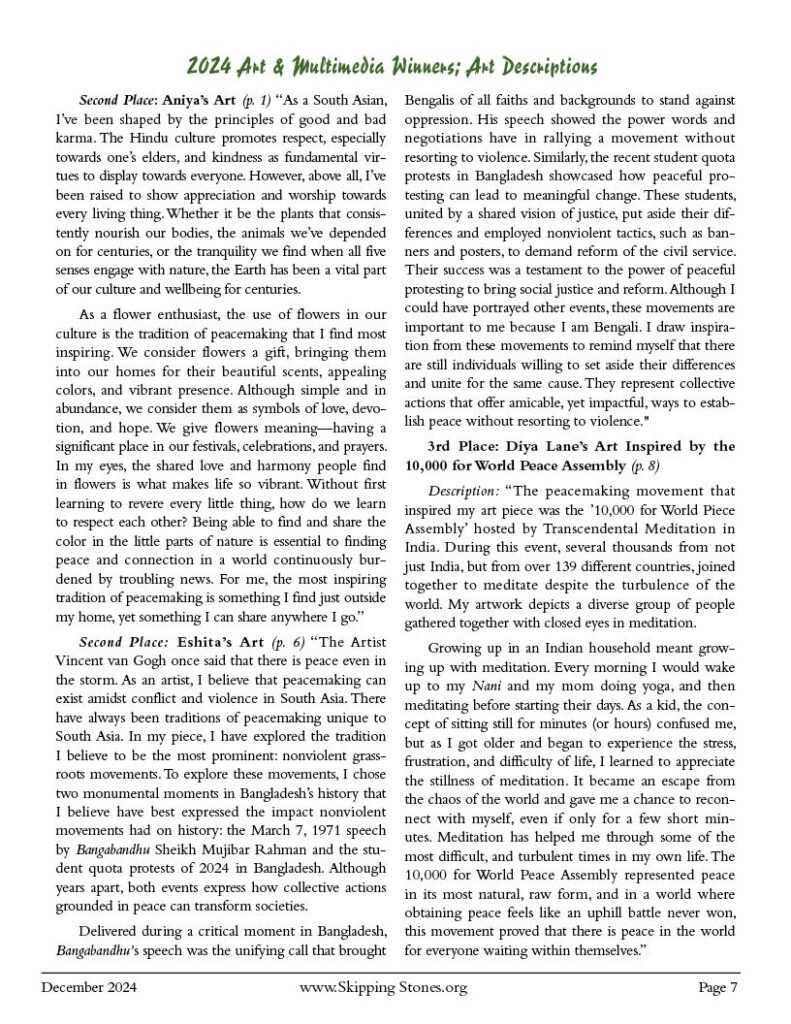
This year’s contest invited students in grades 6-12 to explore the inspiring traditions of peacemaking in South Asia and its diaspora. We asked young writers and artists to reflect on the question, “As a South Asian, what traditions of peacemaking do you find inspiring?”

Violence and conflict have long been a part of South Asian and South Asian diaspora history, literature, and storytelling, but so have different versions of peacemaking. The contest invited students to take inspiration from any South Asian history, literature, poetry, peace activists, or peace movements that focus on concepts or ways to address peace, justice, and democracy.

The contest received a diverse array of essays, artwork, and multimedia submissions showcasing a wide range of South Asian histories, movements, and traditions that advocate for harmony, justice, and democracy. These submissions were heartfelt, creative, and thought-provoking, demonstrating the power of young voices in envisioning a more peaceful world.

Our Hearty Congratulations to all the winners!

Essay Winners:
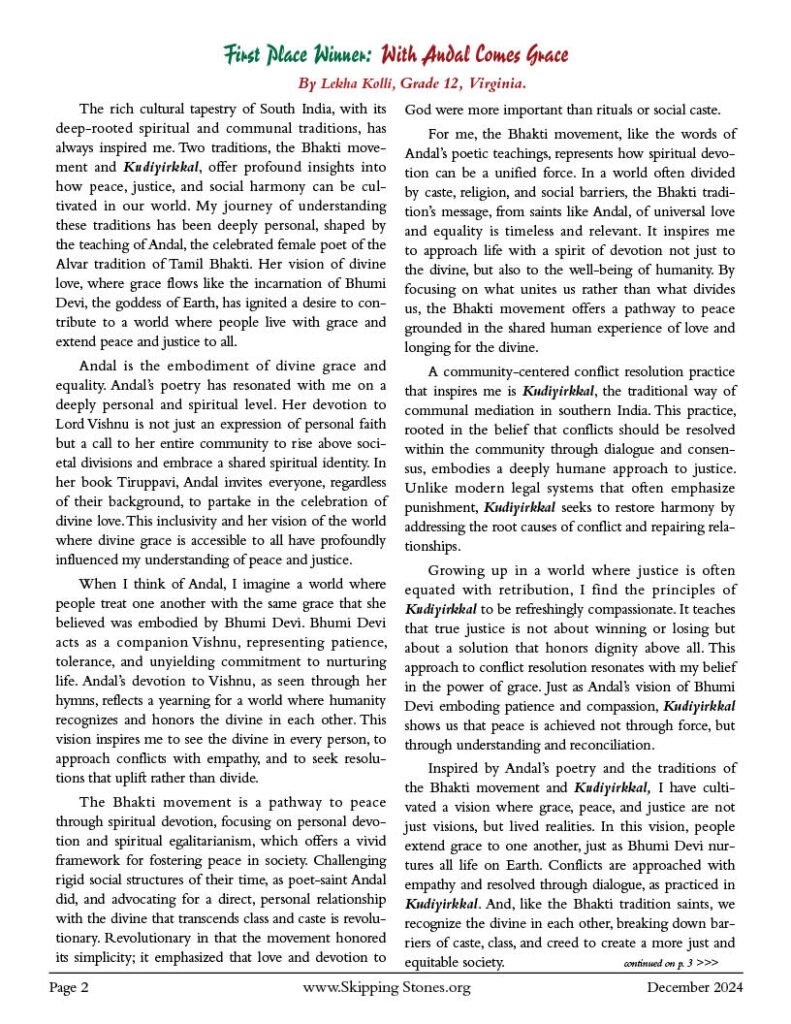
* 1st Place: “With Andal Comes Grace” by Lekha Kolli, grade 12, Virginia.
* 2nd Place: Anti-Sikh Riots and Ongoing Traditions of Peacemaking by Ira Tiwari, grade 11, Illinois.
* 3rd Place: “South Asian Peace Through the Millennia” by Jacob Sajan, grade 11, Arizona.

Art & Multimedia Winners:
* 1st Place: Narrated Bharatanatyam Performance by Deekshitha Jayaprakash, grade, 11 Minnesota. (Please click on the link to view the performance!)
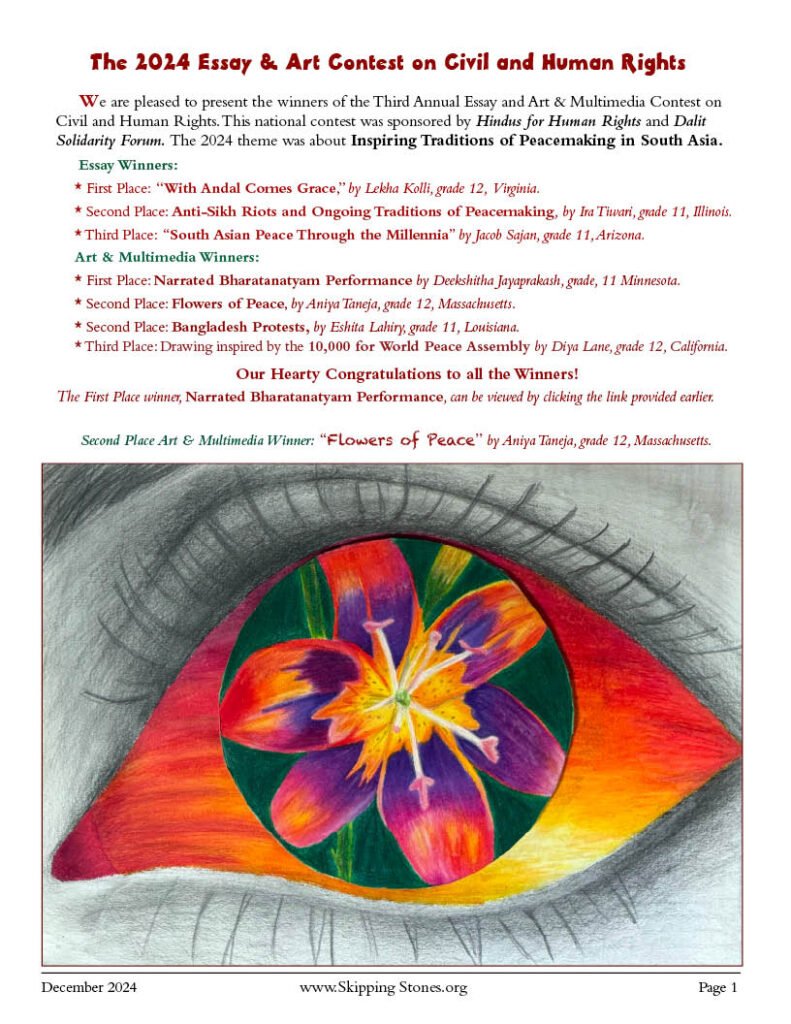
* 2nd Place: Flowers of Peace Illustration by Aniya Taneja, grade 12, Massachusetts.
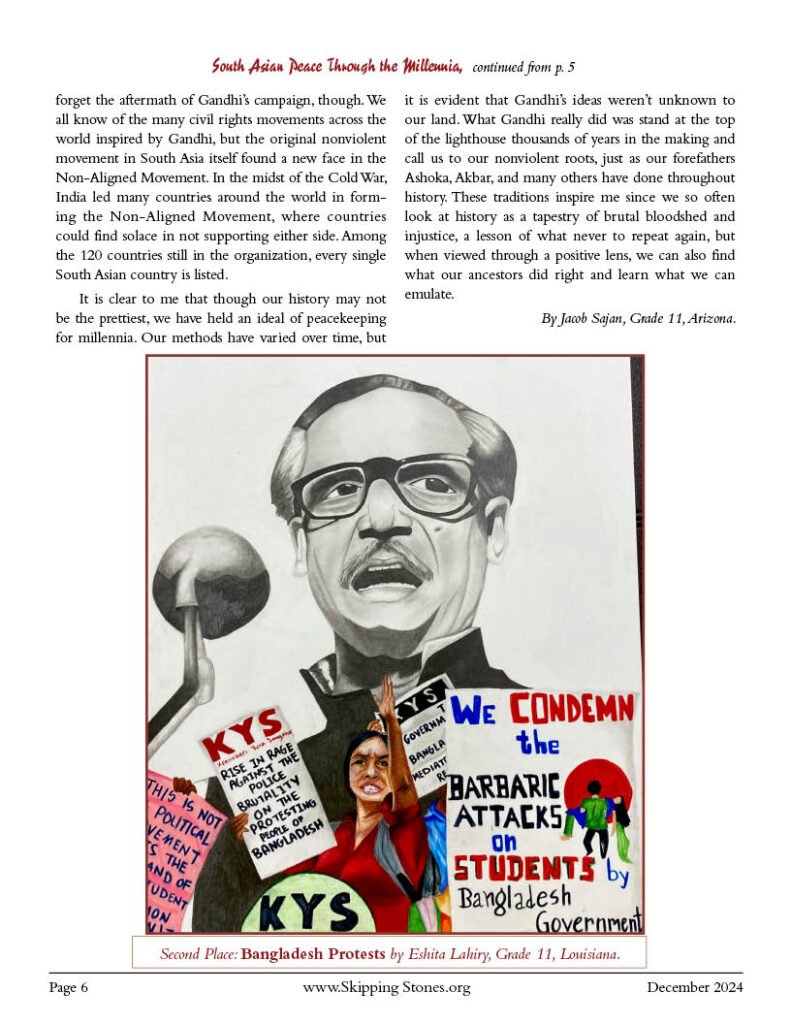
* 2nd Place: Bangladesh Protests by Eshita Lahiry, grade 11, Louisiana.
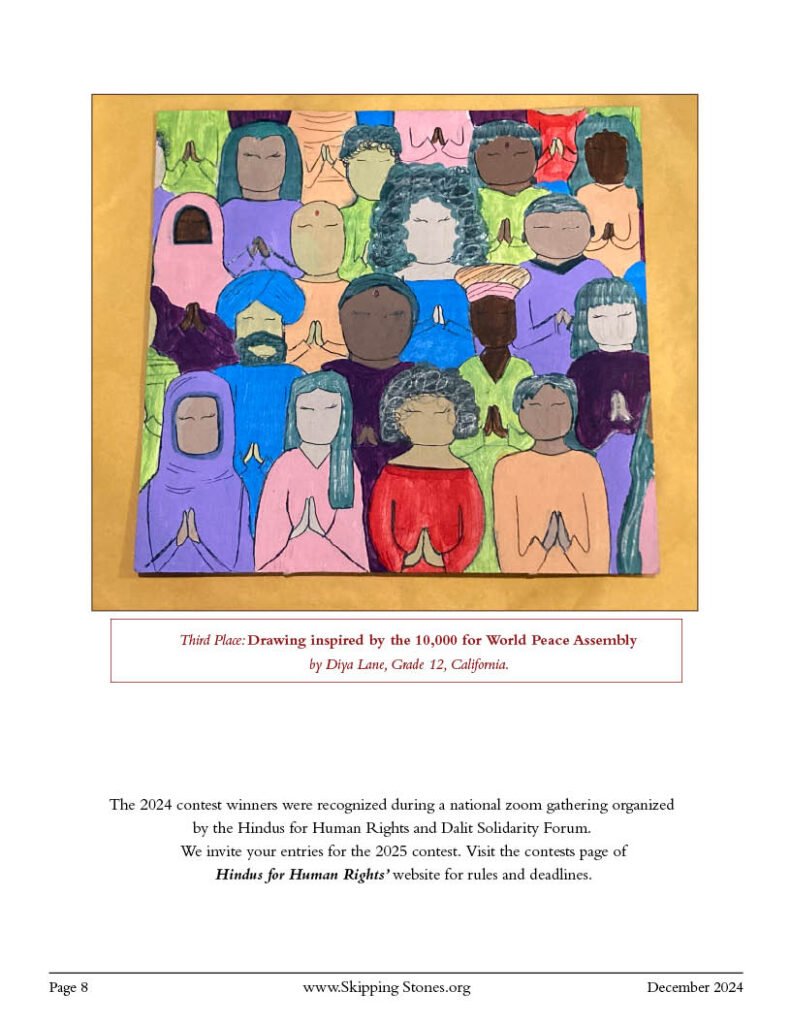
* 3rd Place: Drawing inspired by the 10,000 for World Peace Assembly by Diya Lane, grade 12, California.

Download the Winning Entries (This is a 5 MB file) by clicking here!


The Power of Veganism

The Power of Veganism: On the Vegan Way of Living

By Prof. Joanne Kong, author and speaker, Virginia

This is a slightly condensed transcript of a powerful presentation made by author and speaker, Joanne Kong, to a gathering of Eugene Veg Education Network (EVEN) on May 24, 2024.
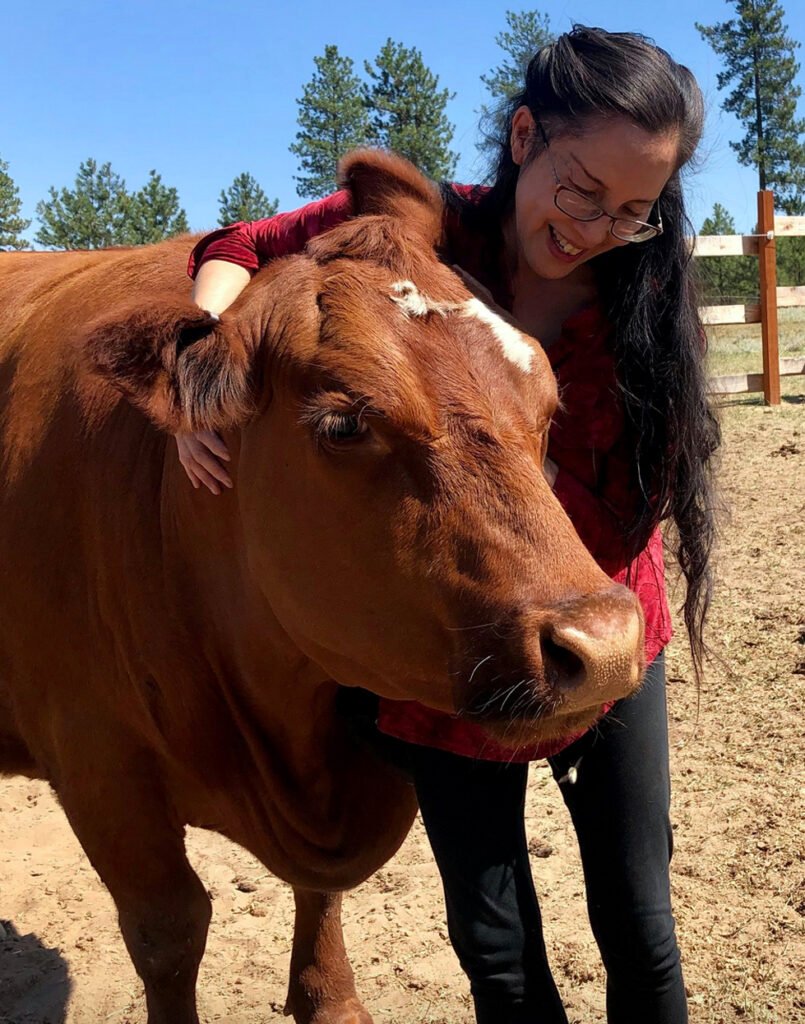
Prof. Joanne Kong with Olive, at River’s Wish Animal Sanctuary in Spokane, Washington

We are dealing with many challenges at present. Some of them affect our very existence—climate change and its effects all around us—increasing numbers of catastrophic weather events, rising temperatures, losses in the natural world, and the looming danger of rising sea levels. And with the COVID-19 pandemic (that we went through for a few years), out of necessity, drastic changes to our daily habits and livelihoods caused us to re-examine the ways in which we interact with others. We still live under social tensions, racial divisions and harmful political divisiveness. No wonder we feel powerless; unable to change these circumstances. We feel as if the problems are too big for us to solve, and that we can’t make a difference.

How do we heal the world? How do we rise above these serious problems, and find strength, as well as inner peace?

I believe that we have arrived at crossroads in our lives, where the choices we make WILL determine our shared destiny. I’m not minimizing or discounting humankind’s extraordinary achievements. But I want to say that the threats to our sustainability are very real, and affect many spheres of our existence—physical, mental, emotional and spiritual, and also our Earth, and other beings with whom we share this planet.

I suggest that a VEGAN lifestyle offers a way to heal.

Food We Eat:

Plant-based eating has been identified as a definite, top trend in recent years. That’s evident in just a casual trip to the grocery store! Veganism is one of the fastest-growing movements today. While physical health is certainly a primary reason why many people decide to go plant-based, I want to point out that veganism has unique power to impact so many aspects of our lives. I hope that you will gain deeper insights into your own values and what are some of the influences that have shaped your food choices, whether you consume animals or not. I wish to discuss aspects of our food consumption in relation to the Natural World, Our Perceptions in Regards to other animals, our own Physical Health, and the State of our Mindfulness and Spirituality.

Over the course of humanity’s existence, there has emerged a growing loss, of the sense of just how deeply connected we are to the natural world. COVID-19 was like a spiritual “alarm bell” that we have reached a state of disconnection, with human influence reaching its point of greatest damage upon the planet. The growing risk of zoonotic diseases is directly linked to the widespread environmental damage caused by us human beings, which has brought us into increased contact with wildlife. As David Quammen, author of Spillover: Animal Infections and the Next Pandemic, writes: “We invade tropical forests and other wild landscapes, which harbor so many species of animals and plants—and within those creatures, SO many unknown viruses…. We disrupt ecosystems, and we shake viruses loose from their natural hosts. When that happens, they need a new host. Often, we are it.”

Dr. Anthony Fauci says: “It boggles my mind, how when we have so many diseases that emanate out of that unusual human-to-animal interface, that we don’t just shut it down.” We hear about animal wet markets, but that is only the tip of the iceberg. Industrial factory farms, spreading around the world and accounting for more than 98% of animals killed for food in the USA, are a global health threat.

Dr. Michael Greger, infectious disease specialist, has been sounding the alarm on pandemics for over a decade. He likens each animal to a test tube, capable of brewing up the next new virus. “When we overcrowd animals by the thousands, in cramped football-field-size sheds, to lie beak to beak or snout to snout, and there’s stress crippling their immune systems, and there’s ammonia from the decomposing waste burning their lungs, and there’s a lack of fresh air and sunlight—put all these factors together and you have a perfect-storm environment for the emergence and spread of disease.”

At least 75% of emerging infectious diseases can be traced to animals, and the escalating rise of antibiotic-resistant bacteria in factory farms is already a global menace. If we remain complacent and fail to see COVID-19 as a wake-up call to rapidly move away from industrialized animal agriculture, it will only be a matter of time before more, potentially deadlier pathogens arise.

Environmental damage is occurring on a vast scale—through fossil fuel extraction, mining, drilling, logging, construction, urbanization, and most destructive of all, the livestock industry. As Peter Singer, philosopher at Princeton University and author of the groundbreaking book, Animal Liberation, has noted, “The kind of secret source of greenhouse gas emissions that no politicians are talking about at the moment are the emissions that come from the livestock industry.” While cutting emissions from energy and transportation, and making a decisive shift away from fossil fuels to renewable and alternative energies are vitally necessary, this will NOT be enough to successfully combat climate change, especially in light of projections that global meat consumption could rise as much as 75% by 2050 due to population growth, urbanization and rising incomes.

Livestock production currently accounts for at least 51% of anthropogenic greenhouse gases; that’s 4 times the amount of emissions from all modes of transportation combined, worldwide. The one major global initiative that will have more rapid and greater impact is to bring about planetary healing through a profound transformation of our food production systems, in particular, by ending the mass killing of animals for food. This must be nothing less than a broad-scale intervention for the health of our planet. Ilmi Granoff, Director of Sustainable Finance at ClimateWorks Foundation, said: “Forget cars. Forget coal. The fastest way to address climate change would be to dramatically reduce the amount of meat people eat.”

We can cut our carbon footprint in half, just by going vegan.

In one of the most comprehensive studies showing the connections between food consumption and the environment, a research team (headed by Dr. Marco Springmann at the University of Oxford, in 2018) concluded that reductions in meat consumption of 75 to 90% in Western countries would be necessary to avoid the ravaging impacts of climate change. Furthermore, it’s startling to realize just how massively inefficient our current food production systems ARE—meat and dairy industries are enormously water-intensive, accounting for at least a third of global water usage. Almost 80% of the Earth’s usable agricultural land is dedicated to livestock, yet the resulting yield is less than 20% of all calories produced, worldwide.

Why this disparity? Farmed animals eat huge amounts of food over their short lifespans. At least 70% of that energy is lost, through the animal’s metabolism and waste. We become SECONDARY consumers of those plants. It is far more efficient to gain nutrition from the source, and eat plants directly! If we made a decisive global move towards plant-based foods instead of growing massive amounts of feed for animals, we actually wouldn’t have to grow as many crops, and could free up over 70% of the earth’s arable land that is dedicated to raising livestock in the US.

Large-scale deforestation, for grazing land and growing livestock feed, not only increases the risk of infectious disease spread; the staggering loss of biodiversity Impacts the survivability of all living beings. Animal agriculture is the Number One cause of Species and Habitat loss. We have ushered in the Sixth Mass Extinction, with up to one million animal and plant species facing extinction; more than at any other time in our history. It’s no wonder that our era has been labelled as the Anthropocene, for it is HUMAN activity that has become the dominant force upon climate and the environment.

Scientist Ron Milo and others note that 60% of all mammals on Earth now consist of Livestock, and only 4% are wild animals. And 70% of all birds are Poultry. Humanity accounts for just a tiny 0.01% of all the Biomass on Earth—that includes all animal and plant life and bacteria, yet we’ve destroyed 83% of wild mammals, and half of plant life.

Did you know that the animal agriculture industry is directly tied to world hunger? Nearly half of global feed crops go to animals raised for food, instead of to the people who need them the most. Did you know, only 6% of soybeans grown in the world actually get used to feed human population!

A decisive shift towards plant-based foods could make it possible to sustainably feed a global population expected to reach close to 10 billion by 2050.

Professor and Scientist Peter Smith at the University of Aberdeen says: “We know food choices are very personal, and that behavior change can be difficult to encourage, but the evidence is now unequivocal—we need to change our diets if we are to have a sustainable future. The fact that it will also make us healthier makes it a no-brainer.”

In considering our relationships to other beings, it is helpful to look at historical and cultural contexts, to see what shaped our perceptions throughout the centuries. Our path of human culture has followed a long trajectory, from our early existence as nomadic hunter-gatherers to the growth of tribal and agrarian societies.

We know that the origins of animal agriculture in human culture can be traced back to roughly 10 to 12,000 years ago. Prior to that, we existed as foragers—nomadic, opportunistic eaters—gathering, hunting, and scavenging for food. We co-existed with animals in a complex web of life, highly observant of their unique abilities and behaviors, and fascinated by the powers they seemed to hold. As our culture developed, a shift in this relationship began to take place. Along with a rise in population, people began to abandon nomadic lifestyles, seeking and settling in places where food, shelter, and land for growing crops were available. Agriculture slowly took hold, as did the concept of ownership, not only of land, but also of animals, beginning with cattle, sheep and goats.

This marked a critical change in our perceptions of animals; we began seeing them not as kindred spirits, but as commodities, objects, even tools for our use. The ultimate rise of urbanization and consumerism which shaped the foundations of our modern culture, served only to reinforce this view of animals—that they are units of production within industries whose sole goals are efficiency and profit.

This perception has become internalized in society’s daily customs. Cultural inertia is a powerful force; it’s a part of human nature to resist change, and it’s often much easier to just stay with what has been established and accepted as the status quo. It’s a kind of subconscious acceptance—everyone else is doing it, so it must be right! We derive this sense of security, stability and even validation from continuing the habits we grew up with. This is especially the case with our food habits, for what we eat is a matter of daily personal choices that can be grounded deeply in family and cultural traditions. I want to make it clear that my views are in no way intended to be judgmental, or to lay guilt.

I often ask, “Were any of you here BORN vegan?” And as you might expect, usually no one raises their hand. Through no fault of our own, most of us, including me, were born into a meat-eating culture, one that dominates and exploits animals. That is the simple reality. Only when I learned about factory farming (as a graduate student in college), did it hit home that our society as a whole has grown further and further away from seeing other living beings as our equals. We grew to hold onto, even if subconsciously, a false belief that consuming animals is necessary for good health, and that there is some kind of hierarchical food chain that requires us to eat them, despite our clearly-herbivorous physiology. We have created a set of beliefs, an egocentric view that humans are superior to other animals, that it is acceptable to abuse and kill them for our own needs, pleasure and profit.

Some believe this all ties into an anxiety about our own mortality.

Anthropologist Ernest Becker wrote, “Mortality is connected to the natural, animal side of [human] existence; and so man reaches beyond and away from that side. So much so that he tries to deny it completely. As soon as man reached new historical forms of power, he turned against the animals with whom he had previously identified—with a vengeance, as we now see, because the animals embodied what man feared most, a nameless and faceless death.”

Writer Michael Mountain says, “The terrible irony in our behavior is that it is our very efforts to raise ourselves above our fellow animals that are, in fact, bringing about our demise. The more we seek “progress”—building an industrial civilization through which we strive to take dominion over nature and its cycles of life and death—the more we are playing into our very worst nightmare: not just death, but now mass extinction. We are part of nature, and life becomes a lot more comfortable when we stop trying to defend ourselves against it. While we may never be able to dissolve our existential terror altogether, we can gain comfort by embracing the world of nature rather than constantly trying to transcend it. That means acknowledging that we are animals, just like all the other animals. And it means ceasing to exploit them as commodities, in our quest for immortality.”

On HEALTH:

Part of the irony of our exploitation and dominance over animals is how using them as a food source has impacted our health, all over the globe. Yes, it is true that early man adopted meat eating when it was necessary for survival, as nomadic, opportunistic eaters. But today, for most of the world’s population, it is not a necessity to eat animals in order to survive. Our typical Western diet is responsible for over 70% of health issues. These include our so-called “diseases of affluence,” heart disease (leading cause of death in the world), hypertension, diabetes, and cancer. And obesity rates are rising globally.

In the US, it’s called the Standard American Diet, or SAD. A 2015 landmark report by the World Health Organization (WHO) classifies processed meat as carcinogenic, and red meat (that’s consumption of cows, pigs, goats and sheep) as a probable carcinogen. And it’s not only the pandemic risk associated with using animals as a food source; meat carries the highest contamination risk for foodborne illness—salmonella, E. Coli and campylobacter. The chronic diseases and conditions associated with an animal-centric diet are among the leading causes of deaths worldwide, both in developing countries and industrialized nations. Globally, consumption of meat has more than doubled in the past 20 years.

However, there is a growing awareness that plant foods are the key to maintaining optimum health, and preventing, even reversing, diseases. One of the most proactive, powerful things we can do to maintain our health is to increase our intake of plant-based foods. We know that countries with the greatest intake of plant foods HAVE the lowest incidences of disease. What are the benefits? Fruits, vegetables, whole grains, nuts and seeds—offer a wide range of nutrients that include the all-important fiber, antioxidants that protect against cell damage, and thousands of phytochemicals that support good health and boost our immune systems. We’re starting to see a real shift towards a new model of healthcare, with the emphasis on PREVENTING disease through nutrition.

There are many physicians taking active roles in promoting the vegan lifestyle. A few of these include Dr. Michael Greger, Dr. Neal Barnard, and Dr. Michael Klaper. Unbelievably, the study of nutrition is not standard curriculum in a large percentage of medical schools. The Journal of Human Nutrition and Dietetics found that most medical students have only an average of 11 hours of nutrition training.

Dr. Kim Williams, past president of the American College of Cardiology, went vegan for HIS own health reasons, and now recommends a plant-based diet for his patients. He says: “There are two kinds of cardiologists—vegans, and those who haven’t read the data.” He also says: “I don’t mind dying. I just don’t want it to be MY fault!”

You are what you eat! It is really no wonder that eating animals and their products are tied to so many physical problems, as we are ingesting THEIR negative states of pain and suffering.

On Spirituality and Consciousness:

I believe that ALL life is energy, and all matter IS a manifestation of vibrating energy. Negative vibrations are heavy and low, resulting from stress or fear, and we know that in such instances the hormone Cortisol is released. So the negative energy carried by the animal upon its death thus transfers into OUR bodies upon consuming them. In fact, comparative studies have shown that mothers who ate a greater percentage of meat vs plant foods during pregnancy gave birth to children who grew up with significantly higher blood pressure, compared to moms who ate primarily plant-based. The energies of everything we consume enter ALL levels of our being—the physical, mental, emotional, and spiritual.

Abbott George Burker, of the Light of the Spirit Monastery in New Mexico, puts it this way: “When the energies within us are positive, they produce harmonious states of mind and behavior. But when the energies are negative, they move in a random and chaotic manner and produce negative states of mind and, consequently, negative behavior. Moreover, these toxic energies can also manifest as physical illnesses or defects. Substances that are toxic to the body–such as meat, alcohol, nicotine, and drugs–are toxic on the inner levels as well, and their ingestion poisons all our bodies…”

For many, turning away from consuming animals and animal products, whether a gradual process or an overnight decision, is something that at its deepest level becomes a reflection of spiritual values. This is even true of those who initially go vegan for health or environmental reasons; once they are no longer are taking part in another being’s suffering through their food habits, their openness and capacity for kindness naturally expands. For some, going vegan leads to a spiritual awakening, for others, it’s the reverse.

If we define Spirituality as: “The quality of being concerned with the human spirit or soul as opposed to material or physical things, we can see that veganism opens up that part of us that touches on our emotional, mindful, and spiritual lives.

There is a greater sense of connection to Nature and all life; seeing we are all One, seeing ourselves in others, that we are all expressions of the same Divine Source. I call this aspect COMPASSIONATE ONENESS. To me, ANIMALS, human or non-human, are deeply interconnected because we EQUALLY share in this oneness—we are all conscious, and we are all aware. Think of all the ways all animals are alike, in what it means to be a sentient being! The desire to live free from pain, seeking adequate nourishment and shelter, freely engaging in unique ways of social interaction and communication. We protect and raise our young, care for one another, we breathe, we all can experience pain, fear and joy. Other Animals, they are unique as WE are unique, and I feel we should not abuse them, exploit them, treat them like property or commodities, and then subject them to the ultimate suffering which is the loss of their lives. You can’t quantify scientifically what consciousness is, but you see the life force in every animal, whether dog, cat, pig or cow.

Veganism thus widens our circle of empathy, sensitivity and our INNATE compassion. Modern industrialized animal agriculture IS the greatest amount of suffering and violence taking place on our planet today, happening every second of every day, yearly exceeding the sum of human deaths by at least 2,000 times over. It is also the greatest area of society’s cognitive dissonance, a situation in which our decisions or behaviors are in conflict with our core values or beliefs. Case in point: most people continue to eat meat, even though on some level they know that meat production entails unnecessary suffering, violence and death. In order to avoid the mental and emotional conflict of this inconsistency, they avoid bringing the issue to the forefront of their conscious awareness. This avoidance is perfectly exemplified in what is probably the most common response when you try to tell people about factory farms—what do they say? “Don’t tell me; I don’t want to think about it!” By distancing themselves from the conflict, this allows them to eat meat without a sense of guilt or complicity. People want to protect their sense of self; they don’t want to see themselves as enablers of such horrific violence, and they’re able to do so by distancing and disconnecting themselves from that reality. Certainly, the ingrained acceptance of food habits is a strong factor, reinforced by marketing messages. The industry employs misleading feel-good labels, like “cage-free,” “free-range” “natural,” “humane certified,” and “grass-fed,” falsely implying that consideration is given to the welfare of the animals. But any industry whose main goal is to profit from the slaughter of innocent animals can never be humane.

There is also the invisibility of meat production. How many of us know where factory farms are located? As a result, the immense suffering that happens behinds their walls remains largely hidden, and most of us have become desensitized to the ongoing violence that IS a part of our everyday lives as consumers. On the path of becoming plant-based, it is a transformative shift in our identity, when we no longer consume food that was borne of violence. It’ a raising of our vibration level and expanding our sense of unconditional love.

Veganism can be a part of our spiritual journeys—moving beyond material desires or temporary taste pleasures.

I invite you to consider a new perspective, one that you may have not thought of. We give serious thought to many of our choices every day, but what distinguishes meal choices from many others, is that it can involve another living being. Writer Mark Hawthorne puts it best when he says, “A person’s “right” to eat whatever they want ends where another’s life begins.” In the relatively SHORT amount of time it takes to eat a meal, your choice is an opportunity to give your capacities for compassion deepest consideration. You may ask yourself, “Does the taste I enjoy from eating this animal, justifies what it went through, to become my food?”

For many of us, one of the aspects of Spirituality is: Seeking inner peace, that center of calm within us. It’s about knowing that our individual actions, and how we express Love in the world, build a powerful energy that shapes the world around us. This can be immensely powerful, and sometimes we get messages that arise from our inner self or subconscious mind. The following is a quote from vegan activist Gwenna Hunter. She lives in Los Angeles, and actually created the city’s first vegan food bank!

“I dreamed once that I was flying in the sky overlooking a beautiful bright green pasture. I noticed a beautiful cow looking up at me. Our eyes connected and when they did it was like I flew inside of her and became one with this cow. I was the cow. We merged and I felt her joy. Her sorrow. Her grief. Her love. Her excitement. Her joy. Giving birth to children. Loving her children. Enjoying companionship and her love for humans. I emerged from the dream in shock, knowing what I experienced had to be real but of course I questioned it. I was crying uncontrollably because what I felt more than anything was their immense capacity to love. It was a love that was pure and kind and gentle and sweet. It was unconditional. But how could a cow be capable of this? After all weren’t they put here for us? As I cried and sat up in my bed I suddenly felt a physical warmth on my chest right where my heart resides. I took my right hand and put it on the warm spot and I was paralyzed with the most beautiful feeling of tranquility and complete peace. I also want to share another dream I had—another experience that was beyond the normal limits of reality. I found myself in a different space and time, and I was standing outside of a slaughterhouse where there were cows and pigs standing in line waiting for their turn to be slaughtered. I instantly had a telepathic connection with them and I knew that they had full awareness of what was going to happen. I began crying and yelling at them, telling them to stop reincarnating back to this planet and to not come back to earth because we keep killing them and hurting them. All of a sudden one of the pigs turned to me and spoke to me in the most powerful male voice and said, ‘We will keep coming back again and again until you all get it right. We love you all that much. Our suffering gives some of your lives purpose.’ He then sent an impulse of his love to my heart and it was so incredibly pure and beautiful. This impulse let me know that it’s not just us trying to save them but they are also saving us.”

One of the aspects of becoming more spiritually aware through our food choices can manifest in the desire to be of service, to make the world a better place. For myself, my journey as a vegan is about filling every waking moment of my life with the highest good and intentions that I can put out into the world, towards ALL beings. It is about AHIMSA—non-violence—to do no harm. I can best describe it as feeling more in the flow of just how sacred all life and Nature are. Our times, more than ever, call for our innate gifts of kindness, empathy, and seeing ourselves in every other living being, to create a more peaceful world.

I would like to end with a quote by Albert Einstein:

“A human being is part of a whole, called by us the Universe, a part limited in time and space. We experience thoughts and feelings, as something separated from the rest, a kind of optical delusion of his our consciousness. This delusion is a kind of prison for us. Our task must be to free ourselves from this prison by widening our circles of compassion to embrace all living creatures and the whole of nature in its beauty. The true value of a human being is determined by the measure and the sense in which they have obtained liberation from the self. We shall require a substantially new manner of thinking if humanity is to survive.”

About the Author:
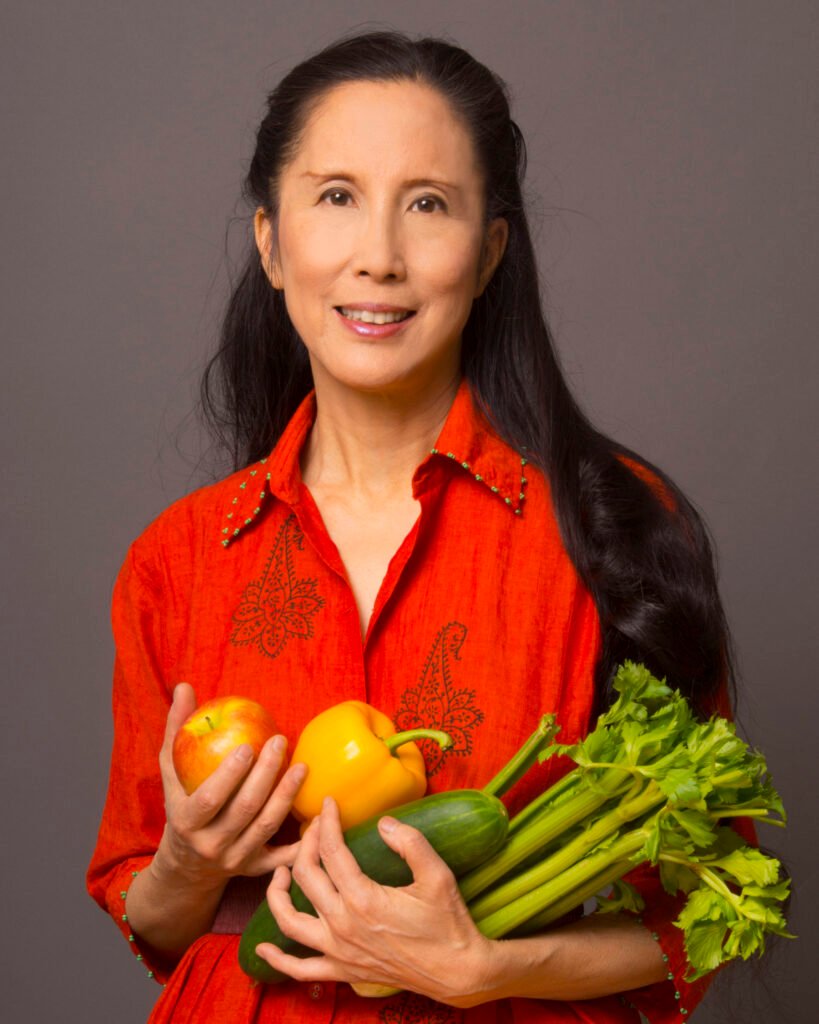
Dr. Joanne Kong, D.M.A., has been praised as one of the most compelling advocates for plant-based nutrition today, centered ethically in raising awareness that greater compassion for animals and our planet is vitally necessary for transformative growth and positive world change. Her TEDx talk, The Power of Plant-Based Eating, has over one million views on YouTube. Her vegan advocacy has been recognized around the world with international talks in Italy, Spain, Germany, Norway, Canada, and a three-week, 10-city tour of India. Dr. Kong is the editor of Vegan Voices: Essays by Inspiring Changemakers (Lantern Publishing & Media, 2021) featuring 50 vegan advocates from around the world, is the author of If You’ve Ever Loved an Animal, Go Vegan, and was profiled in the book, Legends of Change, about vegan women impacting the world. She appears in the major documentary Eating Our Way to Extinction and the upcoming documentary, Taking Note. 

Dr. Kong is a critically acclaimed, award-winning classical pianist on the music faculty at the University of Richmond, and draws upon a diversity of skills as a musician, writer, speaker, and creative artist in her advocacy activities. She performs and speaks in a duo known as Vegan Virtuosi with fellow animal advocate Christoph Wagner. Find further information about her on the websites www.vegansmakeadifference.com and www.joannekongmusic.com.

Unfinished Exit

Unfinished Exit

I keep thinking
about the time in high school
when you drew
me
a map of the city,
I still have it somewhere.
It was so easy
to get lost
in a place where all the trees
look the same.
And now
every time I see
a missing person’s poster
stapled to a pole,
all I can think is
that could have been me.
Missing,
disappeared.

But there are no
posters for people
who just never came back
from vacation, from college,
from life.
You haven’t killed yourself
because you’d have to commit to a
single exit.
What you wouldn’t give to be your cousin Catherine,
who you watched
twice in one weekend get strangled nude
in a bathtub onstage
by the actor who once
filled your mouth with quarters at
your mother’s funeral.
The curtains closed and opened again.
We applauded until
our hands were sore.

But you couldn’t shake the image of
her lifeless body,
the way she hung there like a
marionette with cut strings.
And now every time you try to write a poem,
it feels like a
eulogy.
A desperate attempt to
capture something that’s already
gone.
But maybe that’s why we keep writing,
keep searching for
the right words,
because in this world where everything is
temporary,
poetry is our only chance at
immortality.

So even though you haven’t
found the perfect ending yet,
you keep writing.
For Catherine, for yourself, for all the lost
souls
who never got their own
missing person’s poster.
Because as long as there are words on a page,
there is still hope for an unfinished exit
to find its proper
ending.

About the Poet:
Claudia Wysocky is a Polish poet based in New York, celebrated for her evocative creations that capture life’s essence through emotional depth and rich imagery. With over five years of experience in fiction writing, her poetry has appeared in various local newspapers and literary magazines. Wysocky believes in the transformative power of art and views writing as a vital force that inspires her daily. Her works blend personal reflections with universal themes, making them relatable to a broad audience. Actively engaging with her community on social media, she fosters a shared passion for poetry and creative expression.