
Category Archives: Social issues

The Notebook of Not-me

The Notebook of Not-me

By Kathy Shen, Age 11, New York. 

On a cloudy Monday morning, Bridgette was doodling in her sketchpad when she felt something hard and rough while reaching for her eraser. She turned and looked down to see a red notebook sitting at the roots of the ancient maple tree, as if it was waiting for Bridgette to pick it up. Bridgette was sure this wasn’t hers—she remembered clearly that there was not a notebook in sight yesterday nor throughout the week. She glanced around, unsure. The notebook looked old, with its leather spine peeling, but a bright red cover that still stood out against the gloomy, grey sky. Curiosity overwhelmed her and she flipped the notebook over to the first line on the first page.

In dainty, cursive handwriting, there was a message on the first line that said, “Write what you wish to be true.”

There was no name, explanation, or any other words on that page. It was as if the notebook had been waiting for her to make a wish.

***

Once Bridgette arrived home, she slipped off her sneakers and ran upstairs to examine the notebook. Through all her classes she was busy wondering if this notebook was a fraud or if it would actually work. She decided to keep it a secret in case anyone accused her of something. Bridgette grabbed her book and placed it on her desk. Tired from all this uncertainty, she took a deep breath and decided to test the powers of this notebook.

With shaky fingers as her pencil hovered over the second page, Bridgette wrote down, “I wish for tomorrow to be sunny.” She waited a while, half expecting something to happen, but the only sounds were the cars driving by outside. She sighed in disappointment as she saw the same old words on the page. Feeling a bit foolish and ready to go into a deep slumber, Bridgette crawled onto her bed with her thoughts racing.

Eventually, the silence rocked her to sleep.

***

The next morning came a little too quickly for Bridgette, as the rays of sunlight blinded her eyes when they opened. The thought of the notebook popped into her mind. Quickly, she jumped out of her bed and grabbed the notebook, flipped to the second page, and now saw a little check mark by her wish.

Bridgette’s heart quickened as she realized that her wish truly came true! Her mind began racing with ideas that she could make happen with the help of this notebook. Rinnnnggggg! Bridgette’s alarm went off, reminding her to get downstairs to leave. She quickly slammed her notebook into her backpack, put on her shoes, and ran down the stairs, eager to start the school day. Slamming the door shut, Bridgette practically skipped her way to school. She realized being friendless would bring her an advantage in keeping her magic notebook a secret.

 ***

As Bridgette walked to her seat, her head buzzed with excitement and she clutched her backpack straps a little tighter than before. If the notebook could change the weather, could it change her whole life?        

That afternoon, during lunch, Bridgette went to the library and sat down at a table. She carefully took her notebook out and flipped to a fresh page to write something new. With her hand no longer shaking, she wrote down the words, “I wish to be popular.” Bridgette stared at the words for a good minute, until the nervous, yet excited flutters left her chest. The bell rang just at that time, and she closed the book, hurrying to class.

The next day, when she walked up the steps, people she had never even seen before greeted her and smiled. At lunch, the cool crew, made up of football players and cheerleaders, insisted that Bridgette sit with them. Chelsea, the head cheerleader, smiled warmly.

“Bridgette! We were just saying how it feels like you’ve always been part of our group.”

Marcus, the quarterback, nodded, “Yeah, it’s like you’ve always belonged here.”

Bridgette blinked, surprised and a little unsure if they really knew her or if this was part of the magic. Even older students complimented her on her hair and style, saying it was so “original and lighthearted.” Bridgette’s hair was let down as always, and she still had her usual outfit of jeans and a t-shirt on. 

By the end of the week, Bridgette had already been invited to three parties, two study meets, and a popular kids group chat. There were all the cheerleaders, student council members, football players, soccer players, and anyone else who was a high member of her school society. However, She realized that people started laughing their lungs out at every joke she made.

“Why don’t scientists trust atoms?” she asked, and then smiled before the room exploded with laughter.

“Because they make up everything!” Bridgette was not sure if she even found this joke worthy of exploding over. She had used it as a test, curious to see what it was like being in the spotlight.

Little by little, Bridgette’s desk stopped being crammed full of sketchbooks and eraser shavings. Instead, it became full of party invitations and bottles of lip gloss. Bridgette finally realized that being popular was smiling all the time, laughing at everything, and performing. She felt as if she had to be “on” all the time. 

***

That night, when Bridgette came home, she went straight to her room and looked at the mirror. The person looking back was not the person who loved to draw or felt calm under the maple tree. The spark in her eyes seemed to have dimmed.

Bridgette sat on the bed, thinking about her wish. Being popular was not what she had imagined. It felt fake, empty, and lonely.

Slowly, she took out the notebook once more. On the next clean page she wrote down her wish:

“I wish to be myself again.”

By Kathy Shen, Age 11, New York. She adds: “I speak both English and Mandarin Chinese, and I come from a Chinese American background. I love storytelling, reading, and especially spending time with dogs, my favorite breed is the Cavalier King Charles Spaniel! Sadly, I do not have one yet.

“What’s important to me is fairness, honesty, and standing up for others. When I grow up, I want to be a judge or a lawyer because I care about justice and helping people. I also enjoy writing stories that explore emotions and choices, and I hope to get better and better at it. Writing helps me express what I’m thinking, and I love using it to imagine different possibilities.”
Beneath the Shade of Truth

Beneath the Shade of Truth

By Nasiruddin Hamid, Qadian, Punjab, India.

In the 19th century, on a pleasant afternoon in August, in the serene mountains of Kashmir, Abdul Kareem, 65, and his grandson, Abdul Rahim, were watching their goats and sheep graze on the lush green mountain grass. The air was fresh and crisp, filled with the scent of wildflowers and pine trees. A gentle breeze swept across the hills, rustling the leaves and bringing a cool relief from the warmth of the sun. They were both leaning on a large, smooth rock, resting beneath the shade of tall trees, with the distant hills providing a protective embrace. The sound of the breeze and the peaceful bleating of the goats and sheep made the scene feel timeless.

Abdul Rahim, who was around 15 years old, began the conversation in gentle voice.

“Baba (grandfather/ father), are we Muslims?”

“Yes, dear, why?” answered Abdul Kareem.

“Are we the best people in the world just because we are Muslims?” asked Abdul Rahim.

“I don’t know, son,” replied Abdul Kareem.

“Why don’t you know, Baba? Our master, Molana Sadiq, says we are superior to all human beings. We rule the world, and after this life, we will go to heaven because we are true followers of the Prophet. Others will go to hell because they don’t worship Allah as we do,” said Abdul Rahim.

“I don’t know about being superior, son,” said Abdul Kareem.

“Did Molana Sahib (sir) lie to us then?” asked Rahim.

“No, son. Actually, Molana Sahib doesn’t truly know Almighty God. That’s why he says those inappropriate things about God,” said Abdul Kareem.

“How so? Please tell me, Baba Jan (dear grandfather),” said Rahim.

“Son, Allah doesn’t work the way we say or believe. He is far superior to what we think. He made this world according to His plans and will, but humans have degraded Him according to their own greed and desires. Every Molana (Maulana, a Muslim religious leader), Padri (a Christian priest), or Pandit (a Hindu scholar) claims that their religion is the true one, and others will go to hell. But they use God’s name only to serve their own selfish interests. They have turned God into a figure to scare innocent people. The truth is, God is not as horrible as they make Him out to be. We don’t know God or His ways. It is His will that He made some people beautiful and others not, some rich and others poor, some healthy and others sick. We cannot have complete knowledge of Him. That’s why we create stories about Him based on our own desires. Allah (God, in Islam) is for everyone, whether we believe in Him or deny Him. He doesn’t care about religions; He cares about humanity. People who love and care for humanity are the true believers of God, and they will be rewarded in this world and the next, if there is one. So, my son, just be a good human and respect everyone if you really want to succeed in life,” said Abdul Kareem.

The cool breeze continued to swirl around them, carrying the smell of the mountains as the sun began to dip behind the hills, casting long shadows across the grass. After saying this, both sat in silence, contemplating the words of wisdom, until dusk settled in. Then, they gathered their sheep and goats, and made their way back home, the rhythmic bleating of the flock echoing through the quiet, peaceful valley.

By Nasiruddin Hamid, Qadian, Punjab, India.

Where is Home to You

Where is Home to You?

My piece explores my evolving understanding of the concept of “home.” What began as confusion during a second-grade writing assignment has turned into a meaningful journey of self-reflection. Through literature, dance, and lived experiences across multiple cultures and countries, I’ve come to understand home not as a location, but as an internal sanctuary—something rooted in peace, expression, and emotional connection. I was inspired to share this story because I believe many young people around the world also struggle with this complex question.

—Leah Hyolim Lee, age 14, New York.

The question, “Where is home to you?” is a deceptively simple yet profoundly
complex inquiry. Every individual has a unique interpretation of the question. For some, it may evoke a geographic answer, rooted in soil, and for others, it is a neutral blend of cultural heritage and personal experience. For many years, it remained an elusive enigma, a landscape shrouded in both familiarity and fog. At times, I found myself blaming my diversity and uniqueness for my confusion.

In the second grade, we were required to write an essay, and the prospect of my first major writing assignment filled me with curiosity and joy. My eyes were laser focused on the green basket, which contained a mix of cards. Each of them read a different prompt, and that promise of individuality planted a seed of anticipation and interest in all of us. I daydreamed about the type of subject I would be given. I lost myself in reverie, imagining every scenario possible that I could think of: all of which I knew fully what the answer would be. Would it be a fantastical prompt that required me to use my imagination, or a historical viewpoint that I needed to assert my opinions on?

My trance was broken when my teacher’s voice cut through my thoughts like a razor. With each step towards the teacher’s table, an unmistakable sense of nervousness rose within me, an almost tangible tension that coiled around my chest. When I finally read what was written, it put me in a place of unexpected confusion. What had once seemed so simple now felt like a labyrinth, where I was trapped in the maze lost in disorientation.

It read, “Where is home to you?” in bold unforgiving letters, and I found myself frowning as my footsteps grew shorter with a loss of hope. Thoughts buzzed around in my head like a swarm of restless bees, each one darting from idea to idea, stinging my mind with urgency.

The sharp chime of the bell sliced through the quiet like a sudden gust of wind. As I
looked down, eraser marks and salty tears took the place of words that I prayed were there.

From then on, I subscribed to the conventional image that a “home” was synonymous with a tangible, physical space. I chose to take the easy way out, as I fantasized about a beautiful house, where the rhythm of belonging hummed softly to comfort me. However, each time my family moved countries, my picture-perfect image became increasingly fractured, like a mosaic of pieces that never quite held together. I wondered if my odd life was not deserving of something like a home.

I was met many times with silent criticism from others when I tried to answer the
question, “Where are you from?” Random words spilled out of my mouth, as if they too, were uncertain of their purpose and destination. I felt the unspoken implication that my origins, divided and shifting, were less valued than those steeped in singularity.

The more I bloomed into a more mature individual, I came to realize that I should not have pushed myself into the shadows as I lived in confusion of who I really am. This new perspective was the start of my own journey to sanctuary.

I began to fall in love with the world of literature, where I found a peculiar sense of home in the novels that I read and in the movies that I watched. I embarked on adventures with Huck and Jim and went on a frivolous journey with Chris, Gordie, Vern, and Teddy. The ink and paper seemed to embrace me with the warmth of familiarity that became a refuge where the chaos of the world fell away. The characters’ struggles, triumphs, and moments of reflection mirrored my own, creating an unspoken bond. A thread of shared experiences wove us together into the fabric of human existence.

Through this discovery, I often found myself perplexed. How could a mere assemblage of paper and ink evoke the sense of belonging that I had longed for? How could a world, spun from the loom of imagination, offer such a welcoming hand? It forced myself to confront my sustained belief that a home was a structurally defined place.

A home, as I experienced, can also take the form of an art style. I found shelter in a studio, with its polished floors and mirrored walls, which became a sacred ground. It was not the studio itself that gave me a sense of home, it was how it housed a place where I could express myself in ways that I had never before, where I was both the performer and audience. Through ballet, I learned an entirely new language that spoke to me in a way words never did.

The rhythm of my breaths and the breaths of others synchronized into one. It was a silent but meaningful indication that the mere art form of ballet had brought me both a place for sanctuary and fictive kinship.

The Oxford Dictionary defines a home as “a place where one lives permanently, especially as a member of a family or household,” which is a seemingly straightforward and static notion. Yet, I find myself at odds with this definition, as it enforces the idea that a home is a fixed place, an address, and a place in which an individual is anchored for a lifetime. Even as I challenge the dictionary’s definition, there are moments when I long for the permanence that it reflects and when I yearn for the comfort of knowing exactly where I belong. My own internal diversity has led me to this hard fought journey, where I am able to confront my own definition of where I belong. My belief continues to evolve, but for now, I live by my own definition that a home is not measured by the land beneath my feet, but by the peace within my heart.

By Leah Hyolim Lee, age 14, New York.

They Let Me Live in Sound

They Let Me Live in Sound

By Mahika Kapoor, age 14, Virginia.

I wrote this poem with a ten-minute timer to try to capture the frenzied mindset of the narrator in this poem. I wanted to see how fast I could capture the importance of the Holocaust, and how other people felt. I came up with this piece, “They Let me Live in Sound,” showing a child’s mind during the Holocaust, mostly based on the child Ellie Wiesel. Ellie Wiesel wrote the book “Night” to capture his dream of other people understanding the misery of the Holocaust. He will forever be remembered, and so will many other characters from the Holocaust period, such as Anne Frank. Anne had a dream to publish her diary she wrote during her two-year Holocaust hiding. These two historical figures both had dreams of people remembering the Holocaust, and for others to be able to vision how tragic their experience was through forms of writing.

The poem tries to capture how many people may have been feeling during the Holocaust in metaphorical ways.

—Mahika Kapoor, age 14.


I used to run away from the people and the sound
I used to seal my ears because my life was too loud 
Running away, sealing my ears, hiding from what’s monitoring me
But what if I let loose my hand cuffs and decided to be me?
What if I decided to be free?

They would shut my eyes belligerently, making sure my eyelids wouldn’t dare to let the light in by even a slit
It’s not worth it
It’s not worth it 
What would I do to be free?
What would I do to open the jar of experiences that are limiting myself to be me?
And then suddenly, I expose my ears
I expose my ears, submerge my feet in the bosom of the ground, and erase my tears
The world behind my eyes will vanish if I want the will to be free
But at least I will die knowing I can still be me

By Mahika Kapoor, Indian American, age 14, Virginia.

The Mangonomy

The Mangonomy: Celebrating the Mango Economy

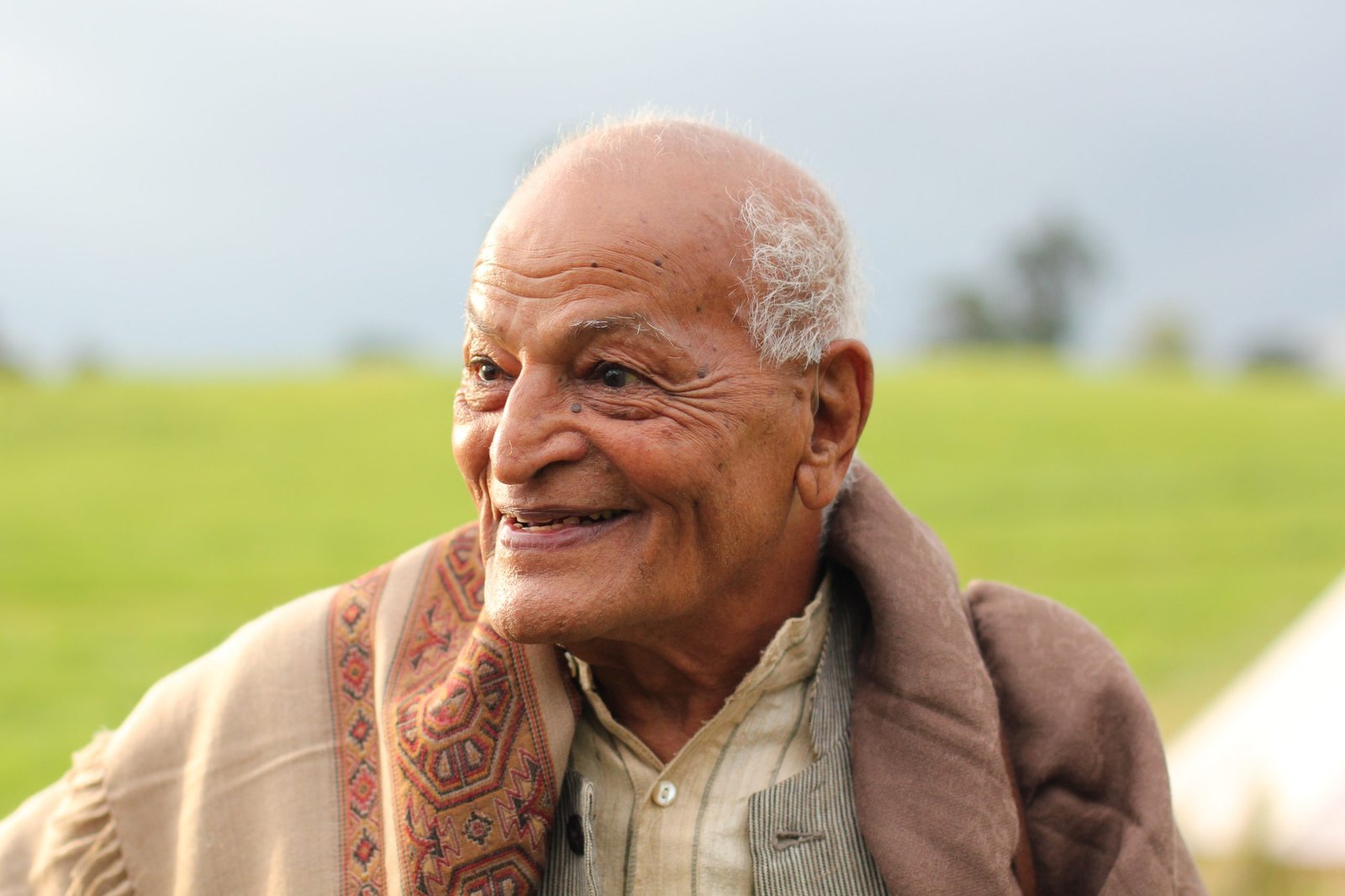
By Satish Kumar, Editor Emeritus, Resurgence, U.K.

Satish Kumar, originally from India, is an author, editor, educator, and a world traveler. He lives in the United Kingdom. Photo by Daniel Elkan.

The economy of Nature is regenerative, resilient, abundant and cyclical. Nature produces no waste. In a forest there are no waste bins!

Take for example a mango tree and mango fruit. We invest one single seed in the soil, what I call the Earth Bank. Then there is slow but steady growth. That seed collaborates with the Sun, soil and rain, as well as pollinating bees and orchard keepers, and slowly it becomes a beautiful tree.

Within a few years that tree produces hundreds of magnificent mangoes, not just for one year, but year after year for forty to fifty years. What an amazing return! Each mango is delicious, nutritious, nourishing, fragrant, sweet, healthy, and beautiful to look at. The juicy and tasty flesh is packaged in a soft skin that can be composted to feed the soil. No waste, no pollution, and no plastic packaging. A mango tree gives oxygen in the daytime (which we humans need) and absorbs carbon dioxide for its own nourishment. What a great miracle!

The mango tree and the mango fruit are beautiful, useful, and durable. Artists take pleasure in painting them, photographers take photos, and poets are inspired to compose poems about them. 

Each mango has a seed within it. The one seed that we planted a few years ago has now multiplied into hundreds of seeds! Eventually from one original seed we can create a whole new orchard. No scarcity of seeds. No need to buy seeds. This is the ‘mangonomy’ of abundance.

The mango tree teaches us the importance of generosity and equality. A king or a beggar, a saint or a sinner, a priest or a prisoner, a human or an animal, a bird or a wasp—everyone is welcome to enjoy and to be fed by mangoes.

Never will a mango tree ask you, “Have you come with your credit card?” Everyone is welcome to have mangoes. No discrimination, no judgement, and no money is needed as far as the tree itself is concerned.

A mango tree needs no fossil fuels, no electricity, no wind turbines, no solar panels, and no batteries. It only takes passive solar energy, which is in constant supply. A mango orchard requires no factory floors, no concrete construction, and no infrastructure. Mango trees are self-sufficient, self-managed, and self-contained.

A mango tree gives more than mangoes. It provides branches for birds to nest in. It provides cool shade in hot summer for people and animals to rest, and firewood in a cold winter. At the end of its life mango wood is made into objects of daily use. A mango tree comes from the earth and returns to the earth. During its lifetime it benefits other species and does no harm to anyone.

This is a perfect economy. We humans need to be humble and learn from mango trees in particular, and Nature in general. I have chosen the mango tree to illustrate my point. But this is true of all the fruit trees and shrubs, grains and vegetables, herbs and flowers, and Nature in her entirety. 

Can any factory or industrial plant produce something as beautiful and beneficial, as good and harmless, as valuable and pleasing as a mango? Industrialists, business leaders and politicians talk about ‘the economy.’  But hardly anyone knows or understands the true meaning of economy. Economy is made of two Greek words: oikos and nomos. Oikos means ‘home,’ and nomos means ‘management.’ In the wisdom of Greek philosophers, the entire ecosystem is our home, and management of the ecosystem is the true economy.

But our modern economists, industrialists, businesspeople and politicians are not managing ecosystems. Instead, they are managing balance sheets, business plans, profitability, industrial production, and money supply. This is not the true economy. This is the ‘moneynomy:’  the management of money. They appear to treat ecosystems and Nature as a ‘commodity,’ a resource for financial gain, a means to the end of making money. Moneynomy is misnamed as economy, but, if the truth be told, moneynomy is anti-economy!

A PERFECT ECONOMY

Governments around the world agree on one thing:  economic growth! Whether a government is capitalist, socialist or communist, whether it is Hindu, Muslim, Christian, Buddhist or atheist, they all have one common goal, and that is the goal of economic growth. All countries live under the dictatorship of the moneynomy. This is not true growth in terms of a true economy. The growth they seek is growth in moneynomy.

In Nature’s true economy or mangonomy there are two types of growth:  vertical growth and horizontal growth. In vertical growth there is an optimum limit. A mango tree on average will grow to become thirty to fifty feet tall and then stop growing. An animal will grow to a certain limited height and then stop growing. A human being will not generally grow much beyond six feet. This is sustainable vertical growth. Then there is horizontal growth. Here we have much more flexibility. Forests, farms, and mango groves are not so limited in horizontal growth. 

The mangonomy is decentralized and widely distributed. No concentration of millions of mangoes on one tree!

LONG-TERM WELLBEING

So-called economic growth is vertical. The rich get richer and richer. There is no limit. Financial wealth concentrates in fewer and fewer hands. Extremely rich individuals of this world pursue vertical growth. Corporations like Amazon, Google and Apple also have vertical growth. For them enough is never enough.

Five to ten countries out of approximately two hundred have much higher economic growth, even though within these rich countries large numbers of people have a very low income and a low standard of living. Many people live in slums, and many are begging in the streets of rich countries. Such economic growth or money growth is largely vertical, without any benefit to a large number of people, and in the long run economic growth of this type also creates growth in pollution, waste and carbon emissions, which are all harmful to planet Earth. 

If we want the long-term wellbeing of the human race and the health of our precious planet, we need to shift our obsession with money management and focus instead on the proper management of ecosystems. Money should be simply a means to an end, the end being both human and planetary wellbeing. That will be the true economy! And the economy needs to be circular—what comes from the Earth goes back to the Earth. Minimum waste, minimum pollution, and minimum carbon emissions.

We can all learn this from a mango tree. Long live the mangonomy!

By Satish Kumar, Editor Emeritus of Resurgence Magazine based in Devon, United Kingdom. Satish is the author of many books, including Soil, Soul, Society and Radical Love, available from www.resurgence.org/shop

Note: This article was first published in Resurgence & Ecologist Issue 349, March/April 2025. All rights to this article are reserved to The Resurgence Trust and author. To buy a copy of the magazine, read further articles or find out about the Trust, visit: www.resurgence.org


Why Permanent Standard Time Is the Best!

Why Permanent Standard Time Is the Best!

By George Nakajima, age 11, California.

Are you not tired of changing clocks twice a year? I believe we should adopt Permanent Standard Time for several compelling reasons: it aligns with our natural circadian rhythms, it is supported by scientific research on health, and it avoids the disruptions caused by Daylight Saving Time.

Los Angeles is located at about 34°N latitude. There are other countries on similar latitudes that do not observe Daylight Saving Time (DST), such as Japan, Taiwan, and Singapore. I chose to compare Tokyo (Japan) and Los Angeles as I have lived in both Tokyo and Los Angeles.

Right now, I live in Los Angeles, where we have DST. DST shifts the clock forward in spring and back in fall. This changes my body clock. In Tokyo, you do not need to change your clock, so you can live more naturally. But in Los Angeles, we need to adjust our clock twice a year—once in spring and once in fall. This is something we cannot easily get used to.

Only two U.S. states do not observe DST. They are Hawaii and Arizona. At first, I wasn’t sure if Utah and New Mexico used Daylight Saving Time. That’s because the Navajo Nation, which does use DST, covers parts of those states. I thought the rest of Utah and New Mexico might not follow DST. But after doing some research, I learned that both Utah and New Mexico do use DST, just like most other states. Several states, including Alabama, Colorado, Florida, Delaware, Georgia, Louisiana, Minnesota, Tennessee, and Wyoming, are trying to adopt Permanent DST. However, I believe we should keep Permanent Standard Time instead.

First, Permanent Standard Time is better aligned with our internal body clocks. According to the article, “Permanent Standard Time Is the Way to Go.”

Dr. Beth Malow, director of the sleep division at Vanderbilt University School of Medicine, explains: “Having light in the morning not only makes you feel more alert, but it also helps you go to bed at the right time at night.”

This highlights how waking up with natural light improves both our alertness during the day and our ability to sleep well at night.

Second, only a small portion of the world still follows Daylight Saving Time. Less than 40% of people worldwide observe Daylight Saving Time. Gabrielle Solis, a supporter of Permanent Standard Time, notes: “It first started as an effort to save energy, but research has found that the actual energy savings are minimal.”

This shows that the original purpose of Daylight Saving Time no longer applies effectively, making it less relevant in today’s society.

Many doctors believe that Permanent Standard Time is healthier. According to Gabrielle Solis, shifting clocks disrupt sleep and increase the risk of heart attacks and other health issues. By sticking to Standard Time year-round, we can create a healthier, more stable routine for everyone.

To conclude, sticking with Standard Time promotes a safe and healthy morning, aligns with our body clocks, and avoids the hottest part of the workday—something especially helpful for workers who dislike working in the heat. If you agree with my idea, please contact your local representative and support changing the law for good.

—George Nakajima, age 11, California. He will start middle school this fall.

The Harvesters & Escaping Hunger Pangs

The Harvesters & Escaping Hunger Pangs

By maggie d., poet and retired educator, Washington

1. The Harvesters

“Be at peace with your
Enemy” our ancestors
Preached
But what if they were
Police
The authorities who
Handcuffed and
Hunted you down like
An animal
That gave you no relief
When you sought to live
Freely in America
Continually we battled
Our poverty hunger strife
In our native land
At one time the fields
And orchards offered a
Way to excel
It was a place where hope
Dwelled
And Cesar Chavez’s Spirit
Existed

2. Escaping Hunger Pangs

Stealing food heals
My momentary hunger
Making me wonder
About the noises
In my stomach
They sound louder than
Thunder as they rumble
Inside
But I relentlessly search
For slumber and shade in
The city sun
Oblivious to places too
Obvious for rest
I recall how nice the
Beans and rice
Are when I realize I can
Get caught someday
Living life on the streets
I savor solutions to stay
Alive without needing to
Hide

—maggie d., African American poet and retired educator, Washington.


ADHD: Hunter in a Farmer’s World

Why School Breaks the ADHD Hunter’s Spirit

By Thom Hartmann, author, educator and commentator

The modern school system wasn’t built with the hunter in mind. But that doesn’t mean we have to keep using it.

Every September, countless ADHD kids return to school full of promise, only to feel like failures by October. It’s not because they’re lazy, stupid, or broken. It’s because the system was never designed for them in the first place.

We built our modern education system during the Industrial Revolution. Its purpose wasn’t to foster creativity or honor individual strengths—it was to create obedient factory workers and good soldiers. Schools emphasized conformity, repetition, and hierarchy. Sit still. Follow the rules. Memorize and repeat. Don’t ask too many questions.

For kids with ADHD—what I call Hunter brains in a Farmer’s world—this is a death sentence for the spirit.

The Classroom as a Factory

Think about it: A standard classroom requires kids to sit still for long periods, absorb abstract information, and stay quiet unless called on. That’s not how Hunters are wired. A Hunter scans their environment, reacts quickly to movement, explores, wanders. Their learning is active, kinetic, sensory.

Now imagine putting that child in a chair under fluorescent lights for six hours a day. Penalize them when their minds wander. Shame them for blurting out brilliant but untimely observations. Force them to repeat tasks that bore them to tears. That’s not education—that’s imprisonment.

The Myth of the Lazy Kid

One of the most insidious myths about ADHD kids is that they “just need to try harder.” But ADHD isn’t about willpower. It’s about neurological wiring. The hunter brain isn’t motivated by future rewards; it responds to immediate stimuli. It craves novelty, intensity, and challenge. Long-term projects, repetitive drills, or quiet reading time simply don’t register as important. It’s not a choice. It’s chemistry.

This leads to an avalanche of negative feedback: low grades, constant reprimands, damaged self-esteem. The message they internalize is clear: you’re not good enough. And so they begin to disengage, act out, or give up altogether.

Rebellion Is Not a Flaw

We treat rebelliousness in children as a character defect. But sometimes it’s wisdom. Hunter kids resist systems that don’t serve them. That resistance, if nurtured, becomes the same trait that leads adults to become inventors, artists, entrepreneurs, and change-makers.

But too often we crush it early. We reward conformity. We punish curiosity. We drug children into silence.

This isn’t just a tragedy. It’s a massive loss of potential. How many future Einsteins and Edisons have we labeled as disruptive? How many future innovators dropped out to escape systems that refused to see their genius?

Real Learning Happens in Motion

Look at how young children naturally learn: by touching, exploring, imitating, asking questions. That’s a Hunter’s learning style. The farther we move from that model, the more we lose those kids.

Project-based learning, outdoor education, apprenticeships—these approaches work brilliantly for ADHD brains. They restore meaning to the learning process. They offer feedback in real-time. They respect movement, engagement, and challenge.

Why do so many ADHD kids come alive in summer camp, theater, robotics, or sports? Because such environments match their wiring.

What Can We Do?

First, we stop blaming the child.

Then we fight to reform the system. Advocate for alternative learning models that honor multiple intelligences. Support teachers who think outside the box. Push back against standardized testing regimes that reduce learning to a number.

And at home, we tell our Hunter kids the truth: You’re not broken. You’re different. And in many ways, you’re better suited to thrive in a world that desperately needs new thinking.

The modern school system wasn’t built with the hunter in mind. But that doesn’t mean we have to keep using it.

Let’s rebuild it. Let’s build schools where Hunters can run. 

—Thom Hartmann, educator and commentator, is the author of a highly respected book, ADHD: Hunter in a Farmer’s World. Reprinted with permission from ADHD: Hunter in a Farmer’s World with Thom Hartmann. To receive new posts you can become a free or paid subscriber of this reader-supported publication.

Our Personal Food Choices Affect Our Community

Our Personal Food Choices Affect our Community

By Hope Bohanec, Oregon.

The current tumultuous political climate has left many in our community feeling powerless and vulnerable. Amidst immediate concerns like climate disasters, declining health and well-being, and rampant injustices, we are now confronted with the reality that relying on government or legislation to effect positive change in the near future is likely futile. However, there are choices we can make and daily actions we can take to alleviate suffering, support the planet, and nurture our bodies. Eugene has been a hub for community-led action and we have been at the forefront of embracing vegetarianism, veganism, and eco-conscious lifestyles. It’s vital that we collectively work to amplify this progress on a grassroots level to effect the necessary changes for our survival on planet Earth. Personal choices hold immense power, and one of the most significant choices we can make every day, that impacts numerous aspects of our lives, is the food we choose to buy, cook, share, and eat.

Many people agree that our food system is broken and that it harms workers, animals, and the environment. As more people wake up to animal exploitation, the epidemic of degenerative disease, the climate crisis, and other negative impacts of animal derived foods, veganism offers a solution. At its core, vegan living is an economic boycott of a cruel, unsustainable, and harmful industry. However, vegan philosophy transcends this to also encompass a social justice strategy for a just, global food system as well as a profound appeal for nonviolence and compassion for all animals with whom we share this planet. Vegan living helps to considerably reduce one’s climate footprint, promotes fairness for those lacking access to healthy foods, and can help us potentially avert the next pandemic—just by extending our compassion to all sentient beings. Veganism reminds us just how political food is.

The damage that is being done to our planet is an imminent threat to our collective survival. Scientific research overwhelmingly demonstrates that producing food from animals has a significantly greater environmental impact compared to producing food from plants with equivalent dietary value. These studies consistently show that, regardless of the production method or product label, plant-based foods repeatedly require less water, energy, and fossil fuels and generate substantially fewer greenhouse gas emissions than comparable calories of meat, dairy, and eggs. We are experiencing this damaging effect in Eastern Oregon with nitrate-laden drinking water caused primarily by animal agriculture. Eating plant-based is eating planet-based.

Experts agree that we need both systemic and individual behavior change to support a global transition to plant-based diets to mitigate climate disasters and alleviate numerous other impacts of animal agribusiness. While working to create systemic change is crucial—it’s incredibly challenging and agonizingly slow. Individual actions that support and demand these larger shifts can happen now, today, with your next meal.

Having been vegan for 35 years, I have witnessed the remarkable progress we’ve made in a relatively short period of time. In just a couple of decades, we have seen plant-based milks become common at coffee shops, most every restaurant menu offering vegan options, and countless cruelty-free products in grocery stores. This progress was made because of individuals standing up against injustice and making compassionate choices. Every day, I am inspired to reclaim our agency and harness the collective power of our plates, palates and pockets. Together, we can continue to dismantle oppressive dairy, poultry, and meat production and marketing systems of violence and alleviate immense suffering.

Plant-based is the global future of food, and it starts locally. About 1,500 people came together for the first ever Eugene VeganFest on Sunday, May the 4th. This celebration of compassionate community in Eugene, Oregon featured 45 vendor booths offering a wide variety of non-animal focused offerings like delicious plant-based foods, animal sanctuaries for rescued animals in need, and eco-forward products that help heal our planet. Fifteen speakers gave well-attended presentations on various topics revealing the ethical and environmental reasons to be vegan as well as focusing on the health and nutritional advantages of a plant-based diet. Everyone was welcome—veg-curious, pre-vegans, heck-no-I-could-never-be-vegans, and vegans alike! People came and learned how much power we have to help make our community a more sustainable, healthier, and kinder place for all.

Encouraged by the success of this event, we’re already preparing for the Second Annual Eugene VeganFest on Sunday, May 3rd, 2026.

About the Author:
Hope Bohanec is the organizer of the Eugene VeganFest (www.EugeneVeganFest.org) and the Executive Director of Compassionate Living. (www.compassionate-living.org)

Resources:
https://www.science.org/doi/10.1126/science.aba7357

https://www.newsweek.com/even-one-persons-food-choices-effect-whole-planet-opinion-2030211

https://www.opb.org/article/2025/01/27/oregon-bill-would-ban-new-livestock-farms-in-states-most-polluted-areas/

American Born Taiwanese

American Born Taiwanese

By Alyssa Huang, age 15, freshman, California

I have two identities, as reflected in my name. My first name originates from the West and contains Greek, English, and Irish roots. It means “rational thinker” and “prospering flower.” By contrast, my last name comes from the Far East. It means “yellow” in Mandarin—an imperial color that symbolizes beauty and balance. When pronounced in Mandarin, my last name flows off the tongue, like a gentle breeze blowing over green meadows in warm sunlight. However, in America, its symbolism and beauty become completely lost. The Phonetic English pronunciation of my last name, “Hawaaaang”, steam rolls over its naturally melodious tone and sounds like a rusty bell, jarring and dissonant.

Crunch. Textured rocks smash across the Earth’s pavement. Every second graders’ hands enthusiastically create “skin colored paints” from chocolate brown and cream-colored rocks. All but mine. I squint and scrutinize the creek bed, searching desperately for tan-yellow rocks that match my skin color. None exist, so I settle on a cocoa-colored rock and forcefully grind it into paint to fulfill the mandatory assignment: a self portrait made using “rock paint.” Later that afternoon, classmates bustle around the classroom taping up their masterpieces. I find myself encircled by a perfectly-matching array of smiling, white-faced portraits. After struggling to find a space on the wall, I hide my solemn-faced, dark-skinned image in the corner. That summer, I avoid the sun, duck behind shadows, and slather on thick white sunscreen to protect my delicate, thin skin. But my complexion remains yellow and tanned. Nothing changes.

For two years, I coexist with my school classmates as a foreigner. When fourth grade finally ends, I feel relieved and ready for my anticipated summer vacation— visiting my grandparents in Washington DC. “Nai Nai!” I shout as I run into Grandma’s warm, outstretched arms. As she envelopes me in her unconditional love, a calm peace washes over my small frame. I tilt my head back to admire Nai Nai’s dark brown, almond-shaped eyes. They appear kind and gentle, strong and wise. I notice my own reflection in her eyes, sigh deeply, and entwine my fingers with Nai Nai’s, creating a seamless blend of golden-brown. Later that day, Nai Nai ushers me to visit her friends. “Let me introduce you to my Garden Group,” she says. We approach an elderly circle of Taiwanese ladies who peer at me curiously and ask, “Ni shi shei?” (Who are you?)  Nai Nai responds, “Wo de sun nu.” (My granddaughter). I survey the wise elders, who share my ancestry and heritage, and feel emboldened. Having spent the year learning Mandarin as my World Language, I prepare to show off. ”Knee howe, woe jiow Huwang Leeshawn,” I enunciate slowly, trying to capture the correct tones. The women’s happy, squinting eyes grow big and round. “Ta bu jiang guo yu?” (She doesn’t speak Mandarin?), Nai Nai rescues me and responds in fluent Mandarin, “Ta shi mei guo shen de.” (She is American-born). The women nod politely, but look away to conceal their disappointment. To them, I am an American foreigner. Not Taiwanese enough.

In the fall of sixth grade, Social Emotional Learning class begins to address the previously taboo topics of race and ethnicity. At my table, two Minority students describe hateful words and years of feeling like outcasts. I empathize with their pain and begin sharing my own story, but they cut me off. “You don’t know anything about racism!” they exclaim. A statement, not a question. “You’re Asian, so you’ve never experienced discrimination in your life!” My jaw drops, but no words emerge. I feel so paralyzed that I cannot muster a response. “Asian racism doesn’t exist,” they announce, then walk away, leaving me isolated yet again. Later that afternoon, I greet a new Asian classmate before entering my advisory. She complains about her “Asian Tiger Mother’s tough expectations.” “My mom can be tough, too,” I comment, trying to empathize. The Asian classmate suddenly steps away from me. “What do you mean? You’re not….” she hesitates before pursing her lips. “I’m not what?” I ask. “Well,” she stammers, “You’re not really…. Never mind, you don’t get it.” We stand side-by-side in awkward silence. My classmate never completes her sentence aloud, but her facial expression is clairvoyant, for I have encountered this scenario before. My classmate speaks Mandarin at home, whereas I speak English. In her eyes, I am a fake Asian, or a “Twinkie”—someone who is yellow (Asian) on the outside but intrinsically white (American) on the inside. I pull my hoodie over my head and walk towards the carpool circle.

Eighth grade ends, and summer finally arrives. For the first time since COVID, I attend summer camp—a week-long Taiwanese cultural camp called Taiwanese American Next Generation (TANG). While unpacking my clothes in my dormitory room, I hear a hollow knock at the wooden entryway. The door swings open, and my assigned roommate steps into our shared space. My eyes widen because it feels like I am staring at a mirror. Like me, she dons an NBA athletic T-shirt and Nike basketball sliders ; a crooked ponytail keeps her long, black hair away from her sun-tanned face. “I’m Audrey,” she announces, then offers me a fist pump. For the next half an hour, my New Jersey-born “ABC” roommate and I speak in excited tones, sharing stories about our families as we walk towards the camp’s opening ceremony. Once at the auditorium, a speaker begins addressing all two hundred campers in Mandarin. I glance sideways at Audrey and notice her head tilt in a confused manner. Creased lines appear on both our golden-skinned foreheads. “Do you understand this?” she giggles, “Because I don’t!”

Immediately, I smile. “Me neither,” I reply.

—Alyssa Huang, age 15, freshman, California. She adds: “My name is Alyssa… I am a Taiwanese-American.

“California is typically thought of as a melting pot of cultures, but I grew up in an overwhelming homogeneous Caucasian neighborhood. When asked about my nationality, well-meaning neighbors have shockingly confused Taiwan with Thailand, or insisted that Taiwan is the same thing as China (The People’s Republic of China). (But, it’s not). 

“As a child, I felt embarrassed about my ethnicity and dark colored skin. It was a huge relief to me when middle school arrived, and new Asian students enrolled in my sixth grade classroom. However, those new students were fluent in Mandarin, and I found myself being teased for choosing to take Mandarin as my “foreign language.” 

“The first time I ever felt truly accepted was at Taiwanese American Next Generation (TANG). TANG is a week-long, multi-generational, Taiwanese cultural camp that I attend with my brother, cousins, parents, and grandparents. We engage in fun Taiwanese games, listen to Taiwanese speakers like Arthur Chu (an eleven-time Jeopardy! winner), and learn about Taiwanese culture. At TANG, we share an appreciation for Taiwanese food and also a deep value of family, relationships, and community. TANG openly welcomes non-Taiwanese (my co-campers include Indian, Haitian, European, and Korean-Americans). I love that Taiwanese culture is warm, welcoming, and inclusive.

“Nowadays, I confidently bring Taiwanese pineapple cakes to social events and gladly compare cultures with my European, Latino, Indian, and Persian friends. I recognize that building an inclusive community requires honesty, insight, and sharing. It’s important for me to listen to my peers, but also contribute my part. I’m finally able to share about myself and my background—because I’m finally proud of my Taiwanese-American heritage.”