Category Archives: Social issues

My Love for Written Words

My Love for Written Words

By Mehek Azra, 15, New York

How do you survive reality? That is a question that had me pondering for years. Every individual has his/her own coping mechanism. Mine is reading. And that may sound strange but I would not survive in a world with no books. Ever since I could read, I did. Although I wasn’t much of a reader when I was younger. I mostly read the books that were required for my class. My first ever book series that I read was the Harry Potter series, which is why it will always have a special place in my heart. But it’s not just that. The Harry Potter series had introduced me to the fantasy world. It showed me a way to shift to another reality. I can never stop recommending it to others, even if fantasy isn’t their favorite genre. (Which is a sure sign of madness if you ask me.)

I don’t read classics or any educational books unless I’m required to. I mostly read fantasy. Fantasy has a lot of world building in it and I want to read books that are less likely connected to the real world. So that is an assumption people make about me when they find out that I’m a reader: I am a nerd and a gifted student. That is a misconception and a truly great one. Encountering with someone who has his or her face buried in a book may give you the wrong impression sometimes. I read for fun, not necessarily for knowledge. The knowledge I get is a bonus. If I don’t enjoy reading a book, I will most likely put it down because there are many other books that will pique my interest.

I love reading. But I never exactly understood why before. Everyone reads for a reason; whether it is for school or for personal enjoyment. If you are a reader, ask yourself what is it that you love about reading and why? Here are a few reasons that make reading fun:

  1. It is a form of escapism

“Reading gives us someplace to go when we have to stay where we are” —Mason Cooley

When my life gets too overwhelming and insolvable, I just open a book. I let the words consume me and make me forget about reality. I love the feeling that I get when I’m so lost in a fictional world that nothing outside of it matters or makes any sense. It leaves my head in the clouds. Avoiding conflict and life problems may not be the best idea but sometimes you need to divert your mind for some temporary peace of mind. Books become my therapy, my consolation. When I read, I feel at home.

2. Problem solving skills

“The trouble with fiction is that it makes too much sense. Reality never makes sense.” —Unknown

Reading fantasy broadens my imagination. It increased my capacity of showing empathy to others. I can easily put myself in others shoes to try to understand their point of view. I became more creative for problem solving in real life. Think about it. Suppose you finish reading a murder/mystery books, you are going to grasp some concept related to conspiracy. It will then allow you to apply that in real life and maybe even solve a case. For me, it had mostly to do with how I perceive things around me. I think about all the possible solutions while I’m faced with a problem. And I am open to different ideas and I always have a hope that anything is possible.

3. Discovering yourself

“Always keep a book in case of an emergency; like a social gathering.” —Unknown

Have you ever read a book with a story that completely devoured you? Have you read a book that changed your perspective and mindset? I definitely have. In a fiction/fantasy book, we get introduced to a lot of diverse characters. Each character has different goals in life, an interesting life story and distinct personality. You may not be able to resonate with them all but sometimes you get to learn new things about yourself. I go for books with characters that are wholly different from me but sometimes I find myself discovering new passions and hobbies after reading about a character that I loved.

4. Increases vocabulary

“A writer only begins a book. A reader finishes it.”   —Samuel Johnson

As mentioned earlier, the knowledge I get from reading is truly a bonus. However, reading has improved my writing skills by a lot. Not only can I write better, but also I can speak more fluently than I did before. Like reading, writing is also one of my hobbies. Every author has a different writing style. Some are very descriptive, some are poetic and some are more like freestyle. After reading a lot of books, I realized what kind of writing I enjoy reading the most. And that is poetic. I like it when authors use a lot of metaphors and other figurative language. I also enjoy descriptive ones. But when it comes to writing, I write mostly nonfiction prose, which is freestyle.

5. Fictional characters become my consolation

“You know you’ve read a good book when you turn the last page and feel a little as if you have lost a friend.” —Paul Sweeney

As a person who has only a few friends, I can easily confide in fictional characters. They may be fictional but they feel real to me. Whenever I finish reading a book and put it down, I go through the “mourning” phrase. Occasionally, our brain can’t tell the difference between real and fictional people because we get so attached to them and we refuse to believe that they are imaginary. That would explain why we sometimes get the book “hangover.” We struggle to pick up another book and start reading it because our mind is still lingering in the book we just finished. The feeling of having one or more comfort characters is phenomenal. Nonetheless, the moment I realize that my love for them is trapped between pages and won’t be real, it will honestly put me in a reading slump—a book hangover.

Reading decreases stress levels and can overall make a person happy. It’s not just a lot of words clustered on a piece of paper. You will enter a whole different world. You can start dreaming again and be more compassionate. If you say you’re not a reader, you just haven’t found the right book yet.

By Mehek Azra, 15, high school sophomore, New York. She is Bengali (from Southeast Asia).
Celebrating Earth Day 2021

By Arun N. Toké, editor.

Earth Day 2021 Greetings!

While we have been observing Earth Day for over 50 years now, the rapid decline in diversity of species and livability on our planet continues unabated. Why?

The issues are numerous and complex: the problems of air, water and soil pollution; the loss of biodiversity, wildlife and wilderness; deforestation; nuclear threat; ecological issues due to overuse of pesticides, herbicides, and chemical fertilizers; and ocean warming. On top of that, the overuse of single-use plastics all over the world and lack of proper recycling facilities add to the plastic pollution problem. And our Covid-19 pandemic response has increased the use of throwaway plastic products to another level.

But, the climate change crisis that we face is the biggest problem of all. While our governments and business leaders may give lip service and say they are doing everything to curb climate change, the situation remains an ecological emergency. The daily CO2 levels have reached 420 ppm recently. Global average temperature increases are sure to go beyond the Paris Accord limit of 1.5° or 2° C. And the results are likely to be devastating!

Nature nurtures us—not just human beings but all species. But if we continue to damage nature, there will be an ecological breakdown. We must learn to be responsible caretakers and conscientious consumers. How can we show our care and love for Mother Nature?

Often we hear solutions like: Use less plastic products, drive less, pick up trash, etc. These are noble goals on a personal level but we also need system-wide changes at national and international levels. We must urge our governments, as well as business, financial and industry leaders to stop their “business as usual!” We need to replace fossil fuels with renewable energy resources—wind, solar, geothermal, micro hydropower, etc. And, we must choose energy efficiency, resource recycling, and closed loop systems. In nature, one species’ waste is another species’ food! If we want true sustainability, we need to mimic this principle of No Waste! Shipping e-wastes, or discarded paper or plastic or scrap metal from developed countries to low-income countries under the guise of “recycling” is not a real solution!

What can we do about climate crisis? We must drastically cut the quantity of greenhouse gases released to the atmosphere—carbon dioxide and methane—and at the same time, sequester the greenhouse gases already present in our atmosphere. We must work on the problem from both ends to make a meaningful progress. We could plant trillions of trees and conserve our forests, locally and regionally, as they help reduce atmospheric CO2 by converting it to bio-matter.

In our own personal and family life, we can try to reduce our consumption of fossil fuels in all possible ways. For example, we can avoid unnecessary driving and minimize the use of automobiles in our family by using bicycles, public transportation, or walking when practical. Lots of our neighbors have installed heat pumps for heating their homes and thus cut down their oil and gas use for home heating.

We can reconsider where we purchase our groceries and which foods we consume. As much as possible, we can use local and organic products because they’re good for our health as well as the local economy, and also the planet. If we can, let’s buy our vegetables and fruits, etc., at local farms or farmer’s market. If there is a space for gardening, we can grow our own fresh produce. We can also have a rooftop or windowsill mini garden.

Let’s make a goal to consume non-animal foods to the extent we can, because producing meat contributes to climate change and it is ecologically damaging. We can rely on grains, veggies, fruits, nuts, and legumes instead. Yes, it is difficult to give up our habits. So we can try to reduce our consumption of meat and fish gradually. Start with skipping meat for a few days a week, or even for one meal a day. When we get used to that, we can cut it down further. I grew up without meat or fish for the first 20 years of my life, and for the last few decades, our household has avoided meat, poultry, and fish completely, so I know it can be done.

Let’s avoid single-use plastic products—plastic bags, eating utensils, straws, etc. There are many ways to avoid using disposable things in our daily life. We take our own reusable bags and containers when we go shopping. Let’s ditch the plastics habit for the sake of life on the planet!

The Covid-19 pandemic has shown us that we can cut our air travels to a minimum. Instead, we can take mini vacations nearby. Day trips are much easier to organize. We can walk, picnic, play and bicycle in our local parks and enjoy nature areas in the region instead of flying cross-country or to another country.

What else can you think of to reduce our greenhouse gas emissions? How can we keep our exceptional planet a livable planet for us and for all other living beings?

Let’s not forget that we are part of Nature; we are not an isolated species. Why not create regenerative systems that work in harmony with nature? Let’s plant seeds of happiness. We’ll reap what we sow. Let’s make this Earth Day a special day that will live in our memory for a LONG time by making a firm resolve to live in harmony with nature!

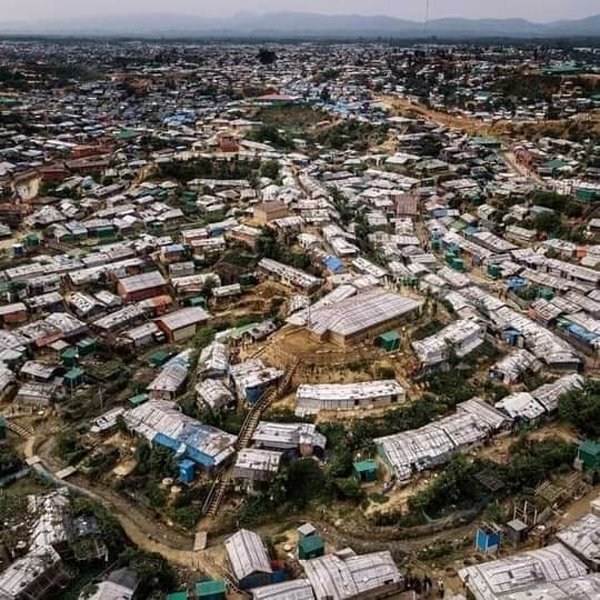
Poems and Photos from the Bhalukhali Rohingya Refugee Camp, Bangladesh

By Mohammed Faisal, 19, Bhalukhali Rohingya Refugee Camp, Bangladesh.

I’m Mohammed Faisal, a young Rohingya poet, living in the world’s largest refugee camp. We, Rohingya, fled from our country Myanmar in 2017 due to the forcible displacement of our civilian population. We were brutalized by the Myanmar military, and we were taken to the Bangladesh refugee camp where we still continue to face so many difficult obstacles in order to survive. We have struggled, and have also established a massive tent village. Unfortunately, there is not enough space in our tents, and we continue to have to downsize. Our family members continue to change with all the various circumstances that are also changing. We feel suffocated, and our parents, children, aunts, and relatives all have to stay together and sleep together in a very small tent shelter. There are not any playgrounds for children to play in, and children are not able to receive the formal education that they deserve. We are all flying around like birds in a cage, and we are not comfortable at all.

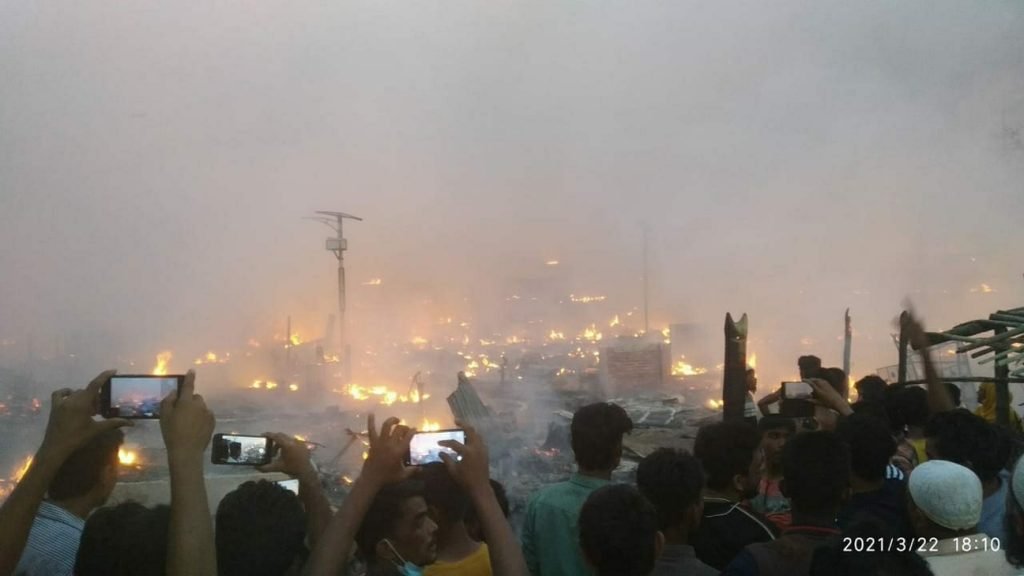
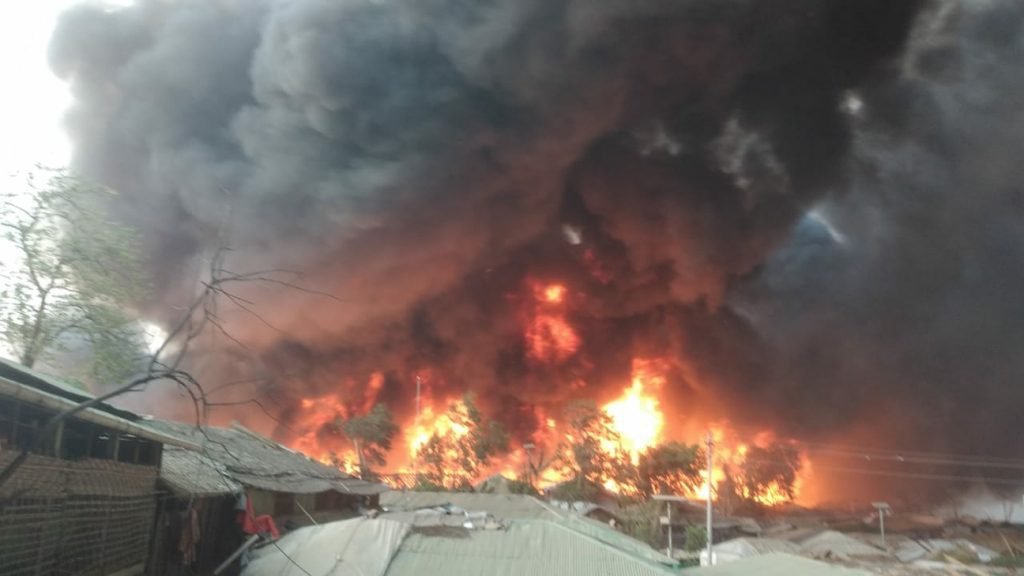
On Friday, March 22, 2021, a massive fire decimated thousands of our shelters here at the Bhalukhali camp. The fire was incredibly violent and killed hundreds of people including infants. Unfortunately, the people here were not able to escape from the camp, because the government of Bangladesh has created a fence all along the camp’s border, which is why so many people were not able escape the violent fire. There are still so many people who are without shelters and homes. I have also seen people sleeping on the ground wrapped in plastic blankets. This is a short introduction to the people I love, the Rohingya, and is also an introduction to our current state of affairs. I hope the Rohingya stories will live on in your awareness.

 The Fence by Faisal Justin
  
 When the fire caught our shelters 
 some people weren’t able to come out.
  
 They burned in the fire,
 couldn’t see their way out. 
  
 Many people could not climb the fence;
 they had to stay in this cage.
  
 There is no freedom in this burning cage,
 suffocated by heat. The fire leaps. 
  
 O, my government! 
 O, dear Bangladesh! 
  
 You are the thousands, rescued and displaced. 
 You are the kind-hearted. Take down this fence, this place. 
  
 Hundreds of lives ruined by this fence--we do not understand. 
 You eliminate words. You eliminate language.
  
 No End to My Sadness by Faisal Justin
  
 Many years of my life have disappeared from view
 Life continues, full of sorrow. I remain here, in the same position 
 My eyes, full of tears, at times, even oceans 
 My body becomes thinner, day after day
  
 Don't feel well wherever I go 
 This moment only makes me ache 
 The world is not the world, in my imagination 
 The sunny day looks like a cloudy day 
 My face even looks gloomy. 
  
 I have visited several places 
 Searching for peacefulness 
 The more I wander, the more morose I feel 
 Every second reminds me of one thing-- 
 Which remains my country 
 And which I hold in my warm heart . 
 Life feels as if it is falling, full of aching, full of sadness.  

A Journey Behind the Walls

City by Eileen Kim, age 17, South Korea
Bird by Eileen Kim, age 17, South Korea
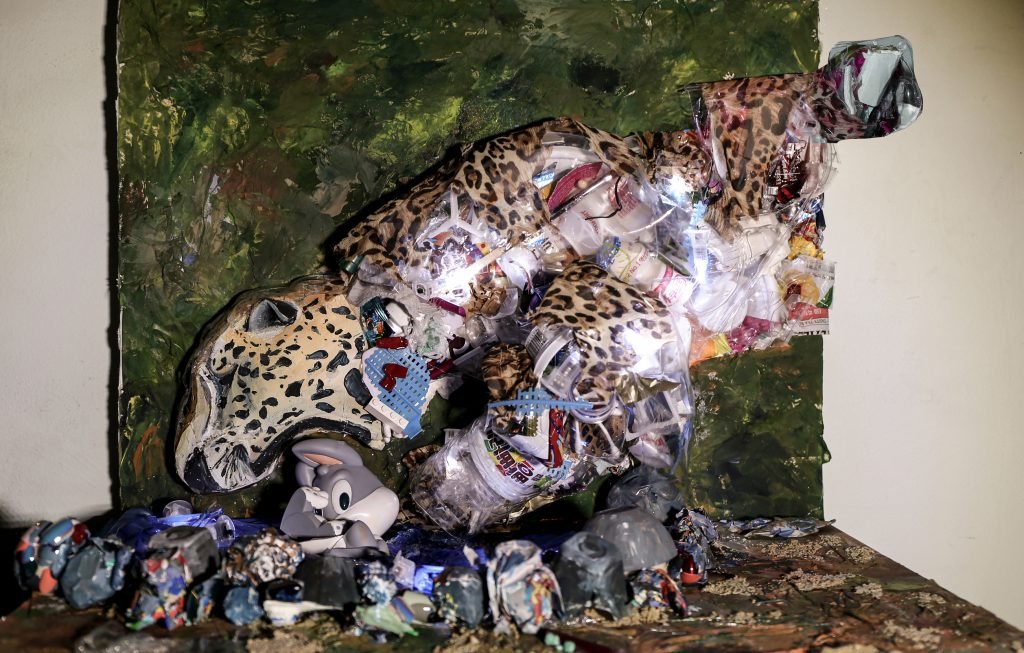
Cheetah by Eileen Kim, age 17, South Korea

A Journey Behind Walls

In recent years, the search for graffiti has taken up a big portion of my time. Within the monotony of my school routine, finding tags and art hidden in building corners or behind walls was akin to a treasure hunt. I have often taken pictures of the latest artworks I found and saved them in my photo album as if they were pieces of a collection. As an artist, I feel inspired to create my own signature style and to learn more about the interesting world of graffiti.

But, growing up in South Korea has reminded me of the impermanence of the culture here. I’ve often observed buildings being demolished and supplanted by newer, shinier structures. Stores I would visit frequently would suddenly close down, and the art that I once cherished would no longer exist. It’s unfortunate that we are so busy moving forward at a fast pace that we can’t appreciate the creations around us. Society doesn’t provide ideal conditions for graffiti in terms of conservation.

On top of the ever-changing nature of Korean street art, COVID-19 has made it even more challenging to explore as frequently as I had in the past. However, last month, I found the perfect opportunity to revisit the childlike wonder I have felt while observing graffiti. While browsing the internet, I came across tickets for URBAN BREAK Art Asia, a three-day fair showcasing street artists.

At the fair, it was almost as if time suspended, and the pandemic didn’t exist. I was surprised to see that people from all walks of life came to see the show, from teenagers donning denim bucket hats to older professionals in their weekend attire. Despite everyone wearing masks, the individuality was compelling and echoed Korean life exactly as it is—one of constant sounds, smells, and colors intermingling. The exhibit echoed the cacophony that citizens experience in their daily routine. I distinctly remember one artist playing the piano in his booth, surrounded by paintings of traditional Korean houses. Meanwhile, an underground rapper signed autographs for his fans a few booths down.

There were numerous exhilarating artists that caught my attention, but the one who stood out the most to me, personally, was a female artist named Junkhouse. Toward the end of the show, I recognized a familiar artwork hers that I’ve seen numerous times on a building during my walks home from school. Luckily, I was able to contact Junkhouse after the show, and she was more than happy to share her thought processes with me.

As Junkhouse compared graffiti in Korea to that in foreign countries, she confirmed that South Korea’s tendency of getting rid of old buildings rapidly prevents street artists from experimenting with their artwork and freely using the city as their own sketchbooks. Furthermore, with the law being strict in terms of interfering with property, young artists move further away from the traditional street art culture. Younger generation artists would rather choose social media as a way of presenting their work and connecting to the greater public.

As she spoke of her free-spirited artistic process, where she draws organic shapes onto existing structures, my mind kept going back to a recurring thought: there is always room for freedom within constraint. There exists a certain, and often justified, stereotype of Korean art as being highly elite and institutionalized. Proprietary gallery owners are often part of a closeted establishment that promote lucrative art forms, such as porcelain from the Goryeo Dynasty or paintings by artists within their inner circles. But unlike traditional art galleries holding the key to the next generation of artists, some people are ready to break the mold and directly communicate with the audience themselves—even teenagers like me.

As I reflected on my own conversation with Junkhouse and on the vibrancy of the works at the art fair, I felt encouraged to challenge my own perceptions. In a rapidly modernizing country like Korea, what would finally allow graffiti art to soar to its highest potential? As for me, what are some preconceived notions and existing barriers that prevent me from reaching my maximum potential?

The answers to both questions are yet to be found, but I am slowly on my way to discovering them. In the meantime, I have added forty new pieces of art to my virtual graffiti collection, which I can browse freely from home. These pieces serve as a reminder to seek freedom even amidst the busy days that lie ahead.

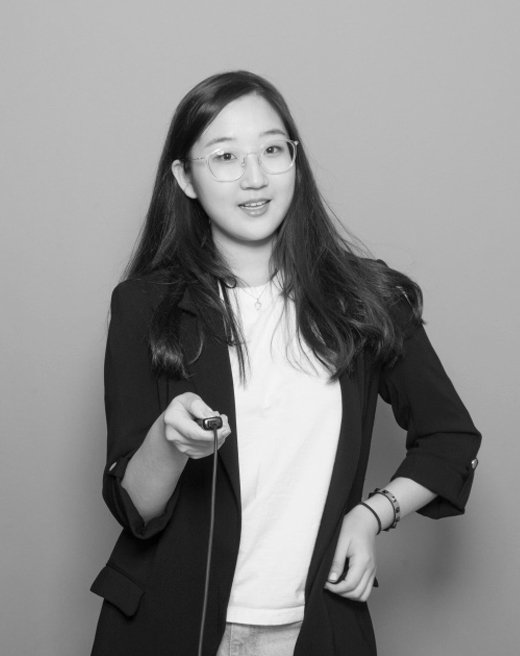
By Eileen Kim, age 17, high school junior in Seoul, South Korea. She adds:

“I am an active artist and writer who enjoys learning about the intersection of culture and the environment. Born in the United States but raised in Korea, I am a bilingual Korean and English speaker with the privilege of examining different perspectives. My interest in environmental conservation, particularly in reducing the use of plastic, has led me on many exciting journeys. Recently, using my art skills, knowledge, and love for the environment, I designed environmentally friendly, reusable masks. My ultimate goal is to create a sustainable system for the future in populated cities, such as Seoul and New York. 

As an artist, I am also highly invested in the emergence of street art. In search of works from creative peers my age, I came across your magazine and felt the courage to submit some of my works. “A Journey Behind the Walls” details the street art culture in South Korea and how our strict society has led to a creative underground movement. Though street art is forced to take on a more limited form in Korea compared to other cities like New York or London, it is surprisingly pervasive and thought provoking.

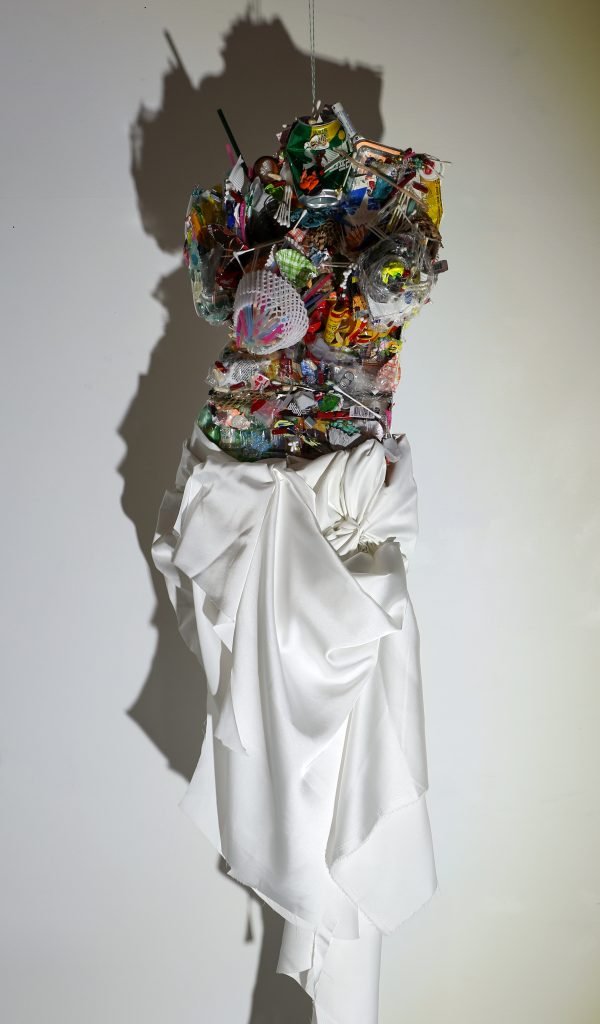
I have also attached my original artworks, “Bird,” “City,’ “Cheetah,” and “Venus.” The recurring theme of these works is the impact of the climate crisis on the ecosystem, from animals and humans to the environment itself. My essay and art attempts to relate to the universal longing of community, freedom and change.”

In My Wildest Dreams

 In My Wildest Dreams
 By Lyla Hershkovitz, age 11, Grade 5, Laurence School, California.
  
 In the world I imagine, we see each other’s hearts, and embrace our skin colors.
 In the world I imagine, we aren’t delicate, but delicate to each other, thinking before speaking.
 In the world I imagine, there will be a lively ocean filled with animals, not plastic.
 In the world I imagine, it won’t be a big deal when somebody puts a disabled person 
 into a commercial or magazine. It will be normal. 
  
 In the world I imagine, people can love who they love, and not be judged because of it. 
 In the world I imagine, people will be themselves, not someone else.
 In the world I imagine, tech has improved so much that it doesn’t addict us or take away our brains, 
 so that in my world, my kids, and their kids will live their lives to the fullest.
  
 In the world I imagine, people will know kindness. It will not be taught, just a practice of life.
 In the world I imagine, in the near future, or however long it takes us, 
 we will be together in person, be kind, and grow together.  
Lyla Hershkovitz, age 11, Grade 5, California.

I’m a Young African Elephant Calf

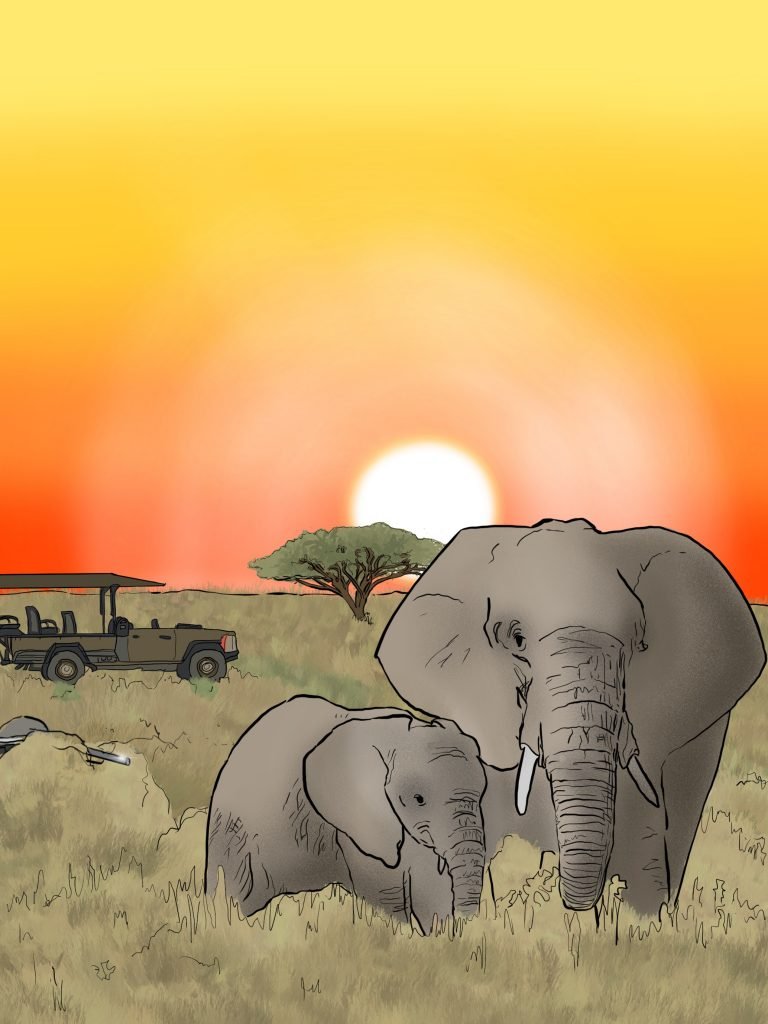
Illustration and flash fiction by Alina Yuan, 17, California.

This season, it is unusually hot. The heat of the African savanna radiates off the parched land and burns my feet with each step while the sun glares down upon us, sneering at our misfortunes. I slowly drag my feet through the dirt, feeling not soreness but numbness. Small fissures have appeared across the arid landscape. I flick my tail to shoo away pesky flies. A slight breeze blows through the landscape, flinging dust into my eyes and nostrils. But I am too tired to shake off the dust. I have gone days without food or water. My eyelids droop as a hazy feeling overpowers my senses and a dull buzzing noise echoes in my head. One of our pack buddies collapses ahead of me, breathing heavily and closing his eyes. Immediately, mosquitos start to swarm him until he takes his shaky, final breath. At this rate, I will die soon, too.

Our pack shuffles sluggishly towards a large puddle left over from the rainy season. Everyone gulps the water greedily. It is the dry season and we must keep ourselves hydrated during the drought. After drinking water, I use my trunk to pull off the leaves and twigs of an uprooted tree, and I eat with Mother and my cousins. The rest of my family stays close by, eating and keeping watch for predators. We continue our journey and trudge towards a patch of trees. After a while, I look up. The sun is starting to set, and I can sense the temperature dropping quickly.

I hear a slight rustle behind the bushes. I see a head, a human. It is carrying a long stick in its hands. It points it at our pack slowly and waits. We immediately become silent, and I turn to Mother.

“What is it doing?”

“Hush,” she says quietly, her voice trembling.

She pushes me roughly into the middle of the pack and blocks me from the human’s sight with her body.

“Is this what killed Father before I was born?” I whisper. “I’m scared.”

Mother turns to me. Her eyes soften, but I can still see her pupils shaking. She caresses my face with her trunk.

“It’s going to be alright.”

The human stands up slowly, making sure to barely make a sound. I see a piece of tusk hanging from a strand around its neck. Sheer fright envelopes me. It moves its finger.

A deafening noise startles me, and I freeze in terror. My pack scatters, frantically trying to escape. One of them falls, but I don’t know who. The human puts something back into the stick and aims again. Another blast. I turn around and run as fast as I can. More fall. My vision blurs, and I search frantically for Mother, turning in circles, bugling in panic. The screams of my brethren are muffled and drowned out by my violent heartbeat. The human appears in front of me, shooting at my relatives beside me. I scream and turn around to face the body of my dead Mother.

By Alina Yuan, 17, California. She adds: “I enjoy writing flash fiction and short stories, as well as drawing comics. At home, I love playing with my dog, a Shiba Inu, and collecting an eclectic array of stickers.

I am of Chinese cultural background, but I always enjoy learning about other cultures and issues around the world. One day, while scrolling through social media, I stumbled upon a picture of poachers hunting elephants for the illegal ivory trade. I was so appalled by that image that it stuck with me and prompted me to create art and writing revolving around this topic. Learning about cultures requires you to put yourself in other people’s shoes, and the same can be said for learning about world issues. Remove yourself from the perspective of a human being and put yourself in the shoes of the oppressed in order to learn more and practice empathy. That is how the world can progress and rid itself of evil.”

A $15 Minimum Wage for all Working Americans

By Amelia Christensen, 16, Minnesota.

Raising the federal minimum could will save millions of Americans from financial burden and stress!

As a working high school student, I get paid $11 an hour, which is $3.75 above the minimum wage in America (currently at $7.25 per hour). My paycheck for two weeks covers a few meals at a fast-food restaurant, one small grocery bill, and maybe a few miscellaneous items. Now imagine a single mom living on a $7.25 per hour wage with kids, a mortgage, grocery bills, and student debt to pay. To put this in perspective, she would need to work 139 hours a week to meet her expenses. This would translate into working almost 20 hours a day, seven days a week!

A $7.25 hourly wage would mean earning about $15,080 per year. This pay is extremely low, leaving an individual living barely above the poverty line, surviving paycheck to paycheck. A full-time worker living on federal minimum wage would even qualify for food stamps. It’s extremely hard to comprehend how an individual can live on this paycheck, but imagine a whole family living on a yearly salary of $15,080. Quality of life goes down, mental health issues increase and basic needs aren’t met.

Money and financial problems play a huge factor in increased suicide rates. The American Journal of Epidemiology found that financial stressors like unemployment and low income might make someone 20 times more likely to attempt suicide.

Fortunately, there is a solution to the problem. According to a 2020 study published by the American Journal of Epidemiology and Community Health, raising the minimum wage by even one dollar an hour would cause suicide rates to drop. As shown in these statistics, people living in poverty don’t just struggle financially, but also have mental health issues. Many low-income workers are struggling to make ends meet, provoking them to have extreme stress, anxiety disorders, depression, or other mental illnesses. Raising the minimum wage could not only help the quality of life for many struggling Americans but it could also save thousands of lives.

Raising the federal minimum is a long process and doesn’t just happen overnight. Biden has proposed to raise the minimum wage to $15 per hour by 2025. If his plan is successful, he would pull 900,000 people out of poverty, increase pay for 17 million workers, and help narrow the chronic economic gap between white Americans and Black and Hispanic Americans. The minimum wage has been stagnant at $7.25 an hour since 2009, but with the Raise the Wage Act the federal minimum wage would go to $9.50 an hour in June. Then it would continue to rise until it hits $15 in June of 2025. The Liberal Economic Policy estimates that 31 percent of African Americans and 26 percent of Latinos would receive a raise if the minimum wage was increased, which would play a crucial role in reducing racial economic disparities.

Some concerns about raising the federal minimum wage are: it would take a toll on the economy and take away millions of jobs, as employers are required to pay their employees more. Two economists from Princeton University, Card and Krueger surveyed 410 fast-food restaurants and found that with higher minimum wage, job openings increased rather than decreased. Professor Arindrajit Dube of Univ. of Massachusetts at Amherst, a leading minimum wage researcher, points out that companies would benefit from a wage increase because employees would be less likely to quit, which would save time, money, and resources.

Raising the minimum wage will not completely solve all financial problems for an American living on federal minimum wage, but it will provide some financial freedom. If we start to raise the minimum wage gradually, even by a dollar an hour, it would relieve financial stress and anxiety, and even save lives for struggling individuals living paycheck to paycheck.

References:

https://livingwage.mit.edu/articles/19-new-data-calculating-the-living-wage-for-u-s-states-counties-and-metro-areas

https://www.healthline.com/health-news/how-raising-the-minimum-wage-can-be-a-win-for-mental-health#Suicide-rates-drop

https://www.pbs.org/newshour/health/how-economists-see-bidens-15-wage-proposal

Erwin: A Holocaust Survivor

By Maggie Satterthwaite, age 16, European American, Massachusetts.

MUNKACS, CZECHOSLOVAKIA, MAY 1944. The German soldiers trampled, raided, and forced his family out of their house and onto a train, which led most of them to their death. This was the moment when World War II confronted Erwin Forley and his family. They watched flames swallow their IDs, while simultaneously feeling their own lives burn to nothing. The happy life that Forely knew as a Czechoslovakian teenager was stolen from him, and soon enough his existence would mean nothing more than a tattoo marking A-9957 on his arm.

Mr. Forely, 92, tells his story to reflect on and share his experiences during the Holocaust, but also to warn today’s society about what may happen if we continue to choose violence over peace and hatred over love.

Before the Nazis arrived in his town, life was normal. For most of his childhood, there was no sign of anti-Semitism or war.

“Life was good. We had parties, we went swimming, we went ice-skating, and we had normal lives… until the end,” says Forley. “Until they took us.”

Forely grew up in Czechoslovakia with a loving and honest family—his father, mother, brother, sister, grandparents, and eight uncles and aunts. By the end of the war in 1945, there were only three survivors in his family—his sister, mother, and himself.

After their capture, Forely’s family was sent off to a ghetto, where they survived off of little food for three weeks. Then, already weak, they were thrown into cattle cars, where one hundred other people were crammed, and were shipped to Auschwitz. At the concentration camp his grandparents and young brother, deemed useless, were sent to a gas chamber. The father of a girl Forely had known in the ghetto told him to “take good care of my daughter,” as he was not optimistic that he would survive.

Forely and his father remained together, but they had to hide their relationship. If an SS (Schutzstaffel in German, meaning Protection Squadron) guard knew that two men were family, one would be beaten to make the other suffer. To avoid this, Forely called his father by his name.

Although he was not beaten in front of his father, he was often threatened with attacks from German Shepherds. These vicious dogs were used by the SS guards for their ability to maim or kill prisoners who misbehaved.

Because Forely and his father were farmers, they continued to work as farmers in Auschwitz for six months. In many ways, this work on the farm saved their lives at first, as they had a purpose in providing for Germany. Although it helped them avoid the gas chambers, it was still extremely dangerous and took place in brutal conditions. Forely, for instance, was hurt while cutting trees and had to go to the hospital, getting separated from his father.

Later, his father was taken to another camp, where he eventually died of hunger.

Just days after Forely was treated for his injury, the Russians liberated Auschwitz on January 27, 1945.

Erwin Forely was free.

Today he says, “I have faith. I am a believer, and that is why I survived.” He explains that his hope and resilience saved his life.

Once Forely left his worst memories behind and reentered life outside of the camp, he found his way back to his childhood home in Munkacs. However, a Russian captain had occupied the house. Forely explained that he used to live there and asked if he could enter his home to move some furniture. The Russian approved.

Inside, Forely pulled out a pair of earrings his father had given his father, earrings he had hidden before being sent to the camp. The earrings were also survivors of WWII, and they now belong to Forely’s granddaughter.

Later, Forely rang the doorbell to his house again, but this time his mother and sister opened the door. Previously unaware that they had survived and returned, he was grateful to reunite with his only living family members. Together they moved around Europe, and Forely went on to study textile engineering at university.

One day, they received a special package. It was from Forely’s uncle, who was in New York. He sent them papers, and soon enough they were on a long journey to America.

Although he would always hate every German his age or older, Forely was able to be positive and optimistic when beginning his new life in New York.

“I didn’t feel out of place,” claims Forely. He was happy in America and felt welcomed.

Forely was once surrounded by death. Now, however, he lives contentedly with his wife of 67 years, with whom he has children and grandchildren.

“She is always helping me. She is my light,” says Forely, as he mentions his wife.

Seventy-five years ago, the only light that Erwin Forely saw was from deadly flames. Now, he sees it instead in the warm, kind faces of his family.

By Maggie Satterthwaite, age 16, European American, Massachusetts.

Lessons

Lessons 
By Bhagyashree Prabhutendolkar, age 16, Mumbai, INDIA

if only I could go back in time
and whisper to my younger self,
i would ask her to calm down
before dipping toes into adulthood,
telling her it would sometimes
feel like growing up around venom
and you would shatter
when the demons would spin
pretty lies for your pretty self,
but you mustn’t drown in their tales,
for purity flows through your veins
and the venom can’t touch your bare skin,
it will turn to ashes dear.
you deserve to catch the stars
and reach the sky;
and you mustn’t love anyone else,
than your dear dreams that make you survive
you have a reason to live, a passion to die for,
never betray them who make you smile
in the worst days of calamity
and help you rise from nothing,
for they are your dreams
just breathe.

By Bhagyashree Prabhutendolkar, age 16, Mumbai, INDIA. Bhagyashree is a high school journalist, public speaker, 
poet and a recipient of 'The Hindustan Times Scholarship Award.' When not writing, she likes to paint the whispers 
of nature on paper to accompany her poems. She aspires to pursue a career in media and creative writing.

Early Bilingual Education

Taking it One Baby Step at a Time:  Why We Need Early Bilingual Education

By Michelle Lo, 17, New York.

If you’re like any typical American high school student, this is how your language-learning journey will go: you spend three years blazing through vocabulary and learning all of the tenses, grammar, and tones of the language, only to forget everything that you’ve learned by the time you’ve graduated (except for maybe how to ask to use the bathroom or where the library is).

Meanwhile, with the rise of globalization over the last century, bilingualism and multilingualism have become some of the most important skills to have as an individual. Some of the many benefits to bilingualism include a communication advantage in the world’s competitive job market, the ability to communicate and connect with people from a variety of social settings, and a wider global perspective. So, if being bilingual or multilingual is that important, how might we improve the way we teach language such that our students can actually become fluent in them?

The solution, as simple as it may be, is to have our students start early.

One of the clearest benefits to learning a new language early is that the younger you are, the easier it is to pick up the language. In a linguistic study done by a research team from Boston-based universities, researchers aimed to pinpoint the age at which our ability to learn a new language disappears through a short online grammar quiz. Individuals were asked about their age, language proficiency, and time studying English. The study concluded that children up to the age of 18 are proficient at learning a new language, while children up to the age of 10 can achieve the level of grammatical fluency of a native speaker. There are many reasons why children generally have an easier time learning a new language. Younger children are less fearful of making mistakes than adults and teenagers, a hurdle that one must overcome in learning a new language. Certain brain structures in children also make this process of language learning easier. One study conducted by researchers at UCLA observed rapid growth in the parts of the brain that are responsible for developing language skills between the ages 6 and 13, but a sharp decline in growth after age 13.

Contrary to what some may believe about bilingualism, learning a second language during a person’s most formative years will not affect their ability to speak their primary one nor will it confuse a child. As a matter of fact, numerous scientific studies have concluded that being multilingual can offer numerous cognitive and intellectual benefits for children. A 2004 study by psychologists Ellen Bialystok and Michelle Martin-Rhee found that the brains of bilingual children had better executive functioning than those of their monolingual peers. This meant that bilingual children were better at planning, solving problems, etc., which stemmed from their ability to switch from one language to the other. Various studies have also proven that bilingualism can lead to higher intellectual performance and higher creativity.

Yet, despite the overwhelming evidence supporting early language learning, the U.S. is falling significantly behind other countries in foreign language learning. As the American Councils for International Education reported in 2017, out of all 50 states and the District of Columbia, only 20% of K-12 students are enrolled in foreign language classes, compared to the European median average of 92% thanks to the national-level mandates for foreign language education. In addition, many European students begin to take foreign language classes from the ages 6 to 9, whereas most American students begin in their high school years. Unlike many European nations, many states lack requirements regarding foreign language education or the age at which students should start in place, causing more lag for American students.

In order to make up for this lag, we need to start taking steps in emphasizing foreign language education, beginning in early childhood. That could mean implementing a more standardized system in the state where all students can begin to get some exposure to foreign languages from kindergarten. We could also expand dual language programs, one of the many great ways early childhood foreign language education can tap into a child’s language learning potential. Although dual language programs vary in form, most are designed to teach students in two languages in order to foster bilingualism and biliteracy. Usually, one half of the instructional day is taught in a foreign language and the other half in English. Many of these dual language classes are immersive. For example, children are encouraged to learn through play, song, and social interactions with their peers, which, over time, can help to foster their interests in learning the language and culture. These programs are great for English-learners and native English-speakers alike. For English-learning students, a bilingual classroom allows them to build friendships with their native English-speaking peers, a relationship that would not have been possible if it wasn’t for their mutual understanding of each other’s languages. For native English speakers, sharing the classroom with non-native speakers and immigrant students will help normalize the diversity in languages and cultures in the classroom.

If we expect our coming generations to build a future that is diverse and multicultural, we need to first construct the foundation: an improved and earlier foreign language education system for all students. Students, teachers, administrators, families, and change-makers of any form can all contribute to this cause by recognizing this need and advocating for better early bilingual education, whether that be writing to your local representatives or spreading awareness within your community. That way, we’ll just be one baby step closer to a truly globalized future.

—Michelle Lo, 16, New York. She adds: “I’m an American-born-Chinese, or ABC, that has always been interested in language and culture. Growing up, I spoke only Chinese as a young child but after rigorously studying only English during my childhood years, I lost my ability to speak Chinese. This is something that I deeply regret as I felt that it created a barrier between me and my culture. As a result, I hope to spread awareness about the importance of bilingualism in our multicultural society to prevent cases like mine from happening.”

Sources:

American Councils for International Education, 2017, The National K-12 Foreign Language Enrollment Survey Report, www.americancouncils.org/sites/default/files/FLE-report-June17.pdf.

“Benefits of Learning a Second Language at an Early Age: Ertheo Education & Sport.” Benefits of Learning a Second Language as a Child | Ertheo Education & Sport, 10 June 2020, www.ertheo.com/blog/en/learning-a-second-language/.

Bhattacharjee, Yudhijit. “Why Bilinguals Are Smarter.” The New York Times, The New York Times, 17 Mar. 2012, www.nytimes.com/2012/03/18/opinion/sunday/the-benefits-of-bilingualism.html.

Devlin, Kat. “Most European Students Are Learning a Foreign Language in School While Americans Lag.” Pew Research Center, Pew Research Center, 6 Aug. 2018, www.pewresearch.org/fact-tank/2018/08/06/most-european-students-are-learning-a-foreign-language-in-school-while-americans-lag/.

Smith, Dana G. “At What Age Does Our Ability to Learn a New Language Like a Native Speaker Disappear?” Scientific American, Scientific American, 4 May 2018, www.scientificamerican.com/article/at-what-age-does-our-ability-to-learn-a-new-language-like-a-native-speaker-disappear/.

Talukder, Gargi, et al. “Brain Development Study May Provide Some Help for Educators.” Brain Connection, 9 Dec. 2016, brainconnection.brainhq.com/2000/09/20/brain-development-study-may-provide-some-hel

Umama, Khujista. Personal Interview. 18 Dec. 2020.

Zhang, Jingyu. Personal Interview. 16 Dec. 2020.