Category Archives: Social issues

What’s it Like to Be a Teen with Social Anxiety

By Mehek Azra, age 15, New York.

When you’re a teenager, you may find yourself worrying about how others perceive you. You are pressured to fit into several norms. There is always a right and a wrong thing to do if you want to make friends or be liked by your teachers. And all of these expectations can be extremely overwhelming, especially to a kid. But many teens grow into having social anxiety. Social anxiety is a response to trauma. And I know that the word “trauma” gets thrown around a lot but regardless of how “small” or ”big” it is, but it is still a trauma.

Some of the experiences (trauma) that often lead to social anxiety are: being bullied, being humiliated in a social situation, or being pressured to participate in class. But the sad reality is, that society acts blind when it comes to teenage mental health. Teens with mental illness are being neglected because they are too “young” to be facing any issue.

Teachers or parents don’t really notice when a student has social anxiety because they think they are “shy.” Being shy and having social anxiety are not the same. Shy kids can gradually come out of their shell at one point but those with social anxiety don’t. They have a constant fear of being judged harshly by others. So when they are told, “Don’t be shy! We are all here to help,” it doesn’t necessarily help.

I was generally a very quiet kid who did not speak much in school. You can also call me an introvert because that’s what I am. Being an introvert is already a stressful factor about myself that makes every day things hard, such as school. And having social anxiety, on top of that makes it even more horrifying. Since I have extreme social anxiety, I will mention some of the things that trigger my anxiety, and if you can relate to these, you may also have social anxiety.

  • 1. When a teacher randomly picks on you to read out loud, you sit there in silence and you panic. You’d rather get a zero than participate because you are afraid your classmates will secretly laugh at you.
  • 2. You’re at the mall and a group of teenagers walk by and they start laughing, and you think they are making fun of your outfit.
  • 3. Your mom asked you to make an order at McDonald’s, and you start to sweat. You plan out the conversation in your head multiple times before you actually speak because you’re scared they will judge you.
  • 4. You constantly avoid going out with people because you’re not sure they will like you.

I will share one of my own personal stories. When I was in 4th grade, one of my teachers would often call out on me during class in front of my classmates, either to read something out loud or just to participate. According to her, she was just trying to help me speak up. But she didn’t realize that she was promoting quite the opposite. It made my social anxiety worse. One time in my freshman year of high school, we had a project that we were then required to present. I kept getting anxious about it way before the due date. When it was finally my turn to present, my hands turned cold, sweating excessively. My heart was beating so fast, it seemed like it could burst out of my ribcage anytime. Although the presentation seemingly went well, it was dreadful. And that is just one of the many terrifying experiences.

If you have social anxiety, you may feel more comfortable expressing yourself through writing. You may prefer text over calls. No matter how much you love them, you are not going to respond to that FaceTime call. It gets to the edge in school, or at least it did for me. The madness about constant group work and participation made me despise school. Though classes are all online now, social anxiety does not go away. You may still be afraid to unmute yourself to answer so you just don’t join your classes anymore.

Many suggest therapy to overcome social anxiety. But not everyone has that option. So what can you do? First of all, know that nothing is wrong with you! You are not alone. Social anxiety is not always recognized or spotted easily by others. So that kid in your class who you think is confident, not afraid to speak, and answers questions effortlessly, might have a fear of social judgment. You can’t tell. Some are just better at hiding it.

One of the methods that seemed to help me with my social anxiety is self-talk. Since I am afraid to let anyone know about my issue, I became my own therapist. Talk to yourself the way you wish others would talk to you. Never disrespect yourself. Remind yourself that as much as you may think others are judging you, most of the time they are just busy with themselves. The teenagers in the mall laughed because one of their friends made a joke. That one girl laughed when you were reading out loud because she and her friend were making inside jokes that did not involve you. We stress too much about how others see us. But you need to see yourself for who you are. Be aware of your triggers. Avoid situations that will make your anxiety eat you up. You do not need to do things to please others. Use your preferred way to share your thoughts and let others know about your issue. Please pay attention to yourself!

I want to let teens like me know that they are not “weird.” They don’t need to “fit in.” I am speaking up on behalf of those who struggle to express their thoughts. And I also want teachers to be mindful of how their students are and not pressure them to do presentations. They should offer alternatives in which the students can contribute their ideas without increasing their social anxiety. I shared my thoughts but will you take them into consideration?

By Mehek Azra, 15, high school sophomore, New York. She is Bengali (from Southeast Asia).
The Codependency between ‘Peace’ and ‘Trust’


By Aliya S., grade 7, INDIA

The literal definition of peace would mean a state of calm, quiet and serenity. But the human race is far more complex, so we would refer to peace as a time of truce—no wars, no violence and no issues that need to be resolved, whereas trust is considered to be the belief of sincerity, either thought or expressed by a person. While the concepts of peace and trust are commonly misidentified as each other, in reality, they are interdependent in order to create a long-lasting, somewhat fantasized period of harmony. 

Obtaining peace is no easy feat, as it has to be mastered from within. Only a person at peace with themselves and their surroundings can achieve peace as society. There is only one path to peace, and that requires change. Change of thought, change of expression and changing actions to words, which believe it or not, has been proven (occasionally) to be more powerful than actions. Currently, peace is a fictional concept, because it requires something most of us lack-a sense of mutual trust. 

(Indian) Farmers have left their homes and have chosen to raise their voices even in the harsh circumstances they now face, because they do not trust the government and ITS corporate policies THAT they fear. Our deterministic chaos is but one pesky gnat that prevents us from living peacefully, whereas the lack of trust and therefore, communication, acts as a barrier instead. Farmers, the souls of our very nation, just wish to come to a mutual agreement with the government to ensure that they receive at least a minimum support price (MSP) for the crop they grow, harvest and sell. Instead, they sit out in the cold, protesting because they fear the new farm laws. The people who spoke up for them, who were supposed to be encouraged, were punished instead. This brings us back to the notion of change, and how the mere thought of change in our society can lead to drastic measures taken just to prevent it. 

The lack of communication has caused a rift between two sides, which can only be solved with the government delivering practical solutions through dialogue, which will reinforce trust-leading to peace.

By Aliya S., grade 7, INDIA.

Beneath the Surface

By Riley Ball, age 14, grade 8, Missouri. 
 Maybe I don’t look like a model.
 Maybe I’m taller than a lot of girls.
 Maybe I don’t wear makeup,
 but I am still beautiful.
  
 I know I acquire pimples
 and blemishes,
 but does that not make me myself?
 When I smile and laugh, 
 do I not look healthy and happy?
  
 When my eyes sparkle,
 after I laugh,
 does my face not show its natural beauty?
  
 Why do looks have to matter, anyway?
 Is what’s inside of you not special?
 Are looks more important than kindness?
  
 Have we dropped so low that we no longer
 care how God looks at us?
  
 Why care what people think of me?
 This is my life.
 Am I expected to live my life on
 Other’s opinions?
  
 God created us in his likeness and image.
 If God thinks I’m beautiful inside and out,
 then why care about what our society thinks?
  
 Before we humans jump to conclusions
 that we are not beautiful,
 maybe we should look in the mirror
 and examine ourselves.
  
 Because sometimes what we
 find is beautiful—
 we surely need to
 look beneath the surface.
Riley adds: “I wrote this poem to help myself get through the struggles every teenage girl goes through. 
I have always looked at myself in the mirror and never really liked how I looked. This poem was to help 
other struggling young women and men get over some of the hard times in their lives.”

Blindfolded

By Doeun (Jessica) Kim, 14, Manila, Philippines.

The streets of Gwangjin-gu (South Korea) rush past the bus window, the sun making Heejin’s eyes squint. The bus flits through the usual route of convenience stores and cafes while she plugs in her earphones, their tangled wires hanging against her chest. Classical music lingers while kids wander along the pavements, dragging themselves to after-school academies. The Ajummas Manning Street food carts with warm fish cake sticks dunked in broth as they count the crinkled bills, sweat creeping down their foreheads. A man in a suit sits beside her. His head leaning back and his eyes are shut. Teenage girls giggle in the back of the bus, their bangs twisted into hair rollers. They purse their bright red lips while taking selfies but Heejin ignores them because she thinks those were the kids who wouldn’t succeed. It’s her stop as she leaves the bus to her math academy. 

Heejin leaves the doors of her last cram-school of the day, stretching after hours of studying. She walks home, taking out a packet of red ginseng from her backpack. She drinks it and cringes from the bitter taste. Her grandmother gave her a box of this ginseng extract for Christmas. It will help you with your studying, she said. 

“Heejin-ah! Come sit, I cooked salmon,” Heejin’s mother says. She is holding a rosary, whispering prayers. Heejin drops her backpack onto her desk then sits down. Her fingers lift the metal chopsticks as she takes a piece of salmon. 

“Eat a lot, it’ll help you study better.” Heejin always ate as fast as she could so she had more time to study for her exams. She leaves to her room while still chewing her food. Organizing her textbooks across her desk, she sits down as she takes out a pencil and an eraser which corners have been flattened out. She takes notes for hours, typing and deleting on her computer, the inner corners of her eyes begin to crust. The sound of the keyboard and the scratches from her pencils repeats for days and nights, until she doesn’t know how long it’s been. 

It was all for Seoul National University. It would help Heejin with her future, allow her to have leisure for the rest of her life, at least that’s what her mother said. 

“Endless studying would all be worth it, right? Just wait for SNU, and it will be fine”. She falls asleep and wakes up to these thoughts. 

Heejin shuffles through the hallways to get to her next block. Her eyes feel heavy after the all-nighter she spent as she enters class. People’s heads are buried underneath their arms and some are sitting on their desks, complaining to their friends about their tests. Heejin sits on her desk, putting in an earbud. Behind her sits Eunjung, her pencil barely tracing on the lines of her notebook. The two were close friends since their childhood, until the rankings of the finals in junior year were posted outside the teacher’s office.

They locked arms, looking for their names on the poster. Heejin’s name was written in second place, and Eunjung’s glimmered above hers. There had been small tensions between them before, but it was the first time Eunjung had placed higher than Heejin. Heejin let go of Eunjung’s arm and said, “Maybe it’s just another sacrifice for both of us, and our future.”

After that, Heejin began to skip Saturday family reunions and church on Sundays. Instead, she always sits down and studies, letting only her classical music flow through her ears. She still goes through social media, seeing the pictures of her old friends laughing, singing karaoke and her cousins in family lunches. 

It’s the night when SNU’s acceptance letters come out. Heejin’s mother and grandmother sit behind her, each squeezing her shoulders as she powers up her computer. Her fingers hovering above her keyboard, taking a deep breath before she goes through her mail. Heejin clicks on the letter from SNU as her breath pauses while she scrolls to the bottom of the letter. She only hears the shrill of cicadas from outside as she reads the words, ‘congratulations and informing you of your acceptance to SNU.’ 

Her mother hugs her, “you made it my Heejin, you made it.” Heejin stays still in her mother’s embrace, her eyes staring at the letter. 

“Did I?” Maybe it was too good to be true. She fell silent while her mother organized a celebration dinner with the whole family. 

Heejin enters the snack bar. 

“Immo, can I get a coffee milk please,” she asks, placing coins onto the counter. She pops the seal of the carton with her straw, then sees Eunjung scrolling through her phone next to the tables. Heejin is about to ignore her and leave, like usual, until Eunjung asks, “I heard you got into SNU. Was everything worth it?” Heejin stops. She didn’t know.

She went to the school rooftop, walking up the steps with the unfamiliar feeling of skipping class. The door opens into the vicinity of Seoul, its hazy sky looming above the city. She sits on the ledge surrounding the rooftop. Her fingertips rest on the cement. They tap towards the end, her flesh pressing onto the ridge while Heejin stares at the door. Her fingers continue to move away from her, until they reach the edge, barely touching the ledge now. She feels a warm gust of wind passing through her palm as she stares back. Buildings leaning and pedestrians walking across the streets while staring at their phones. Where was the life here? The sun scorches the people as they complain while walking to work, parents forcing their children to study for the whole day. Heejin feels blindfolded, as if she spent her four years working for something that she didn’t want to do. She stands up and closes the door behind her. She rushes down the stairs and she promises herself to ignore the feelings that came up in the rooftop.

By Doeun Kim, age 14, Philippines. “As a young writer living in the Philippines, I am grateful for the opportunity to be able to send out works. I am a fourteen year old, born in South Korea and currently studying at the International School of Manila. Despite being Korean, English is my first language, before Korean. Attending an international school has opened my eyes towards the distinct culture every person brings. I hope that through my writing, I am able to inspire others to embrace their culture.”

Why I Need My Cell Phone

By Beatriz Lindemann, age 13, Florida.

People sometimes wonder why kids are always on their phones. Adults think that kids just play dumb games on their phones. That is not true. Being on my phone does not mean that I am being unsocial. You can “talk” to people in many different ways. Texting, social media, phone calls, Facetime, letters, emails, and in person, are the ways that I communicate with people. My parents call my phone “my precious” because it is so important to me. To be honest, it really is. My phone is the best present my parents ever gave me.

I learn things from my phone. I can ask my phone a question and it gives me the answer immediately. I use it to communicate with friends across the world, too. I have a friend that lives in Melbourne, Australia while I live in Florida. If I did not have my phone, I would not be able to talk to her. A phone allows friends to keep in touch though time and geography may separate them. It really is a gift that other generations did not have. Phones give us so many options. My phone allows me to creatively express myself. For example, I can use a videography app to make mini movies. Or, I can edit photos adding cool lighting and even put designs and drawings in them. My phone allows me to share funny things that happened to me with my friends. My phone lets me capture memories so that I have them forever.  I can find news articles about current events or even history. The access inspires me and allows me to do what I want to do with the click of a button. I have learned so much from my phone, and I’m just getting started.

I can listen to music, watch a video about how to do something, or to even write this essay, all on my phone. That is what makes it so special.

Then there’s the excitement. Every buzz could be something or someone important. I don’t want to miss anything. Someone could have messaged me or liked something I did or posted and I don’t want to miss it. Every beep or ding is mysterious, and I just want to click to find out what’s waiting in store for me. 

It amazes me how far technology has come, and I wonder where it will go? It is really quite fascinating. I can research anything, and millions of links will come up immediately. People sometimes wonder why kids are always on their phones. We are on our phones because the world in there is so huge it takes time to explore, to understand, to create.

And, fortunately, if we get lost in there, we can always find our way back—I’m sure there’s an app for that.

By Beatriz Lindemann, age 13, Florida.

Kindness Is Magic

By Lila Drowos, age 10, Florida.

Kindness, whether it’s you being kind to someone, or someone being kind to you, can make you happier and healthier. Even small acts of kindness can change a life and make you feel better. But can kindness also be good for you, the person you’re kind to, and even others around you? Can it keep you healthy and relaxed? What exactly are the benefits of kindness?

The good feelings you get when kindness is happening are created by endorphins, pleasure chemicals that are connected with joy and pleasure, social connection, trust, smiling, laughter, and love, which can also come from doing an act of kindness. Kindness also helps us form meaningful relationships and connections, making strong friendships and bonds with others. Being kind can reduce stress as well, which makes you healthier and calmer, and creates pride, belief and confidence in yourself, and a sense of belonging.

Kindness can also help you learn to appreciate the good things in your own life. It can help you be more grateful. It’s always good to have some gratitude for the good things in your life, rather than focusing on the bad. Kindness can also boost your creativity and help you have a better imagination and ideas which can produce better results in school. It can also reduce the effects of bullying. And there’s the ripple effect, treating others how you want to be treated. If you’re kind to someone, they could go and help someone else, spreading kindness and helping the world become better, happier, and healthier. Witnessing acts of kindness can also produce other chemicals in your body that help lower your blood pressure and improve your overall heart-health. It can also give you optimism and extra confidence, which is extra helpful when you’re anxious or shy in any situation.

Kindness strengthens your heart physically and emotionally and it can help you live longer, and prevent illness. Also, serotonin levels, the feel-good chemicals in our brains are increased in both the person being kind and the person receiving the kindness, as well as anyone who witnesses that kindness.

Kindness is a wonderful way to feel happier and healthier for everyone!

“I am a fifth grade student and I attend a religious day school where I am learning about my Judaism. Being Jewish is really important to me because it connects me to my family and community. I am also learning to speak Hebrew in my school, which is a language traditionally spoken by Jewish people. We have different values and traditions and I am really interested in learning about the history of my people, and how it has shaped our beliefs as a community. 

One of the things that are important in Judaism is our focus on Tzedakah, which is the Hebrew word for charity. Kindness is very important to me and I like to help others. Some of my favorite ways to volunteer and give charity include preparing and delivering food to people that don’t have any, collecting supplies to donate to people in need, and picking holiday presents for families that can’t get them. 

Another important value in Judaism is Tikkun Olam, which means making the world a better place. Helping the environment and protecting it is very important to me as well. I care about sea creatures that get harmed by eating plastic that blew into the ocean, as well as land creatures that may eat trash. Recycling and reducing waste are ways that anyone can help, and take care of our planet, which is very important. 

When I think about what Tzedakah and Tikkun Olam have in common, they are both rooted in kindness. Kindness is a way of achieving a better world and making the planet that we live on a better place. I wrote my essay in honor of World Kindness Day, which was on Friday, November 13th this year. To me, kindness is very connected to my Jewish values and is something I want to teach others about.”

Lila Drowos, age 10, Florida.

A Chinese-American Pioneer for Suffrage

Mabel Ping-Hua Lee: A Chinese-American Pioneer for Suffrage

By Fanny Wong, New York.

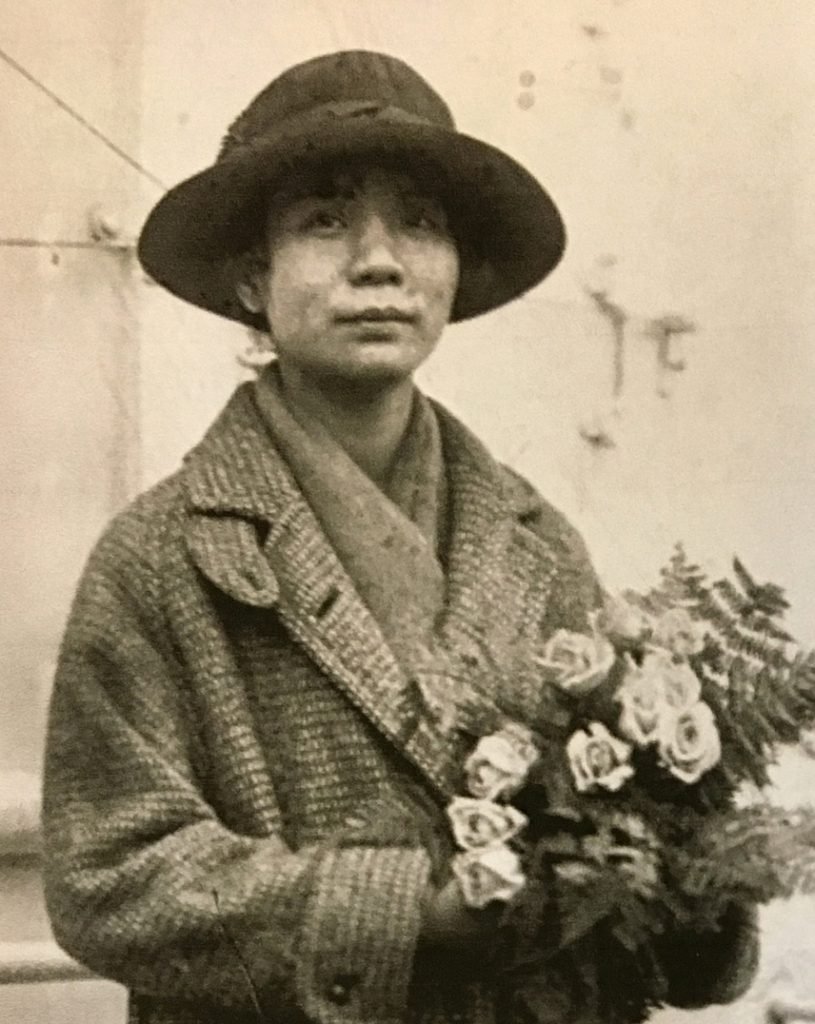
Mabel Ping-Hua Lee
Photo: Mabel Ping-Hua Lee.

from the archives of the public library in Arlington, Virginia

On July 25th 2018, a post office in New York City’s Chinatown was named Mabel Lee Memorial Post Office. It is an honor that Mabel did not anticipate, but it was richly deserved.

Mabel Lee is not well known today, but in 1912, a New York Times article recognized her as a suffragist. It reported “Ten thousand strong, the army of those who believe in the cause of woman’s suffrage marched up Fifth Avenue at sundown yesterday in a parade the like of which New York never knew before.”  On May 4th 1912, what a sight it was to see a sixteen-year-old Chinese girl on a white horse, wearing a sash with “Votes for Women” printed on it. Starting from Greenwich Village, she led a parade of 10,000 suffragists!

Mabel’s father, a missionary pastor from China, had moved to the United States when she was four years old. Living with her mother and grandmother in China, Mabel studied in a missionary school and became proficient in English. She was an excellent student and in 1905, at the age of nine, a scholarship landed her in the United States to attend school. She and her mother were reunited with her father, who was the pastor of the Baptist Chinese Mission in New York’s Chinatown.  At that time, Chinatown was a new community. According to the census of 1910, there were only 5,266 people of Chinese descent in the city of New York.

Mabel’s father was active in the community and greatly influenced his daughter.  Even at a young age, Mable’s Baptist faith infused in her a desire to improve the lives of women and girls. In her teenage years, she became involved in the suffragist movement, knowing full well she could not vote. The Chinese Exclusion Act of 1882 prohibited Chinese immigrants from becoming citizens. Nevertheless, she threw herself energetically into the suffragists’ cause.

Excelling in English, Latin, and mathematics, Mabel was a brilliant student in high school at the Erasmus Hall in Brooklyn. She attended Barnard College, founded for women only because the nearby Columbia University did not admit women at the time. She wrote articles about feminism and suffrage in The Chinese Students’ Monthly magazine, understanding that the poor treatment of women was holding China back and represented a kind of backwardness. 

Mabel’s essay “The Meaning of Women Suffrage” promoted the importance of voting rights and equal opportunities to women. Her speech “The Submerged Half” was an urgent plea to the Chinese Community to promote girls’ education and women’s rights. From the call to the general public and specifically to the Chinese immigrant community, she was indefatigable and resourceful.

As an Asian woman, Mabel broke another barrier. In 1921, she was the first to earn a Ph.D. in Economics from the previously all male Columbia University.  

Mabel was ready to return to China to start a girls’ school. That had always been her dream. In March 1923, she sailed to France to study European economics to prepare herself better. In one of her letters, Mabel said, “I do thank God for the United States which gave me wonderful development and such a keen insight into the realms of knowledge. I feel that my life must be devoted to helping my people in China.”

But that was not to be. Her father died the following November and she returned to New York to take up his work at the Baptist mission. The community and the mission depended on her. She became the director of the First Chinese Baptist Church, devoting the rest of her life to the small church and community service center. The center improved the life of the community by offering a health clinic, a kindergarten, vocational training and English classes. Undoubtedly, she influenced the growing population of children and families in New York’s Chinatown.  

In 1920 the 19th amendment was passed, giving women the right to vote, but the privilege did not extend to Asian or Black women. It wasn’t until 1943 that Chinese persons were permitted to become naturalized citizens with voting rights. The Voting Rights Act of 1965 finally gave voting rights to Black women, 95 years after Black men were able to vote.

What made Mabel spend time, energy, and actions for women’s rights to vote when she herself couldn’t vote? Her religious faith and her nationalistic vision for China suffused her convictions and actions. In her speech “The Submerged Half” she noted “The welfare of China and possibly its existence as an independent nation depended on rendering tardy justice to its womankind.” Her next statement applied to the United States as well. “For no nation can ever make real and lasting progress in civilization unless its women are following close to its men if not actually abreast of them.”

Mabel died in 1966 in obscurity. It is not known whether she ever became a US citizen or if she voted in the US. In the 100th anniversary of the 19th Amendment, she and other less known pioneering suffragists are getting the recognition and celebration they deserve.