Category Archives: Social issues

The crisis in Afghanistan

The crisis in Afghanistan

By Amritha Purohit, age 15, New York.

The crisis in Afghanistan was something I had always known about, lingering in the back of my mind or through news stories floating through the halls of my already noisy house. It was just another emergency in the world, something that needed to be taken care of, but perhaps not by me. I’m a highschooler living in New York. Most of what was happening on the other side of the planet didn’t seem to have that much to do with me. Earlier this year, Sunita Viswanathintroduced me to ABAAD, the Afghan Women Forward. She is my parents’ close friend, and has known me since I was little. She spoke about it to me in passing, not as something she was hoping to involve me in, but to let me know what was happening in her life. I pressed, and soon found myself interning there. I had always thought that trying to make a real difference halfway across the world from would be almost impossible, but I was wrong. A few weeks ago I had the privilege of participating in a video call with children from Afghanistan whose lives have been impacted by the Taliban takeover. Here are a few of their stories:

In August 2021, the Taliban issued an order preventing girls from attending secondary school, citing pretexts ranging from wanting to review the uniform to curriculum issues. This meant an immediate stop for many young girls seeking an education past sixth grade. Krishma is an 11-year-old girl who would have been in the 7th grade had she not been prevented from attending school. She was forced to stop going to school last year. Everyday, when her second-grade brother comes home, he shares what he learned that day. They often work together to learn to spell tricky words in the hopes that Krishma can continue her education. She wants to become a doctor and a teacher when she grows up, but in her current circumstances, it would be impossible for her to even complete high school. Her message to the world is to educate yourself and to always help others.

Hasinat, age 10, is another Afghan girl who can no longer go to school, but for a different reason. She cannot go to school because of her family’s financial situation. Her parents could no longer afford to pay rent on their house, and were forced to move to another province without a school. Now, the only way for Hasinat to continue her education is by moving back to the old province, and that is financially infeasible for her family. 

Aside from education, Hasinat’s life has been devastated in other ways due to her family’s extreme poverty. She hasn’t had her favorite food, Chablis Kabob, in over two years because her family cannot afford the ingredients. Her mother is sick, and the family cannot afford to buy medicine. Hasinat helps around the house to ease her burden. She hopes to become a Quran teacher when she grows up, and share her love of the Quran with the world.  

Sadaf is a 10-year-old girl in the fourth grade. She has a large family—ten members in all—and when she is bored she often makes pillow forts with her younger sisters. She has dreams of being a doctor. Sadaf is one of many Afghan children facing extreme poverty right now. Her diet mainly consists of tea, bread, carrots and shola,a kind of cheap rice. Her mother is very sick, and her family doesn’t have enough money to take her to the hospital. They can’t afford medicine, and many people in her family are chronically ill. No one in her family has a salaried job, and her mother often worries she will not have enough money to feed her kids. Like Hasinat, Sadaf hasn’t been able to eat her favorite food, a kabob, in almost three years. 

Samir and his sister, Marwa, both don’t have national ID cards. This means that they cannot do a lot of things they would normally be able to, like going to school. Marwa is not yet in sixth grade. Only men can get ID cards, and so their mother cannot help them. They also can’t afford to buy supplies needed to attend school. They also don’t have any kind of toys, so Samir and Marwa often race their siblings for fun. Marwa loves shawarma, but ate it for the last time four years ago. 

Farhad is 11-years-old and in fourth grade. He, like Samir and Marwa, does not have any toys, so he too races his 7-year-old brother for fun. He wants to become a teacher when he grows up, despite extreme poverty and lack of resources. 

Aryan is 12, and is in the third grade. Like many others, his family faces extreme poverty. Most of his meals mirror Sadaf’s and consist of shola, and when they cannot even buy that, they turn to bread and tea. The Taliban have decreed that if a student does not have books for the school, they can’t be in school. Aryan’s family cannot pay for books, and has been forced to stop his education. He also has mobility issues, and is always fidgeting. To fill up his time that he’d be in school, Aryan uses a slingshot to aim at bottles. His greatest wish is to own a car and a bicycle, and to be able to go places.

The situation in Afghanistan has become worse. As the rest of the world turns their back on these children, it’s important that we don’t as well. With donations, ABAAD plans to help children get access to education, to get proper medicine, to have a chance to eat their favorite foods for the first time in years. With a donation to Aabad your family will not only be helping Afghan children and families with basic needs, but also showing that change is possible, even in the midst of a crisis.

By Amritha Purohit, age 15, New York.
My Life Experiences

My Life Experiences: In and Out of Afghanistan

By Fatimah Habibi, age 18, Connecticut.

To observe and experience so many terrible things at such a young age had a lasting effect on me. When my brother was kidnapped, I was just seven years old. I may not have known as much at the time because I was so young, but when I saw my family, I knew something wasn’t right. Everyone at home cried for a week, and it appeared as though someone had passed away. He was discovered by the police after the week was over, and they took him to the station. As he saw our family when he got home, he started crying. My parents were crying as well. It “felt like I had been gone forever,” he said. After that, life became more difficult for everyone in my family; we were unable to attend school for almost six months and no longer could leave the house. As long as we stayed in Afghanistan, there was no easy moment. For the protection of my brothers and ourselves, we were forced to make the decision to leave our homeland. Every time I watched my brother or other children playing in the park or outside, I wanted to join them and have fun just like they did. I was happy to hear of my family’s decision since I had always thought that once we left Afghanistan, I would be allowed to play freely in the park like they did without anyone objecting.

I was around age nine when we moved to India, and it was quite traumatic and terrible to leave my entire family behind. It was a good feeling of freedom, but I also faced a lot of challenges like at first, it was very hard for me to learn their language, culture, food, and the most important and shocking thing was their religion (Hinduism).

It was my first time to see a lot of people of different colors and different beliefs. This was something totally new for me. However, on the other hand, I felt as though I had started a new life. I could do whatever I wanted without anyone bothering me. I attended school there fearlessly and learned a lot, including Hindi, English, and a ton of other things. There, I knew what exactly life is and how it felt to be a free woman.

I made a lot of friends, and had a normal childhood. I was really satisfied in India, and I lived there for almost three years. However, after spending three years in India we went back to my country to see my uncles, aunts, and grandfather. We stayed about a month in Afghanistan, and when we tried to go back to India, sadly, my Grandfather passed away. We were unable to go back, so we stayed in Afghanistan. There were no easy moments as we stayed in Afghanistan again, especially for me. I was used to wearing whatever I wanted and going outside whenever I wanted; but in Afghanistan, I couldn’t do any of that which was very hard for me. Going to school with fear and then returning home and spending the entire day at home is not simple.

For our freedom and education, we had to leave Afghanistan once again. We traveled to Turkey and stayed there for a year. I was very tired of being forced to move from one country to another and didn’t want to do it again until we came to the United States.

I experienced a lot of difficulties. People treated us differently because we were strangers, which obviously had a big impact on our mental health. I don’t know why, but as I went outside, the people looked weird. But after a year, I began to get used to it. We lived in Turkey for two years before coming to America. At first, I had the impression that because we were immigrants, everyone would treat us differently, the school and people would be like in Turkey. After a few months, I started going to school and there were really nice, respectable people there. I have come to the conclusion that everyone is the same, regardless of their origin or belief. Everyone follows the same process. In the years that followed, I finally understood how to live and now I feel very free.

The United States offered me and my family a chance at a brighter future. We were able to take advantage of the many opportunities available to us, from education to employment. I was able to pursue my studies at a good high school with plans to attend college and study what I want. My journey from Afghanistan to the United States was not only a physical one, but also a mental and emotional one. I had to learn how to cope with the new culture, language, and people I encountered in my new home. I also had to learn how to adjust to the freedom and independence that I was granted—the freedom and independence that I did not have in my country.

My experience as an immigrant in the United States has been an enlightening one. I have been able to gain an appreciation for a culture different from my own and to gain an understanding of the difficulties that come with the process of acclimating to a new environment. I have also been able to gain a greater sense of appreciation for the many freedoms and opportunities available to me here. I may have left my homeland behind, but I will never forget the strength and courage it took to make such a big move. I will always carry with me the lessons I learned, and the experiences I had during my journey from Afghanistan to the United States. Finally, I have arrived at the place I had planned for myself. I am able to live independently and attend school. I have the opportunity to pursue my dreams in the U.S. and make them come true. I’m a senior in high school now, and intend to go to university to pursue a career that I hope to have and love in the future.

By Fatimah Habibi, age 18, h.s. senior, Connecticut.

Fatimah adds: “I was born and raised in Afghanistan. My cultural background is Afghan and I was raised in a household that placed a strong emphasis on our cultural traditions and customs. One of the traditions that is most important to me is the celebration of Eid al-Fitr, which marks the end of Ramadan. During this holiday, my family and I gather together to pray, give gifts, and share meals. It is a time for us to feel connected to our culture and to pass on our traditions to future generations.

I was also taught about the history and values of my culture, which has had a big impact on my worldview and how I approach life. For instance, the importance of family and community is something that is very important to me and something that I try to incorporate into my daily actions. My cultural background and traditions have played a significant role in shaping who I am and have given me a sense of belonging and connection to my heritage.

The most popular and my favorite dish in my country is called Qabili palau. This is how we make it.

Ingredients:

  • 2 cups of basmati rice
  • 4 tablespoons vegetable oil
  • 1 medium onion, finely chopped
  • 1 pound lamb or beef, cut into small pieces
  • 1 teaspoon salt
  • 1/2 teaspoon black pepper
  • 1/2 teaspoon turmeric
  • 1/2 teaspoon ground cumin
  • 1/2 teaspoon ground coriander
  • 1/2 teaspoon garam masala
  • 1/2 cup raisins
  • 1/2 cup slivered almonds
  • 1/2 cup chopped fresh parsley

Recipe:

  1. Rinse the rice in a fine mesh sieve until the water runs clear.
  2. In a large pot, heat the oil over medium heat. Add chopped onion and cook until it is soft and translucent, about 5 minutes.
  3. Add the lamb or beef to the pot and cook until it is brown on all sides, about 10 minutes.
  4. Add the salt, pepper, turmeric, cumin, coriander, and garam masala to the pot and stir to coat the meat evenly.
  5. Add 3 cups of water to the pot and bring to a boil.
  6. Add the washed rice to the pot, stirring to combine. Reduce the heat to low, cover the pot, and simmer for 20 minutes, or until the rice is tender and the water has been absorbed.
  7. Stir in the raisins, almonds, and parsley. Cover the pot and cook for an additional 5 minutes.
  8. Remove the pot from the heat and let it sit, covered, for 10 minutes. Fluff the rice with a fork and serve. Enjoy!

Editor’s Note: If you are a vegetarian, like many people are in India, you can choose to skip the meat—lamb or beef, etc. The rice pilaf dish will still be very tasty.

A Letter to my Grandchildren

A Letter to my Grandchildren:

How To Save Our Health and the Health of the World!

With Earth Day approaching I have been giving a lot of thought to how I can contribute to making this world a healthier and safer place for you. We have a number of issues that may be stressful for you… but I would like to share some of my thoughts on why the food choices we make can be powerful factors in improving the health and safety in your life as well as the health of the world.
What are some of the problems we face?

  1. Global warming leading to extreme weather (storms, floods, tornadoes, droughts, etc.)
  2. Species extinction due to loss of habitat
  3. Crime and violence
  4. Pandemic issues
  5. Obesity and increase in chronic illnesses (like diabetes, heart disease, kidney disease, liver disease, etc.) 

What is one of the most effective ways to reduce these problems? It’s Food!

Why? When you look around the world…you will discover that certain populations live longer (into their 90’s and 100’s) and are healthier than others. The book, The Blue Zones by Dan Buettner, documents the five regions of the world that have a number of similarities—a whole plant food diet, movement throughout the day, and good social support from family and friends.There are two sources of food available in our world—plants and animals. In the Americas, raising animals for our main food source contributes more to global warming than all the transportation we use. It uses more water and land than using plants for our main food source. And raising animals in close quarters has led to spreading diseases to humans and has contributed to antibiotic resistance. Animal foods are high in saturated fats, which leads to inflammation and clogging of our arteries. Saturated fats also are an underlying cause of obesity, diabetes, and many other chronic illnesses. Also, the processing of our foods to increase shelf life and to make food choices more attractive has increased the fat, salt, and sugar content, and at the same time, made them highly addictive. Addiction leads to anxiety, depression, and a lower quality of life. It may lead to mental illness and potentially to increased crime and violence. All in all, raising animals for our food is not only contributing in a huge way to making our health worse but it is also making our planet sick.

So what is the solution? The one thing we can all do is to start asking ourselves questions like: “Are the food choices I am making now because of my habits or will they help me reach my goals and help improve the health of our planet?” Greta Thunberg’s answer is to just eat plant-based foods. And eating plants as they have grown in nature (with only minimal processing) is the healthiest choice we can make.
What gets in the way of us making healthier choices?

  1. Family and friends
  2. Our culture
  3. Myths we live with…

Let’s look at some of the myths we live with.

Myth# 1. Our Genes Determine Our Health
We used to believe that our genes were the main determinants of our health. We now know that genetics account for about 20% of our health. 80% of our health is determined by our lifestyle (what we eat, how we move throughout the day, the chemicals we use, and how we deal with stress). A good analogy is this… If you put a bullet in a gun, no one gets hurt unless the trigger gets pulled. Our genes are like the bullet. If we choose unhealthy foods, live a sedentary lifestyle, use tobacco or alcohol, or do not learn how to handle stress, then our trigger gets pulled and we can develop the diseases that hurt us. So if you want to be the healthiest, do not stress out too much about your family history, but instead concentrate on the lifestyle choices you make. And eat healthy foods regularly to achieve your best health.

Myth# 2. The Best Source of Protein Is Animal Foods
The building blocks for protein are called amino acids. All of these building blocks are made by and found in plants—greens, beans, legumes, grains, roots and tubers, seeds, fruits, and nuts, etc. Animals are like a middleman. They eat plants and plant products to make protein. Our teeth and long digestive tracts are meant to grind up plants and make our own protein, just like the strongest animals on Earth—elephants and gorillas. We have no need to eat other animals. When we eat protein from animals we decrease the fiber content of our diet. Dietary fiber is the main deficiency in the American diet—the Standard American Diet (SAD).

Myth# 3. Protein Is Deficient in our Diet
If you eat enough calories and a variety of foods in the day, you will get enough protein. Do not focus your attention on getting enough protein, but do focus on how you are going to get enough fiber. Why is fiber so important? Fiber provides bulk and makes us full so we do not overeat. Fiber hooks up with excess cholesterol, other excess hormones, and toxins and wheelbarrows it out quickly through our intestines. For every 10 grams of fiber you add to your daily diet, you decrease your colon cancer risk by 10% because the toxins pass through the intestine so quickly they do not have time to do as much damage to the cells lining your colon. Fiber is the food for the good bacteria in your colon. These bacteria are called your microbiome. When you feed these bacteria they feed you back with chemicals like butyrate and serotonin. Butyrate is an anti-inflammatory chemical which helps heal the body. Serotonin is a hormone that prevents anxiety and depression. Remember… more fiber from whole plant foods leads to better health.

Myth# 4. Carbohydrates Are the Enemy
Many of us are confused about this issue. We all know that eating more fruits and vegetables is healthy. But we are told not to eat carbohydrates. Yet fruits and vegetables are carbohydrates plus fiber. So, why wouldn’t we be confused?

Carbohydrates packaged with their usual fiber are healthy and not harmful. That is why eating whole plant foods as grown in nature is healthy, but processing these same plant foods by stripping away their fiber leads to inflammation and spiking blood sugars that lead to disease. So avoid all processed foods like white sugar, white bread, sugary drinks and sodas, and artificial foods that are not grown in nature.

Myth# 5. Willpower Is the Main Factor in Obesity
Willpower is not the main factor in the epidemic of obesity in the Western world. Our foods have been altered (processed) in such a way as to make them highly addictive. Like any other addiction, high calorie density foods light up the pleasure centers in our brains and keep us wanting to eat more…even though we know this is harming our health. Transition your food choices to low calorie density and you will not have to worry about your weight. It may take several weeks for your body to adjust to eating low calorie density foods rather than the high calorie density foods that you are used to eating.

Myth# 6. Milk Does the Body Good!
Milk has been promoted for its calcium. However, science shows that milk drinkers do not have lower rates of bone fracture. In fact, sometimes they have higher rates of bone fracture. Get your calcium from the beans and greens in your diet. 75% of the world population lacks the enzymes to metabolize lactose (the sugar in milk). This lactose intolerance leads to bloating, increased gas, and a lot of unnecessary abdominal pain. Milk has IGF-1 (a hormone that promotes growth). That is good when you are a baby…but it is not so good if you are older and happen to have some cancer cells whose growth might be stimulated by the Insulin-like Growth Factor-1 hormone.

Myth# 7. You Can Trust your Doctor or Health Care System for Nutrition Advice
Currently there are very few medical schools that share the science of ‘food as medicine’ in the curriculum. So do not be surprised if your doctor or healthcare provider actually learns from you. If you look around and see the number of people who are overweight, have diabetes, or other chronic illnesses, you might ask yourself, “Do I really want to trust the information (nutritional advice) that my healthcare system has been promoting for many years?” or “Do I want to do some research and find a better way?”

Myth# 8. Animals that We Eat are Well Cared for
This might be one of the biggest myths. Big Ag (agriculture) has taken over how animals are raised and killed for our food. Animals are kept in very crowded conditions (I think of these conditions like concentration camps) that require the use of antibiotics to prevent spreading disease in these animals. This use of antibiotics has led to antibiotic resistance. Antibiotic resistance is an important issue because if a person gets an infection that our antibiotics no longer can treat…it could result in increased rates of disability and death. The way we treat others (and that includes animals) will influence how kind or compassionate we become as human beings. The way we have been treating our animals is not an example of how I wish to be treated. My choice is to not support an industry that treats animals inhumanely—as is currently practiced in the meat and poultry industry.

It took over 30 years for the United States to understand that smoking causes cancer and death. Food has become our new tobacco. Promote transitioning to a whole food, plant based diet and watch the reduction in deaths from most of our chronic diseases as we eliminate calorie-rich and processed (CRAP) foods from our diet. We will feel healthier as we replace these with greens, beans, legumes, grains, roots and tubers, seeds, fruits, and nuts in our daily diet. Some of these can be eaten raw while others can be soaked and cooked—boiled or baked to make them digestible and palatable. Minimizing salt, oils (fats) and refined sugars and using whole grains (rather than white flour, white rice, etc.) in preparing meals, and fresh fruits rather than fruit juices ensures that we get that important dietary fiber in our digestive system.
The time is right to transition what we eat…let’s be thoughtful about the science of healthy food choices…not only for our individual health but also for the health of our planet!

Love,
Papa

By Dr. Charles “Charlie” Ross. Doctor Ross is a practicing osteopathic physician for over 45 years and a part-time Assistant Professor at Western University of Health Sciences in Oregon. He wants to change the practice of medicine from treating symptoms to treating the root causes of disease. He practices Lifestyle Medicine and co-teaches free community classes on the science of nutrition and food as medicine.  


Peace Through Awareness

Peace Through Awareness

“I am not a virus.” That was the message on many of the signs to call out anti-Asian hate. Asian hate crimes during Corona have rocked our country back and forth, but even before Corona pandemic came into our world, Anti-Asian hate crimes existed. We’re living in a time of change, with black people getting killed, Corona virus, Asian hate, and to top that all off, Russia’s war in Ukraine. Peace is hard to come by these days.

Back when Corona started, my mom talked to me about Asian hate crimes. She said that President Donald Trump called the virus “the China virus.” It was basically his way of saying, “Oh, this pandemic is all because of Chinese people.” That made me feel sad, but at that time I felt that there wasn’t really anything I could do.   

Unlike me, other people were already doing rallies, and a few people had formed an organization called Stop AAPI Hate. News spread even faster than Corona virus. A few months later, my family went to an Anti-Asian Hate support rally in Fort Lee, and we heard people speak about the hate crimes. My parents had heard about it from our friend. It was on a field, with a big “Be Fort Lee” sign. The supporters were crowded around a table, and the speakers spoke in a microphone. People brought their families with them, including their kids. They made signs to show their support. The signs said things like “Love,” and some even used drawings. One sign I remember clearly was a person with a mask, and the artist used rather dark colors to show their pain and fear.         

I may not have understood then how painful the attacks were, because I hadn’t even made a sign. But the rally encouraged some other people.  Recently, my mom and her coworkers started a podcast. It focused on the Asian Americans living in Queens, NY. I loved listening and learning the stories of these Asian American people, but the podcast also helped me understand the depth of Asian hate in the country. The podcasters would give some snippets of the attacks on Asians such as GuiYing Ma, a 62-year-old lady that was hit on the head with a rock by a stranger. She was sweeping the sidewalk outside her Jackson Heights home on Nov. 26th when a man ambushed her, smashing a large rock against the left side of her head just inches from her eye.

Mrs. Ma woke up in a hospital after a coma and even waved to her husband, though her brain was damaged. For a while everything seemed like it was going to be okay. But then she died. When I heard that, I was shocked. How could someone just kill her, when she didn’t even do anything wrong? What if this had been someone close to me? What if it had been someone in my family?
Then I started speaking up.

“Does anyone else want to share?” My teacher at school asked. It was a few days before Dr. Martin Luther King Jr. Day, and my class was talking about equal rights and what movement we would like to stand up for.

“Noah?”

“I’m Asian, so I want to stand up against Asian hate. There are attacks going on, and many people have gotten hurt.”

I wasn’t the only one speaking about this. Several of my other friends pitched in, and talked about the attacks, and one almost made the teacher cry with her answer, which was more like a speech. Now I finally felt like I was part of this. Not a really big part, but enough that some people at least know about it. Who knows, they could spread the word, and more and more people will hear about it and speak up against the hate crimes. I might not be some famous speaker that would win the Nobel Peace Prize, but I did something to bring a little, just a little, more peace in our world.

By Noah Xia, age 9, Asian American, New York. She adds: “I like to write, read, play piano, and draw. I write poems, short stories and essays. I enjoy playing with my brother and riding my bike along the Hudson River. Even if I don’t have a piece of paper nearby, I make up stories in my head. In fact, one of my greatest stories (according to my brother) was completely improvised! My submission talks about the hate crime attacks against Asians and how they affected me. At first, I didn’t think I could do anything about the attacks, but I ended up actually bringing a little more peace in our world. I believe that world peace is possible, but we’re just not quite there yet…”

The Alchemy of Love

The Alchemy of Love

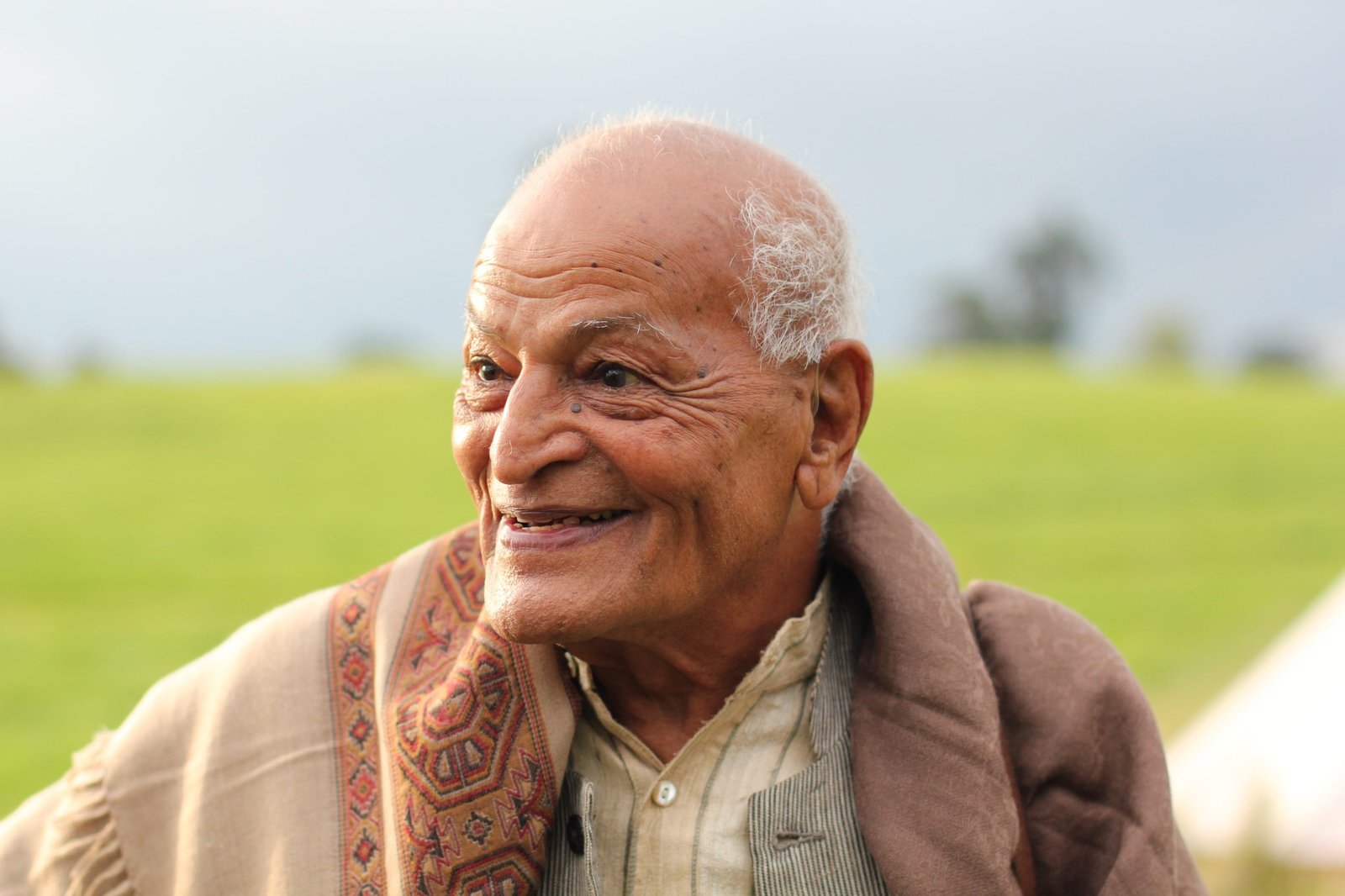
By Satish Kumar, Editor Emeritus, Resurgence

Satish Kumar, Editor Emeritus, Resurgence. Photo by: Daniel Elkan


“I have decided to stick to love; hatred is too great a burden to bear.” 

– Martin Luther King Jr.

Love is all very well, but can we love Vladimir Putin?

I am often asked this question, and I always give the same response, which is to say we must love Putin in order to transform him and save millions of innocent lives. Only love, I tell people, has the power to transform Putin. 

The Sufi poet Rumi wrote:

By love the bitter becomes sweet, 
By love copper becomes gold, 
By love pain becomes healing. 
And to this, I would add:
By love enemies become friends. 

This, then, is the true potential in the alchemy of love and in adopting love as a verb.

Wars and weapons can kill, but they cannot transform. And, of course, before one can kill some ‘undesirable’ person, one might kill thousands, if not hundreds of thousands of innocent people. In wars, millions are made homeless and become refugees. Schools, hospitals and homes are destroyed. Roads, railways and historic buildings are decimated. The price of food and fuel goes up. And it is those living in poverty who will suffer the most. In modern military operations, it is impossible to avoid civilian casualties.

Saddam Hussein and Osama bin Laden were killed, but before they died how many ordinary men, women and children lost their homes or their lives? How many soldiers on both sides were killed, wounded or forever traumatised? And after all the deaths and destruction, what was achieved? Nothing! Afghanistan is still ruled by the Taliban, and Iraq is still in chaos. If the greatest military power in the world, the United States, could not win a war after 20 years of fighting in Afghanistan, what hope is there for either side to win the current war in Ukraine?

If there is a lesson to be learned from the experience of recent wars such as those in Vietnam, Korea, Iraq and Afghanistan, then the lesson is simple and clear: wars are not only futile, but they are also obsolete; they neither transform tyrants nor accomplish peace. 

Nations have waged wars and practised hatred for hundreds of years and have failed miserably in their stated goals. The UK tried to conquer Afghanistan but failed, Russia tried to rule Afghanistan but failed, America tried to establish a friendly government in Afghanistan by military means but it too failed.

So now let them all try love. 

It is easy to love someone who is reasonable and agreeable, who is good and gracious. But to love someone who behaves in a narrow-minded, arrogant and selfish way requires real courage and strength. Making peace with Putin would be a sign of strength, not of weakness.

We need to understand that those who behave badly do so because they have not themselves been loved. The poet W.H. Auden wrote, “Those to whom evil is done do evil in return.” 

The path of love is taken by the brave and not by the faint-hearted. The real test of love is to love your enemy. Love conquers all. Amor vincit omnia. 

War prolongs conflict, but love resolves conflict. Love is as logical as it is magical. Love makes miracles. 

History is full of violent systems: slavery, apartheid, sexism, Nazism, colonialism, casteism and many more unpleasant ‘isms’. Some people think that communism is evil. Others think that capitalism is evil. And if we always take the path of confrontation and opposition in order to overcome these undesirable systems and to defeat our opponents by war, we are simply pouring fuel on the fire and then hoping to extinguish it.

Wise leaders have often proclaimed that the ends cannot justify the means. Noble ends must be pursued and accomplished by noble means – which include love and nonviolent resistance. There is no way to peace: peace is the way.

Mahatma Gandhi is believed to have said, “There are many causes I would die for. There is not a single cause I would kill for.”

We have witnessed the success of nonviolent resistance. Gandhi and the Indian struggle for independence, Martin Luther King and the peaceful campaign against racism in America, Nelson Mandela and the anti-apartheid movement, the Truth and Reconciliation Commission in South Africa. These are some utterly inspiring examples of nonviolent action founded on love. These movements brought about a change of heart leading to a change of regime. These movements were founded on the humility of hearts, on generosity of spirit and on an unconditional love for humanity. 

Love is letting go of ego and arrogance. To love is to accept the multiplicity of systems and the diversity of truths. Love is to live and let live. Love and selfishness do not go together. Love celebrates unity, ego imposes uniformity. Love embraces diversity; ego causes division. Love lets a thousand flowers bloom; ego wants a monoculture. Ego is driven by self-interest, love looks for common interest. Ego seeks separation, love likes relationship. Ego engages in self-seeking, love seeks mutuality and reciprocity. Ego leads to war, love leads to peace. Ego creates contradiction, love creates conciliation.

If we want peace, prosperity and happiness, then love should be a way of life for all of us. It is through love that we find meaning in our lives. The art of love needs to be learned and practised every day. As we nourish our bodies with food every day, so we can nourish our souls with love every day. Love is food for the soul. Love is the essence of life: love of ourselves, love of each other, love of people and love of Nature. No one, not even Putin, is our enemy. I would say the same thing to Putin: Ukrainians are not your enemies, Europeans and Americans are not your enemies. Only through friendship can the whole of humanity protect its common interests. 

Wars cause climate catastrophe. The production of weapons, the constant flying of military planes and the use of other military vehicles, including tanks, require huge amounts of fossil fuel. After the war is over, further fossil fuels are needed to rebuild destroyed buildings and damaged infrastructure. In war people suffer and Nature suffers. In war no one wins and everyone loses.  

War leaders sit comfortably in the Kremlin or in the White House. Soldiers suffer. Society suffers. War is pointless. War is unnecessary. War is uncivilised. War is hell. War is out of date. There is no other act as bitter, as traumatic and as stupid as war. War is immoral and irrational, whoever initiates it. 

Ukrainians blame Putin, Putin blames Ukrainians. But love takes us beyond this blame game. It takes two to fight a war and it takes two to make peace. But politicians of all persuasions seem to have lost the art of making peace. They seem to have forgotten the statesmanship, the statecraft and the craft of true diplomacy that are always rooted in deep love.

Nations know how to conquer the moon. They know how to destroy our precious planet Earth with nuclear weapons, not once but a hundred times over. But the presidents and prime ministers of Europe, the US and Ukraine don’t seem to know how to talk with Putin and help him see the futility of war and inspire him to seek peace! Nor does Putin seem to know how to befriend his neighbours like the Ukrainians and make them feel safe. What is the point of all this progress, what is the benefit of all this education and all the scientific achievements if the graduates of Oxford and Cambridge, Harvard  and Yale, Moscow and Beijing don’t know how to establish harmony among nations and peace among people?

Politics without wisdom is a very dangerous thing, and sadly, politicians do not know how to be true statesmen, ambassadors do not know how to be true diplomats, and religious leaders do not know how to practise love as a verb. Governments of all colours spend billions and trillions of dollars, roubles and euros in preparation for war while many of their citizens are homeless, jobless and hungry, living on food provided by food banks. 

I am a pacifist and a peacemaker. I do not excuse Putin for attacking Ukraine. But I want Ukraine and the supporters of Ukraine, as well as the Russians and their supporters, to rise above their narrow national interests and seek the common interest of the whole of humanity.

Love safeguards the interests of everyone. 

The consequences of wars are so tragic that we need to avoid them in all circumstances. Like the medical profession, politicians need to take an oath to do no harm. No harm to self, no harm to other human beings and no harm to Nature. If such an oath were to become an integral part of international law, Putin could not attack Ukraine. The USA could not attack Iraq. 

Hugely militarised nations live in constant fear and insecurity, forgetting that true security resides in trust, not tanks. Only the power of love can free them from fear of the other. 

When wars become unpopular, leaders are compelled to negotiate and compromise. Neither side gets their way. Both sides are forced to find a mutually acceptable solution. Why could they not do this in the first place? Why not find a negotiated agreement instead of all the deaths and destruction?  Peace is common sense, but conflicts and common sense don’t go together. Unfortunately, common sense is no longer so common!

If we harbour hatred for Putin in our hearts, we are victims of our own hatred. Therefore let us choose love in place of hatred. Hatred is not good for us. Our true self-interest and our true security are both embedded in love, not in hatred. This is tough love. I call it Radical Love. I know I am being an idealist, but the way of the pragmatists is causing chaos. So why not give idealism a chance? 

So yes, we need to love Putin, and we can love Putin. If we loved Putin, he would have no excuse to go to war. Love is unconditional, unlimited and abundant. Love is for all. Let us bring a monsoon of love to Moscow and soften the dry soul of Putin.

My message to Putin is the same:  Stop war and try love.

And my message to Europeans and Americans is the same:  Stop adding fuel to fire.

It is time to bring the rain of love, forgiveness and peace to the fire of war in Ukraine—a war that should never have been started. 

—Satish Kumar is the recipient of the Goi Peace Award 2022. His new book, Radical Love, is published by Parallax Press and is available now from www.resurgence.org/shop

This article was first published in Resurgence & Ecologist Issue 337, March/April 2023. Used with permission. All rights to this article are reserved to The Resurgence Trust. To buy a copy of the Resurgence magazine, read further articles or find out about the Trust, visit www.resurgence.org

Andy’s Birthday Surprise

Andy’s Birthday Surprise

By Astaire R. Greenberg, retired librarian, New York.

Andy loved to read. Even when he was a baby, his mother would hold him on her lap and show him picture books. The best part was when his mom or dad tucked him into bed and read to him.

Wherever he went he always took along a book. When he went to his big brother’s baseball game, everyone watched the players. Not Andy! He sat on the benches and looked at his books. Even at barbecues, he would eat his hot dog so quickly, and gulp down his drink, so he could look at his books again.

At the beach, Andy would go into the water for a few minutes, but then, he would hurry back to his blanket to continue reading. It was such an exciting time for Andy because now he was starting to sound out the words by himself!

Everywhere that Andy went, he carried a blue and white backpack. All of his friends put water, a snack, or games in their backpacks. Not Andy! He put in books—lots and lots of books. There were so many books, and his backpack was so heavy, that sometimes he couldn’t even stand up straight! His dad figured out a way to help Andy. Together, they built a little cart. They worked very hard on this and had lots of fun doing this together. It was the perfect size to carry all of his books. They painted the cart blue, and in big white letters, they wrote,“ANDY’S AMAZING BOOKS.” His friends helped him decorate the cart with bright and colorful designs. They all thought it was so cool, which made Andy feel soproud. He and his dad did a great job with the cart.

Mrs. Rivera, his teacher, allowed Andy to leave his cart in the back of the classroom. When the children finished their work, they were allowed to go to see what books were in the cart for that day. There were usually books about space, soccer, animals, children from around the world, and many more. Every storybook interested Andy. He wanted to learn about EVERYTHING!

Saturday was Andy’s favorite day of the week. That was the day that he went to the public library with his parents. His mom asked Alex to empty the cart, so there would be room for all the new books. He couldn’t wait to visit the library to see Mrs. Hamilton, the librarian. She was so friendly and helpful. She always showed him the new books in the children’s section. After filling the cart, he asks his mom, “Can I get a library card today?” To which she replies, “Not yet!” After visiting the library, Andy and his family had pizza for lunch. It was hard for Andy to eat his pizza and look at a book, but that never stopped him from trying. Every morning when Andy woke up, he would ask, “Is today Saturday?” So, his mom and Andy decided to put up a calendar on the wall. Together, they put a red circle around all of the Saturdays in the month. This way, Andy could check the calendar every morning.

Andy asked, “On which Saturday am I going to get my very own library card?” His mother explained that he had to wait until he was five years old. She said, “Andy, we only have four more Saturdays to go.” Andy couldn’t wait to get his own library card! Soon, he would have it, and his name would be in big letters on the top. There were so many books in the children’s section. How was he ever going to finish reading all of them?

Andy’s birthday was almost here. He invited his best friend, Terrell, to his party because they had so much fun together. His mother also sent out invitations to his other friends: Luis, Maria, Jada, Jordan, Shaquille, and Matt.

COME TO ANDY’S 5TH BIRTHDAY PARTY
PLACE: Andy’s House
DATE: Saturday, March 5
TIME: 1:00 P.M.
ANDY’S PARENTS HAVE A VERY SPECIAL SURPRISE GUEST COMING

When Andy woke up on that Saturday morning, he was all excited to have his birthday party. He was now five years old. He helped his mom and dad decorate the family room with colorful streamers, plenty of balloons, and pictures of Andy’s favorite books. When it was almost time for the party, all of his friends came. They played games, had snacks, and ate birthday cake. Imagine, a cake with five candles!

Suddenly mother stood up, clapped her hands, and got all the children to be very quiet. She said, “As you all know, Andy LOVES books. We wanted to do something very special for him, so we invited a surprise guest.”

A woman came through the door, and it was Mrs. Hamilton, the town librarian. Andy was so excited.

Mrs. Hamilton smiled at the children and said, “Boys and Girls, I am so thrilled to be here. I know how much Andy loves books and reading books teach you so much. They are friends to you. Andy hopes that all of you will start coming to the library with him every Saturday. Think of all the fun we will have together.”

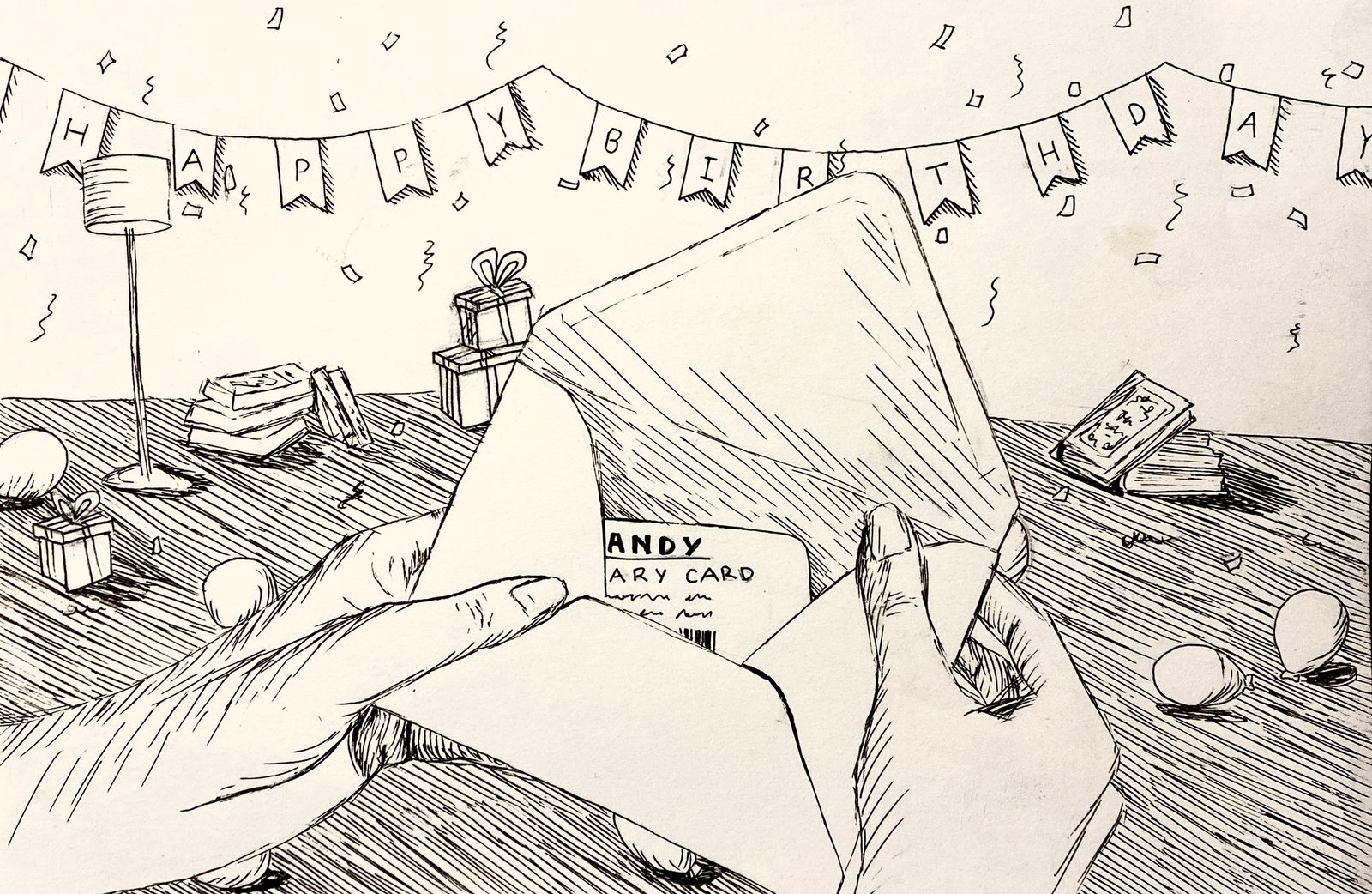
She then gave Andy and each of his friends a white envelope that had each one’s name on the front. She said, “Andy, why don’t you open yours first.” Andy jumped up and clapped his hands. He was so excited. He opened the envelope and there was a Library Card! His name was on top in great big Letters. ANDY!

Then all the children ripped their enveloped open and what a surprise: each one had received their very own library card with their names printed on it.


Oh, how happy Andy was! He said, “This is the best birthday gift I have ever had! It’s great to be five! Now I have my very own library card. And the greatest thing is—all my best friends got library cards too. We can all go to the library together every Saturday.”

Mrs. Hamilton said, “And I can read all the wonderful books to all of you, and then you can check out books to bring them home.”

All the children stood up, made a circle around Mrs. Hamilton and Andy, and they all danced around them and shouted, “Hooray for Books! Hooray for Andy.”

—Astaire R. Greenberg, retired librarian, New York. Illustration by Katherine Han, h.s. senior, Texas.

Weaknesses in the U.S. HealthCare System

What I Perceive as Weaknesses in the U.S. HealthCare System:

 An Analysis from a Personal Point of View 

By Samantha Bean, High School senior, Vermont

My mother has an autoimmune disorder and was diagnosed at 4 years old. There is still no cure for autoimmunity, so it has been a 46-year-long process of appointments, labs, tests, scans, procedures, and surgeries. Doctors she has seen have not given her a diagnosis or clear course of treatment, so she lives day to day, just trying to manage her pain and symptoms. From the experience of a daughter who has been along this journey with her, I have seen how inefficient and unaccommodating the healthcare system can be and want to share my insight and experience. 

As a citizen wanting to take action with any issue, I believe it is important to first educate myself about what is already being done. 

In July of 1965, President Lyndon B. Johnson signed the Medicare and Medicaid Act, also known as the Social Security Amendments of 1965. It established both Medicare and Medicaid health insurance programs for the elderly and people with low income. Next, the Affordable Health Care Act is a comprehensive health reform law enacted in March of 2010. Its goal is to make affordable healthcare available to more people, provide consumers with subsidies, expand the coverage of adults below 138% of the federal poverty level, and support innovative medical care delivery methods to lower the cost of healthcare

An important program in place is the Hospital Readmission Reduction Program (HRPP). This program, under the Affordable Care Act Initiative, requires centers for Medicare and Medicaid Services to reduce payouts to care facilities that experience excessive patient readmissions. 

Finally, an important foundation to recognize is the Commonwealth Fund. This foundation supports independent research on health care issues and makes grants to promote better access, improved quality, and greater efficiency in health care, particularly for society’s most vulnerable: people of color, low income, and the uninsured. 

Overall, it seems that what is being done is not accessible to all people. The programs, acts, and foundations claim they reduce healthcare costs and give people access to health care, but a research study by the Commonwealth Fund showed that from “March 28 through July 4, 2022, 43% of working-age adults surveyed were inadequately insured. This figure includes “…23% that were underinsured where their benefits did not give them access to affordable care.” There are many reasons for this, but one includes how health care providers are unwilling to run into obstacles when trying to bill Medicaid or Medicare, leaving only a handful of doctors that accept this type of insurance. Various surveys, like one by the Medicaid and CHIP Payment and Access Commission (MACPAC), showed that providers are significantly less likely to accept Medicaid or Medicare. This specific study showed that physicians were less likely to accept new patients insured by Medicaid or Medicare, an average 64.75% acceptance, compared to private and much more expensive insurance, 90% acceptance (MACPAC June, 2021).

As a part of my research, I interviewed a physical therapist that works in the Sarasota, Florida area. He has worked as a private physical therapist who does not accept insurance and controls his own rates. But, he has also worked as a physical therapist at a hospital, where he often saw first hand how insurance coverage affected patients’ care. The therapist tries to make his practice more accessible for most people who may need his help. He keeps his prices at a level that he is comfortable charging, even though there are providers that charge significantly more in an attempt to attract high earning clients. He is also building a digital service into his practice that reduces costs without sacrificing quality of care for people who have undergone ACL* surgery. In doing so, he can charge lower rates while delivering a great outcome for his clients, which makes it a feasible option even for those who do not make a lot of money. 

In my interview, the physical therapist said that a weakness of the healthcare system is that the quality of care seems to be highly variable from one hospital to the next, and even from one provider to the next. The quality of care, he says, is also dependent on your insurance coverage and your ability to pay for the care you need. He says that insurance companies make themselves a “middleman” in healthcare payments and make massive profits in that role. They have the ability to promote or approve certain procedures and reject payment for others, which takes some of the power of decision-making away from the provider and patient, sometimes with minimal regard for the best interest of the customer or patient. He also says that the added administrative workload that insurance places on the healthcare system comes with huge costs. He recognizes the need to ensure that the healthcare system is not overwhelmed with unnecessary services, but there are huge barriers and costs introduced in these processes. He has “more questions than clear answers, but when I see the profits that insurance companies pull in by acting as gatekeepers in healthcare, I have to wonder if all that money could be put to better use in other hands.” 

I think this was a really important part of this interview. With any issue, progress will not occur without asking questions, doing research, and recognizing what is already being done. As an active citizen, it is important to recognize this. Like I mentioned before, I am not writing to propose a solution. I am writing to express my concerns and share some insight I have gained with my personal experience.

While I have been an active part of my mom’s experience, especially in the last few years, there are many elements of her story that I was unaware of. So, I asked her a series of general and personal questions about her experience and what she thinks the weaknesses in the healthcare system can be. Because of her extensive experiences, she provided insight on what she thinks would shift our healthcare system to being stronger, efficient, and accommodating for all people. 

It is still undetermined what health, environmental, societal, cultural, or dietary factors can affect or cause autoimmunity. Her experience as a patient and the research she had done has informed her opinion that there is a mind-body connection that doctors could be overlooking. The Myth of Normal, a book by Dr. Gabor Maté, emphasizes how the problem is that doctors are not educated on the mind-body connection, as it would force them to go beyond medical history and break boundaries of treatment protocol. Currently, there are only short-term solutions to autoimmune symptoms, symptoms that are very diverse and unpredictable. This also results in duplicated tests that end up costing a significant amount of money. In her experience, autoimmune disorder patients are tossed around from doctor to doctor, not getting any closer to how the patient feels and what might be going on, making patients feel like their experience is not valid or real. In this way, doctors project their own inadequacy. 

She made an interesting point about a “team approach” when it comes to doctors’ care. When someone is diagnosed with an autoimmune disorder, regardless of doctors understanding, there should be more communication rather than just sending patients to specialists who are unable to see the big picture behind what is going on in the body. 

Next, we discussed the costs of insurance and treatments. She most often pays for tests and procedures with cash and she recognizes that this is a privilege, however; her insight shows her knowledge on both sides, as in recent months, she has had to use Medicaid for increased tests and procedures. Interestingly, when paying cash, she was scheduled right away because it guaranteed a direct payment. With insurance though, she first has to find somewhere that accepts her insurance and get authorization from the insurance company, even if the doctor orders it. Even after all of this, insurance companies have the right to say they will not pay for something. The medical system, unfortunately, has proved to be a money-making business where your level of insurance or ability to pay cash determines your level of care. Insurance costs only become expensive if you become sickly, as it is more profitable to keep people sick. 

Who’s keeping the doctors accountable for their level of care based on your ability to pay? Micheal Pollan, the narrator of the documentary, Food Inc., said in his book, In the Defense of Food, that “much lip service is paid to the importance of prevention, but the healthcare industry, being an industry, stands to profit more handsomely from new drugs and procedures to treat chronic disease than it does from a wholesale change (Pollan, M., In the Defense of Food, 2008).” 

Another point my mom made was that with no underlying illnesses and only regular checkups, a person may spend $2,000 a year on the care itself, but their insurance premium alone is probably close to $1,000 a month. Where is all that money going? When you pay cash, prices are significantly less than they pay with insurance. A fee should be a fee, but since insurance is a business, patients are often treated like business propositions, not human beings. Furthermore, why do pharmacies charge differently? With GoodRX, you can save up to 80% on your prescriptions. Where is the money difference being absorbed and who is getting paid? 

My mother’s insight is significant because even outside of being an autoimmune disorder patient, she has noticed the weaknesses in the healthcare system as a whole. Talking specifically about food and nutrition, an interesting point she made was how health should be followed like a story. Doctors need to be educated to treat people from the very beginning about a healthy lifestyle. If we are what we eat, how can we be healthy if we are not taught from the beginning how to maintain a healthy diet? 

Another point that Micheal Pollan made in his book was how chronic diseases are often affiliated with genetics or demographics, “however; the Western diet and lifestyle, and more specifically, industrialization, has heavily affected the rates of chronic disease like cancer and heart diseases.” This implicitly brings up the idea of how we might be too concerned with supporting a system that is broken rather than strengthening the system from the ground up to promote health and care for all people. Are we more focused on sustaining people’s health or short-term treatments for their medical problems? 

There is clearly a problem, and I think it is my right to question what is being done, or more yet, what is not being done. I believe this is a critical issue that affects far too many people. But in order to progress, it is crucial that we look logically at what is happening in our healthcare system. It is time to strengthen the system and get to the root of the problem, rather than making short-term fixes that only support the system as it is. 

By Samantha Bean, High School Senior, Vermont.

*ACL: The anterior cruciate ligament (ACL) is one of the key ligaments that help stabilize the knee joint. ACL is commonly torn during sports that involve sudden stops and changes in direction.

Women in S.T.E.M. Contest Winners

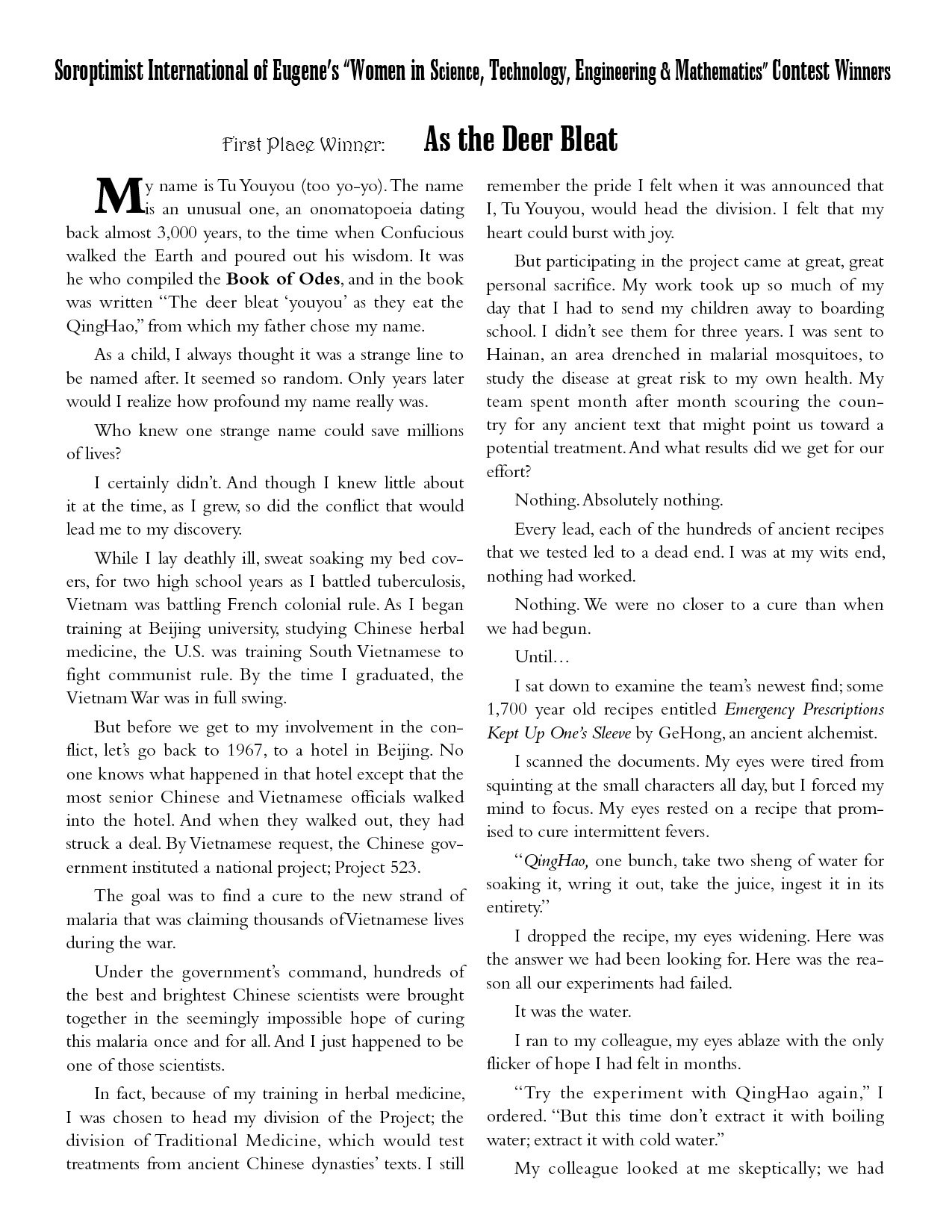
We are pleased to share with you the four winning entries from the Soroptimist International of Eugene and Skipping Stones sponsored Women in S.T.E.M. Writing Contest held recently. The winners were recognized at an awards ceremony held in Eugene on March 8th, the International Women’s Day. You can also read these in our Spring 2023 issue.


New Year’s Resolution

New Year’s Resolution

By Vajra Vanukuri, age 11, grade 6, California.


Eleven-year-old Kristina shouted on the phone. Vera, her mother, packing lunches for her two children, heard the shouting and dashed to Kristina. Kristina gave her the phone. Kristina was talking to her father at his doctor’s office in Moscow, Russia. 

“Vlad, why is Kristina shouting?” began Vera in Russian.

“Vera, this afternoon I must attend a conference at her school. But I cannot be there. I have an important meeting.”

“How can you do this!” she asked.

“Why don’t you attend?” he replied.

“How can I go?”

“You are not going to a forest. You’ll be fine!”

“I know, but I can’t speak English properly. It’s an ironclad rule at her school.”

“You can manage. GO!”

She turned to Kristina, “Kristina, your father is busy. I will come instead of him.”

Kristina shouted, “Mother, you can’t speak English. How can you come to the conference? NO!” She plowed through her mother and ran sobbing. But Vera convinced Kristina. As there was no option, she agreed and left for school. 

Vera was depressed. She felt that if only she knew English, she could avoid such situations. But how is it possible for me to learn English while balancing so many tasks? Suddenly, she realized that Andrei was getting late, so she got him ready and walked him to school.

In the afternoon, Vera attended the conference at the school. All the teachers and staff were cordial to Vera. Kristina kept shushing her mother. All she said were phrases like, “You are embarrassing!”, “Stop talking!”, and “You do not know English!” Ignoring her daughter’s comments, Vera managed to keep her cool and finished the meeting. 

After delivering a cake to a customer Vera went home to start dinner. At home, she asked her mother-in-law where Kristina was. She said that Kristina had gone to study with her friends. While they were talking, Kristina walked in. 

Vera asked, “Why did you go out? You can study at home, you know!”

“I have doubts about English Literature. Can YOU clarify them?” Kristina said with an arrogant tone.

Vera went to the kitchen as she sobbed quietly. Everyone thinks that kids are innocent. Is this the definition of innocence—hurting parents with an inconsiderate tone?

At dinner, Vera explained Kristina’s deplorable behavior to Vlad. But he chuckled and said, “Well, if you knew English, Kristina would not have to suffer like this.” Then he added, “This food is delicious. At least you are good at something!”

That night, Vera was tossing and turning as she thought about her hurt feelings. Like father, like daughter. If my husband won’t respect me, then how can my children respect me? I must learn English. But how is it possible with all my responsibilities? 

*  *  *

As the months went, Vera’s nephew in London was engaged. One day, she got a call from her sister in England. Her sister pleaded Vera to come and help her with the wedding arrangements. 

Vera said, “Margarita, I’d love to come, but you know that I am balancing a tight schedule.” But as Margarita requested over and over again, Vera agreed. 

When Vera asked Vlad if they could go, Vlad said, “I could get a week off. I can come with the kids for the marriage. You could go now and help your sister.” 

Vera worried, but Vlad said that his mom would take care of the kids.

To get to London alone was a challenge for Vera. Finally, she arrived at her sister’s home. Margarita greeted her with a warm welcome. After two days, it was New Year’s Eve. Margarita hosted a party for the bride’s family. It was really boring for Vera because she could not understand their English conversation. Then, the topic about New Year’s Resolutions came. Vera heard the words but didn’t know what to say. So, she kept quiet. 


Illustration by Katherine Han, age 18, high school senior, Texas.

That night, she was thinking: Why can’t I make a resolution? What should it be? Then, an idea struck her head. I will learn English. All night, she tried to figure out how to learn English. 

The next day, she saw an advert from LCC, The London Language Center, on the TV. They offered English classes to newcomers. 

After her sister left, Vera called their number and gathered all the information. In the afternoon, when she went to the LLC, the receptionist said,

“The class is a four-week course; it starts in ten minutes. If you want, you can join it.” Vera paid the fee and sat in the class.

Vera didn’t tell anyone about this. Every day, she managed to attend the class when the family was away. She followed every single detail. While commuting, she’d read anything in English. She tried to communicate with her classmates in English. The instructor was impressed and encouraged her immensely. 

Sometimes, Vera shared her food with her classmates. They loved her cooking and appreciated her. One day, she told them of her small cooking business. The instructor said that she was an entrepreneur. Everyone clapped and cheered for Vera, and praised her. That made her very happy.

One day, Margarita’s daughter, Victoria, was coming back from college and saw Vera on the street. She asked her of her whereabouts. Vera explained the whole story and requested Victoria to keep it a secret. Victoria promised Vera that she’d help fulfill her New Year’s resolution. Vera received English movies from Victoria and watched them in free time. She used every single opportunity she could to immerse herself. 

Vera was extremely busy and tired with all the wedding preparations and her English classes. As the wedding approached, Vlad and the children came to England. Vera was happy to see her children but worried about attending her classes. Victoria noticed her stress and asked, “Why are you looking so worried?”

“How can I attend the classes when everyone is home?”

“How many days are left?”

“Three days!”

“Don’t worry. I’ll see what I can do to help.” 

The next day, Victoria went to LLC and arranged video classes for Vera. For the next two days, Vera attended her class in the bathroom! But the final test was on the actual wedding day. The test was a five-minute speech in English. If they did well, the students would receive a certificate of graduation. 

Vera decided she not to attend the test. At night, Victoria noticed her sadness. “What’s wrong?” asked Victoria.

“I can’t attend the test because of the wedding. This is the end of the line for me,” said Vera. 

That night, Victoria thought of an idea. Next morning, she called LLC and talked to the instructor. 

Everyone was running around with joy as they busily rushed to prepare for the big gathering. Depressed, Vera also got ready. As the wedding ceremony began, she saw her teacher and classmates in the hall.

During the dinner, it was time for family members to make toasts to the bride and the groom. After Margarita, Victoria encouraged Vera to say something. Everyone started encouraging her. Before she could speak, Vlad intervened, “My wife does not know English…” 

But Vera interrupted him, “Vlad, may I speak?” And before he could respond, she stood and started:

Meera … Kevin … Marriage is a beautiful thing. It is a special friendship between two people who are equal. Sometimes, couples don’t know how the other one feels. Family can never be judgmental. Family should never put you down, should never make you feel small. Family is the only one who will never laugh at your weaknesses. Family is the place where you will always get care and friendship. Meera and Kevin, I wish you all the best. Thank you.” 

After the speech, everyone gave a round of applause except Kristina and Vlad. They both felt shameful for having belittled Vera. 

The instructor stood and said, “Vera, you passed and have graduated from the four-week English course of LLC. Excellent job!”

“How is it possible?” Vera asked.

“Victoria convinced me to grade you here. It is a surprise for you,” the instructor said.

“Thank you, Victoria, for helping me fulfill my Resolution,” said Vera.

“I know you worked very hard for this. You are great!” said Victoria.

Kristina and Vlad went to Vera and apologized. Vera was so happy she had fulfilled her New Year’s Resolution. 

The family went back home to Moscow after a few days. Vera now feels, With determination, anything is possible.” 

—Vajra Vanukuri, age 11, grade 6, California. He adds: “I enjoy reading and I have a passion for writing stories. I like playing Soccer. I also practice Yoga, and Taekwondo, currently in the green belt. I aspire to be an environment and human rights lawyer when I grow up.

Illustration by Katherine Han, age 18, high school senior, Texas.

Sustainability and Sustainable Consumption

Sustainability and Sustainable Consumption

 By T. Vijayendra, Hyderabad, India

Life on Earth can be divided in two groups—producers (trees and grasses, for example) and consumers (such as animals and human beings). The difference between the two is that producers—like plants—produce their own food whereas consumer species like animals—humans included—live directly or indirectly on food produced by the producer species (think plant life).

To sustain themselves, humans consume goods and services not only from plant and animal sources but also from inanimate sources such as minerals. These resources are either renewable or non-renewable resources. Non-renewable resources, like fossil fuels, minerals, and metals, are finite in nature by definition. In other words, the more we use them, their supply will deplete. Renewable sources, like plants, trees and agriculture, are by definition renewed in nature; both by natural processes and helped by human efforts.

Now, a simple way to explain sustainability:  If we consume resources in such a way that the resources we need and enjoy can also be available to succeeding generations (as well as for all other forms of life) for their needs and enjoyment at a level needed by them and for a foreseeable future.

This issue of sustainability was not a big problem in human history because our population was small and our levels of resource consumption per capita were also small. Today, both the consumption levels and our population have increased substantially. As a result, the way we live and consume resources is NOT sustainable!

To achieve sustainability, the first thing we need to do is we must reduce our per capita consumption. Secondly, more of it should come from renewable resources.

There is an interesting fact about most non-renewable resources. Be it the fuel used for transport (petrol for cars, for example), chemical pesticides in agriculture, cement used in housing and construction, or the plastics used for packaging, they almost always tend to pollute and add to the climate change (and global warming) problem. This is one more important reason for us to reduce the component of non-renewable resources in our consumption.

Value Chain

What is a value chain? It is the chain of values [the term “value” used here is a business term, and not a “value” in the normal sense] added to a product from the source till it reaches the consumer. Let us explain this more:

If we climb a tree and eat its fruit, there is no value chain. But most of us buy the goods we consume. For example, apples are grown on trees in an orchard (likely, in a rural area), picked, packed and transported to the urban centers where we live. In the city we can buy fruits and vegetables either from a pushcart or a farmer’s market, or in a supermarket. So ‘value’ gets added to the produce in a chain consisting of picking, packing, transporting and retail selling. Now, if the apples were converted into apple juice, involving some processing, there would be even more links in the value chain and hence more value would be added.

There is a difference between fruits and vegetables sold by a street vendor (or at the farmer’s market) and in a supermarket. It is not difficult to understand that the “value” added to it in a supermarket is much more. This extra value is called a shelf rent – which can include the rent of the place, worker salaries, utilities, and air conditioning, etc. You might also notice that a big chunk of the difference comes from the non-renewable resources used for transportation and processing, etc., contributing to pollution and climate change. This makes it less sustainable.

We can add some more attributes to sustainability. Instead of an apple, suppose it was a locally produced vegetable or fruit, and sold directly by the person who produced and harvested it. It will then have much less value added, and it will be more sustainable.

We can extend this logic to other sectors of our activities. Locally produced food is more sustainable as we have seen above. Similarly, mud houses, straw-bale houses, or houses made using local materials like bricks or wood can be more sustainable, not only because of the material used, but also because less energy is used in heating, lighting and keeping them cool during the summer months (or warmer in cold climates). In fact, heating and air conditioning uses a lot of energy.

To mention another example, neighborhood schools can reduce transportation costs and so would more use of bicycles for small distances. In many cases, sustainable products are more ‘expensive’. While ‘value added’ can be calculated, price is determined by a variety of unpredictable factors, which have a lot to do with politics and the prevailing social order in human societies.

To work towards sustainability, we can use these four general principles:

  1. Consume less.
  2. What we consume should have a higher proportion of materials from renewable resources.
  3. The value chain from the source to consumer (or end-user) should be as short as possible, so that ‘value addition’ is reduced. That is, we need to consume local products as much as possible.
  4. The components of the value chain should use as little of non-renewable resources as possible. For example, the transportation can be done with animal carts or bicycles or hand pushed carts. The packaging can be minimal. Consumers can carry their own bags—paper or cloth bags—instead of plastic carry bags and so on. The main idea here is to reduce waste by recycling and reusing resources, or closing the loop in the resource use cycle.

Our power plants, factories, automobiles, machines and buildings need to be adapted so they use predominantly renewable energy resources instead of non-renewable resources that come from underground (fossil fuels) and emit carbon dioxide and other pollutants when burned.

Acknowledgement

The main ideas of this article were developed by Soujanya Mantravadi in 2017 for a talk on International Hawkers’ Day at Lamakaan, Hyderabad, India.

T. Vijayendra (b. 1943) is political-social activist, living in India. He divides his time between an organic farm at the foothills of Western Ghats of South India, and watching birds, writing fiction and educational articles at his home in Hyderabad. He has published several books. He has been a ‘dedicated’ bicyclist all his life; he has never driven a fossil-fuel based vehicle (automobile). Email: t.vijayendra@gmail.com

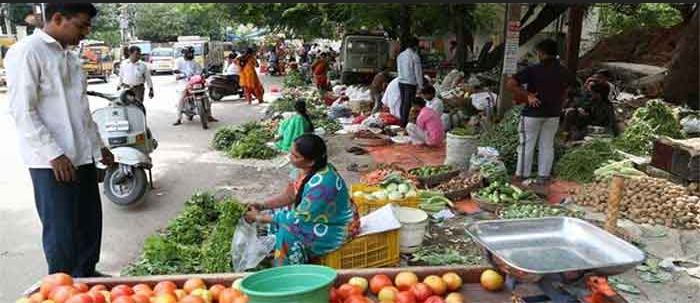
An earlier version of this article was also published in CounterCurrents.org (an online journal, published from Kerala, India) along with the above photo of street vendors of fruits and vegetables in Hyderabad, India.