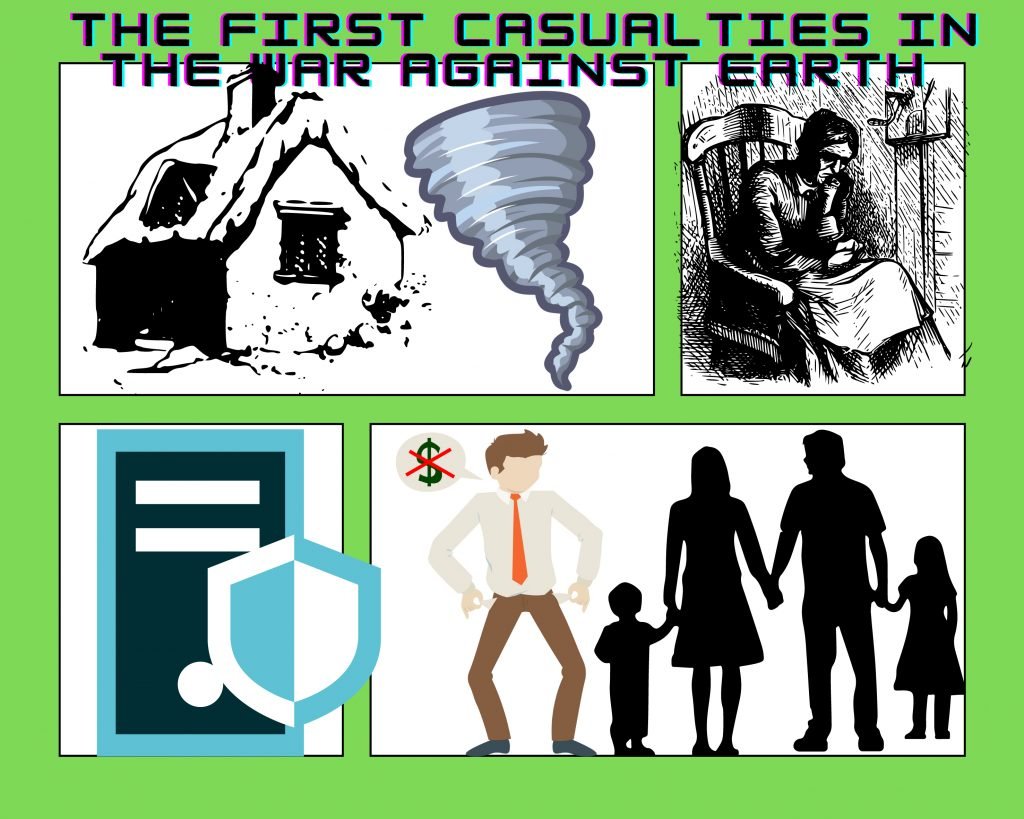
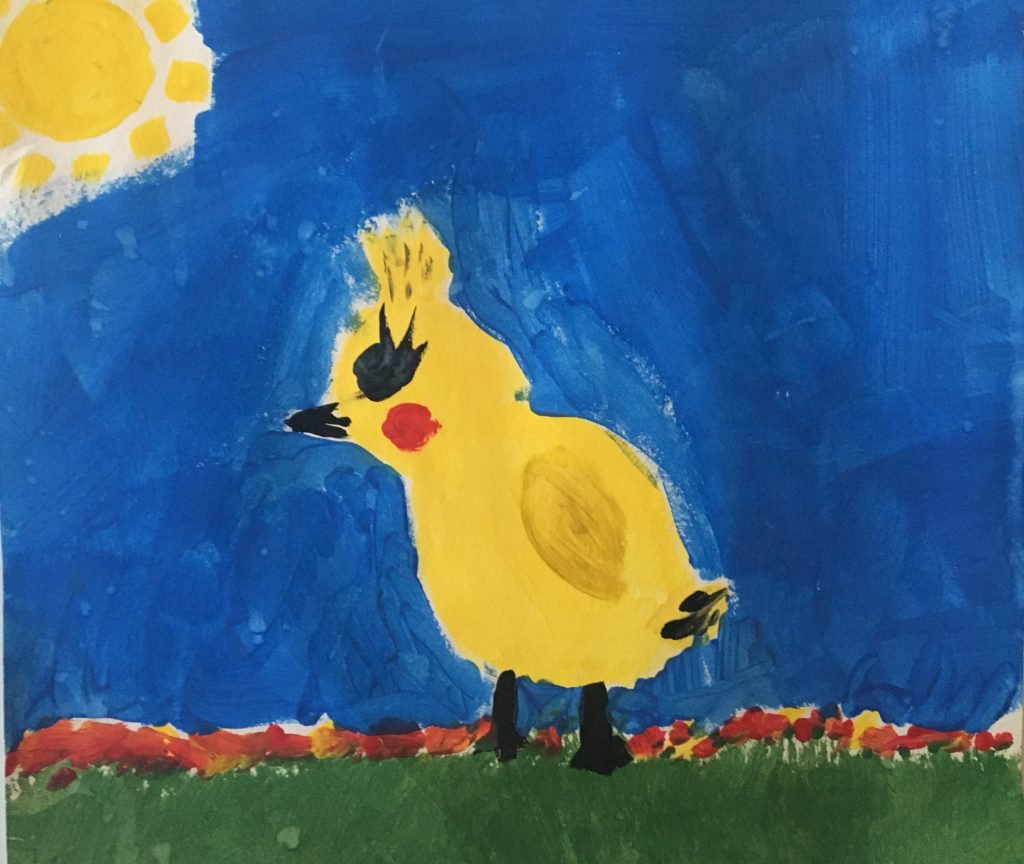
The desperate family feels the vicious sting of betrayal
When Insurance blacklists the entire zip code
Businessmen reassure themselves of their morality
Accepting this debt will only cause their bankruptcy
But what of
The newborn baby, still fresh from the womb
The elderly grandparents, who have worked decades to afford the house
The first casualties of the consequences of the war humans wage on the planet
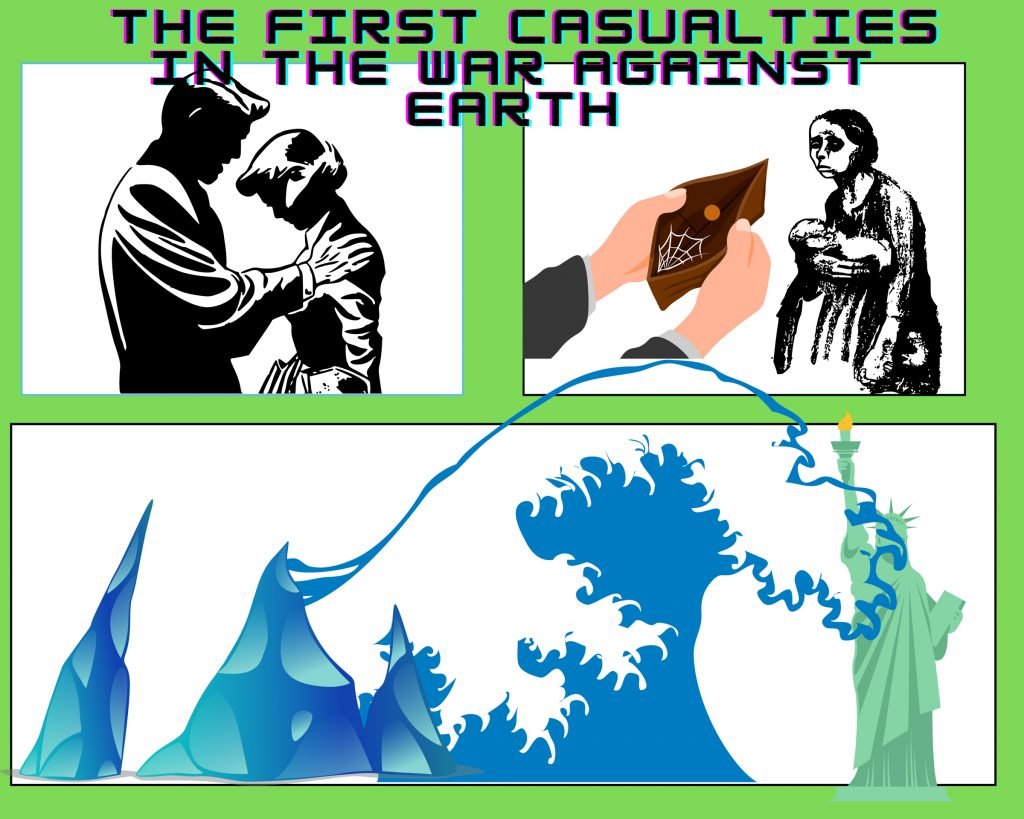
How long must the injustice go on
How many icebergs must melt
The gushing stream of the Earth’s blood
Will overwhelm us if change is not forthcoming
Art and poem by Daniel Liu, age 16, New York.
Daniel Liu adds:
“I am a sixteen year old writer that lives in New York. I am very passionate about the issue of climate change, as it is an enduring issue that grows ever larger with each generation and is deserving of attention from all of society. These poems are a testament to the various consequences of climate change in every aspect of society, from agriculture to insurance. To this extent, I hope that these poems are enough to inspire a sense of alarm for the Earth’s future, but just as importantly, hope that humanity can unify in order to reverse the ecological damage that has been done. It is in times of great crisis that innovation and change are at their peak, and humanity’s resilience is shown through our uplifting moments.”
Tang Li was born in the United States, and she speaks and learns to write in English, Mandarin, and French. She has had one-year horseback riding experience She is very fond of riding and taking care of horses, and she misses those good old days. She wants to be a veterinarian in the future; her dream hasn’t changed since she was four years old.
In Tang’s realistic fiction, Horse Dream, she used the main character Molly to realize her dream, by choosing an ideal location and a dream horse to ride. She began her creative writing by introducing Molly: “Hi. My name is Molly. I am ten years old and was born in Paris, Texas. Yes! It may sound crazy and this Paris even has an Eiffel Tower, just like the one in France. But this Eiffel Tower has a gigantic cowboy hat! My house is just a few blocks away from the Eiffel Tower.
“I have always dreamed of being a cowgirl. Horses are such beautiful animals! I begged mom and dad to sign me up for horseback riding lessons… In school, my favorite part was recess because I got to swing high up on the swings and to see the horse pasture on the other side of the school wall. My favorite horse was a horse named Fiona. She is a brown quarterback horse with a white mark shaped like a rhombus between her eyes. I always hoped to ride on Fiona someday.”
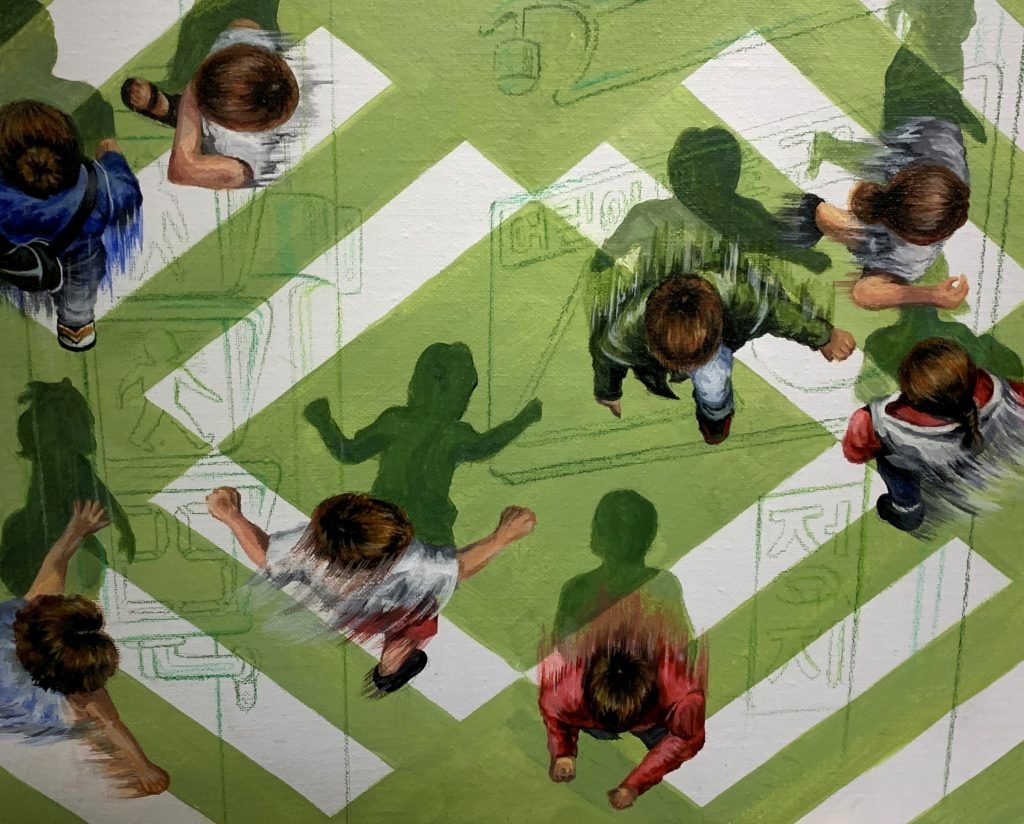
Life is a journey. “Standing at the many crossroads of life, my decisions would add up, changing my life and being. Fortunately, my friends and family have often been on hand to support and guide me through the toughest decisions and transitions. When it comes to art, I draw upon memories for inspiration and create with a strong sense of appreciation for the significant others and cross-cultural influences in my life. In this sense, my works are a collection of nostalgic thoughts, emotions, and experiences, as I look back on my life and hone in on influential fragments of time and space that have come together to define me as a human being.” Jaeyeon is a fine artist who works to claim spaces for the public to engage with art without difficulty. Her work often revolves around detailed paintings, installation art and sculptures, which become a place for social engagement and visual communication. —Jaeyeon Kim, 19, was born in South Korea, and came to the U.S. as an international student at the age of 15. She currently studies at the Parsons School of Design in New York.
1. CrossRoad Korea
Seoul, where I was born, is a big city. There are many cars and people at the crosswalk. When I saw a crosswalk, its ‘X’ shape reminded me of our society. Our community is connected like the shape of ‘X’ and also has a system like a red/green light. Also, everyone has a different destination in life.
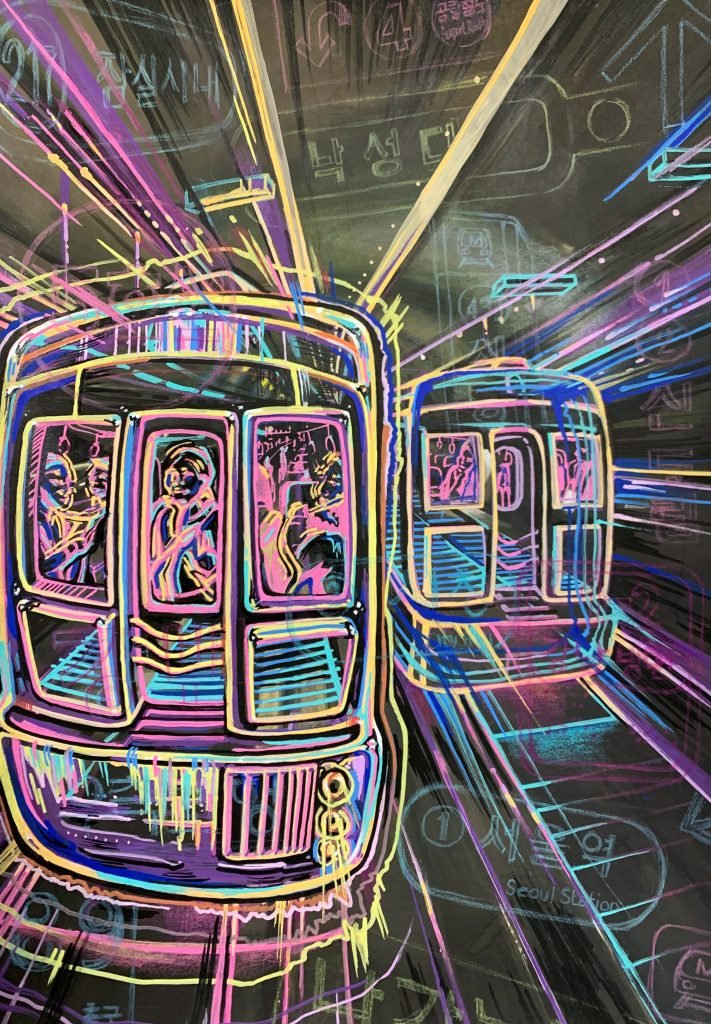
2. Subway Korea
In Korea, the subway is the lifeblood of the city, as in other countries. Many people go to the heart of the city by subway, and it is always crowded. Koreans liken these crowds to the appearance of ‘beansprouts’ which have to grow in a dense environment and survive well in it. I capture a scene of the subway and its passengers. People in the subway have various backgrounds–different ages, genders, occupations, attires, and emotions. Most people feel tired but, well, there is a will to live today.
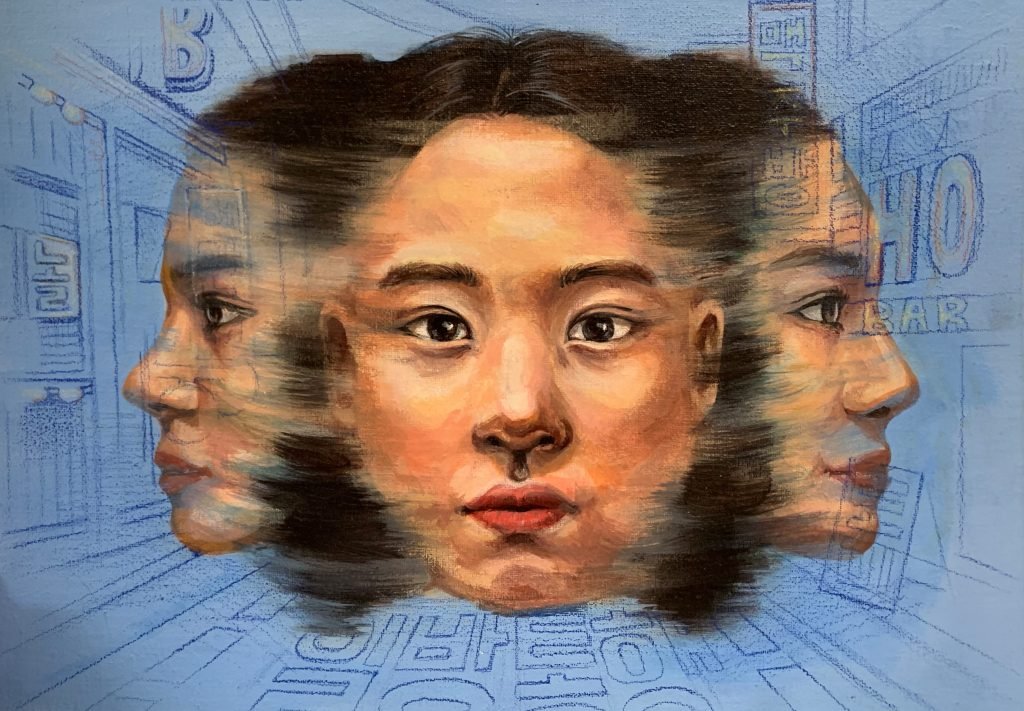
3. Identities
There are many identities within us. Regardless of age, from a girl to a lady, there are various images of women in one person, based on the situation and culture.
—Art and writing by Jaeyeon Kim, 19, was born in South Korea, and came to the U.S. as an international student at the age of 15. She currently studies at the Parsons School of Design in New York.
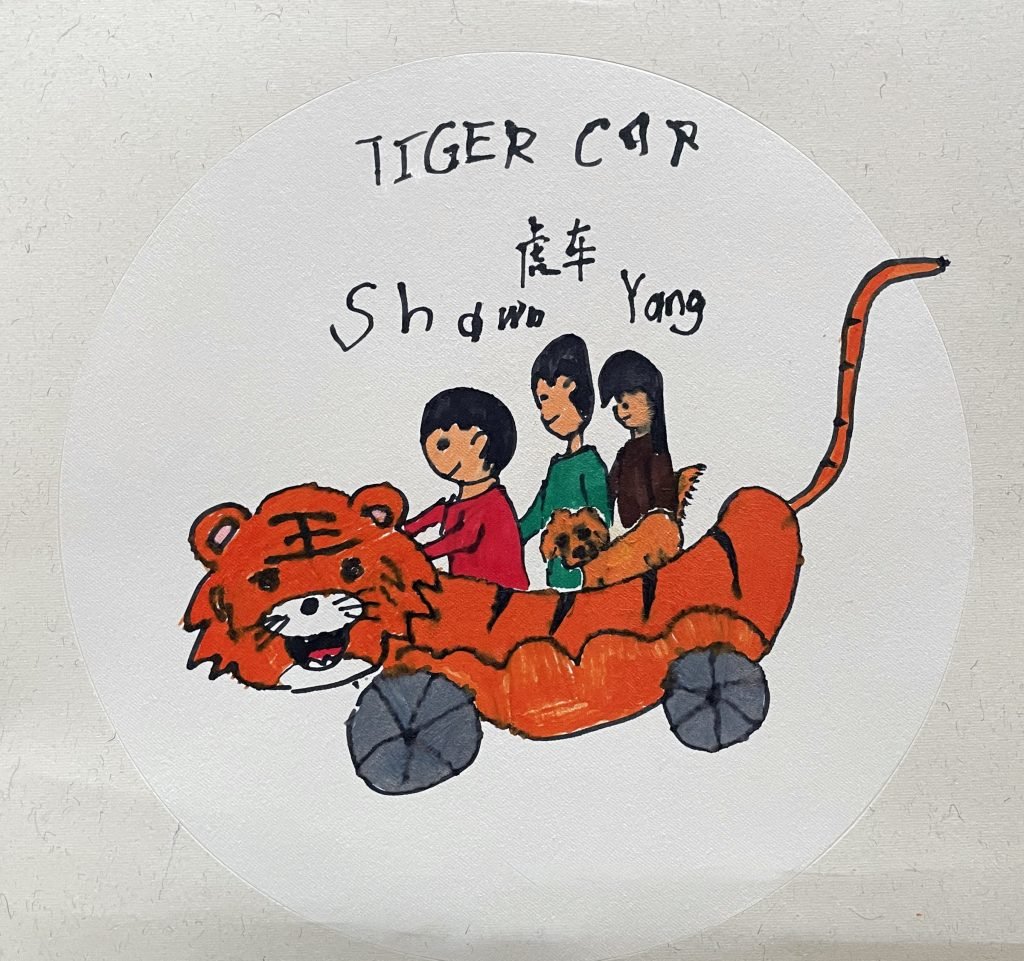
“This is my tiger car to fight again the Monster Nian! I’m driving the car. My dad, my mom, and Ryan are in the car. This car can protect us from all the bad things — monsters, viruses, and bad guys! It is the best car ever!”
On a hot, cloudless July afternoon in 2017, a 13-year-old Chinese American boy ran away from home and jumped in front of an oncoming subway train at the East Broadway station in New York City. He was pronounced dead at the scene, leaving his elder brother and mother devastated.
To many, this is just another suicide incident on the news, but not for me because he and I were close friends in elementary school. I later learned that tense familial relationships and unbearable expectations were the underlying reasons behind his decision to cut his life short. Even after more than four years, I often find myself coming back to this incident, wondering if there was anything that could’ve been done to prevent it.
Despite a growing number of mental health awareness organizations, poor mental health rates are rising. According to the CDC’s Youth Risk Behavior Survey, in 2019, over 36% of high school students in America experienced feelings of depression and hopelessness. More alarmingly, the attempted suicide rate increased by 41% compared to a decade prior, reaching 8.9%. Exacerbated by the COVID-19 pandemic, this rate has only continued to climb in the past few months. A CDC report shows that, in 2020, there was a 24% increase in mental health ER visits for children ages 5 through 11, and more than a 30% increase for those between 12 and 17 years old.
Poor mental health plagues today’s youth, and one of the biggest barriers to improving it is teenagers’ reluctance to admit their struggles to family members, friends, and teachers out of embarrassment. While nonprofit organizations and schools must continue to provide their services and resources, parents must take on a more active role in their child’s mental wellness to address this pressing issue and the social stigma that surrounds it.
With significant worsening in mental health rates in the past decade, we need to address an important question. What might be some of the underlying causes? Firstly, in an increasingly digital world, teenagers are exposed to technology and social media more frequently and at a younger age. According to a report from Common Sense Media, kids between 8-12 years old average nearly six hours of screen time a day and up to well over nine hours for teens. This constant exposure establishes a social norm that adolescents are constantly trying to meet, a stressor that induces low self-esteem and feelings of depression and loneliness. The topic of pop culture also has social implications. A study conducted at the Pew Research Center states that around three-in-ten teens feel pressured to look good (29%) and to fit in socially (28%). Twenty-one percent of teens list extracurricular activities and being good at sports as stressors.
Perhaps more significant is academic stress. Sixty-one percent of teens cite obtaining good grades as their top stressor, and those who attend high-achieving, competitive high schools are the most susceptible. As a student at a high-achieving high school, I can attest to this. The competitive peer culture at school takes a toll on not just my mental well-being, but on that of my peers, too.
Being aware of a child’s mental well-being is a parent’s responsibility. There are many ways parents can get involved. It’s important to first establish a respectful and trusting line of communication where teenagers can receive the support they need. Multiple individuals need to be identified as a source of support in case one overlooks signs of depression.
There are also numerous online resources available at any moment like Find Your Words, which both parents and adolescents can use. From de-stressing activities to coping advice, these resources provide great guidance. Parents should educate their children about the suicide prevention hotline (800-273-8255) and encourage them to frequently take mental health self-evaluations. From local school councils to nonprofit organizations like the National Alliance on Mental Illness, fighting mental health is a collective effort. It’s through collaboration and confrontation that we can change the stigma surrounding adolescent mental health, and it’s time for parents to take the lead.
Students of color often face many difficult and discriminatory situations throughout their lives. Whether it’s at school or in social situations, when applying to jobs, or in their careers, it is an unfortunate truth that people still display biases about skin color, race, national origins, looks, etc. Thisaffects how they treat others. Although it might seem scary or daunting as a minority to face unfair treatments based on prejudice, bias, and ignorance, knowing how to deal with these situations can help you deftly navigate out of them in effective ways.
In order to prepare for the real life issues that you may face as a minority, it is important to think about the kinds of situations where your ethnicity may play a role. Social situations are a common place where this can occur. Say you are an Indian-American and with a group of people where someone asks if you are a doctor or computer engineer. You would likely be fed up with having to deal with such stereotypes, and you might be tempted to react with anger. However, this will likely not help you. Confrontation might even serve to reinforce stereotypes people have about different ethnic groups, as unfair as that is.
When navigating these kinds of conversations, it is important to differentiate between people who are simply ignorant about racial issues but don’t harbor ill-intentions, and people who purposefully act and say discriminatory things. Telling the difference between these two types can go a long way into protecting yourself and ensuring you effectively navigate racial conversations. If someone says something out of ignorance rather than ill-intention, you can help educate them. With the example of career stereotypes, you could explain to them that while doctors and computer engineers are common jobs among Indian-Americans in the United States, that ethnic group doesn’t always act as a single unit. It is made up of so many different people, just like Caucasians, Chinese-Americans, and other ethnic groups. Each person is different, and can have different career goals. However, if someone intentionally tries to discriminate against you, the sad reality is that trying to engage with them directly will generally not help the situation. That is why it is so important for others, perhaps bystanders or people of different ethnic backgrounds than yours, to step in and stand up against such stereotypes and discrimination.
When dealing with those without racist intentions, having patience is key, as is an awareness of why people think the way they do. Some people who make ignorant racial comments do so because they didn’t have exposure to people of different backgrounds. Perhaps they lived in rural areas and didn’t get to interact with many Asians, Hispanics, or African Americans, for example. It is easy to have twisted notions about other ethnicities when you never interact with them yourself. Of course, this is no excuse for racist words or actions, but understanding why some people might be prejudiced can help effectively navigate difficult situations.
Social situations are not the only place this prejudice can manifest though. If you are a minority, you may sometimes find bias or a lack of respect from people in the workplace. One issue in workplaces is something called affinity bias, where people prefer to connect with others who share similar interests, experiences and backgrounds. Therefore, if you work for an organization where most people are of a different racial background than you, you may feel excluded (because others may tend to socialize together). To help reduce this you can show when you do have similar experiences or interests as them. If you share common hobbies, or play similar games in your free time, these can be points of common ground to build upon.
This kind of bias can also manifest in the hiring process itself, and is incredibly unfair to minority candidates. A recruiter or hiring team may subconsciously connect with applicants who are similar to them or had similar upbringings. On the surface, a white recruiter may not think they have much in common with a minority candidate, due to different upbringings, cultural values, etc. To overcome this, you again must put in extra work to show how you do connect with the recruiter or manager, in addition to showing your skillset. Many U.S. businesses and organizations are run by older, white employees who may not have received a ton of cultural exposure, or may not have taken cultural competency training, and therefore they may show a lack of respect for minority candidates. They may repeatedly display stereotypes or lack of cultural understanding, or mispronounce non-American names, for example. This is a well-documented phenomenon but many times this is unintentional, so it is a good opportunity to (politely) correct them, if they mispronounce your name.
However, both bias and a general lack of respect towards minorities can take a toll on you mentally if you constantly have to deal with these types of racial issues. To cope with this kind of stress it can be useful to talk to other people in similar situations and see if they have similar experiences. It can also be helpful to have a support group of friends and family who will listen and empathize with what you are going through.
As an Asian American, my experiences with bias and prejudice will likely be different than those who have different backgrounds, including those who are African Americans, Hispanics, Native Americans, or from other ethnic groups. Skipping Stones is interested in hearing your perspectives, to the extent you feel comfortable. Do you have experience dealing with bigotry or discrimination? How do you deal with those kinds of situations? We invite you to share your experiences as other readers may find your stories useful and helpful in dealing with such issues in their lives. It could show us all that we are not alone in feeling discriminated against or stereotyped.
Hi. My name is Billy and my family was visiting Seoul which is in Korea and I loved everything about it. As soon as I heard that we were staying here for the entire summer vacation plus three months into the school year, I was so excited. Partially because I was going to not have three months of school. But anyway. I was going to be in Seoul because ever since the Korean war started and the fighting began, America had sided with South Korea. My father, who actually had joined the army 15 years ago, had to stay in South Korea to help, just in case the Northern part of Korea attacked again. I hoped I would enjoy my time, especially on the holidays. In America, holidays were still fun but this was a whole new country with different traditions so I couldn’t wait to be in Seoul.
The first holiday I witnessed was the New Year. Everyone stayed up really late until after midnight and in the wee hours of the morning. I was sleepy but tried to stay awake just to see what happens. I saw a big bell that was right next to a street and people had gathered around, cheering as they jumped out of their houses running to it. The only light was the light from thousands of cellphones, and they glowed brightly in the dark. The night was silent until somebody started talking into the mic. I felt a little nervous. The person with the mic stopped talking as someone rang the gigantic bell with a mallet that was hooked onto a chain. The big shouts of celebration filled the air, and children ran around with big smiles on their faces. I heard noises like, “It’s the New Year already!” and “See you next year!” The bell rang 33 times before it stopped. The sound of the heavy gong filled my head even after it ended but I was too excited, so it actually didn’t really matter.
Finally, everyone went back into their houses and went to sleep. When we woke up in the morning, my mom realized something. She said that we should have gotten a traditional food, called Tteokguk (It is a soup with sliced rice cakes inside it). I walked up to my mom and said that we had to try some of the soup because if this was a tradition, then I wanted to try it. She said, “Of course Billy. Why not?” So that was the reason why we rode to the supermarket in a taxi. The supermarket wasn’t crowded because everyone already had Tteokguk prepared a few days before. Luckily for us, one container of Tteokguk was still there sitting on the shelves. We quickly bought it. The cashier said, “Annyeong.” We said that we didn’t speak Korean so it was kind of difficult talking to the cashier but we finally managed to understand each other.
After we were done, I skipped out of the supermarket, and we rode another taxi home. It was a while for us to get back there but we unloaded the food and started cooking. I drooled. We waited and it was finally cooked thoroughly. The soup had a natural taste that felt rich as I rolled the pieces of sliced rice cakes around in my mouth. The soup warmed me inside and made me feel calm after all the excitement. I was thinking about the New Year. I tried some more, and it felt plain but at the same time, strong. I saved some for later; I didn’t want to eat all the Tteokguk in one meal.
Then, I watched as people came back out onto the streets again. But this time, a lot of older people also walked onto the streets. I followed them with my mom and my dad. The children bowed to their elders saying, “Saehae Bok mani badeuseyo!” and the elders smiled back, and they gave the children a little money. This went on for a while and when the last coins rattled, I held my breath with a little disappointment because I thought everything was done.
It wasn’t. There was one other thing. It must have been really meaningful because everyone went to visit their grandfathers and grandmothers or their ancestors who had passed away by going to their ancestor’s graveyards. Their family members who had lived in other cities also came and joined them. They laid food by the graveside and prayed for them. The family members chatted for a while and ate some of the food together and waved to each other for a long time before finally leaving. I was struck with a little confusion because this was a new thing for me, and I only knew a little of what was happening. That’s why everything made me feel awestruck and amazed. I actually liked the Korean way of celebrating the New Year. It soon became dark, and I went to bed and gazed up at the ceiling smiling waiting for the next holiday.
“What?!!!!!” I yelled waking up the next morning. My dad had announced that he had received an early retirement. It was such an honor to turn it down. Plus, my dad had been wanting to go back to America as soon as possible. I just sat there on my bed and scowled, but there was nothing I could do.
I gloomily walked to the airport with the family, boarded the plane and looked out the window. I had actually begun to like Korea and didn’t want to leave. Helplessly, I just flew back to America and cried to myself.
20 years later…
Billy had been in the army for four years. He had been sent to Korea to serve there. The happy smiles and laughs struck him and he smiled. It was good to be back!
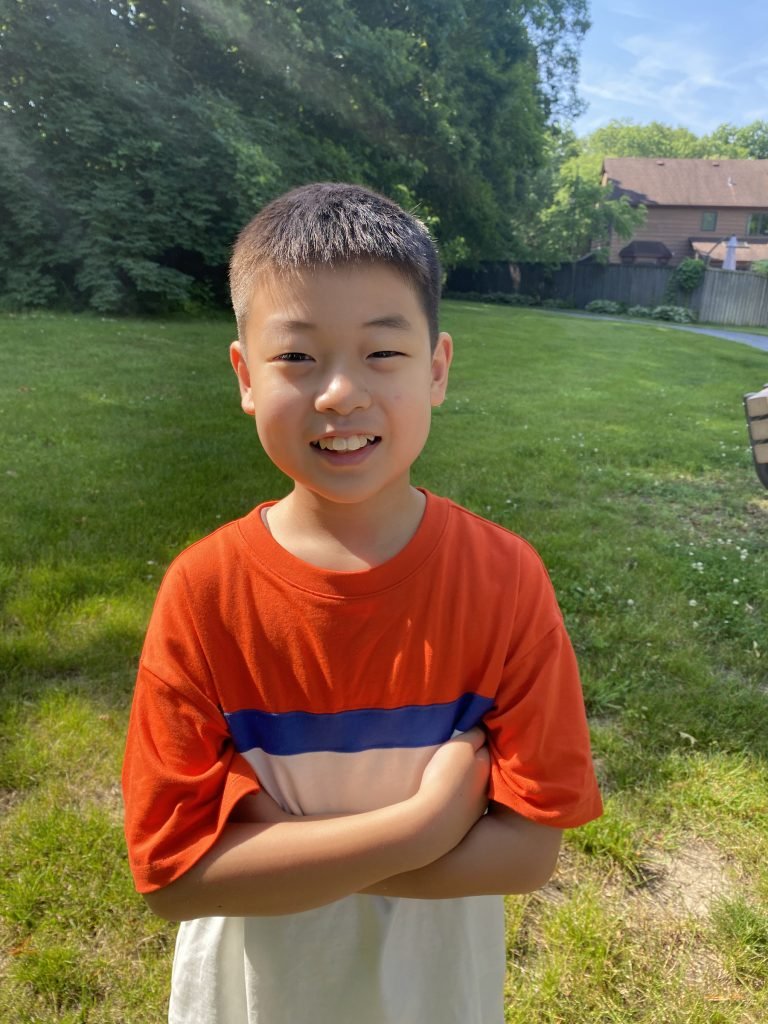
“My name is Benjamin Kwack. I am 9 years old and I really like to draw, to do math and most of all, I like to write. I like to write fantasy, fiction and I really enjoyed reading informational books in class this school year.
In my story, ‘It was Good to be Back ,’ the main character, Billy, is a boy from America and his dad was in the army for 15 years. His dad was sent to South Korea to serve the army. Billy enjoyed the Korean New Year celebration because this was a new country with a new culture and traditions for him.
I wrote most of the story from Billy’s point of view except for the last two lines. I thought that way, it would seem special and more like a real story.”