Category Archives: Asia

Peace Through Awareness

Peace Through Awareness

“I am not a virus.” That was the message on many of the signs to call out anti-Asian hate. Asian hate crimes during Corona have rocked our country back and forth, but even before Corona pandemic came into our world, Anti-Asian hate crimes existed. We’re living in a time of change, with black people getting killed, Corona virus, Asian hate, and to top that all off, Russia’s war in Ukraine. Peace is hard to come by these days.

Back when Corona started, my mom talked to me about Asian hate crimes. She said that President Donald Trump called the virus “the China virus.” It was basically his way of saying, “Oh, this pandemic is all because of Chinese people.” That made me feel sad, but at that time I felt that there wasn’t really anything I could do.   

Unlike me, other people were already doing rallies, and a few people had formed an organization called Stop AAPI Hate. News spread even faster than Corona virus. A few months later, my family went to an Anti-Asian Hate support rally in Fort Lee, and we heard people speak about the hate crimes. My parents had heard about it from our friend. It was on a field, with a big “Be Fort Lee” sign. The supporters were crowded around a table, and the speakers spoke in a microphone. People brought their families with them, including their kids. They made signs to show their support. The signs said things like “Love,” and some even used drawings. One sign I remember clearly was a person with a mask, and the artist used rather dark colors to show their pain and fear.         

I may not have understood then how painful the attacks were, because I hadn’t even made a sign. But the rally encouraged some other people.  Recently, my mom and her coworkers started a podcast. It focused on the Asian Americans living in Queens, NY. I loved listening and learning the stories of these Asian American people, but the podcast also helped me understand the depth of Asian hate in the country. The podcasters would give some snippets of the attacks on Asians such as GuiYing Ma, a 62-year-old lady that was hit on the head with a rock by a stranger. She was sweeping the sidewalk outside her Jackson Heights home on Nov. 26th when a man ambushed her, smashing a large rock against the left side of her head just inches from her eye.

Mrs. Ma woke up in a hospital after a coma and even waved to her husband, though her brain was damaged. For a while everything seemed like it was going to be okay. But then she died. When I heard that, I was shocked. How could someone just kill her, when she didn’t even do anything wrong? What if this had been someone close to me? What if it had been someone in my family?
Then I started speaking up.

“Does anyone else want to share?” My teacher at school asked. It was a few days before Dr. Martin Luther King Jr. Day, and my class was talking about equal rights and what movement we would like to stand up for.

“Noah?”

“I’m Asian, so I want to stand up against Asian hate. There are attacks going on, and many people have gotten hurt.”

I wasn’t the only one speaking about this. Several of my other friends pitched in, and talked about the attacks, and one almost made the teacher cry with her answer, which was more like a speech. Now I finally felt like I was part of this. Not a really big part, but enough that some people at least know about it. Who knows, they could spread the word, and more and more people will hear about it and speak up against the hate crimes. I might not be some famous speaker that would win the Nobel Peace Prize, but I did something to bring a little, just a little, more peace in our world.

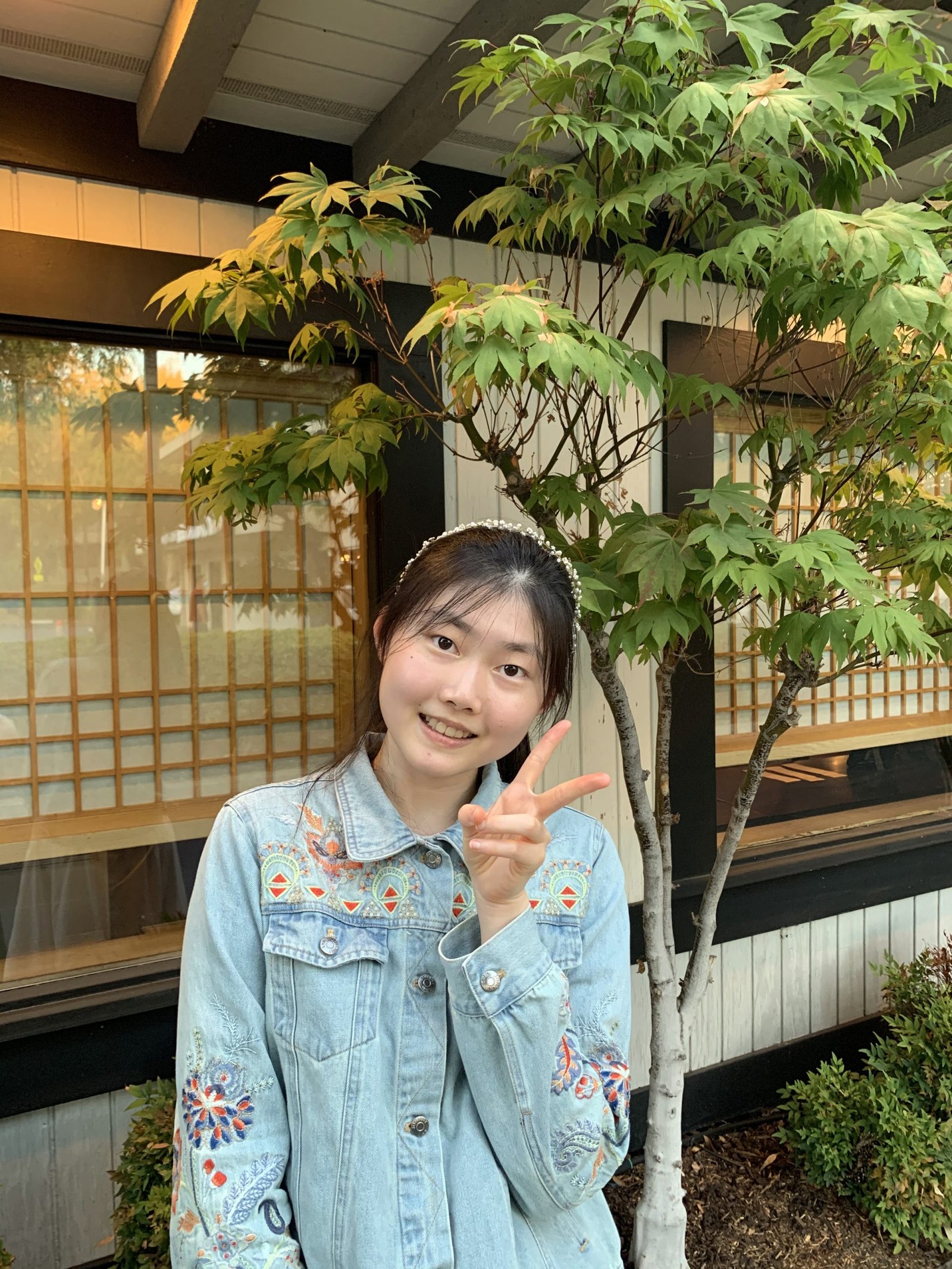
By Noah Xia, age 9, Asian American, New York. She adds: “I like to write, read, play piano, and draw. I write poems, short stories and essays. I enjoy playing with my brother and riding my bike along the Hudson River. Even if I don’t have a piece of paper nearby, I make up stories in my head. In fact, one of my greatest stories (according to my brother) was completely improvised! My submission talks about the hate crime attacks against Asians and how they affected me. At first, I didn’t think I could do anything about the attacks, but I ended up actually bringing a little more peace in our world. I believe that world peace is possible, but we’re just not quite there yet…”
Goldilocks Zone and the Three Planets

Goldilocks Zone and the Three Planets

Have you ever heard of the story of Goldilocks and the Three Bears? In the story, Goldilocks sneaks into a bear family’s house and comes across three bowls of porridge. She finds that the first one is too hot, the second one too cold, and the third one is just right. Interestingly, there is also a principle called the “Goldilocks zone” in astrobiology. The Goldilocks zone (or habitable zone) is a space shaped like a doughnut around a star, where the temperature is “just right” for water to remain liquid, signaling the potential for life. In our solar system, the Goldilocks zone is a doughnut-shaped area between Venus and Mars’s orbit, with our earth in the middle. The only habitable planet orbiting the Sun is Earth, but there could be thousands of other exoplanets in the universe that have the conditions for liquid water. We can’t be sure yet, but some might even have life.

One example of an exoplanet that suits the Goldilocks principle is Proxima Centauri B. Proxima Centauri is a red dwarf star that is the closest star to our sun by a distance of 4.2 light-years. Although Proxima Centauri B lies in the habitable zone and could have an atmosphere and liquid water, there are obstacles that make it harder for people to settle there. For one, Proxima Centauri B suffers from overwhelming stellar wind pressures from its star. Also, as the planet might be tidally locked to its star, meaning that the same side faces the star at all times, one side might be boiling and the other extremely cold. As of now, we are unsure of whether the planet is rocky, icy, or gaseous. However, because the planet is very close to Earth, it might be the first exoplanet for humans to visit, so we should keep it in mind.

Another example of an exoplanet in the Goldilocks zone is Trappist-1e. Located about 40 light-years from Earth, its star Trappist-1 is a red dwarf star that weighs 0.09 times the Sun’s mass. All of Trappist-1’s seven planets have rocky surfaces like Earth and almost all have water in vapor, liquid, or solid form, which make humans look for opportunities to settle there. Out of these seven planets, Trappist-1e has the best chance of being habitable. Trappist-1e has an ocean and land, and if it has an atmosphere similar to that of Earth, people might be able to live there without gas masks or space suits. One interesting fact is that because Trappist-1 and its planets were formed 3 billion years earlier than our solar system, they might even support life that is more evolved than humans!

The last planet we’ll talk about was recently discovered in January 2020. Orbiting around the star TOI 700, TOI 700 d is the first earth-sized exoplanet discovered in the Goldilocks zone. TOI 700’s other two planets are so close to the star that all their water will boil away, while TOI 700 d luckily sits in the habitable zone with liquid water. Out of all the exoplanets in their star’s habitable zones, there aren’t many with the same size as Earth, which makes TOI 700 d one of the best options for settling. However, the distance of 101 light-years hinders us from visiting in the near future.

All three of these exoplanets have a possibility for harboring life. Even though the possibility that any of them are habitable for humans is very slim, we will continue our discovery of exoplanets. Only about 30 years have passed since we first discovered planets outside our solar system. This is only a start, and we can hope that astronomers will find a new exoplanet with the same conditions as Earth. Who knows? Maybe someday in the far future we will settle on a Goldilocks planet outside our solar system.

By Evan Jee, age 12, grade 6, South Korea. Evan writes: “I am interested in this topic of studying space and planets in school classes. And I usually read science novels or watch movies to understand the detailed aspects. As an international school student, I sometimes have time to discuss with foreign friends as well.”

References and Recommended Resources:

  1. NASA May Have Found the Goldilocks Planet of Goldilocks Planets: TOI 700d https://time.com/5763768/toi-700-d-goldilocks-planet/ 
  2. Earth, our Goldilocks Planet; Datasets from ‘Science on a Sphere’ https://sos.noaa.gov/catalog/datasets/earth-our-goldilocks-planet/
  3. Goldilocks Meets Desidero by Carl Spetzler, 2011

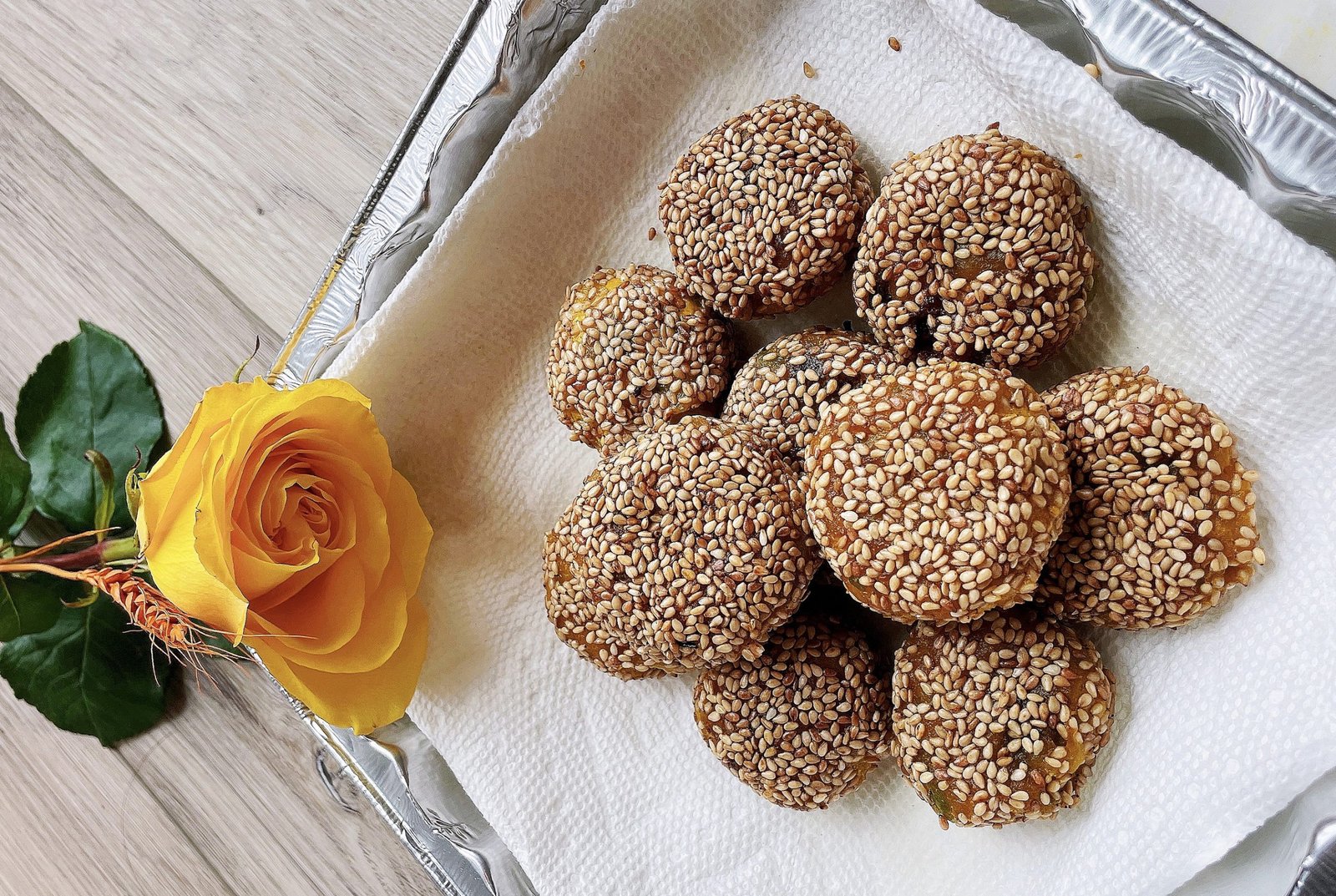
Pumpkin Cakes: A Traditional Chinese Breakfast

Traditional Chinese Pumpkin Pies (Cakes) Make a Perfect Chinese Breakfast (and a Delicious Dessert too).

To make the traditional Chinese breakfast of pumpkin cakes, you will need:

1/4 pumpkin, 2 tbsp sugar, 200g rice flour, red bean paste (optional), and white sesame seeds (optional). 

You will need to prepare the pumpkin first.

  1. Get rid of pumping seed and it’s inside fiber.
  2. Peel off pumpkin skin. 
  3. Slice into thin pieces ~3mm. Thinner pumpkin slices will reduce the time it takes to be cooked. 
  4. Boil the Water first and Steam it in a bowl for 10 min.
  5. After steaming, pour out water from the bowl if any.
  6. Will need to add 2 tbsp sugar and smash it until there are no pumpkin lumps left. 

Making the dough

  1. Add in 50g of the rice flour, and mix evenly. Repeat 4 times. Do not add-in all the flour at once.
  2. What we want is a rather soft dough. (If you have reach this texture, you don’t need to add exactly the same flour amount as I did; different pumpkin and flour will perform differently).

Making the pumpkin pie 

  1. Take approximately half a hand fist of dough. 
  2. And rub into a ball shape, then press over the dough making a round cake shape. 
  3. If you have red bean paste you can take a scoop of it and place it on the pie shaped dough and close it up and repeat step 2. If you are adding the paste make sure your pie shaped dough is thinner and bigger. Don’t add too much of the paste. 
  4. If you have a plate of white sesame, run both sides of the finished pie in the plate, you can press upon the pie softly allowing sesame to stick to the surface of the pie. 

Cooking the pie 

  1. Preheat the frying pan.
  2. Put in enough oil to cover the bottom of the frying pan.
  3. Add in the pie when oil is hot enough. 
  4. Cook the cakes on low medium heat. 
  5. After every one minute, flip the cake(s) over to the other side. Prevent overcooking on one side. 
  6. To test if it’s cooked. You press upon the pie (cake) and if its shape returns quickly it means it’s cooked. Normally it takes 2-4 minutes.

Pumpkin pie is full of nutrients and is very delicious. Chinese often have pumpkin pie as a dessert or breakfast. Pumpkin pie has the best taste the day it’s made, so please enjoy and finish them quickly after made. This recipe makes 5 to 8 pies; you can adjust the recipe proportionally for your family size!

Wendy Mou, age 16, California. Wendy is an active student who enjoys creative outlets including food. For example, baking is her preferred way to relax after school work and family chores. Since her childhood, she has always held respect for the natural ingredients that go into her food. Currently, she is in the process of starting a food science club at her school. She looks up to those unique recipe makers, and hopes to become one someday. 

Sustainability and Sustainable Consumption

Sustainability and Sustainable Consumption

 By T. Vijayendra, Hyderabad, India

Life on Earth can be divided in two groups—producers (trees and grasses, for example) and consumers (such as animals and human beings). The difference between the two is that producers—like plants—produce their own food whereas consumer species like animals—humans included—live directly or indirectly on food produced by the producer species (think plant life).

To sustain themselves, humans consume goods and services not only from plant and animal sources but also from inanimate sources such as minerals. These resources are either renewable or non-renewable resources. Non-renewable resources, like fossil fuels, minerals, and metals, are finite in nature by definition. In other words, the more we use them, their supply will deplete. Renewable sources, like plants, trees and agriculture, are by definition renewed in nature; both by natural processes and helped by human efforts.

Now, a simple way to explain sustainability:  If we consume resources in such a way that the resources we need and enjoy can also be available to succeeding generations (as well as for all other forms of life) for their needs and enjoyment at a level needed by them and for a foreseeable future.

This issue of sustainability was not a big problem in human history because our population was small and our levels of resource consumption per capita were also small. Today, both the consumption levels and our population have increased substantially. As a result, the way we live and consume resources is NOT sustainable!

To achieve sustainability, the first thing we need to do is we must reduce our per capita consumption. Secondly, more of it should come from renewable resources.

There is an interesting fact about most non-renewable resources. Be it the fuel used for transport (petrol for cars, for example), chemical pesticides in agriculture, cement used in housing and construction, or the plastics used for packaging, they almost always tend to pollute and add to the climate change (and global warming) problem. This is one more important reason for us to reduce the component of non-renewable resources in our consumption.

Value Chain

What is a value chain? It is the chain of values [the term “value” used here is a business term, and not a “value” in the normal sense] added to a product from the source till it reaches the consumer. Let us explain this more:

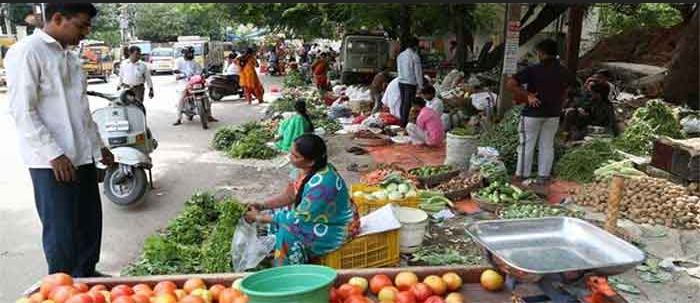
If we climb a tree and eat its fruit, there is no value chain. But most of us buy the goods we consume. For example, apples are grown on trees in an orchard (likely, in a rural area), picked, packed and transported to the urban centers where we live. In the city we can buy fruits and vegetables either from a pushcart or a farmer’s market, or in a supermarket. So ‘value’ gets added to the produce in a chain consisting of picking, packing, transporting and retail selling. Now, if the apples were converted into apple juice, involving some processing, there would be even more links in the value chain and hence more value would be added.

There is a difference between fruits and vegetables sold by a street vendor (or at the farmer’s market) and in a supermarket. It is not difficult to understand that the “value” added to it in a supermarket is much more. This extra value is called a shelf rent – which can include the rent of the place, worker salaries, utilities, and air conditioning, etc. You might also notice that a big chunk of the difference comes from the non-renewable resources used for transportation and processing, etc., contributing to pollution and climate change. This makes it less sustainable.

We can add some more attributes to sustainability. Instead of an apple, suppose it was a locally produced vegetable or fruit, and sold directly by the person who produced and harvested it. It will then have much less value added, and it will be more sustainable.

We can extend this logic to other sectors of our activities. Locally produced food is more sustainable as we have seen above. Similarly, mud houses, straw-bale houses, or houses made using local materials like bricks or wood can be more sustainable, not only because of the material used, but also because less energy is used in heating, lighting and keeping them cool during the summer months (or warmer in cold climates). In fact, heating and air conditioning uses a lot of energy.

To mention another example, neighborhood schools can reduce transportation costs and so would more use of bicycles for small distances. In many cases, sustainable products are more ‘expensive’. While ‘value added’ can be calculated, price is determined by a variety of unpredictable factors, which have a lot to do with politics and the prevailing social order in human societies.

To work towards sustainability, we can use these four general principles:

  1. Consume less.
  2. What we consume should have a higher proportion of materials from renewable resources.
  3. The value chain from the source to consumer (or end-user) should be as short as possible, so that ‘value addition’ is reduced. That is, we need to consume local products as much as possible.
  4. The components of the value chain should use as little of non-renewable resources as possible. For example, the transportation can be done with animal carts or bicycles or hand pushed carts. The packaging can be minimal. Consumers can carry their own bags—paper or cloth bags—instead of plastic carry bags and so on. The main idea here is to reduce waste by recycling and reusing resources, or closing the loop in the resource use cycle.

Our power plants, factories, automobiles, machines and buildings need to be adapted so they use predominantly renewable energy resources instead of non-renewable resources that come from underground (fossil fuels) and emit carbon dioxide and other pollutants when burned.

Acknowledgement

The main ideas of this article were developed by Soujanya Mantravadi in 2017 for a talk on International Hawkers’ Day at Lamakaan, Hyderabad, India.

T. Vijayendra (b. 1943) is political-social activist, living in India. He divides his time between an organic farm at the foothills of Western Ghats of South India, and watching birds, writing fiction and educational articles at his home in Hyderabad. He has published several books. He has been a ‘dedicated’ bicyclist all his life; he has never driven a fossil-fuel based vehicle (automobile). Email: t.vijayendra@gmail.com

An earlier version of this article was also published in CounterCurrents.org (an online journal, published from Kerala, India) along with the above photo of street vendors of fruits and vegetables in Hyderabad, India. 

The Grotto

By Angelie Tumaghap Martzke, Michigan.

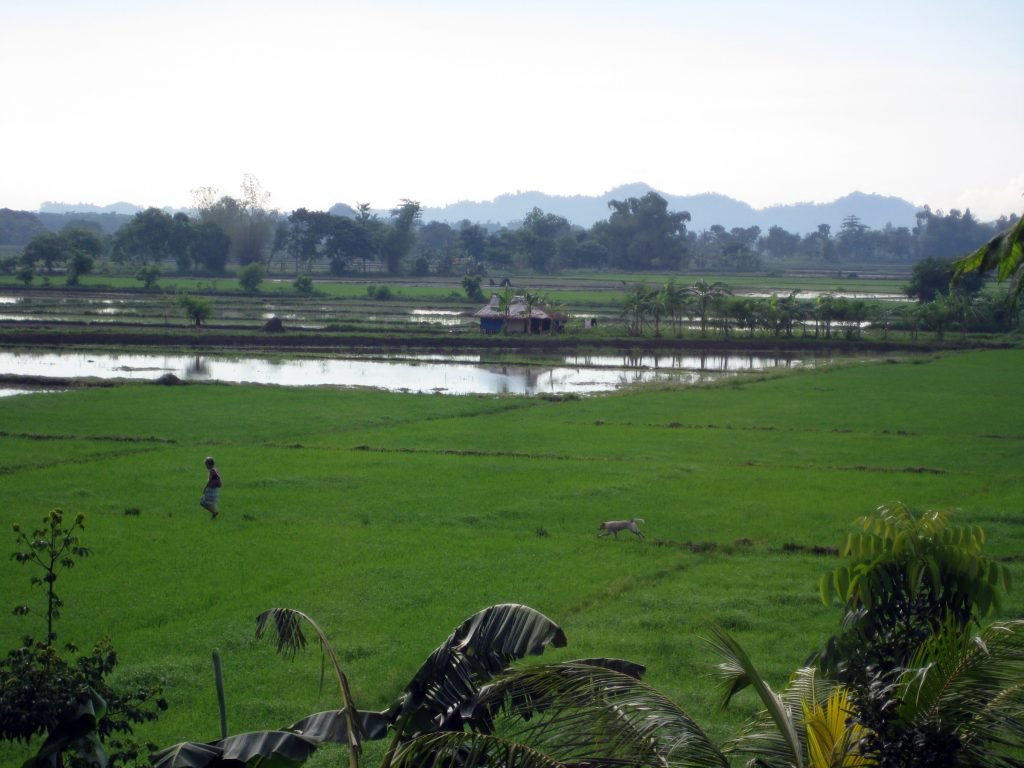
Iloilo Province in Panay, Philippines.

“My dad said he saw something in here yesterday,” Reeza said. “Amelia, when did you get here? Do you have insects in America? Ants? Worms? Caterpillars?”

 “I got here a few days ago. Yeah, we have bugs.” I replied, trembling. “Do you like them?”

 “Yeah, they’re cute. You might see a few in here today.”

Do I really want to go in there with all these slimy, creepy bugs? Yuck, I thought. But she seems nice and I’m finally meeting someone my age.

We were standing as tall as the grotto, a small cavern of rocks my grandparents gathered years ago from the Panay Gulf beach across the street. It was a house for various statues of animals carved by a local artist from the village. A frog, a turtle and a carabao stood strong, stationary, and well-preserved from the scorching Philippine sun. Reeza gently placed her left hand on the arch to peer inside. I did the same with my right hand, feeling secure touching the coarse, solid entrance.

“It smells in here. It’s been rainy this June.” Reeza pointed to the cracked ceiling as she carefully knelt in between the statues. “How long are you going to be here with your grandpa?”

“It’s cooler in here. I’ll be here until Sunday. Then to my aunts’ for school,” I replied, ducking my head in and kneeling on the prickly, pebbly ground. I gently wiped the sweat pouring off my forehead now that we were away from the morning sun. I wondered when I’ll stop sweating and get used to the heat like everyone else here.

We surveyed the black, grainy floor. My right hand unknowingly grabbed something furry and squishy on the grotto wall.

I let out a piercing yelp.

“What is it?”

“It was just moss. Sorry,” I said.

We returned to exploring the darkness. Then a deep, rumbling call echoed inside.

“Have you been to the beach?” Reeza asked. “Let’s go there tomorrow morning and see if the fishermen caught some sharks. I want a picture with it.”

Yuck, I thought. Sharks seem slimy.

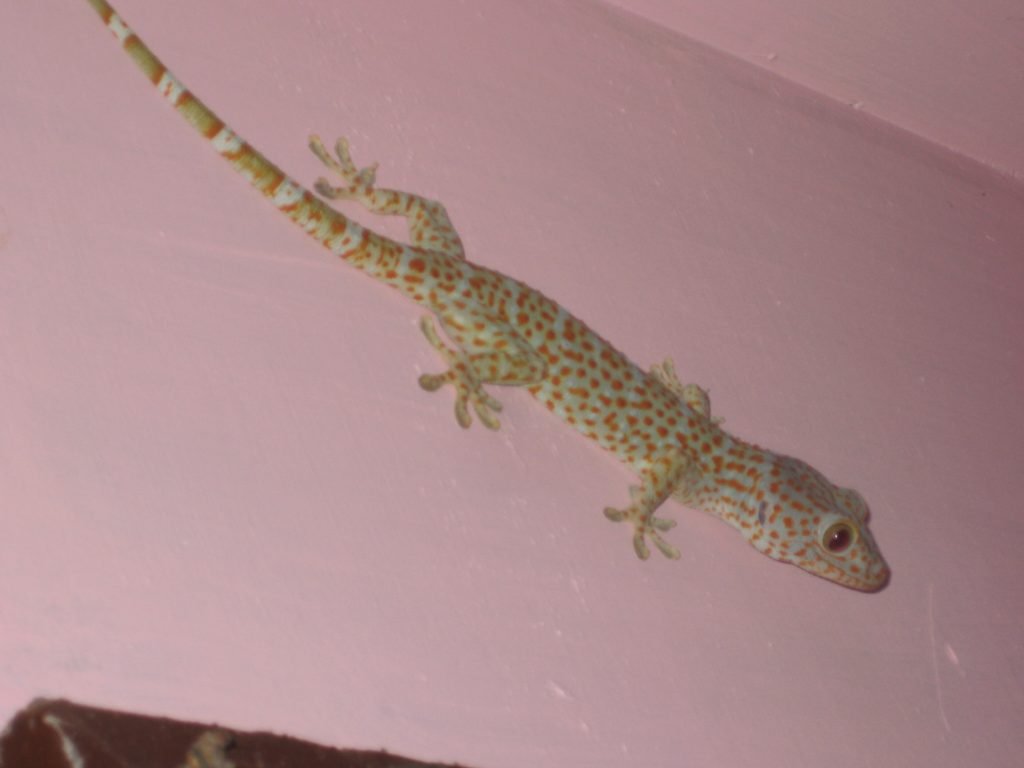
Tookoo! Tookoo!* Big, bulging eyes glowed towards me.

“Eeeek!” I screamed and we hurriedly stepped back.

A gecko the size of my arm scampered out of the cavern, climbing up and blending in with the banana trees behind the grotto.

“He’s harmless,” Reeza replied. “He’s usually inside a house. He sleeps during the day and is up at night looking for bugs to eat.”

“What was he doing here?”

“Maybe cooling off,” Reeza said. “Do you guys have geckos where you come from?”

“None in Michigan.”

“We’re used to them. They’re everywhere here.”

House Geckos? Shark fishing? Bugs everywhere? Will I fit in?

We stooped back into the grotto. My gaping mouth caught the salty sweat running down my forehead. I swallowed and breathed deeply, relieving the cottonball feeling stuck in my throat. Reeza waved me in.

“I can’t. Bugs creep me out and I’m scared of geckos, sharks and whatever else is here,” I said, lowering my head towards my flip-flops. “Maybe I should just go home now.”

“Oh!” Reeza gasped, her finger pointing at me.

A gust of wind whistled and relieved us from this tropical heat. I slowly eyed the right side of my face without moving a muscle in my body. Something was dangling, gently caressing the side of my cheek.

“Run!”

We squealed, bumping into one another on the way out. We bolted out of the grotto and leapt across the front yard. My heart was pounding, my legs were wobbling forward, one after the other. Somehow, we managed to reach the driveway. We collapsed on the cement, panting, and clutching our heavy chests.

“Look!” I yelled, pointing to her back.

Reeza shrieked and pranced in a circle, her hands waving up in the air. She’s a girl on fire. As I peeled the snakeskin off from her shirt, she slumped down and brushed her body with her hands.

“Thank you,” Reeza said, panting.

We examined this leathery object.

“It’s actually soft.”

“So pale and long.”

“My teacher last year brought snakeskin to school. She told us that snakes molt or shed their skin in one piece. They do this when they’re growing,” I said.

“I didn’t know that,” Reeza replied, tilting her head. “Snakeskins don’t scare you, but geckos and little bugs do?”

“I guess not,” I said, giggling. “I’m just not used to the ones you have here. Not yet anyway. Snakeskin is one thing, but a real snake is…”

“Gross.”

“Jinx.”

We sat, laughing and crying with the snakeskin in between us.

I wonder what else we have in common, I thought.

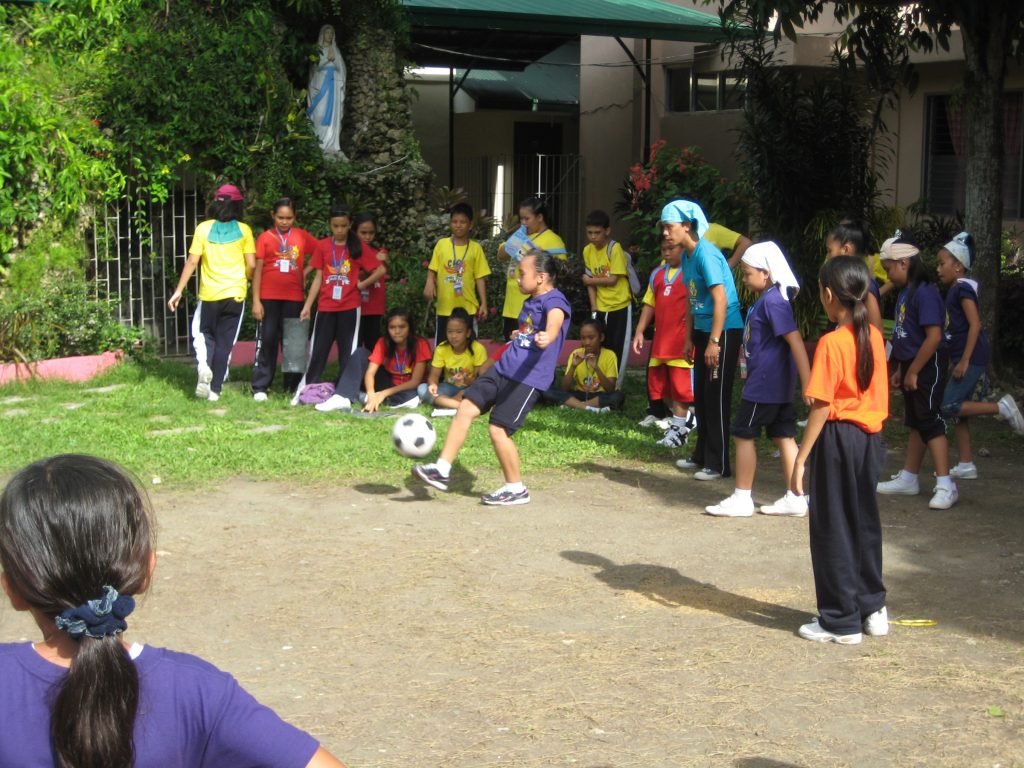
“Do you like soccer?”

Playing Soccer in Pototan, Iloilo Province, the Philippines.

“I love soccer!” Reeza said, beaming. “Let me get my ball and see if anyone else wants to play. I’ll be right back.”

  • Author’s Note: Tookoo! Tookoo! is the sound that a lizard makes.

Photos and story by Angelie Tumaghap Martzke, Michigan. She adds: “I was born in the Philippines and grew up part of my childhood there in my grandfather’s house... This story, set in the Iloilo Province, is inspired by my actual experiences there. Since I was 9-years old, I have gone back every two to three years and continue to speak my language of Kinaray-a. My background is in Social Work, receiving my Master’s degree in Social Work from Columbia University in 2008. I have worked with teens and adults providing individual, family and/or group therapy.”

Art Essay by Jaeyeon Kim

Life is a journey.
“Standing at the many crossroads of life, my decisions would add up, changing my life and being. Fortunately, my friends and family have often been on hand to support and guide me through the toughest decisions and transitions. When it comes to art, I draw upon memories for inspiration and create with a strong sense of appreciation for the significant others and cross-cultural influences in my life. In this sense, my works are a collection of nostalgic thoughts, emotions, and experiences, as I look back on my life and hone in on influential fragments of time and space that have come together to define me as a human being.”
Jaeyeon is a fine artist who works to claim spaces for the public to engage with art without difficulty. Her work often revolves around detailed paintings, installation art and sculptures, which become a place for social engagement and visual communication.
—Jaeyeon Kim, 19, was born in South Korea, and came to the U.S. as an international student at the age of 15. She currently studies at the Parsons School of Design in New York. 

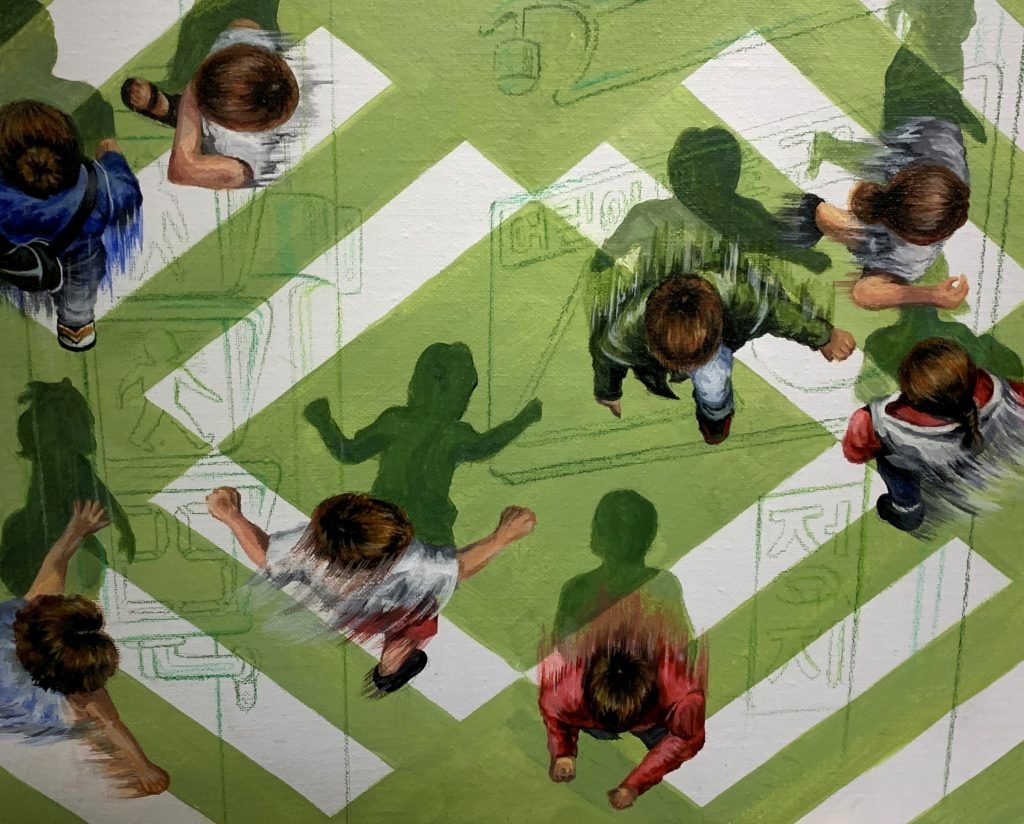
1. CrossRoad Korea

Seoul, where I was born, is a big city. There are many cars and people at the crosswalk. When I saw a crosswalk, its ‘X’ shape reminded me of our society. Our community is connected like the shape of ‘X’ and also has a system like a red/green light. Also, everyone has a different destination in life.

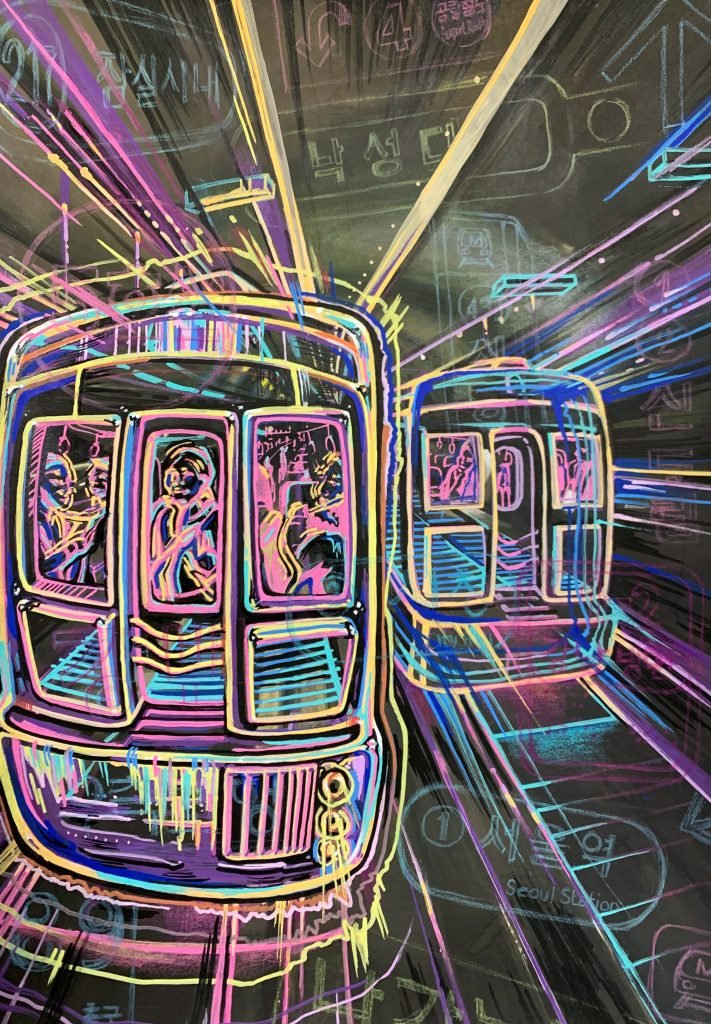
2. Subway Korea

In Korea, the subway is the lifeblood of the city, as in other countries. Many people go to the heart of the city by subway, and it is always crowded. Koreans liken these crowds to the appearance of ‘beansprouts’ which have to grow in a dense environment and survive well in it. I capture a scene of the subway and its passengers. People in the subway have various backgrounds–different ages, genders, occupations, attires, and emotions. Most people feel tired but, well, there is a will to live today.  

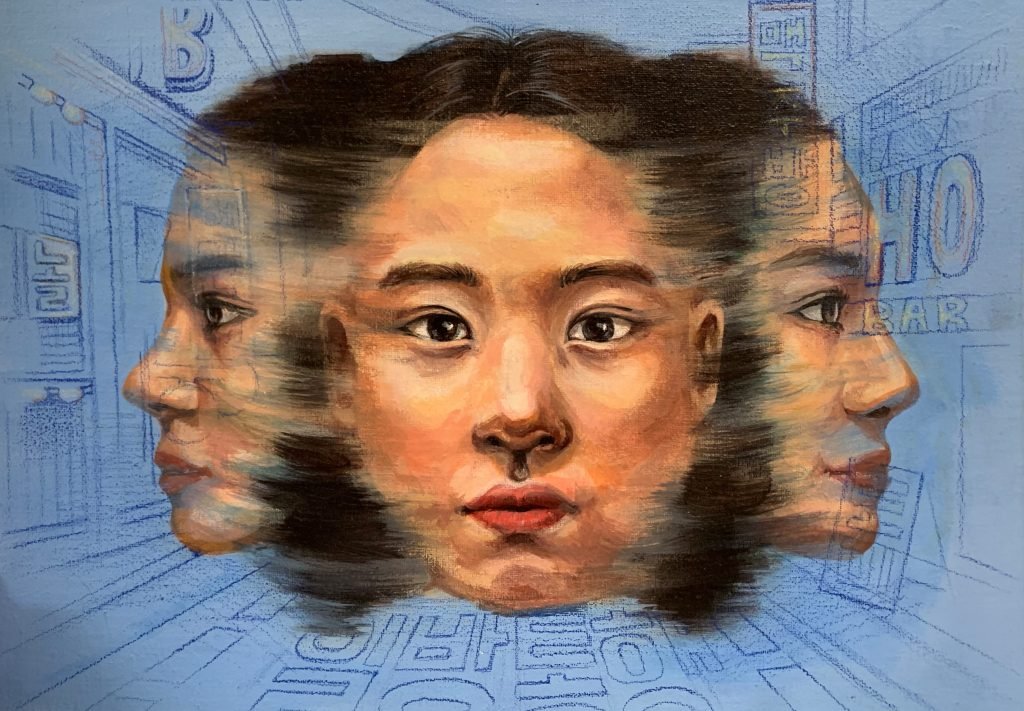
3.  Identities

There are many identities within us. Regardless of age, from a girl to a lady, there are various images of women in one person, based on the situation and culture.

—Art and writing by Jaeyeon Kim, 19, was born in South Korea, and came to the U.S. as an international student at the age of 15. She currently studies at the Parsons School of Design in New York. 

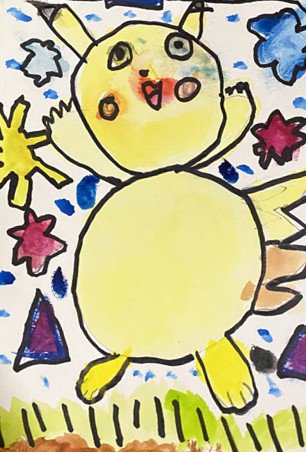
Happika Creature

“When I feel happy, I think there is a happy creature with me! I want to introduce this cute yellow animal to friends all over the world!” 

Art by Tory Won, age 7. Tory is now attending an elementary school, and she loves her family, puppy, and all animals.

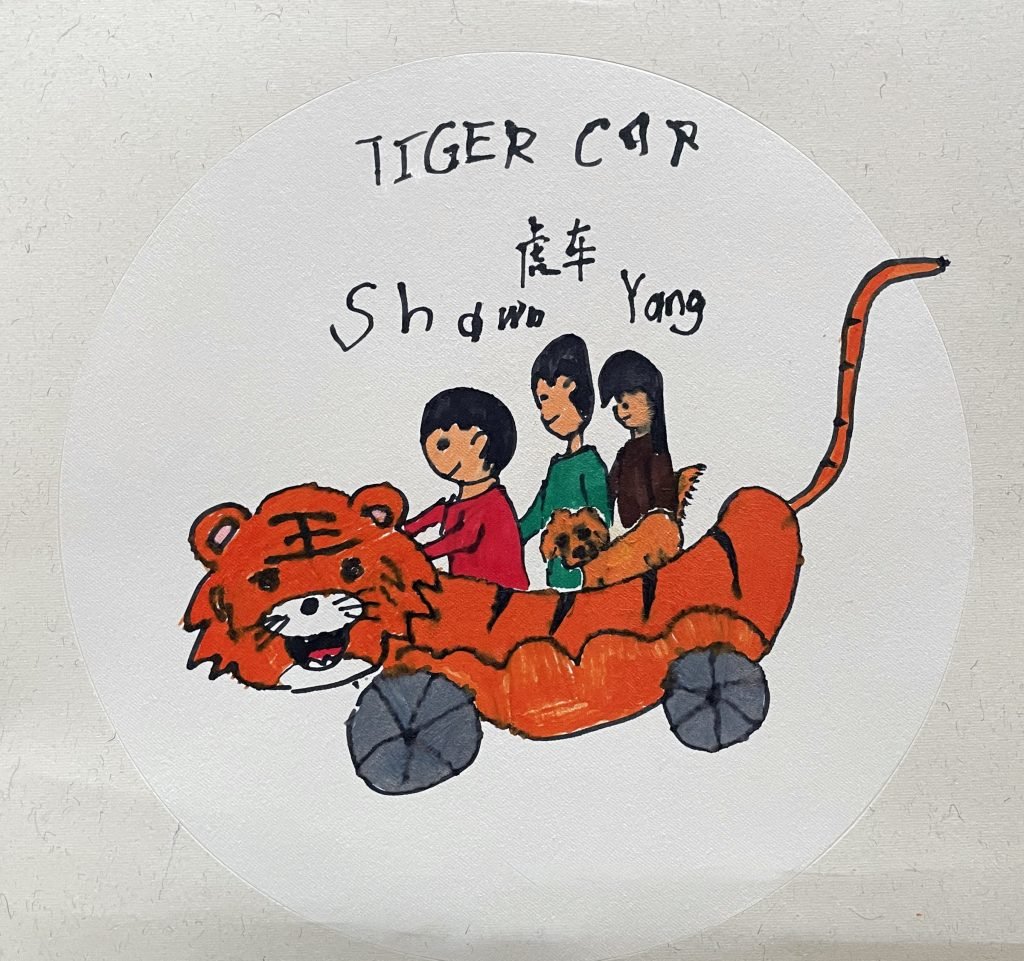
Tiger Car

“This is my tiger car to fight again the Monster Nian! I’m driving the car. My dad, my mom, and Ryan are in the car. This car can protect us from all the bad things — monsters, viruses, and bad guys! It is the best car ever!”

—Shawn Yang, age 5, California.

It was Good to be Back

By Benjamin Kwack, age 9, Illinois.

Hi. My name is Billy and my family was visiting Seoul which is in Korea and I loved everything about it. As soon as I heard that we were staying here for the entire summer vacation plus three months into the school year, I was so excited. Partially because I was going to not have three months of school. But anyway. I was going to be in Seoul because ever since the Korean war started and the fighting began, America had sided with South Korea. My father, who actually had joined the army 15 years ago, had to stay in South Korea to help, just in case the Northern part of Korea attacked again. I hoped I would enjoy my time, especially on the holidays. In America, holidays were still fun but this was a whole new country with different traditions so I couldn’t wait to be in Seoul.

The first holiday I witnessed was the New Year. Everyone stayed up really late until after midnight and in the wee hours of the morning. I was sleepy but tried to stay awake just to see what happens. I saw a big bell that was right next to a street and people had gathered around, cheering as they jumped out of their houses running to it. The only light was the light from thousands of cellphones, and they glowed brightly in the dark. The night was silent until somebody started talking into the mic. I felt a little nervous. The person with the mic stopped talking as someone rang the gigantic bell with a mallet that was hooked onto a chain. The big shouts of celebration filled the air, and children ran around with big smiles on their faces. I heard noises like, “It’s the New Year already!” and “See you next year!” The bell rang 33 times before it stopped. The sound of the heavy gong filled my head even after it ended but I was too excited, so it actually didn’t really matter.

Finally, everyone went back into their houses and went to sleep. When we woke up in the morning, my mom realized something. She said that we should have gotten a traditional food, called Tteokguk (It is a soup with sliced rice cakes inside it). I walked up to my mom and said that we had to try some of the soup because if this was a tradition, then I wanted to try it. She said, “Of course Billy. Why not?” So that was the reason why we rode to the supermarket in a taxi. The supermarket wasn’t crowded because everyone already had Tteokguk prepared a few days before. Luckily for us, one container of Tteokguk was still there sitting on the shelves. We quickly bought it. The cashier said, “Annyeong.” We said that we didn’t speak Korean so it was kind of difficult talking to the cashier but we finally managed to understand each other.

After we were done, I skipped out of the supermarket, and we rode another taxi home. It was a while for us to get back there but we unloaded the food and started cooking. I drooled. We waited and it was finally cooked thoroughly. The soup had a natural taste that felt rich as I rolled the pieces of sliced rice cakes around in my mouth. The soup warmed me inside and made me feel calm after all the excitement. I was thinking about the New Year. I tried some more, and it felt plain but at the same time, strong. I saved some for later; I didn’t want to eat all the Tteokguk in one meal.

Then, I watched as people came back out onto the streets again. But this time, a lot of older people also walked onto the streets. I followed them with my mom and my dad. The children bowed to their elders saying, “Saehae Bok mani badeuseyo!” and the elders smiled back, and they gave the children a little money. This went on for a while and when the last coins rattled, I held my breath with a little disappointment because I thought everything was done.

It wasn’t. There was one other thing. It must have been really meaningful because everyone went to visit their grandfathers and grandmothers or their ancestors who had passed away by going to their ancestor’s graveyards. Their family members who had lived in other cities also came and joined them. They laid food by the graveside and prayed for them. The family members chatted for a while and ate some of the food together and waved to each other for a long time before finally leaving. I was struck with a little confusion because this was a new thing for me, and I only knew a little of what was happening. That’s why everything made me feel awestruck and amazed. I actually liked the Korean way of celebrating the New Year. It soon became dark, and I went to bed and gazed up at the ceiling smiling waiting for the next holiday.

“What?!!!!!” I yelled waking up the next morning. My dad had announced that he had received an early retirement. It was such an honor to turn it down. Plus, my dad had been wanting to go back to America as soon as possible. I just sat there on my bed and scowled, but there was nothing I could do.

I gloomily walked to the airport with the family, boarded the plane and looked out the window. I had actually begun to like Korea and didn’t want to leave. Helplessly, I just flew back to America and cried to myself.

20 years later…

Billy had been in the army for four years. He had been sent to Korea to serve there. The happy smiles and laughs struck him and he smiled. It was good to be back!

“My name is Benjamin Kwack. I am 9 years old and I really like to draw, to do math and most of all, I like to write. I like to write fantasy, fiction and I really enjoyed reading informational books in class this school year.

In my story, ‘It was Good to be Back ,’ the main character, Billy, is a boy from America and his dad was in the army for 15 years. His dad was sent to South Korea to serve the army. Billy enjoyed the Korean New Year celebration because this was a new country with a new culture and traditions for him.

I wrote most of the story from Billy’s point of view except for the last two lines. I thought that way, it would seem special and more like a real story.”

Nice Rice

By Gloria Lauris, Ontario, Canada.

Allow me to take you on a quick rice journey through several culinary dishes and countries.

I grew up in British Columbia, Canada, to second-generation Ukrainian parents who were raised on farms in the prairies, so our dinner was typically bread, meat, and potatoes. We rarely had rice, and it was usually parboiled or instant. It was cooked occasionally as part of something like stuffing in cabbage rolls or in a casserole or pudding. Little did my younger self realize that my travels, especially to Africa and Southeast Asia, would drastically change how I viewed food, especially rice. Just as wheat is a staple in a grain-growing country like Canada, so is rice a cultural way of life in rice-growing countries and is the main cereal crop for over half of humanity.

Fast-forward several years to when I visited Egypt with my Canadian Egyptian husband, I remember seeing large pots of warm, freshly cooked white rice in their kitchens. Sitting on the floor with Egyptian women relatives, we would laugh, smile, and chat speaking broken English or Arabic, taking turns picking up limp pieces of steamed cabbage to fill with a mixture of short grain rice and seasoning to make mashe karumb (cabbage leaves filled with rice). This is a mini-version of the more common Western-style cabbage roll, halupki, which my mother made as a throwback to our Ukrainian heritage. Eastern Europeans make cabbage rolls large and smother them with tomato sauce. But in Egypt they are finely rolled, and just a little sauce is used, as they are mainly steamed in chicken stock and are delicious finger snacks. Egyptians also fill other tasty vegetables with rice, such as peppers, grape leaves, eggplants, and zucchini.

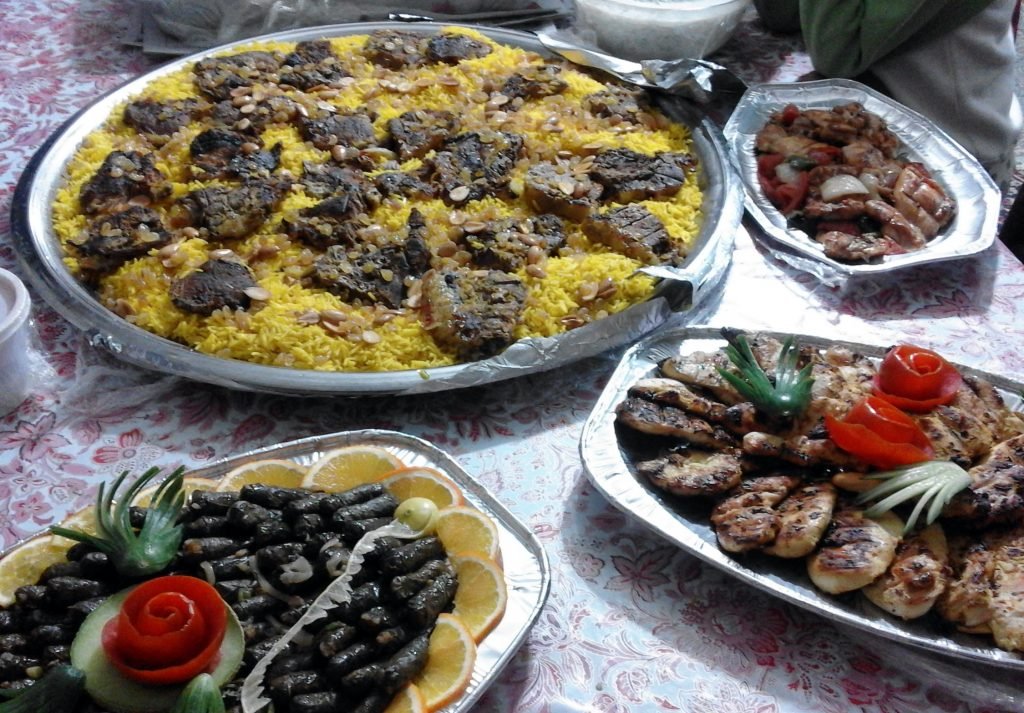
Another exotic rice dish was chicken baked on a bed of Egyptian rice, with nuts and vermicelli. Sometimes yellow or red saffron was added, although that was popular mainly in Middle Eastern countries like Saudi Arabia and Lebanon, where people could more readily afford this expensive spice. Sometimes pine nuts and caraway seeds were added for flavour.

Egyptian Rice Dishes. Photo by Gloria Lauris, Canada.

Koshary, believed to be the national dish of Egypt, uses rice. A flavorful mix of lentils, rice and macaroni is topped with a tomato-chili sauce, garbanzo beans and fried onions. It is served in just about every Egyptian restaurant, in most homes, and on many street corner stalls. It makes a hearty, delicious, and affordable meal.

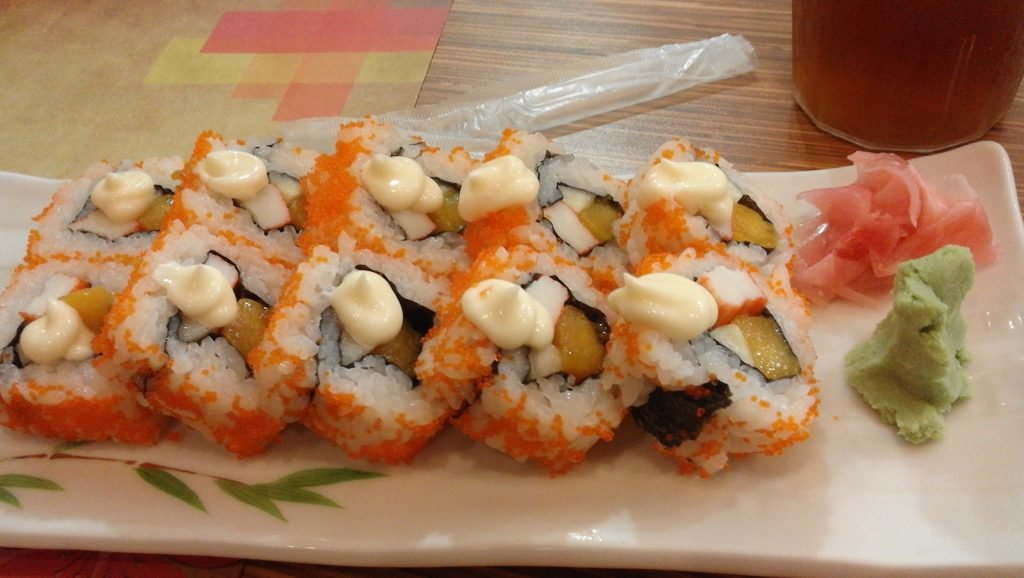
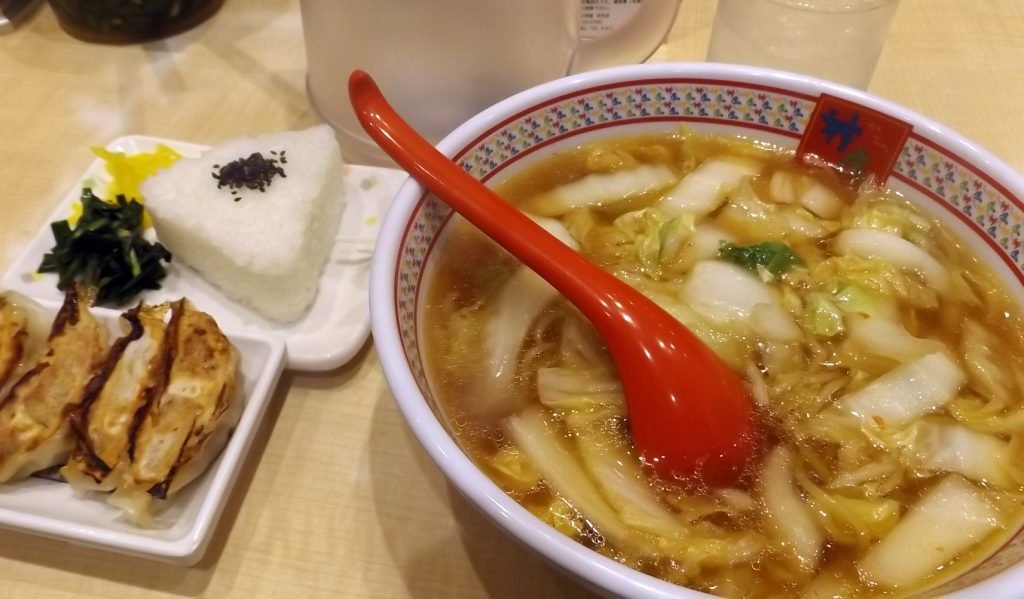
Later, I visited my son who was living in Japan for a while. I found almost all foods included rice; snacks, bento boxes, and sushi and sashimi all came with rice. There was the right way to cook and eat rice: white, steaming, and fresh to be scooped up with chopsticks. To put soy sauce on this essential but bland food was blasphemous to rice purists!  When we ate sushi, we were always amazed how perfectly the rice was cooked. Yet it was sticky enough to be held together with Nori (a seaweed) and veggies to make rolled shapes. We were so impressed with the art of making excellent rice that we bought a Japanese rice cooker in Canada to create perfect rice, every time. The pot somehow senses the right temperature and humidity to produce a quality product consistently.

Now, let’s go to the Southeast Asian country of the Philippines. Rice is grown in many of these islands with their tropical climate, and they export a lot of rice. Some Filipino agricultural institutes even offer a PhD in rice cultivation!

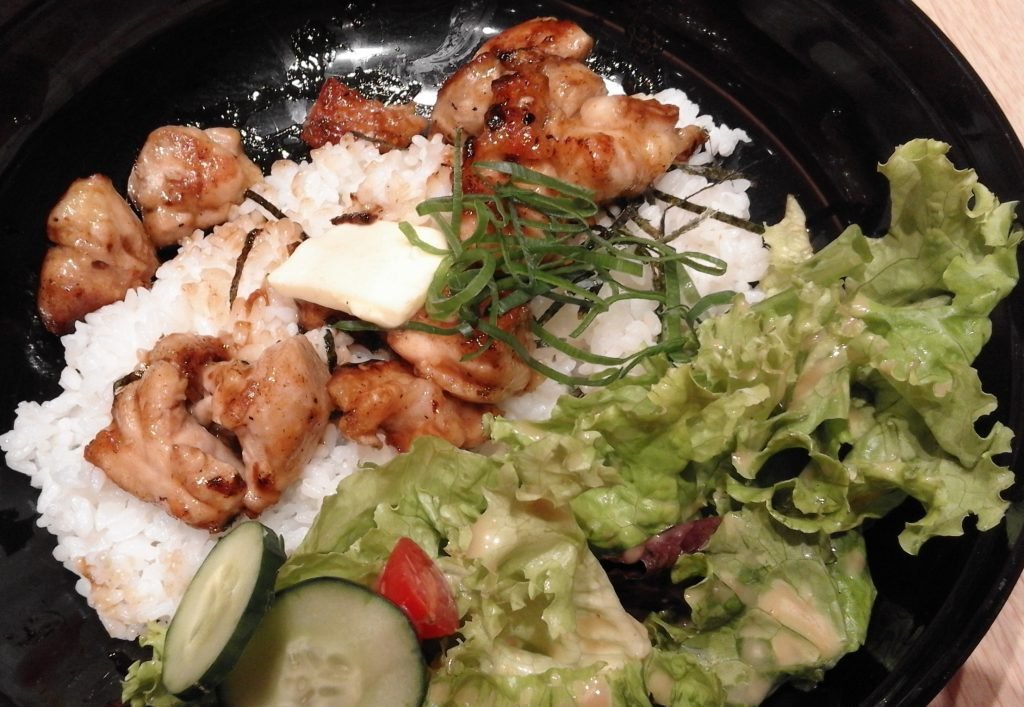
While living in the Philippines, I remember my Dad, who had re-married a Filipina, remarking how the Filipinos love their rice. They have it not only with every meal, but even the desserts were usually made with rice. It was perplexing to a man raised in the prairies to be served a daily diet of rice and fish! He lost a lot of weight during his time there, whereas many Filipinos gained weight due to the regular intake of this starchy food.

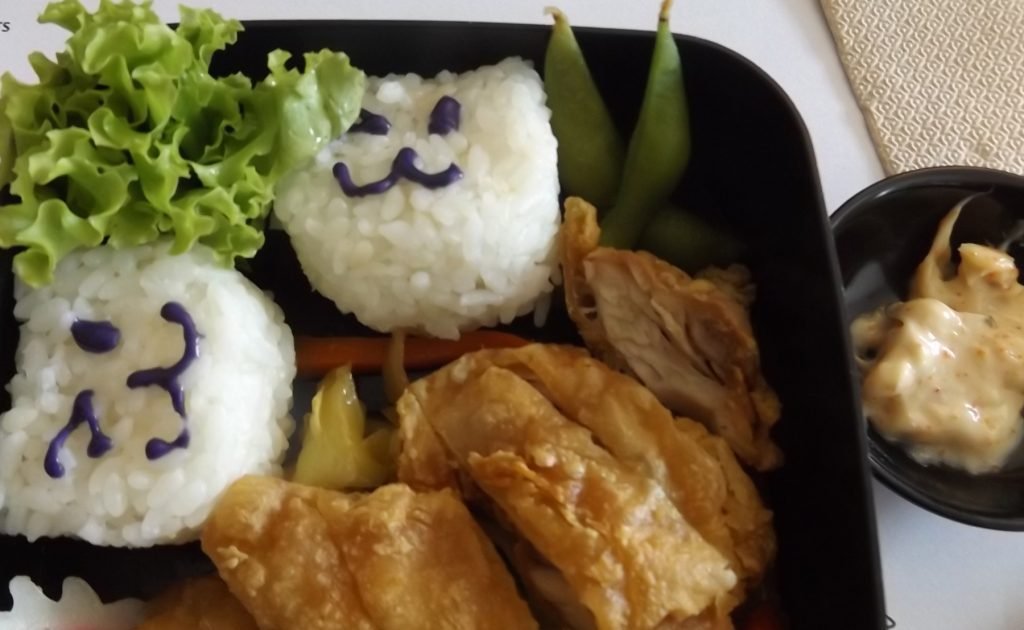
In the Philippines, my personal favourite became Dona Maria Jasponica white rice, a type of hybrid Filipino and Japanese jasmine scented rice, famous for its fragrance, soft texture, and pleasant taste. However, jasmine rice is not good for a risotto as the starch count is not high enough. The Philippines Miponica brand is fluffier and stickier, making it good for risottos, paellas, and congees. Indian basmati rice is a long grain rice which is soft and fluffy when cooked, and it is served with Indian dishes such as biryani, or spicy dishes like butter chicken, chicken tikka and various curries. Filipino Harvester Dirorado rice is naturally fragrant and fluffy in texture and is used in Asian cuisines and in most Filipino dishes such as with chicken inasal, kare-kare and sinigang. At a cat café in Manila, Philippines, I remember being served decorative rice cat cut-outs, their eyes and whiskers being decorated with bits of sauce. Perhaps a sticky rice was used for this?

Affordable and filling, rice is a staple food for many. It is used in Asian (e.g., Chinese, Indian, Filipino, etc.), Middle Eastern, and Mediterranean cuisine. But different types of rice are used for different dishes. Did you know that brown rice is unpolished so it contains selenium and has fibre and B vitamins? It is mineral rich, thus keeping a person full longer than with white rice. However, it takes much longer to cook, and so it is less commonly used, and it is more expensive to buy.

My favourite rice recipe? Although I am a converted fan of Egyptian rice and the delicious Mediterranean style food produced in and around the Nile Valley, my favourite is probably a coconut-flavoured rice, made from jasmine fragrant rice like Jasponica and adding a Thai twist to it. As taught by my kitchen helper in the Philippines, you rinse the rice thoroughly to get rid of any dust and foreign objects in the rice before cooking. Then you add some young coconut milk (buko) to water (liquid to rice ratio is 1:1) to make this delicious rice dish. I have had coconut-flavoured rice in Thai restaurants, and it is a delightful accompaniment to chicken dishes, like peanut chicken satay sticks. Another satisfying dish for me is Egyptian mashe (filled) vegetables, as it brings back happy memories of hearty, flavourful Egyptian meals made by friendly extended relatives, a world away.

International travel and overseas living have opened my culinary taste buds to elevate what I once considered lowly rice. I have come a long way, and not just figuratively, from cooking instant rice once a month in my meat-and-potato youth!

Do you have a favourite rice recipe too?

By Gloria Lauris, Ottawa, Ontario, Canada. Gloria is an emerging Canadian writer. She has visited over 50 countries, and lived in three of them (in the Middle East and SE Asia). She is a long-time animal welfare promoter. She loves to cook.