Category Archives: Asia

Dahu Park

Dahu Park

By Eason Lin, age 10, Taiwan

One Thursday, my classmates, teachers, and I went to Dahu Park to study nature. Dahu park’s moon bridge is one of the most famous places in the whole world. That’s because, at night, it shines bright like the moon! On the bridge, I saw something huge floating on top of the water. I wondered what it was, so I went down to look; when I saw what it was, I wished I hadn’t. There was a rotting, dead, ugly fish floating in the pond. My friend Jasper came over to see what I was looking at and he almost threw up. I asked him if he needed medicine, he said he needed me to get that fish as far away from him as possible. I poked it with a stick, I realized that it was hard and it’s eye was missing. I was totally disgusted. I lost my appetite. Our teacher, sensing what was about to happen, took us away from the pond.

We walked for a while, avoiding the lake and bridges. After a while, our appetites came back. We started to feel hungry when we arrived at the restaurant. After we ate, we kept exploring Dahu Park. As we crossed over a bridge, I tried not to look into the water.

Then, I saw three old men fishing. Two looked exasperated and nervous, the other was calm. They looked like they were competing. I got closer. One of them swore under his breath when a fish nibbled the bait and swam away. The calm one however, patiently waited for a fish to fall into the trap. He wore a hat that made him look like a cowboy and also had a lot of other fishing gear. When he finally caught a fish, I was so happy I could’ve jumped into the lake. But then, the fish managed to squirm out of the old man’s hand, falling back into the lake. I was so disappointed that I moaned in despair. After a while, he caught another one. This one was really small. I expected him to put it in a container or something, but no, he threw it to a nearby bird. It gobbled it up happily. The other birds looked at it with jealousy, then moved closer to the old man. I was shocked. He worked so hard and finally caught a fish, and he threw his first one to a bird!

I thought maybe the disgusting fish earlier had something to do with this old man’s actions. The fish he caught had been scrawny and looked sick. I was so close to him that I could hear him mutter something about the people polluting the water. That’s when I realized what he was talking about. The reason why we saw the dead fish earlier was because people were polluting the water. I noticed the fish he caught had the same black pattern on its scales as the dead fish. Those weren’t scales, those were the result of bad chemicals. I felt really bad for the fish. Maybe someone threw some trash with chemicals into the water. Then another person threw another piece of trash into the lake. Maybe when the two chemicals were mixed together, they created a new deadly substance that killed the fish. This doesn’t just affect the fish, it affects us too. If the smaller fish get poisoned, and the big fish eat them, the big fish will get poisoned. If we eat the poisoned fish, we will get poisoned. Then, Dahu park will not be famous for its moon bridge, it will be famous for it’s dead fish.

We, humanity, need to think about our actions before doing them. If we don’t stop littering, it will be our turn to become polluted and sick.

—Eason Lin, age 10, Taiwan. 

“I speak Chinese and English. I don’t care about anything else other than growing up healthily. I want to be an author when I grow up. My teacher and my classmates inspired me to write my submission. In my spare time, I like to read books. I like Taiwan because it’s peaceful and beautiful. So I wouldn’t want to damage it. I tell my classmates not to litter, or Taiwan will turn ugly.”


How I Got My Idea

How I Got My Idea!

By Priya Elizabeth Kapur DeWinter, Grade 5, Massachusetts.

What’s your favorite food? Mine is ice cream. Have you ever wondered if ice cream could be a dress? Well, I wondered that, and it started many thoughts in my mind about designing clothes.

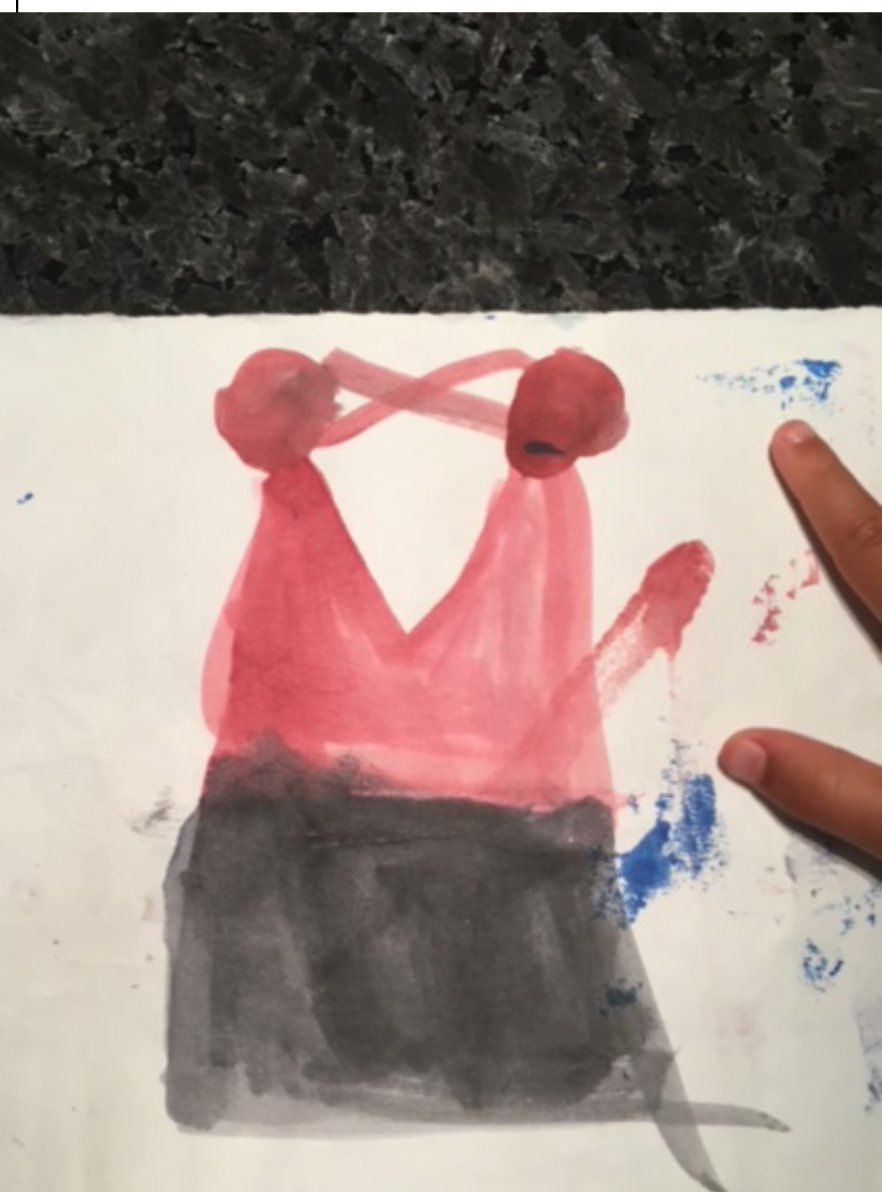
On the day I came up with the idea, I was sitting in Kindergarten wondering as I looked out the window. I saw a big apple tree and in that apple tree was a family of birds. “How beautiful,” I thought. I just love nature so I pulled out a piece of paper and started to draw a dress.

It had a black skirt with a red top. Across it was a green sash that reminded me of nature and the apple tree. It was a beautiful dress, it reminded me of my mom, and the beautiful things she wears. Only, she would prefer purple! The dress was beautiful and I showed it to my mom. She took a picture of it. As I got older, I looked at that picture and really started to focus on it.

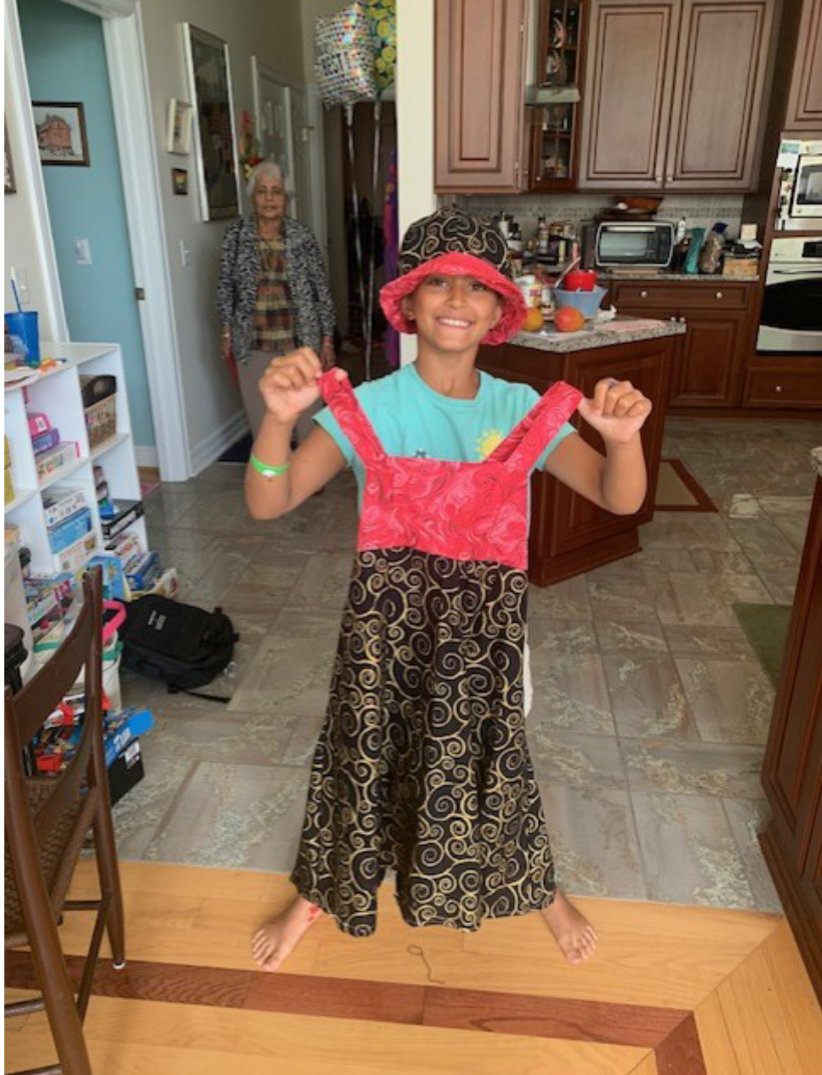
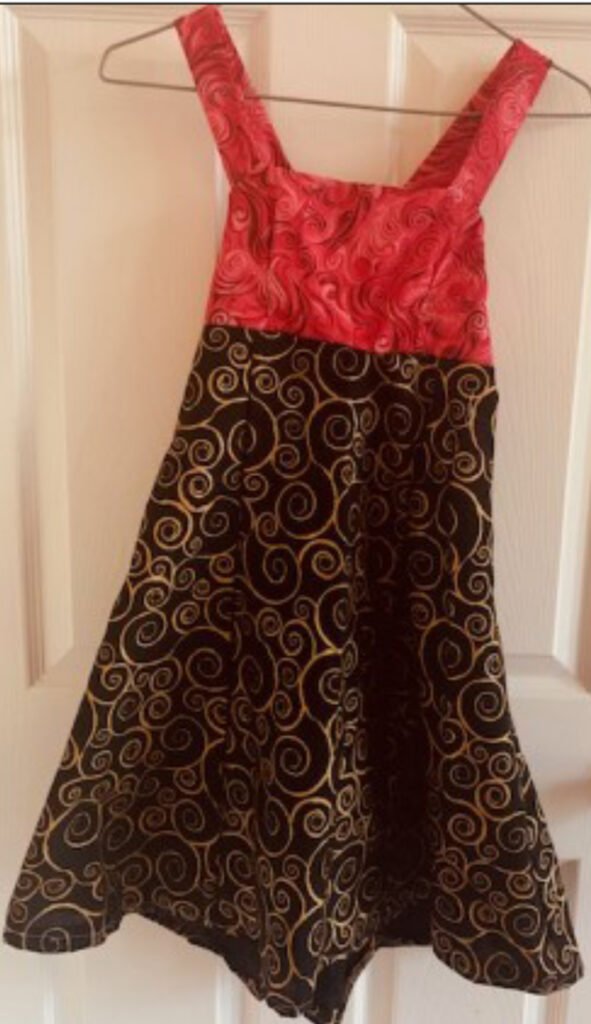
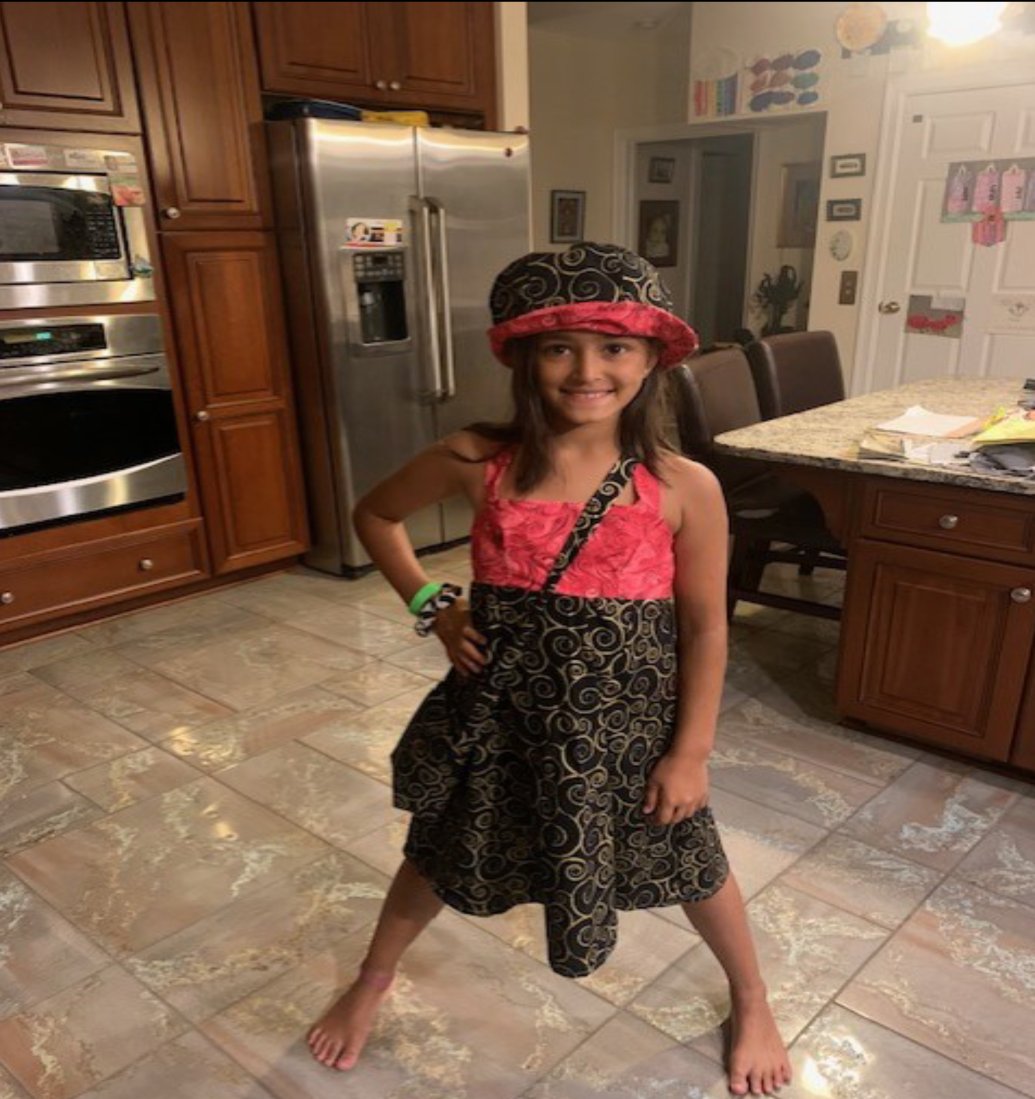
Now that I’m older and going into 5th grade, I talk about my drawings. I never got to really do anything with my design after kindergarten. But, the summer before 5th grade, I finally got the opportunity to make the dress. My mom found me a sewing teacher for the summer and we started making MY dress. It was a little bit harder than I thought, but I realized nothing is impossible.

“Nothing is impossible,” I thought when I was little. Drawing is drawing but I never realized it could come to life! Drawing is easy for me but seeing the final outcome is not. You have to put thought into it and believe in yourself. I realized that no one is too young or old to start something new. And, not just for sewing, anything new, you can do! I started sewing classes and the first step was to practice. It took some learning before I could start sewing my own design. I loved learning new things and was so excited to sew the dress!

You’ve learned what I wanted to do from a young age. Now, you should go and find what you want to do. The world is full of stuff and different things to learn everyday. My dress was one dream that I never knew could become real. I really never thought this would actually happen and I loved learning how to sew and my new dress!


“My name is Priya Elizabeth Kapur DeWinter. I share my full name because it tells you about my family. My mother is 100% Indian—which is where the Kapur comes from—and my father is half Irish and half Belgian. DeWinter is a Belgian name. 

“My maternal grandparents are from India. I’ve never been and hope to go one day. I speak Hindi and English. I’m an older sister. I hope I can be an author or fashion designer when I’m older. I got inspired one day to ask my mom if I could sew the dress that I designed when I was 5 so I did and made it happen, which is what my story is about along with pictures of my original design as well as the dress.”

Ohana

Ohana

By Likhita Makam, age 15, Telangana, India

We fight and apologies we forget.
We get lost and we get upset.
We fall apart into a million pieces,
But being together smooths out all the creases.

Because in the end we’re a family
although we don’t get along dandily
Far from picture perfect Pinterest poses
We make it to the diner just before it closes
We spend weekends at home in quarrels
Perfect family? For that we’d have zero laurels
But we stick together, no matter what
for each other we’d take a jab in the gut, somewhat
What matters the most is we never part
We’re always close, we never depart

Because we’re a family
And family means nobody gets left behind
No matter our irregularities
No matter our similarities

—Likhita Makam, age 15, Indian American high school student, living in India. She has been published in youth newspapers and literary magazines. She is an avid reader and is up for a poetry discussion at all times.

Manu and Noah: Strikingly Different, Surprisingly Similar

Manu and Noah: Strikingly Different, Surprisingly Similar

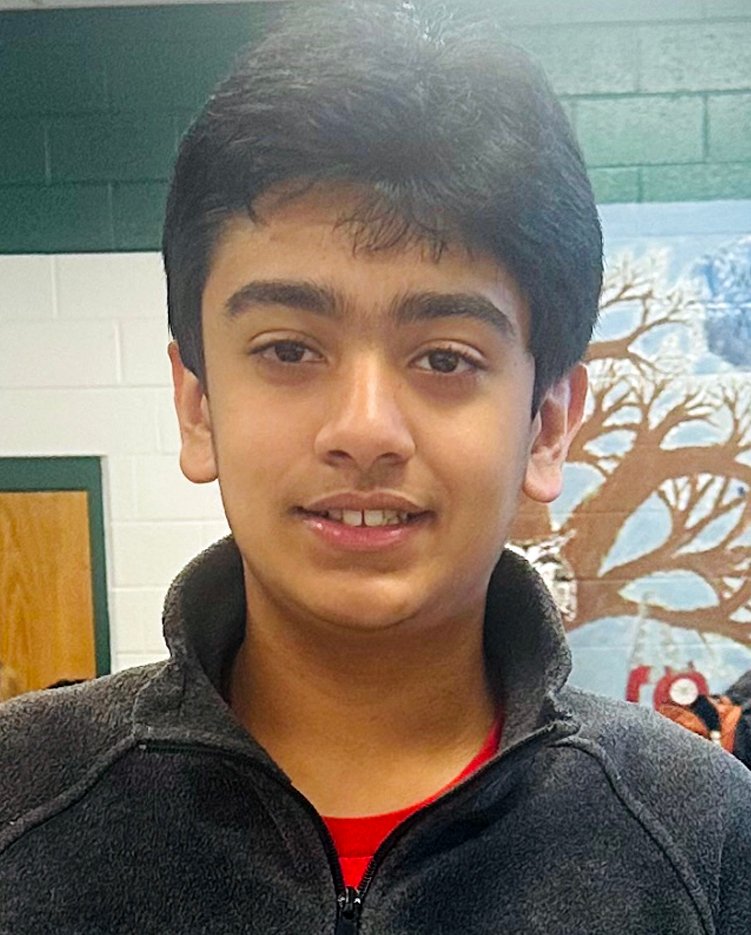
By Sahil Prasad, grade 8, Maryland.

King Manu, the first man according to Hinduism, and Noah, the survivor of the great flood, are two legendary men, who hail from entirely different religions of the world. Yet, these great individuals, surprisingly, shared multiple similarities that would be interesting to dwell upon during these times when religion is the source of divisiveness.

The Great Flood Survivors

First, both Manu and Noah were chosen by their respective Gods to survive a great flood. Their stories are startlingly similar. It is incredible that the two civilizations that these stories originated from were never in direct contact with each other until many centuries later!

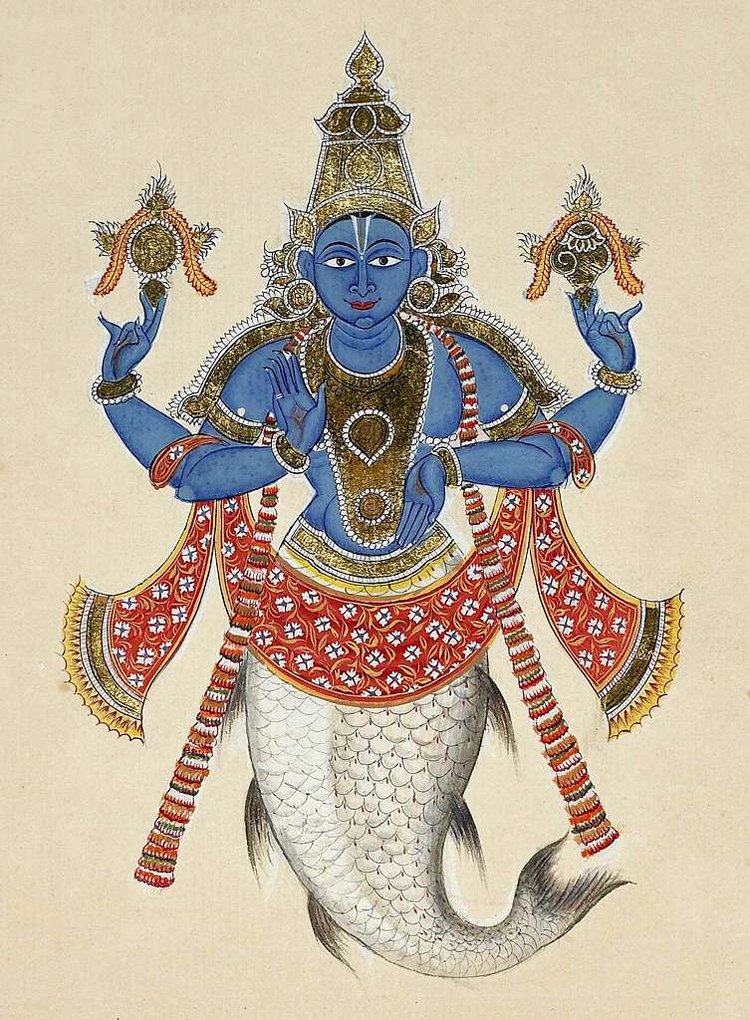
The Matsya or Fish Avatar of Lord Vishnu. Artwork is from the public domain and Wikipedia.

Manu was a sage who dedicated his life to faithfully serving and worshiping Hindu gods. The Lord Vishnu, the preserver in the Hindu trinity, chose Manu to be the survivor of a flood that would cleanse the world. The story goes that Vishnu decided to take the form of a tiny fish, the first of Vishnu’s ten avatars, and said to Manu, “Protect me from my predators and I will reward you.” Manu decided to keep the Vishnu-fish in a pot, which it quickly outgrew, and then in a lake, which also proved to be too small for the fish. Eventually, Manu moved the fish to the ocean. This is where Vishnu assumed his true form and informed Manu about a great flood that was about to occur. To ensure that his faithful follower survived, Vishnu instructed Manu to build an ark or a giant boat with all the animals, seeds, and other essential materials to survive the flood and start a new life. Manu decided to invite the seven holy sages or the Saptarishis to live with him in the new world. Manu and the seven holy sages guided the ark through the giant flood with the help of Vishnu–who led the ship with his horn in his giant fish form–to a peak where they rested until the world was cleansed. Finally, Vishnu came true to his promise and bestowed upon Manu the scriptural knowledge and power. The scriptural knowledge was passed down by Manu’s descendants and still continues to be studied today in the form of the Vedas.

Fun fact: According to B. B. Lal, the former director of the India Archaeology Institute, the flood of Manu approximately occurred as far back as the second millennium BCE.

Now coming to Noah; unlike Manu, the human race already existed in Noah’s world. The old human race was only concerned with money and killing, so God was disappointed with them. He decided to give the humans another chance by having Noah, the only devotee and true believer left on the planet, to be the guardian of a better human race. Noah, like Manu, also built an ark under God’s instructions, which were, “Build an ark of gopherwood, with rooms inside, three decks, and a door. Cover it inside and out with pitch.” (Genesis 6:13-22) Noah’s ark wandered the Earth (with Noah’s family and the various species that he had been instructed to bring with him) for 40 days and 40 nights in continuous rain. Noah traversed the ocean for another 150 days until God directed the boat to Mount Ararat (in present day Turkey) where it halted. Eventually, Noah sent out a dove to find land for them to settle and it came back a week later with an olive branch, which meant that land was out there. Just like to Manu, God made a promise to Noah that he would never flood the Earth ever again.

Harbingers of the Human Race

Manu and Noah were also attributed with ensuring the survival of the human race. After the great flood, Manu made a sacrifice to Brahma, the Creator in the Hindu trinity. He placed sour milk and butter in shallow water and this resulted in a maiden emerging from it, soon to become his wife. Eventually, the human race would start to grow at an exponential rate. Manu then instituted a quintessential set of laws (Laws of Manu) based on the Hindu scriptures that his ten sons and one daughter and subsequently, their descendants had to follow. One of these laws was to divide the population based on their gunas or skill sets. For example, people who were versed in the scriptures would be known as Brahmins. Eventually, humanity split into the solar clan founded by Manu’s sons and the lunar clan founded by Manu’s daughter. According to Hindu scriptures, Manu will be reincarnated when our current universe will be cleansed by Vishnu—in about 186.72 million years according to the Hindu scriptures—and he will be the leader and lawgiver of a more superior race.

In the case of Noah, after the devastating flood, he continued to live with his family and repopulate the Earth. Noah lived until the age of 950 and just like Manu, God helped his family grow rapidly. Just like the descendants of Manu split into the Solar and Lunar Clans, Noah’s descendants also split and settled the world, but they followed a different and more contentious trajectory than Manu’s descendants. Here’s how it played out.

Noah’s great grandson, Nimrod, began to build a colossal structure called the Tower of Babel, which slowly approached the height of the heavens. Citizens thought that Nimrod was building a temple, but it was revealed that reaching the heavens was his motivation all along to prove that he was an equal to God. As a result of Nimrod’s selfish actions, God decided to halt the construction of the Tower by making the workers speak different languages so they wouldn’t understand each other. As a last step, God took his punishment further and decreed that people of the city had to settle all around the world. This is how the world came to be inhabited according to the story of Noah and his family.

So there it is: the story of Manu and Noah. Given the striking similarities between them, some experts argue that they could be one and the same, a theory certainly worth pondering.

—Sahil Prasad, grade 8, Maryland.


Ramadan For All

Ramadan for All

By Zanjabila Khadija, age 8, Indonesia.

Asif was going to fast in Ramadan month for the first time tomorrow. He was still five years old. Eating was usually fun for him, so the first fast was a tough challenge for him. That night, he was restless. He wondered what would happen if he didn’t eat his favorite food. Too tired to think about it, he fell asleep at 8 p.m., even though he usually went to bed at 9 p.m. He was too flustered, so he fell asleep early.

In his dream, he found himself in the land of giants. On that land, a lot of giant-sized foods can be enjoyed, such as candy, ice cream, vegetables, fish, fruit, chocolate, and so on. He was full after eating many different food dishes. He laid down when someone’s voice startled him. It turned out that it was not a human voice, but a giant talking candy!

When Asif fell asleep, his mom and dad discussed Asif’s fasting. They tried to find a way so that Asif could fast comfortably without feeling too hungry or bored. His dad said, “What if we bring him a new toy that he can play with and thus get distracted?”

However, his mom said, “No! Asif was bored with toys. What about a pet? Chickens, cats, or fish. Let him choose it by himself!”

Asif’s dad agreed. The next day, Asif woke up very early to eat his pre-fast meal because he was so excited about his first Ramadan. After finishing his meal, his mom and dad asked Asif to pray at dawn. Later in the morning, Asif and his dad went to Nana’s house, a short walk from their house. Nana was his aunt. Nana had eight cats. Some of them were Persian cats, and the others were domestic short-haired cats. Asif was amazed to see those cats. He wanted three cats. He asked Nana, “Aunty, can I keep these three cats?”

“Oh, sure,” said Nana without hesitation.

Asif was allowed to bring one Persian cat and two domestic cats. He forgot his hunger during the month of fasting. He loved them when they jumped around and chased his toys. Also, they did not find any mice at home anymore. Asif named his first domestic cat “Mimi the Nimble” because he was the most agile at catching mice. The second domestic cat was called “Mike the Great Climber.” He loved to climb all the trees in their backyard and bask for hours on the rooftop. The Persian cat was named “Lulu the Groomer.” Almost all day long, she combed her fur with her tongue.

One evening, Asif went to the mosque. The mosque committee would hold an iftar. All people who wanted to break the fast were invited to come. Arriving at the mosque, he saw many people gathered there. He sat in the mosque next to an old man he had never met. The old man told Asif that he was a traveler and was going to the next town by bike. Asif felt very happy every time he broke the fast together with other people at the mosque. He felt warmth even though he didn’t know those people. He saw that rich people would sit on the same floor as the poor. He also saw that all people got the same food. No matter what their ethnicity. He then remembered what his dad had once told him: “All people are equal before God, except for the good deeds they have done.”

When he ate his Iftar meal, he remembered his cats. He thought they should feel the joy of breaking the fast as well. He set aside his empal, a traditional meat dish, for his three cats. After breaking the fast and doing maghrib prayer—an evening prayer, Asif ran home carrying that large piece of empal. As he opened the door, all his cats ran toward him. Lulu and Mimi rubbed their bodies against his legs, while Mike climbed onto Asif’s shoulders. The three cats then partied happily with that meat!

Zanjabila Khadija, age 8, Indonesia. She writes: “I love writing poetry and short stories.” She has won several literary competitions for young writers in Indonesia. In 2024, the Ramadan will begin on Sunday evening, March 10th and end on Tuesday, April 9, 2024 with the festival of Eid al-Fitr. The festival lasts for three days.
Editor’s Note: Islam follows a lunar calendar and hence the Ramadan dates fall on different dates each year. Did you know that in 2030, there will be two Ramadans? The first Ramadan will be in January 2030, and the second one will be observed in the month of December. Also, on Dec. 25, as the Christians celebrate Christmas, the Muslims will be celebrating the festival of Eid!

A S.T.E.M. Woman from India

A S.T.E.M. Woman from India

By Saroj Pathak, originally from India, now lives in California.

My 50 years of professional life have been a series of challenges, failures, triumphs, and also a few shattered glass ceilings. I would like to share my experiences and describe some of the twists and turns, and the choices I made.

I grew up in Indore, Central India. We were six siblings growing up in a middle-class family. In the 1960s, my high school, St. Raphael H.S., did not offer math major to girls! I was exceptional in Math and wanted to pursue my passion. My father talked to Mrs. Jagdale, who was the head of a small public school nearby. Mrs. Jagdale, an early Women’s Rights pioneer, said, “If our girls want to take math, we have to start math classes.”

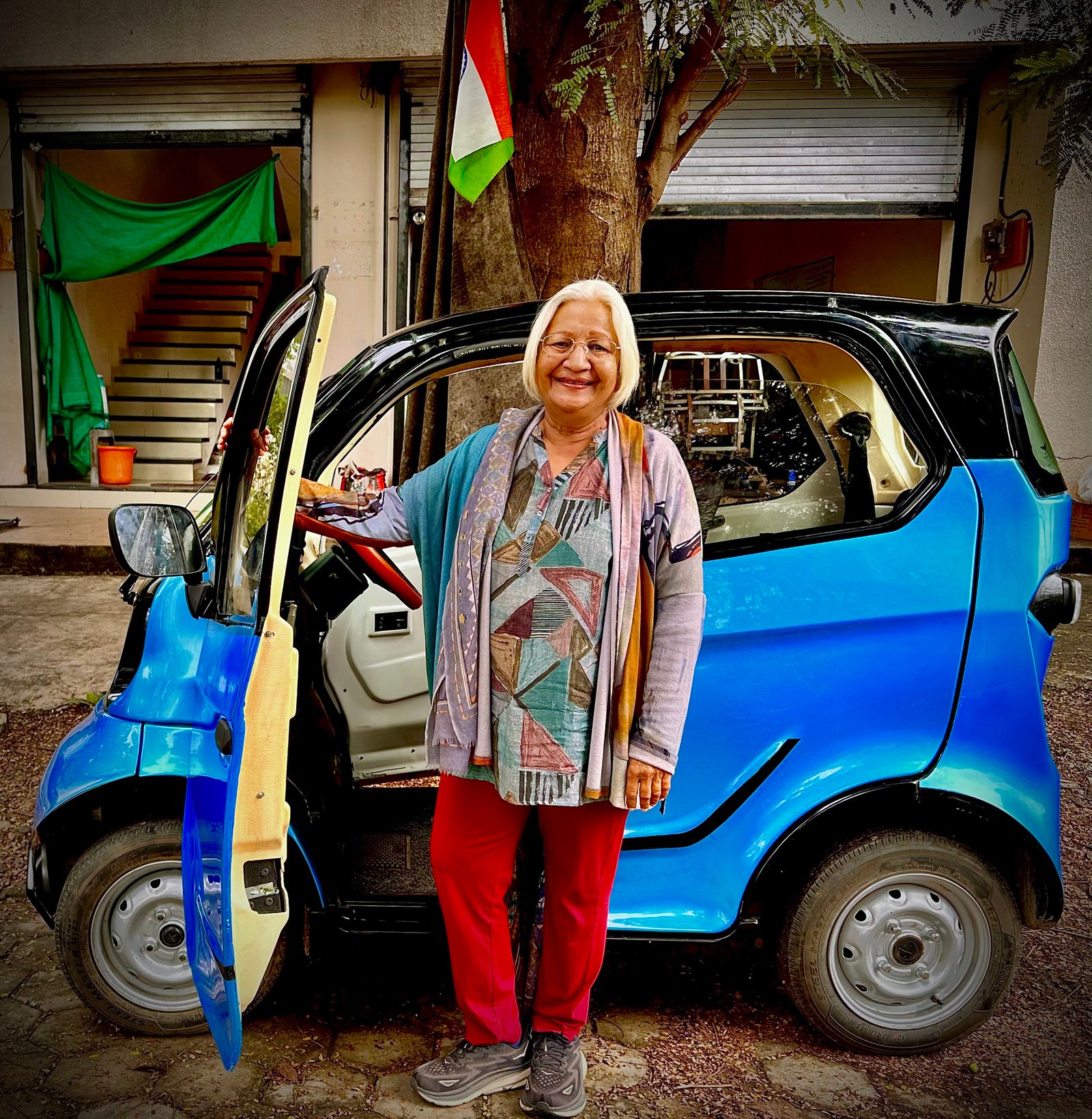
Now retired, Saroj Pathak Recently Visited the Historic Site of Mandu, near the city of Indore, Madhya Pradesh (Autumn 2023)

So my sister and I moved to Mrs. Jagdale’s school. In the nurturing environment of this small school, I ranked third in the state’s high school board examinations, an exceptional achievement!

From 1965 to 1969, I attended S.G.S.I.T.S., the only engineering college in Indore (M.P.). There were only five female students in the entire college. We had to fight for a small private bathroom and a tiny women’s room. I excelled in my chosen field of Electronics and Electrical Engineering and held the first rank in all branches of engineering throughout the four years. I was like a sponge; I absorbed everything offered. There was so much to learn from all my professors.

As graduation approached, I started looking for options for further studies. My parents were liberal but still would not send their daughter away for higher education out of state. And, I didn’t have the audacity to argue.

Dr. Dasgupta, the head of the college, recognizing my potential, and created an opportunity for me to pursue higher education in collaboration with the prestigious Indian Institute of Technology (I.I.T.) at Bombay (now, Mumbai), while working as a lecturer at G.S.I.T.S. in the Electronics Department. While satisfying my drive to excel, this enabled me to live at home. I taught for three years while completing my Master’s degree in Engineering in Control Systems from I.I.T. Although this experience was challenging, I wanted more.

I reached for a moonshot and applied for and was awarded a Rotary International Scholarship to study abroad. It was an easy decision to select University of California at Berkeley for further studies. I dared to dive head-on into the unknown, knowing only one person in America; a graduate student who had graduated from S.G.S.I.T.S. a few years ahead.

It was shocking for me to realize that I was the ONLY female student in the graduate school of electrical engineering, even at this prestigious university. The students and the professors were friendly and treated me with the utmost respect and kindness.

After graduating from U. C. Berkeley with a Master’s in Electrical Engineering and Computer Science, I worked as a semiconductor design and development engineer at American Microsystems in the Silicon Valley of California. When I came in for the job interview, the manager and engineers were shocked to see a female candidate. Women engineers were rare.

The Silicon Valley was full of type-A men, hungry for fame and wealth. It was a norm to “pull all-nighters.” All the engineers were transplants from somewhere else, and without family obligations; we worked hard and played harder. We created a family regardless of skin color or gender. We were on an endorphin high from the success of our innovations.

From 1975 to 1983, I worked with a small group of engineers at Intel Corporation; that’s where we invented and produced the first ‘non-volatile’ memory chips. These were the first chips that retained data (information) after unplugging the power supply. This was revolutionary! We published international papers, had numerous patents, and enjoyed the glory of success. I was a manager by this time and always felt respected and valued. My opinions counted, and I had the center seat at the table.

In 1983, I was offered a job at a Startup company to set up a non-volatile product line. My initial response was NO. I had an eight-month-old son and a three-year-old daughter. I was unwilling to work long hours. Since the company’s CEO wouldn’t take NO for an answer, we negotiated. I agreed to join the company, understanding that I could go home at 5 p.m. every day. The company provided flexibility, and I used my professional judgment to balance work and family needs.

Two years later, the room was packed with engineers from around the world when I presented a research paper on the First High-Speed Non-Volatile Memory at the International Solid-State Circuits Conference (ISSCC). My children sat in the front row. By then, I was confident and assertive enough to invite my children without asking.

When a Vice President position opened up, I did not consider it because I knew it meant working very long hours, and I did not want to sacrifice time with my children. Later, when the children were older and busy with school activities, I accepted a position as Director of a multinational research and development group in a different company. Most often, I was the only woman in the room where the decisions were made. Yet I also attended most of the swim meets, music lessons, cross-country running events and other activities with my children.

After 45 years in business, I decided to follow my lifelong goal of helping the younger generation in STEM field. I am passionate about the accessibility of primary science education to all children. To that end, I have started a non-profit that teaches science fundamentals to children of all socioeconomic statuses. I mentor through Stanford Mentorship Connections and other non-profit organizations. I am also the president of a local Kiwanis club whose mission is the education and well-being of children.

Advice to My Younger Self:

* Enjoy the ride. The trailblazing path is littered with obstacles, but there is no greater joy than facing challenges and finding solutions.

* Discover your core values and be true to them. Define your goals on your terms. Do not let others decide who you should become. Sort through the clutter of cultural baggage and embrace that which gives you joy.

* Be like a river flowing constantly towards the ocean, soft and flexible, but always focused on the destination. Change directions, detour if necessary, or carve a new valley, but keep flowing towards your goal.

* Be confident. You are stronger than you feel, smarter than you think, and braver than you know. Use any fear as motivation to be successful. That fear will then turn into confidence.”

* Educate yourself and acquire indispensable skills.

* Take chances. Inventions are just a step away from failure. Become comfortable with failure and learn from it.

* Dare to shatter glass ceilings, even if that means cuts and bruises. The pain of cuts and bruises is the price you pay to help your daughters and granddaughters.

* Most importantly, find a mentor. Find several mentors. Surround yourself with your cheerleaders. Find inspiration from the life stories of the pioneers who paved the path before you. From mythological women to recent ones, our (Indian) history is full of women who advanced humanity through their ingenuity, courage, and persistence.

* Be a mentor. You are standing on the shoulders of giants. Later, you can offer your shoulders to those following you.

* Be ready to choose. Most successful people have made difficult choices to get there.

* Find a supportive spouse. Sheryl Sandberg, author of “Lean In” and ex-CTO of Facebook, said, “The single most crucial decision you will make in your life is whom you marry, for this will determine the rest of your life.” She was talking to graduates of Harvard Law School.

* “Start the conversation before committing to marriage, not after.” Did you know that the Supreme Court Justice Ruth Bader Ginsburg credited her husband for her success?

In Conclusion, as a young adult in STEM fields, I would like you to be brave, explore, and take chances. Show up daily, sit at the table, and speak up in a firm, clear and compassionate voice. Act like the fate of humanity depends on you because it does.
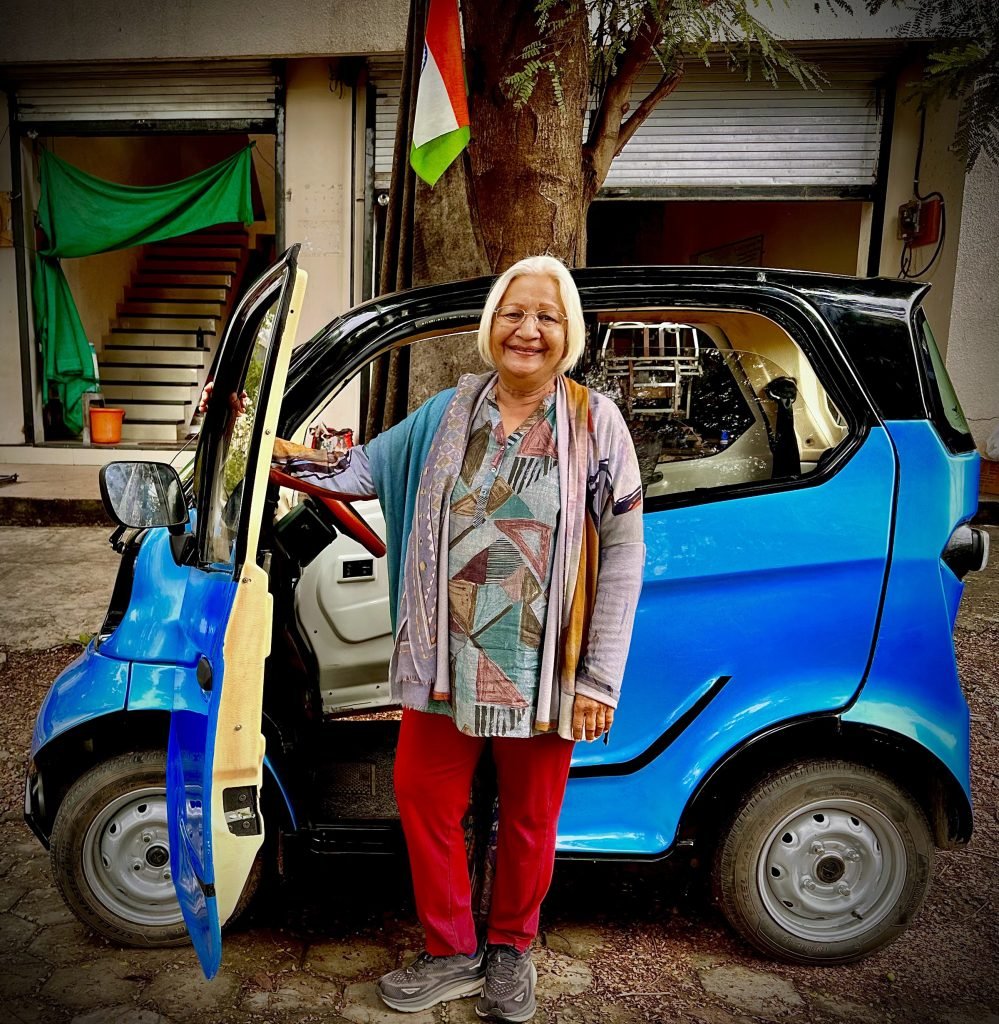
—Saroj Pathak, originally from India, lives in California. She shared this advice with engineering students at her Alma mater in Indore, India, in November 2023.

Photo: Saroj in Indore, Nov. 2023.

Butterfly

Butterfly

By Richard Siyi HE, 17, P. R. China
 
It’s the antennae, then the wings, then…flight.

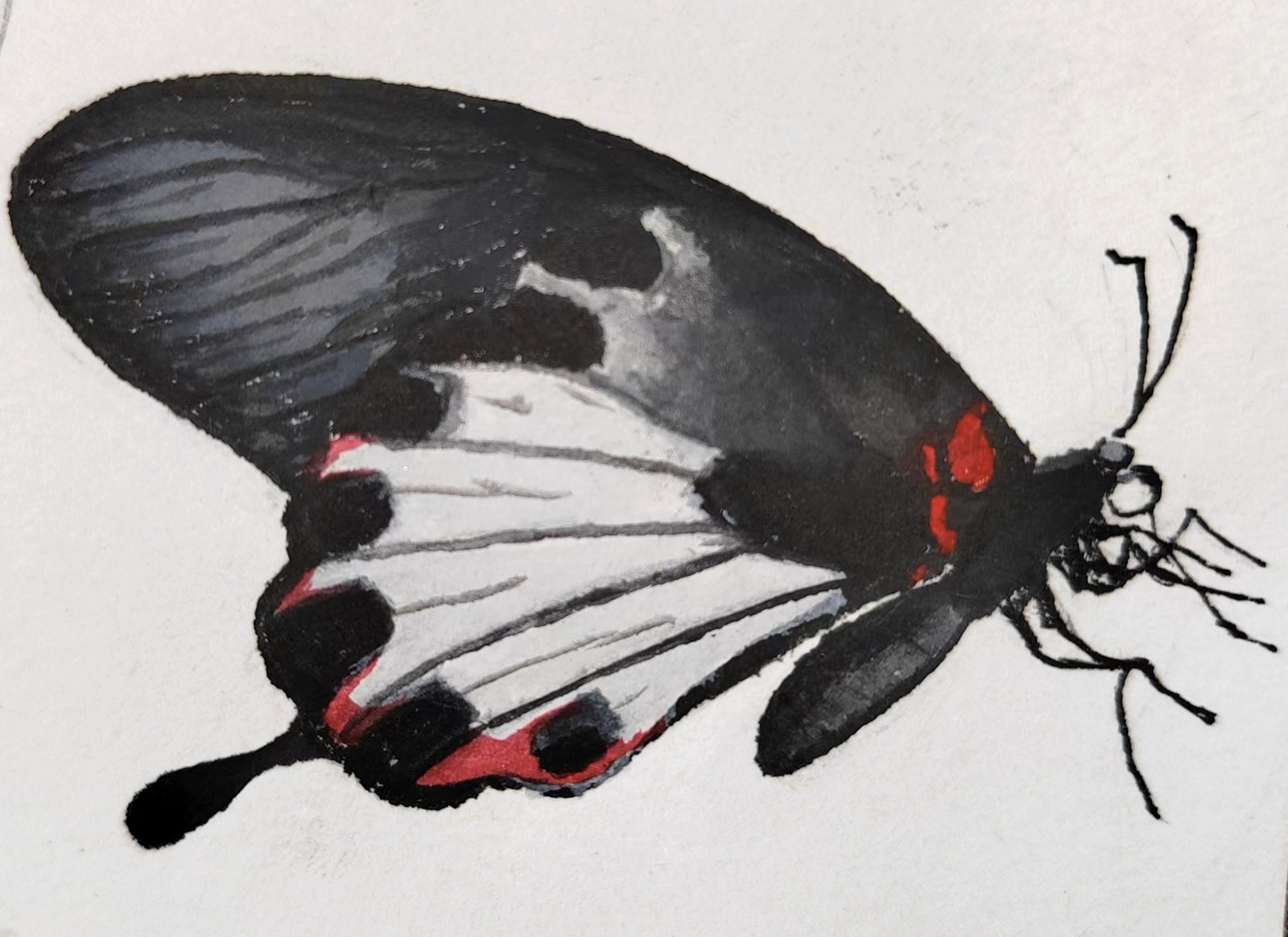
It slowly took off, the blue velvet-like sheen on its wings reflecting onto a large red enchanting flower below it, so intense; the obsidian-like eyes silently gazed at the sky that was inferior to its blue, disdainfully glanced at the flowers below, and slowly swayed in the soothing breeze.

“Hello, I should call you ‘Number 86’… Oh no, let’s call you ‘Flutterby’,” a young girl smiled at it. Her blonde hair and turquoise eyes blended in with the flowers, looking very natural and pretty.

“Oh, this blue-spangled butterfly turned out to have successfully emerged. I had thought it was a damaged butterfly. Having seen you take care of it day and night, I couldn’t bring myself to tell you.” Her father came to her side, “You know, in order to prevent these butterflies from becoming extinct, we can only evolve them into higher predators. Well, since those despicable interest-driven people have taken their habitat, on which they depend, away. But anyway, hopefully, we didn’t over-evolve them.”

“What does that mean?”

“Nothing, but we should go home for dinner. Let’s go!” The girl reluctantly followed her father out of the hexahedral simulated breeding greenhouse.

Not long after they left, Flutterby began to fly steadily. Its eyes slowly fixated on a praying mantis, which was also staring at it. As if provoked, the praying mantis pounced over with its sharp scythes waving fiercely. Flutterby took advantage of the airflow created by the scythes with just one slight flap of its seemingly frail and thin wings, dodged the fatal blow, and landed behind the mantis. It then plunged its proboscis into the head of the mantis and began sucking. The praying mantis twitched for a moment before falling to the ground, its scythes still swinging helplessly.

Soon, the first batch of butterflies was ready to be released into an artificially simulated natural environment. They came to a beautiful hillside and brought many newly emerged blue-spangled butterflies in boxes. “Don’t be nervous. This area has been equipped with a well-developed defense system. If the results are not satisfactory, we can easily eliminate them all. But the simulated environment here is no different from their habitat. Come on, let’s get started.”

The little girl nodded and prepared to gently open the lid with both hands, her palms sweating profusely. But just before opening the lid, she asked softly, “If the results are not satisfactory, is killing them all the only choice?”

“Oh, rather than saying we are killing them, let’s say it’s more like natural selection.”

The little girl reluctantly opened the lid, and the blue-spangled butterflies flew out continuously. In the company of sunlight and breeze, they flew towards the forest, lake, hillside, and stream. Up close they looked like slow-moving blue elves and from far away they looked like a large piece of blue silk rippling with the wind, slowly disappearing into the distance. The little girl smoothed her windswept hair and watched them leave.

“Oh, so sorry, I really didn’t expect to have such a massive outbreak of the butterflies. Hmm…Okay, I’ll be right there.” The little girl’s father hung up the phone and anxiously prepared to leave. The little girl asked curiously, “What’s wrong? Need my help?”

“Oh, the experiment results were terrible. They completely disrupted the ecological balance of that area. But it’s okay, you wait at home.” After that, he kissed her and left.

As soon as the little girl’s father arrived at the release site, he pressed the backup restart button. Time began to speed up, and then the butterflies began to reproduce in large numbers. Billions of blue-spangled butterflies densely covered every tree. The meteor shower made up of them in the sky searched for the trace of any prey. Whenever found, they would frantically wrap their prey. Their sharp proboscises pierced the prey’s body like needles and the blood that splattered on their wings made their wings full of blood-red eyes. Their larvae ate almost all of the leaves and dense black-red larvae wriggled together, even cannibalizing each other. But it didn’t take long for the reproduction rate of prey and host plants to slow down and a large number of butterflies starved to death…The blue-spangled butterflies were eliminated by natural selection. And this process only took a few minutes.

The little girl saw that her father’s face was very pale when he came back. Her father said weakly, “I’m sorry, we may have to terminate this experiment.” The little girl’s eyes welled up with tears. “Oh no, why? There must be a solution, right? Right? Please, please!”

“I’m sorry.” Both were silent, “Time to go to bed, okay?”

In the afternoon, when her father went out, the little girl quietly ran into the greenhouse to say a final goodbye to the butterflies. Flutterby gently stopped on her fingertip. It was so beautiful and charming, and then she was shocked to find that Flutterby was pregnant! The little girl bit her lip and took a deep breath, quietly taking it out of the greenhouse. “You can go. Although I don’t know if this is right.” But Flutterby didn’t leave, as if waiting for her to make a final decision, “Before I change my mind.”

Flutterby gently flew up and headed towards the sunset. Through her tearful eyes, the little girl seemed to see the blue light on the butterfly’s wings and the orange light reflected by the sunset meet to create a fireworks-like pattern of brilliant colors, dancing with the wind in search of light.

Underneath the angelic face of Flutterby, a devilish smile loomed.

—Richard Siyi HE, age 17, high school junior, People’s Republic of China. Richard adds: “I am obsessed with biology but also love writing. My favorite places are butterfly gardens all over the world (unfortunately, Beijing’s Colorful Butterfly Garden has gone). I am trying to breed butterflies and their host plants in the hope of protecting endangered butterflies.”

I Have Two Names

I Have Two Names

By Joy (Peixin) Yin, grade 7, Mexico.

I have two names; a Chinese name and an American one. My Chinese name is Peixin (沛心) . It means “pure heart.” My American name is Joy. My parents named me that because they want me to be happy.

My Chinese name is the one that is official. It’s written all over my legal documents. On first days of school, when the teacher calls roll, I’m always last, because my last name is Yin (尹). But I always need to correct them, “I go by Joy, though.” Sometimes, the teacher forgets and keeps calling me Peixin. And sometimes, I hear laughs and giggles from my classmates. I feel guilty to say, that sometimes, I feel a bit ashamed for having a Chinese name. So, when someone asks me, “What’s your name?” I always tell them to call me Joy. When the substitute pauses while taking attendance, it’s always me. When I write my name on my computer or phone, it always gets autocorrected. It’s almost as if the universe hates my name.

My American name is what they call me. When my family moved to the U.S., my parents gave me my American name so it would be easier for people to remember me, and for it to not be awkward and embarrassing for me every time someone pronounced my Chinese name wrong. My American friends all know me as Joy. I feel connected to the name; I feel like it’s me. Yet, I always get reminded of my real name.

But after three years of living in my hometown in China again, my feelings towards my name have changed. In China, my classmates and teachers all called me Peixin (pronouncing it perfectly!), and I was normal for once. In school, I was able to improve my Mandarin as well (a hard process, but worth it!). During that time, I also felt more connected to my culture, and learned more about it, although I sort of missed my American name and identity.

By now, I’ve accepted the fact that both of my names are part of my identity. Different parts of it. And I’ve embraced my Chinese name more. Especially after I saw many Asians at my new international school use only their Asian names.

My two names are two parts of my identity—living together in harmony, forever and always.

Joy (Peixin) Yin, grade 7, Mexico. She adds: “Born in Wuhan, China, I have also lived in California for five years. I speak and write Mandarin Chinese and English but I am also trying my best to learn Mexican Spanish. I have never been a sports person. Instead, I’ve always loved reading and writing. I’m currently 13 years old, and attending an international school in Mexico City.”