Category Archives: Multicultural

Truly

“Truly”

By Isabelle Tee, age 15, New Jersey.

She doesn’t want you to join us,” she said, “you are too loud.”

For most of my elementary school years, I’ve never had an actual friend that I’ve felt comfortable enough to just be myself. Many of the people I’ve talked to were mainly acquaintances so that I didn’t look like a loner. Because when you’re on a field filled with kids who don’t think before they talk, the last thing you want to be is alone.

So I tried to befriend a group of girls that I’ve only distantly known from second grade. Whenever they talked to me, I just nodded. I had no clue what they were actually talking about. During recess, I just follow along and pretend to be the bad guy when we play games. During class, I’m the one giving them answers for worksheets. And during lunch? That’s another story.

My mom packed me fried rice that day, which—in my opinion—was better than the soggy dino nuggets. I sat down at the lunch table with my “friends” and ate my food. One girl starts to sniff the air and looks around. Then she goes, “What’s that smell?” She looks at me. All I could do at that moment was put on a fake smile. How can you be friends with someone who can’t accept who you are?

The following day at recess, I joined the girls at the corner of the field. Only two of the girls were standing there. I asked them what game they were playing, and they awkwardly looked at me back. They told me that the others didn’t want to play with me anymore, apparently, I was too loud for them.

I pleaded with them, promising I wouldn’t scream loudly and lower my voice. They looked at me and told me to wait. One of them ran over to the other girls and whispered something into their ears. When she came back, she allowed me into the group again. I kept my word and didn’t speak much. I didn’t want to go back home crying to my mom again.

I realized then that, from the beginning, they never truly accepted me. They were never true friends.

By Isabelle Tee, age 15, Asian American, New Jersey.

Discrimination Against Asians in the United States

Discrimination Against Asians in the United States

By Fanny Wong, Chinese American author, New York.

In May, we celebrate the resilience, legacy and culture of Asians, Native Hawaiian, and Pacific Islanders in the United States. As you may know, the last few years have been very difficult for Asian Americans. We were aghast at the March 2021 mass murder of eight people in Atlanta, Georgia. Six of the victims were Korean women. Asian Americans were already targeted for being “Asian” since the beginning of Covid-19 pandemic. Between March 2020 and February 2021, almost 4,000 anti-Asian hate incidents were reported throughout the country. Verbal abuse and physical attacks were recorded on surveillance cameras. Violence could be spitting, hitting, and shoving that led to injuries. In February 2021, an 84-year-old Thai man died after he was shoved to the ground in Oakland’s Chinatown in California. 

Since the arrival of Chinese immigrants in the 1850s, the United States has had a long history of viewing Asians as “The Other.” The early immigrants worked in gold mines and helped build railroads in the American West. They sent their hard-earned money to China to support their families, and repaid loans of their passage to America. They had little choice but to work for whatever wages they could. American laborers generally could bargain for higher wages, but they feared being squeezed out of their jobs by the Chinese immigrants. 

As with most immigrants, the Chinese settled in their own neighborhoods. The stories of crime and decadence in Chinatowns, some of which were true, so alarmed the public that the Chinese were called the Yellow Peril. 

The Chinese Massacre of 1871 was the first in a series of riots and killings in California. Los Angeles was a small town then. The 200 Chinese men who lived there were farmers, laundry workers, laborers and vegetable vendors. This small population lived in a segregated area called Calles de los Negros, a very rough neighborhood where no one wanted to live. That was where the Chinese could afford to live. 

On October 24, 1871, a dispute between two Chinese factions led to the accidental killing of a white bystander. People ran around saying the Chinese were killing White people. A mob of 500 white men descended on Chinatown killing 18, some of them by hanging. At the time, Chinese people were not permitted to testify against white people. Even so, a few of the perpetrators were tried and convicted. But they were released on a technicality. No one served a prison sentence, no one was held accountable.

In 1885, Chinese miners in Rock Spring, Wyoming, did not join a strike by white miners. This enraged the white miners so much that they stormed Chinatown, killing 28 Asians and injuring 15 more. Again, no one was held accountable. When news of the massacre spread, many people condemned the violence, but it also resulted in Chinese immigrants being driven away from some communities. 

By then, Congress had already passed the Chinese Exclusion Act of 1882, which suspended the immigration of Chinese immigrants for ten years. This Act was the first in American history to place broad restrictions on immigration based on nationality. In 1892, Congress voted to renew the exclusion for another ten years, expanding the restriction to cover Hawaii and the Philippines as well. This Act was not repealed until the year 1943, when a law passed set a quota of 105 per year. The Immigration and Nationality Act of 1965 finally abolished the National Origins Formula.

During WWII, some 120,000 Japanese Americans were sent to ten Internment Camps (see my recent article on this topic) in the Western United States. German and Italian Americans were not interned, even though Germany and Italy were also fighting American soldiers in Europe. 

Whenever there is economic hardship, someone becomes a scapegoat. In 1982, Vincent Chin, a 27-year-old Chinese young man, was mistaken for being Japanese. Japanese cars were selling very well, and many workers in American auto plants had lost their jobs. Vincent was bludgeoned to death by a laid-off autoworker and his stepfather, also a Detroit autoworker. His murderers never spent a day in jail. In this case as well, justice was not served. It was almost as if an Asian life was not worth anything. 

But Asians, just like everyone else, are worthy. They have contributed greatly in music, performing arts, science, sports, literature, and politics as well as all other fields. Duke Kahananmoku, Hawaiian American, popularized surfing in the 1920s. Dalip Singh Saund was the first Indian American to be elected in 1956 to the House of Representatives. Yuji Ichioka, Japanese American, was a historian and civil rights advocate. Jerry Yang, Taiwanese American co-founded Yahoo. Tammy Ducksworth, Thai American, is a disabled Veteran and a senator. Sandra Oh, Korean American actress plays roles that are not stereotypes. Sunisa Lee, Hmong American gymnast, won a gold medal in the 2022 Olympics. The list goes on and on. 

It is encouraging that movies made by Asians about Asians Americans are gaining popularity in the United States. The award-winning film “Minari” by Korean director Lee Isaac Chung tells the story of an American Korean family’s struggles and aspirations in rural Arkansas. Disputes between husband and wife, health issues of a child, generational differences and financial difficulties are familiar to those of white families. The more realistic Asian stories are told, the less they will be perceived as “The Other.” 

 In the past, Asians have survived racism by keeping their heads down. The younger generation is coming together and standing up for their parents and elders. It no longer believes that a nail that sticks out gets hammered down. ‘Head down and mouth shut’ is no longer an option. It is important to speak up about and work against injustices of racism. 

Different languages as well as cultural traditions among the many different Asian communities in the nation can make it difficult for them to unite for Asian advocacy. But it is important that we unite and be active for the cause. 

Let’s hope that as we celebrate the Asian American and Pacific Islander Month this May, we witness great strides being made to end racism in our nation.

By Fanny Wong, Chinese American author, New York.
El Musico

EL MUSICO

By Denisse Gonzalez-Amador, age 14, Texas.

My fingers were tired from strumming the guitar

they rested on the small table I sat at

while I ate the freshly made quesadillas

the little money I owned was put into something I loved the most,

being a musician like the ones on billboards

but I was different

I performed at restaurants that gave me breakfast, lunch, and dinner

I cherished the small things

the flowers were thrown onto the small stage where I had poured my feelings into a loving song

the walls had my name painted, to come and watch me do the thing I love most

I have sung and played all the instruments to each song

As the customers eat their food while listening to the songs I handcraft

the luminosity in their eyes push me to continue my job

It doesn’t matter if my apartment is falling apart

whether my clothes have tears and stains in them

I will continue to showcase my one true talent

This is what I am, el músico.

By Denisse Gonzalez-Amador, Texas.
Denisse adds: “​I am a 14-year-old student at Meyerland Performing and Visual Arts. I’m a part of the creative writing magnet program. My cultural background is Hispanic culture, where we celebrate Quincenera (a celebration associated with turning 15 year old), Dia de los Muertos (a festival that celebrates our ancestors and loved ones that we have lost), and the Three Kings Day (The three wise men who came to see baby Jesus). I speak English and a small portion of Spanish. What is important to me is my life and family. My dreams and visions for the future are: becoming a businesswoman, a popular artist, and a poet. What inspired me to create my submission is the thought of my work being read and being published. I want people to see the work I create.”

The Internment of Japanese Americans During WWII

The Internment of Japanese Americans During WWII

By Fanny Wong, Chinese American author, New York.
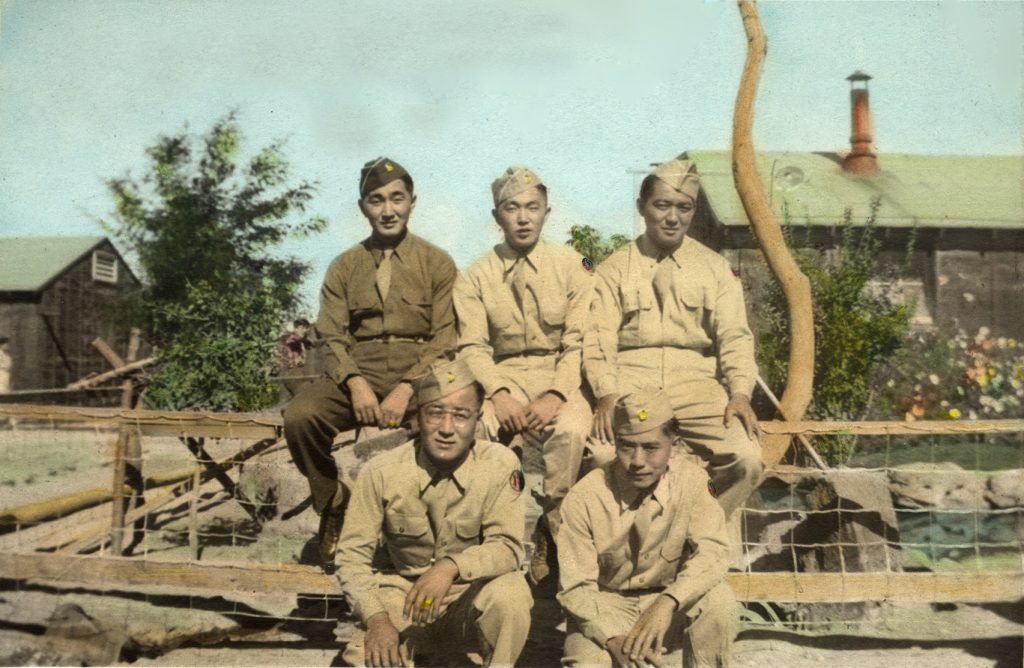
The United States is a nation of immigrants. Japanese immigrants started to arrive on the Hawaiian Islands in the 1860s to work in the sugarcane fields. Later, many moved to the West Coast of the U.S. mainland to work as farmers and fishermen. By 1911, over 400,000 Japanese men and women had immigrated to the U.S. 

At the beginning of the 20th century, the Japanese were portrayed as the enemy of the American worker, just as Chinese immigrants were decades before. The Japanese farmers were the envy of white farmers who did not use as many labor-intensive methods and were less productive.

On December 7, 1941, the Japanese planes attacked Pearl Harbor. Navy ships were destroyed and many American servicemen died. On the West Coast, the government immediately began rounding up Japanese newspaper editors, community leaders and labor organizers. Their families were not told the reason or where the men were taken.  

The entire Japanese American population within 100 miles of the West Coast and Hawaii was considered dangerous, possibly spying for Japan. An 8 p.m. curfew and a five-mile travel limit were imposed on all persons of Japanese origin. On February 19, 1942, President Franklin Roosevelt signed Executive Order 9066, sending the Japanese and Japanese Americans to ten hastily built internment camps in Arizona, Arkansas, California, Colorado, Idaho, Texas, Utah, and Wyoming.   

The Japanese were shocked beyond belief. Two-thirds of the 120,000 internees were American citizens, born in the U.S. They were forced to sell or abandon most of their possessions, houses, cars, boats and land. Their possessions, including precious farmland, were sold at a bargain to white farmers. They had only a few days to pack and could bring only what they could carry. 

The camps were located where the weather was very hot in the summer and cold in the winter. The barracks were shoddily built, covered with tarpaper on the outside. Only canvas cots, a light bulb and a potbelly stove for winter warmth were supplied. Each family had to build its own plain furniture such as a table, chairs and shelves. There was no insulation. Dust and wind blew in through the cracks of wood that had not aged properly and shrank. Four families in small rooms shared one barrack. Within each room, blankets and sheets could be hung to provide some privacy. 

There was no way to escape these prisons. Barbed wires surrounded the camps. Armed guards surveyed from watchtowers. Life was regimented.There were lines for meals, the shower, the toilets and the laundry in communal buildings.  

In the beginning years, the food was American, such as hot dogs, stew, potatoes, liver and cow tongue, which the Japanese were not used to. Later, they grew their vegetables and even made tofu, soy sauce and noodles. Rice was added to the menu. The government spent only thirty cents a day per person on food.  

The internees were put to work with very low wages, from $8 to $19 a month. The camps needed cooks, office and field workers, food servers and construction workers. But many were bored. To relieve boredom, the internees organized outdoor sports for adults and youngsters. Baseball was a favorite pastime for spectators as well. Primitive baseball fields were leveled, rocks and stones removed. There were a variety of other activities, including movies, talent shows and holiday celebrations. 

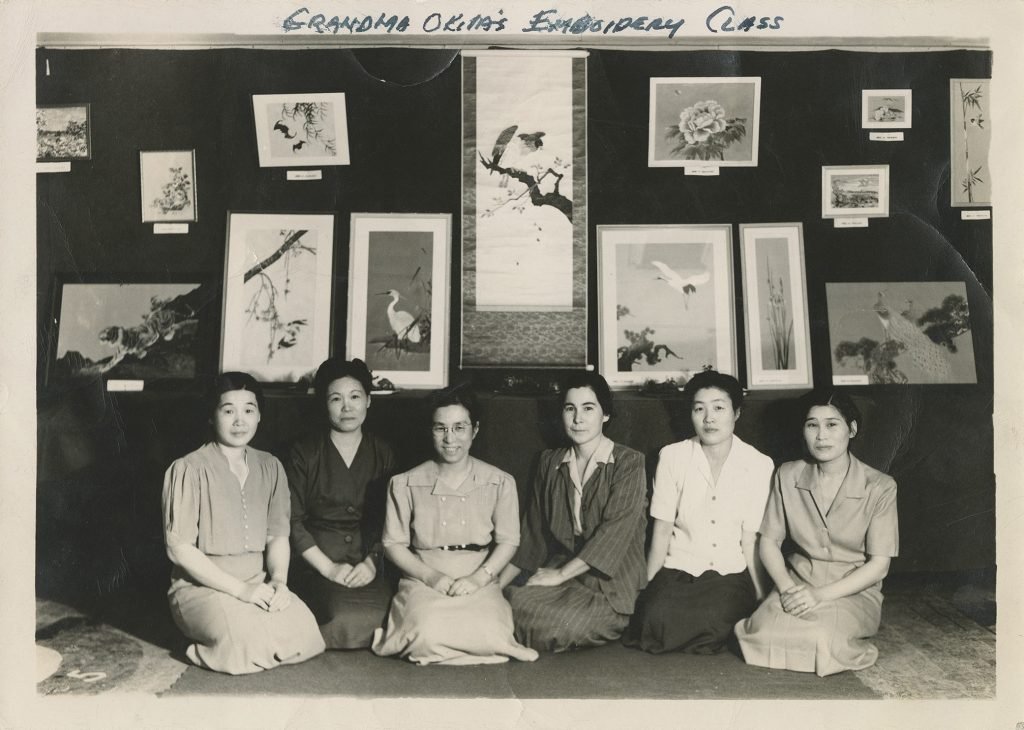
Grandma Okita’s Embroidery Class, Minidoka Concentration Camp. Photo: Courtesy of Japanese American Museum of Oregon, Portland, Oregon. Permission from JAMO required for further reproduction.

The internees were stoic about the experience, often repeating “Shikata ga nai” meaning you can’t change it. They tried to make their lives as pleasant as possible. They ordered fabric from catalogs to make curtains and tablecloths. Paper flowers decorated the rooms. They created tiny gardens in front of the barracks and even small ponds to make their bleak surroundings acceptable. They created handicrafts from dead trees, wood and material found around the camps. Painters, both professional and amateur, recorded the daily activities of the camp in their artwork. Art lifted the spirits of the internees. Their acts of beautifying their surroundings were something the government and the prison guards could not take away from them.  

Some 17,000 children under the age of ten were among the internees and more were born in the camps. Schools were organized for the children from kindergarten to high school. Used textbooks were sent from nearby schools. Most of the teachers were Japanese, although there were some white teachers who had better living quarters. 

In some households, family closeness was a casualty. Children witnessed their parents’ loss of control in their lives. The parents lamented that the children would rather eat with their friends at the mess halls. Teenagers became more rebellious as many of their peers did in the outside world. But in their abnormal lives, the strain was more severe.

Still, the internees were patriotic. They made camouflage nets, bandages for the war, donated money for the Red Cross, and collected metal for recycling.

Nisei Veterans of the 442nd RCT, Minidoka Concentration Camp. Photo: Courtesy of Japanese American Museum of Oregon, Portland, Oregon. Permission from JAMO required for further reproduction.

Beginning in February 1943, citizens of Japanese descent were permitted to enlist in the Army and Navy. Many young men joined the 442nd Regimental Combat Team (RCT) that was comprised of all Japanese American soldiers and fought valiantly in Europe. This regiment was the most decorated unit in the army. They operated in some of the most dangerous battles, and therefore, had the highest casualty rates (9,000 dead or wounded). They put their life in danger for the country even though their parents and relatives were in the internment camps. When the soldiers were wounded, when they were released after treatment, they would be sent right back to the internment camps. 

Towards the end of war, the government began releasing large numbers of the internees. The internment camps were empty by the end of 1945, and the last one closed in March 1946. Most Japanese Americans did not return to their hometowns because there was nothing to return to. Those that did return had a difficult time finding work and accommodations. A small number chose to go back to Japan. Each released person was given just $25 and a bus ticket to start their new life.

At the end of the war, no American Japanese were found to be spying for Japan. Later research proved that some American officials were guilty of falsifying reports that were used as the basis for the government’s internment decision.

In 1988, President Ronald Reagan signed a legislation apologizing for the internment on behalf of the U.S. government. In 1990, the first letters of apology signed by President George Bush were mailed. Surviving interned Americans and their heirs received $20,000 compensation for each individual. For many, the apology and the check came too late—they had lived a very difficult life, and many of them had already died. 

After the 9-11 attack by Muslim terrorists, fear mongering and Islamophobia depicted Muslim as dangerous to Americans just as the Japanese were demonized after the Pearl Harbor attack. The anti-Muslim sentiments being expressed in the country led the Japanese American community to publicly state that the horrible injustice done to them in WWII must not be repeated. It continues to raise its voice whenever an ethnic group is unjustifiably targeted. 

By Fanny Wong, Chinese American author, New York.
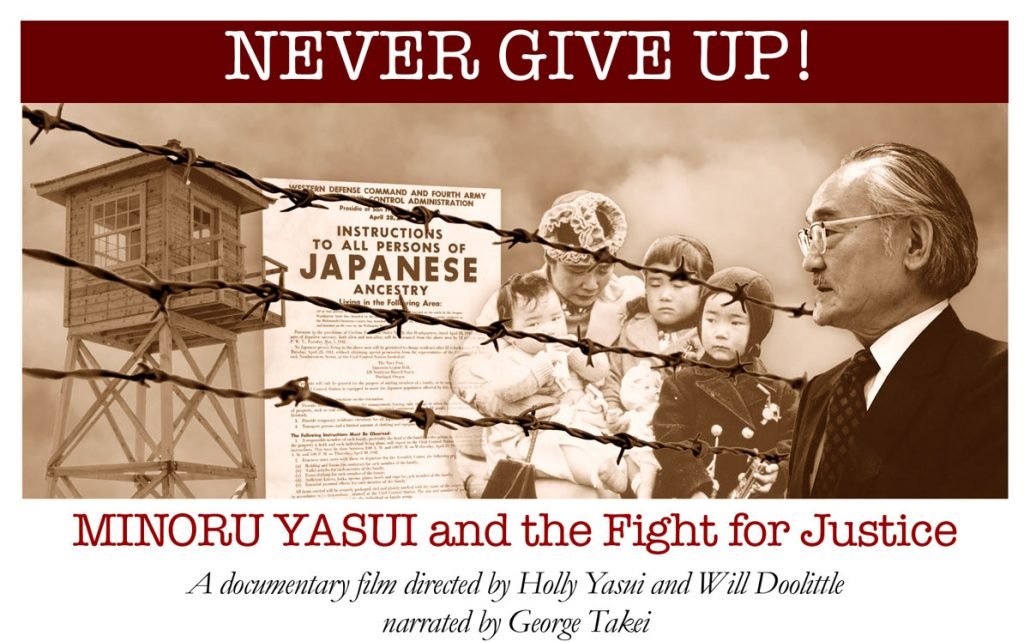
Editor’s Note: May is celebrated as the Asian American and Pacific Islander Heritage Month in the country. 

Never Give Up is an award-winning documentary that teaches about the discrimination faced by the Japanese American community and the issues described in the above article. You can get details from the website: www.minoruyasuifilm.org

Threats, Not Peace!

By Delaney Sheldon, age 14, grade 8, Virginia


Threats, not peace
Threats of creating what we fear most—a Third World tragedy
Threats of cutting the strings that connect us all together
Threats of destroying people’s land
People’s territory

Forget about peace
Why doesn’t peace ever show up?
Why is humanity always one step from falling off the steepest cliff?
Why do we sabotage ourselves and ruin others?
Why does publicity break us down? 

Fake news
Exaggerated news
REAL news
This news is very real
This news disrupts all peace that ever could be

So, what are we supposed to do?
Fight?
That’s not peace
Do we cut them off from the world?
And risk getting cut off too?
Definitely, not peace

Why should we even save them?
What have they done for us? 
If we throw the lifesaver to them in the deep water 
We could drown instead, sink straight to the bottom

But humans should save each other
Give them air
Bring them to the surface
Save them from their greatest fears

It’s our job as human beings
To let our humanity show
And to try to have peace on Earth
Because peace unites us all as one

Should LGBTQ+ Be Taught in Schools?

By: Lucille Amato, age 11, New Jersey.

Imagine that a young girl, with a normal life, has just come out as a part of the LGBTQ+ community to her classmates. That girl’s life has just changed because she has discovered something new about herself, but the needed support from her peers is nowhere to be seen. The classmates who don’t understand, give her weird looks, the classmates that do, sit in silence. Even the teacher is confused because that teacher was never taught about what LGBTQ+ means. Because of all this, the girl who expected support from her friends is left in awkward silence, feeling like she isn’t normal. LGBTQ+ is a community of people who have a gender or sexuality that is different from what people think of as normal. Plenty of people know this but a lot are unaware. This leads us to the question, should LGBTQ+ be taught in schools? Yes, definitely! There would be less bullying and happier students that are more prepared for the real world if we teach LGBTQ+ in schools!

My first reason is that there would be less bullying if kids learn that being LGBTQ+ is normal at a young age. According to StopBullying.gov 32% of bullying is directed towards kids that are a part of the LGBTQ+ community. Kids make fun of what they don’t understand so if they already know about LGBTQ+ then much less bullying would take place. If less bullying took place, it could also lead to better student grades and attendance rates. Because of school bullying, kids get anxiety which causes a lot of stress. All this stress can lead to lower grades. Also these LGBTQ+ bullies can cause kids to fake sickness or stay home just to avoid school. School should be a safe place to learn and have fun, and a student should never have to wake up with fear of going there.

Another reason is that if we teach LGBTQ+ in schools, it helps kids come out of their shells faster which makes students feel more comfortable, not just in school, but anywhere! Many kids suffer from wondering about their genders and not knowing can cause a lot of stress. Some students know that they are not comfortable with their assigned gender from birth, but they don’t know what that means. Thoughts such as “Do I like being a he/him or should I be a she/her or a they/them or maybe none of them? I don’t understand all of these pronouns!” go through some students’ heads every day. If it was taught in school they could understand more and know that they have support from teachers and their peers. Also it could make it so much easier for a kid to come out if their peers already knew what LGBTQ+ means. A kid shouldn’t be forced to keep explaining what their pronouns mean or what their sexuality means. If kids already knew then all these questions wouldn’t have to be asked.

Lastly, LGBTQ+ should be normalized so students can be more prepared. When a kid is young they are more impressionable so it’s best to normalize the LGBTQ+ community at elementary school ages. For example, most kids grow up with “boy” and “girl” being the only two genders and only boys and girls date each other, but when they grow up into the real world, they are going to be very surprised
There are many pronouns people can use and anybody can date anybody. Schools are meant to teach students and prepare them for the real world so normalizing the community should be one of the
priorities.

Although some religions might go against the LGBTQ+ community, kids have the right to learn about it. I know certain religions state that a member of the religion cannot be a part of the LGBTQ+ community but that doesn’t mean they can’t support it. Of course schools should never force someone to do anything that goes against their religion, but learning and supporting the LGBTQ+ community doesn’t make you a part of it. Also if parents truly refuse to let their children learn about LGBTQ+ for religious reasons they can always put them in a private or religious school. Even if religion is the reason a few parents wouldn’t want their child learning about the LGBTQ+ community, that’s not an excuse not to teach it. When it’s taught you will have happier students who are bullied less and are more prepared for the real world.

This community is constantly growing and more and more people are feeling comfortable with expressing their true colors. The world is changing so, don’t you think it’s time schools changed too? Schools would benefit so much from teaching students about the LGBTQ+ . If you also believe that schools would benefit from less bullying and happier students who are more prepared for the LGBTQ+ filled world, then spread the word! LGBTQ+ should be taught in schools!

You can visit https://www.hmhco.com/blog/ways-to-support-lgbtq- students-to-feel-safe-in-school for more information.

By Lucille Amato, 11, New Jersey.

Lucille is an AFAB (Assigned Female At Birth) who identifies as non binary and uses they/them pronoun.

Celebrating Women’s History

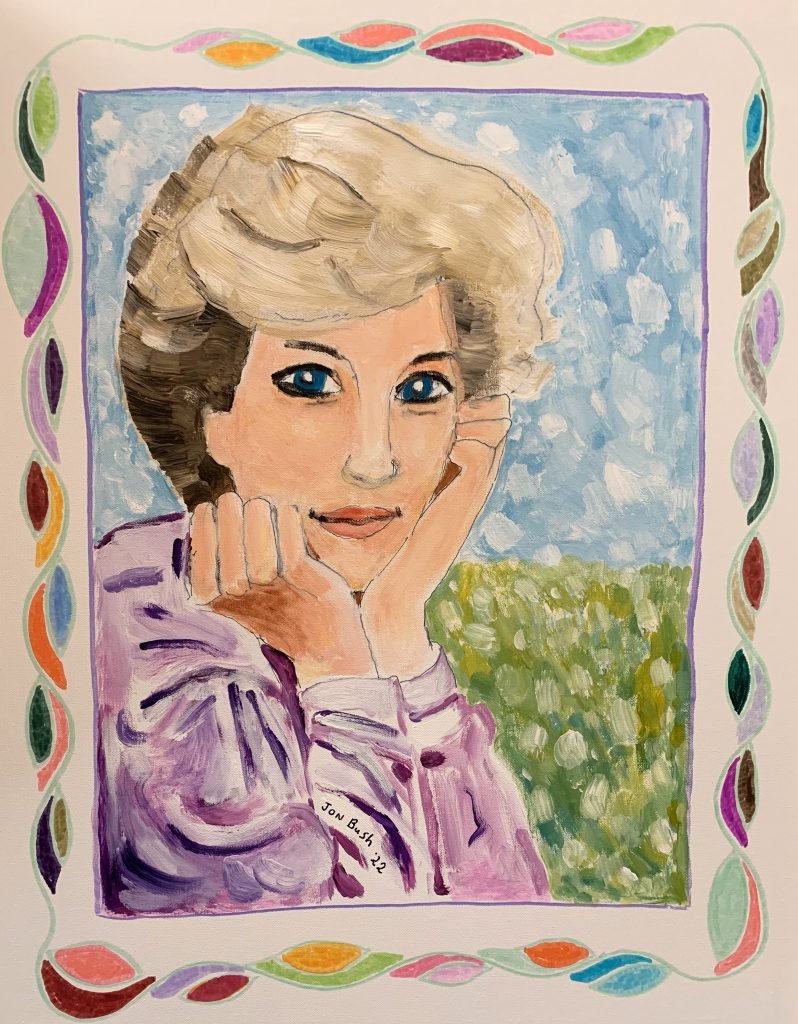
Princess Diana (1961-1997)

Princess Diana (1961-1997). Portrait by Jon Bush, Massachusetts.

“Carry out a random act of kindness, with no expectation of reward, safe in the knowledge that one day someone might do the same for you.”

—Diana, Princess of Wales (1961-1997). She was a member of the British Royal Family and mother of Prince William and Prince Harry. Her kindness, activism and position made her an international icon.


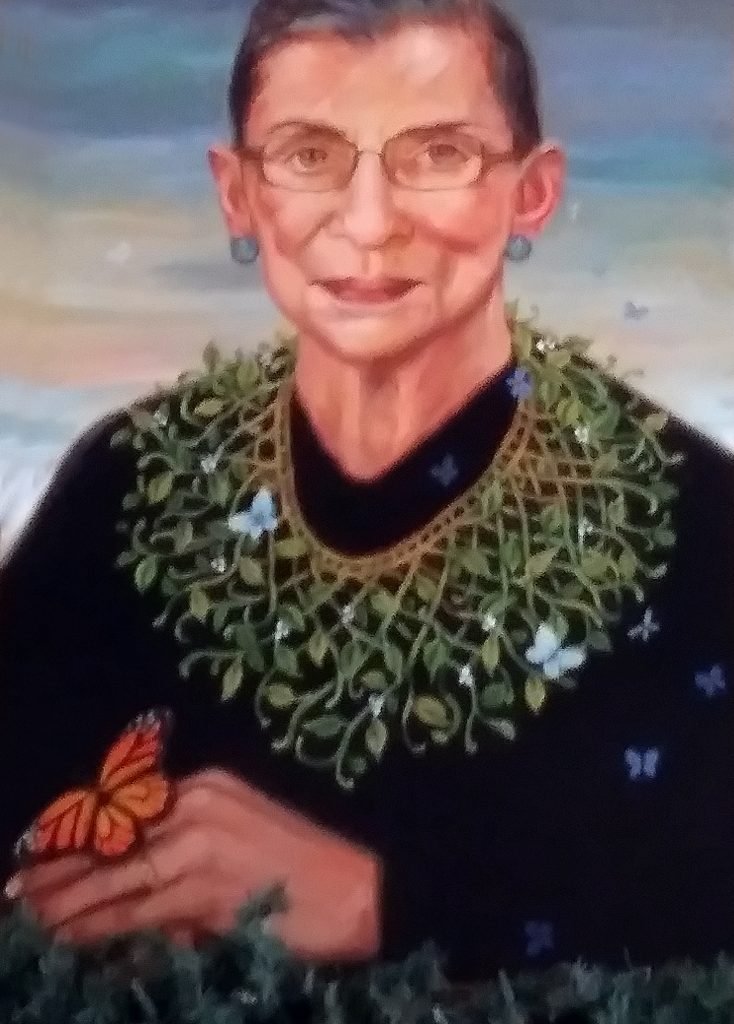
Justice Ruth Bader Ginsburg

Portrait of Justice Ruth Bader Ginsberg by artist Alix Mosieur of Loraine, Oregon.
Ruth Bader Ginsburg (1933-2020) served as an associate justice of the U. S. Supreme Court for 27 years. She was appointed by President Clinton and became the second woman to serve in this important judicial capacity after Sandra Day O’Connor. Justice Ginsburg was a well-known champion of gender equality and women’s rights. She died on September 18th, 2020, at the age of 87, after her battle with pancreatic cancer. You might like to watch RBG (2018), a documentary about her life. 

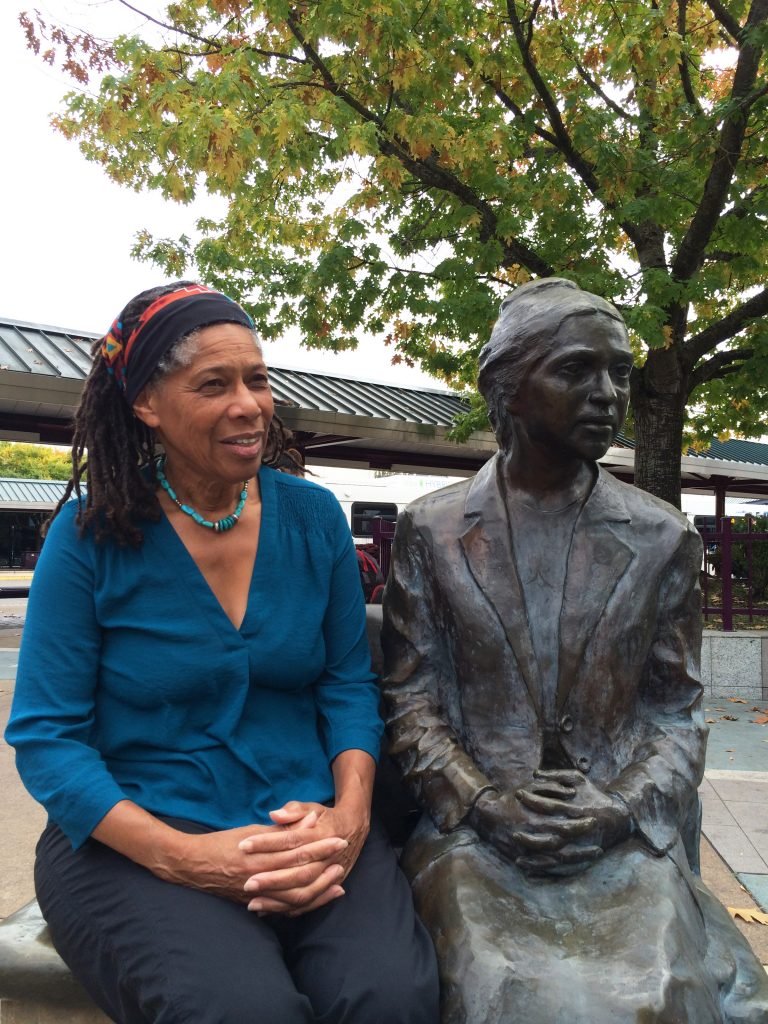
Rosa Parks (Feb. 4, 1913 – Oct. 24, 2005)

Dr. Jean Moule (sitting next to Rosa’s statue outside the Eugene LTD Bus Station, above) writes in her Skipping Stones magazine (April – May 2015) column, “Rosa Parks (Feb. 4, 1913 – Oct. 24, 2005) has become a symbol of the Civil Rights Movement and an international icon. She is an image of one lone person taking a stance that made a very big difference. She was sitting in a part of the bus that allowed Colored (African American) people unless it was needed for a White rider. When she was asked to move back to make room for a White passenger she would not. Rosa was 42 years old at the time and she was no more tired than anyone would be after a long day of work.

Rosa said, “I did not want to be mistreated, I did not want to be deprived of a seat that I had paid for. It was just time… there was opportunity for me to take a stand to express the way I felt about being treated in that manner. I had not planned to get arrested. I had plenty to do without having to end up in jail. But when I had to face that decision, I didn’t hesitate to do so because I felt that we had endured that too long. The more we gave in, the more we complied with that kind of treatment, the more oppressive it became.”

You can read Professor Jean Moule’s Nana Jean Columns in her latest book, Seeking Warmth and Light. FMI moulej@oregonstate.edu.

Multicultural Museums: Helping Make Sense of Our National Identity

By Skipping Stones Staff

Museums can provide an essential, interactive, and engaging way to learn about cultural history—both for our own culture, and the culture of other people. Without knowing our history or roots, we may not fully feel like we belong—especially if we have differences from other people in a society (ethnicity, heritage, etc.). Many museums in the United States help teach about the multicultural history of the country. Some of these museums are located in the nation’s capital—Washington, D.C. They include the National Museum of African American History and Culture, the National Museum of the American Indian, and the United States Holocaust Memorial Museum, among others. If you get the opportunity, take time to explore them!

1. National Museum of African American History and Culture

One of the newest additions to the Smithsonian family of museums is the National Museum of African American History and Culture. It shows the history of African Americans, from the first slaves brought over to the U.S., to the reconstruction era after the Civil War, and the civil rights movement of the 20th century. The museum helps visitors understand the impact of these experiences through stories, interactive exhibits, and the overall atmosphere. Many visitors say the experience is very powerful. and that it helped them better understand the history of the United States, because the history of the country has been significantly impacted by the history of African Americans.

The museum also contains exhibits and cultural items showcasing the lives of famous African Americans, from basketball player Kobe Bryant to singer Chuck Berry. It shows how these cultural icons have contributed to American culture and inspired countless people of all races, and it teaches about the racial barriers they faced in climbing to their success.

The museum also shows how African American culture is not just a unified block. There are different African American subcultures in various regions of the country. We see how geography affects the traditions, identity, and community of a group of people. Thus, African American culture in Chicago will be very different than in Birmingham, Alabama, for example.

The National Museum of African American History and Culture not only helps African Americans better understand their own history, but it also helps people of all races understand the contributions of African Americans in shaping the country’s culture and history.

Museum Website: https://nmaahc.si.edu/

Digital Resources from the Museum: https://nmaahc.si.edu/explore/nmaahc-digital-resource-guide

2. United States Holocaust Memorial Museum 

Another museum that tells the powerful story of a people is the U.S. Holocaust Memorial Museum. It offers visitors a glimpse into an event that killed six million Jews—approximately two-thirds of Jewish people in Europe, during the 1930s and ‘40s. The museum depicts some of the events leading up the Holocaust, the horrors of the genocide that occurred, and how the events of that time shaped global history and culture. The exhibits help us understand how and why the Holocaust occurred and how to ensure something like that does not happen again. To that end, there are also other exhibits that detail types of genocide occurring in the present day, in places in the world.

One floor of the museum is dedicated to understanding how the Nazi Party gained power in the 1930s. This is particularly poignant because it shows how blind hatred for a group of people can lead society to allow extremist governments into power. Obviously, it is possible for this to happen again, unless people avoid getting complacent when they see hatred swelling in a society.

Another floor is dedicated to showing the Nazi’s policies towards Jewish people, including their ostracization, relocation to concentration camps, and mass murders. The final floor covers the liberation of Jewish people from concentration camps and the events after the Holocaust. The museum depicts these eventsthrough photos, Holocaust artifacts, historical footage and commentary.

The museum also hosts conversations with Holocaust survivors to provide first-hand takes on the experience, and has special exhibits dedicated to other genocides around the world, including those occurring in Burma, Sudan, and other places. Furthermore, it has online exhibits that generate further discussion about events and people related to the Holocaust, including Anne Frank, the 1936 Olympics held in Nazi Germany, and global responses to the event.

Visitors to this museum come away with a much better appreciation for the specific details of what occurred during the Holocaust and why it is so important to be aware of what is going on in the world today, so we can avoid another atrocity like this from happening again.

General Museum Website: https://www.ushmm.org/

The online exhibits can be viewed at: https://www.ushmm.org/information/exhibitions/online-exhibitions

3. National Museum of the American Indian at the Smithsonian

Located in Washington, D.C. with a branch in New York City, the National Museum of the American Indian is also a part of the Smithsonian Institute. This museum presents a lot of information that is left out of school textbooks about the history of Native Americans, Native American treaties, how Native Americans viewed the relationship between people and nature, and more. It’s the first national museum dedicated to Native Americans and has a series of rotating exhibits that ensure during each trip you take there, you learn something new. 

As the first national museum in the country dedicated to Native Americans, it not only contains objects, photos, media, and videos about Native Americans who lived on the land that is now the United States, but it also offers exhibits about Native people from what is now northern Canada all the way to the southern tip of South America. The exhibits don’t just show people the ways of Native American life, but they also give a taste of the Native American spirit. People who have Native American heritage can learn about their ancestors and get in touch with that aspect of their culture; People who don’t have that heritage can learn about the unique traditions, perspectives, and ways of life of people who lived in this part of the world long before European settlers arrived.

Museum Website: https://americanindian.si.edu/

Online Resources: https://americanindian.si.edu/online-resources/exhibition-websites

4. Latino Museums

Additionally, a new Smithsonian museum, the National Museum of the American Latino, will be constructed in Washington, D.C. Although an opening date is not yet available, the museum will be dedicated to showcasing Latino history, art, culture, and scientific achievement. It aims to show how these contributions have influenced American culture overall.

While it won’t be ready for a while, there are many other museums around the country that you can visit and learn about Latino heritage. One of these is the Mexic-Arte Museum in Austin, Texas. This museum strives to preserve Latino and Mexican art and cultural artifacts, and it also aims to engage with the community in discussions about Latino heritage. In addition to showing the art of various Mexican and Latino artists, it conducts outreach events, cultural programs, and hosts speakers. Some of the rotating exhibits contain work by up-and-coming artists and teenagers. Others focus on showing the variety of traditions and lifestyles within the Latino community. Visitors get a much richer appreciation of the diversity of Latino culture.

Museum Website: https://mexic-artemuseum.org/

Mexic-Arte Online Exhibitions: https://mexic-artemuseum.org/online-exhibitions/

National Museum of the American Latino Museum: https://latino.si.edu/about/national-museum-american-latino


Museums can be powerful learning experiences. We often may walk out of the doors feeling solemn, as though we have learned something important, because we see in vivid images and stories how various ethnic groups have been treated or persecuted. Many ethnic groups have faced violence simply because of who they are. Visiting museums is an enriching experience, providing a detailed knowledge about the history of different cultures in a way we do not get at school.

The Grotto

By Angelie Tumaghap Martzke, Michigan.

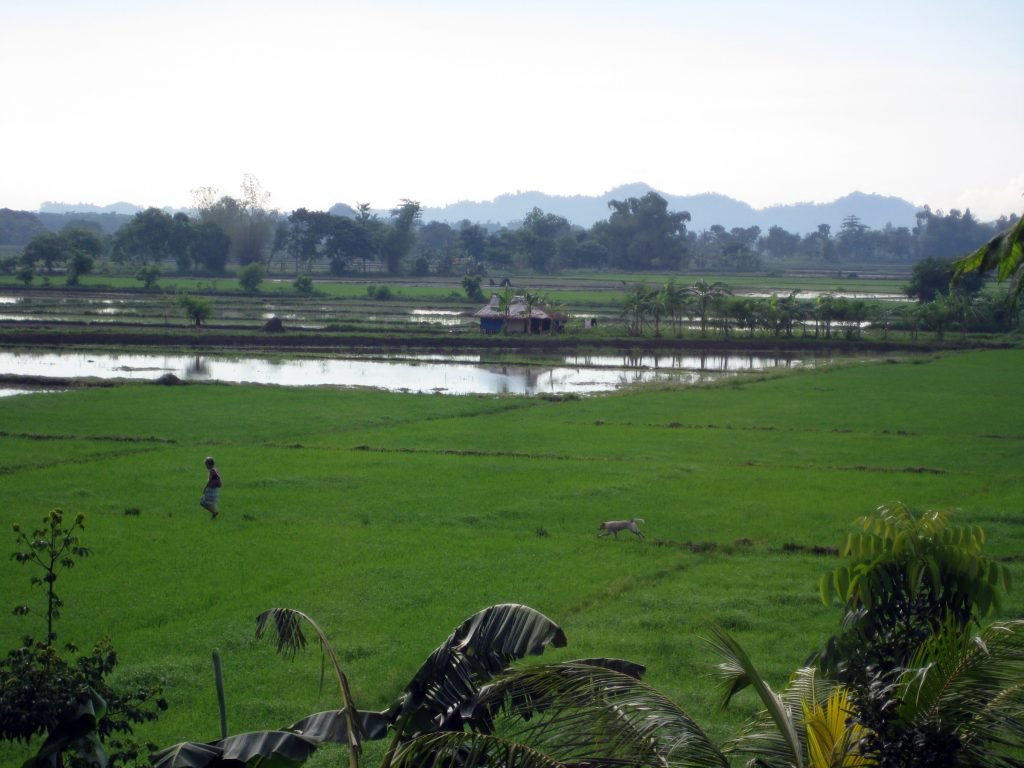
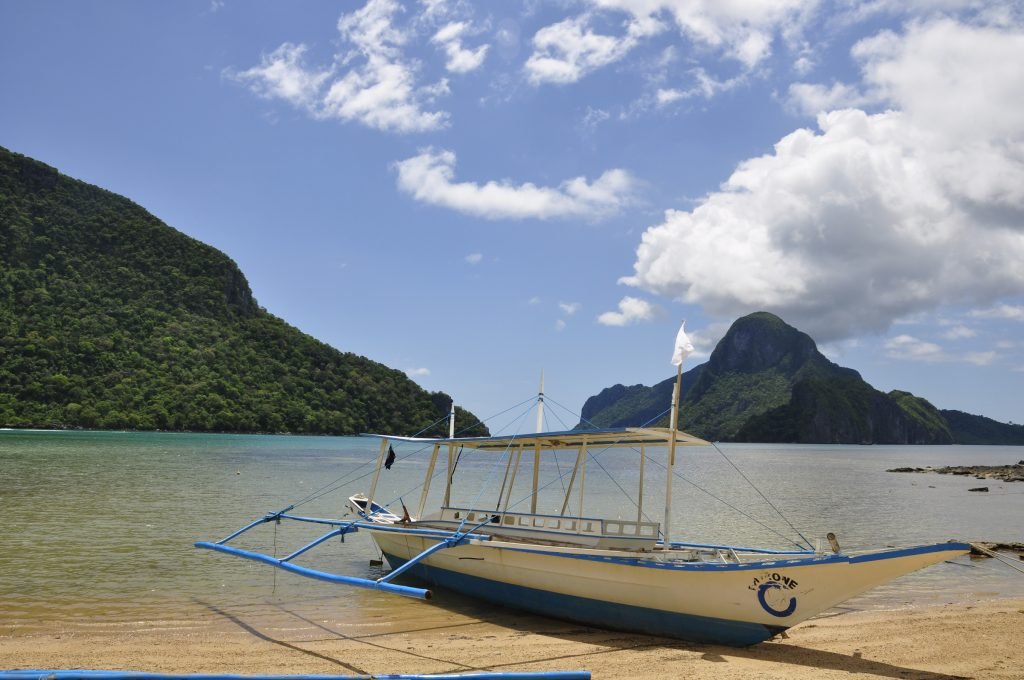
Iloilo Province in Panay, Philippines.

“My dad said he saw something in here yesterday,” Reeza said. “Amelia, when did you get here? Do you have insects in America? Ants? Worms? Caterpillars?”

 “I got here a few days ago. Yeah, we have bugs.” I replied, trembling. “Do you like them?”

 “Yeah, they’re cute. You might see a few in here today.”

Do I really want to go in there with all these slimy, creepy bugs? Yuck, I thought. But she seems nice and I’m finally meeting someone my age.

We were standing as tall as the grotto, a small cavern of rocks my grandparents gathered years ago from the Panay Gulf beach across the street. It was a house for various statues of animals carved by a local artist from the village. A frog, a turtle and a carabao stood strong, stationary, and well-preserved from the scorching Philippine sun. Reeza gently placed her left hand on the arch to peer inside. I did the same with my right hand, feeling secure touching the coarse, solid entrance.

“It smells in here. It’s been rainy this June.” Reeza pointed to the cracked ceiling as she carefully knelt in between the statues. “How long are you going to be here with your grandpa?”

“It’s cooler in here. I’ll be here until Sunday. Then to my aunts’ for school,” I replied, ducking my head in and kneeling on the prickly, pebbly ground. I gently wiped the sweat pouring off my forehead now that we were away from the morning sun. I wondered when I’ll stop sweating and get used to the heat like everyone else here.

We surveyed the black, grainy floor. My right hand unknowingly grabbed something furry and squishy on the grotto wall.

I let out a piercing yelp.

“What is it?”

“It was just moss. Sorry,” I said.

We returned to exploring the darkness. Then a deep, rumbling call echoed inside.

“Have you been to the beach?” Reeza asked. “Let’s go there tomorrow morning and see if the fishermen caught some sharks. I want a picture with it.”

Yuck, I thought. Sharks seem slimy.

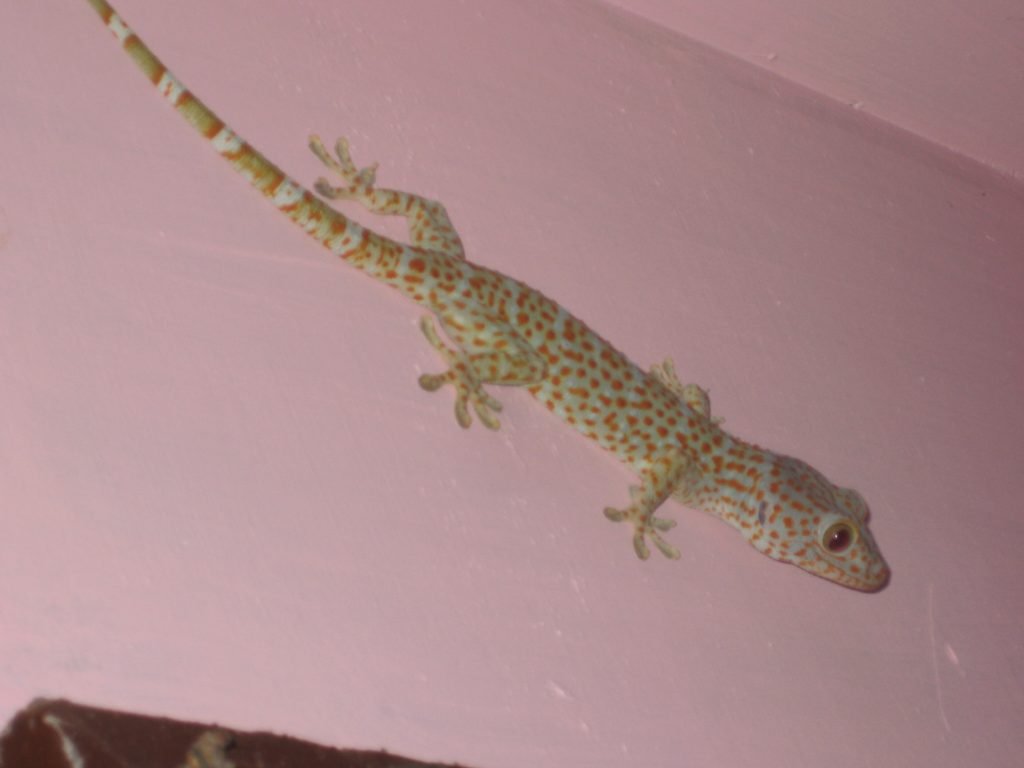
Tookoo! Tookoo!* Big, bulging eyes glowed towards me.

“Eeeek!” I screamed and we hurriedly stepped back.

A gecko the size of my arm scampered out of the cavern, climbing up and blending in with the banana trees behind the grotto.

“He’s harmless,” Reeza replied. “He’s usually inside a house. He sleeps during the day and is up at night looking for bugs to eat.”

“What was he doing here?”

“Maybe cooling off,” Reeza said. “Do you guys have geckos where you come from?”

“None in Michigan.”

“We’re used to them. They’re everywhere here.”

House Geckos? Shark fishing? Bugs everywhere? Will I fit in?

We stooped back into the grotto. My gaping mouth caught the salty sweat running down my forehead. I swallowed and breathed deeply, relieving the cottonball feeling stuck in my throat. Reeza waved me in.

“I can’t. Bugs creep me out and I’m scared of geckos, sharks and whatever else is here,” I said, lowering my head towards my flip-flops. “Maybe I should just go home now.”

“Oh!” Reeza gasped, her finger pointing at me.

A gust of wind whistled and relieved us from this tropical heat. I slowly eyed the right side of my face without moving a muscle in my body. Something was dangling, gently caressing the side of my cheek.

“Run!”

We squealed, bumping into one another on the way out. We bolted out of the grotto and leapt across the front yard. My heart was pounding, my legs were wobbling forward, one after the other. Somehow, we managed to reach the driveway. We collapsed on the cement, panting, and clutching our heavy chests.

“Look!” I yelled, pointing to her back.

Reeza shrieked and pranced in a circle, her hands waving up in the air. She’s a girl on fire. As I peeled the snakeskin off from her shirt, she slumped down and brushed her body with her hands.

“Thank you,” Reeza said, panting.

We examined this leathery object.

“It’s actually soft.”

“So pale and long.”

“My teacher last year brought snakeskin to school. She told us that snakes molt or shed their skin in one piece. They do this when they’re growing,” I said.

“I didn’t know that,” Reeza replied, tilting her head. “Snakeskins don’t scare you, but geckos and little bugs do?”

“I guess not,” I said, giggling. “I’m just not used to the ones you have here. Not yet anyway. Snakeskin is one thing, but a real snake is…”

“Gross.”

“Jinx.”

We sat, laughing and crying with the snakeskin in between us.

I wonder what else we have in common, I thought.

“Do you like soccer?”

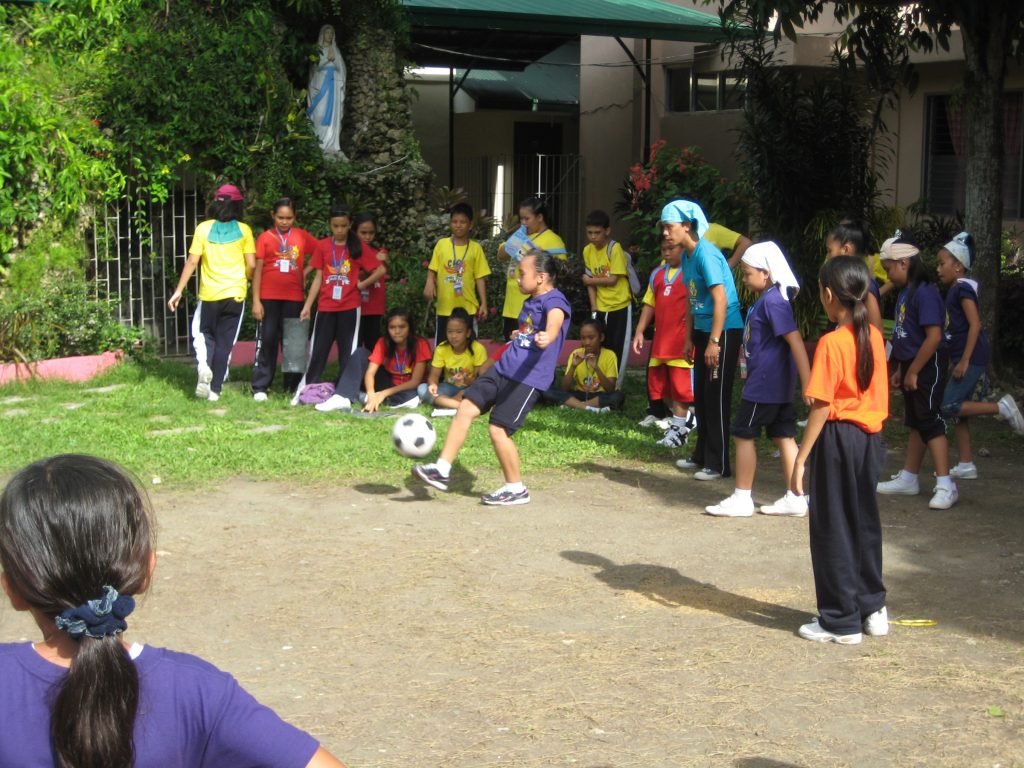
Playing Soccer in Pototan, Iloilo Province, the Philippines.

“I love soccer!” Reeza said, beaming. “Let me get my ball and see if anyone else wants to play. I’ll be right back.”

  • Author’s Note: Tookoo! Tookoo! is the sound that a lizard makes.

Photos and story by Angelie Tumaghap Martzke, Michigan. She adds: “I was born in the Philippines and grew up part of my childhood there in my grandfather’s house... This story, set in the Iloilo Province, is inspired by my actual experiences there. Since I was 9-years old, I have gone back every two to three years and continue to speak my language of Kinaray-a. My background is in Social Work, receiving my Master’s degree in Social Work from Columbia University in 2008. I have worked with teens and adults providing individual, family and/or group therapy.”

Art Essay by Jaeyeon Kim

Life is a journey.
“Standing at the many crossroads of life, my decisions would add up, changing my life and being. Fortunately, my friends and family have often been on hand to support and guide me through the toughest decisions and transitions. When it comes to art, I draw upon memories for inspiration and create with a strong sense of appreciation for the significant others and cross-cultural influences in my life. In this sense, my works are a collection of nostalgic thoughts, emotions, and experiences, as I look back on my life and hone in on influential fragments of time and space that have come together to define me as a human being.”
Jaeyeon is a fine artist who works to claim spaces for the public to engage with art without difficulty. Her work often revolves around detailed paintings, installation art and sculptures, which become a place for social engagement and visual communication.
—Jaeyeon Kim, 19, was born in South Korea, and came to the U.S. as an international student at the age of 15. She currently studies at the Parsons School of Design in New York. 

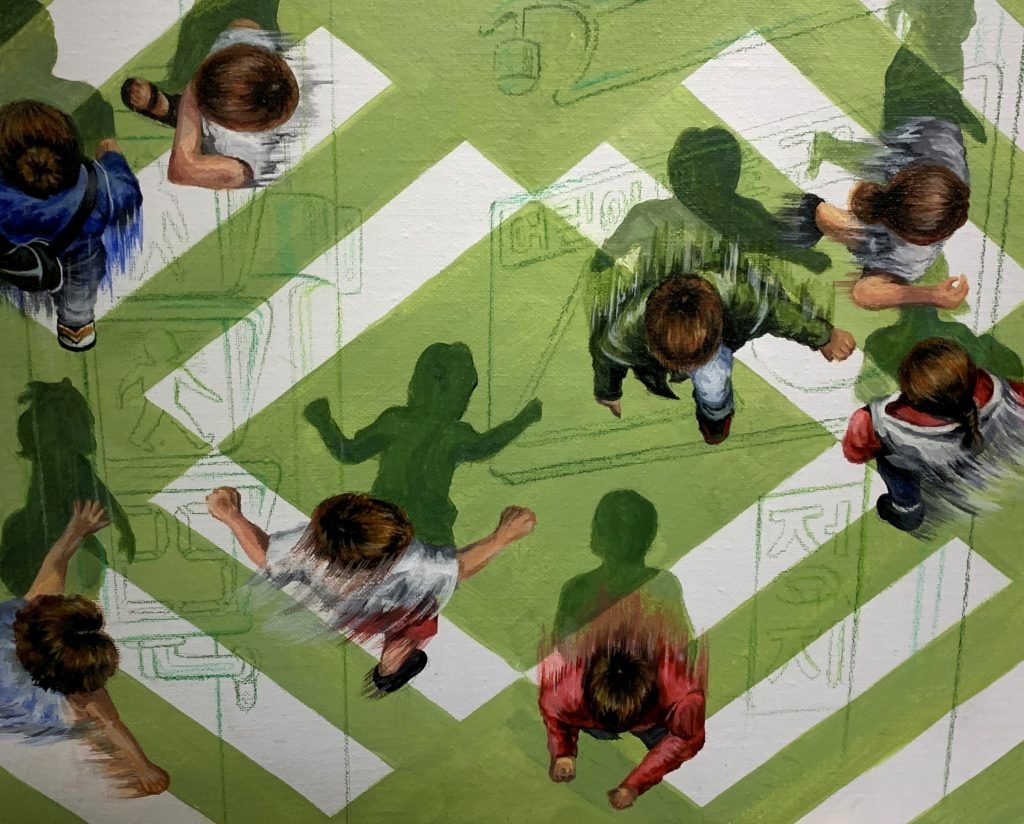
1. CrossRoad Korea

Seoul, where I was born, is a big city. There are many cars and people at the crosswalk. When I saw a crosswalk, its ‘X’ shape reminded me of our society. Our community is connected like the shape of ‘X’ and also has a system like a red/green light. Also, everyone has a different destination in life.

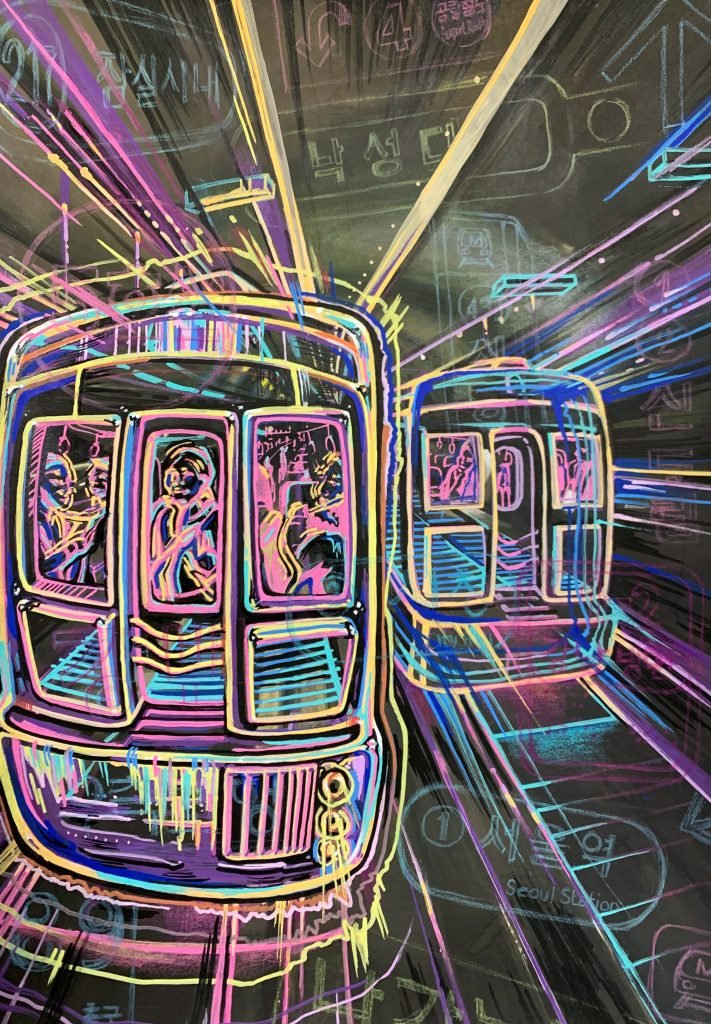
2. Subway Korea

In Korea, the subway is the lifeblood of the city, as in other countries. Many people go to the heart of the city by subway, and it is always crowded. Koreans liken these crowds to the appearance of ‘beansprouts’ which have to grow in a dense environment and survive well in it. I capture a scene of the subway and its passengers. People in the subway have various backgrounds–different ages, genders, occupations, attires, and emotions. Most people feel tired but, well, there is a will to live today.  

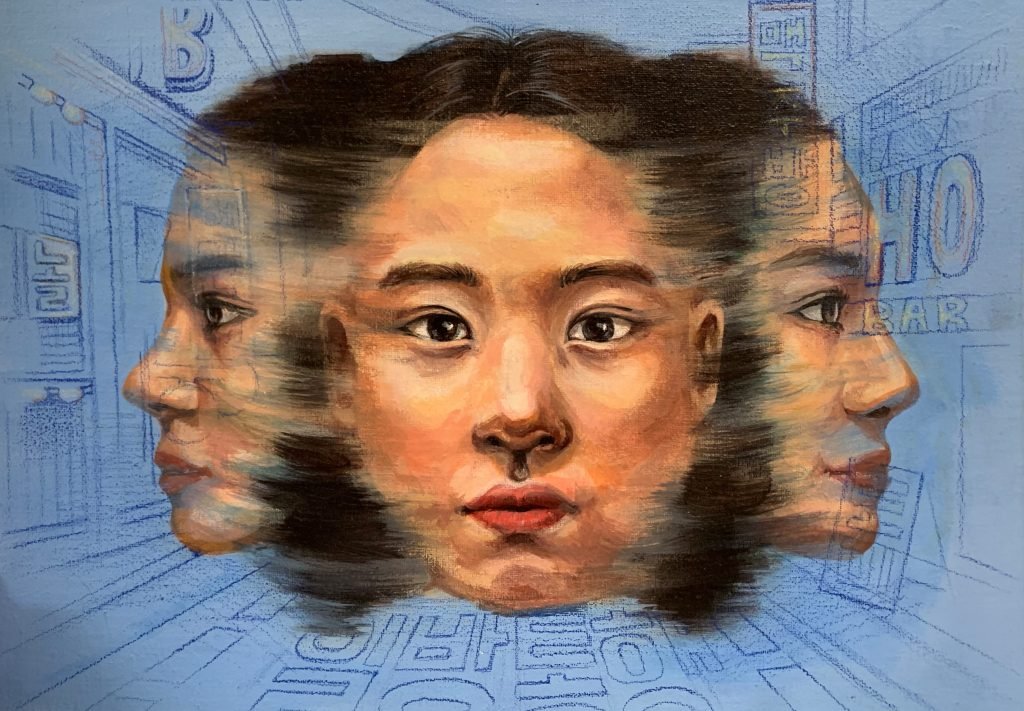
3.  Identities

There are many identities within us. Regardless of age, from a girl to a lady, there are various images of women in one person, based on the situation and culture.

—Art and writing by Jaeyeon Kim, 19, was born in South Korea, and came to the U.S. as an international student at the age of 15. She currently studies at the Parsons School of Design in New York.