Category Archives: Multicultural

Stand OUT

Stand OUT

Smart
Smarter
Smartest
That’s all they care about in this test
Your Creativity doesn’t matter
Your Hardwork doesn’t matter
the Blood sweat and tears you put in doesn’t matter
It’s all about the score in the end
This toxic cycle of making us believe
Believe this is what we have to do to fit in
Fit in with society
Fit in with the crowd
Fit into the jigsaw puzzle
When you’re your very own work of art
For how long does this go on
For how long does this cycle go on
This cycle of blending us all together as one
Until we’re broken and bleeding pieces
Working together in blurred masses
Towards a goal that was never ours
Stop
Make it all stop
Stop making us believe we’re jigsaw pieces
Stop making us believe that we’ve got no choice
No voice
That we cannot be a counterpoise
That we’re nothing more than a mere small voice
Stop making us believe we aren’t our own masterpieces
Stop making us believe that we’ve got to fit in
When we were born to stand out

Likhita Makam is a 15-year-old Indo-American high school student living in India. She has been published in youth newspapers and literary magazines. She’s an avid reader and is up for a poetry discussion at all times. She hopes to inspire people of all ages with her words.

While the World was Fixated on the Folly of Billionaires

While the World was Fixated on the Folly of Billionaires

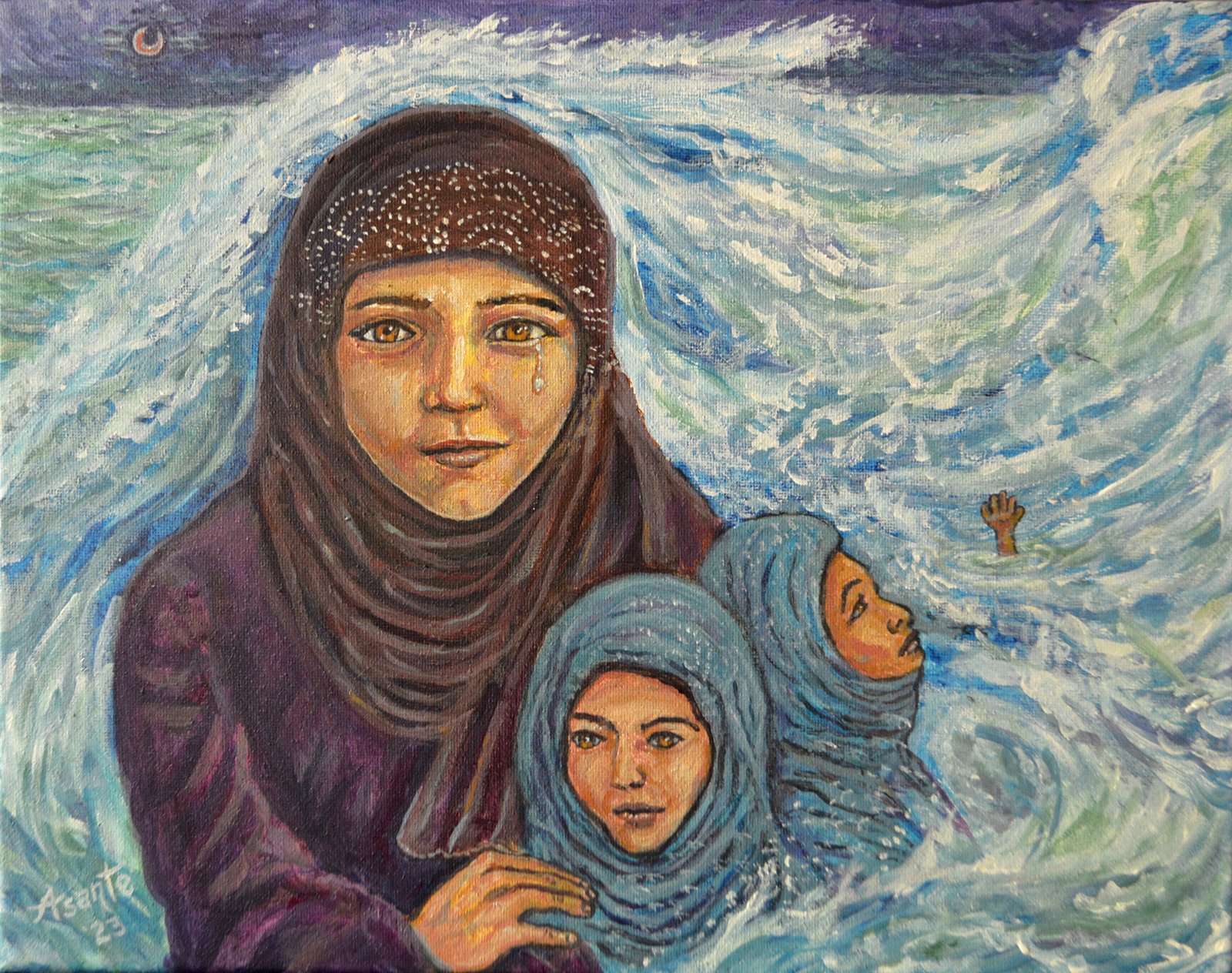
So many of us are mesmerized by the plight of billionaire folly, yet our society is turning a blind eye to the very real horrors of the world’s refugees, seeking survival. While the billionaire submersible was imploding last month reminding us all of the power of our oceans’ depths, and an oft-absent respect for the power of nature, a ship crowded with refugees sunk near the coast of Greece and as many as 700 women and children drowned. The officials in boats did nothing to help, they simply watched in the as the refugees drowned. So much of this world’s politics and cruelty are so reprehensible… so much cruelty when there could be compassionate sharing and life saving help! This new painting insisted on coming into the world. I cannot and art will not be silent on the insanity of this all!!!

You can read an insightful article by Amy Goodman & Denis Moynihan in Democracy Now! https://www.democracynow.org/2023/6/23/greece_migrant_shipwreck_media_coverage

Art and words by Asante Riverwind, artist, Eugene, Oregon.

Army Recruiting in Schools Needs to Stop

Army Recruiting in Schools Needs to Stop

By Avah Keyhani, grade 8, California.

In 2016, more than 60 percent of military enlistments came from neighborhoods with a median household income between $38,345 and $80,912.[1] That means that there are more lower income families in the military, most likely because those families saw the military as a chance to help their economic standing. The truth is, if there was another way to lift families out of poverty, then the military’s recruitment rates would go down, and no one would be joining the military to get money for college or grad school. As it is, that’s exactly what they’re doing. They are using young people in lower income families and giving them a choice: join us and become a hero or live in poverty. Of course, the military kind of beats around the bush when it comes to murdering others and very possibly dying yourself. When you’re younger, you’re more impulsive and more easily persuaded, so the military preys on younger minds. That’s why military recruiters need to get out of schools and stop going after lower income families.

If a young person isn’t joining the military of their own free will, they shouldn’t be joining at all. The military doesn’t want college to be free because their recruitment relies on poorer people enlisting in exchange for funds for college. Many choose to be part of the military because of the promise of college ahead. Take that away, and their recruitment rates will drop (which is good). Common Dreams quotes a GOP lawmaker who Tweeted, “By forgiving such a wide swath of loans for borrowers, you are removing any leverage the Department of Defense maintained as one of the fastest and easiest ways of paying for higher education.” Does the lawmaker not realize he’s literally admitting that college degrees and crushing debt are being used as leverage? And that he’s saying that the military relies on young, poor people and threatens them with poverty? Commenting on this republican lawmaker, Our Wisconsin Revolution argued on Twitter, “The GOP is admitting that the military relies on poor young people to keep the war machine going, and that’s why they oppose canceling student debt…The price of a college degree should not be bloodshed or a lifetime of crippling debt.”

If someone wants to join the military because they enjoy dropping bombs on people, fine. But most people join to pay for a degree, or because of some advertisement. That’s wrong. People shouldn’t have to kill others to get a college degree. Nor should they have to live with debt. War has a terrible effect on the human mind and young people shouldn’t have to deal with that just to go to college or grad school.

The military targets lower income families. According to NNOMY “…Schools with a high proportion of low-income students serve as a magnet for the military. Take the example of two similarly sized high schools in two Hartford suburbs: Avon and Bloomfield. Army recruiters visited Avon High, where only 5 percent of students qualify for free or reduced-price lunch, four times during the 2011-12 school year. Yet at Bloomfield High, where nearly half the students qualify for such assistance, recruiters made more than 10 times as many visits.” That means that they spent more than forty days at Bloomfield high (that’s more than once a week!) and four days at Avon. They spent so much more time at the school where half of the kids needed help paying for their lunch, and barely any time at the school where five percent needed help. That’s blatantly obvious and disgusting. The military is exploiting people that come from lower income families because people who come from lower income families will have a harder time paying for college.

Kids shouldn’t be subjected to the kind of violence the military engages in, especially those who are under twenty-five and whose prefrontal cortexes are not fully developed. According to Heathline, “While many people have endured the hell of war and escaped unscathed, young people who experienced personal trauma before service are the most likely to develop lasting mental health issues after serving in combat.” Well, what kids are more likely to have experienced trauma? Poor kids, which is exactly the group the military is going after. Also, can you ‘endure the hell of war and escape unscathed?’ Can you watch people die, maybe some of your friends and others by your own hand, and go back to life like nothing happened? I don’t believe so, especially if your brain hasn’t fully developed.

According to inequality.org, “Research reveals numerous physical and mental health risks from joining the military at a young age—including higher rates of substance abuse, depression, PTSD, and suicide.” This is common knowledge, knowledge that the military surely has, so why are they continuing to recruit kids even though they know what may happen to them further down the line? It seems like the military purposely feeds on younger soldiers who don’t quite have the mental capacity yet to think ‘wait, why am I doing this?’ If this country really cared about the next generation, they would be helping the kids make a life for themselves rather than recruiting them into the military and exposing them to violence.

The military isn’t something you should be joining to get a degree. The right to education should be assured, not something that lower-income families will either have to go into debt for or be willing to kill people for. And with younger people, who agree to join the military on the promise of paid-for college, it severely attacks their mental and physical health. If the government cares more about being the biggest bully in the playground than caring about their own young people’s mental health, they have no business being the government.

Avah Keyhani, grade 8, California. She writes: “…I am a bilingual Iranian American who speaks Farsi and English. The most important things in my life are my family, friends, my books, and standing up for myself and my ideas. I would very much like to become a scientist and I have an interest in epidemiology. I was inspired to write my essay after reading about the amount of people who join the military at a young age and are scarred for life.”


[1]https://www.brookings.edu

The crisis in Afghanistan

The crisis in Afghanistan

By Amritha Purohit, age 15, New York.

The crisis in Afghanistan was something I had always known about, lingering in the back of my mind or through news stories floating through the halls of my already noisy house. It was just another emergency in the world, something that needed to be taken care of, but perhaps not by me. I’m a highschooler living in New York. Most of what was happening on the other side of the planet didn’t seem to have that much to do with me. Earlier this year, Sunita Viswanathintroduced me to ABAAD, the Afghan Women Forward. She is my parents’ close friend, and has known me since I was little. She spoke about it to me in passing, not as something she was hoping to involve me in, but to let me know what was happening in her life. I pressed, and soon found myself interning there. I had always thought that trying to make a real difference halfway across the world from would be almost impossible, but I was wrong. A few weeks ago I had the privilege of participating in a video call with children from Afghanistan whose lives have been impacted by the Taliban takeover. Here are a few of their stories:

In August 2021, the Taliban issued an order preventing girls from attending secondary school, citing pretexts ranging from wanting to review the uniform to curriculum issues. This meant an immediate stop for many young girls seeking an education past sixth grade. Krishma is an 11-year-old girl who would have been in the 7th grade had she not been prevented from attending school. She was forced to stop going to school last year. Everyday, when her second-grade brother comes home, he shares what he learned that day. They often work together to learn to spell tricky words in the hopes that Krishma can continue her education. She wants to become a doctor and a teacher when she grows up, but in her current circumstances, it would be impossible for her to even complete high school. Her message to the world is to educate yourself and to always help others.

Hasinat, age 10, is another Afghan girl who can no longer go to school, but for a different reason. She cannot go to school because of her family’s financial situation. Her parents could no longer afford to pay rent on their house, and were forced to move to another province without a school. Now, the only way for Hasinat to continue her education is by moving back to the old province, and that is financially infeasible for her family. 

Aside from education, Hasinat’s life has been devastated in other ways due to her family’s extreme poverty. She hasn’t had her favorite food, Chablis Kabob, in over two years because her family cannot afford the ingredients. Her mother is sick, and the family cannot afford to buy medicine. Hasinat helps around the house to ease her burden. She hopes to become a Quran teacher when she grows up, and share her love of the Quran with the world.  

Sadaf is a 10-year-old girl in the fourth grade. She has a large family—ten members in all—and when she is bored she often makes pillow forts with her younger sisters. She has dreams of being a doctor. Sadaf is one of many Afghan children facing extreme poverty right now. Her diet mainly consists of tea, bread, carrots and shola,a kind of cheap rice. Her mother is very sick, and her family doesn’t have enough money to take her to the hospital. They can’t afford medicine, and many people in her family are chronically ill. No one in her family has a salaried job, and her mother often worries she will not have enough money to feed her kids. Like Hasinat, Sadaf hasn’t been able to eat her favorite food, a kabob, in almost three years. 

Samir and his sister, Marwa, both don’t have national ID cards. This means that they cannot do a lot of things they would normally be able to, like going to school. Marwa is not yet in sixth grade. Only men can get ID cards, and so their mother cannot help them. They also can’t afford to buy supplies needed to attend school. They also don’t have any kind of toys, so Samir and Marwa often race their siblings for fun. Marwa loves shawarma, but ate it for the last time four years ago. 

Farhad is 11-years-old and in fourth grade. He, like Samir and Marwa, does not have any toys, so he too races his 7-year-old brother for fun. He wants to become a teacher when he grows up, despite extreme poverty and lack of resources. 

Aryan is 12, and is in the third grade. Like many others, his family faces extreme poverty. Most of his meals mirror Sadaf’s and consist of shola, and when they cannot even buy that, they turn to bread and tea. The Taliban have decreed that if a student does not have books for the school, they can’t be in school. Aryan’s family cannot pay for books, and has been forced to stop his education. He also has mobility issues, and is always fidgeting. To fill up his time that he’d be in school, Aryan uses a slingshot to aim at bottles. His greatest wish is to own a car and a bicycle, and to be able to go places.

The situation in Afghanistan has become worse. As the rest of the world turns their back on these children, it’s important that we don’t as well. With donations, ABAAD plans to help children get access to education, to get proper medicine, to have a chance to eat their favorite foods for the first time in years. With a donation to Aabad your family will not only be helping Afghan children and families with basic needs, but also showing that change is possible, even in the midst of a crisis.

By Amritha Purohit, age 15, New York.

My Life Experiences

My Life Experiences: In and Out of Afghanistan

By Fatimah Habibi, age 18, Connecticut.

To observe and experience so many terrible things at such a young age had a lasting effect on me. When my brother was kidnapped, I was just seven years old. I may not have known as much at the time because I was so young, but when I saw my family, I knew something wasn’t right. Everyone at home cried for a week, and it appeared as though someone had passed away. He was discovered by the police after the week was over, and they took him to the station. As he saw our family when he got home, he started crying. My parents were crying as well. It “felt like I had been gone forever,” he said. After that, life became more difficult for everyone in my family; we were unable to attend school for almost six months and no longer could leave the house. As long as we stayed in Afghanistan, there was no easy moment. For the protection of my brothers and ourselves, we were forced to make the decision to leave our homeland. Every time I watched my brother or other children playing in the park or outside, I wanted to join them and have fun just like they did. I was happy to hear of my family’s decision since I had always thought that once we left Afghanistan, I would be allowed to play freely in the park like they did without anyone objecting.

I was around age nine when we moved to India, and it was quite traumatic and terrible to leave my entire family behind. It was a good feeling of freedom, but I also faced a lot of challenges like at first, it was very hard for me to learn their language, culture, food, and the most important and shocking thing was their religion (Hinduism).

It was my first time to see a lot of people of different colors and different beliefs. This was something totally new for me. However, on the other hand, I felt as though I had started a new life. I could do whatever I wanted without anyone bothering me. I attended school there fearlessly and learned a lot, including Hindi, English, and a ton of other things. There, I knew what exactly life is and how it felt to be a free woman.

I made a lot of friends, and had a normal childhood. I was really satisfied in India, and I lived there for almost three years. However, after spending three years in India we went back to my country to see my uncles, aunts, and grandfather. We stayed about a month in Afghanistan, and when we tried to go back to India, sadly, my Grandfather passed away. We were unable to go back, so we stayed in Afghanistan. There were no easy moments as we stayed in Afghanistan again, especially for me. I was used to wearing whatever I wanted and going outside whenever I wanted; but in Afghanistan, I couldn’t do any of that which was very hard for me. Going to school with fear and then returning home and spending the entire day at home is not simple.

For our freedom and education, we had to leave Afghanistan once again. We traveled to Turkey and stayed there for a year. I was very tired of being forced to move from one country to another and didn’t want to do it again until we came to the United States.

I experienced a lot of difficulties. People treated us differently because we were strangers, which obviously had a big impact on our mental health. I don’t know why, but as I went outside, the people looked weird. But after a year, I began to get used to it. We lived in Turkey for two years before coming to America. At first, I had the impression that because we were immigrants, everyone would treat us differently, the school and people would be like in Turkey. After a few months, I started going to school and there were really nice, respectable people there. I have come to the conclusion that everyone is the same, regardless of their origin or belief. Everyone follows the same process. In the years that followed, I finally understood how to live and now I feel very free.

The United States offered me and my family a chance at a brighter future. We were able to take advantage of the many opportunities available to us, from education to employment. I was able to pursue my studies at a good high school with plans to attend college and study what I want. My journey from Afghanistan to the United States was not only a physical one, but also a mental and emotional one. I had to learn how to cope with the new culture, language, and people I encountered in my new home. I also had to learn how to adjust to the freedom and independence that I was granted—the freedom and independence that I did not have in my country.

My experience as an immigrant in the United States has been an enlightening one. I have been able to gain an appreciation for a culture different from my own and to gain an understanding of the difficulties that come with the process of acclimating to a new environment. I have also been able to gain a greater sense of appreciation for the many freedoms and opportunities available to me here. I may have left my homeland behind, but I will never forget the strength and courage it took to make such a big move. I will always carry with me the lessons I learned, and the experiences I had during my journey from Afghanistan to the United States. Finally, I have arrived at the place I had planned for myself. I am able to live independently and attend school. I have the opportunity to pursue my dreams in the U.S. and make them come true. I’m a senior in high school now, and intend to go to university to pursue a career that I hope to have and love in the future.

By Fatimah Habibi, age 18, h.s. senior, Connecticut.

Fatimah adds: “I was born and raised in Afghanistan. My cultural background is Afghan and I was raised in a household that placed a strong emphasis on our cultural traditions and customs. One of the traditions that is most important to me is the celebration of Eid al-Fitr, which marks the end of Ramadan. During this holiday, my family and I gather together to pray, give gifts, and share meals. It is a time for us to feel connected to our culture and to pass on our traditions to future generations.

I was also taught about the history and values of my culture, which has had a big impact on my worldview and how I approach life. For instance, the importance of family and community is something that is very important to me and something that I try to incorporate into my daily actions. My cultural background and traditions have played a significant role in shaping who I am and have given me a sense of belonging and connection to my heritage.

The most popular and my favorite dish in my country is called Qabili palau. This is how we make it.

Ingredients:

  • 2 cups of basmati rice
  • 4 tablespoons vegetable oil
  • 1 medium onion, finely chopped
  • 1 pound lamb or beef, cut into small pieces
  • 1 teaspoon salt
  • 1/2 teaspoon black pepper
  • 1/2 teaspoon turmeric
  • 1/2 teaspoon ground cumin
  • 1/2 teaspoon ground coriander
  • 1/2 teaspoon garam masala
  • 1/2 cup raisins
  • 1/2 cup slivered almonds
  • 1/2 cup chopped fresh parsley

Recipe:

  1. Rinse the rice in a fine mesh sieve until the water runs clear.
  2. In a large pot, heat the oil over medium heat. Add chopped onion and cook until it is soft and translucent, about 5 minutes.
  3. Add the lamb or beef to the pot and cook until it is brown on all sides, about 10 minutes.
  4. Add the salt, pepper, turmeric, cumin, coriander, and garam masala to the pot and stir to coat the meat evenly.
  5. Add 3 cups of water to the pot and bring to a boil.
  6. Add the washed rice to the pot, stirring to combine. Reduce the heat to low, cover the pot, and simmer for 20 minutes, or until the rice is tender and the water has been absorbed.
  7. Stir in the raisins, almonds, and parsley. Cover the pot and cook for an additional 5 minutes.
  8. Remove the pot from the heat and let it sit, covered, for 10 minutes. Fluff the rice with a fork and serve. Enjoy!

Editor’s Note: If you are a vegetarian, like many people are in India, you can choose to skip the meat—lamb or beef, etc. The rice pilaf dish will still be very tasty.

A Letter to my Grandchildren

A Letter to my Grandchildren:

How To Save Our Health and the Health of the World!

With Earth Day approaching I have been giving a lot of thought to how I can contribute to making this world a healthier and safer place for you. We have a number of issues that may be stressful for you… but I would like to share some of my thoughts on why the food choices we make can be powerful factors in improving the health and safety in your life as well as the health of the world.
What are some of the problems we face?

  1. Global warming leading to extreme weather (storms, floods, tornadoes, droughts, etc.)
  2. Species extinction due to loss of habitat
  3. Crime and violence
  4. Pandemic issues
  5. Obesity and increase in chronic illnesses (like diabetes, heart disease, kidney disease, liver disease, etc.) 

What is one of the most effective ways to reduce these problems? It’s Food!

Why? When you look around the world…you will discover that certain populations live longer (into their 90’s and 100’s) and are healthier than others. The book, The Blue Zones by Dan Buettner, documents the five regions of the world that have a number of similarities—a whole plant food diet, movement throughout the day, and good social support from family and friends.There are two sources of food available in our world—plants and animals. In the Americas, raising animals for our main food source contributes more to global warming than all the transportation we use. It uses more water and land than using plants for our main food source. And raising animals in close quarters has led to spreading diseases to humans and has contributed to antibiotic resistance. Animal foods are high in saturated fats, which leads to inflammation and clogging of our arteries. Saturated fats also are an underlying cause of obesity, diabetes, and many other chronic illnesses. Also, the processing of our foods to increase shelf life and to make food choices more attractive has increased the fat, salt, and sugar content, and at the same time, made them highly addictive. Addiction leads to anxiety, depression, and a lower quality of life. It may lead to mental illness and potentially to increased crime and violence. All in all, raising animals for our food is not only contributing in a huge way to making our health worse but it is also making our planet sick.

So what is the solution? The one thing we can all do is to start asking ourselves questions like: “Are the food choices I am making now because of my habits or will they help me reach my goals and help improve the health of our planet?” Greta Thunberg’s answer is to just eat plant-based foods. And eating plants as they have grown in nature (with only minimal processing) is the healthiest choice we can make.
What gets in the way of us making healthier choices?

  1. Family and friends
  2. Our culture
  3. Myths we live with…

Let’s look at some of the myths we live with.

Myth# 1. Our Genes Determine Our Health
We used to believe that our genes were the main determinants of our health. We now know that genetics account for about 20% of our health. 80% of our health is determined by our lifestyle (what we eat, how we move throughout the day, the chemicals we use, and how we deal with stress). A good analogy is this… If you put a bullet in a gun, no one gets hurt unless the trigger gets pulled. Our genes are like the bullet. If we choose unhealthy foods, live a sedentary lifestyle, use tobacco or alcohol, or do not learn how to handle stress, then our trigger gets pulled and we can develop the diseases that hurt us. So if you want to be the healthiest, do not stress out too much about your family history, but instead concentrate on the lifestyle choices you make. And eat healthy foods regularly to achieve your best health.

Myth# 2. The Best Source of Protein Is Animal Foods
The building blocks for protein are called amino acids. All of these building blocks are made by and found in plants—greens, beans, legumes, grains, roots and tubers, seeds, fruits, and nuts, etc. Animals are like a middleman. They eat plants and plant products to make protein. Our teeth and long digestive tracts are meant to grind up plants and make our own protein, just like the strongest animals on Earth—elephants and gorillas. We have no need to eat other animals. When we eat protein from animals we decrease the fiber content of our diet. Dietary fiber is the main deficiency in the American diet—the Standard American Diet (SAD).

Myth# 3. Protein Is Deficient in our Diet
If you eat enough calories and a variety of foods in the day, you will get enough protein. Do not focus your attention on getting enough protein, but do focus on how you are going to get enough fiber. Why is fiber so important? Fiber provides bulk and makes us full so we do not overeat. Fiber hooks up with excess cholesterol, other excess hormones, and toxins and wheelbarrows it out quickly through our intestines. For every 10 grams of fiber you add to your daily diet, you decrease your colon cancer risk by 10% because the toxins pass through the intestine so quickly they do not have time to do as much damage to the cells lining your colon. Fiber is the food for the good bacteria in your colon. These bacteria are called your microbiome. When you feed these bacteria they feed you back with chemicals like butyrate and serotonin. Butyrate is an anti-inflammatory chemical which helps heal the body. Serotonin is a hormone that prevents anxiety and depression. Remember… more fiber from whole plant foods leads to better health.

Myth# 4. Carbohydrates Are the Enemy
Many of us are confused about this issue. We all know that eating more fruits and vegetables is healthy. But we are told not to eat carbohydrates. Yet fruits and vegetables are carbohydrates plus fiber. So, why wouldn’t we be confused?

Carbohydrates packaged with their usual fiber are healthy and not harmful. That is why eating whole plant foods as grown in nature is healthy, but processing these same plant foods by stripping away their fiber leads to inflammation and spiking blood sugars that lead to disease. So avoid all processed foods like white sugar, white bread, sugary drinks and sodas, and artificial foods that are not grown in nature.

Myth# 5. Willpower Is the Main Factor in Obesity
Willpower is not the main factor in the epidemic of obesity in the Western world. Our foods have been altered (processed) in such a way as to make them highly addictive. Like any other addiction, high calorie density foods light up the pleasure centers in our brains and keep us wanting to eat more…even though we know this is harming our health. Transition your food choices to low calorie density and you will not have to worry about your weight. It may take several weeks for your body to adjust to eating low calorie density foods rather than the high calorie density foods that you are used to eating.

Myth# 6. Milk Does the Body Good!
Milk has been promoted for its calcium. However, science shows that milk drinkers do not have lower rates of bone fracture. In fact, sometimes they have higher rates of bone fracture. Get your calcium from the beans and greens in your diet. 75% of the world population lacks the enzymes to metabolize lactose (the sugar in milk). This lactose intolerance leads to bloating, increased gas, and a lot of unnecessary abdominal pain. Milk has IGF-1 (a hormone that promotes growth). That is good when you are a baby…but it is not so good if you are older and happen to have some cancer cells whose growth might be stimulated by the Insulin-like Growth Factor-1 hormone.

Myth# 7. You Can Trust your Doctor or Health Care System for Nutrition Advice
Currently there are very few medical schools that share the science of ‘food as medicine’ in the curriculum. So do not be surprised if your doctor or healthcare provider actually learns from you. If you look around and see the number of people who are overweight, have diabetes, or other chronic illnesses, you might ask yourself, “Do I really want to trust the information (nutritional advice) that my healthcare system has been promoting for many years?” or “Do I want to do some research and find a better way?”

Myth# 8. Animals that We Eat are Well Cared for
This might be one of the biggest myths. Big Ag (agriculture) has taken over how animals are raised and killed for our food. Animals are kept in very crowded conditions (I think of these conditions like concentration camps) that require the use of antibiotics to prevent spreading disease in these animals. This use of antibiotics has led to antibiotic resistance. Antibiotic resistance is an important issue because if a person gets an infection that our antibiotics no longer can treat…it could result in increased rates of disability and death. The way we treat others (and that includes animals) will influence how kind or compassionate we become as human beings. The way we have been treating our animals is not an example of how I wish to be treated. My choice is to not support an industry that treats animals inhumanely—as is currently practiced in the meat and poultry industry.

It took over 30 years for the United States to understand that smoking causes cancer and death. Food has become our new tobacco. Promote transitioning to a whole food, plant based diet and watch the reduction in deaths from most of our chronic diseases as we eliminate calorie-rich and processed (CRAP) foods from our diet. We will feel healthier as we replace these with greens, beans, legumes, grains, roots and tubers, seeds, fruits, and nuts in our daily diet. Some of these can be eaten raw while others can be soaked and cooked—boiled or baked to make them digestible and palatable. Minimizing salt, oils (fats) and refined sugars and using whole grains (rather than white flour, white rice, etc.) in preparing meals, and fresh fruits rather than fruit juices ensures that we get that important dietary fiber in our digestive system.
The time is right to transition what we eat…let’s be thoughtful about the science of healthy food choices…not only for our individual health but also for the health of our planet!

Love,
Papa

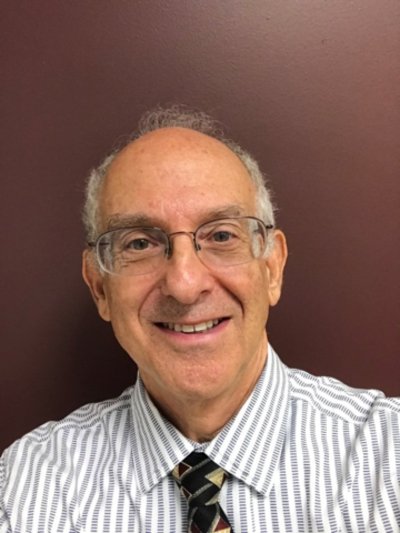
By Dr. Charles “Charlie” Ross. Doctor Ross is a practicing osteopathic physician for over 45 years and a part-time Assistant Professor at Western University of Health Sciences in Oregon. He wants to change the practice of medicine from treating symptoms to treating the root causes of disease. He practices Lifestyle Medicine and co-teaches free community classes on the science of nutrition and food as medicine.  


Patbingsu With A Twist

Patbingsu With A Twist

By Nina Choi Zaldivar, age 14, Illinois

“I am a fourteen year old high school freshman living in Chicago, Illinois. Half Korean and half Argentinian, I love connecting to the cuisines of both of my cultures. I wrote the attached piece, Patbingsu, inspired by my desire to explore my cultural identity through food, specifically, delicious desserts!”

During middle school, my cousin Audrey and I figure skated at a suburban North Shore camp where most of the coaches and skaters were white. We slept over at our Korean grandparents’ house for a shorter commute to camp, where our grandparents cherished every moment with us, their lovely granddaughters. My grandmother expressed her love through her Korean cooking: kalguksu (noodles with beef broth), bulgogi(sweetened beef), fishcakes, chapchae (sweet sesame glass noodles), chapssaltteok (rice cake with sweet red bean paste), and my favorite, patbingsu.

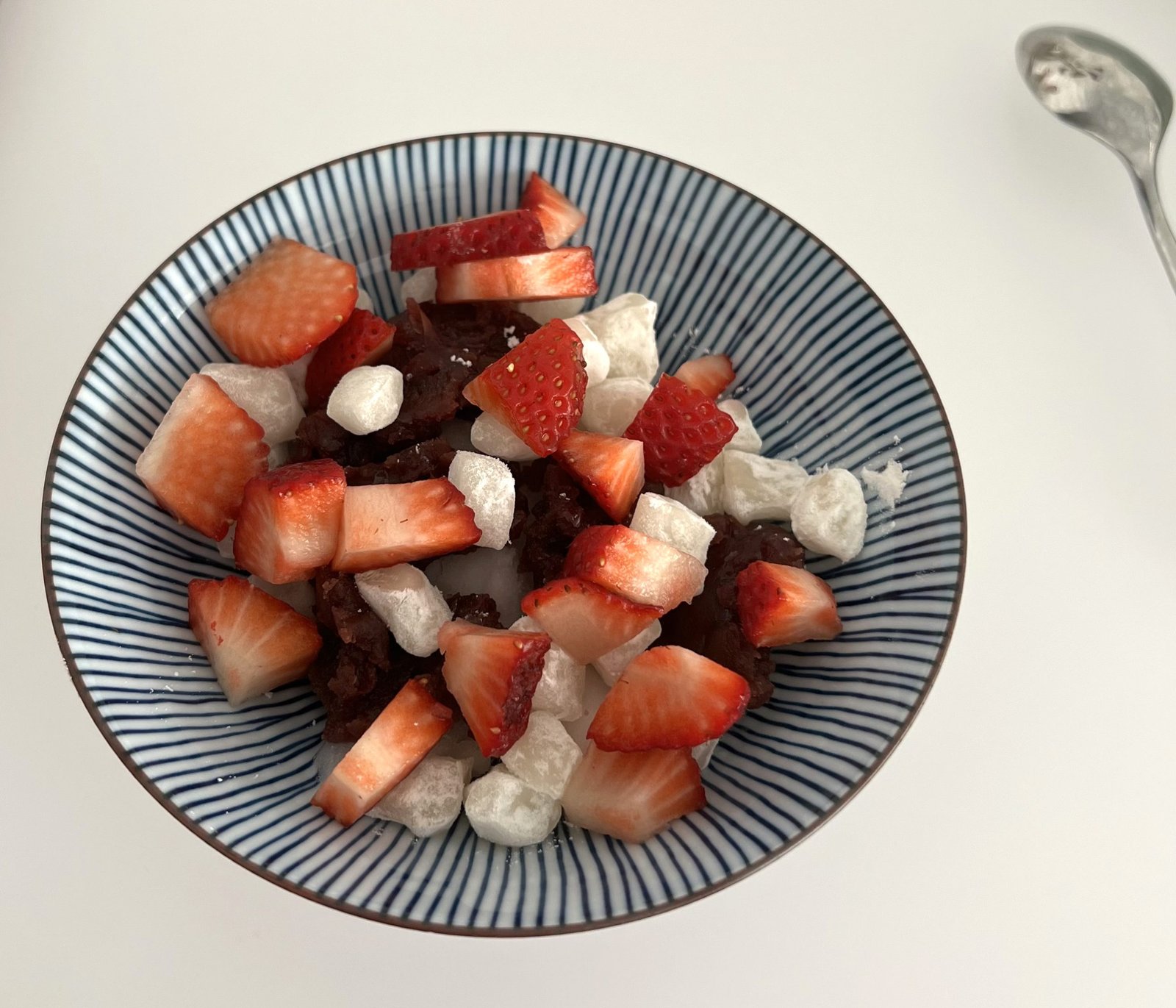
Patbingsu, pronounced pot-bing-soo, is a summertime red bean shaved ice dessert. “Pat” means red bean in Korean, and “bingsu” is the shaved ice part. Most bingsusare made with shaved ice, but my grandparents introduced an American touch of lemon-flavored Italian ice, which adds a light, citrusy note. On top of the ice, you layer a sweet, earthy, and creamy red bean paste and a variety of fruits—my favorite are grapes and strawberries, which add a crunchy texture. Finally, you sprinkle soft, chewy mini rainbow mochi among the fruit on top. The harmony of lemon ice melting with the red bean paste turns into a symphony with a bite of strawberry and mochi.

Every morning our grandparents fed us a Korean breakfast and our grandpa drove us to the skating rink, our Korean lunches wrapped securely in our rolling ice skating bags, where we were met by a chilly blast of air. During lunch, our friends pulled out peanut butter and jelly sandwiches with a Capri Sun, while I opened my bulgogialong with rice and gim (dried seaweed).

The pungent smell traveled across the table, the conversation skipping a beat while my friends noticed the difference. I felt humiliated, and then guilty about my embarrassment because I was betraying my Korean-ness. Ashamed of feeling ashamed, I quietly ate my bulgogi and rejoined the conversation about Taylor Swift’s Reputation Tour.

At the end of each day of skating, I’d collapse at my grandparents’ kitchen counter where my grandmother greeted me in her floral blouse with faded pastel slippers, having lovingly prepared chopped fruit for patbingsu. “Muhguh chigoom!” she’d command—Eat now!—as she handed me a clear, square floral bowl full of freshly assembled patbingsu.Relieved to be home, I’d take the cold treat to the backyard where I’d devour the tangy and sweet patbingsu. My devoted grandmother never denied my request for a second serving, even though it was always smaller than the first.

My life consists of two worlds: the traditional Korean world, and the mainstream American one. Whenever I taste patbingsu, I am transported to the summers of my middle school, smelling the sweetness of the breeze in my grandparents’ backyard, enjoying the flavors of the lemon Italian ice melting into the red bean paste. Patbingsu is my place of comfort and security where I can be unconditionally accepted as both Korean and American.

Recipe for Patbingsu with Italian Ice (makes 1-2 servings)

This refreshing patbingsu recipe with lemon italian ice is courtesy of the Choi grandparents. For the fruit, I recommend fruits that are ripe and in season. I prefer using a variety: grapes, strawberries, watermelon, kiwi, and blueberries.

Ingredients:

⅓ cup lemon Italian Ice
¼ cup sweetened red bean paste
¼ cup fresh fruit
1 ½ tablespoon mini mochi (sweet rice cake)

Instructions:

  1. Add the Italian Ice then red bean paste into a bowl.
  2. Cut up fresh fruit into bite size cubes then add to the bowl.
  3. Add the mochi and serve.

Peace Through Awareness

Peace Through Awareness

“I am not a virus.” That was the message on many of the signs to call out anti-Asian hate. Asian hate crimes during Corona have rocked our country back and forth, but even before Corona pandemic came into our world, Anti-Asian hate crimes existed. We’re living in a time of change, with black people getting killed, Corona virus, Asian hate, and to top that all off, Russia’s war in Ukraine. Peace is hard to come by these days.

Back when Corona started, my mom talked to me about Asian hate crimes. She said that President Donald Trump called the virus “the China virus.” It was basically his way of saying, “Oh, this pandemic is all because of Chinese people.” That made me feel sad, but at that time I felt that there wasn’t really anything I could do.   

Unlike me, other people were already doing rallies, and a few people had formed an organization called Stop AAPI Hate. News spread even faster than Corona virus. A few months later, my family went to an Anti-Asian Hate support rally in Fort Lee, and we heard people speak about the hate crimes. My parents had heard about it from our friend. It was on a field, with a big “Be Fort Lee” sign. The supporters were crowded around a table, and the speakers spoke in a microphone. People brought their families with them, including their kids. They made signs to show their support. The signs said things like “Love,” and some even used drawings. One sign I remember clearly was a person with a mask, and the artist used rather dark colors to show their pain and fear.         

I may not have understood then how painful the attacks were, because I hadn’t even made a sign. But the rally encouraged some other people.  Recently, my mom and her coworkers started a podcast. It focused on the Asian Americans living in Queens, NY. I loved listening and learning the stories of these Asian American people, but the podcast also helped me understand the depth of Asian hate in the country. The podcasters would give some snippets of the attacks on Asians such as GuiYing Ma, a 62-year-old lady that was hit on the head with a rock by a stranger. She was sweeping the sidewalk outside her Jackson Heights home on Nov. 26th when a man ambushed her, smashing a large rock against the left side of her head just inches from her eye.

Mrs. Ma woke up in a hospital after a coma and even waved to her husband, though her brain was damaged. For a while everything seemed like it was going to be okay. But then she died. When I heard that, I was shocked. How could someone just kill her, when she didn’t even do anything wrong? What if this had been someone close to me? What if it had been someone in my family?
Then I started speaking up.

“Does anyone else want to share?” My teacher at school asked. It was a few days before Dr. Martin Luther King Jr. Day, and my class was talking about equal rights and what movement we would like to stand up for.

“Noah?”

“I’m Asian, so I want to stand up against Asian hate. There are attacks going on, and many people have gotten hurt.”

I wasn’t the only one speaking about this. Several of my other friends pitched in, and talked about the attacks, and one almost made the teacher cry with her answer, which was more like a speech. Now I finally felt like I was part of this. Not a really big part, but enough that some people at least know about it. Who knows, they could spread the word, and more and more people will hear about it and speak up against the hate crimes. I might not be some famous speaker that would win the Nobel Peace Prize, but I did something to bring a little, just a little, more peace in our world.

By Noah Xia, age 9, Asian American, New York. She adds: “I like to write, read, play piano, and draw. I write poems, short stories and essays. I enjoy playing with my brother and riding my bike along the Hudson River. Even if I don’t have a piece of paper nearby, I make up stories in my head. In fact, one of my greatest stories (according to my brother) was completely improvised! My submission talks about the hate crime attacks against Asians and how they affected me. At first, I didn’t think I could do anything about the attacks, but I ended up actually bringing a little more peace in our world. I believe that world peace is possible, but we’re just not quite there yet…”

Can You Live?

Can You Live?

The summers of New York
You feel the fresh tar
Boiling
Melting
Your feet are scorched

You lived, I lived
The harsh cold winter
What's red and white all over?
Your face stinging from the stabs of ice and snow
Slush at your feet
Cold and wet
The consequences of the cold

You lived, I lived
I survived a disease
Manifesting into our lives
Becoming the new normal
It starts to become hard to breath
Pieces of cloth cover our mouths
Painting over our personalities

I lived
Many didn’t
I lived through walks in Mexico
Walks at 2am in the Bronx
Track meets
“Extra time”
Slide tackles
Shots (soccer balls) to my stomach
Bloody noses
Broken arms

People have lived through war
Shots to the chest
Death
People can live with no eyesight,
no hearing, they love to live
They survive fights
They can move on
They can live
I can live
You can live too

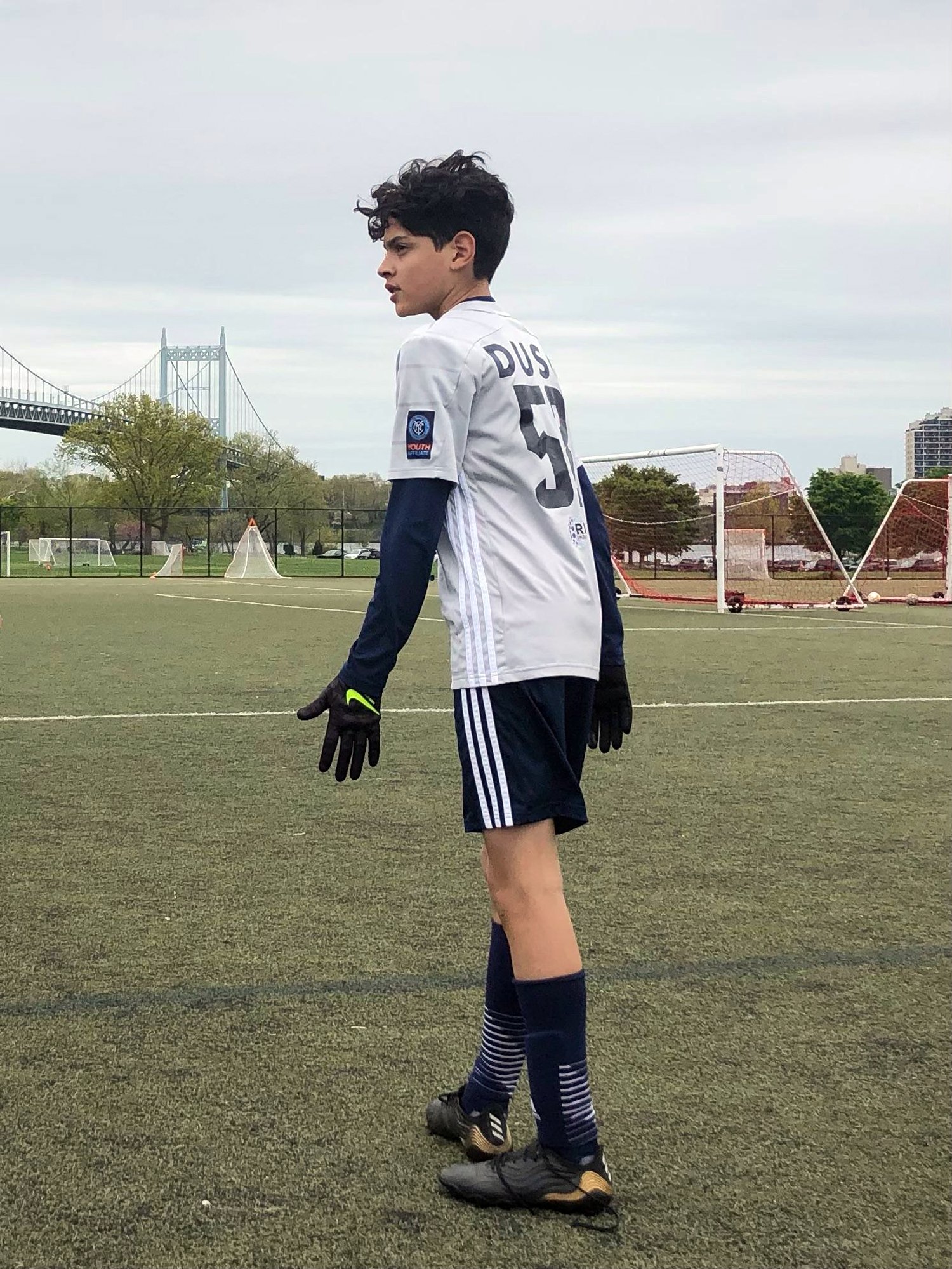
By Emiliano Dietrich-Jimenez, age 13, New York. He writes: “I speak English and Spanish, and have lived here since I was a toddler. I play soccer and guitar. I found out in my English class last year that I really like poetry.”

The Alchemy of Love

The Alchemy of Love

By Satish Kumar, Editor Emeritus, Resurgence
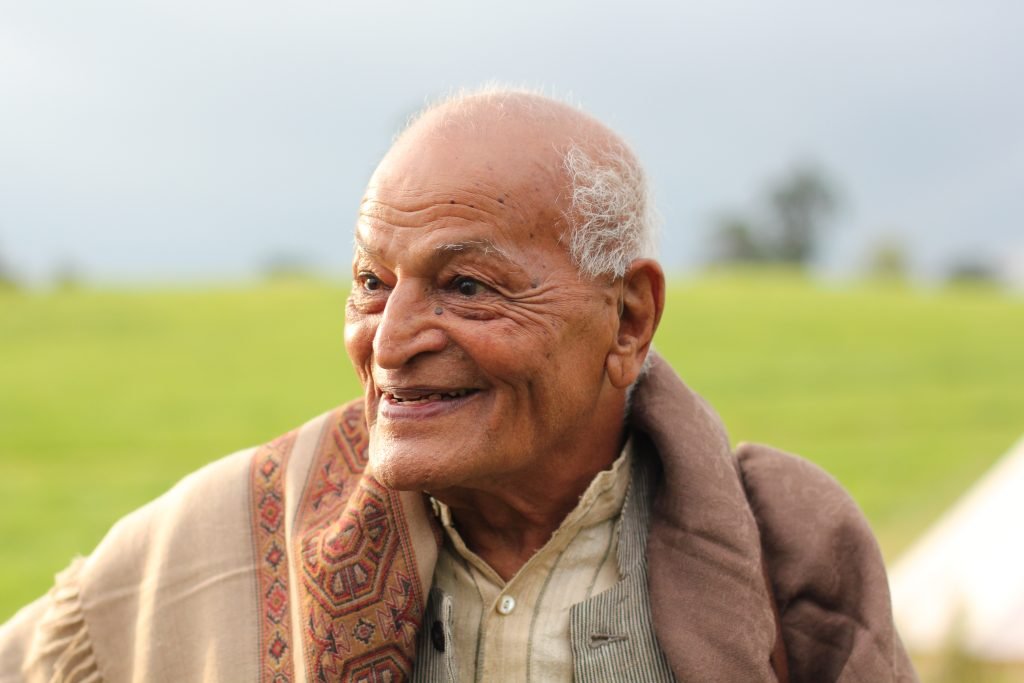
Satish Kumar, Editor Emeritus, Resurgence. Photo by: Daniel Elkan


“I have decided to stick to love; hatred is too great a burden to bear.” 

– Martin Luther King Jr.

Love is all very well, but can we love Vladimir Putin?

I am often asked this question, and I always give the same response, which is to say we must love Putin in order to transform him and save millions of innocent lives. Only love, I tell people, has the power to transform Putin. 

The Sufi poet Rumi wrote:

By love the bitter becomes sweet, 
By love copper becomes gold, 
By love pain becomes healing. 
And to this, I would add:
By love enemies become friends. 

This, then, is the true potential in the alchemy of love and in adopting love as a verb.

Wars and weapons can kill, but they cannot transform. And, of course, before one can kill some ‘undesirable’ person, one might kill thousands, if not hundreds of thousands of innocent people. In wars, millions are made homeless and become refugees. Schools, hospitals and homes are destroyed. Roads, railways and historic buildings are decimated. The price of food and fuel goes up. And it is those living in poverty who will suffer the most. In modern military operations, it is impossible to avoid civilian casualties.

Saddam Hussein and Osama bin Laden were killed, but before they died how many ordinary men, women and children lost their homes or their lives? How many soldiers on both sides were killed, wounded or forever traumatised? And after all the deaths and destruction, what was achieved? Nothing! Afghanistan is still ruled by the Taliban, and Iraq is still in chaos. If the greatest military power in the world, the United States, could not win a war after 20 years of fighting in Afghanistan, what hope is there for either side to win the current war in Ukraine?

If there is a lesson to be learned from the experience of recent wars such as those in Vietnam, Korea, Iraq and Afghanistan, then the lesson is simple and clear: wars are not only futile, but they are also obsolete; they neither transform tyrants nor accomplish peace. 

Nations have waged wars and practised hatred for hundreds of years and have failed miserably in their stated goals. The UK tried to conquer Afghanistan but failed, Russia tried to rule Afghanistan but failed, America tried to establish a friendly government in Afghanistan by military means but it too failed.

So now let them all try love. 

It is easy to love someone who is reasonable and agreeable, who is good and gracious. But to love someone who behaves in a narrow-minded, arrogant and selfish way requires real courage and strength. Making peace with Putin would be a sign of strength, not of weakness.

We need to understand that those who behave badly do so because they have not themselves been loved. The poet W.H. Auden wrote, “Those to whom evil is done do evil in return.” 

The path of love is taken by the brave and not by the faint-hearted. The real test of love is to love your enemy. Love conquers all. Amor vincit omnia. 

War prolongs conflict, but love resolves conflict. Love is as logical as it is magical. Love makes miracles. 

History is full of violent systems: slavery, apartheid, sexism, Nazism, colonialism, casteism and many more unpleasant ‘isms’. Some people think that communism is evil. Others think that capitalism is evil. And if we always take the path of confrontation and opposition in order to overcome these undesirable systems and to defeat our opponents by war, we are simply pouring fuel on the fire and then hoping to extinguish it.

Wise leaders have often proclaimed that the ends cannot justify the means. Noble ends must be pursued and accomplished by noble means – which include love and nonviolent resistance. There is no way to peace: peace is the way.

Mahatma Gandhi is believed to have said, “There are many causes I would die for. There is not a single cause I would kill for.”

We have witnessed the success of nonviolent resistance. Gandhi and the Indian struggle for independence, Martin Luther King and the peaceful campaign against racism in America, Nelson Mandela and the anti-apartheid movement, the Truth and Reconciliation Commission in South Africa. These are some utterly inspiring examples of nonviolent action founded on love. These movements brought about a change of heart leading to a change of regime. These movements were founded on the humility of hearts, on generosity of spirit and on an unconditional love for humanity. 

Love is letting go of ego and arrogance. To love is to accept the multiplicity of systems and the diversity of truths. Love is to live and let live. Love and selfishness do not go together. Love celebrates unity, ego imposes uniformity. Love embraces diversity; ego causes division. Love lets a thousand flowers bloom; ego wants a monoculture. Ego is driven by self-interest, love looks for common interest. Ego seeks separation, love likes relationship. Ego engages in self-seeking, love seeks mutuality and reciprocity. Ego leads to war, love leads to peace. Ego creates contradiction, love creates conciliation.

If we want peace, prosperity and happiness, then love should be a way of life for all of us. It is through love that we find meaning in our lives. The art of love needs to be learned and practised every day. As we nourish our bodies with food every day, so we can nourish our souls with love every day. Love is food for the soul. Love is the essence of life: love of ourselves, love of each other, love of people and love of Nature. No one, not even Putin, is our enemy. I would say the same thing to Putin: Ukrainians are not your enemies, Europeans and Americans are not your enemies. Only through friendship can the whole of humanity protect its common interests. 

Wars cause climate catastrophe. The production of weapons, the constant flying of military planes and the use of other military vehicles, including tanks, require huge amounts of fossil fuel. After the war is over, further fossil fuels are needed to rebuild destroyed buildings and damaged infrastructure. In war people suffer and Nature suffers. In war no one wins and everyone loses.  

War leaders sit comfortably in the Kremlin or in the White House. Soldiers suffer. Society suffers. War is pointless. War is unnecessary. War is uncivilised. War is hell. War is out of date. There is no other act as bitter, as traumatic and as stupid as war. War is immoral and irrational, whoever initiates it. 

Ukrainians blame Putin, Putin blames Ukrainians. But love takes us beyond this blame game. It takes two to fight a war and it takes two to make peace. But politicians of all persuasions seem to have lost the art of making peace. They seem to have forgotten the statesmanship, the statecraft and the craft of true diplomacy that are always rooted in deep love.

Nations know how to conquer the moon. They know how to destroy our precious planet Earth with nuclear weapons, not once but a hundred times over. But the presidents and prime ministers of Europe, the US and Ukraine don’t seem to know how to talk with Putin and help him see the futility of war and inspire him to seek peace! Nor does Putin seem to know how to befriend his neighbours like the Ukrainians and make them feel safe. What is the point of all this progress, what is the benefit of all this education and all the scientific achievements if the graduates of Oxford and Cambridge, Harvard  and Yale, Moscow and Beijing don’t know how to establish harmony among nations and peace among people?

Politics without wisdom is a very dangerous thing, and sadly, politicians do not know how to be true statesmen, ambassadors do not know how to be true diplomats, and religious leaders do not know how to practise love as a verb. Governments of all colours spend billions and trillions of dollars, roubles and euros in preparation for war while many of their citizens are homeless, jobless and hungry, living on food provided by food banks. 

I am a pacifist and a peacemaker. I do not excuse Putin for attacking Ukraine. But I want Ukraine and the supporters of Ukraine, as well as the Russians and their supporters, to rise above their narrow national interests and seek the common interest of the whole of humanity.

Love safeguards the interests of everyone. 

The consequences of wars are so tragic that we need to avoid them in all circumstances. Like the medical profession, politicians need to take an oath to do no harm. No harm to self, no harm to other human beings and no harm to Nature. If such an oath were to become an integral part of international law, Putin could not attack Ukraine. The USA could not attack Iraq. 

Hugely militarised nations live in constant fear and insecurity, forgetting that true security resides in trust, not tanks. Only the power of love can free them from fear of the other. 

When wars become unpopular, leaders are compelled to negotiate and compromise. Neither side gets their way. Both sides are forced to find a mutually acceptable solution. Why could they not do this in the first place? Why not find a negotiated agreement instead of all the deaths and destruction?  Peace is common sense, but conflicts and common sense don’t go together. Unfortunately, common sense is no longer so common!

If we harbour hatred for Putin in our hearts, we are victims of our own hatred. Therefore let us choose love in place of hatred. Hatred is not good for us. Our true self-interest and our true security are both embedded in love, not in hatred. This is tough love. I call it Radical Love. I know I am being an idealist, but the way of the pragmatists is causing chaos. So why not give idealism a chance? 

So yes, we need to love Putin, and we can love Putin. If we loved Putin, he would have no excuse to go to war. Love is unconditional, unlimited and abundant. Love is for all. Let us bring a monsoon of love to Moscow and soften the dry soul of Putin.

My message to Putin is the same:  Stop war and try love.

And my message to Europeans and Americans is the same:  Stop adding fuel to fire.

It is time to bring the rain of love, forgiveness and peace to the fire of war in Ukraine—a war that should never have been started. 

—Satish Kumar is the recipient of the Goi Peace Award 2022. His new book, Radical Love, is published by Parallax Press and is available now from www.resurgence.org/shop

This article was first published in Resurgence & Ecologist Issue 337, March/April 2023. Used with permission. All rights to this article are reserved to The Resurgence Trust. To buy a copy of the Resurgence magazine, read further articles or find out about the Trust, visit www.resurgence.org