Category Archives: Multicultural

Ohana

Ohana

By Likhita Makam, age 15, Telangana, India

We fight and apologies we forget.
We get lost and we get upset.
We fall apart into a million pieces,
But being together smooths out all the creases.

Because in the end we’re a family
although we don’t get along dandily
Far from picture perfect Pinterest poses
We make it to the diner just before it closes
We spend weekends at home in quarrels
Perfect family? For that we’d have zero laurels
But we stick together, no matter what
for each other we’d take a jab in the gut, somewhat
What matters the most is we never part
We’re always close, we never depart

Because we’re a family
And family means nobody gets left behind
No matter our irregularities
No matter our similarities

—Likhita Makam, age 15, Indian American high school student, living in India. She has been published in youth newspapers and literary magazines. She is an avid reader and is up for a poetry discussion at all times.

Manu and Noah: Strikingly Different, Surprisingly Similar

Manu and Noah: Strikingly Different, Surprisingly Similar

By Sahil Prasad, grade 8, Maryland.

King Manu, the first man according to Hinduism, and Noah, the survivor of the great flood, are two legendary men, who hail from entirely different religions of the world. Yet, these great individuals, surprisingly, shared multiple similarities that would be interesting to dwell upon during these times when religion is the source of divisiveness.

The Great Flood Survivors

First, both Manu and Noah were chosen by their respective Gods to survive a great flood. Their stories are startlingly similar. It is incredible that the two civilizations that these stories originated from were never in direct contact with each other until many centuries later!

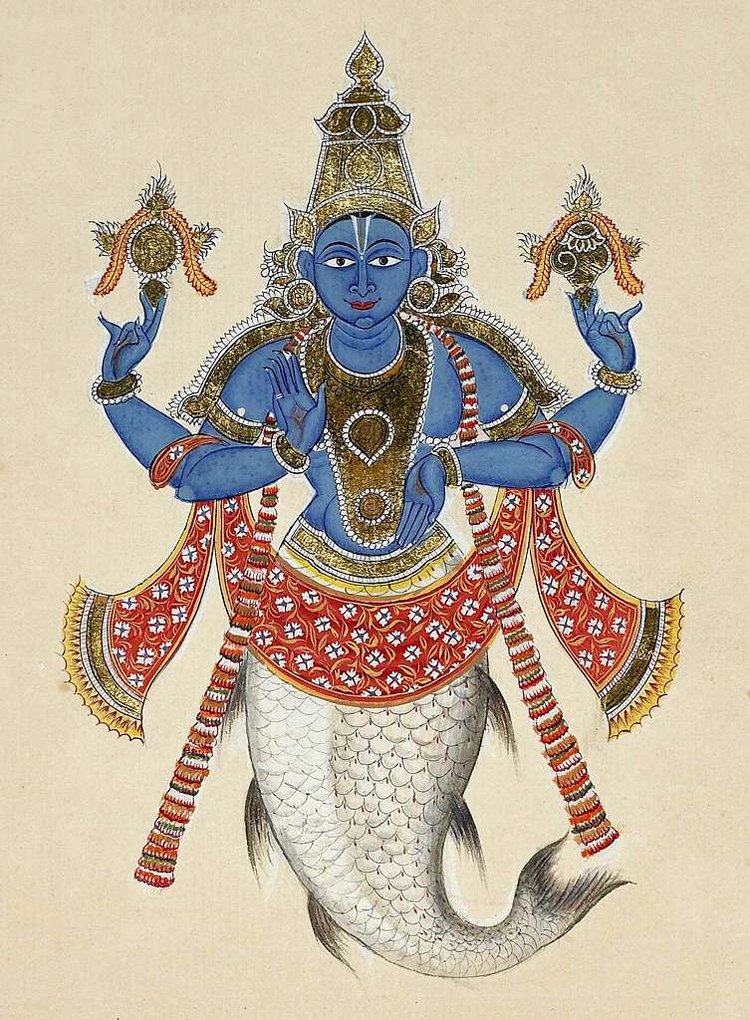
The Matsya or Fish Avatar of Lord Vishnu. Artwork is from the public domain and Wikipedia.

Manu was a sage who dedicated his life to faithfully serving and worshiping Hindu gods. The Lord Vishnu, the preserver in the Hindu trinity, chose Manu to be the survivor of a flood that would cleanse the world. The story goes that Vishnu decided to take the form of a tiny fish, the first of Vishnu’s ten avatars, and said to Manu, “Protect me from my predators and I will reward you.” Manu decided to keep the Vishnu-fish in a pot, which it quickly outgrew, and then in a lake, which also proved to be too small for the fish. Eventually, Manu moved the fish to the ocean. This is where Vishnu assumed his true form and informed Manu about a great flood that was about to occur. To ensure that his faithful follower survived, Vishnu instructed Manu to build an ark or a giant boat with all the animals, seeds, and other essential materials to survive the flood and start a new life. Manu decided to invite the seven holy sages or the Saptarishis to live with him in the new world. Manu and the seven holy sages guided the ark through the giant flood with the help of Vishnu–who led the ship with his horn in his giant fish form–to a peak where they rested until the world was cleansed. Finally, Vishnu came true to his promise and bestowed upon Manu the scriptural knowledge and power. The scriptural knowledge was passed down by Manu’s descendants and still continues to be studied today in the form of the Vedas.

Fun fact: According to B. B. Lal, the former director of the India Archaeology Institute, the flood of Manu approximately occurred as far back as the second millennium BCE.

Now coming to Noah; unlike Manu, the human race already existed in Noah’s world. The old human race was only concerned with money and killing, so God was disappointed with them. He decided to give the humans another chance by having Noah, the only devotee and true believer left on the planet, to be the guardian of a better human race. Noah, like Manu, also built an ark under God’s instructions, which were, “Build an ark of gopherwood, with rooms inside, three decks, and a door. Cover it inside and out with pitch.” (Genesis 6:13-22) Noah’s ark wandered the Earth (with Noah’s family and the various species that he had been instructed to bring with him) for 40 days and 40 nights in continuous rain. Noah traversed the ocean for another 150 days until God directed the boat to Mount Ararat (in present day Turkey) where it halted. Eventually, Noah sent out a dove to find land for them to settle and it came back a week later with an olive branch, which meant that land was out there. Just like to Manu, God made a promise to Noah that he would never flood the Earth ever again.

Harbingers of the Human Race

Manu and Noah were also attributed with ensuring the survival of the human race. After the great flood, Manu made a sacrifice to Brahma, the Creator in the Hindu trinity. He placed sour milk and butter in shallow water and this resulted in a maiden emerging from it, soon to become his wife. Eventually, the human race would start to grow at an exponential rate. Manu then instituted a quintessential set of laws (Laws of Manu) based on the Hindu scriptures that his ten sons and one daughter and subsequently, their descendants had to follow. One of these laws was to divide the population based on their gunas or skill sets. For example, people who were versed in the scriptures would be known as Brahmins. Eventually, humanity split into the solar clan founded by Manu’s sons and the lunar clan founded by Manu’s daughter. According to Hindu scriptures, Manu will be reincarnated when our current universe will be cleansed by Vishnu—in about 186.72 million years according to the Hindu scriptures—and he will be the leader and lawgiver of a more superior race.

In the case of Noah, after the devastating flood, he continued to live with his family and repopulate the Earth. Noah lived until the age of 950 and just like Manu, God helped his family grow rapidly. Just like the descendants of Manu split into the Solar and Lunar Clans, Noah’s descendants also split and settled the world, but they followed a different and more contentious trajectory than Manu’s descendants. Here’s how it played out.

Noah’s great grandson, Nimrod, began to build a colossal structure called the Tower of Babel, which slowly approached the height of the heavens. Citizens thought that Nimrod was building a temple, but it was revealed that reaching the heavens was his motivation all along to prove that he was an equal to God. As a result of Nimrod’s selfish actions, God decided to halt the construction of the Tower by making the workers speak different languages so they wouldn’t understand each other. As a last step, God took his punishment further and decreed that people of the city had to settle all around the world. This is how the world came to be inhabited according to the story of Noah and his family.

So there it is: the story of Manu and Noah. Given the striking similarities between them, some experts argue that they could be one and the same, a theory certainly worth pondering.

—Sahil Prasad, grade 8, Maryland.


Miya’s Summer Bubbles

Miya’s Summer Bubbles

By Carleen Clifton Bragg, African American Photographer, Illinois.

“I live in Chicago’s South Side neighborhood. There are three beautiful small lakes near where I live. Sometimes, I visit the park with a cup of my morning coffee. Sitting on the bench by the water, I gaze at the still water and the geese enjoying their group gatherings, and naturally, I smile. Watching the geese swimming makes me happy. It’s the most beautiful cornerstone in the neighborhood that I depend on as a quick getaway. It is my home away from home. In the autumn, it’s especially breathtaking! I call this ‘My Peace Spot’ for the tranquility it offers me. Last autumn, I took some of the most stunning photographs here!

“I developed an interest in photography at the age of five. I credit my parents for planting the seeds when they purchased me my first camera. They have continued to support my interest in photography over the years. I started as a self-taught photographer, but later trained with the New York Institute of Photography. I try to capture sports moments, glamour, landscapes, music, theater, and street life. I am enamored with the works of the ‘late greats’ like Gordon Parks and James Van Der Zee.

“My photos have been published by Tyler Perry’s Production: Why Did I Get Married?, Today’s Photographer Magazine, and the International Library of Photography. I am a three time-winner of the Museum of Science and Industry’s Black Creativity. I also had a solo exhibit—my first One-Woman show in 2011 at the ARC Gallery in Chicago, Illinois.”

Ramadan For All

Ramadan for All

By Zanjabila Khadija, age 8, Indonesia.

Asif was going to fast in Ramadan month for the first time tomorrow. He was still five years old. Eating was usually fun for him, so the first fast was a tough challenge for him. That night, he was restless. He wondered what would happen if he didn’t eat his favorite food. Too tired to think about it, he fell asleep at 8 p.m., even though he usually went to bed at 9 p.m. He was too flustered, so he fell asleep early.

In his dream, he found himself in the land of giants. On that land, a lot of giant-sized foods can be enjoyed, such as candy, ice cream, vegetables, fish, fruit, chocolate, and so on. He was full after eating many different food dishes. He laid down when someone’s voice startled him. It turned out that it was not a human voice, but a giant talking candy!

When Asif fell asleep, his mom and dad discussed Asif’s fasting. They tried to find a way so that Asif could fast comfortably without feeling too hungry or bored. His dad said, “What if we bring him a new toy that he can play with and thus get distracted?”

However, his mom said, “No! Asif was bored with toys. What about a pet? Chickens, cats, or fish. Let him choose it by himself!”

Asif’s dad agreed. The next day, Asif woke up very early to eat his pre-fast meal because he was so excited about his first Ramadan. After finishing his meal, his mom and dad asked Asif to pray at dawn. Later in the morning, Asif and his dad went to Nana’s house, a short walk from their house. Nana was his aunt. Nana had eight cats. Some of them were Persian cats, and the others were domestic short-haired cats. Asif was amazed to see those cats. He wanted three cats. He asked Nana, “Aunty, can I keep these three cats?”

“Oh, sure,” said Nana without hesitation.

Asif was allowed to bring one Persian cat and two domestic cats. He forgot his hunger during the month of fasting. He loved them when they jumped around and chased his toys. Also, they did not find any mice at home anymore. Asif named his first domestic cat “Mimi the Nimble” because he was the most agile at catching mice. The second domestic cat was called “Mike the Great Climber.” He loved to climb all the trees in their backyard and bask for hours on the rooftop. The Persian cat was named “Lulu the Groomer.” Almost all day long, she combed her fur with her tongue.

One evening, Asif went to the mosque. The mosque committee would hold an iftar. All people who wanted to break the fast were invited to come. Arriving at the mosque, he saw many people gathered there. He sat in the mosque next to an old man he had never met. The old man told Asif that he was a traveler and was going to the next town by bike. Asif felt very happy every time he broke the fast together with other people at the mosque. He felt warmth even though he didn’t know those people. He saw that rich people would sit on the same floor as the poor. He also saw that all people got the same food. No matter what their ethnicity. He then remembered what his dad had once told him: “All people are equal before God, except for the good deeds they have done.”

When he ate his Iftar meal, he remembered his cats. He thought they should feel the joy of breaking the fast as well. He set aside his empal, a traditional meat dish, for his three cats. After breaking the fast and doing maghrib prayer—an evening prayer, Asif ran home carrying that large piece of empal. As he opened the door, all his cats ran toward him. Lulu and Mimi rubbed their bodies against his legs, while Mike climbed onto Asif’s shoulders. The three cats then partied happily with that meat!

Zanjabila Khadija, age 8, Indonesia. She writes: “I love writing poetry and short stories.” She has won several literary competitions for young writers in Indonesia. In 2024, the Ramadan will begin on Sunday evening, March 10th and end on Tuesday, April 9, 2024 with the festival of Eid al-Fitr. The festival lasts for three days.
Editor’s Note: Islam follows a lunar calendar and hence the Ramadan dates fall on different dates each year. Did you know that in 2030, there will be two Ramadans? The first Ramadan will be in January 2030, and the second one will be observed in the month of December. Also, on Dec. 25, as the Christians celebrate Christmas, the Muslims will be celebrating the festival of Eid!

Black History Month Poem: Resilience

Resilience

To observe the annual Black History Month, we are pleased to present “Resilience,” a poem by Arianna Shaprow Crain, age 12, a seventh grader in Nevada. Arianna was interviewed this morning and was asked to read her poem by KTNV News, on their ‘Good Morning Las Vegas’ show. The poem will also be published in our upcoming Spring 2024 issue (Mar. – Aug. 2024). You can also download the poem here.

“Resilience” explores the African Diaspora and chronicles the struggles of the vibrant, defiant members of my family. In the midst of our tragedies, my ancestors were able to find peace and navigate the rough terrain that lie ahead. They were slaves in Holly Springs, Mississipi. After the Emancipation Proclamation, they migrated to Chicago for more opportunities. In Chicago, they had to endure racism and segregation, which negatively impacted their employment. My great grandmother became a maid at a hotel and raised 13 children. She had to endure an endless cycle of poverty. Much of our history was lost, because we were stolen from our homeland. Even though our cultural identities were dismantled, my ancestors found comfort in music, stories, and our love for one another. We are resilient, and we are survivors. I know that I am a survivor, because I am here to tell you my story.

We were taken
from our homelands
our prosperity and sense of community
stolen from us
our families torn apart
cultural identities dismantled
forgotten…

forced to work all day
beneath the blistering hot sun
dehydrated and burned out
bruised knees, scraped elbows
wounded from whips
desperately yearning for a way out
but their cries were never heard

They locked us
in an endless loop of poverty
mental illness
disease
and depression

from Holly Springs, Mississippi
and the shackles of slavery
to Chicago
seeking independence
and “liberty”
this was the journey of my ancestors

We were never freed
after the Emancipation Proclamation
never freed
from generational trauma
and pain

rejected
from schools
unable to receive the education
that we deserved

Oppression
Segregation
Stereotypes
and racism
Poverty naturally followed
Haunting us…

A never-ending maze
with no exit
only dead ends.

My relatives suffered
rat bites and tuberculosis as babies
gunshot wounds and addiction as adults
no money for doctors
unstable living conditions
poor ventilation
never knowing
what’s next…

Surviving paycheck to paycheck
Food stamps, welfare
Evictions and discrimination
13 of my aunts and uncles
lived in a tiny apartment
5 slept on a single, soiled mattress
a drumline of tragedies

Many of them
broke the cycle
my grandmother became the first
African American female Assistant District Attorney
in El Paso, Texas
scholarships and hard work paved her way

My mother is a survivor
of PTSD and panic attacks
a single mother who cares for me
with unwavering love

We don’t know
much of our history
or where in Africa
we come from

The knowledge of our history
was stripped away from us
buried deep in our family’s past
it remains a mystery…
One thing that will never
be taken away from us
Is our culture
We have created
a rich culture
Through centuries of oppression
our coping mechanisms
soothed us
comforting melodies
gospel
jazz
blues
and soul

What do we have?
We have our imagination
We redefine and reframe
To make us sane

documents detail our ancestors’ stories
Defiant
And bold
full of vibrant characters
riveting music
and soulful dishes

When I am fearful
I remember to be courageous
I remember I have ancestors
who were beaten and lynched

My ancestors were
Slaves
Survivors
Refugees
Migrants

This is my lineage
This is my history
We are resilient
Resilient survivors

—Arianna Shaprow Crain, age 12, grade 7, Nevada.

The Secret

The Secret

By Hongwei Bao, United Kingdom.

Your secret is safe with me,” was Ming’s promise when I told him that I liked boys instead of girls.

Ming was my best friend at school. Wearing the same type of school uniform, Ming looked older and bigger, but we were the same age. We grew up together in the same neighbourhood and our parents knew each other well. Ming was always the first one to hear stories from me. I trusted him on everything and anything. One afternoon after school, we met at the balance bars on the school playground as usual. It was just the two of us. I mustered up courage and told him about my secret.

Ming seemed slightly surprised, but he soon smiled and agreed to keep it a secret for me, as he had done other times. We were best friends after all. After a few push-ups, we headed for our own homes.

The next morning, in the school corridor, just as I was about to wave at him and say hi, I noticed something was different. As soon as he saw me, he dropped his head and continued to walk on, avoiding eye contact with me. In the classroom, I couldn’t help casting frequent glimpses at his side—he wasn’t looking at me. In fact, he remained quiet all day. When the school bell rang, he picked up his schoolbag and left the classroom in a rush. Was it because of my secret? What did he do to my secret?

I ate very little that evening. Mum frowned when she saw the food I’d left in the bowl. Dad threw me a disapproving look and asked me how my day was. “It was OK,” I replied, “lots of homework to do.” I stood up, ready to leave the table.

“Wait!” Dad raised his hand and gestured me to sit down. His eyes looked serious.

After a few seconds of silence, he spoke: “We know it. Ming told his parents, and his dad told me about it.”

I could hear my own heartbeat.

”I’ve asked them to keep it a secret. They’ll make sure Ming doesn’t talk about it either,” Dad added.

A relief, followed by a profound sense of sadness.

“You should learn a lesson from this. Don’t talk about things you don’t understand.”

Horrified by these words, I nodded sheepishly.

“Ming will remain your friend, but he will need more time to understand this,” he consoled me.

I dropped my head, tears in my eyes.

The next morning, in the school corridor and in the classroom, I tried to avoid Ming. The day felt long, and the air was steaming hot. I couldn’t concentrate on the lessons. The words in the textbook jumped around and didn’t make much sense. I wished the Earth would crack open, and I could disappear into the hole. I felt ashamed for what I had done, and for who I was.

Near the end of a day, a small, folded paper ball landed on my desk. I picked it up and unwrapped slowly. Ming’s handwriting jumped into my eyes:

“Can we talk?”

There, on the playground, near the balance bars, Ming told me that he was confused the other day and didn’t know what to do. So he told his parents about it. They simply told him to shut up and keep quiet. But he couldn’t help thinking about it, and about me. He told me that he liked boys too.

—Hongwei Bao (he/him) grew up in China and now lives in Nottingham, UK. He uses short stories, poems, reviews and essays to explore queer desire, Asian identity, diasporic positionality, and transcultural intimacy. 


United States v. Wong Kim Ark

United States v. Wong Kim Ark

By Fanny Wong, New York

In October 1895, Wong Kim Ark was lucky he didn’t get sick and die on his ten-week journey on the steamship Coptic from China to San Francisco. The third-class hold was crowded and poorly ventilated. He was eager to return to his small apartment on Sacramento Street in the city he loved. He missed everything about his city—San Francisco, even its fog.

At age 22, Wong had already visited China several times. So when he arrived at the dock, he was shocked to find out that he would not be allowed to land. How could the Collector of Customs, Mr. John Wise, not allow him to land? True, this man was known to be against Chinese immigration. But Wong’s identification paper was in good order. He even had three white residents vouch he was born in the city and was a good resident.

Wise had detained Wong on the grounds that he was not an U.S. citizen. And, Wong became a prisoner on the ship.

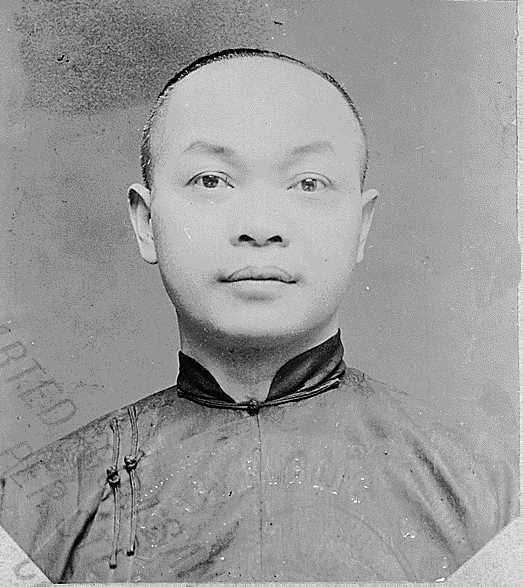
Wong Kim Ark, courtesy of the National Archives

Wong was born in San Francisco in 1873 to parents of Chinese descent. Around 1881, the parents had returned to China after a 20-year stay in San Francisco. However, Wong had chosen to stay in the United States, and now he found himself in a dire situation after another trip to China.

Fortunately, an aid association, The Chinese Consolidated Benevolent Association, was ready to help him. Its lawyers argued that his rights as a citizen were being violated. The Fourteenth Amendment of the U.S. Constitution, ratified in 1868, stated, “All persons born or naturalized in the United States, and subject to the jurisdiction thereof, are citizens of the United States and the State wherein they reside…”

The U.S. Solicitor General, Mr. Holmes Conrad, disagreed and appealed the case all the way to the Supreme Court. He argued that Wong’s parents were subjects of the emperor of China and by extension Wong was also the subject of the emperor.

When the case was argued in 1897, the Supreme Court justices were, Stephen Field, John Harland, Horace Gray, Melville Fuller, David Brewer, Henry Brown and Rufus Peckham. The justices debated whether American citizenship should be based on the principle of “right of blood” (jus sanguinis) or “right of the soil” (jus soli). The Supreme Court did not agree with the Solicitor General and ruled in favor of Wong. Justice Horace Gray wrote the opinion on behalf of a 6-2 majority. The court established the concept of jus soli—the citizenship of children born in the United States to non-citizens.

The cloud over his citizenship had disappeared forever!

Wong’s landmark case set a very important precedent. It remains today the definitive interpretation of the 14th Amendment’s birthright provision. It affects all the children born to legal and illegal immigrant parents. It is reasonable to say that Wong never expected his case to have such long lasting and important consequence. Immigrants may not know his name, but they certainly know the rights of their children born in the United States.

—By Fanny Wong, Chinese American author and long-time contributor to Skipping Stones, New York.

Notes
1868: The 14th Amendment to the U.S. Constitution ratified.
1882: The Chinese Exclusion Act signed by President Arthur. It restricted entry and immigration of Chinese labor, both skilled and unskilled, into the United States.

Mona Lisa Memories

Mona Lisa Memories

By Katacha Díaz, Oregon

During my childhood years of growing up in Peru, as the first-born grandchild in the family, I spent a great deal of time with my loving and nurturing paternal grandparents. Papapa and Mamama patiently indulged me with clever age-appropriate answers to my many questions. I was intrigued by my grandparents’ art collection—serene landscapes and stormy seascapes kept me entertained, but I was most fascinated by the formal portraits of our family members and predecessors. Little did I realize we had such illustrious relatives in our family tree, for the family to commission portraits from popular artists of the time.

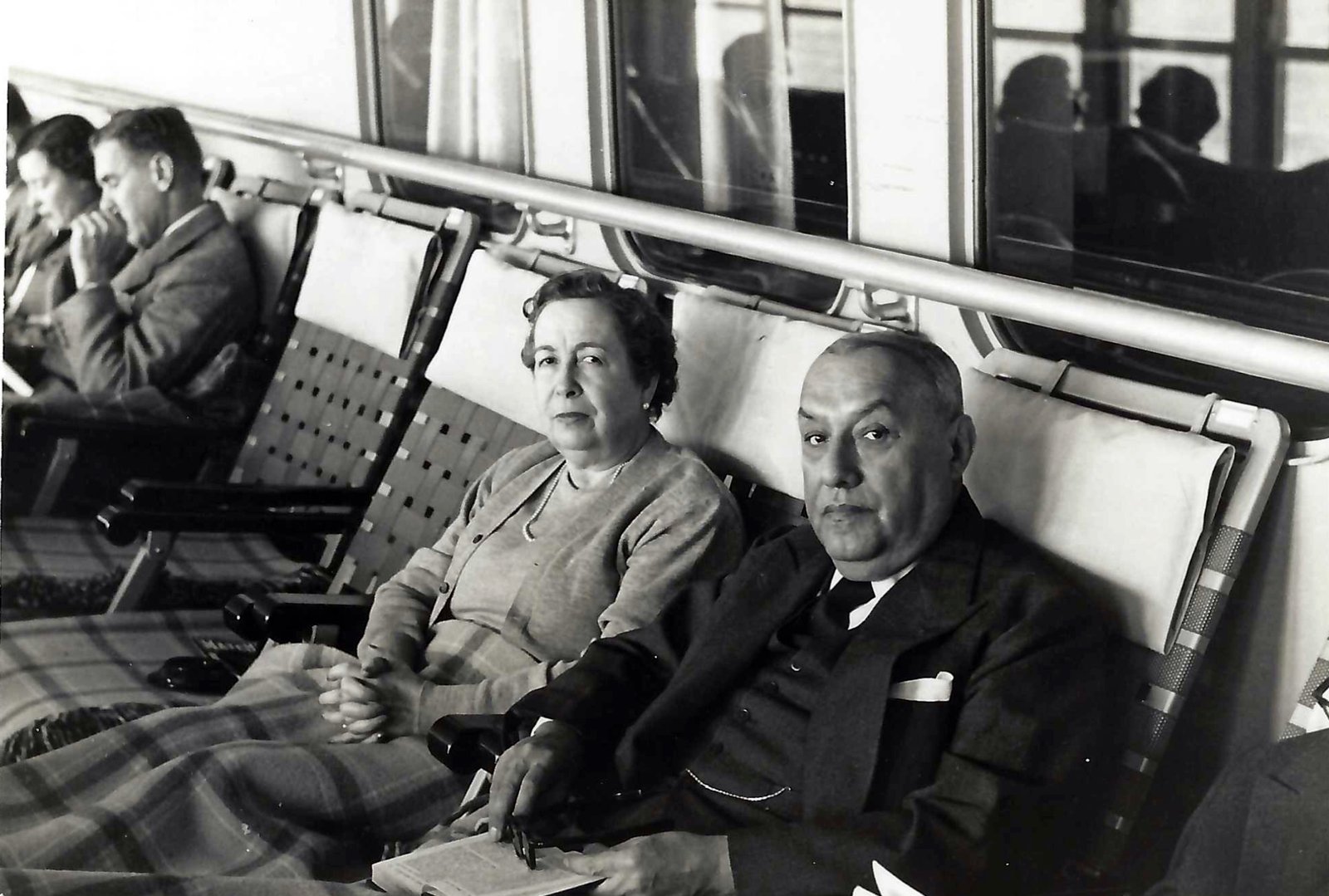
My Mamama and Papapa on their Return Voyage from Europe, 1953

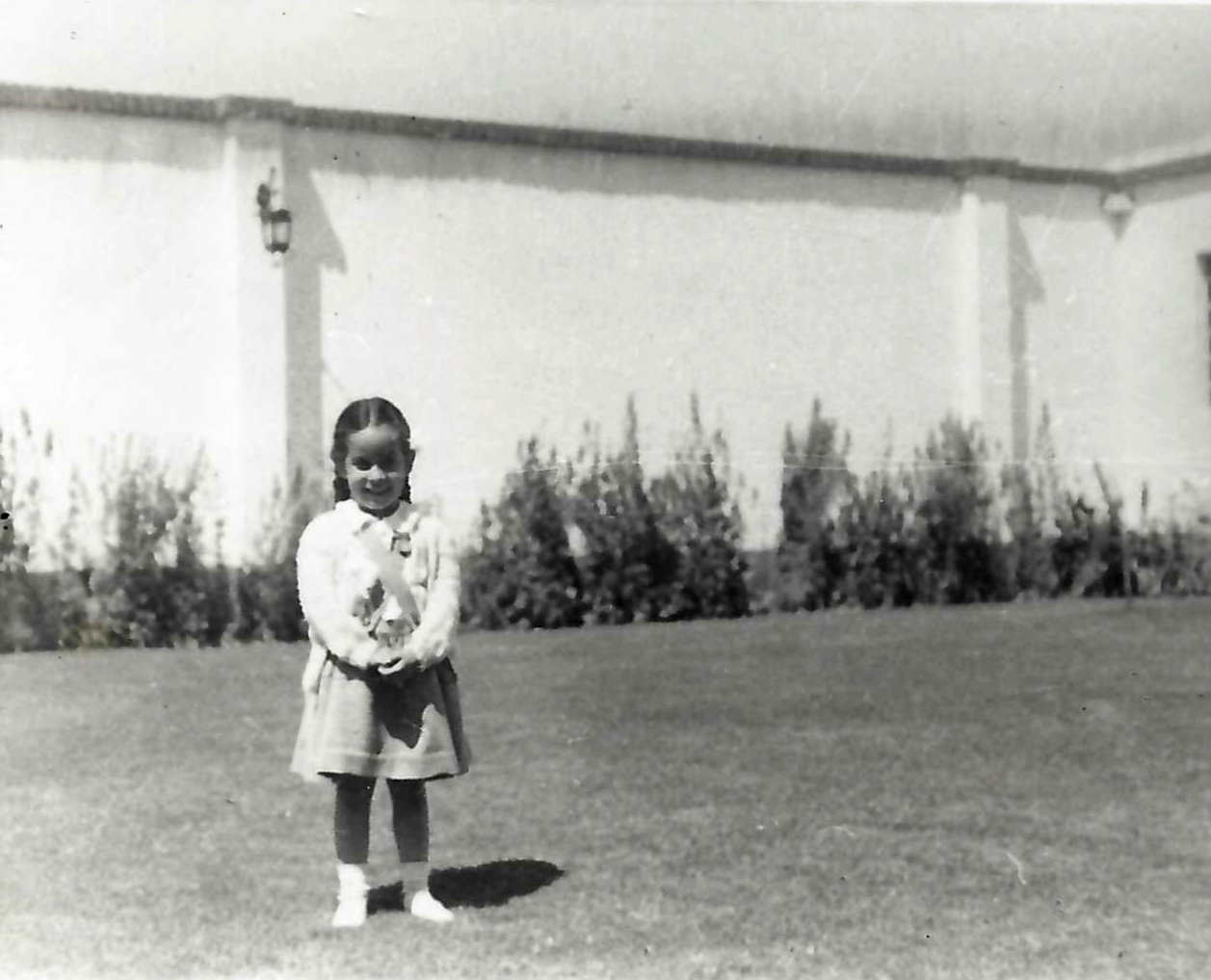
Recently I spent time organizing my own family memorabilia, collected over the years, and found myself transported back in time to childhood days at my grandparents’ sprawling house in Miraflores, a suburb of Lima, Peru (see below). The family had gathered at Sunday luncheon to celebrate my grandparents’ return home from Paris. Papapa had served four years as Peru’s ambassador to France.

The Author as a child at her Grandparents home in Miraflores, Lima, Peru. 1948.

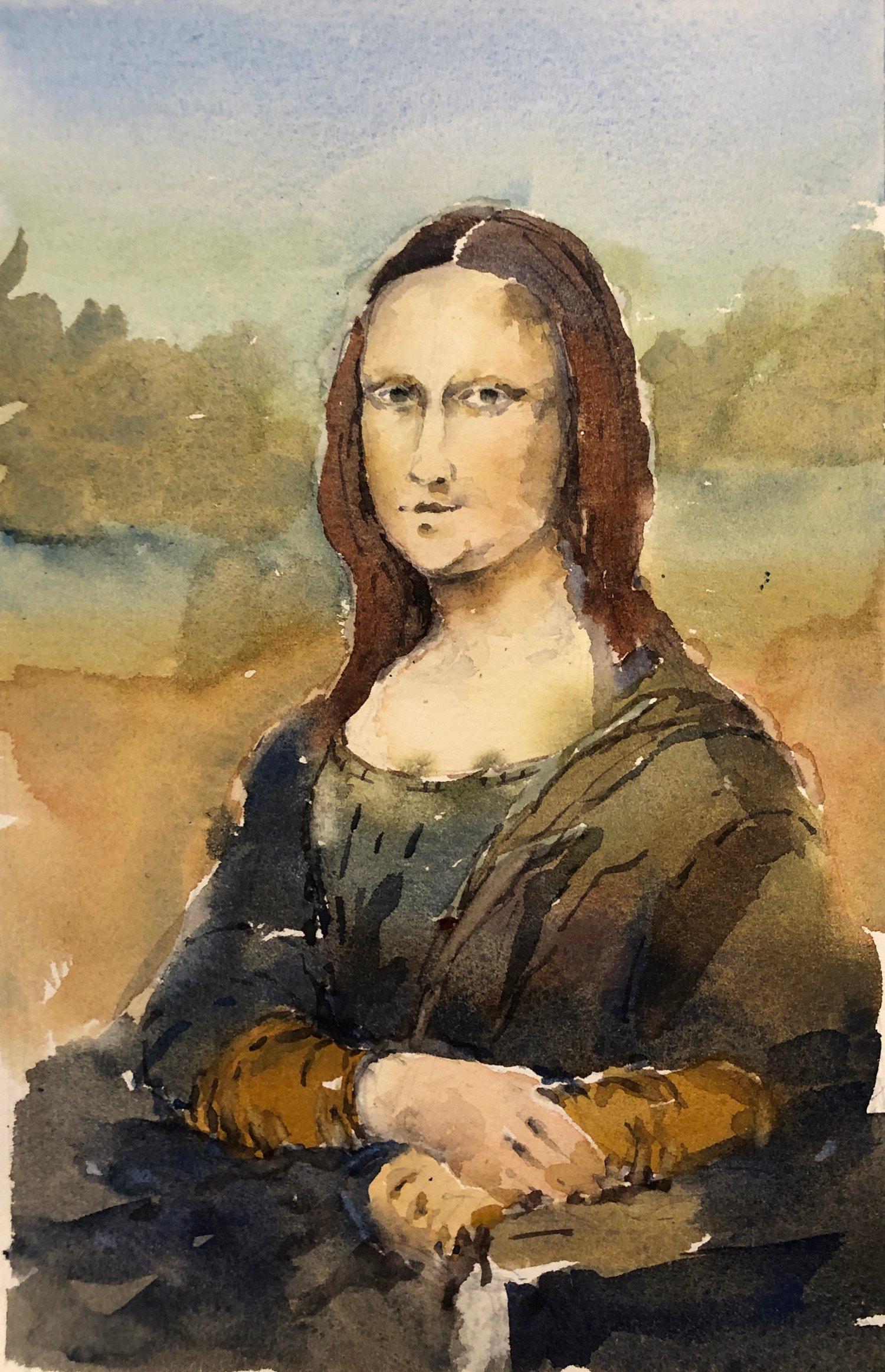
This particular day is etched in my memory. Papapa stood beside me while I gazed wide-eyed at the painting of a smiling beautiful young woman. “Is she another of our famous relatives, I asked him?” Papapa shook his head and smiled. “This is a copy of the world famous painting by Leonardo da Vinci, the Mona Lisa. Mamama and I saw the original painted on wood, at the Louvre Museum in France. We found our oil-on-canvas copy at an art gallery, during an evening stroll along the Ponte Vecchio in Florence (Italy).”

“Mona Lisa” Replica. Illustration by Daemion Lee. Oregon.

Papapa and Mamama showed me photo albums and art books collected during their European travels. These were filled with photographs of renowned paintings and illustrations with captions, along with artist biographies and exhibition notes. I learned the difference between an original piece of art and a reproduction, like the one in my grandparents’ house. Later, we stood by the floor globe in Papapa’s study and charted the voyage of the replica Mona Lisa. Our Mona Lisa had traveled inside a wooden crate from Europe across the Atlantic Ocean and through the Panama Canal to reach Peru!

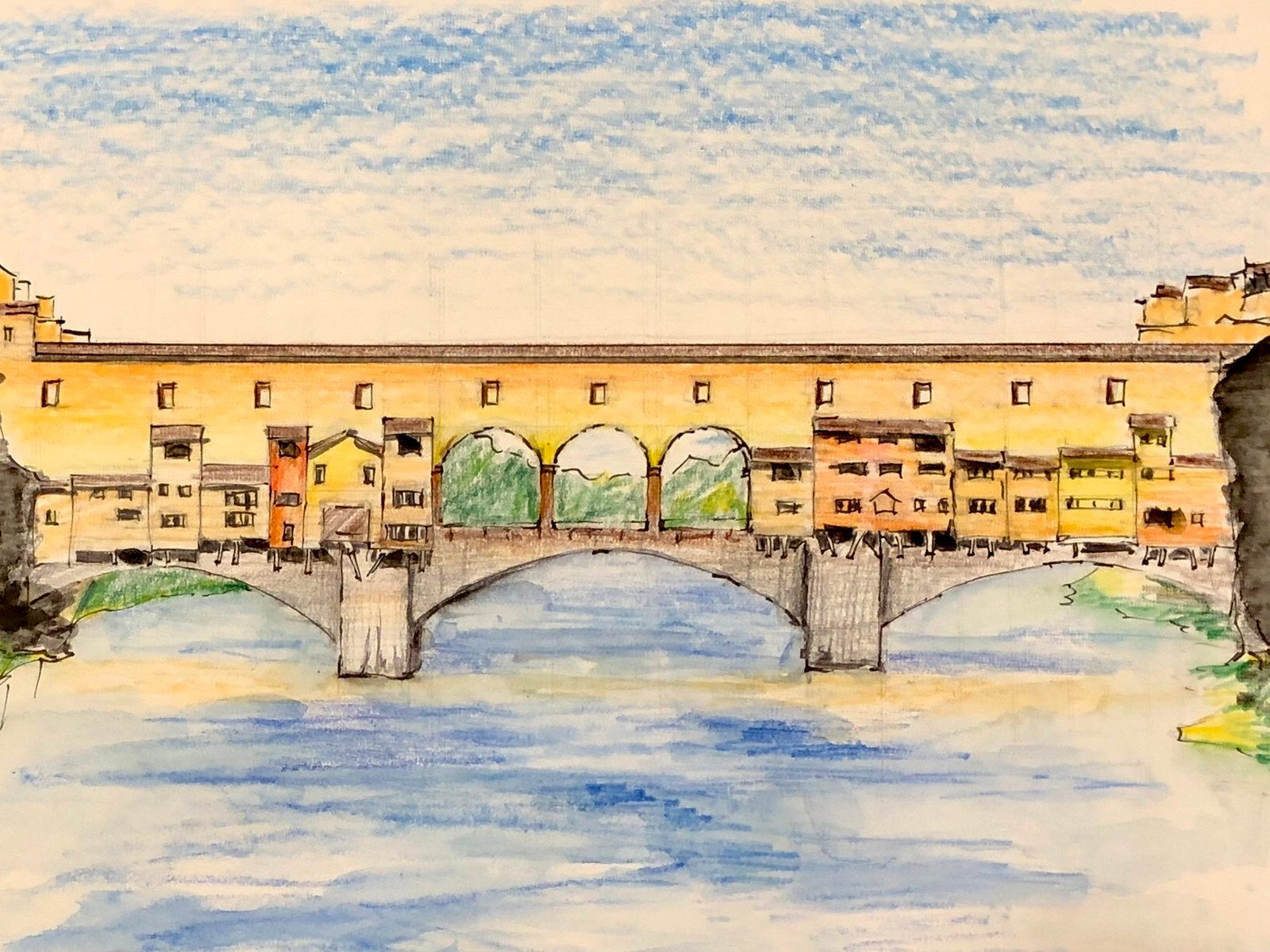
Growing up in the exotic land of the Incas, I was impressed by my grandparents’ eclectic art and stamp collections, the leather-bound books, and encyclopedias lining the walls of the library where my grandfather spent hours reading and writing. Mamama and Papapa’s home opened a whole new world to explore and study during my sleep-over adventures. Five decades ago, following in my grandparents’ footsteps, I visited la bella Firenze, walking across the beloved 16th century Ponte Vecchio, peering into the windows of the art galleries, goldsmith shops, and souvenir sellers. And I imagined Papapa and Mamama enjoying a romantic afternoon stroll along the picturesque bridge, the only one in Florence that was spared from destruction during the Second World War. I was transported back in time and reconnecting with my dear Papapa and Mamama missing their presence in my life.

Ponte Vecchio, Florence, Italy. Illustration by Daemion Lee, Oregon.

All these years later, I am grateful for my childhood memories of Peru, and the way that a painting or a photograph can keep my grandparents in my life, even today. In my kitchen I keep a watercolor painting of sunflowers in a Tuscan (Italy) field, which I found along the Ponte Vecchio. It keeps the memories alive and is good for my soul. Who could ask for more?”

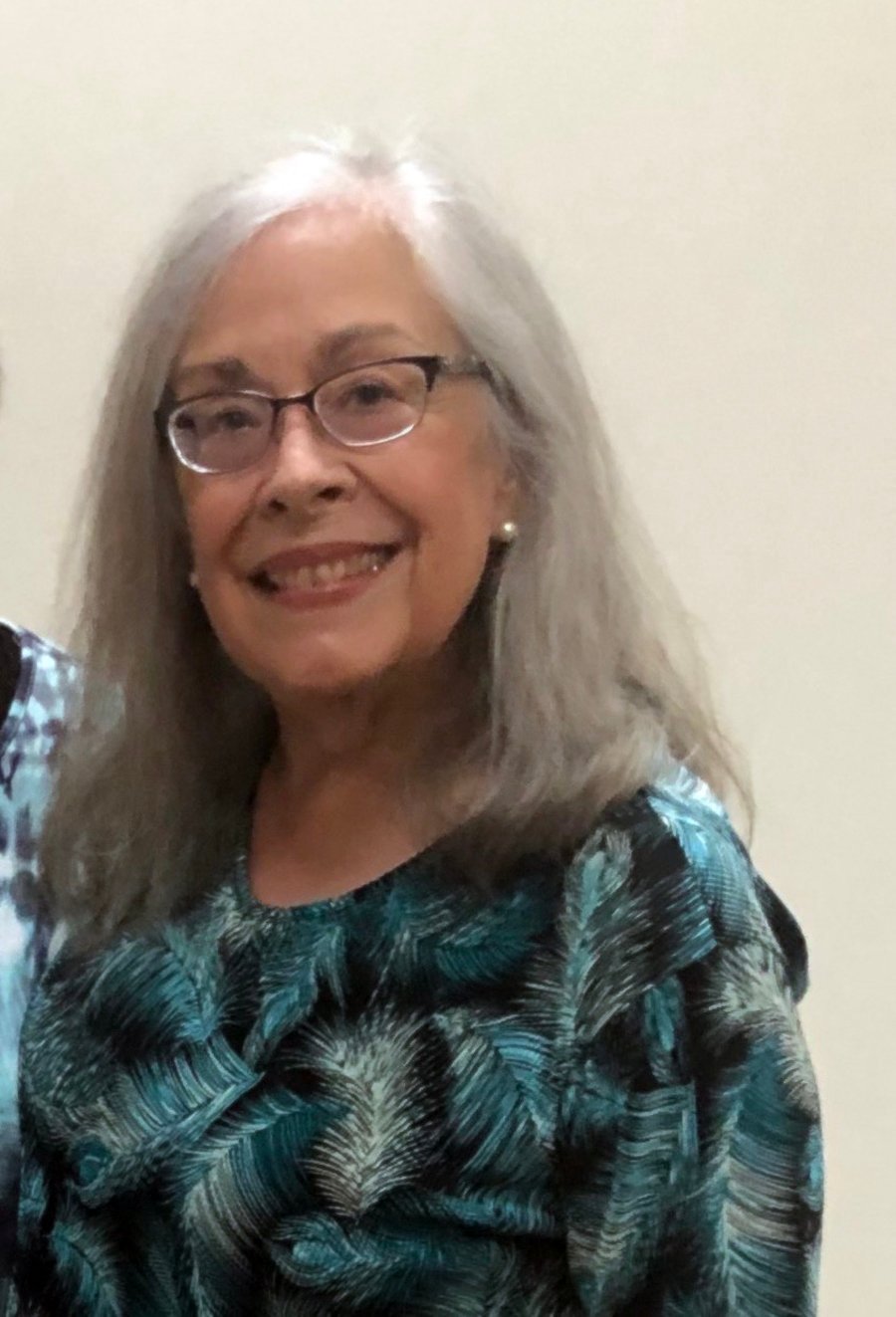
Katacha Díaz is a Peruvian American writer and author. Wanderlust and love of travel have taken her all over the world to gather material for her stories. She has been published in many outlets, including in several issues of Skipping Stones. Katacha lives in the Pacific Northwest, near the mouth of the Columbia River, USA. 

Perfect: A Seven Letter Word

Perfect: A Seven Letter Word

By Lila Ahitov, 15, California.

Perfect. Verb, “make (something) completely free from faults or defects, or as close to such a condition as possible.” Adjective, “having all the required or desirable elements, qualities, or characteristics; as good as it is possible to be” (Oxford Dictionary).

Perfect! Such a small, seemingly insignificant word! Worthless even, words can’t cause any real harm, right? Perfect is just a way that you can describe something. Wow, the weather really is perfect for swimming today! I’m just going to study a little bit longer; I want perfect grades. It’s a nice word, it describes things that are really good. Perfect is inspiration, it’s a standard you can hold yourself to. Honestly, what could be bad about trying to be perfect? It’s no different than trying to succeed at something, or than just trying to lessen the amount of flaws overall.

I want to be perfect. I want the perfect body. So, what if that means waking up at 5am every morning and going for a run? It really is no big deal to skip breakfast every day, and sometimes even lunch. To restrict sugar and carbs, and anything that will stop me from looking perfect. I want the perfect grades. Exchanging many emails with each of my teachers can only benefit my grades. Staying up late memorizing flashcards and completing countless practice worksheets will only further my understanding of the material. I hope that my report card will reflect that I am being perfect.

I want to be the perfect friend. Of course, I can help you with the homework! You’re feeling sad, I’m sorry, tell me about it, maybe I can help. You’re bored? Come over! Or we can just FaceTime. You don’t need to know when I’m feeling down, that wouldn’t be very cool from the funny, loyal, therapist friend that I am. I will not share the burden of my thoughts, as that would not be something a perfect friend would do. Concealer can hide the eye bags that deepen after every late night and early morning. A practiced smile can cover up the nervous facial twitch that I’ve developed. It’s all worth it, so I can be perfect.

A bad grade, a failed test, a blemish on my skin. All flaws that can be fixed. The judgment from everyone else, surely that would stop once I have become perfect, right? A teacher yelled at me last week because I was talking to my friend. Which do I prioritize? Be the perfect friend, or be the perfect student? What if when I stop laughing at their jokes or contributing to the conversation, they don’t want me as their friend anymore? What if I do think of the cleverest, the most perfect response to my friend’s comment, and after I say it the teacher catches me? Is it worth the bad reputation with my teacher for the good one with my friends? Is it worth the possibility of my friends liking me less or talking to me less so that the teacher thinks that I am perfect? Is it possible to do both? Candy, offered to the class, and I always take a piece. I don’t think of the repercussions of this, until the guilt that drowns me later. And yet, I never fail to take it when it is presented to me.

I cannot possibly choose which things I want to be perfect all the time. My friendships, my face, my body, my grades, my reputation, my mental health, my social life, my ability to handle being alone. My anxiety that will not settle for anything less than perfect. Which to prioritize when they contradict each other? Do I choose my mental health over my friendships and my schoolwork? I would allow myself to sleep in from time to time, and to submit mediocre work on a couple of the dozens of assignments that I get a week. I would choose to spend my Saturday night watching a movie and eating pizza. If I take that road, then my grades, my social life, and my friendships will suffer. On the other hand, if I don’t sleep, I could be irritable and rude, and then my friendships and my relationship with my parents will be hampered, but I will have enough time to do my homework. I play an instrument, I’m in clubs, I’m on the cheer team, I hang out with my friends, I spend time with my family, but choosing to do one thing stops the others from being perfect. And yet, while I agonize over what to do and the consequences of each, perfect people seem to be able to choose the perfect option, every single time. I don’t try to be selfish with my choices, but it isn’t possible to think through everything that ought to happen for me to be perfect. I say that it’s all worth it. And that a simple, seven letter word cannot possibly affect me, or my life. I ponder on that thought, and hope that my answer will be considered perfect.

—Lila Ahitov, age 15, California.
Lila writes: “Since a young age, I have loved writing and reading. Whether it was reading the French children’s books that my Parisian mother put me to bed with, or attempting the lyrics of my dad’s favorite Turkish song from his childhood, I always noticed words. “Lila,” my name, means purple, night, and beauty, and much more that I have yet to learn. Growing up in America with European parents allowed me to dabble in languages other than English, French being the one that mostly stuck. Staying close with my family and friends, and growing my cultural knowledge are continuously important to me. I am filled with gratitude for the freedom of choice in my future, which I hope to include writing, travel, and law. Heavy emotions and thoughts can sometimes be a burden, and writing things, like my submission, helps me release it.”

A S.T.E.M. Woman from India

A S.T.E.M. Woman from India

By Saroj Pathak, originally from India, now lives in California.

My 50 years of professional life have been a series of challenges, failures, triumphs, and also a few shattered glass ceilings. I would like to share my experiences and describe some of the twists and turns, and the choices I made.

I grew up in Indore, Central India. We were six siblings growing up in a middle-class family. In the 1960s, my high school, St. Raphael H.S., did not offer math major to girls! I was exceptional in Math and wanted to pursue my passion. My father talked to Mrs. Jagdale, who was the head of a small public school nearby. Mrs. Jagdale, an early Women’s Rights pioneer, said, “If our girls want to take math, we have to start math classes.”
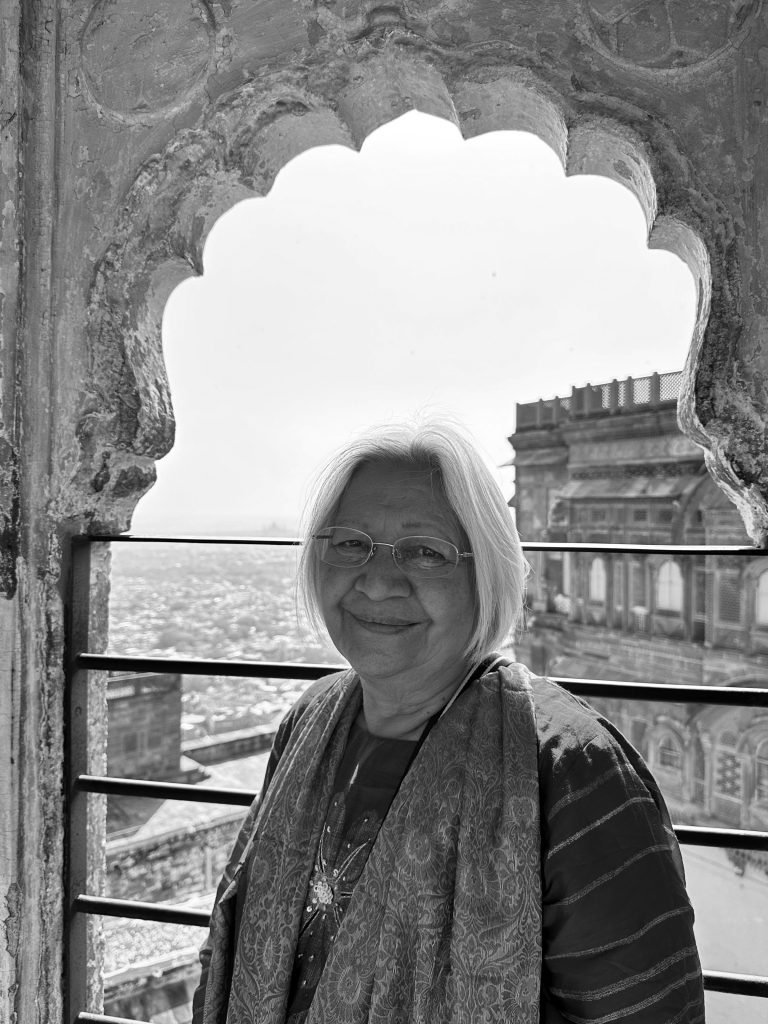
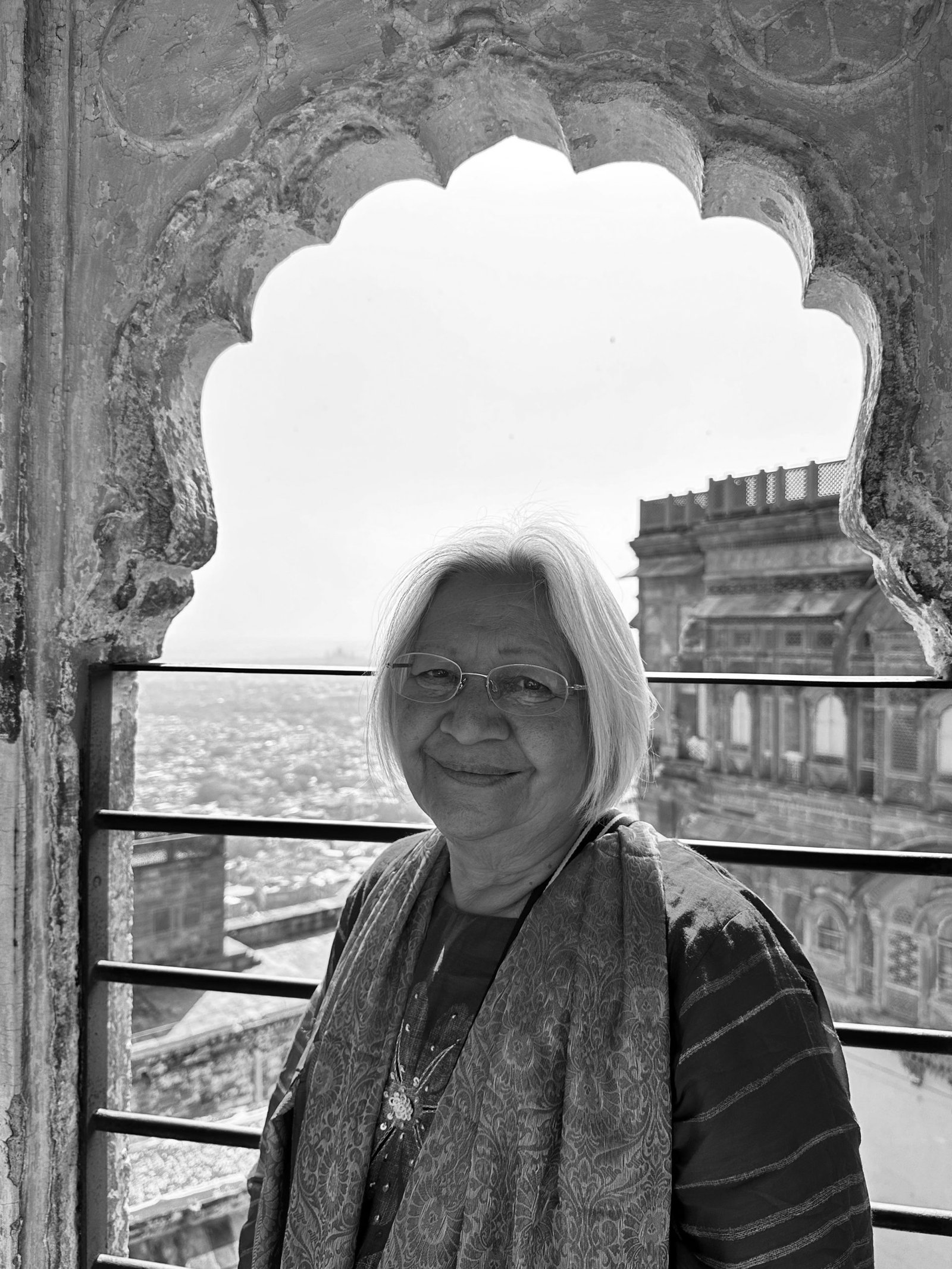
Now retired, Saroj Pathak Recently Visited the Historic Site of Mandu, near the city of Indore, Madhya Pradesh (Autumn 2023)

So my sister and I moved to Mrs. Jagdale’s school. In the nurturing environment of this small school, I ranked third in the state’s high school board examinations, an exceptional achievement!

From 1965 to 1969, I attended S.G.S.I.T.S., the only engineering college in Indore (M.P.). There were only five female students in the entire college. We had to fight for a small private bathroom and a tiny women’s room. I excelled in my chosen field of Electronics and Electrical Engineering and held the first rank in all branches of engineering throughout the four years. I was like a sponge; I absorbed everything offered. There was so much to learn from all my professors.

As graduation approached, I started looking for options for further studies. My parents were liberal but still would not send their daughter away for higher education out of state. And, I didn’t have the audacity to argue.

Dr. Dasgupta, the head of the college, recognizing my potential, and created an opportunity for me to pursue higher education in collaboration with the prestigious Indian Institute of Technology (I.I.T.) at Bombay (now, Mumbai), while working as a lecturer at G.S.I.T.S. in the Electronics Department. While satisfying my drive to excel, this enabled me to live at home. I taught for three years while completing my Master’s degree in Engineering in Control Systems from I.I.T. Although this experience was challenging, I wanted more.

I reached for a moonshot and applied for and was awarded a Rotary International Scholarship to study abroad. It was an easy decision to select University of California at Berkeley for further studies. I dared to dive head-on into the unknown, knowing only one person in America; a graduate student who had graduated from S.G.S.I.T.S. a few years ahead.

It was shocking for me to realize that I was the ONLY female student in the graduate school of electrical engineering, even at this prestigious university. The students and the professors were friendly and treated me with the utmost respect and kindness.

After graduating from U. C. Berkeley with a Master’s in Electrical Engineering and Computer Science, I worked as a semiconductor design and development engineer at American Microsystems in the Silicon Valley of California. When I came in for the job interview, the manager and engineers were shocked to see a female candidate. Women engineers were rare.

The Silicon Valley was full of type-A men, hungry for fame and wealth. It was a norm to “pull all-nighters.” All the engineers were transplants from somewhere else, and without family obligations; we worked hard and played harder. We created a family regardless of skin color or gender. We were on an endorphin high from the success of our innovations.

From 1975 to 1983, I worked with a small group of engineers at Intel Corporation; that’s where we invented and produced the first ‘non-volatile’ memory chips. These were the first chips that retained data (information) after unplugging the power supply. This was revolutionary! We published international papers, had numerous patents, and enjoyed the glory of success. I was a manager by this time and always felt respected and valued. My opinions counted, and I had the center seat at the table.

In 1983, I was offered a job at a Startup company to set up a non-volatile product line. My initial response was NO. I had an eight-month-old son and a three-year-old daughter. I was unwilling to work long hours. Since the company’s CEO wouldn’t take NO for an answer, we negotiated. I agreed to join the company, understanding that I could go home at 5 p.m. every day. The company provided flexibility, and I used my professional judgment to balance work and family needs.

Two years later, the room was packed with engineers from around the world when I presented a research paper on the First High-Speed Non-Volatile Memory at the International Solid-State Circuits Conference (ISSCC). My children sat in the front row. By then, I was confident and assertive enough to invite my children without asking.

When a Vice President position opened up, I did not consider it because I knew it meant working very long hours, and I did not want to sacrifice time with my children. Later, when the children were older and busy with school activities, I accepted a position as Director of a multinational research and development group in a different company. Most often, I was the only woman in the room where the decisions were made. Yet I also attended most of the swim meets, music lessons, cross-country running events and other activities with my children.

After 45 years in business, I decided to follow my lifelong goal of helping the younger generation in STEM field. I am passionate about the accessibility of primary science education to all children. To that end, I have started a non-profit that teaches science fundamentals to children of all socioeconomic statuses. I mentor through Stanford Mentorship Connections and other non-profit organizations. I am also the president of a local Kiwanis club whose mission is the education and well-being of children.

Advice to My Younger Self:

* Enjoy the ride. The trailblazing path is littered with obstacles, but there is no greater joy than facing challenges and finding solutions.

* Discover your core values and be true to them. Define your goals on your terms. Do not let others decide who you should become. Sort through the clutter of cultural baggage and embrace that which gives you joy.

* Be like a river flowing constantly towards the ocean, soft and flexible, but always focused on the destination. Change directions, detour if necessary, or carve a new valley, but keep flowing towards your goal.

* Be confident. You are stronger than you feel, smarter than you think, and braver than you know. Use any fear as motivation to be successful. That fear will then turn into confidence.”

* Educate yourself and acquire indispensable skills.

* Take chances. Inventions are just a step away from failure. Become comfortable with failure and learn from it.

* Dare to shatter glass ceilings, even if that means cuts and bruises. The pain of cuts and bruises is the price you pay to help your daughters and granddaughters.

* Most importantly, find a mentor. Find several mentors. Surround yourself with your cheerleaders. Find inspiration from the life stories of the pioneers who paved the path before you. From mythological women to recent ones, our (Indian) history is full of women who advanced humanity through their ingenuity, courage, and persistence.

* Be a mentor. You are standing on the shoulders of giants. Later, you can offer your shoulders to those following you.

* Be ready to choose. Most successful people have made difficult choices to get there.

* Find a supportive spouse. Sheryl Sandberg, author of “Lean In” and ex-CTO of Facebook, said, “The single most crucial decision you will make in your life is whom you marry, for this will determine the rest of your life.” She was talking to graduates of Harvard Law School.

* “Start the conversation before committing to marriage, not after.” Did you know that the Supreme Court Justice Ruth Bader Ginsburg credited her husband for her success?

In Conclusion, as a young adult in STEM fields, I would like you to be brave, explore, and take chances. Show up daily, sit at the table, and speak up in a firm, clear and compassionate voice. Act like the fate of humanity depends on you because it does.
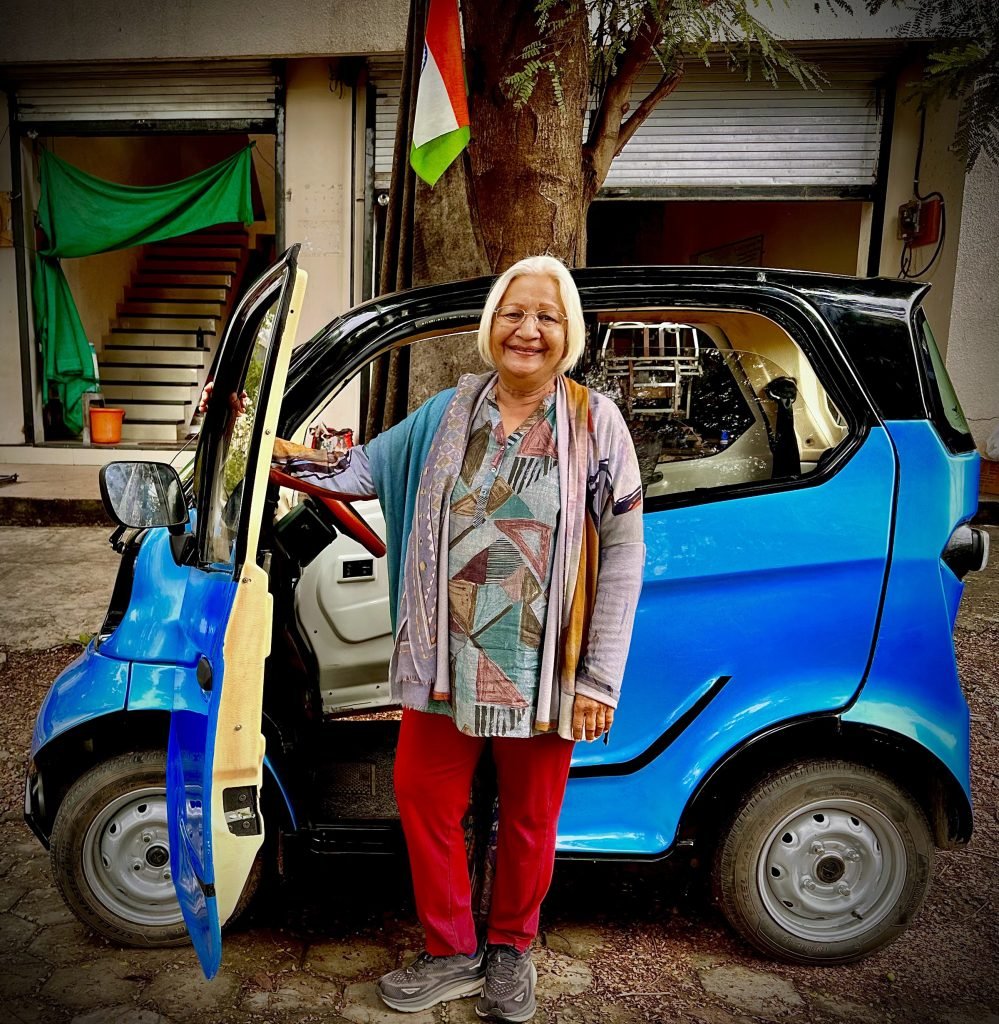
—Saroj Pathak, originally from India, lives in California. She shared this advice with engineering students at her Alma mater in Indore, India, in November 2023.

Photo: Saroj in Indore, Nov. 2023.