Category Archives: Family and Community

Grandma 

Grandma

By Jessica Chen, age 16, Shenzhen, People’s Republic of China.

Every Tuesday and Thursday, I go back to our old house to take vocal lessons because the piano is still there. 

Before my class, I always spend some time with Grandma on the eighth floor. She is a lovely old lady, short and chubby, with big eyes and rosy cheeks that look like steamed buns. 

Our whole family was raised under her care. She is like Buddha to us. My brother and I often kneel before her and bow, making her both annoyed and amused. Yes, she is fun. When I badmouth Confucius, she makes me spit on the ground and slap myself three times before letting me off. My cheeks turned red instead.

Today, I went to keep her company again. As I entered, the slippers were neatly arranged at the door, and the TV was on the children’s channel. Grandma was wearing her usual floral shorts. I changed my shoes and adjusted the TV channels while she bent down to place my sneakers in a convenient position for later. 

I collapsed on the sofa and asked Grandma what she had been up to today. Her response was the same as always: got up early, made her bed, cooked, went out to buy groceries, haggled, came home, cleaned, washed clothes, watched TV, cooked again, watched videos (and forwarded some to me), and cleaned the already tidy house once more. But then she raised her voice, saying that a girl sitting so sloppily would be an embarrassment outside. I laughed, saying I looked like a free person. Nonetheless, I put my legs down, leaned over, and hugged her. She couldn’t stand my affectionate gestures and made playful noises in protest. My attention soon drifted back to the TV, lying quietly beside Grandma.

Suddenly, she asked casually, “Kaka, shall I make you some noodles?”

Noodles. I hadn’t had noodles in a long time.

“Sure,” I said.

She got up and went into the kitchen, and I watched her. She bent down to retrieve a pot and bowl from the cupboard, placed them on the stove, filled the pot with water, and turned on the heat. Then she tiptoed to reach into the cupboard above her head, pulling out noodles, salt, soy sauce, and vegetables. 

She kept rummaging, her hands feeling around. I got up and went into the kitchen to ask if she needed help. She told me to stay out of her way, so I stood nearby, watching her. She finally found a small green canister, its surface worn, with some red oil stains on the lid. Curious, I tried to open it to smell, but Grandma smacked my hand away. Apparently, badmouthing Confucius was out of the question, and even smelling condiments was off-limits. I went back to my spot, continuing my time-out.

Grandma put the noodles into the pot and started adding soy sauce and salt to the bowl.

“Add more salt,” I suggested.

She replied, “Eat, eat, eat. You’ll get diabetes when you’re older and won’t be able to eat at all.”

“If I get diabetes, will you take care of me?” I joked.

“Spit, spit, spit! Quick, spit, spit, spit,” she insisted.

“Okay, okay,” I said. The noodles were ready.

She used long, thick chopsticks to pull the noodles from the boiling pot into the bowl, then ladled in some broth. The aroma was incredible, like the intense scent that wafts into your house from a neighbor’s kitchen. I leaned over to smell it, but she stopped me and brought out the green canister. Opening it, I saw it was chili seasoning. My eyes lit up.

“Add more,” I urged.

“That’s enough,” she said.

“I like it spicy. Add more,” I insisted.

“Look at the pimples on your face. Grandma used to have such clear skin,” she sighed.

“Fine, fine,” I relented.

But she still added a heaping spoonful of chili sauce. I grinned at her, but she turned away to avoid my smile. I carried the steaming bowl of noodles to the dining table.

“Let Grandma carry. It’s hot,” she said. Hot or not, I wasn’t going to let her carry it.

I placed the noodles on the table. Grandma came out with chopsticks and a spoon, setting the spoon in the noodles and the chopsticks across the bowl. She pulled out a chair and sat beside me.

I stared at the noodles. They smelled so good, made by Grandma. I looked up to find her watching me.

The noodles lay quietly in the bowl. I gently lifted a few strands with my chopsticks, placing them in the spoon filled with the rich, red broth. I blew on it, and the aroma filled my nostrils. In the steam, I brought the spoon to my mouth.

The hot broth slid down my throat, soaking into each noodle. I lowered my head, using my hair to hide my face as I continued eating. Why did these noodles taste just like they did when I was a kid? The chili sauce was perfect, just like before.

Grandma asked gently, “Is it good?”

My mouth full of noodles, I nodded slightly, “Delicious.”

Perhaps because my mouth was stuffed, she didn’t notice the tears in my voice. That’s good. She’s an emotional person. If I cry, she will, too. I can’t bear to see her cry, especially not because of me.

I tried to keep my sniffles from falling into the noodles while gobbling them down. Grandma watched me quietly.

“Eat slowly. No one is going to take it from you,” she said.

That’s the line I hate most in movies. Why does my hand feel so painfully hot? Grandma, I miss you so much. What will I do when there’s no one to make me these noodles in the future?

—Jessica Chen, 16, is a rising senior at an international school in Shenzhen, China. A passionate playwright and performer, she has written and brought to life several compelling scripts, both in English and Chinese. Jessica also writes film reviews and makes global film recommendations for her school’s news media. In her spare time, she enjoys following soccer and often gets a kick out of the games, whether winning or losing.
Jessica also sent the story in Chinese. Here it is:

《姥姥》

每周的周⼆和周四我都会回搬家前的家去上声乐课,因为钢琴还在那。上课前我都会去下⼋楼去陪姥姥⼀会⼉。她是个可爱的⽼⼈。矮矮胖胖的,⼤⼤的双眼⽪,⼤⼤的眼睛,脸颊像两颗馒头,会变红的馒头。我们全家⼈都是在她的照顾下长⼤的。她像佛祖⼀样。我经常和我哥突然跪在她⾯前拜两下,搞得她又烦又觉得好笑。对,她很好玩。我平时说孔子坏话她还会让我“呸呸呸”,还要让我打⾃⼰三下逼⽃才肯放过我。脸颊红的⼈成我了。

这天,我又去陪她。进门后,拖鞋已经规整的摆放在门⼜,电视上放着少⼉频道。姥姥穿着平时的花裤衩。我换了鞋,去调电视频道,⽽她又弯下⾝⼦把我的运动鞋规整的摆成⽅便⾛时穿的⽅向。我瘫在沙发上问姥姥今天⼲了些什么。又跟每次⼀样的回复:清晨起床叠被⼦,做饭,出门买菜,讨价,回家,打扫,洗⾐服,看电视,做饭,刷短视频,给我转发短视频,又打扫⼀遍已经⼲净了的屋⼦。嗯。但这时她又提着嗓⼦说我⼥孩⼦家家坐的七扭⼋歪要是在外⾯会像什么样。哈哈,像⾃由⼈。但我只是把腿放下了,跨过去“么么哒”了⼀下她。她受不了我这么⾁⿇就“诶诶诶”,哈哈哈。我的注意又很快的被电视夺⾛,安静躺在姥姥⾝边。

这时,她突然很平常的问,“卡卡,我给你做⾯吃好不好”。

⾯。我好久没吃过⾯了。

“好”。

她起⾝⾛进厨房开始捣⿎,我躺在沙发上看她。看她弯腰在柜⼦⾥翻出锅和碗,放到灶台上又往锅⾥加⽔,开⽕烧。接着又踮起脚尖翻开头顶的柜⼦,拿出⾯条、盐、酱油和蔬菜后还在往⾥翻,⼿到处摸。我起⾝⾛进厨房问她需不需要我帮忙,她让我⼀边呆着看别添乱,我就乖巧地在旁边罚站,看她左摸摸右摸摸,摸出了个⼩绿罐。绿⾊的表⾯有些掉⾊,盖⼦外有些红红的油渍。我好奇地想打开闻,被姥姥扇了个⼤逼⽃⼦。不是,我到底做错了啥,骂孔子不⾏,闻个调味的也不⾏。我只好回到刚站在位置继续罚站。

姥姥把⾯下进锅后就开始往碗⾥加酱油和盐。

我说,“盐多放点”。

她说,”吃吃吃⽼了以后得糖尿病看你还吃不吃“。

“我得糖尿病了你来照顾我呗”

“呸呸呸,快,呸呸呸”。“好好好”

我把⾃⼰呸掉了。⾯,也好了。

她⽤粗长的筷⼦把⾯从沸腾的锅⾥捞出来夹到碗⾥,再⽤勺⼉把⾯汤陈进去。⾹。太他妈⾹了。这种⾹就像是隔壁⼩孩⼉家吃饭时从你家窗⾓缝飘进来的浓郁感。我跨到姥姥⾝边想低头闻,她把我打住并拿出了那瓶绿⾊罐⼦。打开,⾥⾯是辣椒调味料。我⼀看就两眼放光

“多加点”

“啧,够了”

“我吃辣啊,多来点”

“你吃,你看看你脸上长的疙瘩,啊,姥姥以前脸⼲净的很”

“哎呀我好好好”

但她还是听我的加了很厚的⼀勺辣椒酱。我开⼼的向她呲⽛,可她却转过头回避了我的笑脸。我⽤⼿端起热腾的⾯条往餐桌⾛。“姥姥端,烫“。

烫,才不让你端呢。

我当没听见,把⾯放在桌⼦上。姥姥这时拿着筷⼦和勺⼦⾛了出来,把勺⼉放进⾯⾥,筷⼦架在碗上。她拉开凳⼦坐在了我旁边的旁边。

我盯着⾯条。好⾹啊,是姥姥做的。我抬起头,姥姥盯着我看。

⾯条在碗中静静地躺着。我⽤筷⼦轻轻挑起⼏楼⾯条放在舀着鲜红粽⾊的汤汁的勺中。我凑近吹了吹,汤汁的⾹⽓扑⿐⽽来。热⽓氤氲中,我将勺⼦送⼊⼜中。

热汤划过我的喉咙,⽽汤汁早已渗⼊每⼀根⾯条。

我低下了头,⽤头发挡住了我的脸颊继续吃⾯。为什么,味道跟⼩时候吃的⾯⼀模⼀样呢。

好好吃的辣椒酱。味道和⼩时候的⼀样。好好吃啊姥姥。

她见我不抬头,关切地问:“好吃吗”?

我的嘴巴被⾯条塞满了,低着点了点头,”很好吃。“

可能是嘴巴被⾯条塞满,并没有让姥姥听出被压抑着的哽咽。也好。她是个⾮常感性的⼈。

我⼀哭,她就会哭。我看不得她哭,更看不得她因为我哭。

我努⼒吸着⿐涕不让它掉进⾯⾥,同时又狼吞虎咽。

姥姥静静地看着我。

她说,”慢点吃,又没⼈跟你抢.“

这是我在影视中最讨厌的台词。为什么突然感觉⼿⼼被烫得好疼啊。姥姥我好想你啊。要是以后没⼈给我做这样的⾯条我该怎么办?

—Jessica Chen, 16, is a rising senior at an international school in Shenzhen, China. A passionate playwright and performer, she has written and brought to life several compelling scripts, both in English and Chinese. Jessica also writes film reviews and makes global film recommendations for her school’s news media. In her spare time, she enjoys following soccer and often gets a kick out of the games, whether winning or losing.
The Empty Spot

The Empty Spot

By Leslie T. Fry, high school senior, New York.

They stuck us in Studio 8. At first glance, it looked in decent shape. The professional company never danced there so the floors were rosin-free, letting us pirouette with ease. The room also had gaping windows and a cavernous ceiling.

Mr. Vankan would implore the boys: “Look how much ceiling you still have! Jump so high you hit it!”

For us girls, the ceiling only helped us feel dainty. The studio’s wonky mirrors trapped us in our own private funhouse.

We all knew that the end-of-the-year performance was scheduled for two months from now, though the specific details of our dance remained unknown. In the other studios, the older girls already had started rehearsals. The soloists’ gracefulness took our breath away. I longed to be a soloist someday; I suspect we all did.

Mr. Vankan’s yellow notebook appeared more frequently as we got closer to the performance. He creased the spine before placing it open on top of the speaker.  We remembered that book from our audition. When that book came out, our PTSD returned, along with the insecurities of our 15-year-old selves. He circled around us as we danced, then stopped to stare at someone’s foot or head before jotting down his verdict. Our bodies felt sore, and we wanted to go home. Often, he would excuse us early, testing our commitment. We demonstrated our resilience by staying as long as he did.

A month before the performance, Mr. Vankan pulled out the dreaded notebook and studied his notes. He instructed the boys to leave early and then told us girls to stand in a line from shortest to tallest. Surprisingly, the boys left without hesitation, presumably sensing that he was in a particularly sadistic mood.

He assigned places, repeating, “Remember, these places are not set. I just want to see how it looks.”

For a week, Mr. Vankan moved us girls around as if playing chess. Under the touch-move rule, he would leave his finger on the piece until the last minute, convincing us that he was sure of his move, only to dash expectations with a “Nah, I don’t like it.”

Historically, we had been good at learning choreography, having danced from infancy, but we had questions.

When we asked him whether our arms should be up or down when we ran to the back, his puzzling response was, “Do whatever everyone else is doing.”

We smiled at him in disbelief, waiting for the punchline that never came.

He split us up into two sections, supposedly intending to give us equal practice time, though he never did. Instead, the second cast sat on the floor in extended splits for the last half hour of class.

Mr. Vankan yelled: “If you’re sitting on the ground, you better be doing something!”

Our hands marked the routine accurately, without ever breaking a sweat.

In one muggy session, all were surprised to find Ms. Robin teaching class because of Mr. Vankan’s unannounced trip to Germany. Previously, he had asserted we couldn’t skip any classes whatsoever. Many of us pushed through illness, and one of us even skipped a funeral of a close family member. Now, he had disappeared. After watching both casts, Ms. Robin clenched her teeth, forcing an unnatural smile.

“Uh, okay,” feigning a supportive tone. “Where are your arms supposed to be when you run to the back?”

We collectively shrugged, as if choreographed.

“What count do you enter in on?” she continued questioning.

No one knew.

* * *

A week later and two weeks before the performance, Mr. Vankan returned, tanned and well-rested. He didn’t bother to explain his absence and dove right into class.

“Noooooo, you run in on 5-6-7-8, not 3-4-5-6-7-8! Again! And Christa, Crystal, uh, whatever your name is, point those feet! You look like a clumsy duck!” Mr. Vankan mocked. It was her first day back from a week of dreadful coughing and sneezing.

Tears rolled down Christie’s cheek, despite her best efforts to hold them back. During the rest of the rehearsal, I watched her with the hope that she could hold in her emotions until arriving safely in the privacy of our changing room. Oblivious to Christie’s crying, Mr. Vankan pushed her harder and harder.

“Look at your extensions! What’s happened to you?” he blurted out.

We all knew that you usually try to sleep when sick, not stretch. It wasn’t fair, but there was nothing we could do. She had no clue about all of the changes that Ms. Robin had made. Neither did Mr. Vankan, who was fumbling with the speakers. Tchaikovsky blared from the speakers when Mr. Vankan confused the varispeed and volume knobs, making it impossible for us to verbally comfort Christie. Mr. Vankan was slow to adjust the volume and even slower to get back to the right tempo. The first cast started to dance with Mr. Vankan’s count. However, Christie seemed to dance to her own music.

“No, no!” Mr. Vankan exploded.

He stopped the music. A cluster of worry wrinkles formed on Christie’s forehead. Mr. Vankan sat in his chair, face buried in one hand and mumbled, “You know what . . . we don’t need you.”

Christie stared at him as if asking, “Are you serious?”

Mr. Vankan was entirely serious.

Looking down to hide her tears, she jogged over to the wall. I walked over to her and gave her a hug.

“It will be okay,” I whispered. “You’ll be fine.”

I let go of her. She looked at me with streams of tears trickling down from her red eyes, and she ran out of the room without being excused. I entered the changing room when I could. Her locker was open and empty. I smiled, at least on the inside. Someone was getting promoted to first cast.

* * *

Christie did not return the next day or ever again. In the corner of the studio where she set her bag, I set mine down. Her absence left a noticeable gap in the choreography.

“Does anyone know Christina’s part?” Mr. Vankan petitioned as he looked around the room.

My hand darted in the air before he finished his sentence. He nodded and motioned for me to fill the gap.

“If you see an empty space, that’s where you’re supposed to be,” he instructed, and that was all.

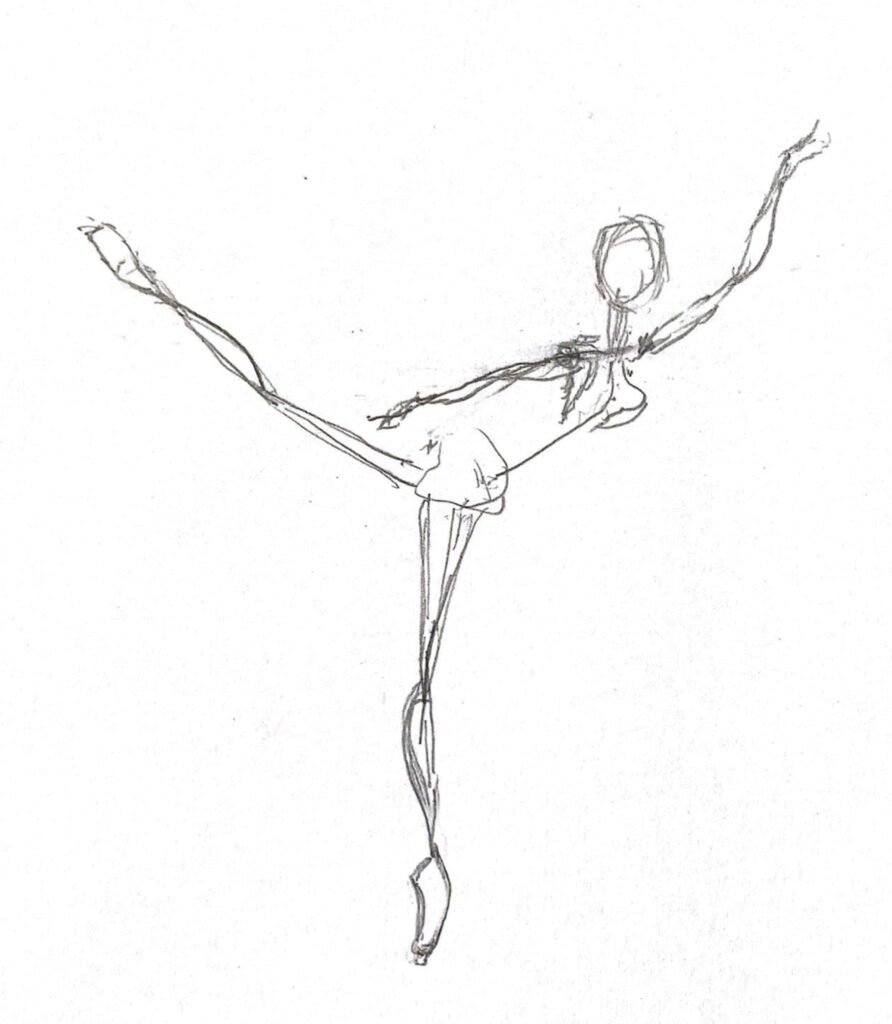
I didn’t need more, even though it was my first time dancing with the first cast. My head spun as I chased the empty spot, like a cat chasing a laser, not knowing where it would appear next. My spirit soared when I felt my arabesque turned out like never before. Renewed energy coursed through my veins as I stretched my legs through. I glowed with confidence. I didn’t even mind that Mr. Vankan was not watching me, just as long as he didn’t take out his yellow notebook. As I held my final pose with a sense of accomplishment, I caught my beaming smile in the mirror, attached to a body that I could not recognize as my own. It would take some getting used to, but I knew I was in the spot where I needed to be.

—Leslie T. Fry, high school senior. Leslie was born in Hong Kong, and she also has lived in The Hague and New York City. Leslie has been dancing seriously since the age of two. Apart from dance, she enjoys literature, art, math, psychology, and chemistry. In addition to English, Leslie studies Chinese, Dutch, French, and Latin. She plans to study behavioral neurochemistry at university and hopes to eventually become a neuropsychiatrist.

Climate Change Threatens the Future and the Past

Climate Change Threatens the Future and the Past

By Halia Ochieng, age 13, Virginia. 

Storms and floods are increasingly common in coastal areas in the United States and around the world. Rising water tables prevent soil from draining, which impacts soil health, plant growth, and other important ecological resources. I traveled to Jamestown, Virginia, home of England’s first permanent colony in North America, to learn more about another impact of rising water levels: the destruction of archeological sites. 

To understand how climate change is threatening these sites, I met with Dave Givens, the Director of Archaeology at Jamestown Rediscovery. Dave explained that rising water levels not only damage artifacts, they also make it harder for archeologists to do their work. Things stand to get worse: Dave estimated that “Jamestown will solidly be underwater by 2050.” 

Archeologists on Dave’s team reported that, as previously dry archaeological features become inundated, they are damaged in ways that reduce the historical clues they offer. DNA, for example, can be lost when bones are submerged for too long. Saltwater causes even greater damage, and Jamestown and many other archeological sites are close to the ocean. Artifacts containing porous materials like bricks, bones, pottery shards, and wood are damaged slowly, but metal artifacts corrode quickly, even in brackish water.

It’s not only Jamestown that’s threatened. According to a study done by researchers from across the country, more than 13,000 U.S. archeological sites are at risk of sinking. 

The same is true of many important heritage sites around the world. Ancient civilizations often developed along river deltas, such as the Tigris, Jordan, Euphrates, Nile, Indus, Huang He and Changjiang. River deltas are particularly threatened by rising water levels because they are flat and close to sea level. This means that our most valuable archaeological sites are often at the highest risk. 

Even a several-inch rise can submerge these sites, and according to the U.S. Global Change Research Program, the “average sea level has risen by more than 8 inches since scientific record keeping began in 1880.” 

New advances in technologies used for archeology, such as ground-penetrating radar, Light Detection and Ranging (LIDAR) imagery, and portable X-ray fluorescence spectroscopy measurers, offer an unprecedented opportunity to understand the civilizations that shape our societies and enrich our cultures. If archeologists had the time they needed to apply these new technologies in threatened sites, we could unlock a wealth of knowledge about our ancestors and our world. Because these new archaeological tools are less effective under water, rising water levels have created a race against the clock. 

Despite the urgency of their work, archeologists face many climate change-related interruptions. Coastal archeological sites have reported 100-year-storms becoming as frequent as every five years. Also, archeologists need to dig when soil is dry to see discolorations in the soil, which can indicate trenches or other filled-in groundwork. It’s hard for archeologists to race ahead when dry-soil days are becoming rare. 

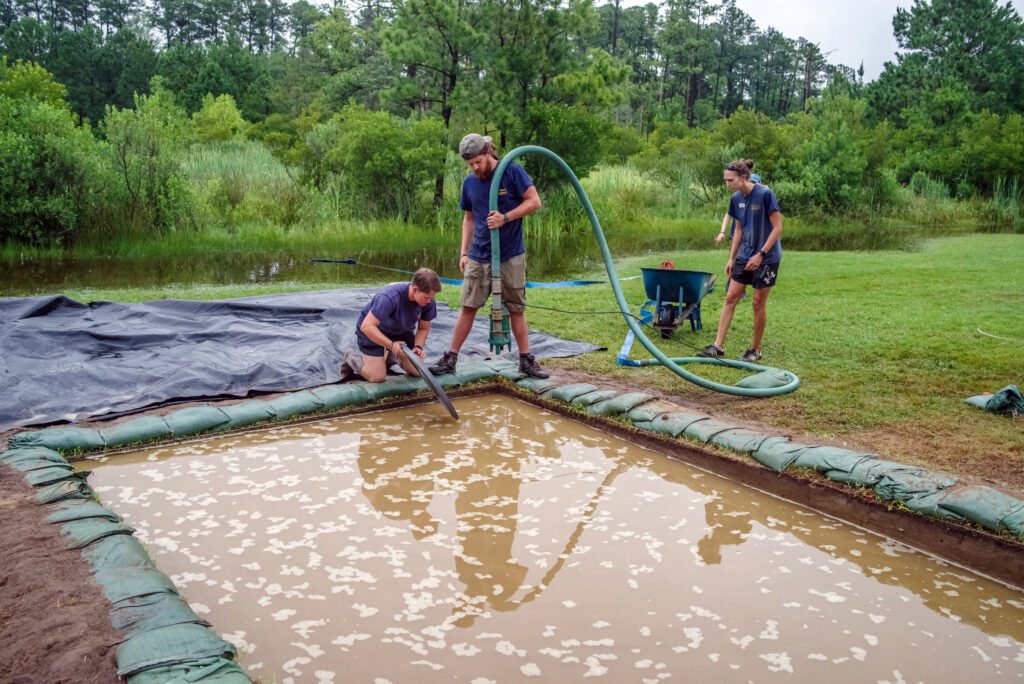
June 2023. Heavy rains and high tides inundated excavation units with evidence of early expansion of James Fort.

To buy time, archeologists have sought temporary solutions, such as pumps and water retention walls. These are not only costly, but they are also inadequate. To enable archeologists to continue making discoveries, we need to slow climate change, which does more than submerge artifacts. According to the Union of Concerned Scientists, “coastal erosion… and more frequent large wildfires are damaging archaeological resources, historic buildings, and cultural landscapes across the nation.” 

Some may argue that climate change has actually helped archeologists. Historic droughts in 2022 revealed sunken Nazi warships in the Danube, dinosaur footprints in the Paluxy riverbed in Texas, and other artifacts. These were often found in rivers, lakes, or reservoirs, instead of coastal areas, and some have since been resubmerged. While archeologists try to make the most of these unpredictable opportunities, these finds cannot compare to what they stand to lose.

As a student who hopes to become an archeologist in the future, I see my career dreams literally sinking at the precise moment when, thanks to technological advances, the field holds so much promise. By the time I enter the workforce, it may be too late to dig in some of my favorite archeological sites. This is particularly sad because archeology has recently made great strides in telling the stories of women and marginalized communities. Whereas history used to focus on the stories of dominant individuals and groups, so many of us are only now learning our histories. 

I wanted to write this article as a way to raise my voice. I am told I am too young to run for office, too young to vote, and too young to do much lobbying. Young people are rarely given the chance to encourage our governments to protect the climate, which is why young people like Greta Thunberg had to resort to school strikes when she was around my age. Similarly, young people are rarely included in discussions about supporting archeology. Both goals are so important, and the current generation of adults has a responsibility to lead the way. Younger generations know that it’s their future at stake, but they need adults’ help to access and raise their voices in adult-led spaces. 

Adults can help by improving climate change education. Young people need to learn more about climate change and its impact on archeology. These topics get little attention in schools, educational resources, or children’s media, but we need to understand what’s at stake and how to reduce our climate footprint to protect historical treasures waiting to be dug up. 

Adults should also increase funding for climate-informed archeological work. “Funding for archaeological research from governmental and philanthropic sources is becoming scarcer,” according to the Digital Archeological Record, just at the time when the field needs to accelerate its work. 

Most importantly however, adults need to reduce their own climate footprint. Protecting the climate today not only safeguards our future, it also allows us to continue learning from our past. 

By Halia Ochieng, age 13, Virginia. Their Climate Conservation Club can be reached at: climateconservationclub.gf@gmail.com. Halia says, “I’ve grown up between Europe, Kenya, and the United States, and I take inspiration from environmental activists like Wangari Maathai and Greta Thunberg. I speak German and English and am currently learning French.”


Between Gaza and Me

Between Gaza and Me

By Nada Alaloul, age 17, from Rafa, lives in Egypt.

Between all of these
Cold bodies,
Tired faces,
Busy minds
Lost people
There is Nada como yo
Between black and white there’s me
Between sun and moon, there’s a scream
Between hell and heaven, there’re my people under the rubble
Between death and life, there’s a missile
Between war and peace, there’s a border
Between freedom and shackles, there’s the whole world
Between tanks & planes, there’s my family
Between my family & me, there’s an endless cry
Between my happiness & sadness, there’s the news of my city
Between the present and the past, there’s a genocide.
Between death here, and death there
There’s a huge price
I have one heart with
Two separated souls
And I’m a ghost
And I’m completely alone.

I was at home
Now I’m missing my home
Suddenly
I lost my home
I was here and there
But Suddenly
I’m nowhere
My home was bombed
My friend was killed
My sister was scared
And my dad was missed
And all I’m doing here
Is just avoiding to be the
Favorite dish for my sadness
Cuz actually I’m a liar
A big liar
I’m drowning in heavy clouds of sadness
Afraid to confirm
That my happiness is sad
To be with me
My happiness is scared
To be bombed with me
My happiness fooled me
But at least I know
That I couldn’t know
That I’m not happy
Without my sadness
I couldn’t realize
That I want balance
Between black and white
Between my happiness and sadness
To stop being gray
Without my sadness.

So now
I’m under a sky that
Doesn’t target its people
I walk towards the sun but I’ll never be burned
Cuz my soul has been burned once
Before when I left Gaza
Alone

What about you, dear human?
Can you bring me the warmth of the sun?
Not the one over my head
Nor the Egyptian sun which
Burns my bones like
The missiles do against
The tents of my friends
I want the warmth of my family
I’m a ghost and
I’m completely alone

I’m blue, drowning in a
Gray ocean of the fog
Gray, the favorite color of the death in my city
The color that I used to see
Whenever I roam in my ghost city
The color that I used to feel
Whenever the measure between
Death and me is just a path

I have one heart
With two separated souls
I’m a ghost and I’m completely alone
I’m here and there
And suddenly
I’m nowhere
Como Nada como Yo.

By Alaloul, age 17, from Rafa, Palestine, currently lives in Egypt.

Ms. Lauren Marshall, a playwright, musical theater librettist/lyricist, director and teaching artist based in Washington state, adds: “Nada is a remarkable girl from Gaza, now living with relatives in Cairo, Egypt. She participated in the Gaza Heartbeat, a creative writing project that was sponsored by Palestine Charity Team (PCT) in Rafah, Gaza (Palestine), in 2022.

“Nada has a positive outlook despite all that has happened to her! She was evacuated from Gaza in April, 2024. But her family is still stranded in Gaza, displaced from their home, which has been destroyed during this senseless war. Nada, like all of Gaza’s children, has missed an entire year of school as the result of the war. During this time, she has read books, written short stories and poems, taught herself Spanish, taken a business course in Cairo, and volunteered with PCT!”


Being Split

Being Split
By Preston Young, age 10, New York.

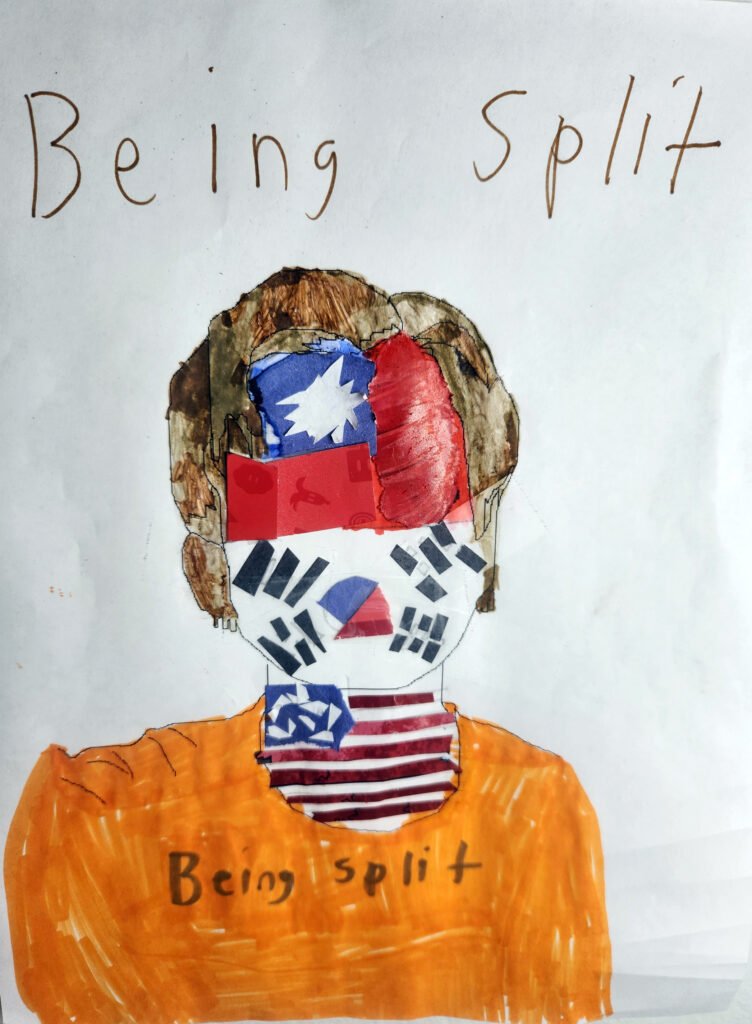
Being Split by Preston Young, age 10, New York

Illustration by Preston Young, 10, New York.

Being split,
Korean and Taiwanese,
I can’t process two different cultures,
It’s hard for me.

On Korean New Year,
I bow to elders and eat Duk Bok Ki (rice cakes).
On Chinese New Year,
I get red envelopes and eat dim sum with herbal tea.
I call my Korean grandparents Halmoni and Haraboji;
Ah ma, I call to my grandma who is Taiwanese.

The Taiwanese flag has red, white and blue.
The South Korean flag has those colors too.
The American flag has them too, oooh!

Being split,
Korean and Taiwanese,
Sometimes people don’t understand me.
When my friends talk about their one culture,
I want one of my other cultures to be unseen.

I try to tell my friends over and over;
I scream and I shout and whisper over their shoulder.
They never understand when I say,
 I am both Korean and Taiwanese!
They look confused and annoyed like fleas.

Sometimes I wonder if being Korean and Taiwanese is right for me.
I sit there and think until I can finally see,
I am special with being multicultural,
Being Korean, Taiwanese, and American,
Can all fit in my soul.

Being split,
Korean, Taiwanese, and American is hard.
But the three cultures,
Are forever in my heart!

By Preston Young, age 10, New York. Preston adds: “My mom is Korean and my dad is Taiwanese. I was born in the USA. I speak English but I am learning how to write, read and speak Korean because my friends at school can speak fluently, and I want to be able to communicate with them. My dream is to become an author and entertain kids. I was inspired to write this poem because when I am in school people always assume that I am full Korean or full Taiwanese. Sometimes people think I’m Chinese but I always correct them. I wanted to express how I feel and what that makes me feel like. I made a collage out of construction paper and some magazine clippings with markers to show my feelings about being split in three different cultures.”

“Looksmaxxing” and Toxic Beauty Standards

“Looksmaxxing” and Toxic Beauty Standards

By Colin Wu, high school junior, California.

Earlier this year, one of my close friends got very wrapped up in the looksmaxxing community, a growing online community that strives for the ideal body and flawless face. He started calling people out that he didn’t find attractive, bullying and fat-shaming them. He shunned and looked down on his peers who didn’t have the “perfect body”—6’ 0” tall, six-pack abs and huge biceps. The looksmaxxing community targets young males and females and influences their ideas about beauty in a toxic way. Looksmaxxers are part of an online community that has gotten inside our heads and inside our homes and it needs to be stopped before more people get hurt.

Social media has had a huge effect on younger people’s feelings about their appearance. In a New York Times op-ed titled, “Toxic Beauty Standards Can Be Passed Down”, Alexandra D’Amour writes, “There’s a nickname for tweens and teenagers who have been influenced by social media to get into skin care: Sephora Kids. Johanna Almstead, a fashion industry friend, tells me that in her local mothers group chat, nearly every mom had “Skincare, skincare, skincare!” on the holiday gift lists they were given—by their fifth graders.”

Younger children requesting skincare products as gifts is alarming. It suggests that they have a problem with their appearance and are using skincare to fix it. It also shows the influence social media has on the youth now, whereas, when I was in fifth grade, I wanted video games and Legos. D’Amour also says, “A recent video on TikTok that has garnered more than eight million views features a 28-year-old woman showing her “raw,” procedure-free face, meaning no Botox or fillers. As some women and girls cheered on her bravery, others were left horrified. “Praying I’ll never look like that,” one comment reads. This comment shows the ways in which social media has defined beauty for future generations. While sharing their “raw” face makes some people proud, others are disgusted by its imperfections.

Parents, who also contribute to the focus on skincare in young people, can make this situation better. D’Amour writes, “And yet, if a mother’s insecurity can fuel her daughter’s own self-loathing, a mother’s radical self-love might just protect and even heal her daughter from a toxic culture.” D’Amour believes the influence that parents can have on their children can be more positive than negative. Parents who are able to teach their kids to love their appearance may help their children stay away from bad communities. D’Amour says, “When I ask the few friends who haven’t gotten Botox why they haven’t, they tell me it’s because they love how their mothers are aging and how they embrace it. They don’t fear aging because their mothers don’t (or didn’t).” Older generations of mothers who are secure about their appearance influence younger generations by making them realize it’s best to accept and love themselves for who they are. Coming from a family in which no one had any kind of procedure, my parents and grandparents have taught me self-worth and have made me love myself for who I am.

People today are growing up in toxic cultures that lead them to accept unnatural beauty standards. D’Amour warns us that, “Gen Z-ers are being introduced to the idea of starting treatments early as preventive treatment. They are growing up in a culture of social media that promotes the endless pursuit of maintaining youth—and at home, some of them are watching their mothers reject aging with every injectable and serum they can find.” Gen Z-ers are still growing and many are still in puberty. By attempting to slow or stop the natural aging process, young people seek out treatments that could alter and change the way they look when they’re fully grown. While it can physically harm Gen Z-ers, the mental effects can also cause significant harm. They are oblivious to the ways in which buying treatments connects their self-worth to their beauty. The consequences of children being influenced by skincare culture could mirror the harm caused by previous toxic cultures. D’Amour points out that “The anti-aging craze comes with the same toxicity as diet culture does.” Diet culture influenced people to want to be skinnier. Anorexia was a large issue and resulted in many people hurting themselves to obtain the ideal body image. Similar to diet culture, the anti-aging culture puts pressure on young people to strive for unhealthy and unattainable beauty.

My friend was too invested in the looksmaxxing community. As he tried to achieve his ideal body image, his obsession led to him putting down and hurting others. While there are positive aspects of social media, these negative parts harm younger people who are vulnerable when it comes to their appearance. Even though my friend was putting others down, this community was also harming him, by ruining friendships. Some unlucky teens have to deal with crazy parents, who put their own insecurities on their children and reaffirm toxic cultures that enforce unrealistic beauty standards. Other teens can be affected in positive ways, if parents or role models teach them to accept themselves. In the future, if we want to feel good about ourselves, we must embrace our natural appearance and develop self-worth that is grounded in loving ourselves.

—Colin Wu, h.s. junior, California. Colin adds: “I am a Chinese and Burmese American, whose first language is English, and I am currently learning to speak and write Mandarin. My family, education, health, and religious beliefs are most important to me. I am very interested in environmental sciences and engineering. I was inspired to write this essay because of the harm this community has done to friends of mine.”

A Friend That Never Was

A Friend That Never Was

By maggie d., Washington.

Except for Erica and I
The playground was empty
And our laughter could be
Heard miles away
“Not it! Not it! You are it!”
She yelled
Beginning a game of tag

Seconds later
A white car arrived to
Pick her up
The driver was someone
I never saw before
“No matter,” I whispered
With a shrug
Resting my mind on
Tomorrow’s joy

But the next day’s gladness
Did not show
Angrily she blurted
“My Mom said you are a monkey
And I do not play with
Monkey girls!”

A bucketful of tears
Streamed down my cheeks
As I stared into an
Unfamiliar face at the
End of a fence
Making me wince
When she wrapped my hand
Around her light peach
Fingers and asked
“Will you be my friend?”

—maggie d., African American poet and educator, Washington.

Nature’s Quest

Nature’s Quest:
Geocaching Adventures for Young Explorers

By Carol Thompson, EdD., Georgia

Have you ever wished you could go on a real-life treasure hunt? Well, guess what? There’s a super cool outdoor activity called geocaching that lets you do just that! It’s like a secret mission where you get to explore nature, find hidden treasures, and enjoy quality time with your family.

What is Geocaching?

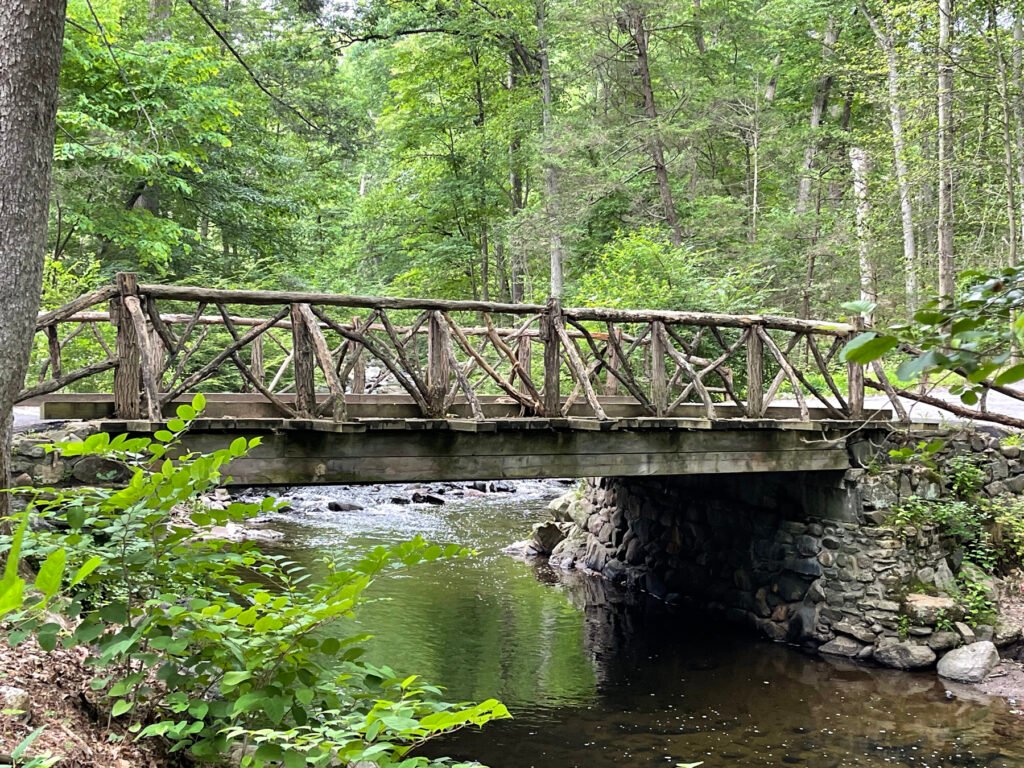
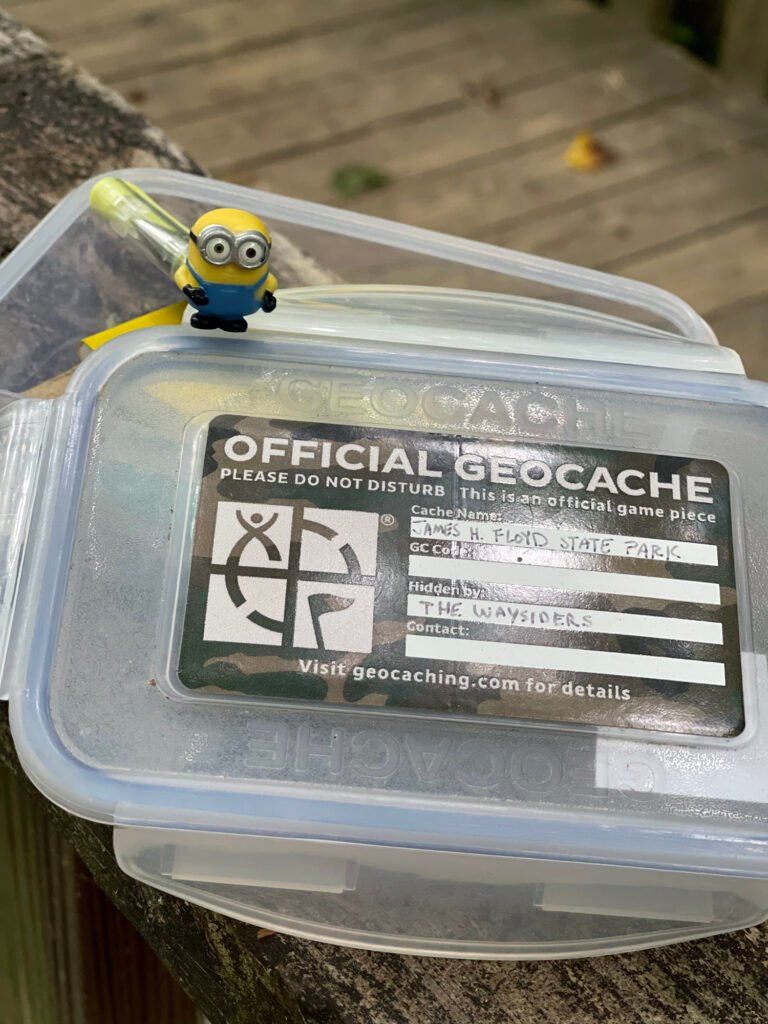
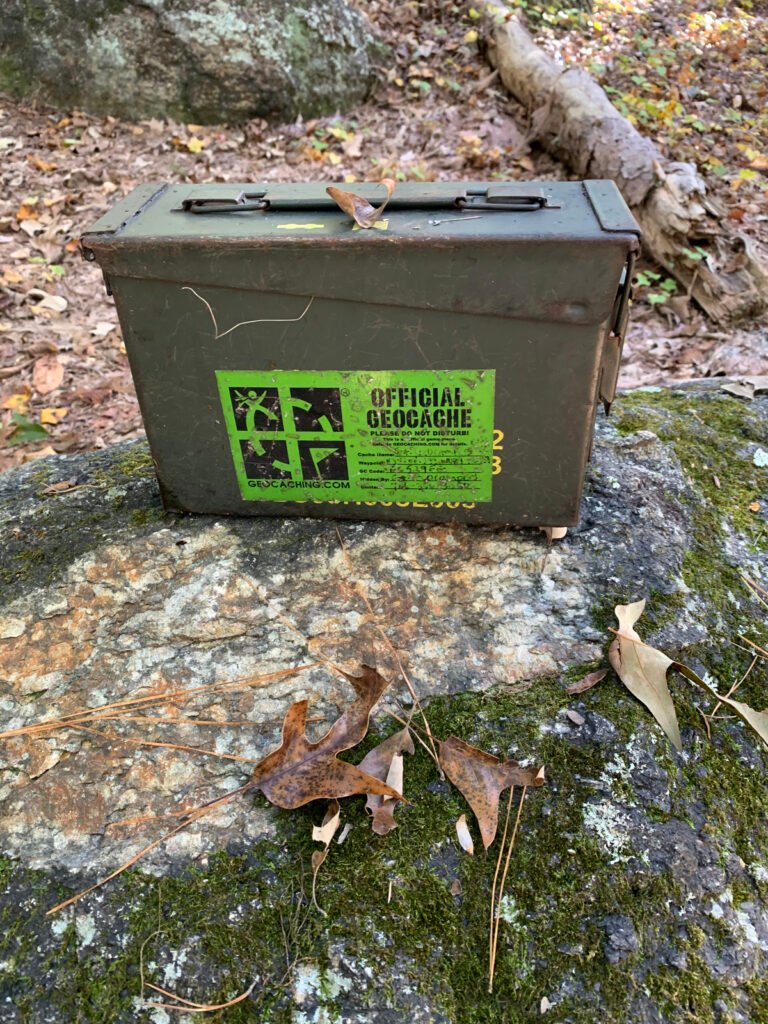
Geocaching is a modern-day treasure hunt using GPS devices or smartphones. People all around the world hide small containers, called geocaches, “cache” for short, in various outdoor locations, from parks to forests to urban areas. These hidden treasures can be found using GPS coordinates, which guide you to the exact spot where the geocache is waiting to be discovered. It is very similar to hide and seek with small goodies to locate. Who doesn’t like a good game of hide – go – seek?

How Do You Geocache?

Getting started with geocaching is easy and doesn’t require a lot of fancy equipment. All you need is a GPS device or a smartphone with a geocaching app installed. You can find many free apps designed just for kids to make the adventure even more exciting.

  1. Choose Your Geocache:  Use the app to pick a geocache near you. Look for ones with easy difficulty levels at first, so you can get the hang of it. The app will give you the cache basics, like size, difficulty, and terrain. It also sometimes gives you hints, photos, and date of the last find. The challenge is on!
  2. Follow the Coordinates:  The GPS coordinates provided by the app will lead you to the general location of the geocache. Once you get close, use your keen observation skills to find the hidden treasure. Depending on the app, sometimes your GPS will even vibrate when you are close.
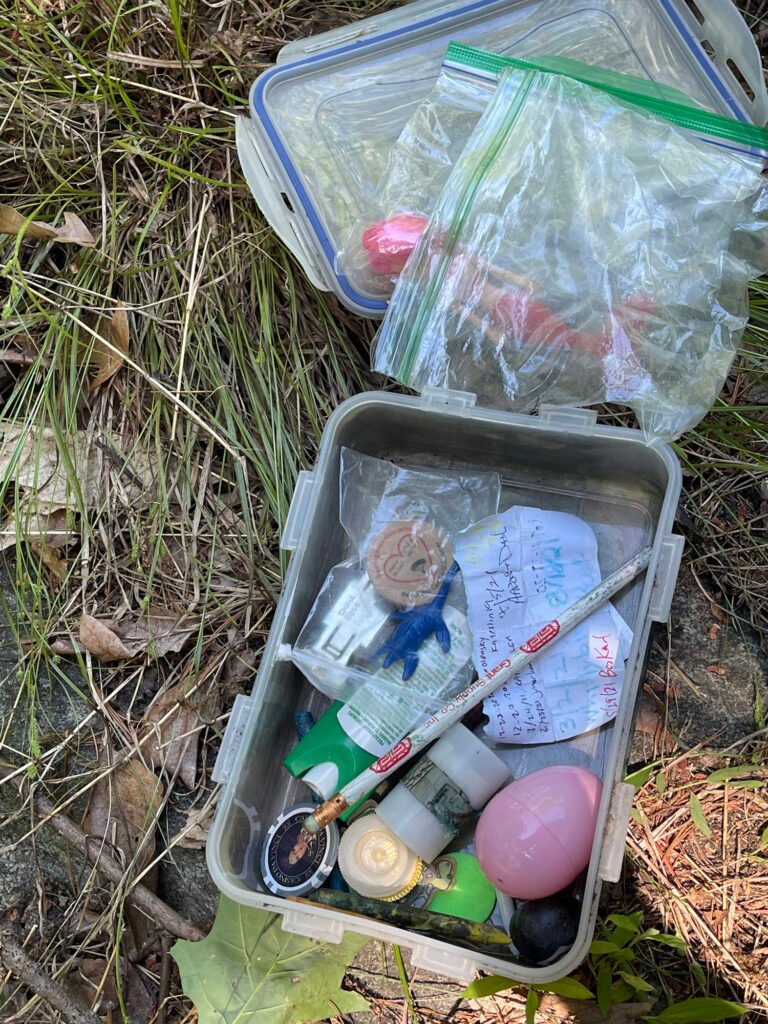
  3. Discover the Treasure:  When you find the geocache, open it carefully. Inside, you might find small toys, stickers, or other fun items. Remember, if you take something, you should leave something of equal or lesser value for the next adventurer. Another reminder is that the cache shouldn’t be moved so that the next treasure seeker can find it using the same coordinates. Bask in your discovery and take the time to look around.
  4. Log Your Discovery:  Many geocaches have a logbook where you can write your name and the date of your discovery. Sometimes the log is digital only and requires you to log via your app. It’s like leaving your mark on the treasure map and letting other treasure seekers know that you were successful.

What are the Different Types of Caches?

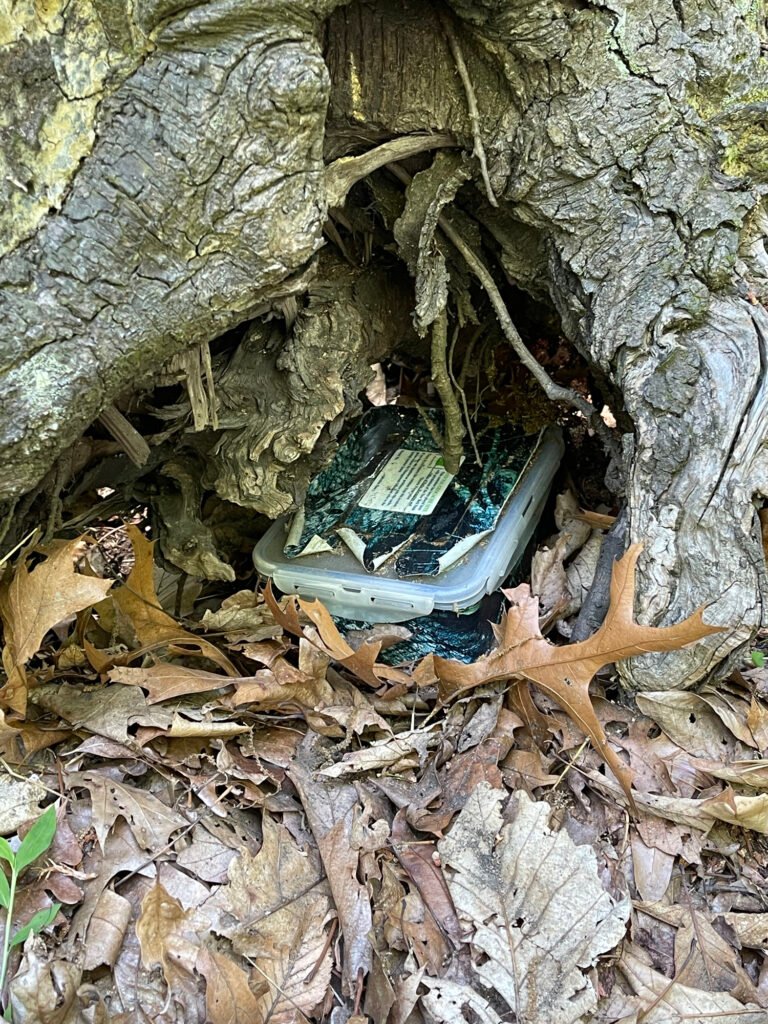
Geocaching has a cache for every adventurer! “Micro” and “small” caches are perfect for inside city settings where space is limited like magnetized under a park bench. “Traditional” caches are more likely to be tucked inside natural hideaways like under a huge Oak Tree with coordinates specific to a wildlife area. “EarthCaches” add an educational twist, exploring geological wonders. “Virtual” caches offer interactive challenges, and “gadget caches” combine tech and ingenuity for a modern treasure hunt where the caching pirate must figure out a specific puzzle to unlock the container. Each cache type ensures geocaching is a diverse and thrilling adventure, catering to a wide range of interests and skills.

Connecting with Nature

Geocaching is not just about finding treasures; it’s also a fantastic way to connect with nature away from screens and gadgets. As you follow the GPS coordinates, you’ll explore beautiful parks, serene forests, and other outdoor wonders. You might come across flowers, insects, wildlife, or even some cool geological features—all part of Mother Nature’s amazing creation. It’s a chance to appreciate the beauty of the world around you while having a blast with your friends and family. Geocaching is a thrilling adventure, a friendly competition, and a great way to get outside and see lots of different things. Get ready for your first of many geocaching expeditions!

A Note of Caution

As always, for safety reasons, we highly recommend that you should have a trusted adult (a parent, for example) with you on your geocaching adventures. 

—Carol Thompson, EdD., Georgia. Carol is an experienced author with a diverse portfolio, including the “Mr. Wiggle” series published by McGraw Hill, Inc. She has also published numerous magazine articles.

The Presidency 

The Presidency 

There have been 45 presidents of the United States. The current one, number 46, has a similarity to all but one of his predecessors. They are all White, and all 46 are male. Asian Americans have been in the country since the 1800s, and have come nowhere close to the presidency. Could someone of Eastern Asian ethnicity ever become president of the United States?

Loyalty is an act of faith in which you do not betray or desert your cause no matter the circumstances. I believe most of the issues faced by Asian Americans are to do with loyalty. When using a search engine to research, the question, “Are Asian Americans loyal to the United States?” it distributes a plethora of discussion posts, disagreements, newspaper articles and more. For example, in a survey conducted by the Asian American Foundation of over 4,000 U.S. citizens, 32 percent agreed with: Asian Americans are more loyal to their perceived country of origin than to the U.S. I find this response disgusting and shocking. These questions and polls are not done on Irish Americans, Italian Americans, Norwegian Americans or African Americans; who whilst facing an uphill struggle in many areas, they would not be questioned if they are serving another country. Where does the questioning of  loyalty of this specific ethnic group come from? 

As an Asian American, I have not felt any urging for ongoing loyalty toward any country other than the U.S. In fact, Asian Americans have contributed to the United States as much as others. So what causes this unique form of discrimination? I believe one of these reasons is fear. For decades, the U.S. has been the world’s global superpower, with no country since the fall of the Soviet Union coming close. Over the course of recent years though, China has grown and empowered their economy, as well as modernized their military to the extent where there is a possibility of them overtaking the U.S. in a decade. Politicians, media pundits, and some American people are fearful of losing their global hegemony. I believe this fear has spilled into affecting Asian Americans citizens. The buildup of tension between China and the U.S has led to a buildup of tension against Chinese and other Eastern Asian ethnicity.

The coronavirus began November of 2019, and has only escalated this recurring issue. When the matter is brought up to classmates, all point directly to China as the one to blame. About 1.4 billion people populate the country of China, fingers pointed to every single one. During the coronavirus pandemic, the quantity of Asian American hate crimes increased rapidly. People of various Eastern Asian ethnicities were affected by this as well. The differences between Asian and American cultures itself is a leading cause, as we human beings tend to point fingers at those most different to us. For example, there is a mass of cuisine differences between Asians and Americans. Asian cuisine is based mostly on older type traditional recipes, including foods considered exotic to others. American cuisine is based highly on dishes from other ethnicities, although are home to modern dishes. 

In addition to these previous points, whilst all nations have fostered racism, The United States has had government policies introduced specifically pushing these racist policies. When schools were divided into white and black, Asian Americans found themselves questioning where they belong. Asian Americans were not mentioned in the laws themselves, as if they were forgotten and the law makers didn’t know they existed. This sense of idea of being an “other” or not being a part of the nation itself I believe still carries on to modern society.

In conclusion, I do not believe an Asian American could ever become president. As much as we as the Asian American community continue to integrate ourselves with the nation, humans will always find a way to exclude parts of our people and treat them as outsiders. Asian Americans are constantly challenged on our trustworthiness, loyalty, and dedication to this country. Attempts to prove ourselves feel disregarded by the same continuous subgroup of people. I truly hope to be proven wrong in my lifetime. 

Author’s Note:

            In the past few weeks, the political climate has changed. Vice President Kamala Harris has become the Democratic Party’s nominee for the President of the country. She is half African American, and half Indian. Despite this sudden change, I still stand by my previous assertion. My piece is focused on Eastern Asian ethnicities, and their uniquely questioned loyalty to the  nation. Kamala’s nomination is what I believe to be a step forward in our nation, due to her being female as well as a woman of color. However, due to the still-rising tensions with China, as well as the Coronavirus-19 pandemic, I still believe an East Asian American could not currently be elected the president.

—Abigail Lee, Age 12, Grade 7, Illinois. She writes: “I have a passion for writing. I enjoy reading realistic drama stories. I am socially conscious about Asian American discrimination in our country, in particular since the Coronavirus Pandemic. I am an Asian American, born as well as raised in Illinois. My essay focuses on my belief that an East Asian American could never become president due to racial discrimination.”


Friendship

Friendship

A real friend is pleasant sigh
To breathe, that money just can’t buy.
It’s something held by you and I,
Steadfastly, now that love is nigh.

A good friend will cover your back
And cheer you up when joy you lack.
Someone who shows they really care
So much for you by being there.

Friendship is like warm bread with jam,
When I’m accepted as I am.
It is never harsh or pressured.
And kindness always is observed.

And friendship is a two way street.
Our get togethers, short and sweet
And often, as a good friend said,
To me the joy unlimited.

With soft and subtle ecstasy,
Like sharing a good joke with glee.
Embracing with a great bear hug.
Dispelling heartache with a shrug.

Friendship is a hand-knit sweater
Bracing me against the weather.
Friendship is sitting by a fire.
Telling tales that keep getting higher.

And a good friend is forgiving
Of whatever trials life does bring.
Always accepts you as you are,
Together we will travel far.

—Jon Bush, author and artist, Massachusetts.