Category Archives: Family and Community

Unfinished Exit

Unfinished Exit

I keep thinking
about the time in high school
when you drew
me
a map of the city,
I still have it somewhere.
It was so easy
to get lost
in a place where all the trees
look the same.
And now
every time I see
a missing person’s poster
stapled to a pole,
all I can think is
that could have been me.
Missing,
disappeared.

But there are no
posters for people
who just never came back
from vacation, from college,
from life.
You haven’t killed yourself
because you’d have to commit to a
single exit.
What you wouldn’t give to be your cousin Catherine,
who you watched
twice in one weekend get strangled nude
in a bathtub onstage
by the actor who once
filled your mouth with quarters at
your mother’s funeral.
The curtains closed and opened again.
We applauded until
our hands were sore.

But you couldn’t shake the image of
her lifeless body,
the way she hung there like a
marionette with cut strings.
And now every time you try to write a poem,
it feels like a
eulogy.
A desperate attempt to
capture something that’s already
gone.
But maybe that’s why we keep writing,
keep searching for
the right words,
because in this world where everything is
temporary,
poetry is our only chance at
immortality.

So even though you haven’t
found the perfect ending yet,
you keep writing.
For Catherine, for yourself, for all the lost
souls
who never got their own
missing person’s poster.
Because as long as there are words on a page,
there is still hope for an unfinished exit
to find its proper
ending.

About the Poet:
Claudia Wysocky is a Polish poet based in New York, celebrated for her evocative creations that capture life’s essence through emotional depth and rich imagery. With over five years of experience in fiction writing, her poetry has appeared in various local newspapers and literary magazines. Wysocky believes in the transformative power of art and views writing as a vital force that inspires her daily. Her works blend personal reflections with universal themes, making them relatable to a broad audience. Actively engaging with her community on social media, she fosters a shared passion for poetry and creative expression.


Sustainable Shorelines: Keeping our Beaches Clean

Sustainable Shorelines: Keeping our Beaches Clean

By Maya Govindaraj, age 17, from Texas, is currently studying in Chennai, India.

Plastic is Destroying our World!

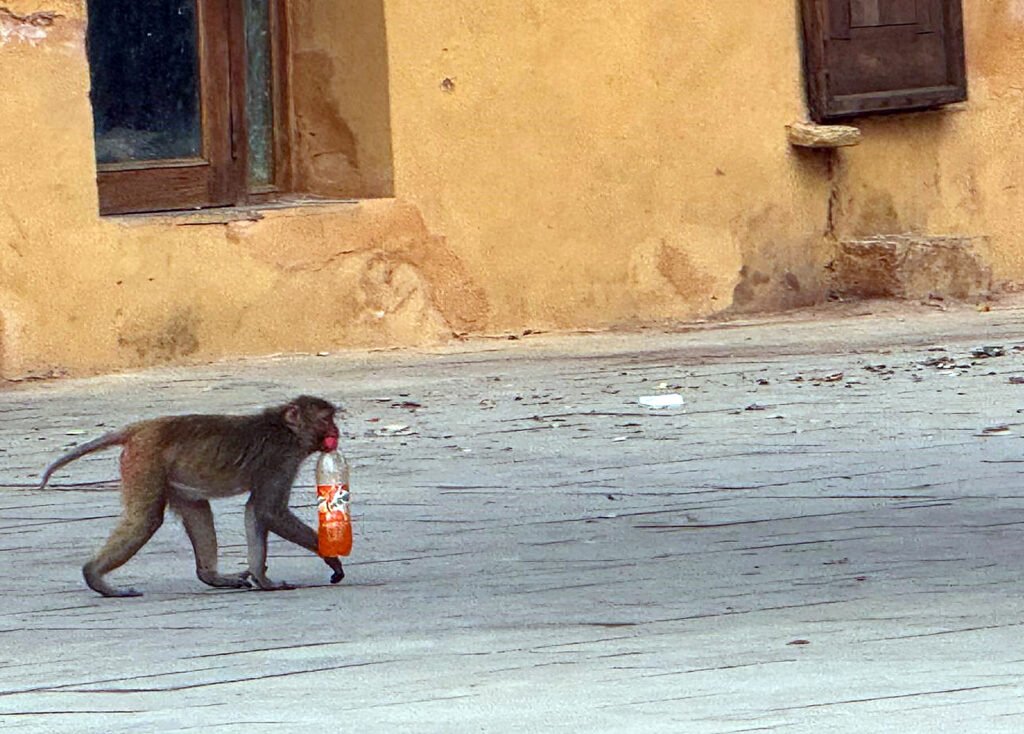
Beaches are vital ecosystems that support diverse marine life. However, the beauty of beaches is increasingly threatened by pollution, littering, and unsustainable human activities. According to global health experts, “Ocean pollution is posing threats to human health that are great and growing. It is causing disease, disability, and premature death in countries around the world today.” My journey from the beaches of Galveston, Texas, to the shores of Chennai, India, brought me face to face with the complexities of beach cleanliness. By participating in a local beach cleanup event, I gained insight into the challenges facing beach conservation efforts. Galveston beach in Texas is known for its wide stretches of sand, warm water, and opportunities for activities like swimming, and sunbathing. Chennai, on the other hand, is a coastal city in India, situated along the Bay of Bengal with beaches stretching for several kilometers and known for its lively atmosphere, with vendors selling snacks and toys, and locals enjoying various activities like kite flying and cricket. While efforts are being made to maintain cleanliness along the Galveston beaches by local authorities; in Chennai, cleanliness efforts on beaches have faced challenges. Although local authorities and environmental groups are trying to address cleanliness issues it is difficult due to high population density, inadequate waste management, and limited public awareness and participation in conservation efforts.

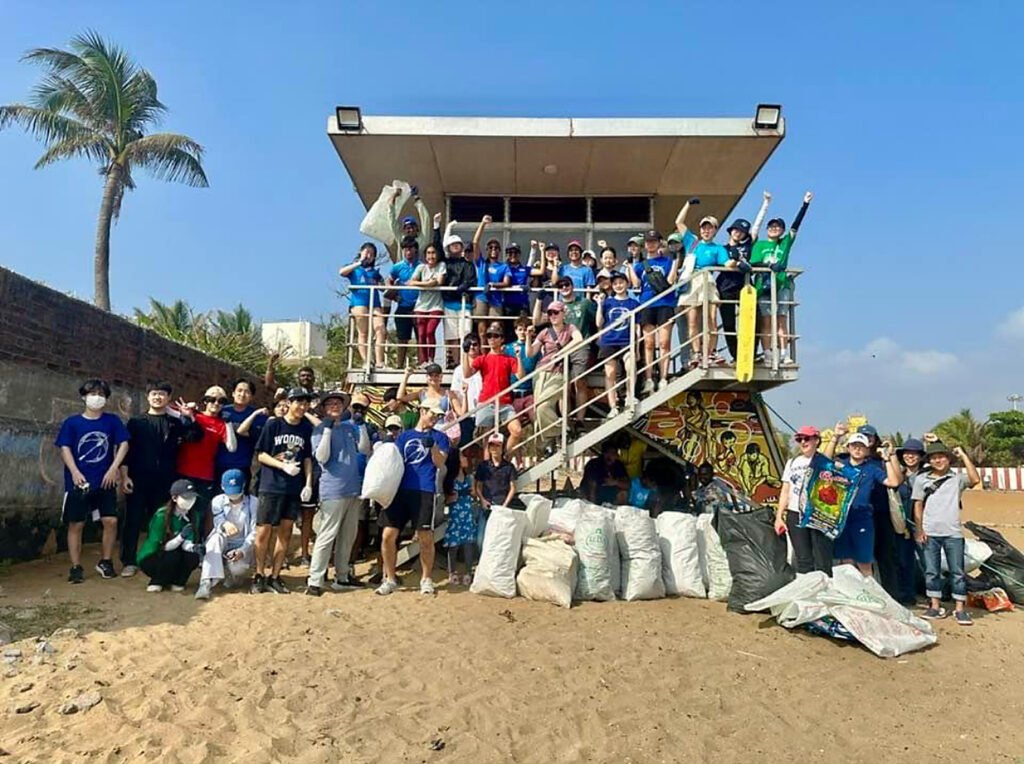
Participating in a Beach Clean-up Event

By conducting an online survey among Chennai residents who frequent the beach, I was able to gather valuable insights regarding their attitudes and behaviors toward littering and beach cleanliness. Although the survey demographics skewed towards 68% female respondents, with the majority holding at least a high school or higher education degree, a unanimous consensus emerged among them. They emphasized the importance of maintaining beach cleanliness to protect marine life, reduce health risks, preserve the natural beauty of the shoreline, and promote tourism. They advocated for proper waste disposal in designated bins, the use of reusable items over disposables, educational projects to raise awareness, and active participation in organized beach clean-up efforts. According to respondents, the primary factors contributing to litter accumulation include irresponsible behavior, entrenched cultural attitudes towards littering, inadequate provision of waste bins, and insufficient efforts by authorities to address cleaning needs.

Beaches are valuable natural assets that deserve our protection and stewardship. By adopting responsible behavior, supporting local initiatives, raising awareness, and advocating for policy changes we should all play a part in keeping beaches clean to ensure improved health and well-being and their preservation for future generations.

Footnotes:

  1. Texas Disposal Systems. “Ocean Pollution: Causes, Effects, Prevention | TDS.” Texas Disposal Systems, 2 Feb. 2024, www.texasdisposal.com/blog/ocean-pollution-causes-effects-and-prevention.
  2. Landrigan, P J, et al. “Human Health and Ocean Pollution.” Annals of Global Health, vol. 86, no. 1, 2020, p. 151, doi:10.5334/aogh.2831.
  3. “Beach Cleanups, MarineBio Conservation Society.” MarineBio Conservation Society, www.marinebio.org/conservation/ocean-dumping/beach-cleanups.

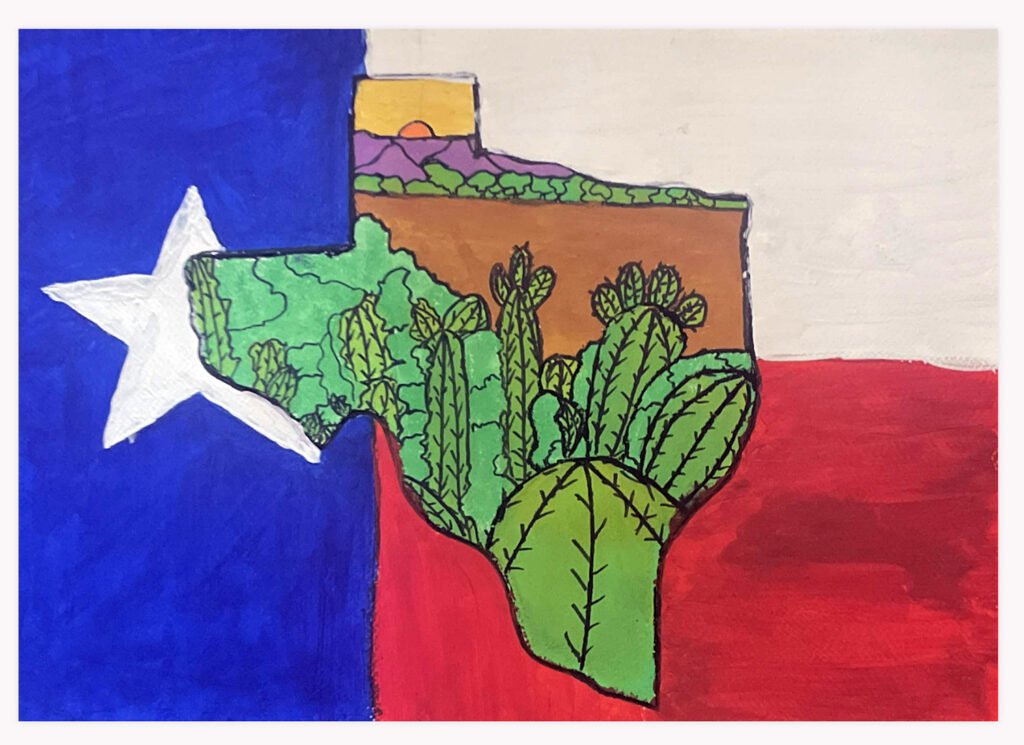
    Texas, the Lone Star State. By Maya Govindaraj, age 17.

    Editor’s Note: Please also read the article, My Indian Memories by Maya’s brother Arjun, also published today!

    About the Authors:
    Arjun and Maya are 17-year-old twins at the American International School in Chennai, India. As USTA-ranked tennis players, they love sports and have won medals in South Asian Interscholastic Association competitions. Both serve as Student Ambassadors, bridging cultural gaps through orientation and wellness programs. Passionate about community service, they have both worked with various organizations. They also have co-founded the non-profit Mission BE A Resource, securing grants to support disadvantaged children. Arjun is a tech enthusiast with a love for outdoor adventures, while Maya enjoys helping elementary school teachers and expressing her creativity through art.

My Indian Memories

My Indian Memories

By Arjun Govindaraj, age 17, from Texas, currently studying in India.

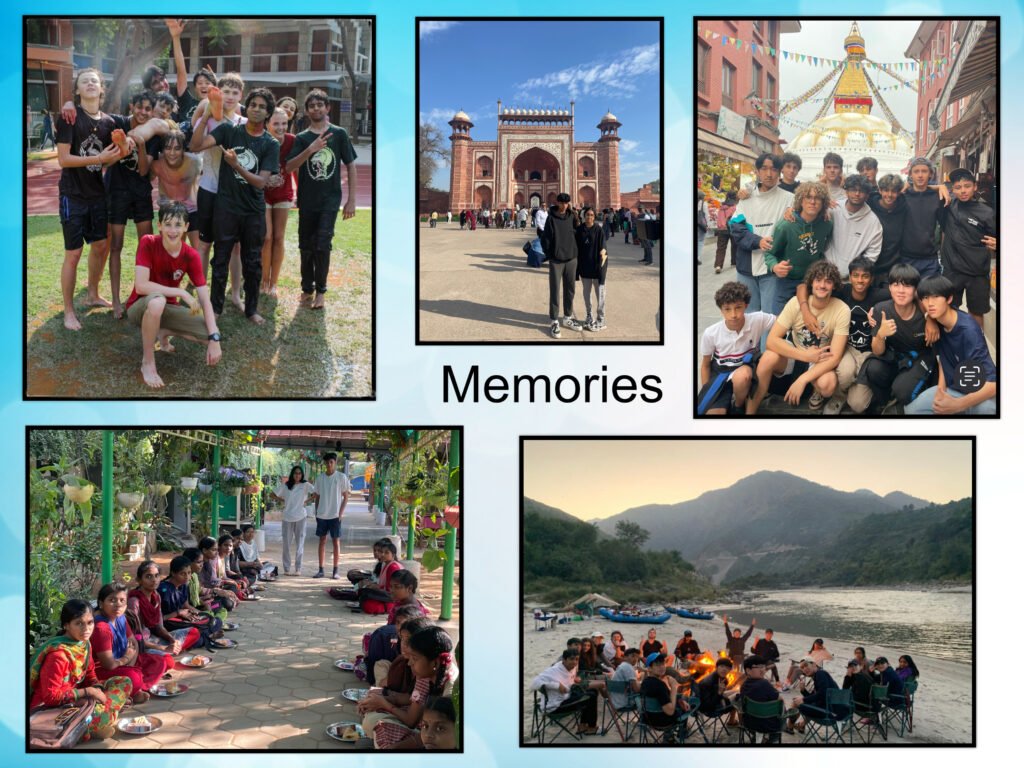
The first picture is of us celebrating Holi at school where we throw colors and water at each other and have fun. Holi is the Festival of Colors, a celebration that marks the arrival of spring. It is an occasion filled with laughter, music, and dance, where everyone, regardless of age, comes together to play with colors and enjoy festive food. Classmates and teachers share in the excitement, creating beautiful memories and promoting unity and love. Holi not only celebrates the beauty of diversity but also encourages forgiveness and the strengthening of bonds among people. We also celebrated Diwali, the Festival of Lights, symbolizing the victory of light over darkness and good over evil by dressing up in Indian clothes, sharing sweets, and participating in traditional games.

Second picture is of us visiting the Taj Mahal, located in Agra, India, built by Emperor Shah Jahan in memory of his wife, Mumtaz Mahal. Designated a UNESCO World Heritage Site, its stunning white marble architecture, carvings, and beautiful gardens attracts millions of visitors each year, and symbolizes the cultural heritage of India. We also explored the monuments of Delhi, the bustling streets of Mumbai, and the tranquil foothills of Dehradun with its cascading waterfalls. Exploring the streets of Coimbatore, we were amazed by the warmth of its people and the aromas of its bustling markets, while the ancient wonders of Mahabalipuram reminded us of a bygone era of art and architecture. Through these diverse experiences, we have come to cherish our rich culture and landscapes that make our world a truly remarkable place.

The third picture is of my team visiting Kathmandu, Nepal, for the South Asian Interscholastic Association (SAISA) soccer tournament. It was an incredible experience representing AISC against 11 member schools. The atmosphere of Kathmandu, with its rich culture and breathtaking landscapes, added to the excitement of the tournament. Throughout the events, I not only had the opportunity to showcase my skills and win medals but also learned invaluable team-building skills and the importance of fair play. Each match brought us closer as teammates, creating lasting friendships and unforgettable memories that extended beyond the games. The spirit of camaraderie and sportsmanship was truly inspiring, making this trip an enriching experience both on and off the field.

The fourth picture captures a heartfelt moment as we distribute school supplies and a meal to underprivileged children. Following the popular custom in India, they sit on the ground to share their meal, and their smiles of gratitude warmed our hearts as we handed out new backpacks filled with school supplies. In a country where overpopulation and poverty are pressing issues, we felt a profound sense of purpose in being able to contribute, even in a small way, to their education and well-being. This experience taught us invaluable lessons about empathy and compassion, reminding us of the importance of supporting one another and making a difference in the lives of those in need. Acts of service can build connections, bring hope, and inspire change.

The final picture is from our school trip, “Discover India,” which became one of the main highlights of my educational journey. These immersive week-long expeditions across India went beyond traditional classroom learning, offering a rich tapestry of experiences that allowed us to explore local cultures in depth. Each annual school excursion helped us develop essential teamwork and outdoor survival skills. From camping under starlit skies to navigating thrilling rafting/ surfing adventures, every journey nurtured resilience and adaptability while fostering a profound appreciation for the natural world. These unforgettable experiences shaped not just our knowledge but also our connections with one another and the environment.

Editor’s Note: Please also read Sustainable Shorelines by Arjun’s sister Maya, also published today!

About the Authors:
Arjun and Maya are 17-year-old twins at the American International School in Chennai, India. As USTA-ranked tennis players, they love sports and have won medals in South Asian Interscholastic Association competitions. Both serve as Student Ambassadors, bridging cultural gaps through orientation and wellness programs. Passionate about community service, they have both worked with various organizations. They also have co-founded the non-profit Mission BE A Resource, securing grants to support disadvantaged children. Arjun is a tech enthusiast with a love for outdoor adventures, while Maya enjoys helping elementary school teachers and expressing her creativity through art.

Memories of Dumplings

Memories of Dumplings

By Julia Qi, educator, Nevada.

I remember a time when steaming dishes of dumplings were laid out before me on the dining table. I was five years old, and a bowl of Chinese vinegar with two drops of sesame oil sat under my nose, eagerly awaiting the three hot dumplings that my grandma would soon drop in.

She’d always break the dumplings in half for me so my little fingers could navigate my chopsticks, and that day, I was the pride and joy of my family for devouring a total of nine dumplings.

That was the last time I remembered looking at a plate of dumplings without fear—at least until recently.

Somewhere along the way, food transformed into something I avoided. Any plate became a conversion of fat-protein-carbs in my eyes. The rich fat on decadent, red-braised pork belly remained untouched on my plate, and even my mom’s delicious stir-fried dishes were secretly rinsed off in the sink before I’d attempt to pick away at them. Passing by bakeries consumed me with conflict for the rest of the day because they looked so, so delicious. I wanted a taste so bad, but no, I couldn’t.

What my family saw as a “glow-up” before college was, in reality, my refusal to cook with salt or oil. I limited myself to raw foods for weeks and pretended I had simply outgrown my love for my childhood favorite foods. Steering clear of soup dumplings, BBQ skewers, and hearty pots of Chinese stew, I opted instead for bland salads and spinach smoothies.

The restriction ate away at me as I started college. I refused to eat before drinking water to “avoid” the calories. Despite the arrays of dishes in the dining halls, I spent 90% of my time at the salad bar, and the rest of the time lurking in the dessert section mustering the occasional courage to nibble a cookie. The additional walking in New York City resulted in me rapidly losing weight my first semester, which, as I anticipated, was celebrated not only by my peers, but also by my family.

My mother’s beauty was hard to miss. She’s a slender petite woman with voluminous curly hair, big bright eyes, and her classy fashion choices were always a topic of envy. She taught me the meaning of strength, independence, and courage as I saw her create the life she wanted for us in America. When she bought her first house in 2019 after 13 years of moving here, those walls represented something only immigrant parents can really understand. Her words were, “I just wanted to give you a home.” What she meant was, this is something that is finally ours. In a place where we had to start over, we had something that finally belonged to us.

My mom imparted many invaluable lessons growing up, but our culture also taught us that a woman’s beauty is paramount. Despite her exhaustion our first few years in the states from working consecutive night shifts and still managing to get up in time to wake me, cook breakfast, and take me to school, my mom maintained her elegant appearance. She always reminded me that as immigrants, we must pay extra attention to how we looked; we shouldn’t give anyone a reason to look down at us. My naturally tan complexion contradicted the porcelain-white Chinese beauty standard, and the fixation on my appearance naturally grew towards my weight as I got older. While genetically slender, my mom and her three sisters dreadfully feared weight gain. As I rounded out my teenage years, comments about my weight, what I was eating, and what I was wearing gradually took up a dangerous amount of space in my head.

Eating disorders are addictions. You’re stuck in a cycle, and even though you know it’s bad for you, you don’t know how to stop. Years of restriction led to an overwhelming preoccupation with food, which manifested in binging, then overcompensating by purging. The painful details of my four-year struggle with bulimia are oddly blurry, numbed by a filter of shame as I walked around hiding this part of me that I despised but couldn’t let go.

In a culture where famine was still a childhood memory for many, food was not meant to be wasted. Food was nourishment, and the idea of intentionally restricting or purging would have been absurd to those like my grandparents who grew up in the countryside and never had enough to eat for their four little girls. Northeastern Chinese stews were hearty, crafted to keep hunger at bay. Buns and baos were designed to fill you up for hours. My actions were completely at odds with what I was taught, which is likely why I wouldn’t touch my favorite foods for years, at least without bringing it back up.

This past March, I visited my family in China for the first time in six years. There was a stillness unlike earlier springs. The winter chill overstayed its welcome, seemingly in response to my grandpa’s passing just a few weeks prior.

My grandpa always requested peanuts with his dumplings, sometimes a Tsingtao beer, if my grandma allowed it. He liked sauerkraut or chive filling, since meat was hard on his dentures, which made clicking sounds when he chewed. This time around, we bought giant sauerkraut dumplings from the morning market made of purple forbidden rice. My grandma still broke them in half for me, except only one giant dumpling could fit in my bowl. This time, I couldn’t eat nine, but I ate until I was full, and over the memories of my grandpa’s clicking and the warmth of my belly filling up, I found solace.

—Julia Qi, received her undergraduate degree a few years ago, Nevada.

The Song of Saccidānanda

The Song of Saccidānanda

By Kevin Zhang, age 16, Shenzhen, People’s Republic of China.

I sing the song of forever.

I sing the gentle winds
as they brush against the cliffs
of endless time.

I sing the tireless birds
as they crowd the windswept plains
of limitless space.

I sing the hushed darkness
as it dreams the Rudra Tandava*
of boundless life.

I sing myself,
I sing the song of Saccidānanda.**

Notes: * Rudra Tandav: A divine dance of Lord Shiva, the Hindu god of destruction and transformation, with vigorous, brisk movements.

** Saccidānanda: In Hindu philosophy, the direct experience and bliss of absolute, unchanging reality.

By Kevin Zhang, age 16, Shenzhen, People’s Republic of China. Kevin is a junior at BASIS International School PLH. He is an Honorary Junior Fellow of the John Locke Institute and serves on the PLATO Student Advisory Council. Kevin enjoys boating, collecting rocks, and learning about other cultures.

“half, whole”

“half, whole”

By Alyson Henderson, age 16, Connecticut.
 
 
i have always been

two halves stitched together
half this, half that,
never wholly me
always half in, half out
not belonging to either
instead, i am two parts,
conflicting, like puzzle pieces
that don’t match,
forced together anyways
not one whole,
just bad stitching
the parts that don’t fit
hide under the paint,
cracked and chipped
not hiding much at all

they like to ask
if i am this half or that half,
but i say and, not or
and maybe they won’t understand
but i am always this half
and that half,
these halves are just me,
whole

By Alyson Henderson, age 16, high school junior, Connecticut. She adds: “I have been reading and writing for as long as I can remember, and it’s through reading and writing that I learned about other people’s cultures and identities as well as my own. My dad is white and American, and my mom is Korean and immigrated when she was young. For a long time, I’ve been exploring my own identity through writing, particularly my identity as a biracial person. I often feel like I have to choose between being Asian and being white, and I can’t identify as both. However, by ignoring either part of my identity, I am ignoring so much of my life. The way I see it, choosing one half of my identity is being dishonest with myself about who I am. My poem, “half, whole” explores the struggle of never feeling fully accepted as either “half” of myself, and how I have accepted that I don’t have to be put in one box and discard parts of myself for others’ comfort.”

Still A Student?

Still A Student?

By Emra Woldearegay, originally from Ethiopia, now teaching in Missouri.

Here I am, still a student.
Oh, why, after so many decades?
Aren’t you tired? They ask
What’s the point, they ask.
You better start earning tons
because time’s running out.
But for whom? I ask.
How could time run out when
I’ve so much to learn
about things & skills that make me more adept.
Why should that matter
When what I love is asking questions,
I am curious, like the cat.
They jump on me, snarling like an angry cat
And declare-gleefully: “Curiosity killed the cat.”
I would rather be like the cat killed for curiosity
after living nine lives, learning, and relearning eight times.
NINE lives!
What a way to go; it is the best way.

By Emra Woldearegay, originally from Ethiopia, did her graduate studies at the University of Oregon. She is now teaching journalism in Missouri.

Waiting for a Madam President of the United States!

Waiting for a Madam President of the United States!

By Arun N. Toké, editor

Did you know that each and every one of the 46 Presidents of the United States, has been a male in its almost 250-year history since the Declaration of Independence? Since the founding of the nation on July 4th, 1776, not even one woman has been elected to the highest office of the land!

Ask your female classmates, neighbors, friends and family members, “Can a woman lead the country?” and listen to what they say. Likely, they will all say, “Women are equally capable as men to lead the nation.”

Across the globe, many dozens of nations—in Europe, Africa, Latin America, and Asia—have elected women as presidents or prime ministers to lead their countries during the last 65 years. Some of these countries have elected women leaders multiple times over the decades. Various countries like the United Kingdom, India, New Zealand, Germany, Norway, Denmark, Pakistan, Bangladesh, Sri Lanka, Rwanda, Central African Republic, Argentina, Costa Rica, Nicaragua, and Indonesia… the list is too long to include them all here! But unfortunately, the United States has not made the list so far!

Just recently, in October 2024, Mexico also joined the ranks of over 25 countries with women heads of their governments when Claudia Sheinbaum was sworn in as the first elected female President of the nation located just south of our border! Why haven’t we elected a woman to lead the United States of America yet?

Will the people of the United States choose to elect our first ever woman president this November? Many capable women leaders in other nations have shown clearly that women can lead as well as men, and sometimes even better.

Perhaps, you have studied the history of our country, and you know that women were not given even the basic rights to vote when the Constitution was first written. It allowed only landowning white males a right to vote. African Americans, and even the Indigenous People (who had lived here for generations) were not considered citizens of the country, and were not able to vote or run for any political office.

It was the 19th Amendment to the U.S. Constitution, adopted in the year 1920, after a decades-long suffrage movement led by women, that gave women the right to vote and thus help elect their representatives.

Interestingly, a number of European countries also enacted laws to give their women citizens a right to vote around the same time. Russia did so in 1917, Germany in 1919, and the United Kingdom began the process by granting women limited rights in 1918, and then full rights in 1928. Did you know that New Zealand became the first country to grant women voting rights in 1893? Nineteen other countries had also granted these rights to women before the United States did so in 1920. However, Switzerland did not grant women voting rights until 1971! In Asia, India granted some of its women the right to vote in 1935, while it was still a British colony. When India became an independent nation in 1947, the country’s constitution, adopted on January 26, 1950, gave its women full voting rights.

While the 13th, 14th, and 15th Amendments of the 1860s were enacted to bring full citizenship rights to non-whites and former slaves—primarily African Americans—it was not until the year 1965 as the Voting Rights Act was signed into law by President Johnson, that Blacks in the South gained meaningful access to the ballot box. Thus also including the African American women (who were left out in the 19th Amendment of the 1920)!

Unfortunately, the country still does not have a true democracy. Because we have an archaic system of “The Electoral College,” which gives disproportional power to small states in electing the President, at times, we have had presidents who did not get the most votes. For example, in the 2016 presidential election, even though Hillary Clinton received 2.9 million more votes than Donald Trump, she did not become the President because she lost the Electoral College. She came very close to becoming the first woman president of the country!

The U.S. Supreme Court Justices are appointed for a lifetime. And, they are not even elected by the people. Until recently, all of these justices were also male and white (Sandra Day O’Conner was the first woman to be appointed to the Supreme Court in 1981). They interpret the laws and decide what is constitutional and what is not. Here is an example worth noting: reproductive health rights for women.

In 2022, the “Roe v. Wade” decision, which had guaranteed national access to abortion for women for about 50 years was struck down by the Supreme Court. As a result, some states now have severely restricted women’s rights and have caused great harm to many women living there. Thanks to progressive leaders, Democratic states still have reasonable family planning options, including an abortion procedure, for families, couples, and women.

In 1917, Montana’s Jeanette Rankin became the first woman to serve as a Congressional Representative in the nation. Since then over 300 women have been elected to serve in the U.S. Congress or the Senate (the upper house). Ms. Kamala Harris became the first woman to serve as the United States Vice President in January 2021 after Sen. Joe Biden and his running mate, Kamala Harris (who had previously been elected as a U.S. Senator, and before that the Attorney General, of California) won the 2020 presidential elections.

In 2024, we have a precious opportunity to turn the page in our nation’s history by electing Ms. Kamala Harris as our next President. Who we elect as the President will shape the future of the nation (and even the whole world because of our tremendous global power). The implications of the choice we make as a nation are huge. We have serious issues facing us: the wars in Ukraine and the Middle East, the accelerating climate change crisis, and the nuclear weapons threat…

We need a truly capable leader who has a deeper understanding of the many complicated issues our nation (and our world) faces, and then lead us with fairness, kindness, and compassion to solve these pressing problems. Someone who knows and speaks the truth and works to bring the country together; someone who does not make hasty decisions based on short-term, selfish, or financial gains.

In 2024, our choice is clear, in my humble opinion.

—Arun N. Toké, editor.

Home

Home

By Lina Murat Mariani, age 11, New York. 

As I stand here, looking at this blank sheet of paper
Trying to describe how it felt when I looked back on the plane that day
All I remember is forgetting—
Forgetting home.
That plane was Odysseus’ ship
Sailing to a strange land,
Leaving but fading memories
A puppet in time’s grip.
Looking back and seeing all my life
Ashes for someone else’s dream to be born from
My home was but naked walls,
Perfect for someone’s paintings and trophies
All my life was a few boxes
And everyone says I should look forward to my new home
But why, if everything would be pictures of people that could be here? Windows into my melted life?

I had already moved on before,
And all that were just undone stitches now.
Why did my home had to be a comfy sweater,
One that people could just throw away?
Why was home meaningless as this sheet of paper?
This new home was my grave—
And worse, the grave of my life.
I look around, feeling like a trapped bug in the full-wall windowed room.
At least Odysseus had iron and blood to fight for his home.
All I had was my swift pen
My empty words
And this blank, meaningless sheet of paper.

—Lina Murat Mariani, age 11, from New York. Currently, she is in Brazil with her family.

Lina explains her poem, “Usually, poems are not read for the reasons they were written. Sometimes, they’re read because of the poet who writes them, but normally, it’s about more than that. Poems are read because the right poem doesn’t just paint a profound or beautiful picture. They paint you. They paint your whole existence, the doubts that consume you like a wildfire, or the hopes that lift your chin up. It’s that tangled mess of red strings and emotions that makes up your life. The right poem echoes your every thought, your every action, the treasure trove of who you are. 

“My reason to write this poem, which I call Home, may be selfish, or childish. It is because three months ago, I watched, helpless and silent, as we got onto that plane to move here, to Brazil. It’s because I have seen everything disappear in the blink of an eye, behind mountains and oceans. It’s because I long for that feeling of being in the U.S., instead of Brazil, with my friends, my teachers, my family, before it was all broken… I write about that strange and wonderful feeling of being home, like a warm blanket that hides fear, sadness, and anything else, because I know I am where I belong, and that can’t change. Until it did. And, more than all, I wrote this poem because I resent that all I can do to go back is write some words on an otherwise blank paper, and those words are just as easily ripped as the paper that binds them. I write because I am bound to this land, as words are to paper, and all I can do is watch as destiny writes my story, my cry swallowed and lost on that horrible day when I saw my entire life being packed up and dragged away.”

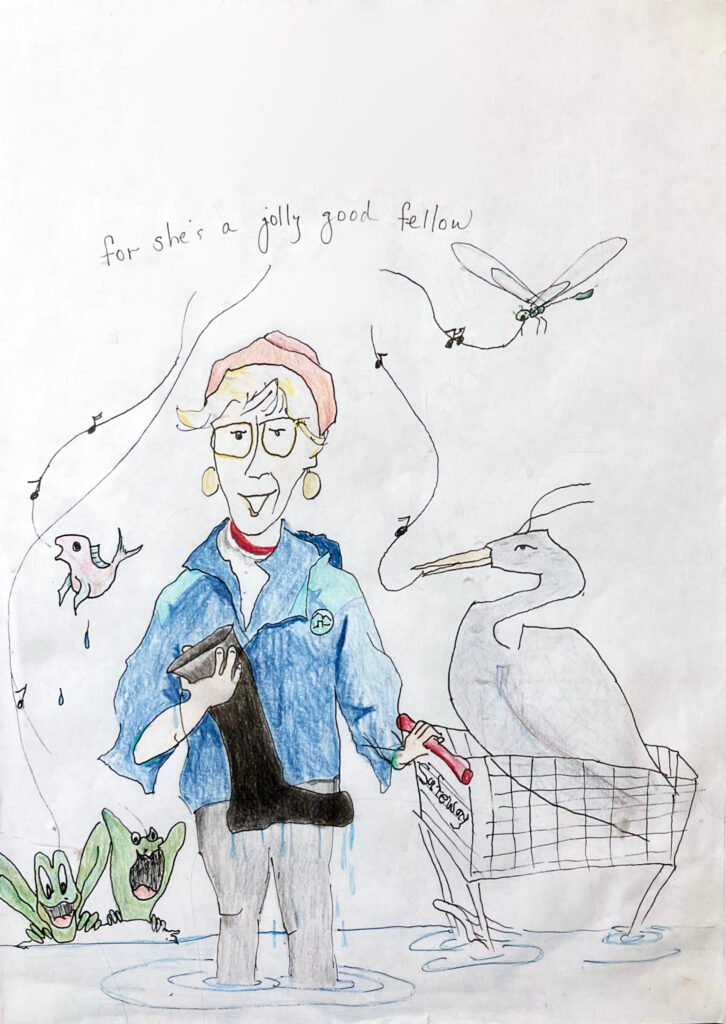
Ruth Koenig: A Jolly Good Fellow!


Drawing of Ruth Konig

Ruth Koenig:  A Jolly Good Fellow!

Our good friend, Ruth Koenig, age 83, is going strong. She is still active in several environmental conservation activities and social justice issues. Above is a whimsical portrait of her work while she helped the city of Eugene to cleanup nearby wetlands. She encouraged many volunteers to help in these cleanup projects.