
Category Archives: Family and Community
Read the 2023 Awards Issue of Skipping Stones
Fear of Failure
Fear of Failure
By Olivia Macy Leonard, age 15, New York.
It’s just a line
All you have to do is draw a line
A straight, plain, normal line
Nothing more
Just take your pen, pencil, marker
Doesn’t matter what you use
Doesn’t matter if it’s not perfect
Doesn’t matter what color
Doesn’t matter if it’s short or long
But you hesitate for a second
And then a minute
Then 5 minutes
Now 10 minutes
And that turns into 30 minutes
Soon it’s been an hour
5 hours pass
You realize it’s been a day
Finally, it’s a week later
And you still haven’t drawn that one line
The simple line
Why?
All because you were scared
All because you didn’t want to mess up
All because you wanted it to be perfect
All because you didn’t want to fail.
—Olivia Macy Leonard, age 15, New York.
Mariana on the Night Shift
Mariana on the Night Shift
By Ann Malaspina, New Jersey
Mrs. Benton called out from the front of the classroom. “Are you with us, Mariana?”
Mariana lifted her head from her desk. She had fallen asleep in history class. How embarrassing!
“Sorry, Mrs. Benton,” she murmured, sitting up straight.
A boy giggled. Abby, who sat next to her, leaned over. “Don’t worry,” she whispered. “Everyone falls asleep at least once in this boring class.”
History class wasn’t boring to Mariana. She loved learning about the past. Mrs. Benton made history interesting by talking about ordinary people, not just presidents and other famous men. This week, they were learning about Dolores Huerta, the labor leader who helped farmworkers earn better pay and improve their living and working conditions.
The lunch bell rang, and Mariana walked slowly out of the classroom.
“Are you okay?” asked Abby, coming up from behind.
Abby lived down the street from Mariana’s uncle and aunt, Tia Luna and Tio Miguel. Mariana had been staying in their house since the summer.
Mariana yawned. “I guess so.”
“My dad said he saw you at the factory the other night,” Abby said. “Were you visiting your uncle?”
Mariana’s uncle worked at the cereal factory, just like Abby’s parents. Her mother worked in the office and her father drove a truck for them. Almost every family in town had someone who worked at the factory.
“Yes,” Mariana lied.
But she could hear her mother’s voice. “Never lie, mi hija. A lie always comes back to bite you, like a mosquito.” Suddenly, she missed Mami, who lived in Mexico City, many miles from Mariana.
The two girls sat at a picnic bench. Abby began eating her lunch, but Mariana wasn’t hungry. She took a deep breath.
“I wasn’t there to see my uncle,” she said. “I work the night shift.”
“The night shift?” Abby put down her sandwich. “You’re not even fourteen! My mom said I can’t work until I’m sixteen.”
“My uncle got me the job. I help pack the cereal on the line,” said Mariana. “It’s easy.”
“Easy” was another lie.
The first hours of her shift weren’t so bad. Mariana pushed bags of oat squares into cereal boxes as they traveled past her on the conveyor belt. An older worker helped Mariana if she fell behind. But, by 11 PM, her feet hurt. Her back ached. And her head pounded from the noisy machinery. She still had three hours to go.
Before Abby could ask more questions, Mrs. Benton walked up them.
“Can you come see me after school, Mariana? There’s a book I want you to read.”
When Mariana stepped into Mrs. Benton’s classroom, her teacher asked her to sit down.
“I hear that some of our students are working at the factory!”
It was true. Mariana had seen a half-dozen other children working the night shift. Mariana felt like she might cry. Her uncle had told her not to talk about her job to anyone, and she’d already told Abby.
Mrs. Benton quickly said, “You don’t have to answer. I just want you to know the facts. It’s not safe—or legal —for children your age to be working in a factory. There are labor laws that protect children. The laws were written to keep children safe from harm.”
Mariana looked down. Her right thumb was bruised from two nights ago. It had gotten caught under conveyor belt. She overheard someone say Mariana was too small for the job.
Mrs. Benton pulled a book from the shelf. On the cover, a girl stood at a conveyor belt like the one at the factory.
Mariana put the book in her backpack. Ever since she started working, Mariana could barely finish her homework, much less read extra books. Luckily, today was Friday, her day off.
That night, Mariana read stories from history about a farm girl who operated a loom in a cotton mill, a boy who worked in a coal mine, and a boy who sold newspapers in New York City. A shiver went up her back when she read about the girl catching her finger in the cotton loom. “Even though laws protecting children from unsafe work were passed in the 20th century, child labor continues to the present day,” she read.
Tio Miguel woke her up early on Saturday. “I got you a day shift today,” he said. “Hurry and eat your breakfast.”
Mariana sat down at the kitchen table. She stirred her scrambled eggs, thinking hard. Her teacher’s words —“It’s not safe or legal”—kept swirling in her head.
But the problem wasn’t so simple. Tia Luna had hurt her back while lifting heavy boxes at the factory. She hadn’t worked for a whole year. The family needed Mariana’s help to pay the bills. Still, there must be another solution.
Mariana put down her spoon. “I’m not allowed to work at the factory. I’m not old enough. It’s the law.”
“What?!” Tio Miguel’s coffee cup spilled. “I need you to work. Otherwise, you can’t stay here.”
Mariana touched the angel on her necklace. Mami had given it to Mariana when she left home. The angel made her feel strong. Maybe Mariana would be a writer when she grew up. A writer like the one who wrote about the mill worker, the coal miner, and the newspaper boy. To be a good writer, Mariana couldn’t fall asleep in history class.
Tia Luna rushed into the kitchen. “What’s all the arguing about?”
Mariana told her the same thing she had told her uncle. She added, “I fell asleep in class yesterday!”
Her aunt’s eyebrows went up.
“She’s right, Miguel,” she said, briskly wiping up the spilled coffee. “Mariana is a smart girl. She needs to be awake at school. Anyway, my back feels a lot better. I’m ready to go back to work.”
Tio Miguel sighed deeply. “Life is not easy. All I want is to pay our bills.”
Tia Luna hugged Mariana. “We love having you here. We made a big mistake. From now on, your job is to go to school.”
There was a knock on the door.
Abby held her soccer ball under her arm. “Can you practice soccer in the park?”
Mariana looked at her aunt and uncle. They smiled and nodded.
Grabbing her cleats, Mariana ran out the door. “Yes, let’s go!”
The End
—Ann Malaspina, author and educator, New Jersey. Ann has published many picture books and nonfiction books on social issues, including on the important issue of child labor. Please visit http://www.annmalaspina.com to learn more about her literary work.
Betrayal
Betrayal
By Siah Giji, age 13, New York.
Betrayal, a word so bitter and cold
A stab in the back, a heart turned to stone
A trust once given, now broken and old
A bond once strong, now shattered and sold
The sting of betrayal, a wound so deep
A hurt so profound, it cannot sleep
The memories linger, the pain so real
A betrayal so cruel, it cannot heal
The world may move on, the pain may fade
But the memory of betrayal will never be made
A wound so deep, a scar so wide
A betrayal so profound, it cannot hide
 By Siah Giji, high school freshman, New York, adds: “I am passionate about writing and determined to improve my skills. Despite English not being my first language, I’ve come a long way, and at just 13 years old, I’ve written a poem that reflects my growth. My first language that was taught to me by my parents is Malayalam and even though I do not know how to write in this language my family and I communicate using this language.
My South Indian cultural background has deeply influenced my perspective and creativity. What’s important to me is embracing diversity, preserving cultural richness, and promoting inclusivity.
In crafting this poem on betrayal, my aim was to capture the raw emotions associated with a broken trust, specifically in the context of a betrayal of my trust by so many of my closest people. The poem delves into the complex layers of emotions and reflections that arise when those you hold closest prove to be unreliable. It’s a personal exploration of the feelings one goes through when faced with the harsh reality of trust shattered by those who were supposed to be the closest.”
Irwin Noparstak, Social Justice Advocate
Irwin Noparstak, Social Justice Advocate
Our long-time friend and social justice advocate, Dr. Irwin Noparstak, passed away in late October at the age of 84. He worked on mental health issues, and after retirement, he became involved in several interfaith organizations because he felt it was important for him to represent progressive Judaism in various settings. Over 200 people of various faith traditions attended the service. My friend, Marion Malcolm of the Community Alliance of Lane County, who worked with Irwin for several decades, spoke at the memorial service held for him at the Temple Beth Israel in Eugene. Here are a few excerpts from her talk:
“Irwin did an amazing job of educating, advocating and organizing on a range of social justice issues. I was among the many who were fortunate to work side by side with him. To all the causes that drew his energy he brought both passion, deep passion, but also precision. Precision is not always a hallmark of grassroots efforts, but the efforts Irwin was involved with benefited from his attention to detail and to his careful note-taking. He often circulated notes the same day a meeting happened. Irwin was never a passive participant. He always more than pulled his weight in any group that enjoyed his involvement.
Irwin opposed U.S. intervention in Central America, distressed by the parallels he saw to the Vietnam War in which he had served and which he had come to strongly oppose. Irwin would have traveled to El Salvador or Nicaragua on the delegations that were happening in those years, but he didn’t feel he could responsibly do that, as he was a single parent at that time, devoted to his adopted daughter, Jacquelyn.
Irwin’s values and political perspectives influenced his practice as a psychiatrist. He served many Vietnam veterans, helping them work through the impact of their wartime experiences on their lives. He was at the same time part of a community of anti-war veterans. He also worked for Alternatives to Militarism and became engaged in counter-recruitment work, challenging the hype of military recruiters and making sure that young people knew what they were getting into before they enlisted. We knew that young people received a barrage of glossy materials from all branches of the military about the time they turned 18, and that the military promised job skills, education, and travel. So, using lists of new drivers from the DMV (Dept. of Motor Vehicles) back when those were still publicly available, we developed a “birthday packet” that we sent to young people turning 18, pointing them to other ways to find jobs and to serve abroad, ways that did not involve militaristic intervention. I remember sitting at the table in the CALC office with Irwin, addressing those packets.
Irwin was a strong advocate for LGBTQ+ rights and a key activist in the Religious Response Network. The RRN existed to make sure that far right groups and congregations were not the only voices emanating from religious communities, that an interfaith community could send messages of acceptance and love, could offer safety and support.
Irwin opposed bigotry of all kinds. He and his wife Joan were partners with us, in founding the Understanding Antisemitism Project… It involved vulnerability and a bit of courage. And I know that Irwin often did not feel safe in Eugene as a Jew. I know that he felt haunted by the cross that used to stand on Skinners’ Butte, where KKK crosses once burned. He may not have felt safe, but that did not stop him.
I want to say a few words that go beyond all Irwin’s work for human rights and social justice, all his challenging of militarism and bigotry, to talk about the way he did the work, to talk about the comradeship he built among those he worked with, the way he became a sweet, thoughtful, supportive friend to his colleagues. If you collaborated with Irwin, you knew he saw you, you knew he cared about you. You probably received some of his personal notes on cards that he made with his photos. He lent his love and strength to many of us who were fortunate to become his friends. He helped us all keep going.”
I knew Irwin for about 25 years. We saw each other at our Interfaith Dialogue group every month. He was a strong supporter and contributor to Skipping Stones. Each year he gave gift subscriptions to many people he knew—young friends, educators, rabbis, and ministers. We will miss him dearly.
Irwin touched so many lives and we’re sure, saved some lives too. So, in sorrow but with deep gratitude, we want to say, “Irwin Noparstak, presente, presente, presente.” Irwin Noparstak is still with us, still with us, still with us.
—Marion Malcolm and Arun N. Toké, editor.
Skin Pigmentation, Skin Cancer and Vitamin D Deficiency
Skin Pigmentation, Skin Cancer and Vitamin D Deficiency
By Parnian Derahvasht, Grade 11, Ghods Girls High School, 8th District, Tehran, Iran
Humans have been migrating throughout history. It is believed that the first Homo sapiens migrated out of Africa about 50 to 70,000 years ago, likely due to climate changes in Africa. [1]
As they left Africa to settle in other regions of the planet, they also interacted with other archaic human species such as the Neanderthals and Denisovans who were already living in those areas. [2]
Factors such as UV exposure, altitude and latitude, food sources, the overall climate, etc. vary from location to location and each species that inhabits those areas must have the biological qualities that are required for its survival and reproduction in that environment. Our ancestors did not have those qualities when they first migrated out of Africa and it took many generations to gain those traits and for natural selection to take part in this process although interbreeding with the Neanderthals and Denisovans did speed up the process and was advantageous for our survival in the new environment.
Our adaptive introgression inherited from Neanderthals has affected genes associated with body fat distribution, muscle contraction, brain size and functioning, keratin filaments, enamel thickness, sugar metabolism, as well as oocyte meiosis. Humans inhabiting in various locations on Earth adapted to those places and, as a result, the genes related to variation in skin pigmentation and hair morphology showed signs of positive selection. [3]
Melanin, which provides the skin with pigmentation, is also a filter for the ultraviolet radiation (UVR) that we are constantly exposed to. Long-term exposure to the sun’s UVRs can damage our DNA and lead to the development of skin cancer. In order to resolve this issue, we evolved to have particular amounts of melanin according to the environment we live in.
For example, in places with high latitude and low UVR, it is more favorable to have lighter skin. This is because of the fact that there is not much UVR to damage the DNA, so having skin that allows these rays to penetrate the skin to produce vitamin D is crucial for the individual’s well-being in that environment. It is a similar situation for darker skin populations that live in low latitudes (near the equator) where there is high UVR. It is best to have highly pigmented skin for a protection against the sun’s high levels of UV radiations.
The Fitzpatrick scale is a numeric chart for human skin color classification. It was developed in 1975 by Thomas B. Fitzpatrick, an American dermatologist, as a way to guess the response of different types of skin pigmentation to UV light.[4] In the Fitzpatrick scale, there are six major skin color categories:
Type I: Always burns, never tans (palest; freckles)
Type II: Usually burns, tans minimally (light colored but darker than fair)
Type III: Sometimes mild burn, tans uniformly (golden honey or olive)
Type IV: Burns minimally, always tans well (moderate brown)
Type V: Very rarely burns, tans very easily (dark brown)
Type VI: Never burns (deeply pigmented dark brown to darkest brown)
The potential of skin cancer varies between the categories, with the highest being in Type I, and the lowest chance being in Type VI. To put it simply: the lighter the skin the higher risk of developing skin cancer and burning. The darker the skin, the lower the risk of developing skin cancer and burning.
Although skin cancers can occur in any type of skin color, it is more likely to be seen in white populations as their skin is not well protected against the sun’s UV radiations. The most common type of skin cancer among white individuals is BCC (Basal Cell Carcinoma), followed by SCC (Squamous Cell Carcinoma). Both are non-melanoma skin cancers and can be cured if detected early. Lastly, the third most common kind of skin cancer is melanoma which can spread to other parts of the body and can be fatal.[5]
As said earlier, the human race has been migrating to new environments since our species first emerged. As human beings became more advanced, environmental factors became less of a reason for migration; instead, social and political factors such as wars, conflicts and government persecutions have been the main reasons for migration during these past centuries. Whatever the reason may be, not many people acknowledge the long-term health risks that come with migration to a completely different environment.
For years, there has been a skin cancer crisis in Australia. According to the website “World Cancer Research Fund International,” Australia had the highest overall rate of melanoma of skin in 2020, followed by New Zealand. [6] This could be because of a number of reasons including Australia experiencing high levels of UVR, resulting from the reduction in their ozone layer since the 1970s or the culture of tanning that has gained a lot of popularity over the decades. It is interesting to know that most of these cancer cases are in white Caucasian immigrants, and this is mainly because of the low levels of melanin that are produced in the skin, and thus having less protection against the sun’s UV rays than other races with darker skin tones.
On the other hand, some ethnic groups with darker skins, especially African Americans who live in North America are at greater risk of vitamin D deficiency.[7] Again, this could also be because of a number of reasons such as diet, health conditions that prevent the absorption of vitamin D and the overall increase in indoors time. A major amount of vitamin D that is produced by our body comes from the sun’s UVB rays, so it is obvious that skin types with high levels of melanin will have a hard time absorbing those UVB rays, thus producing insufficient amounts of vitamin D. The melanin in dark skin is twice as effective in blocking UVB compared to White skin. While the Black skin epidermis allows only 7.4% of UVB and 17.5% of UVA to penetrate the skin, 24% UVB and 55% UVA passes through white skin.[8]
If it has not become apparent by now, both of these cases (skin cancer and vitamin D deficiency) are more likely to be seen in immigrants from different countries and continents. Racial groups look different for a reason that has a lot to do with the race’s environment of origin; the relocation of those individuals might result in the health issues stated above.
As social and economic concerns are becoming more prominent every day, more people are choosing to emigrate to other countries; which means more people are going to be living in completely new environments that their biology has not adapted for.
To conclude, the best strategy for dealing with these issues is to take precautions. For light- skinned individuals living in tropical or subtropical areas, it is best to apply sunblock creams and avoid ‘tanning beds’ completely, because there is no such thing as “safe tanning.” People with darker skin living in polar and sub-polar zones should have a vitamin D rich diet along with other nutrients, and it might be better for them to be slightly more exposed to the sun than their light-skinned counterparts.
References:
[1] https://en.wikipedia.org/wiki/Early_human_migrations#:~:text=Around%201.8%20million%20years%20ago,around%201.9%20million%20years%20ago. [2] https://en.wikipedia.org/wiki/Interbreeding_between_archaic_and_modern_humans#:~:text=Genes%20affecting%20keratin%20were%20found,cope%20with%20non-African%20environments [3] Dolgova O, Lao O. Evolutionary and Medical Consequences of Archaic Introgression into Modern Human Genomes. Genes (Basel). 2018 Jul 18;9(7):358. doi: 10.3390/genes9070358. PMID: 30022013; PMCID: PMC6070777. [4] https://en.wikipedia.org/wiki/Fitzpatrick_scale [5] Bradford PT. Skin cancer in skin of color. Dermatol Nurs. 2009 Jul-Aug;21(4):170-7, 206; quiz 178. PMID: 19691228; PMCID: PMC2757062. [6] https://www.wcrf.org/cancer-trends/skin-cancer-statistics/ [7] Harris SS. Vitamin D and African Americans. J Nutr. 2006 Apr;136(4):1126-9. doi: 10.1093/jn/136.4.1126. PMID: 16549493 [8] Brenner M, Hearing VJ. The protective role of melanin against UV damage in human skin. Photochem Photobiol. 2008 May-Jun;84(3):539-49. doi: 10.1111/j.1751-1097.2007.00226.x. PMID: 18435612; PMCID: PMC2671032.I Have Two Names
I Have Two Names
By Joy (Peixin) Yin, grade 7, Mexico.
I have two names; a Chinese name and an American one. My Chinese name is Peixin (沛心) . It means “pure heart.” My American name is Joy. My parents named me that because they want me to be happy.
My Chinese name is the one that is official. It’s written all over my legal documents. On first days of school, when the teacher calls roll, I’m always last, because my last name is Yin (尹). But I always need to correct them, “I go by Joy, though.” Sometimes, the teacher forgets and keeps calling me Peixin. And sometimes, I hear laughs and giggles from my classmates. I feel guilty to say, that sometimes, I feel a bit ashamed for having a Chinese name. So, when someone asks me, “What’s your name?” I always tell them to call me Joy. When the substitute pauses while taking attendance, it’s always me. When I write my name on my computer or phone, it always gets autocorrected. It’s almost as if the universe hates my name.
My American name is what they call me. When my family moved to the U.S., my parents gave me my American name so it would be easier for people to remember me, and for it to not be awkward and embarrassing for me every time someone pronounced my Chinese name wrong. My American friends all know me as Joy. I feel connected to the name; I feel like it’s me. Yet, I always get reminded of my real name.
But after three years of living in my hometown in China again, my feelings towards my name have changed. In China, my classmates and teachers all called me Peixin (pronouncing it perfectly!), and I was normal for once. In school, I was able to improve my Mandarin as well (a hard process, but worth it!). During that time, I also felt more connected to my culture, and learned more about it, although I sort of missed my American name and identity.
By now, I’ve accepted the fact that both of my names are part of my identity. Different parts of it. And I’ve embraced my Chinese name more. Especially after I saw many Asians at my new international school use only their Asian names.
My two names are two parts of my identity—living together in harmony, forever and always.
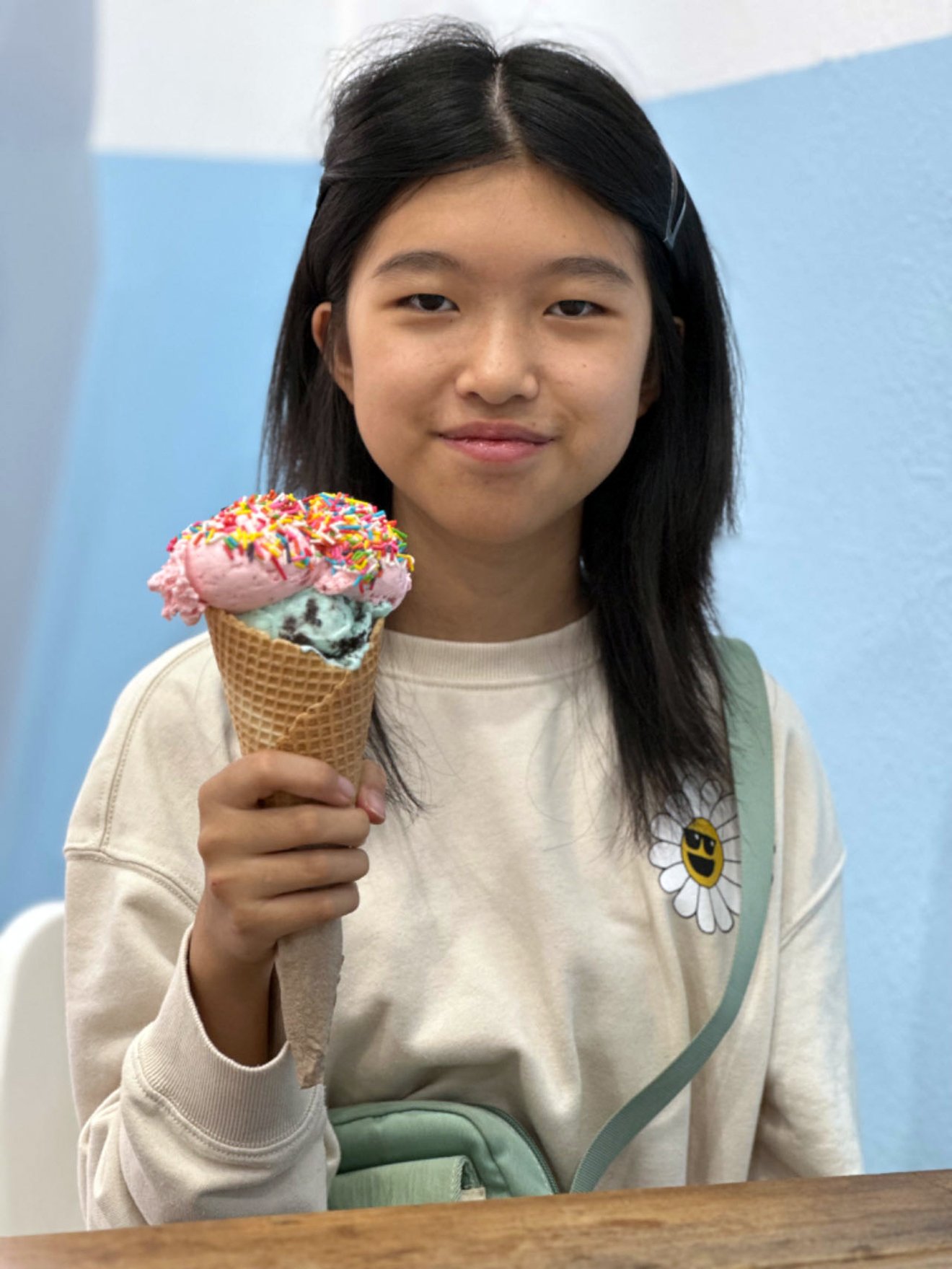
—Joy (Peixin) Yin, grade 7, Mexico. She adds: “Born in Wuhan, China, I have also lived in California for five years. I speak and write Mandarin Chinese and English but I am also trying my best to learn Mexican Spanish. I have never been a sports person. Instead, I’ve always loved reading and writing. I’m currently 13 years old, and attending an international school in Mexico City.”
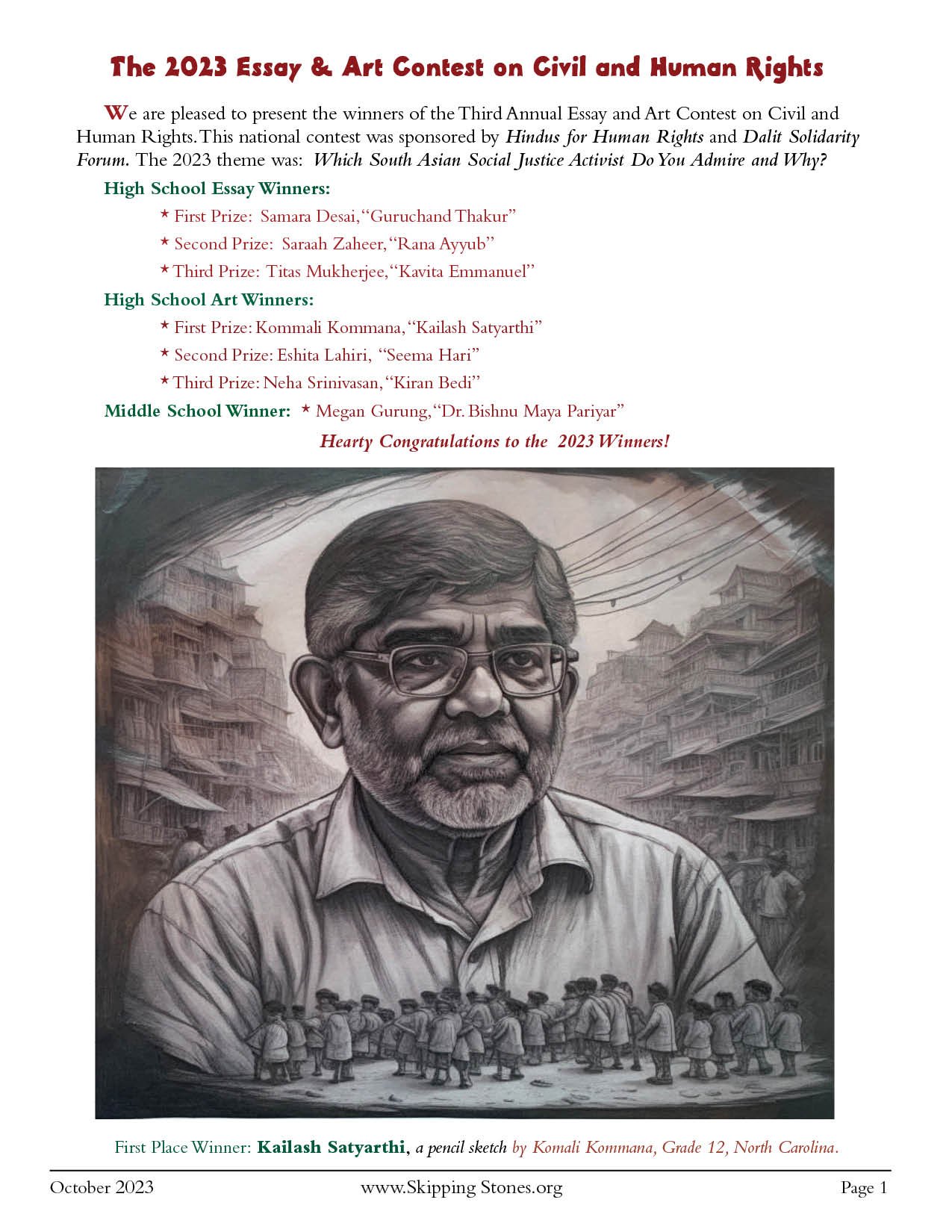
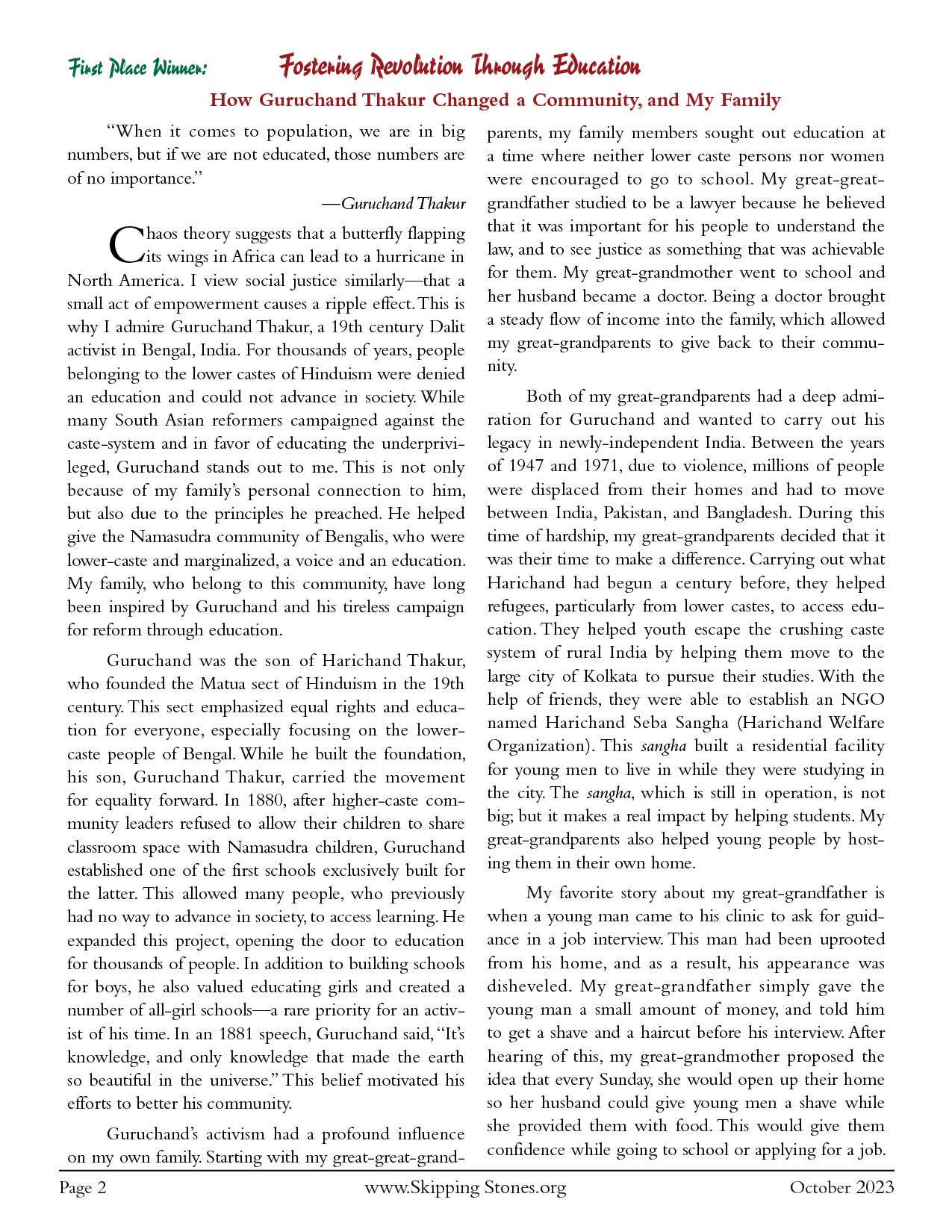
2023 Essay & Art Contest on Civil and Human Rights
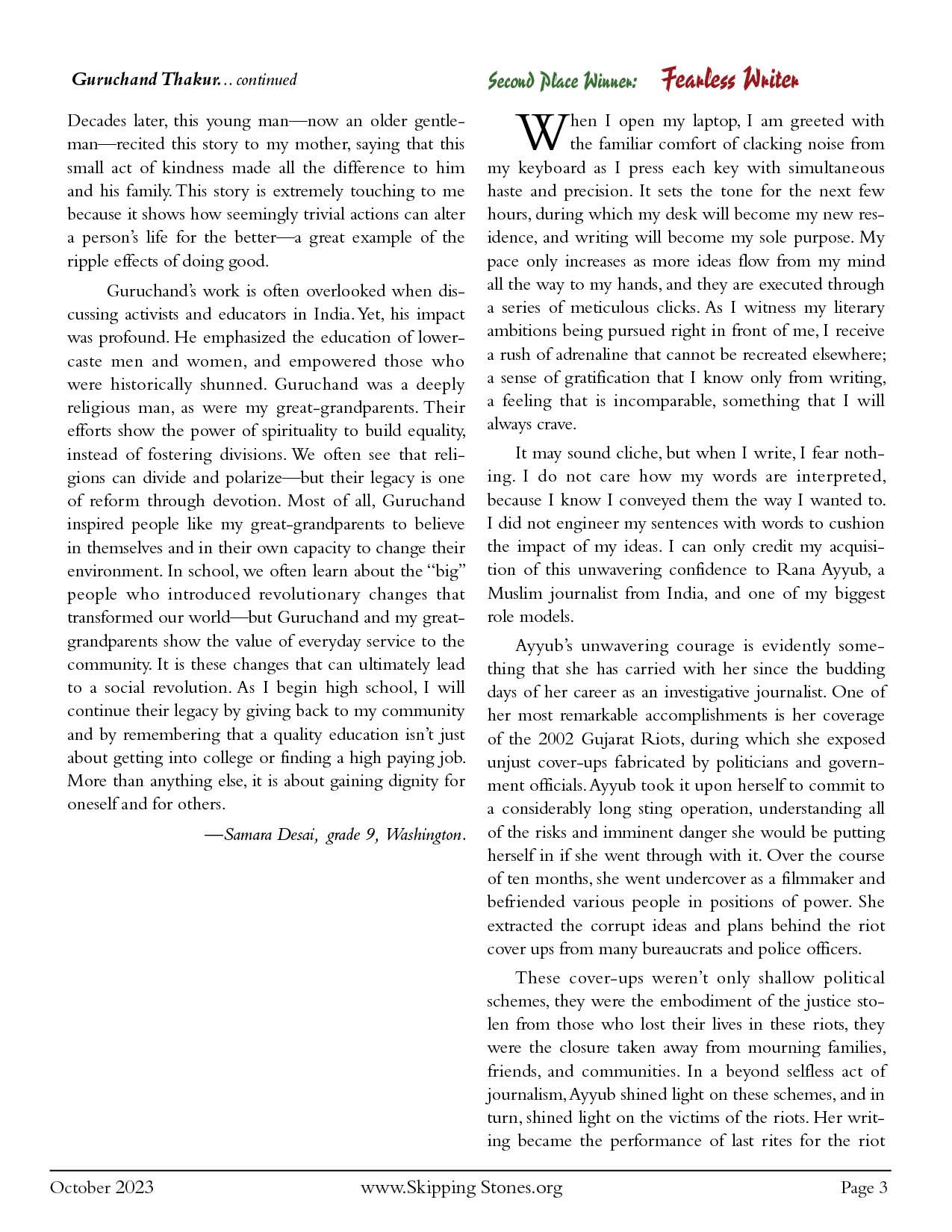
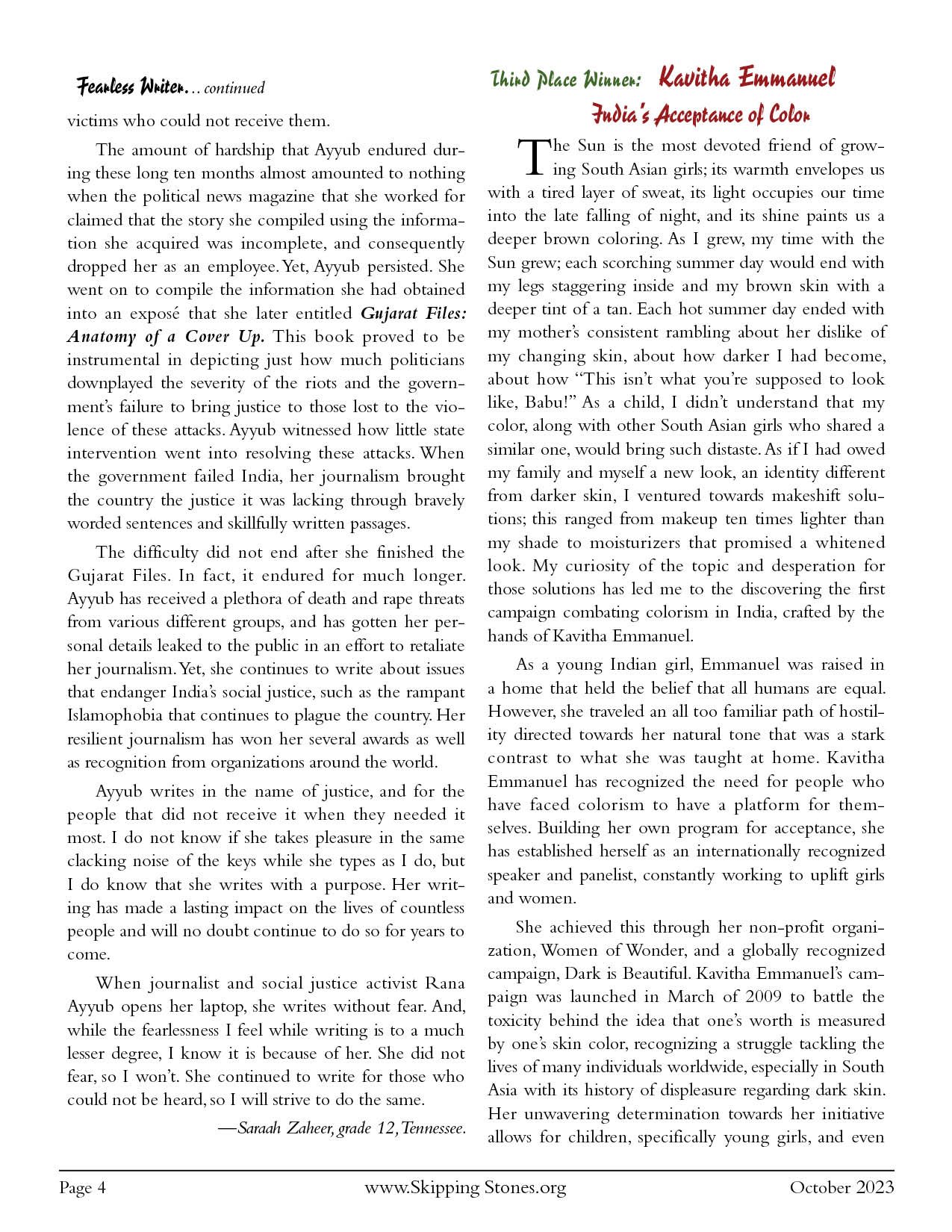
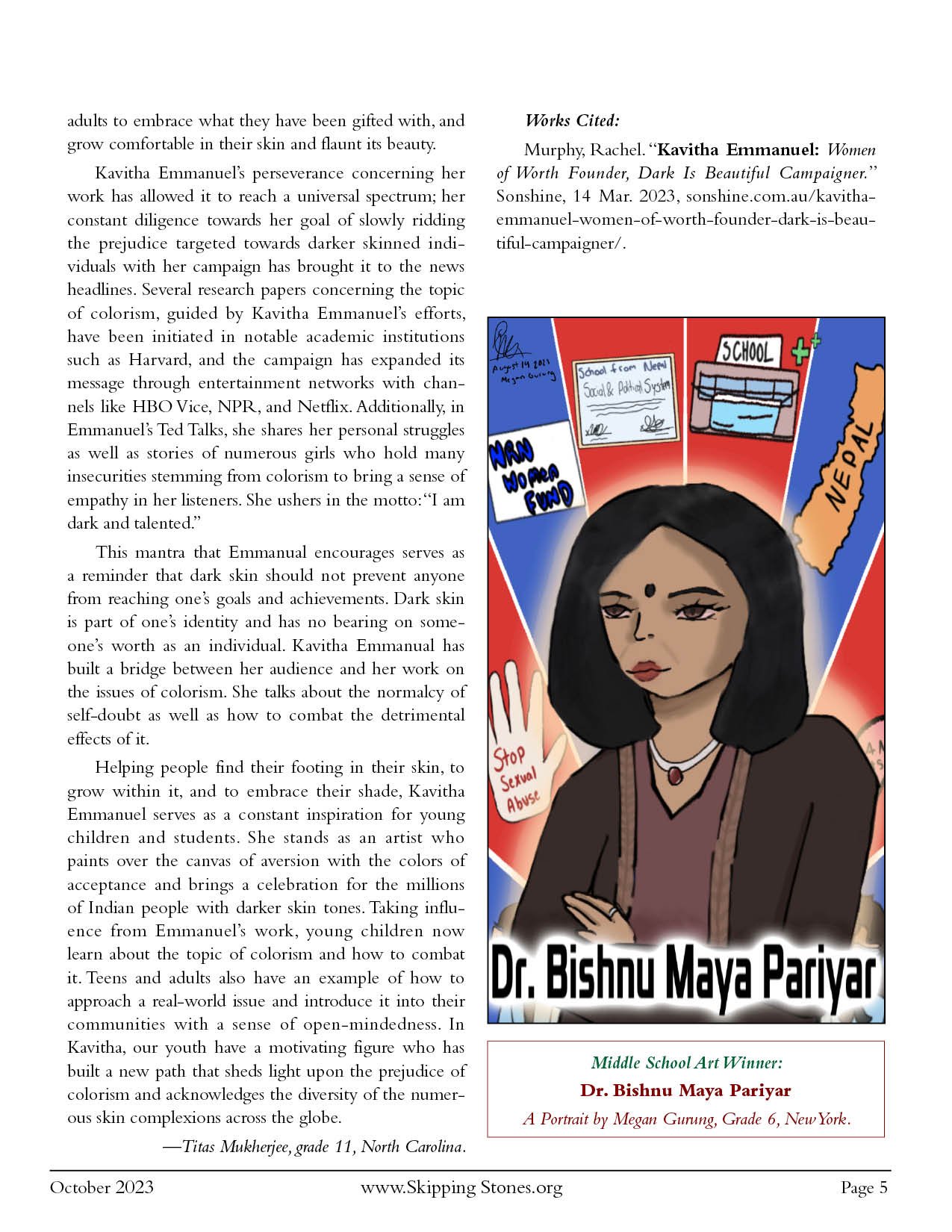
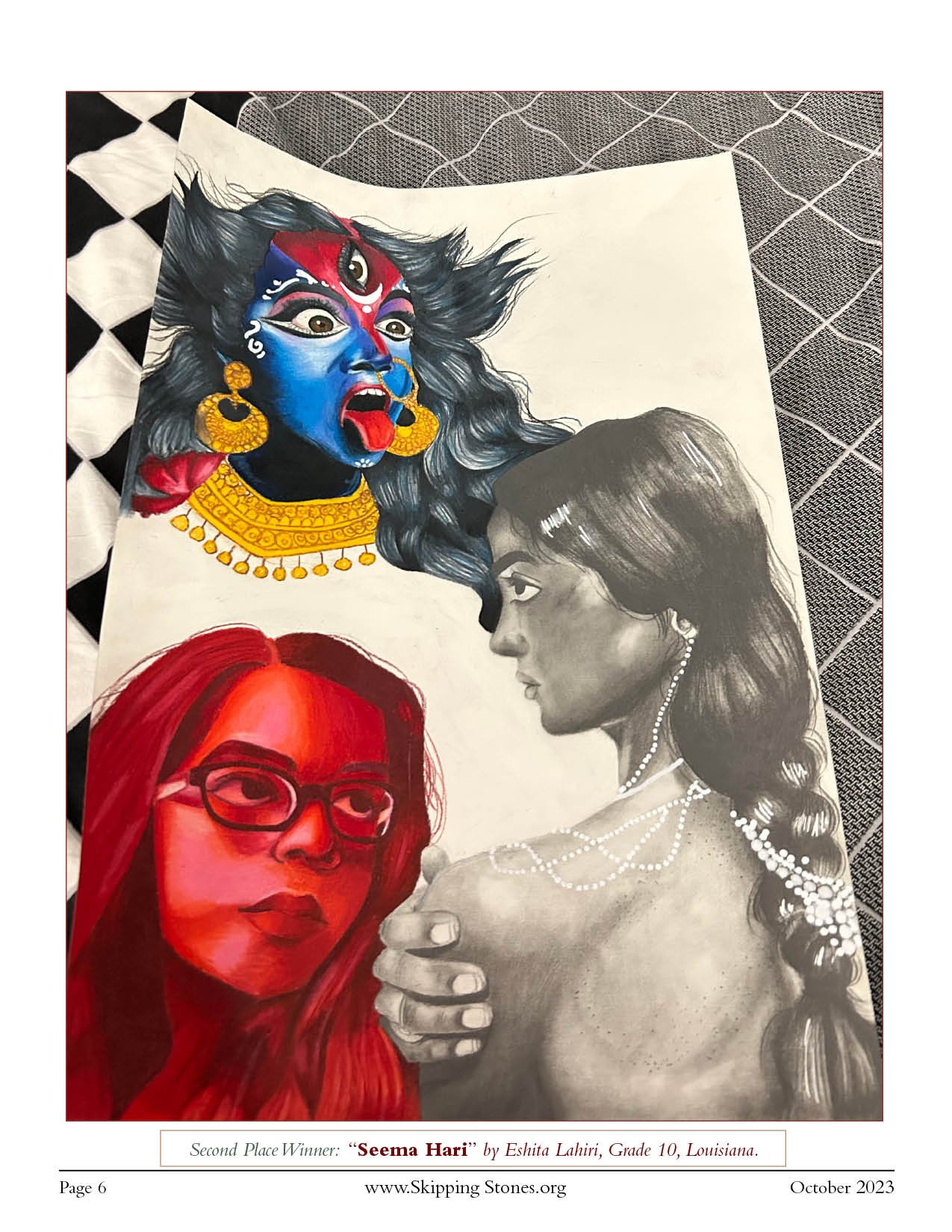
Oh, What A Sweet Girl!
Oh, What A Sweet Girl!
By Addison Townsend, age 16, Utah.
Oh, what a sweet girl. What an innocent, kind, happy girl.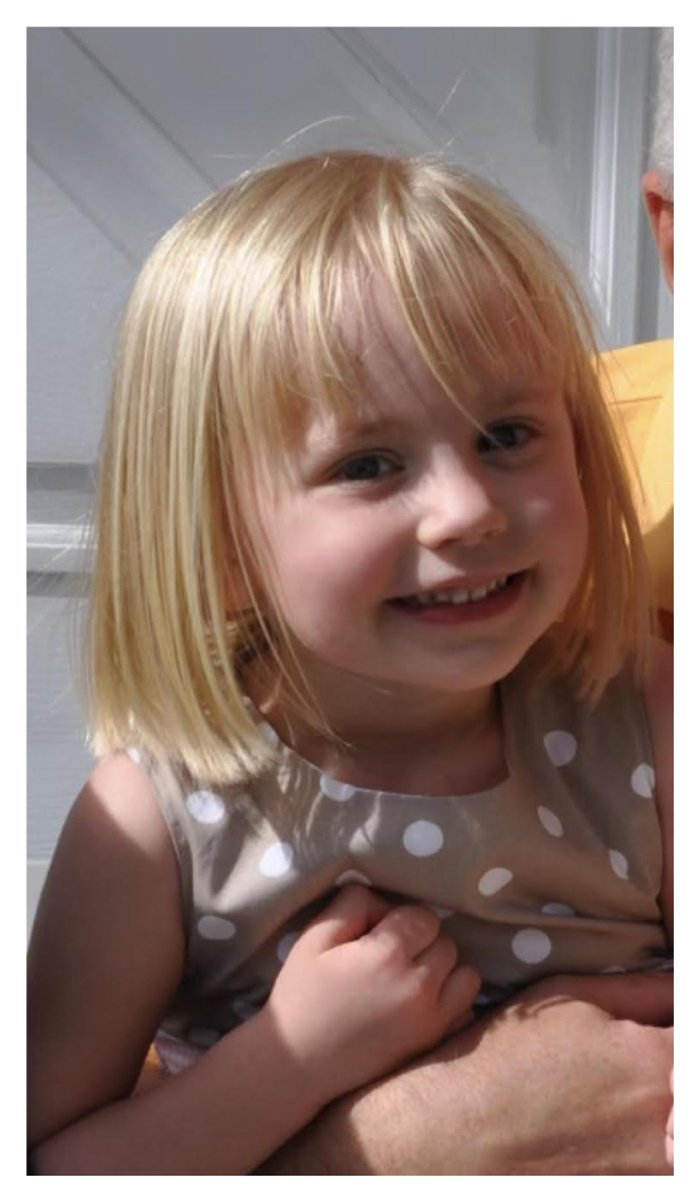
I didn’t know of anything but the perfect life. School was perfect, my family was perfect, and even something as small as my fish was perfect. My life was filled with the joy of ignorance, where there was nothing wrong in the whole wide world. And, oh how happy I was when I looked in the mirror and saw only a body and not the calories from the apple I ate an hour ago. And how tragic it was when that apple mutated to a dark obsession, soon to take over my whole life.
Thin was the first-word people would use to describe me, and it never offended me. But, as I continued to age, there was an expectation forming. What would they think of me when I gained weight? How would they react when I wasn’t a bottomless pit of food anymore? When I was big?
What would I think when I was big?
I think the word ‘comparison’ should be changed to ‘that which is impossible to overcome’. Pictures of my face reminded me of chipmunks hoarding nuts for the winter, while I envied the girls with round and youthful faces, enhanced by their chubby cheeks. Lunch became a study session and dinner became an afterthought. I wanted to lose weight and I didn’t have much time for meals anyway so how easy it was when I stopped eating. And how addicting it was to see an inch off of my stomach. When you have the body people would die for, how could I not fall in love with my illness? Hunger became a friend, one I could rely on every day, every hour, every minute. When everyone else left, a twisting stomach was still there.
When they ask, “Are you going to eat all of that?” the translator in my head vomits it out as, “Go stick a toothbrush down your throat.” Eventually, the portion sizes became as small as nothing, but I could still look in the mirror and see more than a skeleton.
Long sleeves and layered clothing became a daily necessity. I was playing a game with my body, how long can you go without food and how well can you hide it? I didn’t mind the layers though, my body clenched and shivered without any insulation. But that’s okay, shivering means you’re winning. Those bruises on your spine and your hair falling out in clumps mean you’re winning. Passing out means you’re winning.
But nothing about my illness felt like winning.
My anorexia’s whispers became a deafening scream as the caloric calculator in my head lit up like a scoreboard at a basketball game. My stomach begged for more than water, but nothing felt better than how the cool water slipped down my throat and hit my stomach. My head pounded at me to wake up, but you can’t be hungry when you’re asleep. My teeth clenched for anything but the gum I had fed it for the last week, but gum was just so low in calories and mental unrest. Hallucinations of a younger Addy begged, why do you do this to yourself? My once-perfect life had managed to flip itself into a food-focused, dizzying black hole. My mindset went from me praising my anorexia, to me running from it like a killer ready to murder what little of me there was left. My diseased mind furied, like an ex who desperately wanted to get back together.
You know, there are perks of going to the hospital. The people are nice for the most part and the beds are adjustable, but my once secret friend became less of a secret and less of a friend. Bite by bite, my mind screamed at me, shrieking the most heart-wrenching and life-ruining things at me. They say, “I would die for a body like that,” I urge, “I am dying.” They say, “No. You’re an inspiration.”
Some days it’s easier to die than to take one more bite.
But some days, you remember why you’re still breathing, swallowing. Some days, you remember the sound of your violin, the way the orchestra comes alive as you close your eyes and peace fills your whole body. Some days, you remember what it’s like to hug your dog and to have him wiggle his booty as you come in the door, so excited to see you’re still fighting. Some days, you remember the joy of being able to kiss your girlfriend and that feeling of never wanting to let her go. Some days, you remember what it’s like to be happy.
Years later, I’m still re-learning that ice doesn’t count as dinner and the reflection in a passing window is not a measure of my worth. And even now, after years of recovery, I still cannot un-memorize the calories of a peppermint.
So, Anorexia, I wrote you a letter:
Dearest Anorexia,
I’m breaking up with you. And no, I’m not going to say, “It’s not you, it’s me.” because it was you. You stole five years of my life that I’ll never be able to get back. I wish I could say I loved you, but what we had was not love. Love is supposed to be beautiful and filling and satisfying, but you hollowed me out, turned me into an empty shell of a human. You taught me dependency is love, not desperation, and I believed you. It took me five whole years to realize food wasn’t the enemy, but it was the voice in my spinning head promising control, perfection. You built a shrine of my bones and diet pill bottles, forcing me to worship you.
So, Anorexia, you can loom over me and scar me and nip at my heels, but today I build an empire out of every word you used to destroy me. I tear down your temples made of my self-hatred and face you, saying, “Do your worst.” You whisper I’ll never be perfect, I say I know. You say I’m disgusting, I say I’m beautiful. You scream I’ll never be happy, I cry back, I already am.
By Addison Townsend, age 16, high school Junior, Utah. She adds: ” I wrote this narrative about my experience with disordered eating as I would like to create more of a space to talk about the struggles of Anorexia. For five years, Anorexia broke me and coming out the other side of recovery, it is incredibly important to me that I prevent this from happening to anyone in the future. This is the true reason I value publication and strive for attention from others.”
Stone Soup
Stone Soup
By Laurel Aronian, 16, New York
Elizabeth gave us our assignment:
“Today in class you will be making stone soup.” She held up the book for all to see.
“You want us to cook?” a bold boy asked.
“Of course,” said Elizabeth, and handed us the aprons.
We went into the kitchen in the parallel classroom,
And listened to the clink of knives and the bustle of our classmates.
Each of the grades would provide a vegetable,
And as fourth graders, we were assigned the onions.
My friend and I wondered what genius had given us this task.
The teachers only provided us with long, silver knives, intentionally dulled down.
We set to work at our stations, passing the onions and shielding our eyes.
Over time, we came up with useful solutions to protect us from the sting and fiery smell.
Some kids passed around their glasses.
Others grabbed goggles from the science cabinet.
Some even asked the teachers for a slice of bread to hold in their mouths.
We were some wimpy fourth graders.
Yet things improved when we found solutions that worked.
The goggles fared well against the fumes,
And we learned to take turns passing around the glasses.
Soon enough, we had seven big bowls filled with the slices.
We walked outside as a pack and sat on shedding tarps.
We huddled closer around the fire, shielded from air like needles,
We felt our size as we sat with the lower grades, leaders of the school.
And we watched Elizabeth take the lead and open the book once more.
The rumble turned to patter as she began to read,
As the students slowly deposited their chopped vegetables
The smell of the soup filled the air,
The bubbling pot and voices a chorus on the wind.
When it was our turn, we stood up with our bowls of onions.
Full of pride, dropping them in the sizzling soup.
We realized what Elizabeth was trying to teach us,
Standing there with our dulled knives and aprons.
If we were given the solutions to our problems,
We would never learn.
We would never create.
For the next time we made soup without assistance.
The sound of the realization was the clink of spoons,
The passing of mugs, the shatter as one fell,
The clatter of a dustpan as we swiped up the shards,
The happy chatter as well enjoyed good food.
The smell of the vegetables mingling together,
The burning wood within the fire,
The earthiness of the dirt on which we sat,
The wool of our mittens in the chilly air.
Tasting the soup was the ultimate prize,
If we hadn’t been the chefs, we wouldn’t have realized,
The distinct change the onions made to the overall aroma,
And never would’ve known to add them.
Elizabeth taught us more than numbers that day,
She taught us the impact every action makes,
Not only would we be able to make stone soup once again,
But we’d learned creativity in solving the problems at hand.
By Laurel Aronian, 16, Connecticut.
“I love to write in all genres (poetry, prose, journalism). I also enjoy taking photos and creating art. I have a passion for music and perform as a singer-songwriter and accompany on guitar. When I’m not writing or making music, I play competitive chess.
My poetry submissions highlight multicultural awareness as I am of multicultural heritage and recently celebrated Ramadan, Passover, and Easter. My pieces also reflect the awe of nature, earth stewardship, and our planet’s majesty and magic.”