Category Archives: Asian American

The Empty Spot

The Empty Spot

By Leslie T. Fry, high school senior, New York.
They stuck us in Studio 8. At first glance, it looked in decent shape. The professional company never danced there so the floors were rosin-free, letting us pirouette with ease. The room also had gaping windows and a cavernous ceiling.

Mr. Vankan would implore the boys: “Look how much ceiling you still have! Jump so high you hit it!”

For us girls, the ceiling only helped us feel dainty. The studio’s wonky mirrors trapped us in our own private funhouse.

We all knew that the end-of-the-year performance was scheduled for two months from now, though the specific details of our dance remained unknown. In the other studios, the older girls already had started rehearsals. The soloists’ gracefulness took our breath away. I longed to be a soloist someday; I suspect we all did.

Mr. Vankan’s yellow notebook appeared more frequently as we got closer to the performance. He creased the spine before placing it open on top of the speaker.  We remembered that book from our audition. When that book came out, our PTSD returned, along with the insecurities of our 15-year-old selves. He circled around us as we danced, then stopped to stare at someone’s foot or head before jotting down his verdict. Our bodies felt sore, and we wanted to go home. Often, he would excuse us early, testing our commitment. We demonstrated our resilience by staying as long as he did.

A month before the performance, Mr. Vankan pulled out the dreaded notebook and studied his notes. He instructed the boys to leave early and then told us girls to stand in a line from shortest to tallest. Surprisingly, the boys left without hesitation, presumably sensing that he was in a particularly sadistic mood.

He assigned places, repeating, “Remember, these places are not set. I just want to see how it looks.”

For a week, Mr. Vankan moved us girls around as if playing chess. Under the touch-move rule, he would leave his finger on the piece until the last minute, convincing us that he was sure of his move, only to dash expectations with a “Nah, I don’t like it.”

Historically, we had been good at learning choreography, having danced from infancy, but we had questions.

When we asked him whether our arms should be up or down when we ran to the back, his puzzling response was, “Do whatever everyone else is doing.”

We smiled at him in disbelief, waiting for the punchline that never came.

He split us up into two sections, supposedly intending to give us equal practice time, though he never did. Instead, the second cast sat on the floor in extended splits for the last half hour of class.

Mr. Vankan yelled: “If you’re sitting on the ground, you better be doing something!”

Our hands marked the routine accurately, without ever breaking a sweat.

In one muggy session, all were surprised to find Ms. Robin teaching class because of Mr. Vankan’s unannounced trip to Germany. Previously, he had asserted we couldn’t skip any classes whatsoever. Many of us pushed through illness, and one of us even skipped a funeral of a close family member. Now, he had disappeared. After watching both casts, Ms. Robin clenched her teeth, forcing an unnatural smile.

“Uh, okay,” feigning a supportive tone. “Where are your arms supposed to be when you run to the back?”

We collectively shrugged, as if choreographed.

“What count do you enter in on?” she continued questioning.

No one knew.

* * *

A week later and two weeks before the performance, Mr. Vankan returned, tanned and well-rested. He didn’t bother to explain his absence and dove right into class.

“Noooooo, you run in on 5-6-7-8, not 3-4-5-6-7-8! Again! And Christa, Crystal, uh, whatever your name is, point those feet! You look like a clumsy duck!” Mr. Vankan mocked. It was her first day back from a week of dreadful coughing and sneezing.

Tears rolled down Christie’s cheek, despite her best efforts to hold them back. During the rest of the rehearsal, I watched her with the hope that she could hold in her emotions until arriving safely in the privacy of our changing room. Oblivious to Christie’s crying, Mr. Vankan pushed her harder and harder.

“Look at your extensions! What’s happened to you?” he blurted out.

We all knew that you usually try to sleep when sick, not stretch. It wasn’t fair, but there was nothing we could do. She had no clue about all of the changes that Ms. Robin had made. Neither did Mr. Vankan, who was fumbling with the speakers. Tchaikovsky blared from the speakers when Mr. Vankan confused the varispeed and volume knobs, making it impossible for us to verbally comfort Christie. Mr. Vankan was slow to adjust the volume and even slower to get back to the right tempo. The first cast started to dance with Mr. Vankan’s count. However, Christie seemed to dance to her own music.

“No, no!” Mr. Vankan exploded.

He stopped the music. A cluster of worry wrinkles formed on Christie’s forehead. Mr. Vankan sat in his chair, face buried in one hand and mumbled, “You know what . . . we don’t need you.”

Christie stared at him as if asking, “Are you serious?”

Mr. Vankan was entirely serious.

Looking down to hide her tears, she jogged over to the wall. I walked over to her and gave her a hug.

“It will be okay,” I whispered. “You’ll be fine.”

I let go of her. She looked at me with streams of tears trickling down from her red eyes, and she ran out of the room without being excused. I entered the changing room when I could. Her locker was open and empty. I smiled, at least on the inside. Someone was getting promoted to first cast.

* * *

Christie did not return the next day or ever again. In the corner of the studio where she set her bag, I set mine down. Her absence left a noticeable gap in the choreography.

“Does anyone know Christina’s part?” Mr. Vankan petitioned as he looked around the room.

My hand darted in the air before he finished his sentence. He nodded and motioned for me to fill the gap.

“If you see an empty space, that’s where you’re supposed to be,” he instructed, and that was all.

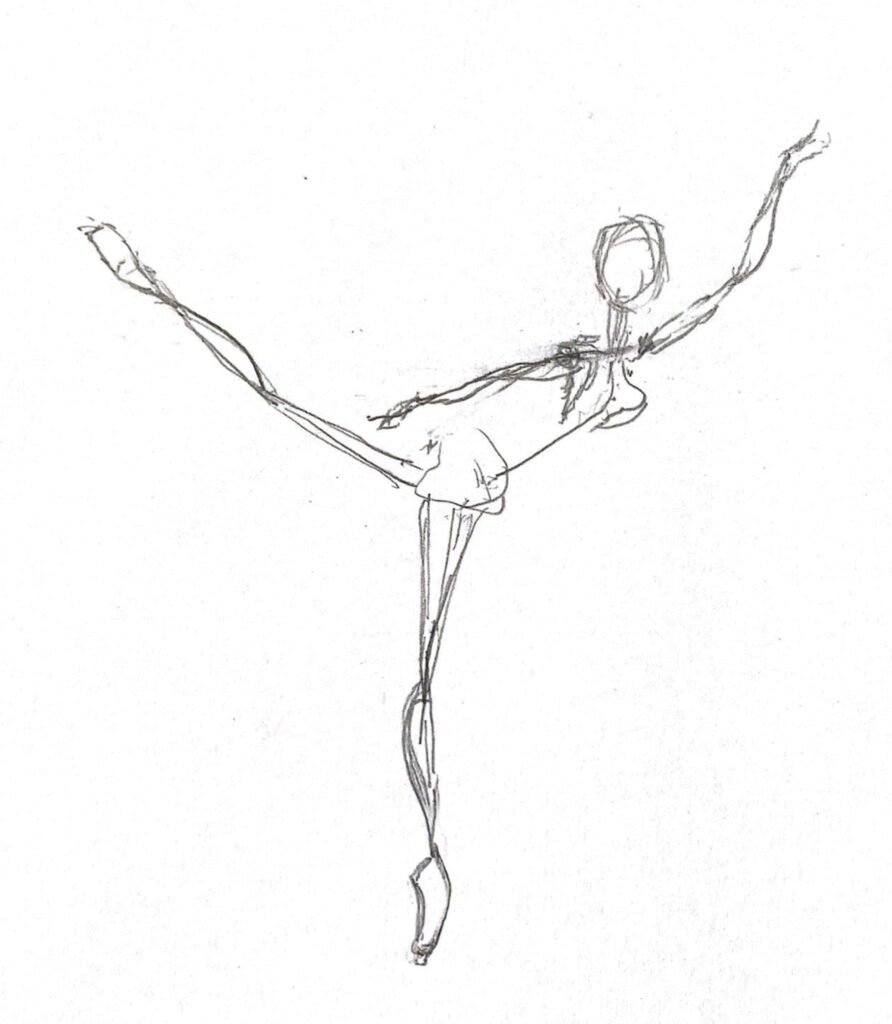
I didn’t need more, even though it was my first time dancing with the first cast. My head spun as I chased the empty spot, like a cat chasing a laser, not knowing where it would appear next. My spirit soared when I felt my arabesque turned out like never before. Renewed energy coursed through my veins as I stretched my legs through. I glowed with confidence. I didn’t even mind that Mr. Vankan was not watching me, just as long as he didn’t take out his yellow notebook. As I held my final pose with a sense of accomplishment, I caught my beaming smile in the mirror, attached to a body that I could not recognize as my own. It would take some getting used to, but I knew I was in the spot where I needed to be.

—Leslie T. Fry, high school senior. Leslie was born in Hong Kong, and she also has lived in The Hague and New York City. Leslie has been dancing seriously since the age of two. Apart from dance, she enjoys literature, art, math, psychology, and chemistry. In addition to English, Leslie studies Chinese, Dutch, French, and Latin. She plans to study behavioral neurochemistry at university and hopes to eventually become a neuropsychiatrist.
Defiance Through Design

Defiance Through Design:
The Legacy of Filipino Art in Activism and Resistance

By Shloka Chodhari, High School Junior, New Jersey

Abstract:
Resistance against tyranny is a widely discussed topic, especially in light of current global conflicts and elections. My research reveals that Filipino art is deeply intertwined with activism and resistance against foreign rule. It demonstrates the powerful role of Filipino art in the fight to freedom. My article aims to educate readers on this connection, highlighting how indigenous art forms have served as platforms for defiance and cultural preservation for centuries.

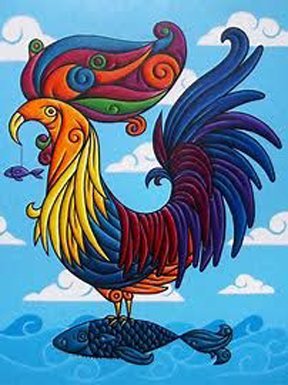
The Philippines is a Southeast Asian archipelago consisting of 7,641 islands in the western Pacific Ocean. The country is known for its vibrant cultural tapestry woven from the traditions of its diverse indigenous communities. Prior to the arrival of Spanish colonizers in the 16th century, Filipino art was deeply rooted in animistic beliefs, nature, and mythology. Woven textiles, pottery, and wood carvings showcased motifs and told stories that were passed down through generations. This produced many vibrant patterns and designs that were not only aesthetically beautiful but also served as valuable symbols of protection and good fortune. One such design, the “Sarimanok,” was a mythical bird that frequently appeared on textiles.

IMAGE: Majestic Sarimanok: Symbol of Prosperity and Myth / Photo courtesy by Ruben HC 2017
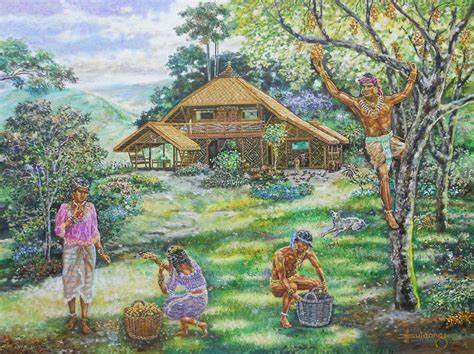
Pre-colonial Filipino art embodied “Kalikasan,” a term used by the indigenous people of the Philippines referring to the interconnectedness between humans and the environment. For example, the intricate ‘okir’ designs and carvings served to remind viewers of the harmonious relationship one has with the world and their ancestors. Unlike in many other indigenous societies, Kalikasan was not fulfilled through a passive or solely spiritual/ religious connection with nature but by actively caring for her physically. Thus, many Filipino art pieces serve to inspire individuals to take a hands-on approach toward preserving and respecting nature. Kalikasan is alive and well today in the Philippines. Environmental activism in the Philippines isn’t just a contemporary response to pollution or climate change but part of a long-standing tradition of actively caring for nature. This is evident in the Writ of Kalikasan within the Constitution of the Philippines, which provides the Filipino people the right to a “balanced and healthful ecology in accord with the rhythm and harmony of nature.”

“Kalikasan: Pre-colonial Filipino art, such as intricate ‘okir’ designs, embodies the deep interconnectedness between humans and the environment.” / Photo Courtesy by J. Bulaong 2020
When Spain arrived, they aimed to Christianize Filipino society, leading to the suppression of indigenous art, which they viewed as inferior and embodying heretical values. In its place, they forced indigenous artists to produce Catholic iconography. They believed that compelling the inhabitants to create Catholic art would not only civilize them but also instill in them Christian virtues.

Despite the suppression, indigenous art persisted, serving as a form of “resistance” against colonization. During this period, the Estilo Hispano-Filipino, a fusion of Spanish and indigenous artistic styles, became prominent across architecture, painting, and sculpture. In architecture, the Estilo Hispano-Filipino style manifested in the construction of churches as well as government buildings where Spanish Baroque elements blended with indigenous architectural techniques and materials.

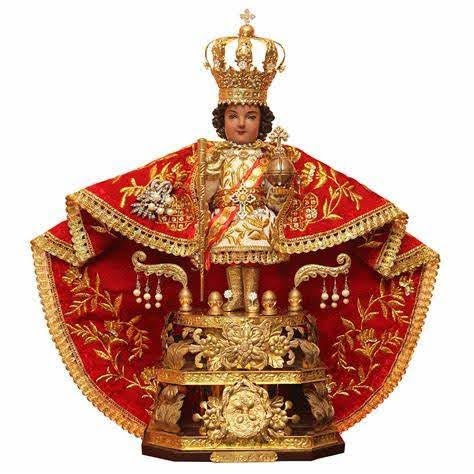
This fusion acted as a form of resistance to colonization by embedding indigenous culture and motifs into the very Christian imagery that the Spanish sought to supplant indigenous culture with. This led to indigenous culture becoming intertwined with Christianity, making it much more difficult to root out. The Santo Niño de Cebu best illustrates this. It was a 30 cm tall sculpture of the Christ Child holding a globe and a scepter created by Flemish artists. When the ruler of Cebu, Rajah Kulambu, and his wife were baptized, she was christened as Juana and was presented with the Santo Niño. Their baptism marked the first conversions to Christianity in Filipino history. Upon converting, Juana asked for the Santo Niño to take the place of her former idols. Afterward, Ferdinand Magellan, a Portuguese explorer who claimed the island of Cebu for Spain, left, resulting in a 40-year period in which the Santo Niño was left solely in the
hands of the indigenous Filipino people.

When the Spanish returned 44 years later, they found the Santo Niño to have its original clothes replaced with indigenous clothes made specifically for its tiny frame, and the painting from its face and nose had faded a bit. The latter was due to how in indigenous Filipino culture, body parts of religious constructs were touched to initiate the healing powers the natives believed that they possessed.

Original image of Santo Niño de Cebu: A Divine Symbol of Faith and Heritage / Source:Wikipedia
The natives gave it a new origin story with themes and motifs that were undeniably indigenous and lacked a trace of Spanish involvement. Local artists would reproduce many local variants of this sculpture, each including indigenous features, such as rounder faces, flat noses, and specifically shaped eyes. During the struggle for national independence, Filipinos chanted, “Long live the Katipunan! Viva Santo Niño!” In the minds of the Spanish, by introducing images such as the Santo Niño, they sought to rewrite Filipino culture in their own image. This backfired spectacularly when the natives leveraged the universalist pretenses of Christianity to make the Santo Niño their own, rooting their independence movement in the very ideas the Spanish sought to use to control them.

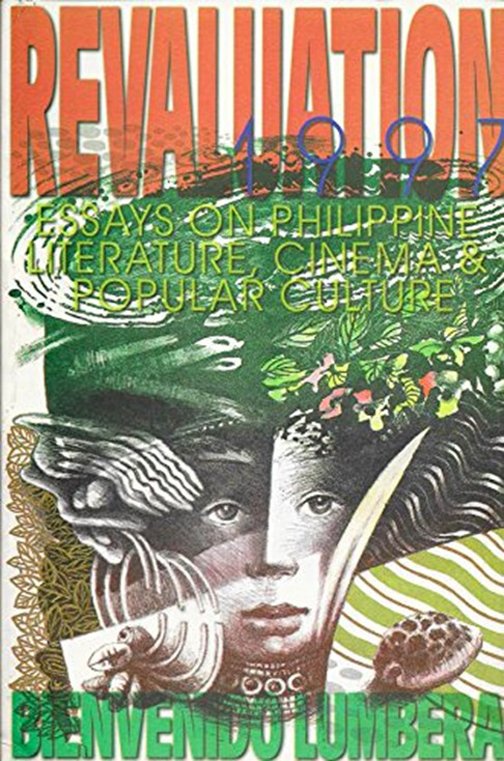
After gaining independence from the United States in 1946, indigenous art forms had a resurgence fueled by a growing sense of cultural identity. However, attitudes towards indigenous arts varied depending on the political climate. During Ferdinand Marcos’s authoritarian rule (1972-1986), many artists faced persecution for their political views, such as Bienvenido Lumbera (1932-2021). Lumbera was a renowned Filipino poet and critic known for his significant contributions to Philippine literature and his critical stance against the Marcos regime. Lumbera’s work revolved around themes of social justice as well as national identity; he was particularly known for his critiques of Marcos’s authoritarian rule. His outspoken
personality and political beliefs led to his imprisonment when Marcos declared martial law. His poems, such as “Tales of the Manuvu,” contain criticisms of the regime’s human rights record. Lumbera’s work, employing symbolism drawn from indigenous Filipino culture, resonated with the masses.

Similarly, Jose Tence Ruiz (1956-), known for his avant-garde style, created many works that criticized the Marcos regime. One of his most notable pieces was called “Brutalism,” which used abstract forms to symbolize the harshness of dictatorship. This infuriated the regime and led to efforts to suppress his works. Bienvenido Lumbera employed most of his art through poetry. The messages of these works of art formed the foundation of resistance movements. Symbolism of indigenous Filipino art through posters and murals was ubiquitous during the People Power Revolution of 1986, during which millions gathered wearing the same color in a mass protest. The themes of resilience through indigenous art allowed for unity amongst the public, leading to the collapse of the regime.

“Exploring Cultural Heritage: Bienvenido Lumbera’s Masterful Blend of Filipino History and Artistic Expression” Publisher: University of Santo Tomas Pub. House, 1997
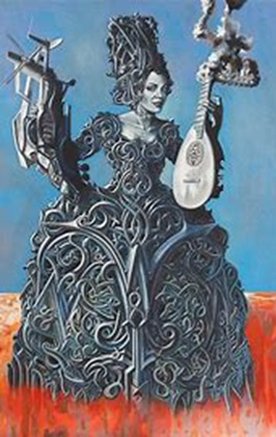
“Royal Decay: José Tence Ruiz’s ‘Granduchess’ Examines the Intersection of Power, Opulence, and Corruption” Lot 622: Jose Tence Ruiz (b. 1958)
The history of Filipino art in resisting tyranny showcases the immense power within the agency of artists. Foreign hegemonic forces often reproduce elements of the cultures they seek to dominate, aiming to legitimize their rule and pacify any aspects of it that could promote resistance. In contrast, native artists resist colonization or tyranny by intentionally incorporating symbols and motifs of their native culture into the art forms of the oppressors. This strategy undermines colonial rule by taking the universal moral
and religious pretensions of the colonizers and turning them against them, leveraging these to preserve particular forms of cultural autonomy. Over time, this autonomy outlasts the colonizers, eventually enabling national liberation.

This enduring legacy of artistic resistance underscores the vital role of cultural expression in the struggle for freedom and self-determination. The strength and adaptability of Filipino society highlight how indigenous art serves as a physical manifestation of every person’s right to freedom.
Author:
Shloka Chodhari, Arts Associate, The Lawrence CXLIII
Editor, Lawrenceville Science Reports, and High School Junior, New Jersey.

Both the author and publisher would like to thank all the artists and art sources for the five reproductions included in this article.

Sources:
Marin, M. (Ed.). (2021). *Transmission image: Visual translation and cultural agency.* Duke University Press
History of Philippine Art | Sutori
PHILIPPINE HISTORY (aboutphilippines.org)
Understanding Authoritarianism and Corruption in the Philippines | Psychology Today
Authoritarian powers are back in the Philippines, here’s how to fight them – Interviews | IPS Journal (ips-journal.eu)
A writer’s truth: The legacy of National Artist Bienvenido Lumbera – University of the Philippines (up.edu.ph)
The Relevant and Irreverent Jose Tence Ruiz—Positively Filipino | Online Magazine for Filipinos in the Diaspora
The Philippine Literature and Arts in the Post-War Era (1946-1972) (sinaunangpanahon.com)
Booklet-Guide-2022-1.pdf (santoninodecebubasilica.org)

Being Split

Being Split
By Preston Young, age 10, New York.

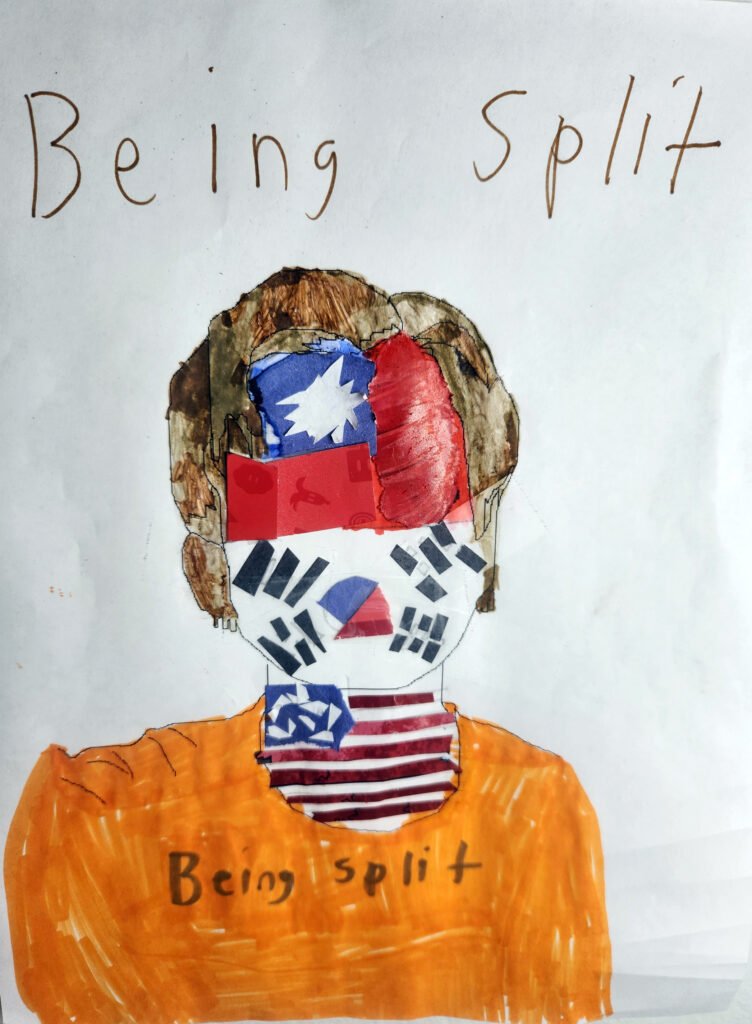
Being Split by Preston Young, age 10, New York

Illustration by Preston Young, 10, New York.

Being split,
Korean and Taiwanese,
I can’t process two different cultures,
It’s hard for me.

On Korean New Year,
I bow to elders and eat Duk Bok Ki (rice cakes).
On Chinese New Year,
I get red envelopes and eat dim sum with herbal tea.
I call my Korean grandparents Halmoni and Haraboji;
Ah ma, I call to my grandma who is Taiwanese.

The Taiwanese flag has red, white and blue.
The South Korean flag has those colors too.
The American flag has them too, oooh!

Being split,
Korean and Taiwanese,
Sometimes people don’t understand me.
When my friends talk about their one culture,
I want one of my other cultures to be unseen.

I try to tell my friends over and over;
I scream and I shout and whisper over their shoulder.
They never understand when I say,
 I am both Korean and Taiwanese!
They look confused and annoyed like fleas.

Sometimes I wonder if being Korean and Taiwanese is right for me.
I sit there and think until I can finally see,
I am special with being multicultural,
Being Korean, Taiwanese, and American,
Can all fit in my soul.

Being split,
Korean, Taiwanese, and American is hard.
But the three cultures,
Are forever in my heart!

By Preston Young, age 10, New York. Preston adds: “My mom is Korean and my dad is Taiwanese. I was born in the USA. I speak English but I am learning how to write, read and speak Korean because my friends at school can speak fluently, and I want to be able to communicate with them. My dream is to become an author and entertain kids. I was inspired to write this poem because when I am in school people always assume that I am full Korean or full Taiwanese. Sometimes people think I’m Chinese but I always correct them. I wanted to express how I feel and what that makes me feel like. I made a collage out of construction paper and some magazine clippings with markers to show my feelings about being split in three different cultures.”

“Looksmaxxing” and Toxic Beauty Standards

“Looksmaxxing” and Toxic Beauty Standards

By Colin Wu, high school junior, California.

Earlier this year, one of my close friends got very wrapped up in the looksmaxxing community, a growing online community that strives for the ideal body and flawless face. He started calling people out that he didn’t find attractive, bullying and fat-shaming them. He shunned and looked down on his peers who didn’t have the “perfect body”—6’ 0” tall, six-pack abs and huge biceps. The looksmaxxing community targets young males and females and influences their ideas about beauty in a toxic way. Looksmaxxers are part of an online community that has gotten inside our heads and inside our homes and it needs to be stopped before more people get hurt.

Social media has had a huge effect on younger people’s feelings about their appearance. In a New York Times op-ed titled, “Toxic Beauty Standards Can Be Passed Down”, Alexandra D’Amour writes, “There’s a nickname for tweens and teenagers who have been influenced by social media to get into skin care: Sephora Kids. Johanna Almstead, a fashion industry friend, tells me that in her local mothers group chat, nearly every mom had “Skincare, skincare, skincare!” on the holiday gift lists they were given—by their fifth graders.”

Younger children requesting skincare products as gifts is alarming. It suggests that they have a problem with their appearance and are using skincare to fix it. It also shows the influence social media has on the youth now, whereas, when I was in fifth grade, I wanted video games and Legos. D’Amour also says, “A recent video on TikTok that has garnered more than eight million views features a 28-year-old woman showing her “raw,” procedure-free face, meaning no Botox or fillers. As some women and girls cheered on her bravery, others were left horrified. “Praying I’ll never look like that,” one comment reads. This comment shows the ways in which social media has defined beauty for future generations. While sharing their “raw” face makes some people proud, others are disgusted by its imperfections.

Parents, who also contribute to the focus on skincare in young people, can make this situation better. D’Amour writes, “And yet, if a mother’s insecurity can fuel her daughter’s own self-loathing, a mother’s radical self-love might just protect and even heal her daughter from a toxic culture.” D’Amour believes the influence that parents can have on their children can be more positive than negative. Parents who are able to teach their kids to love their appearance may help their children stay away from bad communities. D’Amour says, “When I ask the few friends who haven’t gotten Botox why they haven’t, they tell me it’s because they love how their mothers are aging and how they embrace it. They don’t fear aging because their mothers don’t (or didn’t).” Older generations of mothers who are secure about their appearance influence younger generations by making them realize it’s best to accept and love themselves for who they are. Coming from a family in which no one had any kind of procedure, my parents and grandparents have taught me self-worth and have made me love myself for who I am.

People today are growing up in toxic cultures that lead them to accept unnatural beauty standards. D’Amour warns us that, “Gen Z-ers are being introduced to the idea of starting treatments early as preventive treatment. They are growing up in a culture of social media that promotes the endless pursuit of maintaining youth—and at home, some of them are watching their mothers reject aging with every injectable and serum they can find.” Gen Z-ers are still growing and many are still in puberty. By attempting to slow or stop the natural aging process, young people seek out treatments that could alter and change the way they look when they’re fully grown. While it can physically harm Gen Z-ers, the mental effects can also cause significant harm. They are oblivious to the ways in which buying treatments connects their self-worth to their beauty. The consequences of children being influenced by skincare culture could mirror the harm caused by previous toxic cultures. D’Amour points out that “The anti-aging craze comes with the same toxicity as diet culture does.” Diet culture influenced people to want to be skinnier. Anorexia was a large issue and resulted in many people hurting themselves to obtain the ideal body image. Similar to diet culture, the anti-aging culture puts pressure on young people to strive for unhealthy and unattainable beauty.

My friend was too invested in the looksmaxxing community. As he tried to achieve his ideal body image, his obsession led to him putting down and hurting others. While there are positive aspects of social media, these negative parts harm younger people who are vulnerable when it comes to their appearance. Even though my friend was putting others down, this community was also harming him, by ruining friendships. Some unlucky teens have to deal with crazy parents, who put their own insecurities on their children and reaffirm toxic cultures that enforce unrealistic beauty standards. Other teens can be affected in positive ways, if parents or role models teach them to accept themselves. In the future, if we want to feel good about ourselves, we must embrace our natural appearance and develop self-worth that is grounded in loving ourselves.

—Colin Wu, h.s. junior, California. Colin adds: “I am a Chinese and Burmese American, whose first language is English, and I am currently learning to speak and write Mandarin. My family, education, health, and religious beliefs are most important to me. I am very interested in environmental sciences and engineering. I was inspired to write this essay because of the harm this community has done to friends of mine.”

The Presidency 

The Presidency 

There have been 45 presidents of the United States. The current one, number 46, has a similarity to all but one of his predecessors. They are all White, and all 46 are male. Asian Americans have been in the country since the 1800s, and have come nowhere close to the presidency. Could someone of Eastern Asian ethnicity ever become president of the United States?

Loyalty is an act of faith in which you do not betray or desert your cause no matter the circumstances. I believe most of the issues faced by Asian Americans are to do with loyalty. When using a search engine to research, the question, “Are Asian Americans loyal to the United States?” it distributes a plethora of discussion posts, disagreements, newspaper articles and more. For example, in a survey conducted by the Asian American Foundation of over 4,000 U.S. citizens, 32 percent agreed with: Asian Americans are more loyal to their perceived country of origin than to the U.S. I find this response disgusting and shocking. These questions and polls are not done on Irish Americans, Italian Americans, Norwegian Americans or African Americans; who whilst facing an uphill struggle in many areas, they would not be questioned if they are serving another country. Where does the questioning of  loyalty of this specific ethnic group come from? 

As an Asian American, I have not felt any urging for ongoing loyalty toward any country other than the U.S. In fact, Asian Americans have contributed to the United States as much as others. So what causes this unique form of discrimination? I believe one of these reasons is fear. For decades, the U.S. has been the world’s global superpower, with no country since the fall of the Soviet Union coming close. Over the course of recent years though, China has grown and empowered their economy, as well as modernized their military to the extent where there is a possibility of them overtaking the U.S. in a decade. Politicians, media pundits, and some American people are fearful of losing their global hegemony. I believe this fear has spilled into affecting Asian Americans citizens. The buildup of tension between China and the U.S has led to a buildup of tension against Chinese and other Eastern Asian ethnicity.

The coronavirus began November of 2019, and has only escalated this recurring issue. When the matter is brought up to classmates, all point directly to China as the one to blame. About 1.4 billion people populate the country of China, fingers pointed to every single one. During the coronavirus pandemic, the quantity of Asian American hate crimes increased rapidly. People of various Eastern Asian ethnicities were affected by this as well. The differences between Asian and American cultures itself is a leading cause, as we human beings tend to point fingers at those most different to us. For example, there is a mass of cuisine differences between Asians and Americans. Asian cuisine is based mostly on older type traditional recipes, including foods considered exotic to others. American cuisine is based highly on dishes from other ethnicities, although are home to modern dishes. 

In addition to these previous points, whilst all nations have fostered racism, The United States has had government policies introduced specifically pushing these racist policies. When schools were divided into white and black, Asian Americans found themselves questioning where they belong. Asian Americans were not mentioned in the laws themselves, as if they were forgotten and the law makers didn’t know they existed. This sense of idea of being an “other” or not being a part of the nation itself I believe still carries on to modern society.

In conclusion, I do not believe an Asian American could ever become president. As much as we as the Asian American community continue to integrate ourselves with the nation, humans will always find a way to exclude parts of our people and treat them as outsiders. Asian Americans are constantly challenged on our trustworthiness, loyalty, and dedication to this country. Attempts to prove ourselves feel disregarded by the same continuous subgroup of people. I truly hope to be proven wrong in my lifetime. 

Author’s Note:

            In the past few weeks, the political climate has changed. Vice President Kamala Harris has become the Democratic Party’s nominee for the President of the country. She is half African American, and half Indian. Despite this sudden change, I still stand by my previous assertion. My piece is focused on Eastern Asian ethnicities, and their uniquely questioned loyalty to the  nation. Kamala’s nomination is what I believe to be a step forward in our nation, due to her being female as well as a woman of color. However, due to the still-rising tensions with China, as well as the Coronavirus-19 pandemic, I still believe an East Asian American could not currently be elected the president.

—Abigail Lee, Age 12, Grade 7, Illinois. She writes: “I have a passion for writing. I enjoy reading realistic drama stories. I am socially conscious about Asian American discrimination in our country, in particular since the Coronavirus Pandemic. I am an Asian American, born as well as raised in Illinois. My essay focuses on my belief that an East Asian American could never become president due to racial discrimination.”


Eons of Thought

Eons of Thought
By Manvi Gupta, recent high school graduate, M. P., India

In the cosmos, who determines the designs?
Who creates the stars, and who draws the line?
Am I the actor in a predestined play,
Or am I the narrator who holds the quill, forming the best story ever told in a way?

Can a single drop of rain question the ocean’s mighty
Or does it become one with the sea and lose its identity?
Am I the architect of fate,
Or in this riddle of existence are we all the same?

What is a fallen tree to the deafening silence of the forest with no ear?
Is my existence only validated when heard loud and clear?
If I am hidden in the darkness, does the sun brightly shine?
Is the universe but a reflection, of my consciousness divine?

Does the dart of time travel straight, or can it arch or sway?
If tomorrow mutters a secret, what would today say?
Is the present, past and future nothing but the illusion of my mind,
Or are they the stepping stones to the actuality we bind?

Can we discover the fringe of the universe, the origin of space?
Is there a creator, a composer, in this celestial embrace?
Or is it but a Möbius strip, a limitless twist,
In the loom of existence, does beginning or end exist?

In this universe, am I a free thinker,
Is my mind the sole philosopher,
Or is it but a fragment of a lone troubled lad?
In this shore of existence, we are but a grain of sand.

—Manvi Gupta, just graduated from high school, Madhya Pradesh, India. She adds: “I’m someone who is passionate about building ideas from the ground up and constantly learning, with a deep love for creative writing.”

World Environment Day, June 5

The World Environment Day, June 5

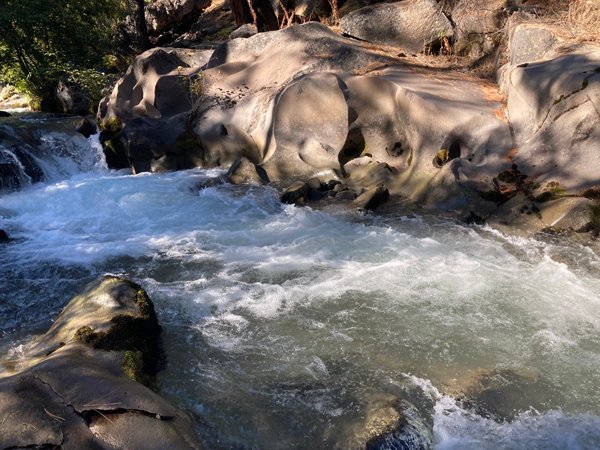
Snow-fed mountain streams bring us water year around. Photo taken in the Oregon Cascades by Arun N. Toké.

Greetings! We wish you all a very happy World Environment Day, being observed today (5 June 2024) around the world with the theme of Land restoration, desertification and drought resilience.

World Environment Day is one of the biggest international day for remembering our relationship to the environment. Led by the United Nations Environment Program (UNEP), and held annually since 1973, it has grown to be the largest global platform for environmental outreach (similar to the Earth Day that has been observed in the United States since 22 April 1970). It is celebrated by millions of people across the world.

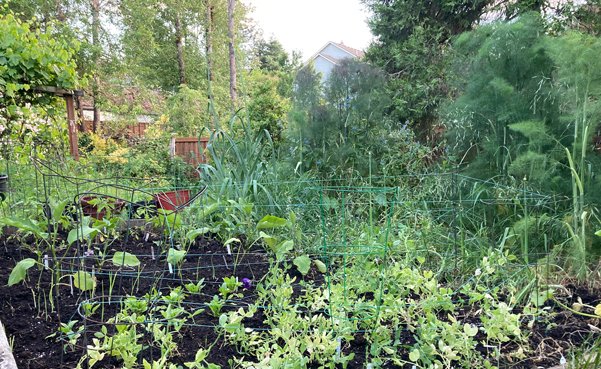
Our Backyard Garden. Photo: Arun N. Toké

Early this morning, as I began my day, I ventured out in our backyard garden, nibbled on a handful of berries that had ripened, and looked at how the garden was doing in the warm, late spring weather. Then later while I bicycled to work, I enjoyed the clean air that I breathed in and appreciated the shrubs and trees that enlivened my way to work. This daily, relaxed way of commuting to work gives me some time to think on what I need to focus on at work and to plan my day to achieve the needed tasks.

Without the natural environment (aka biosphere) that makes life on our precious Earth possible, we simply can’t exist. We owe Mother Nature our immense gratitude for this lifetime of opportunity to experience the incredible beauty and complexity of life.

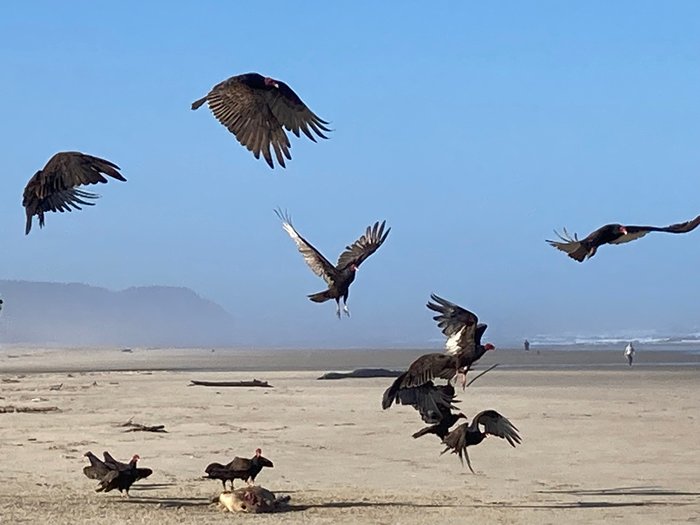
Vultures Devouring a Dead Seal on the Waldport Beach, Oregon. Photo: Arun N. Toké

Let us do everything humanly possible to keep the biosphere intact. Let’s appreciate what nature has sustained for millions of years. Human life has been around for just a small fraction of that time. True, with our intelligence and industry, we are able to alter the natural conditions in our surroundings for our temporary pleasures. And that is a big problem! We don’t see the long-term impact of what our technology and industry, economic and political systems, and greedy ways are able to do.

Land restoration is a key pillar of the UN Decade on Ecosystem Restoration (2021-2030), a rallying call for the protection and revival of ecosystems all around the world, which is critical to achieving the Sustainable Development Goals. Visit the World Environment Day website.

As we observe the World Environment Day, I would like to leave you with some images I carry with me on my cellphone. Whenever I look at them, I remember my immersions in nature—be it working in the garden, camping, hiking, and wandering through the woods, rafting in a river, kayaking in a quiet lake, or feeling tiny in the vicinity of the Pacific Ocean—that these moments represent.

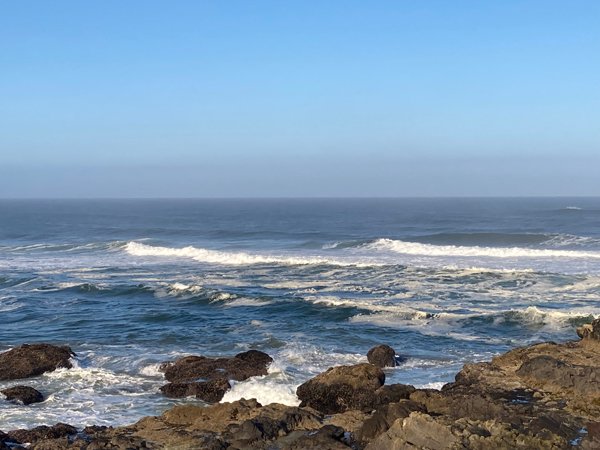
Pacific Ocean near Yachats, Oregon. Photo: Arun N. Toké

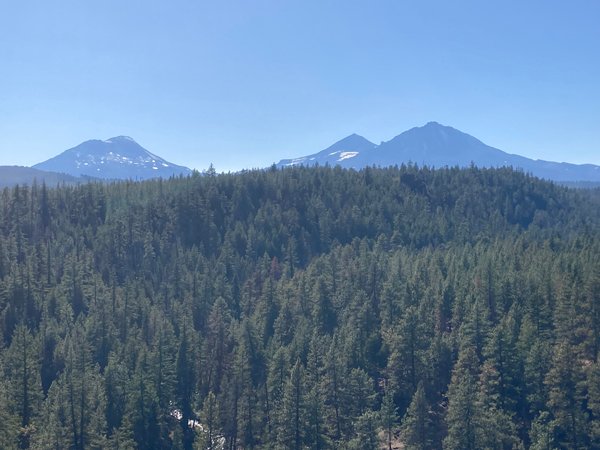
Three Sisters, Oregon Cascades. Photo: Arun N. Toké

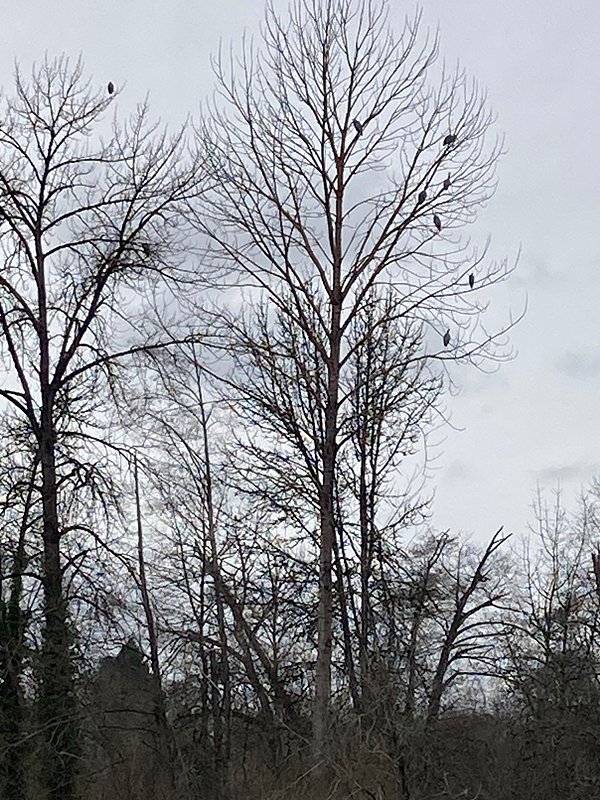
Many Great Blue Herons Enjoying a Winter Afternoon near the Delta Ponds, Eugene. Photo: Arun N. Toké

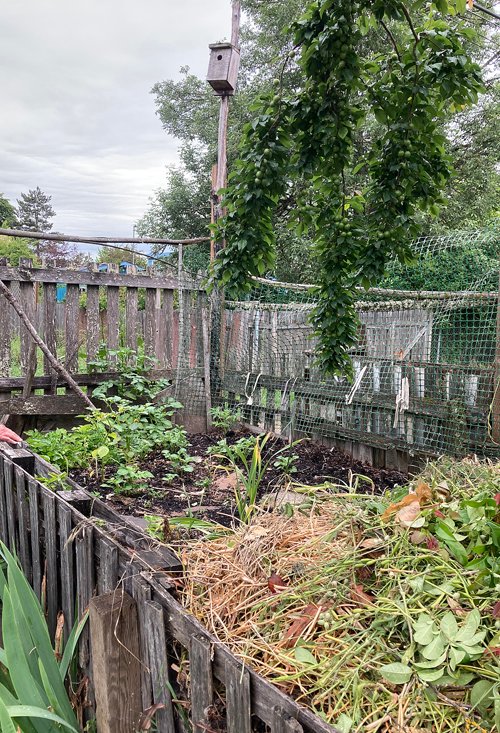
A Big Compost Bin in my Friend’s Backyard Produces Rich Soil for Garden. Photo: Arun N. Toké

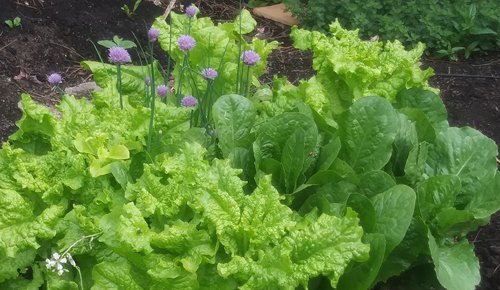
Paul Dix’s Lettuce and Chives Patch Produced Tasty Greens! Photo: Arun N. Toké

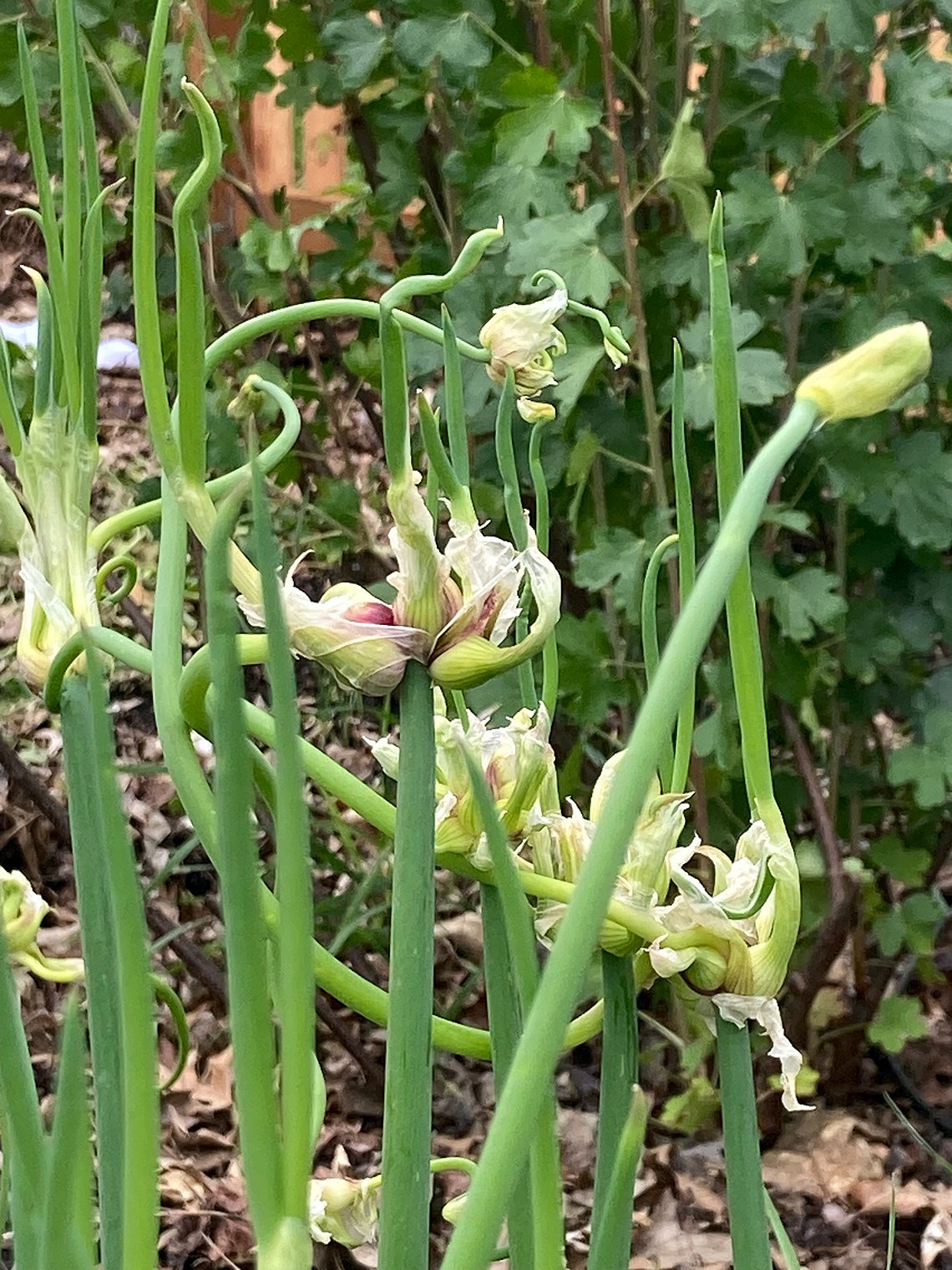
“Walking Onions” in Paul Dix’s Garden Provide Onions, Season after Season! Photo by Arun N. Toké.

Perspective

perspective

by Surabhi Verma, grade 11, California


female leader
            impossible

peaceful change
            impossible

violence eliminated
            impossible

full equality
            impossible

impossible, impossible.

its repetition,
bewilders me.

its presence,
bothers me.

its truth,
baffles me.

Impossible,
                  i    m    p o s s i b l e
                                                      i am Possible

Surabhi Verma, grade 11, California. She writes:

“I enjoy writing poetry and non-fiction and use writing as a form of expression and reflection. I have won several awards… and am a STEM blog writer for STEMpathize. When I’m not writing, I love playing the flute and spending time with my family and friends.

“I come from an Indian background and speak both English and Hindi. Though living in America, I find myself deeply connected to my Indian roots and culture, celebrating every Indian festival, going to the temple, and enjoying a variety of Indian dishes. My favorite part of an Indian event is that it gives an excuse to wear a lehenga!

“I am passionate about the flute, writing, and mental health. In the future, I hope to make an impact in the field of biomedical research while also being able to pursue my passions through providing affordable flute lessons, continuing to write, and taking part in advocating for mental health by creating more support programs.

”My poems are influenced by my experiences and cover a variety of topics, ranging from identity struggles and personal feelings to altering perspectives and the relationship between music and peace against violence.”

Memories of a Guava Tree

Memories of a Guava Tree

By Dawson Yee, age 13, grade 7, California.

My grandmother’s hands reach for my face
Feeling to be sure I am the child she remembers
Her mind has only enough space
for past Decembers.

My mother, father, and aunt turn in surprise
Her knotted hands grip my shoulders in recognition
With a teasing crinkle in her eyes
she calls my name, an intermission

Three years ago, she gave me a white guava seedling
With hardy red stems and elliptical leaves
She explained what it was needing
Learned from years of shielding it from disease.

Afterwards, she ushered me into the guest room, where she unearthed treasure:
An embroidered Japanese trinket box, a logic puzzle, an old plush toy
Her smiling eyes watched my curiosity with pleasure
As she entered the absurdly colorful world of a little boy.

But now we sit together watching nature shows
And she is like a sailor disappearing into a storm.
I can see her boat sinking but I’m not sure she knows
she’s lost her tiller and our roles will transform.

A logger chopping a tree flashes on the screen
She worries for the animals inside, knowing they are doomed.
I reach over her frail figure and push the remote to intervene
I tell her that our guava has finally bloomed.

—Dawson Yee, age 13, grade 7, California. Dawson writes:

“I see creative writing as a puzzle of wisdom. I’m 13 years old and in 7th grade but take high school English and philosophy at a local independent school. 

“I’ve also adored challenging myself to understand the symbolism behind not only prose such as in magical realism, but also the figurative language in poetry. When I recently analyzed “Boy and Egg” by Palestinian-American poet Naomi Shihab Nye, I found that searching for evidence of Nye’s purposeful line breaks and sound devices to convince a reader she was contrasting the innocence of a childhood immersed in nature versus the chaotic world to be beyond satisfying as a puzzle to solve. 

“I use my heritage as a third-generation Asian American to inform my writing, as it is an important part of how I view the world. I also write with an eye to health, both physical and mental, as I personally have several life-threatening allergies as well as Mass Cell Activation Syndrome, which shape my view of the world. My maternal grandmother, who recently passed away from Alzheimer’s disease, provided the basis for my poem “Memories of a Guava Tree.” In addition, I am influenced by my parents’ experiences as second-generation Americans growing up in predominantly non-Asian rural and inner-city U.S. communities and by my grandparents’ stories of the immigrant experience and their childhoods wrenched by memories of war and poverty. 

“I’m also an Event Coordinator for an online, international Asian American youth writers’ collective, Asian Youth Writers Alliance (asianyouthwritersalliance.com). In the writing groups that I’ve found surrounding these events and projects, where my classmates and fellow writers are insightful and tactful, I feel I have the space to put the puzzle of wisdom together. I would love to connect with a multicultural and global community of young writers who share the same values as these online initiatives. In finding literary magazines like Skipping Stones to share my writing, I realize more and more that I’m truly searching for the exact kind of wisdom and togetherness it provides.”