Category Archives: India

Seeing the World on a Bicycle

Seeing the World on a Bicycle

By Arun Narayan Toké, Eugene, Oregon.
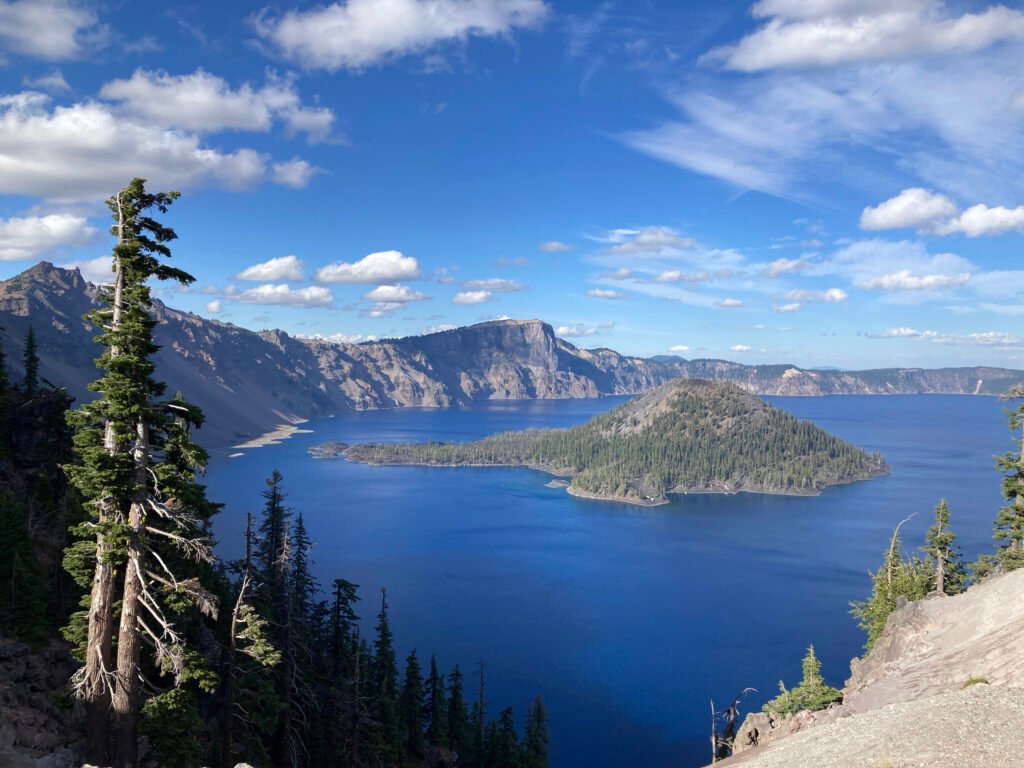
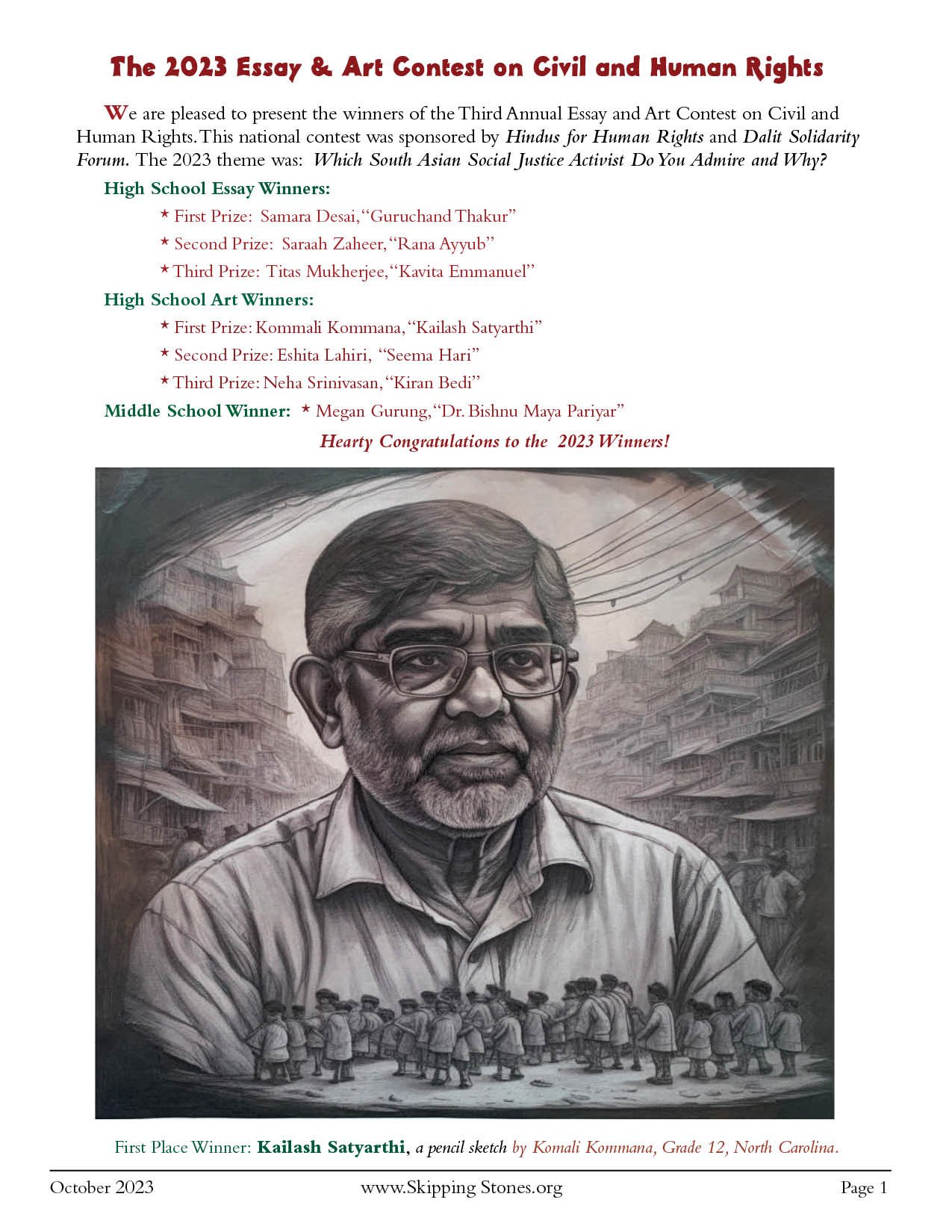
A few weeks ago, I bicycled the east rim of the famous Crater Lake with two good friends of mine. You might ask what’s so special about this bicycle ride?

On two Saturdays in early September, the Crater Lake National Park in Oregon (USA) closes the East Rim Drive to automobile traffic. Only bicycles and hikers are allowed to enjoy this beautiful mountainous landscape. It overlooks the incredibly beautiful, natural 2,000 ft. deep lake that was created about 7,700 years ago, when a volcanic eruption left a huge hole where the Mount Mazama once stood sky high—some 11,000 feet high. Snowmelt and rains over 750 years formed this crystal clear, deep blue lake. After the United States government made this natural landscape and its surroundings into a National Park in 1902, they also built a 33-mile long “Rim Road” at a height of about 7,000 to 8,000 ft. so visitors can appreciate the natural beauty as they drive around the lake to observe the varied vistas of the valleys and the mountains.

Each year, three to five thousand bicycle enthusiasts—young and old—come to ride around the lake on these two Saturdays. Some participants choose to hike or run parts of the scenic road with no shops or commercial activities. Every so often, you come across rest areas with incredible vistas of the lake (see photo above), distant valleys, and many spectacular mountains like the Diamond Peak. The organizers even provide several rest stops offering cold drinking water, snacks, and hot drinks. At one rest stop, someone even served us freshly baked, nutritious cake!
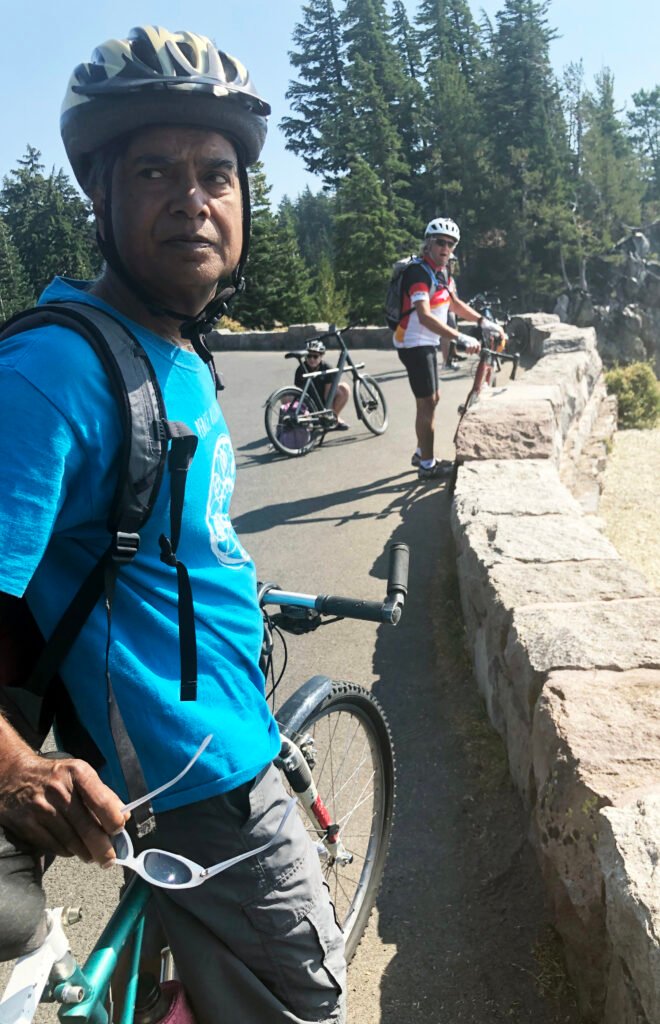
Two years ago, after bicycling a part of the East Rim Road during this event, my friend Daemion and I had hiked a mile down to the lake shore, and took an exhilarating swim in the icy cold waters, and then hiked back to the rim with about 2,000 feet elevation gain. (Daemion is a “pro” at bicycling. A few years earlier, he had bicycled 2,000 kilometers from his hometown on the Southern Oregon Coast to the Grand Canyon National Park in Arizona, and after his Peace Corps volunteering assignment in Sierra Leone, he bicycled over 1,600 kilometers to Ghana before returning back to the U.S.!)

With the popularity of the electric-assist bicycles, senior citizens and others with limited physical abilities are able to participate in this adventure, once reserved for only the “physically-fit” athletes.

This beautiful bicycle ride reminded me of my five month long adventure, several decades ago, when I was young and full of zest for adventure.

* * * * *

As a child, I grew up in Central India…my father had a bicycle repair and rental shop. Naturally, I learned from him how to fix simple repairs like oiling the moving parts and fixing flats in inner tubes. In the U.S., if you take your bicycle with a flat to a bicycle shop, they simply replace the inner tube. But in India, the repair shops actually found the pinhole using a container of water to see where the air was leaking out from the tube, and then vulcanized it. Similarly, when a tire had small hole or break in it due to wear and tear, they’d put a piece of an old tire as a backing to cover the worn out area, rather than replacing the old tire. It was inexpensive and meant for functionality, rather than speed. Only when it was absolutely needed would they put in a new part!

After I moved to Vermont (USA), I acquired a ten-speed bicycle. During my weekends or summer breaks, I didn’t shy away from bicycling 60 miles or so a day, over two or three mountain ridges with steep inclines. And, for the last 30 years in Eugene, my common mode of commute is bicycling. I believe I must have bicycled upwards of 50,000 miles (80,000 Kilometers) over these years.

* * * * *

I have cherished memories of my five-month-long travels by bicycle in Northern Europe. On my return trip to the U.S. in the summer of 1986, I was invited to visit some friends in Germany and in Sweden. After spending a few weeks of summer with my friends in Germany, I went to Stockholm. It was mid-summer and the days were long and warm. I decided spontaneously to buy an old (I’d say, antique), single-speed bicycle for a very reasonable price in the university town of Uppsala and bicycled south to the Stockholm! It was strenuous, of course. But after a couple of days of resting at my friends’ house, I was ready to continue. I had no idea where I’d go, how far I might travel, which way I might take, and for how long!

I set my next destination as Karlstad, the City of Lakes in Southwest-central Sweden. While bicycling in the afternoon, it began to rain. I kept myself dry under a porch roof and after a while when it stopped raining, I continued on. I realized I had not prepared well for the trip—no raincoat, no spare tubes, no bicycle pump, no tools, no tent, no bicycling maps, and no plans. True, I did have a road map of Sweden so I could decide which general direction I might take and what my next immediate destination city might be.

Que sera, sera! Whatever will be, will be! I wanted an attitude of faith and trust. I decided I’d deal with what comes my way, when it does! Since I had not made any big plans, I didn’t feel like I was under any pressure that I had so much more to travel, or that I had so little time left to complete my journey.

When it felt right, I would look for a place to stay—either a youth hostel or, if I was in the middle of nowhere, just sleep under the stars in my sleeping bag. Sometimes, I asked a passerby or a farmer along the rural road if they knew of a place I might stay for the night. Many a times, the farmers offered their barns… but they made sure to ask me if I smoked. When I told them, “No, I do not smoke,” they invited me to use their barn; and usually there was plenty of hay in the barn to make a good padding under my sleeping bag. More likely than not, I was also invited for a morning breakfast of muesli (cereal), yoghurt or kefir (cultured milk), toast, a good cup of coffee, and light conversation. And, then I’d continue on my journey.

At times, I bicycled late into the night… at that high latitude, almost near the Arctic Circle, the sun did not set until almost midnight. As tired as I’d be most days, I slept like a log, and I had no idea what time I woke up. I carried no watch, and in those days, there were no cellphones either. It was a totally carefree way to travel. I had no schedule, no planes or trains to catch, and nobody waiting for me.

My Swedish friends had told me that in Sweden, you could camp out anywhere in the countryside as long as you were not bothering others. If you camped about100 meters away from a home for the night, you’d be fine. I did not see any “No Trespassing” signs anywhere!

Most campgrounds did not charge you to sleep there; but you had to pay for the use of their facilities or restrooms, etc. It being a warm summer season, I was very comfortable sleeping outdoors without a tent; and at times, I found refreshing places to swim. International youth hostels provided a reasonable place to stay and a good morning breakfast. I often bought my supplies in small stores—fruits, vegetables, bread, etc. to keep me nourished. At times, I found patches of wild strawberries and raspberries in the countryside too.

* * * * *

One morning, after a good night’s rest out in the open countryside, I packed my bag and began bicycling. Soon, I rode by a few teenagers sitting on a culvert. They tried to make some conversation in their broken English and invited me to their home. Their mom served me a breakfast of fish curry and rice. They were refugees from Vietnam.

In one small city of may be 20,000 people, when I reached downtown it must have been past 10 p.m., I asked some youth (who looked Indian) hanging out in the town square, if they knew of a youth hostel in the town. They said they didn’t know, but that they were staying in a hotel, and I was welcome to join them. I walked with my bicycle over to their hotel. I found out that they were war refugees from Sri Lanka, and the government had housed them in this hotel. I watched them make hot, spicy curry and rice. Luckily, they had some yoghurt to go with the meal; I don’t think I could have possibly eaten that super hot curry with several tablespoons of red cayenne pepper. We had some good conversations before retiring for the night.

Another evening, it was raining—not very heavy, but a consistent rain. It was too wet to find a dry spot to sleep outside. So I waited out the rain under a roof before continuing on. Finally, when it stopped raining in the wee hours of the morning, I bicycled on towards the town of Holden in Norway until I found a picnic area, and I slept in my sleeping bag on one of the picnic tables; the grass was too wet!

Early that morning, I heard a car pulling into a nearby picnic area. So I figured it was time to roll on. Just as I was about to get out of my sleeping bag, a middle-aged woman from that car came walking to my table and said in Norwegian or Swedish, “Good Morning,” and handed me a hot cup of coffee and some snacks with a smile. And, she went back to her family for their breakfast. What a kind and considerate couple!

* * * * *

I kept going towards Oslo for a while, but decided to head south instead, towards the famous city of Gothenburg. It is the second largest city in Sweden. It’s situated on the Kattegat, an arm of the North Sea. After enjoying swimming at a vast beachside park, I continued south towards Copenhagen in Denmark. I connected with a couple of other cyclists, and we bicycled together for a while. That encouraged me enough to continue on with my bicycle journey. It had become a way of life for me. I pedaled across the southern region of Sweden to Kivik on the Southeastern coast. I was having a light conversation with the owner of a farm and I noticed that they were using a wood pellet stove for heating the farmhouse. During our conversation he realized that not only did I have an engineering background but also that I had written a textbook on Energy and Society, so he invited me to see his wood-chip stove and the heating system. After that he extended an invitation to stay with the family for the weekend. He said they had a birthday party for their daughter the next day and that I might like to experience that.

So, next morning—bright and early—we all walked over to her window to wake her up with a Happy Birthday song in Swedish. And the party was on! I felt like I was a part of their family. I wrote a story of this Swedish Birthday Celebration in English and typed it up on their non-electric typewriter and presented it to the family for their keepsake.

Then I bicycled west towards Malmö and continued over the bridge to Copenhagen, Denmark. While pedaling, my knee was acting up; even a slight uphill was impossible to pedal over. So, when I visited a Danish-Mexican family that I had met during my travels in Sweden, they suggested to rest up for a week with them. After that week of rest, when they suggested that I go north with them to a folk music festival in Aarhus, I was more than happy to accept. This way, they said, I would be able to ride through much of Denmark and get a feel for the country. I bicycled up one of the tallest points, Himmelbjerget (The Sky Mountain) in Denmark (150 meters high!) and then fly down it on my bicycle.

In the rural area of Denmark just north of Holland, while enquiring if there was a youth hostel in the area, an old farmer saw that I was bicycling through Scandinavian countries and invited me to his farmhouse. He also asked an English teacher he knew in the area who had visited the United States to check me out. After talking with me for a while and seeing my valid U.S. passport, he told the farmer that I was to be trusted. And he told me I was welcome to stay with them. The old farmer, close to seventy years, quickly cleaned up a spare bedroom in the house for me. We played a game of chess and ate typical Danish supper with Danish beer. The old man spoke no English and I did not know any Danish; but we had a great time. I was asked to come to a party the next day, but I politely declined.

While bicycling through Denmark, I noticed that I could see the inner tube on my front wheel; the old tire had worn out in a place after traveling more than a 1,000 kilometers. I bought a new tire at a bicycle shop at 5 pm on a Friday evening, just before they closed. They couldn’t put it on until the next working day and I figured I would do it somehow.

As I was bicycling through the city with a tire hanging on the handlebar, a middle-aged man waved me down and asked if he could help me with tools to replace the tire. We walked over to his home a few blocks away and replaced the worn out tire. During our light conversation, when he realized I had been bicycling through several countries, he graciously invited me for supper and an overnight stay. He was a schoolteacher and we shared good conversations on various topics. And, the next morning, I continued on my journey south to Germany, all rested up and refreshed.

* * * * *

Soon, I was bicycling through Flensburg, Germany. I continued on to the large city of Hamburg in Northern Germany, and visited a couple I knew from my trip to Guatemala. They had a new-born child, and I was amazed to see the planning and detailed work they had put in the bedroom for their baby. It was very conducive to a restful sleep. Every night, they read a couple of board books to the baby and turned on soft music to get the baby ready for a good night’s rest. I was included in the whole ritual!

After spending a few days with them sightseeing, I was on my way south. While crossing a bridge over the Elbe River in Hamburg, I saw someone walking about 50 feet ahead. I said to myself, I think I know who she could be. I yelled her name as I bicycled towards her, and sure enough, it was my friend Heike. What a pleasant surprise! We had met on our “Peacewalk Through Central America” a couple of years earlier and walked together over 500 kilometers through Costa Rica and Nicaragua. No wonder, I could tell who was walking ahead!

After a good conversation and quick lunch at an ethnic restaurant, we decided to bicycle on to Frankfurt. Heike needed to go visit her aunt there. She picked up her bicycle from her home, and we were on our way south. After spending a few days with her aunt in Frankfurt, I continued the journey to Heidelburg in Southern Germany. I had left my luggage with my friends there before I had gone to Sweden. After a few days of resting and sharing my experiences with my friends, it was time to begin my return journey.

* * * * *

Much of the time, I was able to bicycle on scenic and safe bike paths along the rivers in urban areas of Germany. In Sweden, Norway and Denmark, the bike paths paralleled the main roads but they were separated by rows of trees or some grassland and therefore, it was less noisy, more pleasant and much safer to bicycle on them. In some larger cities, they even had “Bicycle Only Roads,” with their own traffic lights! Throughout my travels, I felt car drivers were very considerate of bicyclists and pedestrians. They drove carefully so as not to endanger us. Once, I was pleasantly surprised when a big semi (a huge truck) stopped for me to cross the street on my bicycle.

The bicycle lanes and bike baths were free of litter. During my whole trip, not once did I get a flat tire; no nails, no broken glass or sharp objects halted my bicycle journey. My rear tire served me well until almost the end of my 2,500-kilometer journey. Then I discovered a slow air leak in rear tire near Wuppertal, a hilly city south of Dortmund. I rode up and down a steep, long and windy road on my single-speed bicycle. However, while climbing up I was going too slow for the headlamp to shine bright; the generator didn’t work at low speed! Other than that, this 50 plus year-old bicycle gave me no trouble on this long journey that covered parts of Sweden, Norway, Sweden, Denmark, Germany, Belgium, and Holland (the Netherlands). I visited some famous cities like Stockholm, Copenhagen, Hamburg, Bonn, Cologne, Dortmund, Frankfurt, Heidelburg, and Amsterdam. In a few cities, like Bonn (which used to be the capital city then), I even stayed long enough to know the local culture and attractions. This was the most wonderful, educational experience I could have had. It was beyond my imagination and it did not cost me an arm and a leg.

On my return journey, I covered the Netherlands in just a couple of days and arrived in Haarlem, about 25 kilometers west of Amsterdam. I had visited a Christian community in this coastal city some years earlier. So after a few days, I said goodbye to the Netherlands and left on a ferry to the United Kingdom, leaving my bicycle with the Christian community.

* * * * *

Life has taken a different turn since then. I have been publishing Skipping Stones, a multicultural, global awareness magazine for today’s youth for the last 36 years. My European experience was definitely a motivational factor in founding the magazine.

In Germany, Denmark, Sweden, and the Netherlands, like so many other countries on the continent, almost all of the young Europeans I met were bilingual or trilingual! I wanted to promote this concept of multilingualism in Skipping Stones. In the beginning years, many of our published articles, poems, and stories were in two or three languages, side by side. Having grown up using three languages in India, it was normal for me. But not so for many Americans!

Unless you grew up near the Southern border—like in Arizona, Texas or California—where many people do speak both Spanish and English, it’s not common to meet many bilingual people in the United States. Of course, most new Americans and Latin Americans (including Cuban Americans and Puerto Ricans) are fluent in at least two languages. Because I have spent more than a year in Mexico and Central America, I have acquired some ability to communicate in Spanish, and I know first hand, how comfortable it feels to have the language skills of the region you are visiting. Most Indians can vouch to this fact of social life; for we grew up with learning and speaking three or more languages in India. Mahatma Gandhi could speak 14 languages, I have heard!

Recently, as I was about to start writing this article, I came across a news report of Lael Wilcox, an American woman who bicycled around the world—over 18,000 miles (that’s 29,000 Kilometers) in a record 108 days and 12 hours—averaging some 160 miles a day! While my bicycling adventure was nowhere near that caliber, I have acquired a lifetime of experience bicycling through, and immersing myself in, five countries in about five months. I would recommend it to anyone who can take time in life to embark on such a journey. I have met bicyclists like Willy Weir, who have bicycled in many continents and written a few books about their wonderful experiences. One thing for sure, people all over the world are more than pleased to meet and greet adventurous souls, break bread with them, have chai and chat with them, and make them feel welcomed, wherever they are.

Bicycling is an amazing mode of transportation; I cannot say that enough. In today’s world where plane-hopping and automobile travel has become the norm for so many of us, bicycling offers a welcome relief. We can soak in the beauty of life, away from the hustle and bustle of busy airports or crowded lanes of our highways. As we bicycle, often we’re able to stop frequently to have a look at something that calls for our attention, appreciate the beauty that nature has to offer, or to say hello to people we meet along the way. Our carbon footprint is much smaller with the bicycling way of life and travels, and we get more value out of our time and money. Our journey offers us many surprises along the way while we keep our body healthy and fit; our muscles strong and vibrant while we keep on pedaling.

By Arun Narayan Toké, Executive Edior.
Eons of Thought

Eons of Thought
By Manvi Gupta, recent high school graduate, M. P., India

In the cosmos, who determines the designs?
Who creates the stars, and who draws the line?
Am I the actor in a predestined play,
Or am I the narrator who holds the quill, forming the best story ever told in a way?

Can a single drop of rain question the ocean’s mighty
Or does it become one with the sea and lose its identity?
Am I the architect of fate,
Or in this riddle of existence are we all the same?

What is a fallen tree to the deafening silence of the forest with no ear?
Is my existence only validated when heard loud and clear?
If I am hidden in the darkness, does the sun brightly shine?
Is the universe but a reflection, of my consciousness divine?

Does the dart of time travel straight, or can it arch or sway?
If tomorrow mutters a secret, what would today say?
Is the present, past and future nothing but the illusion of my mind,
Or are they the stepping stones to the actuality we bind?

Can we discover the fringe of the universe, the origin of space?
Is there a creator, a composer, in this celestial embrace?
Or is it but a Möbius strip, a limitless twist,
In the loom of existence, does beginning or end exist?

In this universe, am I a free thinker,
Is my mind the sole philosopher,
Or is it but a fragment of a lone troubled lad?
In this shore of existence, we are but a grain of sand.

—Manvi Gupta, just graduated from high school, Madhya Pradesh, India. She adds: “I’m someone who is passionate about building ideas from the ground up and constantly learning, with a deep love for creative writing.”

The World of Table Tennis

The World of Table Tennis

By Viraj Ajgaonkar, age 10, grade 6, Mumbai, India

A strategic game with swift moves
that is played between ones or twos.
To compete in singles or doubles,
is what you need to choose.

Played atop on a mini-playground,
with net across the middle.
Holding a racquet in hand,
you simply hit the ball or fiddle.

There is no room for foul
let the game be fair,
Otherwise, you will be warned
by the referee in chair.

Quite popular by the
name ping pong,
It is every boyhood dream to play
as good as Ma Long.

A long way to learn Lebrun’s
signature style of pen-hold,
If one follows a right technique,
am sure you’ll win a gold.

It is rather difficult to play on
Bobrow’s snake serve,
Be as wise as not to hit hard, just roll
and maintain pure nerve.

Some learn forehand while
others backhand faster,
But you have to be competent
in both to be a game master.

Improved footwork and drill
enhances agility,
Rigorous practice
improves overall ability.

With more and more matches,
you learn to tackle your opponent,
And for a game of table tennis
this forms an essential component.

Advancing from an amateur to
professional level drills,
Day by day you learn
better and better skills.

The ranking of the players time to time
switches up-and-down,
You never know one fine day, you will
receive the winner’s crown.

The game demands focus, patience
and cool temperament,
To play in the event to the
spectator’s amazement.

With hours of daily practice and a stroke of luck
you may find a place in the finals
Rejoicing the moments of triumph
by winning glistening medals!

          By Viraj Ajgaonkar, age 10, grade 6, Mumbai, India. He adds:
”Being a sports-enthusiast and an intermediate level table tennis player, I have tried to pen down the nitty-gritty of this racquet game in this poem using ‘simile’ as one of the figures of speech while comparing the playing surface with a mini-playground! I also like to share the experiences that I have had while playing in different level tournaments and the essential requisites with the special mention of the ‘GOATS’ (Greatest player of all times—China’s Ma Long, France’s Alex Lebrun, and Adam Bobrow, American table tennis commentator whom I greatly adore) through this poem. As a matter of fact, I do have a strong bonding, a feeling of camaraderie with my duo (my racquet-ping pong balls) and one can’t deny the fact that a sport teaches you significant skills and life values even at a very early age!
“I like to venture into varied activities and learn associated skills, which I feel is a life-long process. I envision myself to be a world-class table tennis player and grow up to be a sports coach or may pursue sports medicine! I wish to transform my passion into an initiative that would strengthen the feeling of ‘Love Sports’ in the minds of youngsters or rather every common individual.

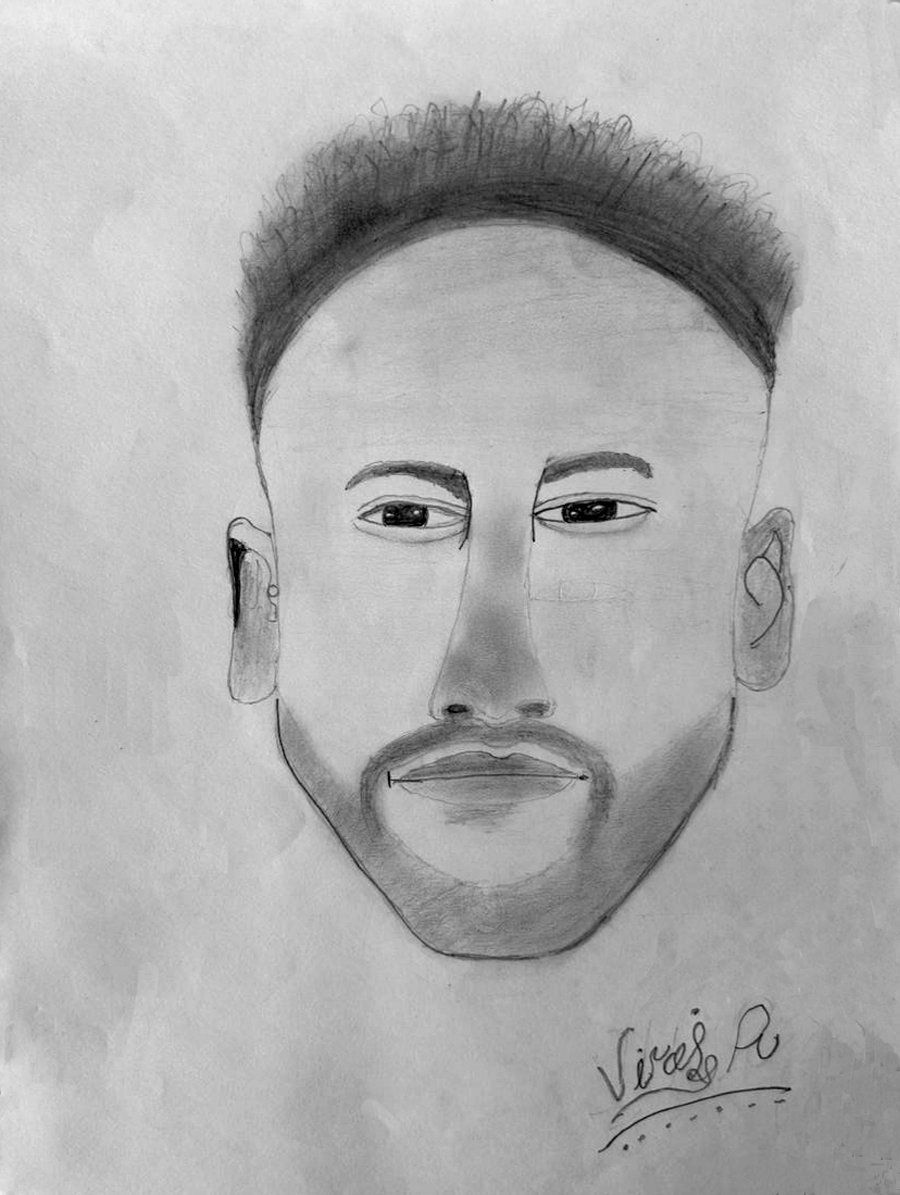
”I also do a lot of sketching of famous personalities and exhibit interest in playing musical instruments like tabla and keyboard. I have drawn a sketch of Neymar da Silva santos Jr, a Brazilian professional soccer player as he is a great role model for young athletes. He is humble and gives 100% on the field. He posts funny videos of himself on social media and I relate myself to him as he is hyperactive and playful.”

Neymar da Silva Santos Jr, a Brazilian professional soccer player. Sketch by Viraj Ajgaonkar, age 10, India.

Ohana

Ohana

By Likhita Makam, age 15, Telangana, India

We fight and apologies we forget.
We get lost and we get upset.
We fall apart into a million pieces,
But being together smooths out all the creases.

Because in the end we’re a family
although we don’t get along dandily
Far from picture perfect Pinterest poses
We make it to the diner just before it closes
We spend weekends at home in quarrels
Perfect family? For that we’d have zero laurels
But we stick together, no matter what
for each other we’d take a jab in the gut, somewhat
What matters the most is we never part
We’re always close, we never depart

Because we’re a family
And family means nobody gets left behind
No matter our irregularities
No matter our similarities

—Likhita Makam, age 15, Indian American high school student, living in India. She has been published in youth newspapers and literary magazines. She is an avid reader and is up for a poetry discussion at all times.

Manu and Noah: Strikingly Different, Surprisingly Similar

Manu and Noah: Strikingly Different, Surprisingly Similar

By Sahil Prasad, grade 8, Maryland.

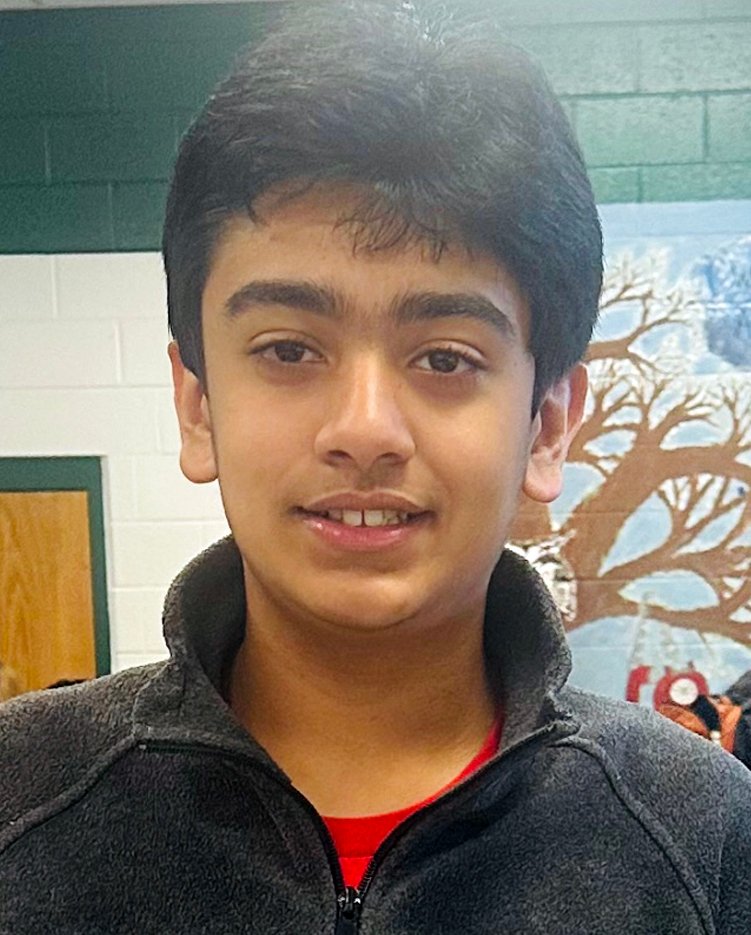
King Manu, the first man according to Hinduism, and Noah, the survivor of the great flood, are two legendary men, who hail from entirely different religions of the world. Yet, these great individuals, surprisingly, shared multiple similarities that would be interesting to dwell upon during these times when religion is the source of divisiveness.

The Great Flood Survivors

First, both Manu and Noah were chosen by their respective Gods to survive a great flood. Their stories are startlingly similar. It is incredible that the two civilizations that these stories originated from were never in direct contact with each other until many centuries later!

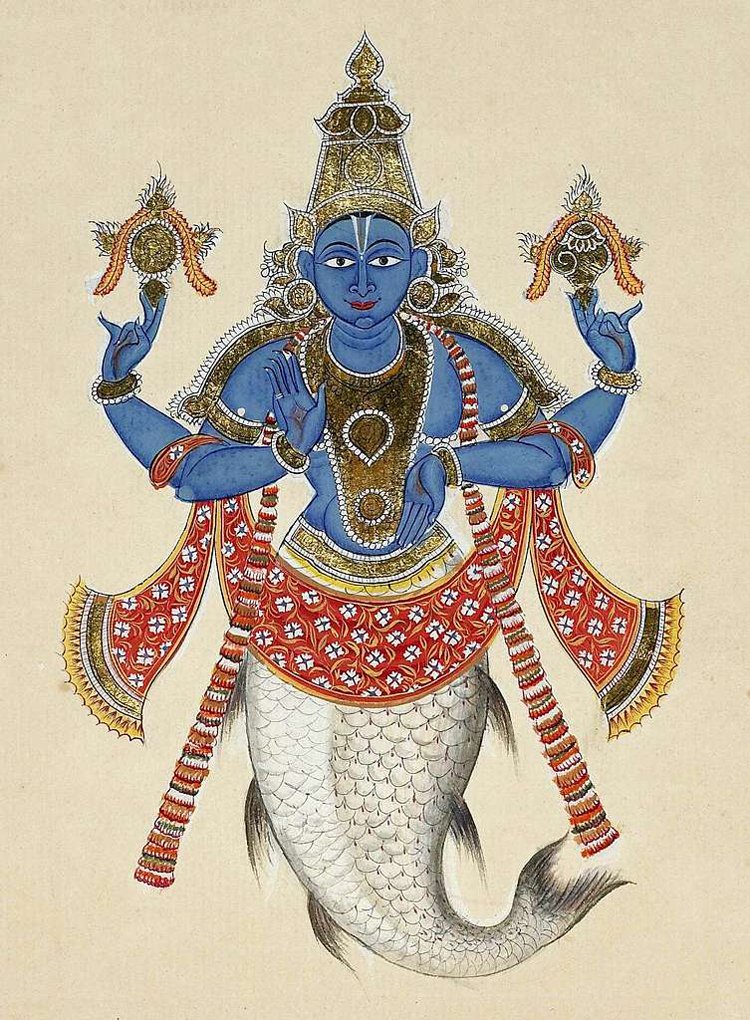
The Matsya or Fish Avatar of Lord Vishnu. Artwork is from the public domain and Wikipedia.

Manu was a sage who dedicated his life to faithfully serving and worshiping Hindu gods. The Lord Vishnu, the preserver in the Hindu trinity, chose Manu to be the survivor of a flood that would cleanse the world. The story goes that Vishnu decided to take the form of a tiny fish, the first of Vishnu’s ten avatars, and said to Manu, “Protect me from my predators and I will reward you.” Manu decided to keep the Vishnu-fish in a pot, which it quickly outgrew, and then in a lake, which also proved to be too small for the fish. Eventually, Manu moved the fish to the ocean. This is where Vishnu assumed his true form and informed Manu about a great flood that was about to occur. To ensure that his faithful follower survived, Vishnu instructed Manu to build an ark or a giant boat with all the animals, seeds, and other essential materials to survive the flood and start a new life. Manu decided to invite the seven holy sages or the Saptarishis to live with him in the new world. Manu and the seven holy sages guided the ark through the giant flood with the help of Vishnu–who led the ship with his horn in his giant fish form–to a peak where they rested until the world was cleansed. Finally, Vishnu came true to his promise and bestowed upon Manu the scriptural knowledge and power. The scriptural knowledge was passed down by Manu’s descendants and still continues to be studied today in the form of the Vedas.

Fun fact: According to B. B. Lal, the former director of the India Archaeology Institute, the flood of Manu approximately occurred as far back as the second millennium BCE.

Now coming to Noah; unlike Manu, the human race already existed in Noah’s world. The old human race was only concerned with money and killing, so God was disappointed with them. He decided to give the humans another chance by having Noah, the only devotee and true believer left on the planet, to be the guardian of a better human race. Noah, like Manu, also built an ark under God’s instructions, which were, “Build an ark of gopherwood, with rooms inside, three decks, and a door. Cover it inside and out with pitch.” (Genesis 6:13-22) Noah’s ark wandered the Earth (with Noah’s family and the various species that he had been instructed to bring with him) for 40 days and 40 nights in continuous rain. Noah traversed the ocean for another 150 days until God directed the boat to Mount Ararat (in present day Turkey) where it halted. Eventually, Noah sent out a dove to find land for them to settle and it came back a week later with an olive branch, which meant that land was out there. Just like to Manu, God made a promise to Noah that he would never flood the Earth ever again.

Harbingers of the Human Race

Manu and Noah were also attributed with ensuring the survival of the human race. After the great flood, Manu made a sacrifice to Brahma, the Creator in the Hindu trinity. He placed sour milk and butter in shallow water and this resulted in a maiden emerging from it, soon to become his wife. Eventually, the human race would start to grow at an exponential rate. Manu then instituted a quintessential set of laws (Laws of Manu) based on the Hindu scriptures that his ten sons and one daughter and subsequently, their descendants had to follow. One of these laws was to divide the population based on their gunas or skill sets. For example, people who were versed in the scriptures would be known as Brahmins. Eventually, humanity split into the solar clan founded by Manu’s sons and the lunar clan founded by Manu’s daughter. According to Hindu scriptures, Manu will be reincarnated when our current universe will be cleansed by Vishnu—in about 186.72 million years according to the Hindu scriptures—and he will be the leader and lawgiver of a more superior race.

In the case of Noah, after the devastating flood, he continued to live with his family and repopulate the Earth. Noah lived until the age of 950 and just like Manu, God helped his family grow rapidly. Just like the descendants of Manu split into the Solar and Lunar Clans, Noah’s descendants also split and settled the world, but they followed a different and more contentious trajectory than Manu’s descendants. Here’s how it played out.

Noah’s great grandson, Nimrod, began to build a colossal structure called the Tower of Babel, which slowly approached the height of the heavens. Citizens thought that Nimrod was building a temple, but it was revealed that reaching the heavens was his motivation all along to prove that he was an equal to God. As a result of Nimrod’s selfish actions, God decided to halt the construction of the Tower by making the workers speak different languages so they wouldn’t understand each other. As a last step, God took his punishment further and decreed that people of the city had to settle all around the world. This is how the world came to be inhabited according to the story of Noah and his family.

So there it is: the story of Manu and Noah. Given the striking similarities between them, some experts argue that they could be one and the same, a theory certainly worth pondering.

—Sahil Prasad, grade 8, Maryland.


A S.T.E.M. Woman from India

A S.T.E.M. Woman from India

By Saroj Pathak, originally from India, now lives in California.

My 50 years of professional life have been a series of challenges, failures, triumphs, and also a few shattered glass ceilings. I would like to share my experiences and describe some of the twists and turns, and the choices I made.

I grew up in Indore, Central India. We were six siblings growing up in a middle-class family. In the 1960s, my high school, St. Raphael H.S., did not offer math major to girls! I was exceptional in Math and wanted to pursue my passion. My father talked to Mrs. Jagdale, who was the head of a small public school nearby. Mrs. Jagdale, an early Women’s Rights pioneer, said, “If our girls want to take math, we have to start math classes.”

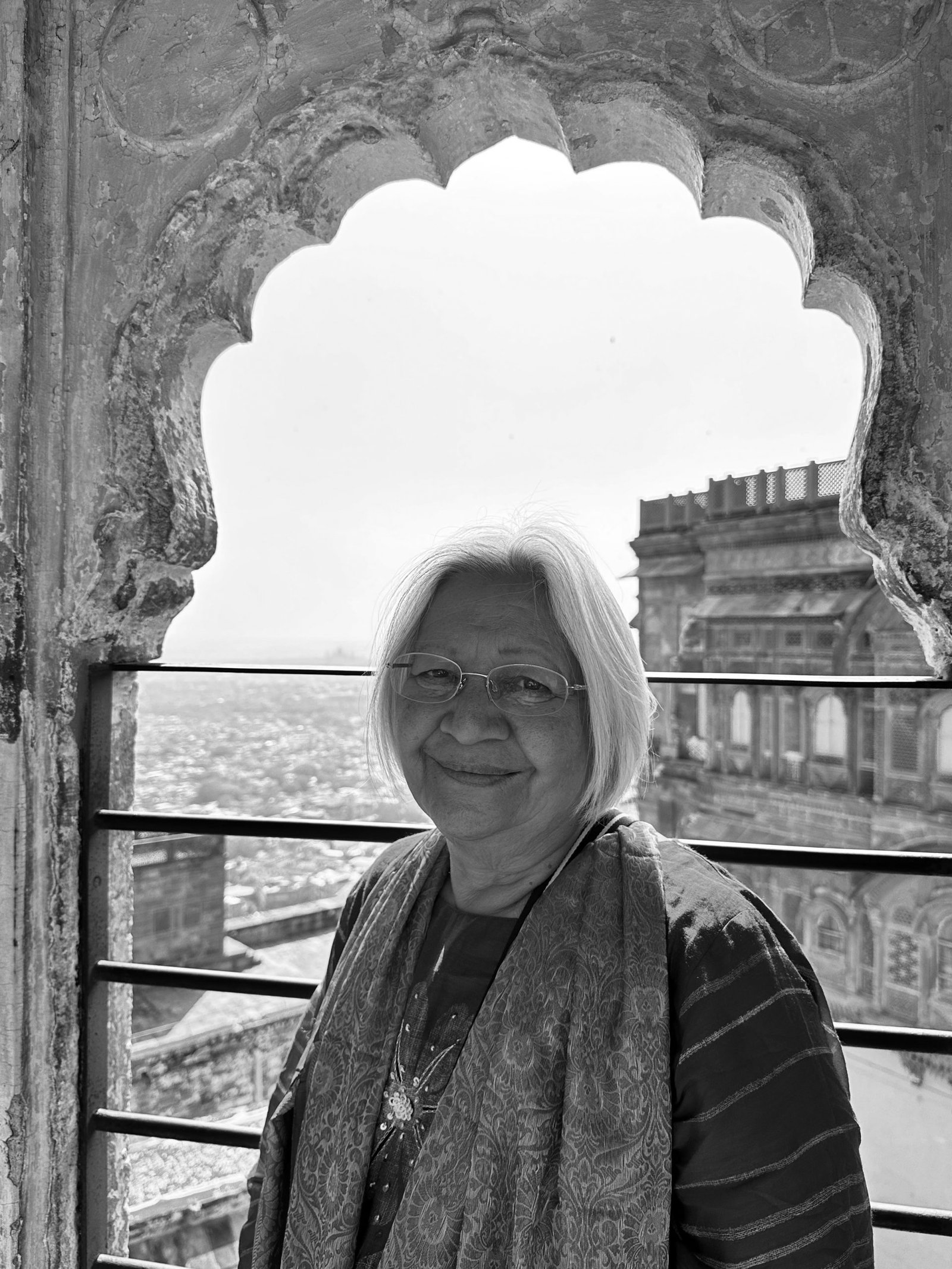
Now retired, Saroj Pathak Recently Visited the Historic Site of Mandu, near the city of Indore, Madhya Pradesh (Autumn 2023)

So my sister and I moved to Mrs. Jagdale’s school. In the nurturing environment of this small school, I ranked third in the state’s high school board examinations, an exceptional achievement!

From 1965 to 1969, I attended S.G.S.I.T.S., the only engineering college in Indore (M.P.). There were only five female students in the entire college. We had to fight for a small private bathroom and a tiny women’s room. I excelled in my chosen field of Electronics and Electrical Engineering and held the first rank in all branches of engineering throughout the four years. I was like a sponge; I absorbed everything offered. There was so much to learn from all my professors.

As graduation approached, I started looking for options for further studies. My parents were liberal but still would not send their daughter away for higher education out of state. And, I didn’t have the audacity to argue.

Dr. Dasgupta, the head of the college, recognizing my potential, and created an opportunity for me to pursue higher education in collaboration with the prestigious Indian Institute of Technology (I.I.T.) at Bombay (now, Mumbai), while working as a lecturer at G.S.I.T.S. in the Electronics Department. While satisfying my drive to excel, this enabled me to live at home. I taught for three years while completing my Master’s degree in Engineering in Control Systems from I.I.T. Although this experience was challenging, I wanted more.

I reached for a moonshot and applied for and was awarded a Rotary International Scholarship to study abroad. It was an easy decision to select University of California at Berkeley for further studies. I dared to dive head-on into the unknown, knowing only one person in America; a graduate student who had graduated from S.G.S.I.T.S. a few years ahead.

It was shocking for me to realize that I was the ONLY female student in the graduate school of electrical engineering, even at this prestigious university. The students and the professors were friendly and treated me with the utmost respect and kindness.

After graduating from U. C. Berkeley with a Master’s in Electrical Engineering and Computer Science, I worked as a semiconductor design and development engineer at American Microsystems in the Silicon Valley of California. When I came in for the job interview, the manager and engineers were shocked to see a female candidate. Women engineers were rare.

The Silicon Valley was full of type-A men, hungry for fame and wealth. It was a norm to “pull all-nighters.” All the engineers were transplants from somewhere else, and without family obligations; we worked hard and played harder. We created a family regardless of skin color or gender. We were on an endorphin high from the success of our innovations.

From 1975 to 1983, I worked with a small group of engineers at Intel Corporation; that’s where we invented and produced the first ‘non-volatile’ memory chips. These were the first chips that retained data (information) after unplugging the power supply. This was revolutionary! We published international papers, had numerous patents, and enjoyed the glory of success. I was a manager by this time and always felt respected and valued. My opinions counted, and I had the center seat at the table.

In 1983, I was offered a job at a Startup company to set up a non-volatile product line. My initial response was NO. I had an eight-month-old son and a three-year-old daughter. I was unwilling to work long hours. Since the company’s CEO wouldn’t take NO for an answer, we negotiated. I agreed to join the company, understanding that I could go home at 5 p.m. every day. The company provided flexibility, and I used my professional judgment to balance work and family needs.

Two years later, the room was packed with engineers from around the world when I presented a research paper on the First High-Speed Non-Volatile Memory at the International Solid-State Circuits Conference (ISSCC). My children sat in the front row. By then, I was confident and assertive enough to invite my children without asking.

When a Vice President position opened up, I did not consider it because I knew it meant working very long hours, and I did not want to sacrifice time with my children. Later, when the children were older and busy with school activities, I accepted a position as Director of a multinational research and development group in a different company. Most often, I was the only woman in the room where the decisions were made. Yet I also attended most of the swim meets, music lessons, cross-country running events and other activities with my children.

After 45 years in business, I decided to follow my lifelong goal of helping the younger generation in STEM field. I am passionate about the accessibility of primary science education to all children. To that end, I have started a non-profit that teaches science fundamentals to children of all socioeconomic statuses. I mentor through Stanford Mentorship Connections and other non-profit organizations. I am also the president of a local Kiwanis club whose mission is the education and well-being of children.

Advice to My Younger Self:

* Enjoy the ride. The trailblazing path is littered with obstacles, but there is no greater joy than facing challenges and finding solutions.

* Discover your core values and be true to them. Define your goals on your terms. Do not let others decide who you should become. Sort through the clutter of cultural baggage and embrace that which gives you joy.

* Be like a river flowing constantly towards the ocean, soft and flexible, but always focused on the destination. Change directions, detour if necessary, or carve a new valley, but keep flowing towards your goal.

* Be confident. You are stronger than you feel, smarter than you think, and braver than you know. Use any fear as motivation to be successful. That fear will then turn into confidence.”

* Educate yourself and acquire indispensable skills.

* Take chances. Inventions are just a step away from failure. Become comfortable with failure and learn from it.

* Dare to shatter glass ceilings, even if that means cuts and bruises. The pain of cuts and bruises is the price you pay to help your daughters and granddaughters.

* Most importantly, find a mentor. Find several mentors. Surround yourself with your cheerleaders. Find inspiration from the life stories of the pioneers who paved the path before you. From mythological women to recent ones, our (Indian) history is full of women who advanced humanity through their ingenuity, courage, and persistence.

* Be a mentor. You are standing on the shoulders of giants. Later, you can offer your shoulders to those following you.

* Be ready to choose. Most successful people have made difficult choices to get there.

* Find a supportive spouse. Sheryl Sandberg, author of “Lean In” and ex-CTO of Facebook, said, “The single most crucial decision you will make in your life is whom you marry, for this will determine the rest of your life.” She was talking to graduates of Harvard Law School.

* “Start the conversation before committing to marriage, not after.” Did you know that the Supreme Court Justice Ruth Bader Ginsburg credited her husband for her success?

In Conclusion, as a young adult in STEM fields, I would like you to be brave, explore, and take chances. Show up daily, sit at the table, and speak up in a firm, clear and compassionate voice. Act like the fate of humanity depends on you because it does.

—Saroj Pathak, originally from India, lives in California. She shared this advice with engineering students at her Alma mater in Indore, India, in November 2023.

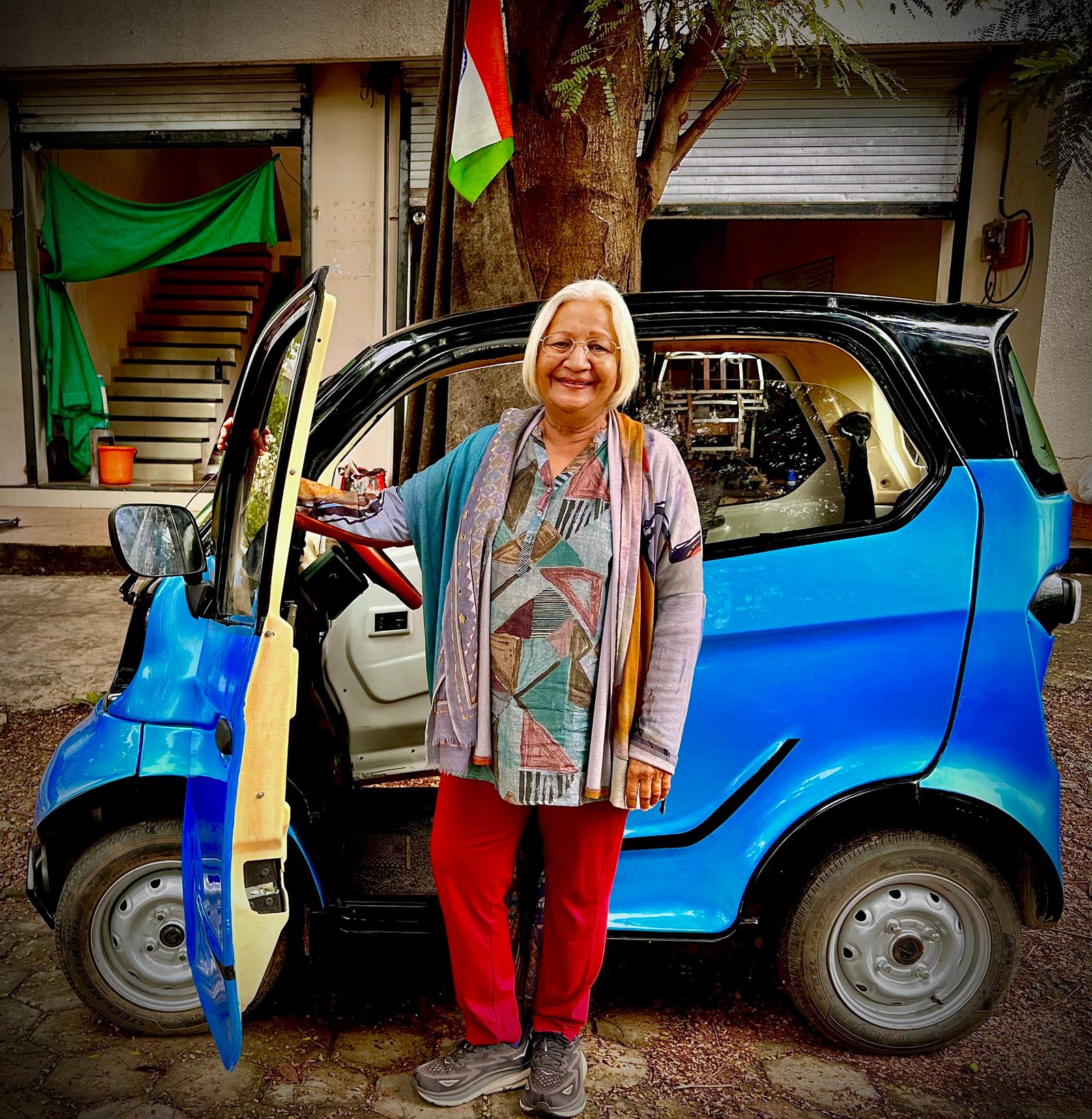
Photo: Saroj in Indore, Nov. 2023.

The Abscission of Perennial Petals

The Abscission of Perennial Petals

By Aniket Dewangen, grade 10, India.


The bougainvillea flowers whistled with the wind. Each of them withered away as two stayed by the coarse and flaky mahogany tree.

My childhood

The image of the god was pleasant and heartwarming. He held a brass flute adorned with a flower and a bead. The arched legs crossed against the drapery of the Dhoti1 and his lips touched the edge of the flute. His gaze was drawn downward to the majestic instrument. Its amygdaloid-like face and beaten-blue complexion were elegant and defined by a sharp jaw. A majestic peacock flower hung above the satiny hair at the crown of his head. The ace-shaped, indigo-colored splotch in the middle was covered by a flurry of green strands that flowed in a rhythm. The Lord Krishna stood there elegantly, displaying a natural aura of benevolence. Next to the defined blue edges was the goddess of devotion and tenderness, Radha. The two gods stood serenely in the centre of the ashram.2 The terracotta figures seemed to be emphasized in the minds of the people standing before me. Two Pandits3 walked towards the idols. They were wearing angharkas (a short coat-like scarf around the stomach). They marched around and began to proceed with the pooja.4 I looked back and scanned the long queue. The line’s shape curled almost like a racetrack. We all soon congregated, pushing forward to get a greater view of the two idols in the spotlight. I couldn’t see much. I just saw the shoulders of men who were agitated. My father, who limped through the crowd was in front. He had polio, and an orthotic device was attached to his legs. He began to walk in discomfort without any space left.

“Are you okay?” My father looked at me. He looked in agony, yet he powered through the line, which was like a Dandi march.5 Paa (father) was a kindhearted man, or at least I thought so, for the majority of my life. Soon the line began to compress, and I could sense the aroma of Rabri and Malpua.6 The glistening white substance dazzled with a pinch of cardamom on top. It was my favorite. My mother standing behind me kept her soft hands on my shoulders as we moved slowly through the long queue. The brass-plated bell rang at a fast tempo and the procession began. The chimes cut the air and rang through my ears. Soon I started to sense that we had come to the beginning of the line. My mother took me in her arms, and I could finally have a better view of the luminescent and vibrant colors. Both the terracotta figures were covered in tinsel. The pandits approached the idols and began to swerve a copper plate that contained an incandescent flame in one of the lamps. The intricate and mesmerizing designs on the bell and the plate were astonishing. The Pandits began to pour a white substance over lord Krishna. The idols were soaked in the thin badam milk.8 The low-pitched sound began to omit and amplify in the chamber. The Chappan Bhog9 had begun. The Chappan Bhog was a tradition during the festival of Janmashtami10 where the graceful gods were lavishly fed. The Pandits sang a harmonious tune and began to pour different things over the idols. I never understood why this happened. My mother told me that the gods were never fed, and this festival would fulfill them. The myriad of assorted foods made my mouth water.

“Now beta,11 ask for what you want most and fold your hands looking up at the terracotta idol,” my mother said in a haste. My hands joined together and pressed against the warm surface of my palms. I closed my eyes. The one wish and the one thing that I sought the most was barely even related to me. “Dear god, since you have had a wonderful meal, it wouldn’t be rude to ask you this small request. Please keep my parents happy, they seem to fight a lot. I want them to be happy and complement each other.” My eyes slowly opened and a hue of blue covered my vision. The voices that were once muffled began to ring in my ears. The same flame came close to me by the copper plate. The Pandit approached me. I leaned forward and raised my hands underneath the fire that rippled diagonally in the presence of oxygen. The Pandit then smiled and took a red-colored pigment mixed with water. He dipped his thumb in the color and put the tilak12 on the center of my forehead as I pulled my hair back. The Pandit took a few rice grains and stuck it at the same red line. Soon after, my focus quickly shifted from the pooja to the prasad.13 The prasad was a small token that was a blessing from the gods. Taking it from one hand was disrespectful, so I layered them both underneath. A green powder-like brittle was poured into my hand. It looked like earthy soil in my hand with other assorted colors sprouting. I dumped it all in my mouth, and the sweet powder dissolved.

We exited the ashram and my father smiled at me. I hugged them both, yet they had some repulsion against each other, like two magnetic poles. I noticed it instantly, but I didn’t understand what caused this tension.

Vexed – pandora’s box

I climbed up the staircase; drops of sweat poured down my body and made my hair oily. I removed my socks and speckles of grass rained down on the entrance mat. I realized a deafening noise was coming from the inside. The voice was stentorian, like the roar of a lion. I looked down at the marbled tiles aligned next to each other like a tessellation. I stepped inside, and the voice was even louder. In the kitchen, there were the sounds of a pressure cooker that emitted a blaze of steam and gas. In the other room was the sound of my mother, whose voice quickly changed from loud to timid. She began to pule and cry querulously. I quietly put my heavy bag in the room and decided not to make her aware of my arrival. I sat by the curb of my bed and silently listened to the conversation. They began to spit out insults in Hindi and the very blunt manner made me cover my ears. The walls became thin like paper, almost turning into the translucent matter. I pulled my kambal,14 over my head. I couldn’t bear to hear my mother sob and weep over the phone. Instantly I began to connect the pieces and realized who she was talking to.

I spent the entire day sitting on the bed. The call had stopped, and she had begun to snivel. I imagined her facial expression and the tone of his voice. “What could have made her cry so much?” I thought in my head as I concentrated on a single point on my cupboard. The scenarios flooded my brain. I began to become more and more anxious about finding out the mere truth. The teary-eyed face emerged from the aperture in the wall. She was perplexed and baffled by my sudden appearance and sat beside me.

“It will all be okay.” The vague statement did not assure me that she was doing fine. Instead, I began to get even more worried. As Maa left my room, I pulled out my drawer and began to nibble on a childhood snack. The packet of sweets besides my belongings would usually be saved after dinner. But at that moment I needed something to relieve the inexpressible pain. I put the hard candy, shaped like a mango in my mouth. The explosion of flavour tingled my mouth with a stiff numbness. The sour hard candy shifted its position from left to right in my mouth, coating it with the orange dye. I leaned on the headboard of the bed and didn’t do anything for the next few minutes.

Paa opened the door. I heard the creak and began to peek from the edge to see his face with a rictus. It emitted a smoldering look that was bold and quite masculine. He put his belongings by the sofa in the hall and called out my name. A sudden sense of anxiety penetrated my skull. I came out, put my hands behind my hips, and sat down on the greyish-white sofa. The conversation started normally and then was weighed down by emotions. I had not anticipated this moment, and I had begun to link the fact that money was a problem at home. Yet this was not even close to my prediction. Instead, I had learned of the disunion of the two pillars in my life. My world collapsed into a black void, and I sat there still in a vegetative manner for the next few minutes. The Pandora’s box had been opened, and I became enraged at this classified information which was unraveled.

The second petal beside the pinker one, began to hold on to the stem with a thread. Almost beginning to detach.

The contrasting white chair

It was PTM (Parent-Teacher Meeting) day. I walked by the person who made me ripe for the harvest. We both stepped inside the room where Mr. Girinath, my math teacher, welcomed us. He wore a checkered T-shirt and had a Vandyke beard with sleek metallic glasses. The three seats were next to each other. I wasn’t nervous about meeting my teachers, but I was bothered by one thing. It lingered in the back of my mind. My sore eyes were filled with gunk. While walking to the meeting, I was tired and pretended to be elated. The teacher began to lecture me about my poor attention span and my slipping grades in class. It didn’t matter to me. At that point, I just looked at the corresponding chair. The virgin white appalled me with its emptiness. I began to stare at it. My skin flaked like the scales of a viper. Soon my focus was disrupted by a concerned look on my mother’s face. She was quite upset with my academic performance. I was then continually lectured about my grades. I didn’t seem to care. I stepped out of the room. My attention was diverted to the other children. Their faces were lit up with ecstatic expressions. I noticed that both their pillars helped in upholding the integrity of their life. That one other pillar that was supposed to be upholding me had vanished. My mother’s sari15 revealed my face, and its fabric emitted a powerful aura. I was beholden to her and grateful because she raised me even when everything seemed to collapse. I hugged her tightly, grasping her back as a tear rolled down my cheeks.

            “I love you Maa,16” I murmured softly.

The mahogany tree stood there alone. The singular petal tarried in like an anchor.

By Aniket Dewangen, grade 10, India. He adds: “My roots have stemmed from the streets of Haryana, and I speak Hindi at home despite being born in the United states. Yet apart from this, I actively enjoy photography and art. I like capturing numerous moments, people and cultures through my Camera, and explore my artistic capabilities with the help of a brush and canvas. A large part of my childhood was seemingly rough and I went through many hardships, but my hobbies and passions made up and brought me relaxation even in distress. This all taught me one thing to stay stronger and push through anything that was to come my way.”

Foot Notes:

1 Dhoti: A white cloth garment with a border, worn in an Indian traditional manner

2 Ashram: A hermitage

3 Pandit: A Hindu scholar

4 pooja: A Hindu ritual of worshipping god

5 Dandi march: Mahatma Gandhi’s famous Salt March—nonviolent civil disobedience in 1930 during the British Colonial Indian rule

6 Rabri and Malpua: Traditional Indian sweet dish made with milk, sugar and condiments

7 Aarthi: A ritual ceremony of waving a lighted lamp during prayers

8 Badam : Almond

9 Chappan Bhog: Offering of 56 food items to Lord Krishna on his birthday (Janmashtami)

10 Janmashtami: Lord Krishna’s birthday festival, usually in August or September

11 Beta: Endearing term for son in the Hindi language

12 Tilak: A mark worn by Hindus on their forehead, especially during festivals

13 prasad: Food that is offered to gods

14 Kambal: A blanket or comforter

15 Sari: A traditional garment worn by women in India; it’s a long, colorful cloth decorated with various designs.

16. Maa: Mother.


My Life Experiences

My Life Experiences: In and Out of Afghanistan

By Fatimah Habibi, age 18, Connecticut.

To observe and experience so many terrible things at such a young age had a lasting effect on me. When my brother was kidnapped, I was just seven years old. I may not have known as much at the time because I was so young, but when I saw my family, I knew something wasn’t right. Everyone at home cried for a week, and it appeared as though someone had passed away. He was discovered by the police after the week was over, and they took him to the station. As he saw our family when he got home, he started crying. My parents were crying as well. It “felt like I had been gone forever,” he said. After that, life became more difficult for everyone in my family; we were unable to attend school for almost six months and no longer could leave the house. As long as we stayed in Afghanistan, there was no easy moment. For the protection of my brothers and ourselves, we were forced to make the decision to leave our homeland. Every time I watched my brother or other children playing in the park or outside, I wanted to join them and have fun just like they did. I was happy to hear of my family’s decision since I had always thought that once we left Afghanistan, I would be allowed to play freely in the park like they did without anyone objecting.

I was around age nine when we moved to India, and it was quite traumatic and terrible to leave my entire family behind. It was a good feeling of freedom, but I also faced a lot of challenges like at first, it was very hard for me to learn their language, culture, food, and the most important and shocking thing was their religion (Hinduism).

It was my first time to see a lot of people of different colors and different beliefs. This was something totally new for me. However, on the other hand, I felt as though I had started a new life. I could do whatever I wanted without anyone bothering me. I attended school there fearlessly and learned a lot, including Hindi, English, and a ton of other things. There, I knew what exactly life is and how it felt to be a free woman.

I made a lot of friends, and had a normal childhood. I was really satisfied in India, and I lived there for almost three years. However, after spending three years in India we went back to my country to see my uncles, aunts, and grandfather. We stayed about a month in Afghanistan, and when we tried to go back to India, sadly, my Grandfather passed away. We were unable to go back, so we stayed in Afghanistan. There were no easy moments as we stayed in Afghanistan again, especially for me. I was used to wearing whatever I wanted and going outside whenever I wanted; but in Afghanistan, I couldn’t do any of that which was very hard for me. Going to school with fear and then returning home and spending the entire day at home is not simple.

For our freedom and education, we had to leave Afghanistan once again. We traveled to Turkey and stayed there for a year. I was very tired of being forced to move from one country to another and didn’t want to do it again until we came to the United States.

I experienced a lot of difficulties. People treated us differently because we were strangers, which obviously had a big impact on our mental health. I don’t know why, but as I went outside, the people looked weird. But after a year, I began to get used to it. We lived in Turkey for two years before coming to America. At first, I had the impression that because we were immigrants, everyone would treat us differently, the school and people would be like in Turkey. After a few months, I started going to school and there were really nice, respectable people there. I have come to the conclusion that everyone is the same, regardless of their origin or belief. Everyone follows the same process. In the years that followed, I finally understood how to live and now I feel very free.

The United States offered me and my family a chance at a brighter future. We were able to take advantage of the many opportunities available to us, from education to employment. I was able to pursue my studies at a good high school with plans to attend college and study what I want. My journey from Afghanistan to the United States was not only a physical one, but also a mental and emotional one. I had to learn how to cope with the new culture, language, and people I encountered in my new home. I also had to learn how to adjust to the freedom and independence that I was granted—the freedom and independence that I did not have in my country.

My experience as an immigrant in the United States has been an enlightening one. I have been able to gain an appreciation for a culture different from my own and to gain an understanding of the difficulties that come with the process of acclimating to a new environment. I have also been able to gain a greater sense of appreciation for the many freedoms and opportunities available to me here. I may have left my homeland behind, but I will never forget the strength and courage it took to make such a big move. I will always carry with me the lessons I learned, and the experiences I had during my journey from Afghanistan to the United States. Finally, I have arrived at the place I had planned for myself. I am able to live independently and attend school. I have the opportunity to pursue my dreams in the U.S. and make them come true. I’m a senior in high school now, and intend to go to university to pursue a career that I hope to have and love in the future.

By Fatimah Habibi, age 18, h.s. senior, Connecticut.

Fatimah adds: “I was born and raised in Afghanistan. My cultural background is Afghan and I was raised in a household that placed a strong emphasis on our cultural traditions and customs. One of the traditions that is most important to me is the celebration of Eid al-Fitr, which marks the end of Ramadan. During this holiday, my family and I gather together to pray, give gifts, and share meals. It is a time for us to feel connected to our culture and to pass on our traditions to future generations.

I was also taught about the history and values of my culture, which has had a big impact on my worldview and how I approach life. For instance, the importance of family and community is something that is very important to me and something that I try to incorporate into my daily actions. My cultural background and traditions have played a significant role in shaping who I am and have given me a sense of belonging and connection to my heritage.

The most popular and my favorite dish in my country is called Qabili palau. This is how we make it.

Ingredients:

  • 2 cups of basmati rice
  • 4 tablespoons vegetable oil
  • 1 medium onion, finely chopped
  • 1 pound lamb or beef, cut into small pieces
  • 1 teaspoon salt
  • 1/2 teaspoon black pepper
  • 1/2 teaspoon turmeric
  • 1/2 teaspoon ground cumin
  • 1/2 teaspoon ground coriander
  • 1/2 teaspoon garam masala
  • 1/2 cup raisins
  • 1/2 cup slivered almonds
  • 1/2 cup chopped fresh parsley

Recipe:

  1. Rinse the rice in a fine mesh sieve until the water runs clear.
  2. In a large pot, heat the oil over medium heat. Add chopped onion and cook until it is soft and translucent, about 5 minutes.
  3. Add the lamb or beef to the pot and cook until it is brown on all sides, about 10 minutes.
  4. Add the salt, pepper, turmeric, cumin, coriander, and garam masala to the pot and stir to coat the meat evenly.
  5. Add 3 cups of water to the pot and bring to a boil.
  6. Add the washed rice to the pot, stirring to combine. Reduce the heat to low, cover the pot, and simmer for 20 minutes, or until the rice is tender and the water has been absorbed.
  7. Stir in the raisins, almonds, and parsley. Cover the pot and cook for an additional 5 minutes.
  8. Remove the pot from the heat and let it sit, covered, for 10 minutes. Fluff the rice with a fork and serve. Enjoy!

Editor’s Note: If you are a vegetarian, like many people are in India, you can choose to skip the meat—lamb or beef, etc. The rice pilaf dish will still be very tasty.

Sustainability and Sustainable Consumption

Sustainability and Sustainable Consumption

 By T. Vijayendra, Hyderabad, India

Life on Earth can be divided in two groups—producers (trees and grasses, for example) and consumers (such as animals and human beings). The difference between the two is that producers—like plants—produce their own food whereas consumer species like animals—humans included—live directly or indirectly on food produced by the producer species (think plant life).

To sustain themselves, humans consume goods and services not only from plant and animal sources but also from inanimate sources such as minerals. These resources are either renewable or non-renewable resources. Non-renewable resources, like fossil fuels, minerals, and metals, are finite in nature by definition. In other words, the more we use them, their supply will deplete. Renewable sources, like plants, trees and agriculture, are by definition renewed in nature; both by natural processes and helped by human efforts.

Now, a simple way to explain sustainability:  If we consume resources in such a way that the resources we need and enjoy can also be available to succeeding generations (as well as for all other forms of life) for their needs and enjoyment at a level needed by them and for a foreseeable future.

This issue of sustainability was not a big problem in human history because our population was small and our levels of resource consumption per capita were also small. Today, both the consumption levels and our population have increased substantially. As a result, the way we live and consume resources is NOT sustainable!

To achieve sustainability, the first thing we need to do is we must reduce our per capita consumption. Secondly, more of it should come from renewable resources.

There is an interesting fact about most non-renewable resources. Be it the fuel used for transport (petrol for cars, for example), chemical pesticides in agriculture, cement used in housing and construction, or the plastics used for packaging, they almost always tend to pollute and add to the climate change (and global warming) problem. This is one more important reason for us to reduce the component of non-renewable resources in our consumption.

Value Chain

What is a value chain? It is the chain of values [the term “value” used here is a business term, and not a “value” in the normal sense] added to a product from the source till it reaches the consumer. Let us explain this more:

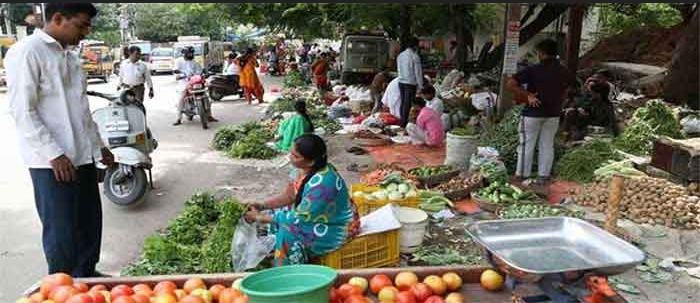
If we climb a tree and eat its fruit, there is no value chain. But most of us buy the goods we consume. For example, apples are grown on trees in an orchard (likely, in a rural area), picked, packed and transported to the urban centers where we live. In the city we can buy fruits and vegetables either from a pushcart or a farmer’s market, or in a supermarket. So ‘value’ gets added to the produce in a chain consisting of picking, packing, transporting and retail selling. Now, if the apples were converted into apple juice, involving some processing, there would be even more links in the value chain and hence more value would be added.

There is a difference between fruits and vegetables sold by a street vendor (or at the farmer’s market) and in a supermarket. It is not difficult to understand that the “value” added to it in a supermarket is much more. This extra value is called a shelf rent – which can include the rent of the place, worker salaries, utilities, and air conditioning, etc. You might also notice that a big chunk of the difference comes from the non-renewable resources used for transportation and processing, etc., contributing to pollution and climate change. This makes it less sustainable.

We can add some more attributes to sustainability. Instead of an apple, suppose it was a locally produced vegetable or fruit, and sold directly by the person who produced and harvested it. It will then have much less value added, and it will be more sustainable.

We can extend this logic to other sectors of our activities. Locally produced food is more sustainable as we have seen above. Similarly, mud houses, straw-bale houses, or houses made using local materials like bricks or wood can be more sustainable, not only because of the material used, but also because less energy is used in heating, lighting and keeping them cool during the summer months (or warmer in cold climates). In fact, heating and air conditioning uses a lot of energy.

To mention another example, neighborhood schools can reduce transportation costs and so would more use of bicycles for small distances. In many cases, sustainable products are more ‘expensive’. While ‘value added’ can be calculated, price is determined by a variety of unpredictable factors, which have a lot to do with politics and the prevailing social order in human societies.

To work towards sustainability, we can use these four general principles:

  1. Consume less.
  2. What we consume should have a higher proportion of materials from renewable resources.
  3. The value chain from the source to consumer (or end-user) should be as short as possible, so that ‘value addition’ is reduced. That is, we need to consume local products as much as possible.
  4. The components of the value chain should use as little of non-renewable resources as possible. For example, the transportation can be done with animal carts or bicycles or hand pushed carts. The packaging can be minimal. Consumers can carry their own bags—paper or cloth bags—instead of plastic carry bags and so on. The main idea here is to reduce waste by recycling and reusing resources, or closing the loop in the resource use cycle.

Our power plants, factories, automobiles, machines and buildings need to be adapted so they use predominantly renewable energy resources instead of non-renewable resources that come from underground (fossil fuels) and emit carbon dioxide and other pollutants when burned.

Acknowledgement

The main ideas of this article were developed by Soujanya Mantravadi in 2017 for a talk on International Hawkers’ Day at Lamakaan, Hyderabad, India.

T. Vijayendra (b. 1943) is political-social activist, living in India. He divides his time between an organic farm at the foothills of Western Ghats of South India, and watching birds, writing fiction and educational articles at his home in Hyderabad. He has published several books. He has been a ‘dedicated’ bicyclist all his life; he has never driven a fossil-fuel based vehicle (automobile). Email: t.vijayendra@gmail.com

An earlier version of this article was also published in CounterCurrents.org (an online journal, published from Kerala, India) along with the above photo of street vendors of fruits and vegetables in Hyderabad, India.