Author Archives:

Gone Bananas

By Connie Salmon, bilingual author, originally from Puerto Rico, lives in Connecticut.

You put it in your cereal. You eat it with peanut butter and bread. You eat it with ice cream in a special dish. But have you ever wondered where your banana came from?
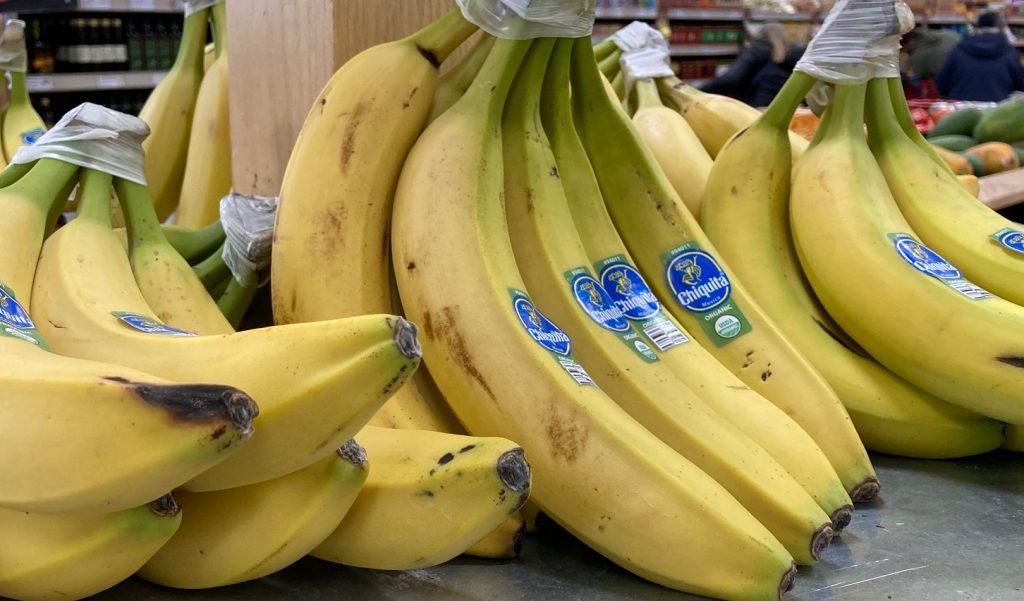
Bananas for Sale in a Grocery Store

Many people think that bananas grow on a tree. The truth is that they grow on an herbaceous (herb) plant. It’s leaves sprout from the ground and wrap around each other very tightly, forming the stem. Large purplish red buds push through the center of the stem and later form smaller purplish flowers that grow into bananas. The banana got its name from the Arabic word for finger, banan. A single banana is called a finger.

Bananas most likely came from South East Asia, about 7,000 years ago. Then they were taken to Arabia, and later to the Middle East and Africa. They were transplanted to the Canary Islands. From there, the Spanish brought bananas to the New World, after the voyages of Christopher Columbus.

Bananas grow in plantations in countries with a tropical climate. Leading exporters of bananas to the US are Columbia, Ecuador, Costa Rica, the Dominican Republic and West Africa.

The banana is America’s favorite fruit. There are 500 different types of bananas. The most popular one in the US is the Cavendish.

If the bananas are going to be harvested the traditional way, they are sprayed with pesticides (chemicals to get rid of insects) at the plantation. Then the farmers add fertilizers (artificial nutrients) to the soil to help the crop grow.

If the bananas are to be harvested organically, natural fertilizers like manure and seaweed are used. Insect predators and barriers are used to prevent pests. For example, crushed eggshells or pistachio nut shells prevent slugs and snails. The plants are weeded by hand or mulch is used to prevent weeds.

Farmers tie banana plants to long poles for support and cover them in large, plastic bags to protect them from insects and birds. The clear plastic lets light reach the leaves, allowing the fruit to mature.

Nine to twelve months after planting, the fruit is ready to be harvested. The bananas grow in large bunches. These are broken down into smaller groups. 10 to12 bananas are called a cluster, 4 to 6 are a hand, and each individual banana is a finger.

There are many steps to the harvesting (gathering) of the bananas. They are picked while still green to prevent them from spoiling while being shipped. A worker called a cutter cuts down the plant with a machete. Another worker, a backer catches the plant as it falls into a large cushion on the backer’s shoulder, to prevent the fruit from bruising. The backer attaches the bunch to one of the overhead cables that run between rows of plants. The moving cables bring the bananas to the packing shed, located in the plantation.

The bananas are washed in large tanks of cold water. The water removes most of the chemicals from the fruit. It also lowers the temperature of the bananas, which are still warm from the tropical heat in the field.

Inspectors then examine the bananas, to make sure they are of good enough quality to export. Once they pass inspection, the bananas are carefully packed into boxes, so they don’t bump against each other and bruise.

Boxes of bananas are loaded into huge, refrigerated ships or reefers, to prevent the bananas from ripening any further, putting the bananas “to sleep.”

Once the reefers arrive at their destination, they dock at food terminals. They are then inspected for insects, snakes and other tropical pests (spiders sometimes hide in banana leaves).

Then the fruit ripens in special rooms for 3 to 8 days. Ethylene gas, which is produced naturally by all fruit, is pumped through the ripening rooms to speed up the process. The temperature is lowered as days pass, so the bananas don’t over-ripen before they are loaded onto refrigerated trucks and brought to the market to sell.  

The banana has at last made its long journey to you. The next time you are in the supermarket with Mom, you can pick out a hand or a finger of bananas and tell her all about them.    

Sidebar: TOP EXPORTERS OF BANANAS TO THE UNITED STATES

The banana is the most traded fruit in the world. Bananas started to be traded internationally by the end of the 1300’s. Today they are grown in over 150 countries.

There is an organization called Banana Link in Latin American countries like Ecuador, Honduras, Columbia, Costa Rica, Guatemala and Nicaragua. It campaigns for fair and ethical trade practices for banana (and pineapple) plantation workers. In a largely hostile work environment for trade unions, there is a high level of violence and repression.

There is also a failure of health and safety standards, that causes much devastation of human health and natural environments, due to the use of toxic chemicals in banana production.

Banana Link fights for the dignity of workers (both men and women) and trade union rights. Trade unions try their best for workers to have better wages and benefits as well as better working conditions.

Bananas and plantains are a staple food in many tropical countries and play a major role in food security for many households.

TOP EXPORTERS:

ECUADOR:  US $3,68 millions in exports. Total Banana production: 6.28 million metric tons.

THE PHILIPPINES:  US $1,608 million in exports. Total production: 8.4 million metric tons

COSTA RICA:  US $1,083 million. Total Banana production: 2.27 million metric tons

COLUMBIA:  US $990 million. Total Banana production: 3.7 million metric tons

GUATEMALA:  US $956 million. Total Banana production: 3.8 million metric tons

Other smaller banana exporting nations include countries like Nicaragua, Panama, Honduras, Mexico, Dominican Republic, and Ivory Coast.

Sources for the Information:

“How bananas are Grown, Banana Link”  www.bananalink.org.uk

Encyclopedia Brittanica.com:  “Banana (Description, History, Cultivation, Nomenclature)”

By Connie Salmon, bilingual author, originally from Puerto Rico, now lives in Connecticut.
Longing to Leave

By maggie d. , African American poet, Washington.

Frost and snow puzzles me

Hailing from Sudan

Icicles and sleet

Billowing clouds holding no

Heat

Makes me weep

For sandy dust sweeping

Across tan dunes 

Never ruining my shoes

With muddy slush of melted snow

Oh

Without constant sun

Running for fun

Getting drenched by rain

Has made me aim

For returning to Wad Madani

Leaving behind winter

Without a whimper

I will laugh again with 

Sunglasses on to watch

Camels parade upon dirt roads

But I suppose it will take awhile

For Alab to say

“Goodbye Sigh-beria!”

By Maggie d., Washington.

Global Warming

By Derek Meng, age 10, California.

Glaciers melting, polar bears dying

Sea levels rising, floods occurring

Fire’s spreading, lightning’s striking

Tornadoes and tsunamis ruining houses and killing

More and more natural disasters happening

Virus spreading, people dying

Have you ever thought about who has caused this trouble?

You might say it’s nature, but do you think of us

and our broken relationship with nature?

Carbon dioxide coming out of cars

Trees going down

Thousands of dead, unwanted fish thrown overboard

Tons of unused food discarded

These are few examples of what’s happening in our world

Then how can we help nature?

If you have thought, “How can we help Earth?”

Then here are some things we can do:

Reuse, reduce, recycle

Use reusable bags

Use reusable bottles

Plant trees

Pick up trash

Save electricity by turning off lights

Use renewable energy

These are a few ways we can help

Have you ever thought what a beautiful world it would be

If we could make Earth—our home—clean?

“I am Chinese and I live in California. I am bilingual—I speak both Chinese and English fluently, I can also read and write these two languages.

My Global Warming poem was inspired by climate change. I want people to know that our world may soon be inhabitable if we do not change our ways. 

My vision of the future is the past combined with the present, all the trees should be restored to extract all that extra carbon dioxide [from the atmosphere], our houses should be ecosystem-friendly, and every vehicle should run on electricity. This is because of what I think is important, which is the world, the environment, and my family.”

—Derek Meng, age 10, California.

Where Were You When I Needed You?

By Lyla Hershkovitz, grade 6, California.

Hey.
You know, it really hurts.
You were everywhere else when I needed you most.
You pretended I wasn’t there,
and I was always there for you.
I had to sit alone,
when you were over there laughing with them.
Yet, I’m not confronting you.
You just have to deal with my anger that you aren’t even here for.

I get it, friendships change,
but you didn’t have to talk about me.
I guess you weren’t who I thought you were
because the version of you I used to know might not have done this.
But, I’ll never know.
Whispering secrets…
About me?
I should say I don’t care.
But it really hurts.

By Lyla Hershkovitz, grade 6, California.

It was Good to be Back

By Benjamin Kwack, age 9, Illinois.

Hi. My name is Billy and my family was visiting Seoul which is in Korea and I loved everything about it. As soon as I heard that we were staying here for the entire summer vacation plus three months into the school year, I was so excited. Partially because I was going to not have three months of school. But anyway. I was going to be in Seoul because ever since the Korean war started and the fighting began, America had sided with South Korea. My father, who actually had joined the army 15 years ago, had to stay in South Korea to help, just in case the Northern part of Korea attacked again. I hoped I would enjoy my time, especially on the holidays. In America, holidays were still fun but this was a whole new country with different traditions so I couldn’t wait to be in Seoul.

The first holiday I witnessed was the New Year. Everyone stayed up really late until after midnight and in the wee hours of the morning. I was sleepy but tried to stay awake just to see what happens. I saw a big bell that was right next to a street and people had gathered around, cheering as they jumped out of their houses running to it. The only light was the light from thousands of cellphones, and they glowed brightly in the dark. The night was silent until somebody started talking into the mic. I felt a little nervous. The person with the mic stopped talking as someone rang the gigantic bell with a mallet that was hooked onto a chain. The big shouts of celebration filled the air, and children ran around with big smiles on their faces. I heard noises like, “It’s the New Year already!” and “See you next year!” The bell rang 33 times before it stopped. The sound of the heavy gong filled my head even after it ended but I was too excited, so it actually didn’t really matter.

Finally, everyone went back into their houses and went to sleep. When we woke up in the morning, my mom realized something. She said that we should have gotten a traditional food, called Tteokguk (It is a soup with sliced rice cakes inside it). I walked up to my mom and said that we had to try some of the soup because if this was a tradition, then I wanted to try it. She said, “Of course Billy. Why not?” So that was the reason why we rode to the supermarket in a taxi. The supermarket wasn’t crowded because everyone already had Tteokguk prepared a few days before. Luckily for us, one container of Tteokguk was still there sitting on the shelves. We quickly bought it. The cashier said, “Annyeong.” We said that we didn’t speak Korean so it was kind of difficult talking to the cashier but we finally managed to understand each other.

After we were done, I skipped out of the supermarket, and we rode another taxi home. It was a while for us to get back there but we unloaded the food and started cooking. I drooled. We waited and it was finally cooked thoroughly. The soup had a natural taste that felt rich as I rolled the pieces of sliced rice cakes around in my mouth. The soup warmed me inside and made me feel calm after all the excitement. I was thinking about the New Year. I tried some more, and it felt plain but at the same time, strong. I saved some for later; I didn’t want to eat all the Tteokguk in one meal.

Then, I watched as people came back out onto the streets again. But this time, a lot of older people also walked onto the streets. I followed them with my mom and my dad. The children bowed to their elders saying, “Saehae Bok mani badeuseyo!” and the elders smiled back, and they gave the children a little money. This went on for a while and when the last coins rattled, I held my breath with a little disappointment because I thought everything was done.

It wasn’t. There was one other thing. It must have been really meaningful because everyone went to visit their grandfathers and grandmothers or their ancestors who had passed away by going to their ancestor’s graveyards. Their family members who had lived in other cities also came and joined them. They laid food by the graveside and prayed for them. The family members chatted for a while and ate some of the food together and waved to each other for a long time before finally leaving. I was struck with a little confusion because this was a new thing for me, and I only knew a little of what was happening. That’s why everything made me feel awestruck and amazed. I actually liked the Korean way of celebrating the New Year. It soon became dark, and I went to bed and gazed up at the ceiling smiling waiting for the next holiday.

“What?!!!!!” I yelled waking up the next morning. My dad had announced that he had received an early retirement. It was such an honor to turn it down. Plus, my dad had been wanting to go back to America as soon as possible. I just sat there on my bed and scowled, but there was nothing I could do.

I gloomily walked to the airport with the family, boarded the plane and looked out the window. I had actually begun to like Korea and didn’t want to leave. Helplessly, I just flew back to America and cried to myself.

20 years later…

Billy had been in the army for four years. He had been sent to Korea to serve there. The happy smiles and laughs struck him and he smiled. It was good to be back!

“My name is Benjamin Kwack. I am 9 years old and I really like to draw, to do math and most of all, I like to write. I like to write fantasy, fiction and I really enjoyed reading informational books in class this school year.

In my story, ‘It was Good to be Back ,’ the main character, Billy, is a boy from America and his dad was in the army for 15 years. His dad was sent to South Korea to serve the army. Billy enjoyed the Korean New Year celebration because this was a new country with a new culture and traditions for him.

I wrote most of the story from Billy’s point of view except for the last two lines. I thought that way, it would seem special and more like a real story.”

Renowned Cartoonist Robb Armstrong

By Nicole Borgenicht, California. www.nicoleborgenicht.com

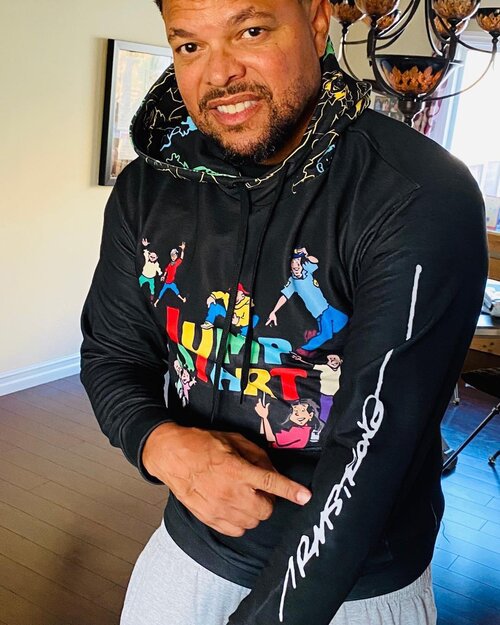
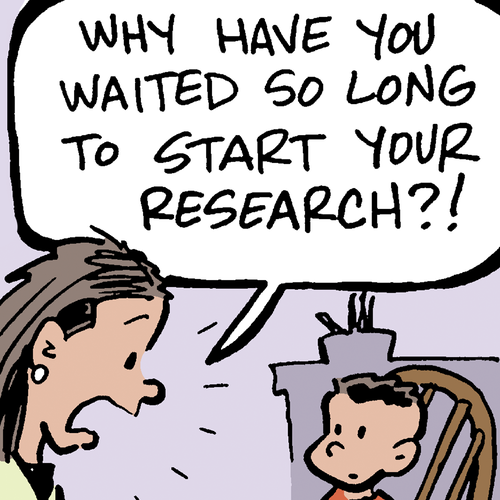
Once the youngest syndicated cartoonist at 27, now Robb Armstrong’s comic strip JumpStart runs in 300 newspapers. JumpStart is the best-known black comic strip that follows the Cobb family, and includes several multi-racial associates and friends.

His autobiography, Fearless, tells the story of Armstrong’s early years in the ghetto, where he lived with two brothers, one of whom sadly died in an accident, two sisters, and their single mother. A great role model, their mother had been a community leader and the first black trustee at the private school Robb Armstrong attended. As his mother saw Robb Armstrong’s exceptional creative talent, she engendered her graceful guidance, and subsequent mentors during his further education.

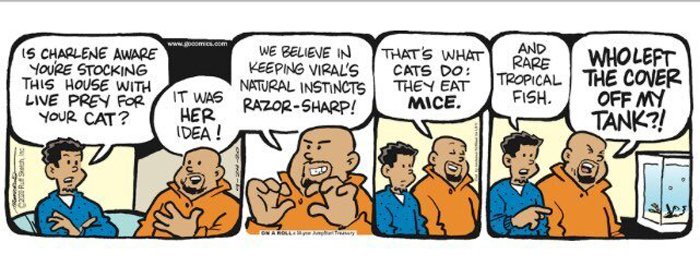
Later Charles Schulz, the creator of Peanuts, became a mentor and friend who added ‘Armstrong’ for a last name to his own comic black character Franklin. In Armstrong’s recent book, On A Roll!: A JumpStart Treasury, he shows JumpStart character’s thoughts and actions with inventive humor, spinning his unique yet universal perspective, enhancing readership lives.  

One Example of Robb Armstrong’s JumpStart Strip, Sept. 24, 2020

Prior to JumpStart, Armstrong created the popular comic strip Hector at Syracuse, and later received two advertising awards working at an ad agency after college, while continually developing Hector. He met Wee Pals cartoonist creator Morrie Turner, who introduced Armstrong to cartoon collector Mark Cohen resulting in a reference to United Feature Syndicate where Hector had previously been rejected. Finally, Armstrong’s cartoon was accepted with a couple of adjustments, and the new title: JumpStart. Next, he befriended Charles Schulz who told Armstrong his JumpStart characters are strong, and suggested he always focus on character (rather than topic) to have a long-lasting syndicated strip.

During my interview, Armstrong shared how JumpStart characters are three dimensional as in real life. An example is the football player Marcus who represents a superstar, millionaire “cheapskate – a trait for the sake of humor,” says Armstrong. However, when a community Thanksgiving holiday banquet will be cut due to lack of funds in one comic strip story, Marcus steps up and pays for it.

A resident of Los Angeles, Robb Armstrong is happy to interact with many creatives, while living his syndicated cartoon dream and working the everyday challenges it entails. He says, “JumpStart is character driven rather than topic driven. The characters build at a snail pace, but pack a punch in time while the reader is being charmed by them.”   Receiving an Honorary Doctorate as a motivational and educational speaker, Armstrong gives back to the community, inspiring young people. Through JumpStart, Armstrong communicates emotions on controversial points, by allowing readers to respond naturally, while viewing real life circumstances with levity and love.

Illustrations and photo credit: Robbarmstrong.com. Please visit: ROBBARMSTRONG.COM or follow Robb Armstrong on Instagram at: @ROBBTARMSTRONG

In the Forest within the City Park

there is a beauty that can not be muffled

by the city’s lights and sounds

it flies free with the clouds

and pushes the leaves in the air

onto the ground

to flutter like butterflies  

it holds the reins of the seasons

it dresses the earth in wailing white and grassy green

it gives us life  

but we take away from its own

the sky is filled with fire

the ground bathed in garbage

after all that it has done to us

we must save it from ourselves  

we must protect our world, our home

our beginning

nature

By Jaslene Kwack, age 11, Illinois.

Jaslene writes: “I like writing, art and music. I play the piano, clarinet and I started bassoon a while ago. In my free time, I like to write stories and poems. I try to be creative using metaphors and verbs that aren’t cliche. I enjoy drawing realistic and abstract pieces of art. When I grow up, I want to be a person who combines art and writing in a creative way to entertain or help people.

     “I wrote [this] poem about nature and how we are polluting and killing our environment. I want to recognize the beauty of nature and how it formed us in the first place. Sometimes, people don’t give nature as much credit as it should deserve. Without it, our world would be empty and barren. In my poem, I also talk about parts of nature all around us everyday. The wind blowing, the leaves falling from trees. Technology which is represented in my poem as “the city’s lights and sounds” is taking over our world slowly by every hour. I think because of all these new inventions and ways of life we are making for ourselves, a lot of us forget about how important nature is and how it is humanity’s origin. We should recognize nature and be grateful for this world around us. I think we should all strive to be better and protect the earth so that we can keep our world clean and healthy.”

Colors of Ukraine

By Camille Campbell, age 17, Arizona.

With images flashing in my mind,

I lay out the billowing silk,

and begin to paint.

I trace the lines of my ancestry,

each brushstroke forming a branch

on my family’s ancestral tree.

With golden gutta, I outline my identity,

ready to color between the lines.

I splash on the colors of Ukraine—

the teal darkness of Odessa’s Black Sea,

the sun-lit golden domes of Kyiv,

the crimson autumn of Sofiyivka gardens,

the flaxen fields of sunflowers.

I dream of living within the painting,

strolling and dancing in the silken world.

The kaleidoscope of hues connects me

to my mother’s Land of Color.

Camille writes:

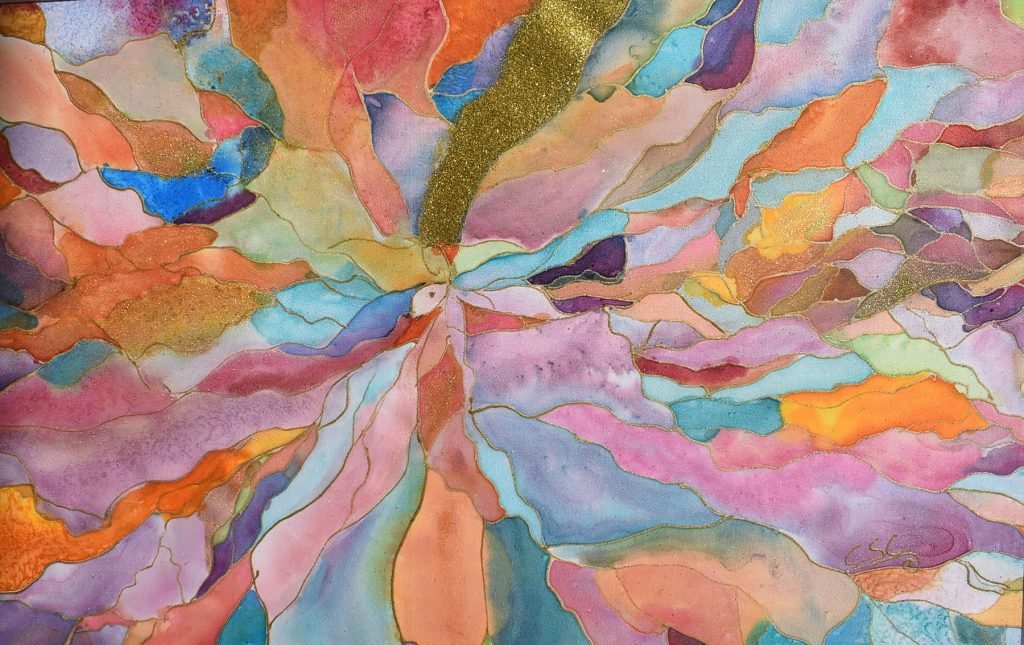
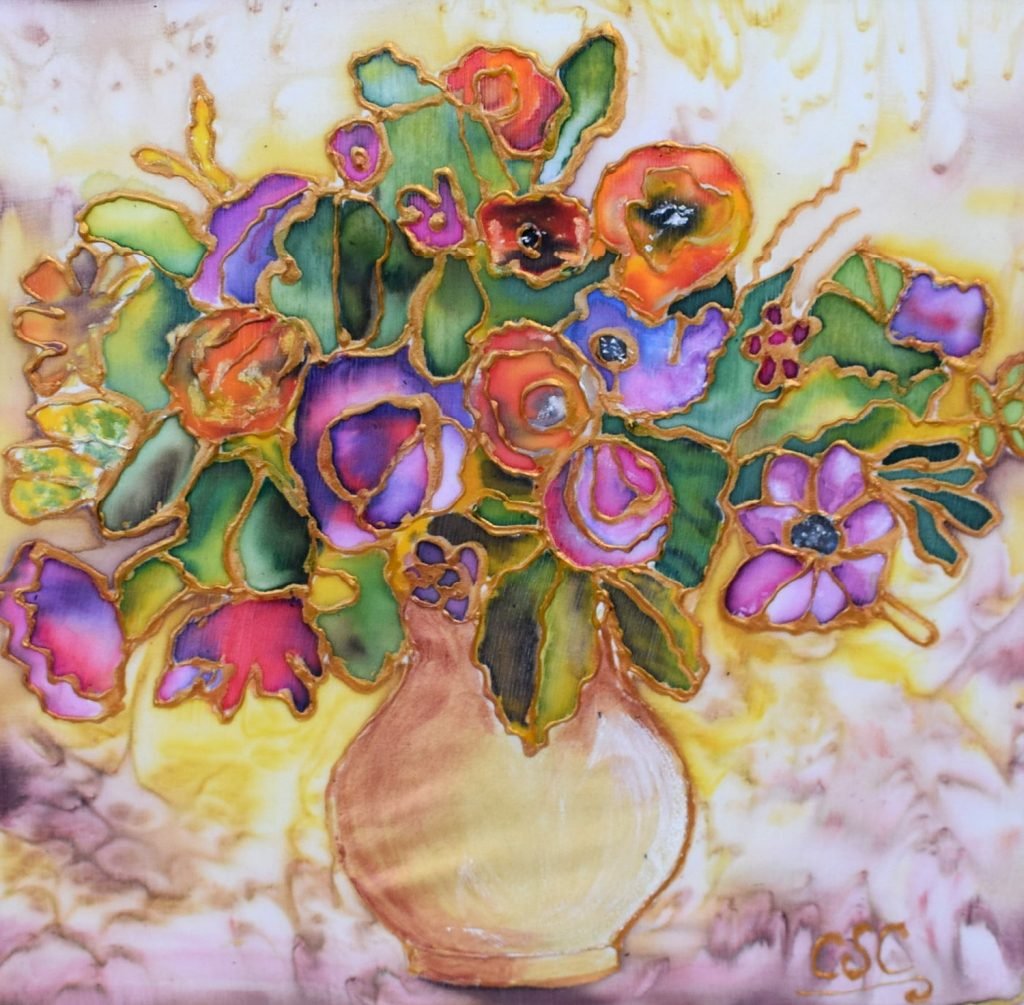
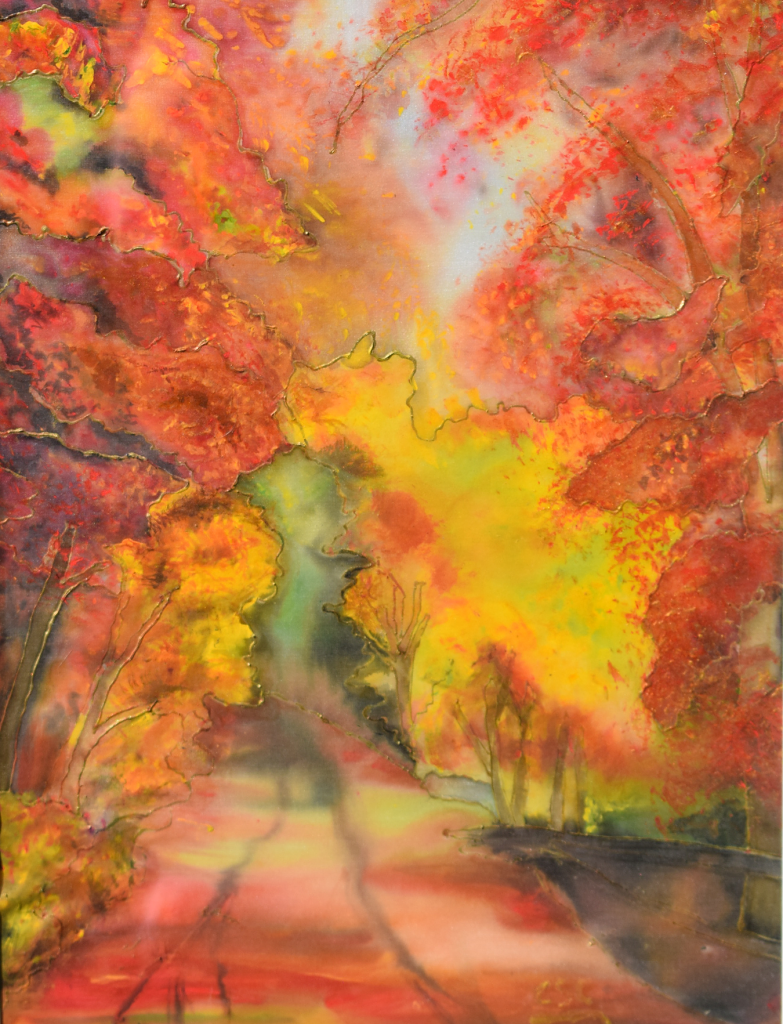
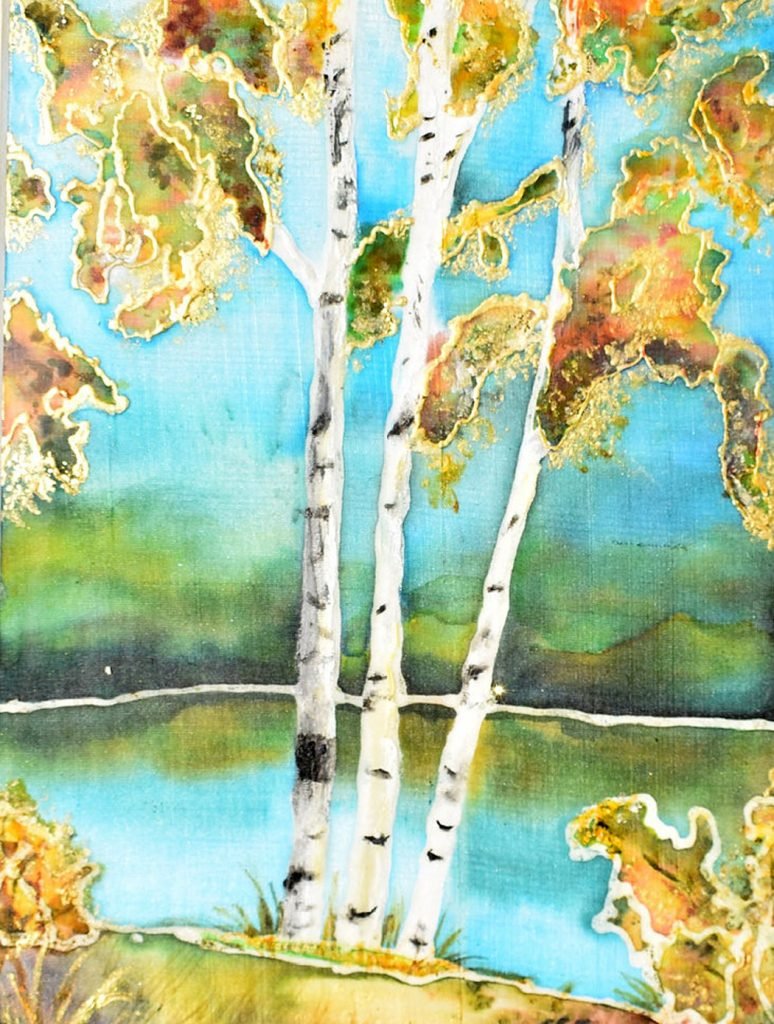
In my poem, I write about the beautiful form of art called “silk painting” and how it connects me with my Ukrainian heritage. 

For years, silk painting has captivated me. My mother, who moved from Ukraine to the United States, fondly talked of the colorful silk paintings made by artistic communities in Ukraine. Disappointed that this technique was not practiced much in the United States, I decided to change that: one brushstroke at a time. As I learned the intricate and complex process, each painting felt like a tribute to my mother’s country. 

When art gallery owners expressed interest in my silk paintings, I assembled a collection of my work and was fortunate enough to receive representation by Derubeis Fine Art Gallery in Scottsdale, Arizona. With my silk paintings, I positively impacted my community by donating a few of them to the Make a Wish Foundation to raise money at their silent auctions.

When I’m doing a live art event, I always love to answer people’s questions about the process of silk painting and how it ties to my Ukrainian heritage. 

Along with my poem “Colors of Ukraine,” I have included four of my silk paintings: The Kaleidoscope of Dreams, the Vase of Joy, Flickers of Autumn and Serenity. You can see more of my art at: www.artistcamillecampbell.com 

Life Is Never Fair

By Jacob Henderson, 18, Illinois.

People have always said life is unfair
But I don’t see it that way.
I think, “Where did I go wrong?”
But others say, “Don’t blame yourself.”

Who else can I say did it then?
Life isn’t a person nor is it a thing.
More of a saying, is it not?

Now others say life is perfect.
That’s because they have everything they could ever want—
A two-story house, a never-fighting family,
And so much more.

Now, I don’t have that luxury
I have to keep on pushing,
no matter what happens.

“Life” keeps pushing me down.
No, don’t say that.
Where did you go wrong?
Find it, then fix it or do it better.
Never blame others for your faults.
But once again I am told this is wrong.
And when I ask, “Why?”
They respond with:
“It just is.”

Nice Rice

By Gloria Lauris, Ontario, Canada.

Allow me to take you on a quick rice journey through several culinary dishes and countries.

I grew up in British Columbia, Canada, to second-generation Ukrainian parents who were raised on farms in the prairies, so our dinner was typically bread, meat, and potatoes. We rarely had rice, and it was usually parboiled or instant. It was cooked occasionally as part of something like stuffing in cabbage rolls or in a casserole or pudding. Little did my younger self realize that my travels, especially to Africa and Southeast Asia, would drastically change how I viewed food, especially rice. Just as wheat is a staple in a grain-growing country like Canada, so is rice a cultural way of life in rice-growing countries and is the main cereal crop for over half of humanity.

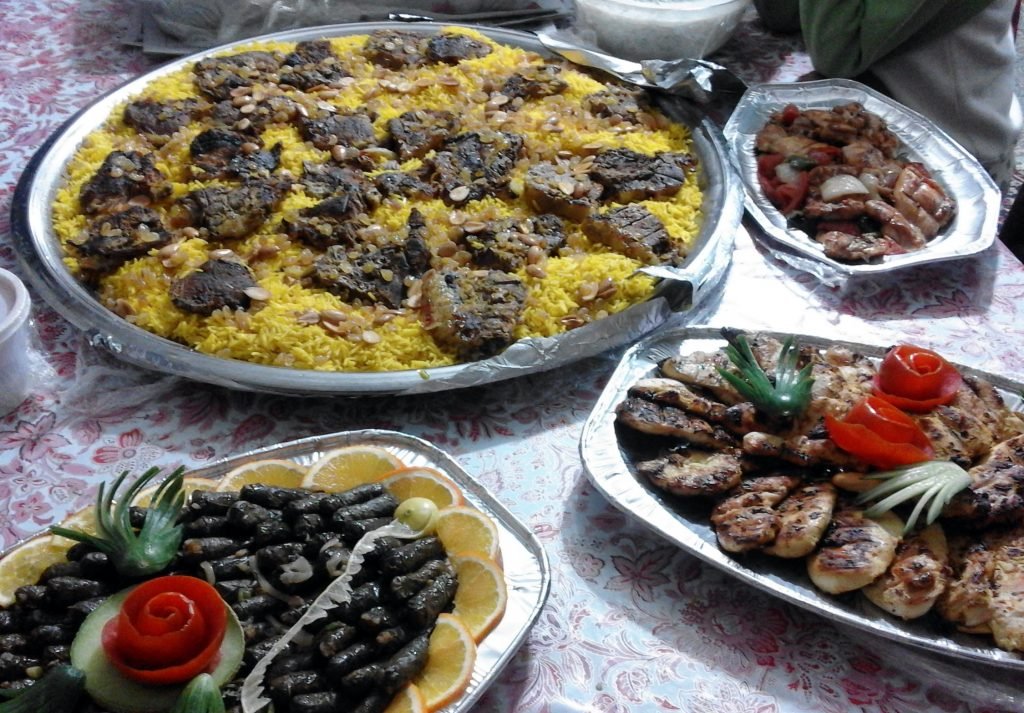
Fast-forward several years to when I visited Egypt with my Canadian Egyptian husband, I remember seeing large pots of warm, freshly cooked white rice in their kitchens. Sitting on the floor with Egyptian women relatives, we would laugh, smile, and chat speaking broken English or Arabic, taking turns picking up limp pieces of steamed cabbage to fill with a mixture of short grain rice and seasoning to make mashe karumb (cabbage leaves filled with rice). This is a mini-version of the more common Western-style cabbage roll, halupki, which my mother made as a throwback to our Ukrainian heritage. Eastern Europeans make cabbage rolls large and smother them with tomato sauce. But in Egypt they are finely rolled, and just a little sauce is used, as they are mainly steamed in chicken stock and are delicious finger snacks. Egyptians also fill other tasty vegetables with rice, such as peppers, grape leaves, eggplants, and zucchini.

Another exotic rice dish was chicken baked on a bed of Egyptian rice, with nuts and vermicelli. Sometimes yellow or red saffron was added, although that was popular mainly in Middle Eastern countries like Saudi Arabia and Lebanon, where people could more readily afford this expensive spice. Sometimes pine nuts and caraway seeds were added for flavour.

Egyptian Rice Dishes. Photo by Gloria Lauris, Canada.

Koshary, believed to be the national dish of Egypt, uses rice. A flavorful mix of lentils, rice and macaroni is topped with a tomato-chili sauce, garbanzo beans and fried onions. It is served in just about every Egyptian restaurant, in most homes, and on many street corner stalls. It makes a hearty, delicious, and affordable meal.

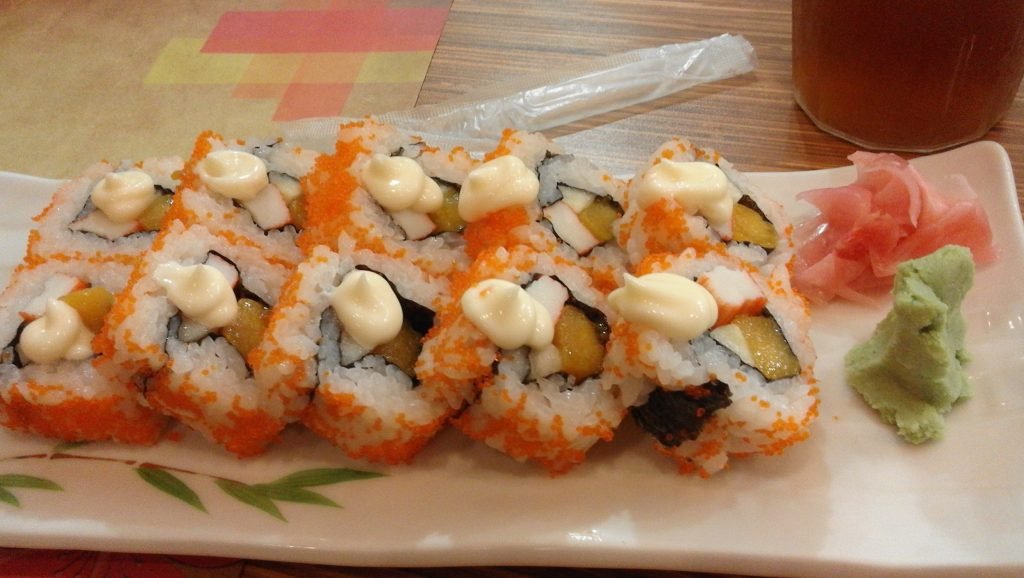
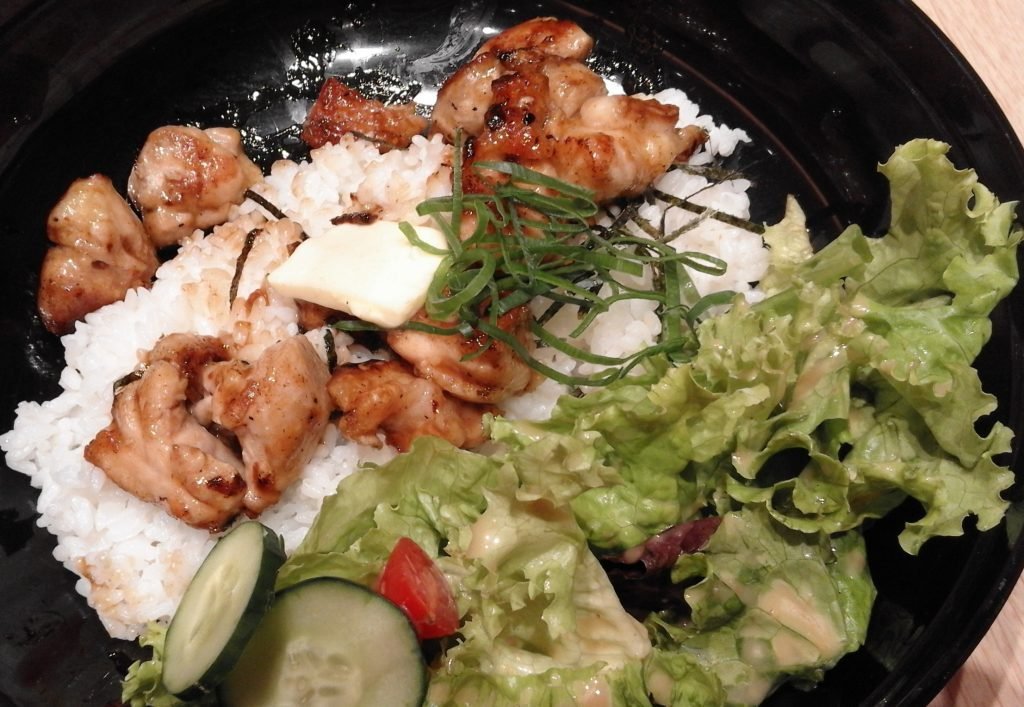
Later, I visited my son who was living in Japan for a while. I found almost all foods included rice; snacks, bento boxes, and sushi and sashimi all came with rice. There was the right way to cook and eat rice: white, steaming, and fresh to be scooped up with chopsticks. To put soy sauce on this essential but bland food was blasphemous to rice purists!  When we ate sushi, we were always amazed how perfectly the rice was cooked. Yet it was sticky enough to be held together with Nori (a seaweed) and veggies to make rolled shapes. We were so impressed with the art of making excellent rice that we bought a Japanese rice cooker in Canada to create perfect rice, every time. The pot somehow senses the right temperature and humidity to produce a quality product consistently.

Now, let’s go to the Southeast Asian country of the Philippines. Rice is grown in many of these islands with their tropical climate, and they export a lot of rice. Some Filipino agricultural institutes even offer a PhD in rice cultivation!

While living in the Philippines, I remember my Dad, who had re-married a Filipina, remarking how the Filipinos love their rice. They have it not only with every meal, but even the desserts were usually made with rice. It was perplexing to a man raised in the prairies to be served a daily diet of rice and fish! He lost a lot of weight during his time there, whereas many Filipinos gained weight due to the regular intake of this starchy food.

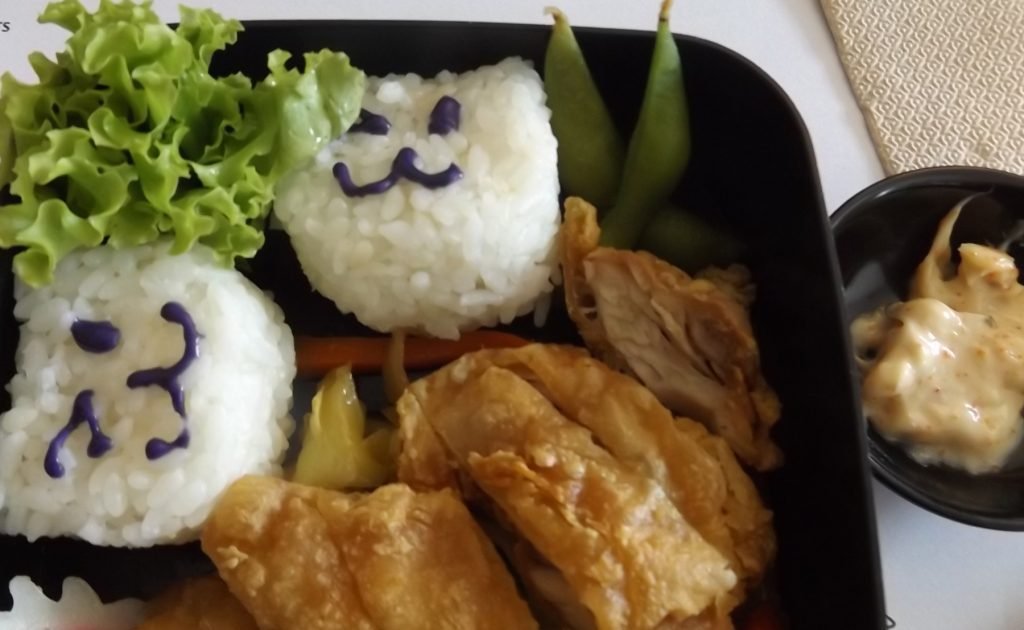
In the Philippines, my personal favourite became Dona Maria Jasponica white rice, a type of hybrid Filipino and Japanese jasmine scented rice, famous for its fragrance, soft texture, and pleasant taste. However, jasmine rice is not good for a risotto as the starch count is not high enough. The Philippines Miponica brand is fluffier and stickier, making it good for risottos, paellas, and congees. Indian basmati rice is a long grain rice which is soft and fluffy when cooked, and it is served with Indian dishes such as biryani, or spicy dishes like butter chicken, chicken tikka and various curries. Filipino Harvester Dirorado rice is naturally fragrant and fluffy in texture and is used in Asian cuisines and in most Filipino dishes such as with chicken inasal, kare-kare and sinigang. At a cat café in Manila, Philippines, I remember being served decorative rice cat cut-outs, their eyes and whiskers being decorated with bits of sauce. Perhaps a sticky rice was used for this?

Affordable and filling, rice is a staple food for many. It is used in Asian (e.g., Chinese, Indian, Filipino, etc.), Middle Eastern, and Mediterranean cuisine. But different types of rice are used for different dishes. Did you know that brown rice is unpolished so it contains selenium and has fibre and B vitamins? It is mineral rich, thus keeping a person full longer than with white rice. However, it takes much longer to cook, and so it is less commonly used, and it is more expensive to buy.

My favourite rice recipe? Although I am a converted fan of Egyptian rice and the delicious Mediterranean style food produced in and around the Nile Valley, my favourite is probably a coconut-flavoured rice, made from jasmine fragrant rice like Jasponica and adding a Thai twist to it. As taught by my kitchen helper in the Philippines, you rinse the rice thoroughly to get rid of any dust and foreign objects in the rice before cooking. Then you add some young coconut milk (buko) to water (liquid to rice ratio is 1:1) to make this delicious rice dish. I have had coconut-flavoured rice in Thai restaurants, and it is a delightful accompaniment to chicken dishes, like peanut chicken satay sticks. Another satisfying dish for me is Egyptian mashe (filled) vegetables, as it brings back happy memories of hearty, flavourful Egyptian meals made by friendly extended relatives, a world away.

International travel and overseas living have opened my culinary taste buds to elevate what I once considered lowly rice. I have come a long way, and not just figuratively, from cooking instant rice once a month in my meat-and-potato youth!

Do you have a favourite rice recipe too?

By Gloria Lauris, Ottawa, Ontario, Canada. Gloria is an emerging Canadian writer. She has visited over 50 countries, and lived in three of them (in the Middle East and SE Asia). She is a long-time animal welfare promoter. She loves to cook.