Author Archives:

Memories of a Guava Tree

Memories of a Guava Tree

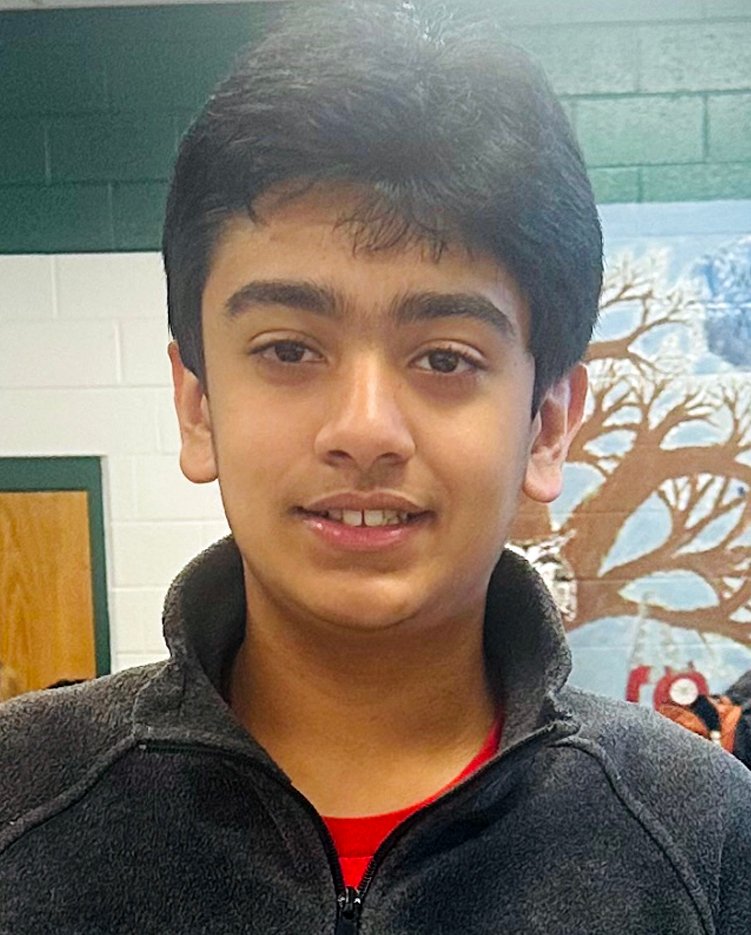
By Dawson Yee, age 13, grade 7, California.

My grandmother’s hands reach for my face
Feeling to be sure I am the child she remembers
Her mind has only enough space
for past Decembers.

My mother, father, and aunt turn in surprise
Her knotted hands grip my shoulders in recognition
With a teasing crinkle in her eyes
she calls my name, an intermission

Three years ago, she gave me a white guava seedling
With hardy red stems and elliptical leaves
She explained what it was needing
Learned from years of shielding it from disease.

Afterwards, she ushered me into the guest room, where she unearthed treasure:
An embroidered Japanese trinket box, a logic puzzle, an old plush toy
Her smiling eyes watched my curiosity with pleasure
As she entered the absurdly colorful world of a little boy.

But now we sit together watching nature shows
And she is like a sailor disappearing into a storm.
I can see her boat sinking but I’m not sure she knows
she’s lost her tiller and our roles will transform.

A logger chopping a tree flashes on the screen
She worries for the animals inside, knowing they are doomed.
I reach over her frail figure and push the remote to intervene
I tell her that our guava has finally bloomed.

—Dawson Yee, age 13, grade 7, California. Dawson writes:

“I see creative writing as a puzzle of wisdom. I’m 13 years old and in 7th grade but take high school English and philosophy at a local independent school. 

“I’ve also adored challenging myself to understand the symbolism behind not only prose such as in magical realism, but also the figurative language in poetry. When I recently analyzed “Boy and Egg” by Palestinian-American poet Naomi Shihab Nye, I found that searching for evidence of Nye’s purposeful line breaks and sound devices to convince a reader she was contrasting the innocence of a childhood immersed in nature versus the chaotic world to be beyond satisfying as a puzzle to solve. 

“I use my heritage as a third-generation Asian American to inform my writing, as it is an important part of how I view the world. I also write with an eye to health, both physical and mental, as I personally have several life-threatening allergies as well as Mass Cell Activation Syndrome, which shape my view of the world. My maternal grandmother, who recently passed away from Alzheimer’s disease, provided the basis for my poem “Memories of a Guava Tree.” In addition, I am influenced by my parents’ experiences as second-generation Americans growing up in predominantly non-Asian rural and inner-city U.S. communities and by my grandparents’ stories of the immigrant experience and their childhoods wrenched by memories of war and poverty. 

“I’m also an Event Coordinator for an online, international Asian American youth writers’ collective, Asian Youth Writers Alliance (asianyouthwritersalliance.com). In the writing groups that I’ve found surrounding these events and projects, where my classmates and fellow writers are insightful and tactful, I feel I have the space to put the puzzle of wisdom together. I would love to connect with a multicultural and global community of young writers who share the same values as these online initiatives. In finding literary magazines like Skipping Stones to share my writing, I realize more and more that I’m truly searching for the exact kind of wisdom and togetherness it provides.”

Affirmative Action

Affirmative Action Was Never Enough

By Alexandra de Graeve, age 13, New York.

When affirmative action was struck down, the New York Times interviewed a bunch of high school students. Connor, from St. Peter High School in Minnesota, said, “I like the idea of having diverse campuses but not at the expense of hard work. I think that everyone is equal so everyone should be treated equally and given the same opportunities. I believe that colleges should look more at the hard work put in by the students than at race.”

I don’t completely disagree or agree with Connor. I agree that everyone should be treated the same way and given the same opportunities, and that colleges should reward hard work. But not everyone gets the same opportunities, which diminishes diversity on campuses. Black students often attend poorly-equipped elementary, middle or high schools. This causes Black students who need help to not get any, which makes it more difficult for them to get into elite colleges. The question is, what should we do to change this for the better? Affirmative action was a controversial solution, but it did help marginalized students have a better chance at getting into good colleges, and on June 29, 2023 the U.S. Supreme Court ended it.

Affirmative action tried to help historically marginalized groups have better chances at getting into good colleges. According to NPR (National Public Radio), when the Supreme Court ended affirmative action, it ended “…the ability of colleges and universities—public and private—to do what most say they needed to do: consider race as one of the many factors in deciding which of the qualified applicants should be admitted.” Unfortunately, lots of people thought that students with lower scores would get into schools over students with higher scores. But, the truth is, if two students had the same SAT scores and the same quality for their essay, affirmative action let colleges pick the student from a marginalized group.

A student named Hamid from Glenbard West High School in Illinois said, affirmative action “…is not picking a minority student over a white student simply on the basis of race. Affirmative action literally means “the practice or policy of favoring individuals belonging to groups regarded as disadvantaged or subject to discrimination, over similarly qualified non-minority individuals.” The idea wasn’t to disadvantage privileged kids, but help less privileged ones. This was important because it would start a chain reaction, allowing less wealthy students to get better jobs, which would also help their kids do better, and their kid’s kids do better because they would have more opportunities.

Ending Affirmative action was a controversial decision. NPR  said, “Indeed, the reality is that in those places where affirmative action has been eliminated, there has been a severe drop in minority, and particularly, African American, admissions.” In its job of increasing diversity at schools, it worked. Affirmative action let more minorities into colleges. But even with it, there was still a severe wealth gap in marginalized groups. Without it, the wealth gap will grow again. Speaking to the NY Times, Amalia, a student at RFHS in Colorado, said, “Increasing diversity in schools, jobs, and major positions of power starts in colleges. So we need to include race in college applications.” We need more diversity among powerful people. We can’t have a congress that only has white and/or rich people in it. While Amalia is right, we also need to consider education at every level. It helps to get into a good college if you go to a good high school; it helps to get into a good high school if you go to a good middle school; it helps to get into a good middle school if you go to a good elementary school; it helps to get into a good elementary school if you go to a good preschool. It’s important to have access to quality education at every stage. Even when you’re really young.

To help students from marginalized groups access higher education we need more than just affirmative action. Tobz, of Baker High School said, “Now, of course, ideally, we wouldn’t need affirmative action. It probably isn’t even that effective at curbing racial biases and inequalities due to how limited its application would be. But it’s not a negative for anyone, and it has a reasonable and logical justification for existing.” While affirmative action is helpful, it isn’t going to change everything. We need more than that. To do well in school, you need accessible teachers, healthcare, a supportive family, food, and a home. Snacks, living close to school, having someone at home to help you, and extra curricular activities are all also very helpful. The government should make sure everyone has what they need to have a good education.

Contrary to what Connor believes, diversity isn’t just going to happen. There are too many things working against people from marginalized groups. For a while, some members of historically marginalized groups had better chances of getting into colleges because of affirmative action. That’s why the Supreme Court’s decision to end it was highly controversial. The truth is, affirmative action was a step in the right direction, but it was not enough. Now that it’s gone, we need to share our resources much more equitably so that everyone has access to a good education.

—Alexandra de Graeve, age 13, grade 7, New York. “I live in New York City but both my parents come from Europe. I speak English and Dutch, and I am taking French and Latin at my school. I don’t know what I want to be when I’m older, but I want math to be a part of it. I was annoyed at my English teacher for talking about affirmative action in a careless way, and so I researched it to find out more.”

Dahu Park

Dahu Park

By Eason Lin, age 10, Taiwan

One Thursday, my classmates, teachers, and I went to Dahu Park to study nature. Dahu park’s moon bridge is one of the most famous places in the whole world. That’s because, at night, it shines bright like the moon! On the bridge, I saw something huge floating on top of the water. I wondered what it was, so I went down to look; when I saw what it was, I wished I hadn’t. There was a rotting, dead, ugly fish floating in the pond. My friend Jasper came over to see what I was looking at and he almost threw up. I asked him if he needed medicine, he said he needed me to get that fish as far away from him as possible. I poked it with a stick, I realized that it was hard and it’s eye was missing. I was totally disgusted. I lost my appetite. Our teacher, sensing what was about to happen, took us away from the pond.

We walked for a while, avoiding the lake and bridges. After a while, our appetites came back. We started to feel hungry when we arrived at the restaurant. After we ate, we kept exploring Dahu Park. As we crossed over a bridge, I tried not to look into the water.

Then, I saw three old men fishing. Two looked exasperated and nervous, the other was calm. They looked like they were competing. I got closer. One of them swore under his breath when a fish nibbled the bait and swam away. The calm one however, patiently waited for a fish to fall into the trap. He wore a hat that made him look like a cowboy and also had a lot of other fishing gear. When he finally caught a fish, I was so happy I could’ve jumped into the lake. But then, the fish managed to squirm out of the old man’s hand, falling back into the lake. I was so disappointed that I moaned in despair. After a while, he caught another one. This one was really small. I expected him to put it in a container or something, but no, he threw it to a nearby bird. It gobbled it up happily. The other birds looked at it with jealousy, then moved closer to the old man. I was shocked. He worked so hard and finally caught a fish, and he threw his first one to a bird!

I thought maybe the disgusting fish earlier had something to do with this old man’s actions. The fish he caught had been scrawny and looked sick. I was so close to him that I could hear him mutter something about the people polluting the water. That’s when I realized what he was talking about. The reason why we saw the dead fish earlier was because people were polluting the water. I noticed the fish he caught had the same black pattern on its scales as the dead fish. Those weren’t scales, those were the result of bad chemicals. I felt really bad for the fish. Maybe someone threw some trash with chemicals into the water. Then another person threw another piece of trash into the lake. Maybe when the two chemicals were mixed together, they created a new deadly substance that killed the fish. This doesn’t just affect the fish, it affects us too. If the smaller fish get poisoned, and the big fish eat them, the big fish will get poisoned. If we eat the poisoned fish, we will get poisoned. Then, Dahu park will not be famous for its moon bridge, it will be famous for it’s dead fish.

We, humanity, need to think about our actions before doing them. If we don’t stop littering, it will be our turn to become polluted and sick.

—Eason Lin, age 10, Taiwan. 

“I speak Chinese and English. I don’t care about anything else other than growing up healthily. I want to be an author when I grow up. My teacher and my classmates inspired me to write my submission. In my spare time, I like to read books. I like Taiwan because it’s peaceful and beautiful. So I wouldn’t want to damage it. I tell my classmates not to litter, or Taiwan will turn ugly.”


A Call for Action: Muslims and Jews Find Community in Nature

A Call for Action: Muslims and Jews Find Community in Nature

A Convergence of Islamic and Jewish Perspectives on the Environment

By Emily Maremont, age 17, California.

In my fifth grade gardening class, I shared a shovel with a girl who had recently immigrated to the United States from Yemen. Here we were—me a Jew, her a Muslim—passing that rusty shovel back and forth across a row of red clay pots. Little did I know at the time, the act of cultivating that rooftop garden followed what our ancestors had done for thousands of years. Ancient teachings from both Islam and Judaism stress the importance of caring for the natural world. In America, the birthplace of the modern interfaith and environmentalist movements, the fight to combat climate change has the potential to foster deeper cultural understanding between Muslims and Jews.

Environmentalist narratives are prominent throughout the Quran. According to Islamic teachings, the essential elements of nature—earth, water, fire, forests, light—belong to all living organisms, not just to the human race. Humans, the guardians of nature, are discouraged from abusing or destroying natural resources: “He is the One Who produces gardens…Eat of the fruit they bear and pay the dues at harvest, but do not waste. Surely, He does not like the wasteful.” Planting trees, purifying rivers, and digging wells are also considered charitable deeds. Preventing water pollution is particularly significant given the role of water in daily worship. In the performance of ablution before prayer, Muslims are expected to exercise moderation as they wash themselves. In Mecca and Medina, The Prophet established the first protected areas in history, known in Arabic as hima. Within the bounds of protected areas, natural resources considered sacred were off limits during certain periods, and logging and grazing were prohibited.

Similarly, the Hebrew principles of bal tashchit (“do not destroy” or “do not waste”) and tikkun olam (“repair the world”) connect to the values of moderation and the sacredness of natural resources found in Islam. Themes of guardianship over nature are also woven into Jewish holidays. During Sukkot, Jews dwell in temporary structures called sukkot (it is a plural of the word Sukkah). Jewish law commands that a sukkah must have a thatched roof made of organic material while allowing a view of the sky and for rain to penetrate. This practice allows Jews to appreciate their relationship to nature more directly. Tu BiShvat, another holiday nicknamed “the new year of the trees,” coincides with the blooming of almond trees after dormancy during winter. Sixteenth century Kabbalists began the tradition of a seder (ritual meal) for Tu BiShvat, in which symbolic nuts, fruits, juices, and wines are featured. In the Midrash Ecclesiastes Rabbah, G-d says: “Do not corrupt or desolate my world; for if you do, there will be no one to repair it after you.’” This line resembles the foreboding of many contemporary environmental activists and scientists.

Historically, the natural world has played a major role in the relationships between Muslims and Jews. The Muslim conquest of the Iberian Peninsula resulted in the introduction of new agricultural practices from the Middle East and ushered in an era of general religious tolerance. New crops such as sugarcane and rice became parts of the culture of all who lived there: Arabs, Jews, other Europeans, etc. Sustainable irrigation practices involving the noria (waterwheel) and qanat (underground water channel) increased water supply. Historians call this agricultural transformation the “Islamic Green Revolution.” Córdoba, the capital of the Islamic Umayyad Caliphate (c. 711-1031), became the center of Sephardic Jewish life. Jews from all over Europe migrated to Spain, where the land supported their growing population. There was widespread transculturation of Jewish and Arab cultures in the sciences, philology, and literature. Against the backdrop of a shared, flourishing natural environment, Muslims and Jews coexisted peacefully.

In recent years, many Muslim and Jewish grassroots organizations and individuals have moved to the forefront of environmental activism. Green Muslims uses solar water heaters to heat water for ablution that thousands of worshipers perform in Washington, DC. Other organizations, including Eco-Halal, Green Ramadan, and Green Haj, are working to make Muslim traditions more sustainable. In 2022, twenty major Jewish organizations formed the Jewish Climate Leadership Coalition, which is committed to taking action against the urgent threat of climate change.

Youth are also prominent voices in this movement. Muslim American climate activists like Saad Amer and Zahra Biabani are spreading their message through social media, leading protests at the White House, and speaking at the United Nations. The Jewish Youth Climate Movement has chapters across the United States. Young Jews for a Green New Deal incorporates Jewish music, poetry, and celebration into their activism to engage more people. In a variety of ways, American Muslims and Jews of every age are taking up their traditional mantles as stewards of the earth.

Meanwhile, when I am walking through my neighborhood, I never see Muslims and Jews interacting with each other. While there are annual interfaith events between Jews and Christians at my synagogue, I never see similar events between Muslims and Jews. As someone who from a young age has strived to learn and appreciate other faiths, I cannot sit with the prospect that tensions always have to exist between our communities—no more than I can fathom the idea that our efforts to stop climate change are futile. I believe that multicultural understanding springs from having hard conversations about the complex world we live in. What better way to have hard conversations than out in nature, which we all value and enjoy? Yet as the Earth continues to suffer from carbon emissions, pollution, and other issues created by humans, such opportunities for connection are lost before we even realize they exist.

Through climate-focused interfaith partnerships, Muslims and Jews can find common ground. By developing community projects, organizing protests, and lobbying the government, Muslims and Jews can learn about each other’s values and traditions. In the process, they can become more comfortable with being in the same place—passing shovels back and forth underneath the leaves we all pray will change color come autumn, as centipedes march past on the ground and eagles circle overhead.
By Emily Maremont, age 17, California. Emily adds: “I enjoy writing and learning about history in order to gain new perspectives on the world. In my essay, I use a memory from my childhood as a starting place to look at climate activism through an interfaith and multicultural lens.”


Bibliography

1. Bsoul, Labeeb, Amani Omer, Lejla Kucukalic, and Ricardo H. Archbold. “Islam’s Perspective on Environmental Sustainability: A Conceptual Analysis.” Social Sciences 11, no. 6 (May 24, 2022): 228. https://doi.org/10.3390/socsci11060228.

2. Fitzwilliam-Hall, A.H. “An Introductory Survey of the Arabic Books of Filāḥa and Farming Almanacs.” The Filāha Texts. Last modified October 2010.
http://www.filaha.org/introduction.html#top.

3. Islam, Md Saidul. “Old Philosophy, New Movement: The Rise of the Islamic Ecological Paradigm in the Discourse of Environmentalism.” Nature and Culture 7, no. 1 (Spring 2012): 72-94. https://www.jstor.org/stable/43303917.

4. Jackson, Joelle. “Repairing Our World: Jewish Environmentalism through Text, Tradition, and Activism.” Folklife Magazine, January 12, 2022. https://folklife.si.edu/magazine/jewish-environmentalism-text-tradition-activism.

5. O’Brien, Becky. “Major Jewish Organizations Form Coalition to Act on Climate Crisis; Issue Open Call for Jewish Organizations Everywhere to Join.” Boulder Jewish News (Boulder, CO), September 15, 2022. https://boulderjewishnews.org/2022/major-jewish-organizations-form-coalition-to-act-on-climate-crisis-issue-open-call-for-jewish-organizations-everywhere-to-join/.

6. “Spain Virtual History Tour.” Jewish Virtual Library. https://www.jewishvirtuallibrary.org/spain-virtual-jewish-history-tour.

7. Tirosh-Samuelson, Hava. “Nature in the Sources of Judaism.” Daedalus 130, no. 4 (Fall 2001): 99-124. https://www.jstor.org/stable/20027720.

8. Venkatraman, Sakshi. “As Eid and Earth Day coincide, young Muslims are driving the modern climate movement.” NBC News. Last modified April 23, 2023. https://www.nbcnews.com/news/asian-america/eid-earth-day-coincide-young-muslims-are-driving-modern-climate-moveme-rcna80485


How I Got My Idea

How I Got My Idea!

By Priya Elizabeth Kapur DeWinter, Grade 5, Massachusetts.

What’s your favorite food? Mine is ice cream. Have you ever wondered if ice cream could be a dress? Well, I wondered that, and it started many thoughts in my mind about designing clothes.

On the day I came up with the idea, I was sitting in Kindergarten wondering as I looked out the window. I saw a big apple tree and in that apple tree was a family of birds. “How beautiful,” I thought. I just love nature so I pulled out a piece of paper and started to draw a dress.

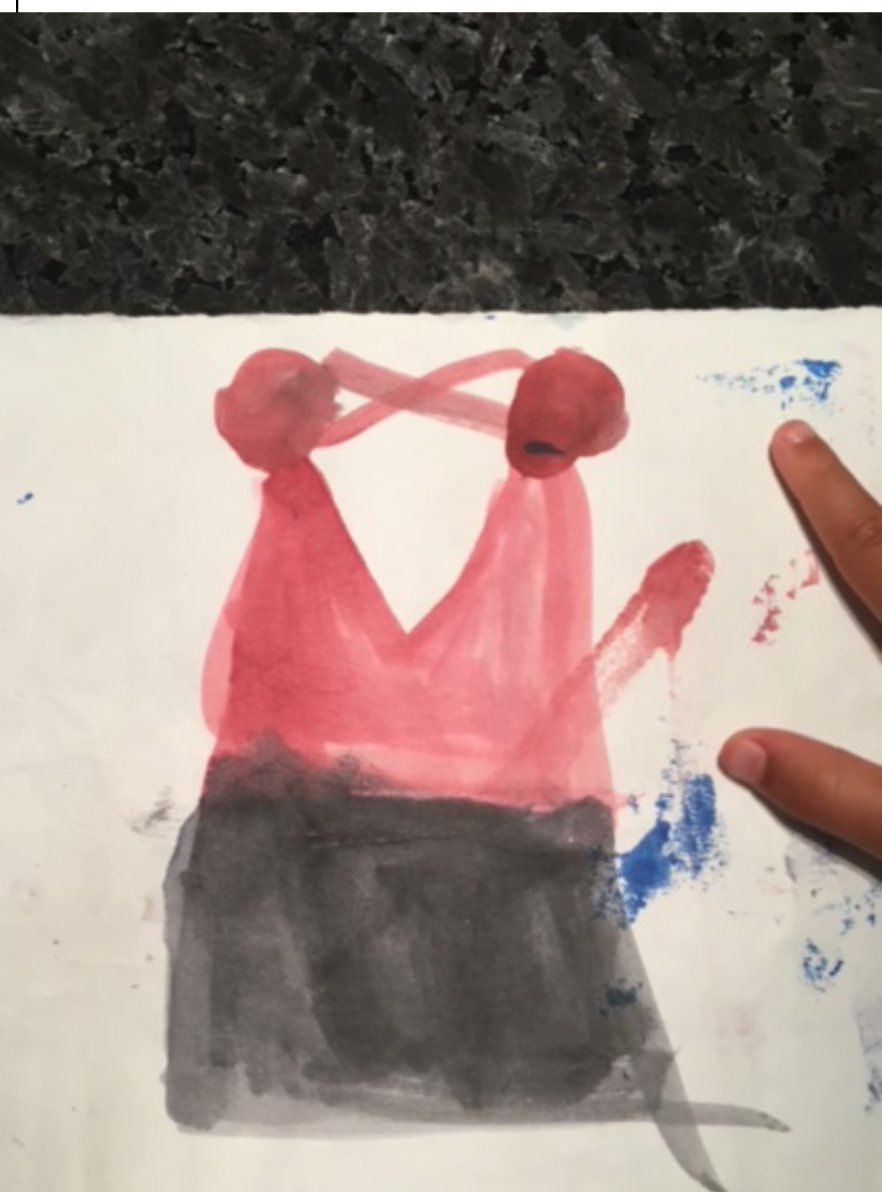
It had a black skirt with a red top. Across it was a green sash that reminded me of nature and the apple tree. It was a beautiful dress, it reminded me of my mom, and the beautiful things she wears. Only, she would prefer purple! The dress was beautiful and I showed it to my mom. She took a picture of it. As I got older, I looked at that picture and really started to focus on it.

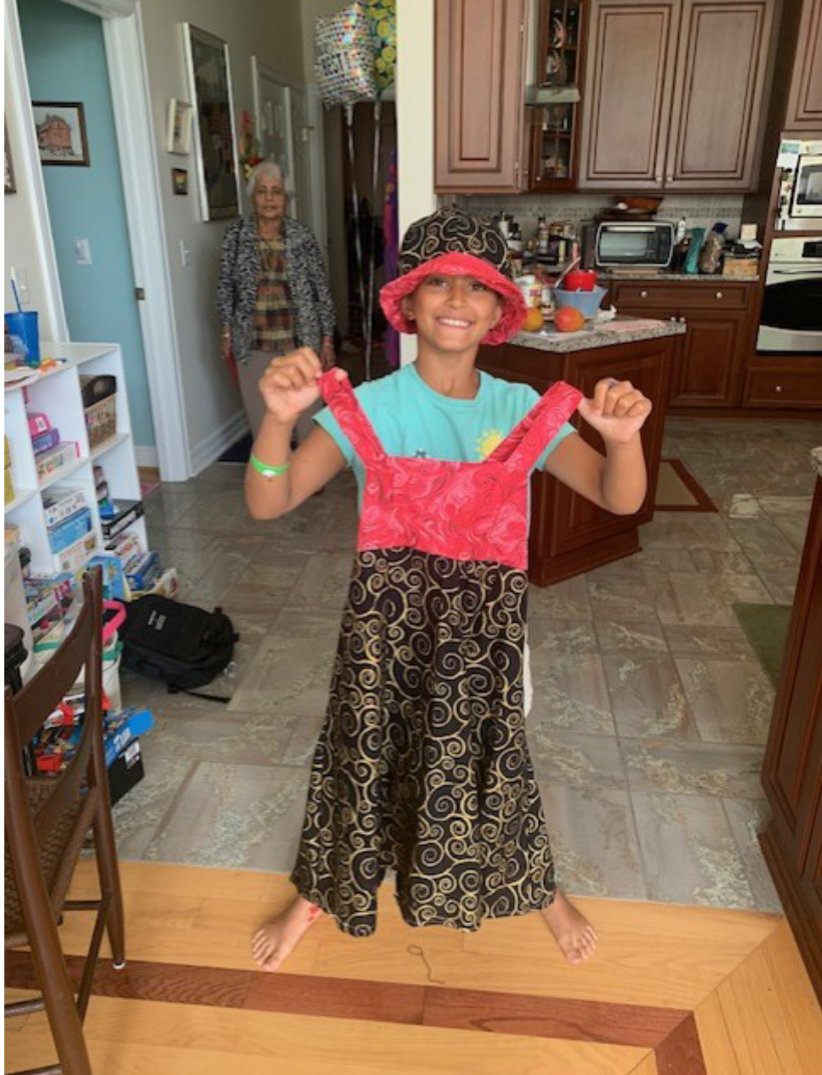
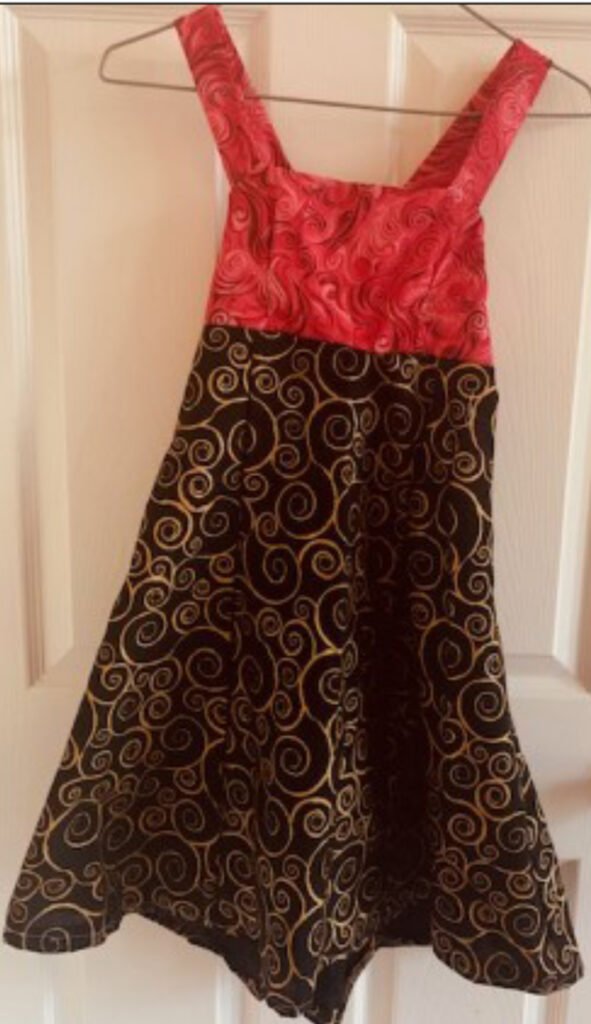
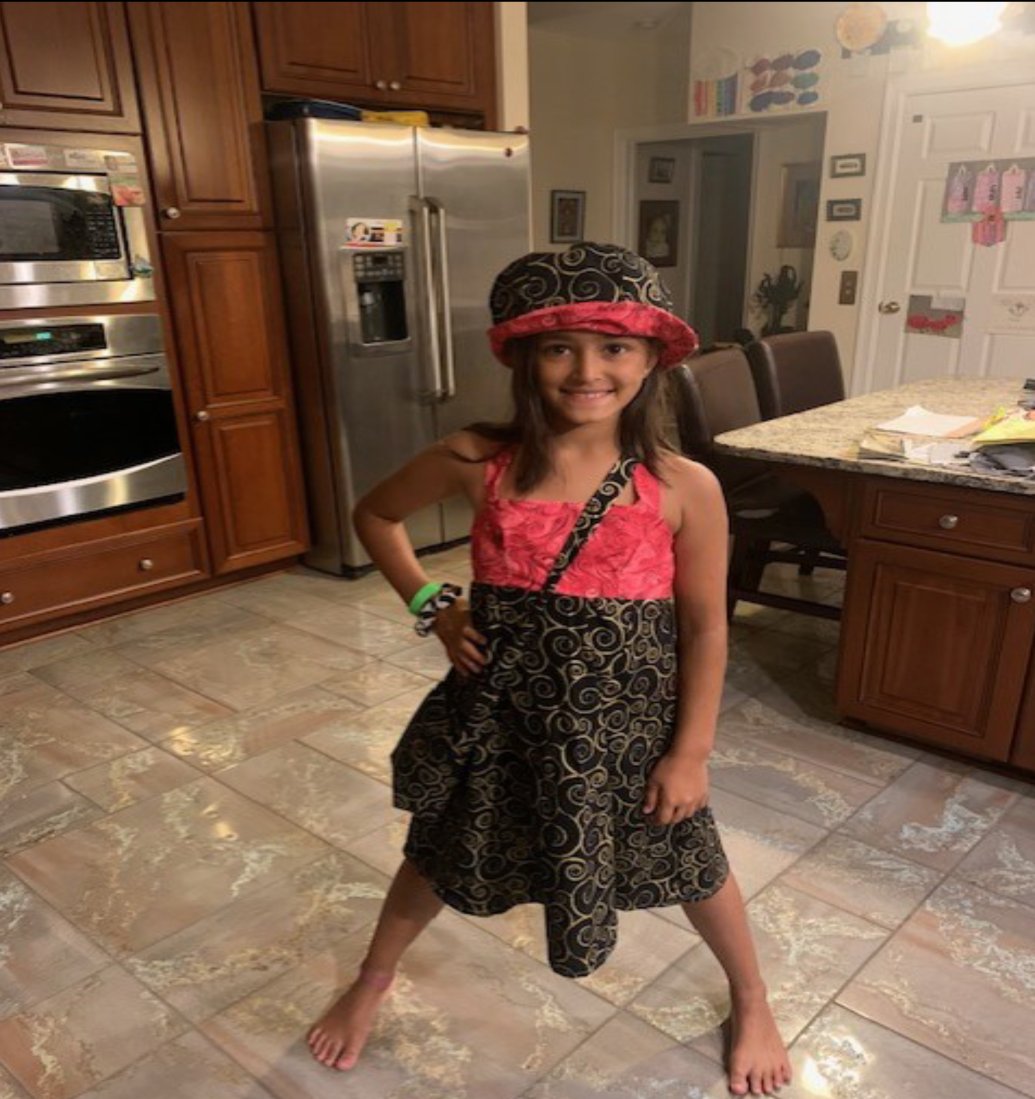
Now that I’m older and going into 5th grade, I talk about my drawings. I never got to really do anything with my design after kindergarten. But, the summer before 5th grade, I finally got the opportunity to make the dress. My mom found me a sewing teacher for the summer and we started making MY dress. It was a little bit harder than I thought, but I realized nothing is impossible.

“Nothing is impossible,” I thought when I was little. Drawing is drawing but I never realized it could come to life! Drawing is easy for me but seeing the final outcome is not. You have to put thought into it and believe in yourself. I realized that no one is too young or old to start something new. And, not just for sewing, anything new, you can do! I started sewing classes and the first step was to practice. It took some learning before I could start sewing my own design. I loved learning new things and was so excited to sew the dress!

You’ve learned what I wanted to do from a young age. Now, you should go and find what you want to do. The world is full of stuff and different things to learn everyday. My dress was one dream that I never knew could become real. I really never thought this would actually happen and I loved learning how to sew and my new dress!


“My name is Priya Elizabeth Kapur DeWinter. I share my full name because it tells you about my family. My mother is 100% Indian—which is where the Kapur comes from—and my father is half Irish and half Belgian. DeWinter is a Belgian name. 

“My maternal grandparents are from India. I’ve never been and hope to go one day. I speak Hindi and English. I’m an older sister. I hope I can be an author or fashion designer when I’m older. I got inspired one day to ask my mom if I could sew the dress that I designed when I was 5 so I did and made it happen, which is what my story is about along with pictures of my original design as well as the dress.”

Ohana

Ohana

By Likhita Makam, age 15, Telangana, India

We fight and apologies we forget.
We get lost and we get upset.
We fall apart into a million pieces,
But being together smooths out all the creases.

Because in the end we’re a family
although we don’t get along dandily
Far from picture perfect Pinterest poses
We make it to the diner just before it closes
We spend weekends at home in quarrels
Perfect family? For that we’d have zero laurels
But we stick together, no matter what
for each other we’d take a jab in the gut, somewhat
What matters the most is we never part
We’re always close, we never depart

Because we’re a family
And family means nobody gets left behind
No matter our irregularities
No matter our similarities

—Likhita Makam, age 15, Indian American high school student, living in India. She has been published in youth newspapers and literary magazines. She is an avid reader and is up for a poetry discussion at all times.

Manu and Noah: Strikingly Different, Surprisingly Similar

Manu and Noah: Strikingly Different, Surprisingly Similar

By Sahil Prasad, grade 8, Maryland.

King Manu, the first man according to Hinduism, and Noah, the survivor of the great flood, are two legendary men, who hail from entirely different religions of the world. Yet, these great individuals, surprisingly, shared multiple similarities that would be interesting to dwell upon during these times when religion is the source of divisiveness.

The Great Flood Survivors

First, both Manu and Noah were chosen by their respective Gods to survive a great flood. Their stories are startlingly similar. It is incredible that the two civilizations that these stories originated from were never in direct contact with each other until many centuries later!

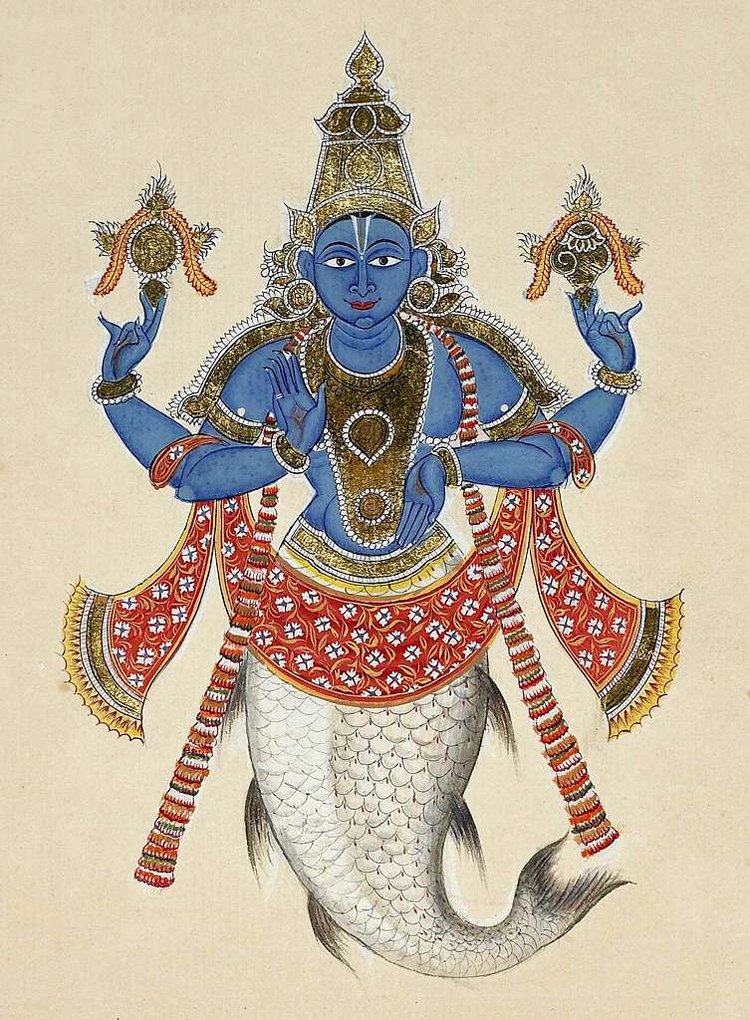
The Matsya or Fish Avatar of Lord Vishnu. Artwork is from the public domain and Wikipedia.

Manu was a sage who dedicated his life to faithfully serving and worshiping Hindu gods. The Lord Vishnu, the preserver in the Hindu trinity, chose Manu to be the survivor of a flood that would cleanse the world. The story goes that Vishnu decided to take the form of a tiny fish, the first of Vishnu’s ten avatars, and said to Manu, “Protect me from my predators and I will reward you.” Manu decided to keep the Vishnu-fish in a pot, which it quickly outgrew, and then in a lake, which also proved to be too small for the fish. Eventually, Manu moved the fish to the ocean. This is where Vishnu assumed his true form and informed Manu about a great flood that was about to occur. To ensure that his faithful follower survived, Vishnu instructed Manu to build an ark or a giant boat with all the animals, seeds, and other essential materials to survive the flood and start a new life. Manu decided to invite the seven holy sages or the Saptarishis to live with him in the new world. Manu and the seven holy sages guided the ark through the giant flood with the help of Vishnu–who led the ship with his horn in his giant fish form–to a peak where they rested until the world was cleansed. Finally, Vishnu came true to his promise and bestowed upon Manu the scriptural knowledge and power. The scriptural knowledge was passed down by Manu’s descendants and still continues to be studied today in the form of the Vedas.

Fun fact: According to B. B. Lal, the former director of the India Archaeology Institute, the flood of Manu approximately occurred as far back as the second millennium BCE.

Now coming to Noah; unlike Manu, the human race already existed in Noah’s world. The old human race was only concerned with money and killing, so God was disappointed with them. He decided to give the humans another chance by having Noah, the only devotee and true believer left on the planet, to be the guardian of a better human race. Noah, like Manu, also built an ark under God’s instructions, which were, “Build an ark of gopherwood, with rooms inside, three decks, and a door. Cover it inside and out with pitch.” (Genesis 6:13-22) Noah’s ark wandered the Earth (with Noah’s family and the various species that he had been instructed to bring with him) for 40 days and 40 nights in continuous rain. Noah traversed the ocean for another 150 days until God directed the boat to Mount Ararat (in present day Turkey) where it halted. Eventually, Noah sent out a dove to find land for them to settle and it came back a week later with an olive branch, which meant that land was out there. Just like to Manu, God made a promise to Noah that he would never flood the Earth ever again.

Harbingers of the Human Race

Manu and Noah were also attributed with ensuring the survival of the human race. After the great flood, Manu made a sacrifice to Brahma, the Creator in the Hindu trinity. He placed sour milk and butter in shallow water and this resulted in a maiden emerging from it, soon to become his wife. Eventually, the human race would start to grow at an exponential rate. Manu then instituted a quintessential set of laws (Laws of Manu) based on the Hindu scriptures that his ten sons and one daughter and subsequently, their descendants had to follow. One of these laws was to divide the population based on their gunas or skill sets. For example, people who were versed in the scriptures would be known as Brahmins. Eventually, humanity split into the solar clan founded by Manu’s sons and the lunar clan founded by Manu’s daughter. According to Hindu scriptures, Manu will be reincarnated when our current universe will be cleansed by Vishnu—in about 186.72 million years according to the Hindu scriptures—and he will be the leader and lawgiver of a more superior race.

In the case of Noah, after the devastating flood, he continued to live with his family and repopulate the Earth. Noah lived until the age of 950 and just like Manu, God helped his family grow rapidly. Just like the descendants of Manu split into the Solar and Lunar Clans, Noah’s descendants also split and settled the world, but they followed a different and more contentious trajectory than Manu’s descendants. Here’s how it played out.

Noah’s great grandson, Nimrod, began to build a colossal structure called the Tower of Babel, which slowly approached the height of the heavens. Citizens thought that Nimrod was building a temple, but it was revealed that reaching the heavens was his motivation all along to prove that he was an equal to God. As a result of Nimrod’s selfish actions, God decided to halt the construction of the Tower by making the workers speak different languages so they wouldn’t understand each other. As a last step, God took his punishment further and decreed that people of the city had to settle all around the world. This is how the world came to be inhabited according to the story of Noah and his family.

So there it is: the story of Manu and Noah. Given the striking similarities between them, some experts argue that they could be one and the same, a theory certainly worth pondering.

—Sahil Prasad, grade 8, Maryland.


Miya’s Summer Bubbles

Miya’s Summer Bubbles

By Carleen Clifton Bragg, African American Photographer, Illinois.

“I live in Chicago’s South Side neighborhood. There are three beautiful small lakes near where I live. Sometimes, I visit the park with a cup of my morning coffee. Sitting on the bench by the water, I gaze at the still water and the geese enjoying their group gatherings, and naturally, I smile. Watching the geese swimming makes me happy. It’s the most beautiful cornerstone in the neighborhood that I depend on as a quick getaway. It is my home away from home. In the autumn, it’s especially breathtaking! I call this ‘My Peace Spot’ for the tranquility it offers me. Last autumn, I took some of the most stunning photographs here!

“I developed an interest in photography at the age of five. I credit my parents for planting the seeds when they purchased me my first camera. They have continued to support my interest in photography over the years. I started as a self-taught photographer, but later trained with the New York Institute of Photography. I try to capture sports moments, glamour, landscapes, music, theater, and street life. I am enamored with the works of the ‘late greats’ like Gordon Parks and James Van Der Zee.

“My photos have been published by Tyler Perry’s Production: Why Did I Get Married?, Today’s Photographer Magazine, and the International Library of Photography. I am a three time-winner of the Museum of Science and Industry’s Black Creativity. I also had a solo exhibit—my first One-Woman show in 2011 at the ARC Gallery in Chicago, Illinois.”

Sketching and Painting a Horse

Sketching and Painting a Horse

By Janelle Tang, High School Senior, England, United Kingdom.

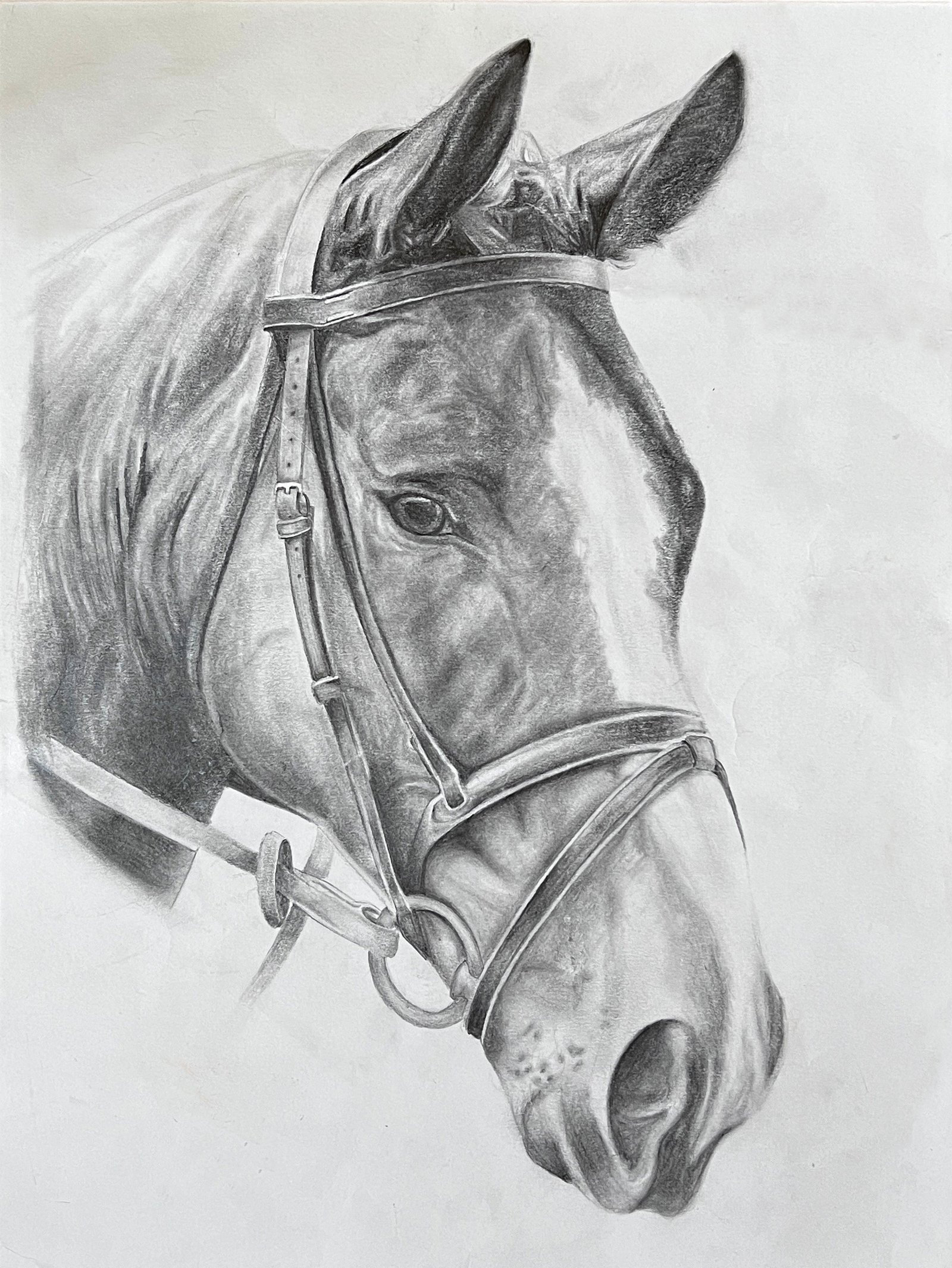
Horse Sketch: This was originally the planning sketch for a painted piece following a photo shoot (capturing the vitality and movement of horses). But while sketching it from a picture, I realised that there was much more to the muscles and twitches in the musculature of the horse than I had initially thought. Hoping to learn more about the facial structure and how the animal uses each muscle, I started sketching it out in more detail, finding tiny veins in the photograph that I had looked past originally. Eventually, the pencil sketch turned into a detailed pencil drawing of the horse. This not only allowed me to finesse my pencil skills, but also it led to a more detailed understanding of a horse’s musculature, which was later applied to another painting.

Horse Painting:

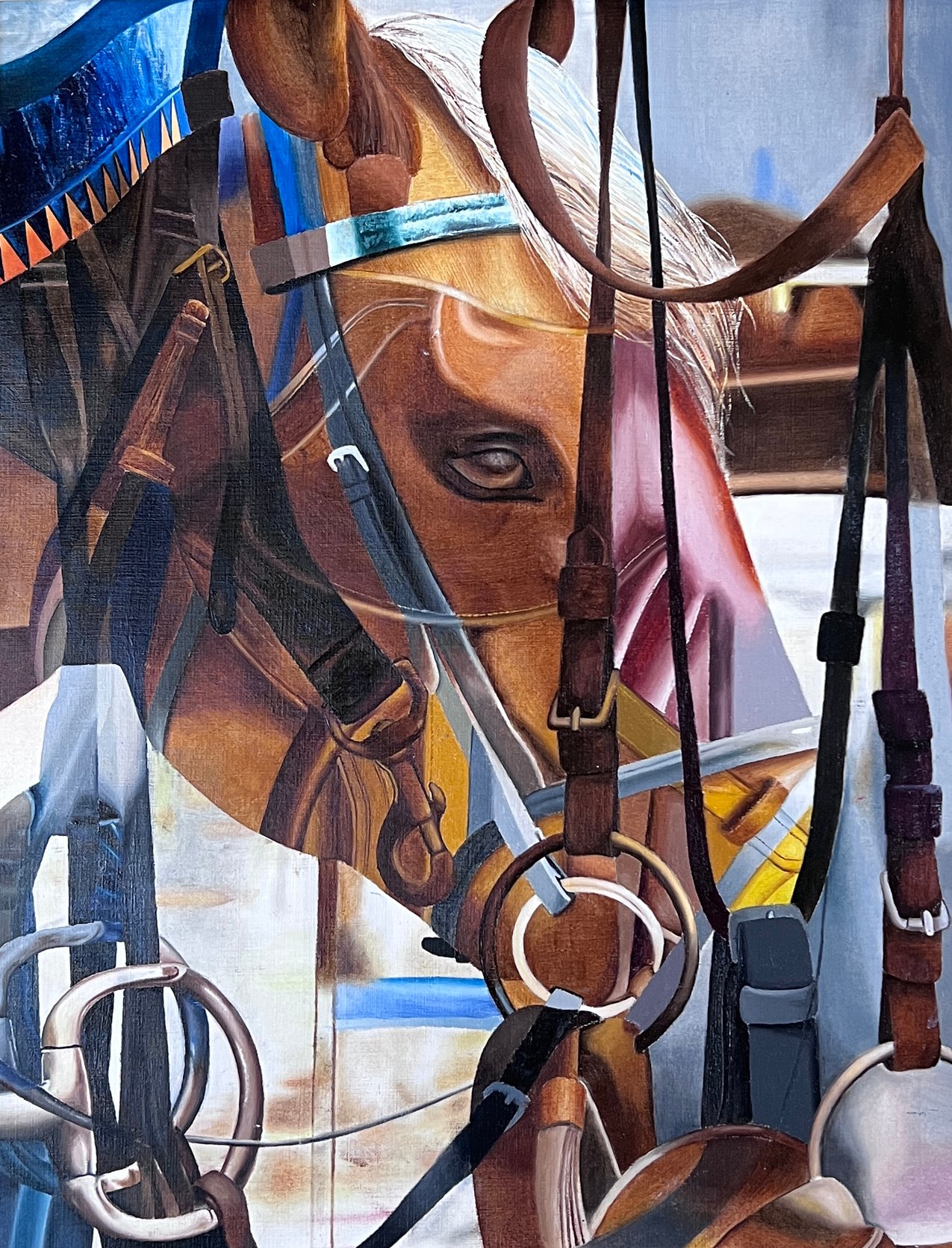
This painting was created after a photo shoot to capture horses’ vitality and movement and my curiosity to explore digital tools like Photoshop. I layered multiple pictures of horses, saddles and reigns together, and juggled with the formats, colouring and opacity of each image, and used different filters on each to highlight multiple areas on each image. This allowed me to focus on fine details I was interested in each image, treating each of them differently and associating colours and tone with each image, while still capturing the likeness of the horse. The medium of oil paint allowed me to create details in the image, changing the opacity as well through thinning the paint down in different areas, finally creating a cohesive painting that blends and flows throughout using optical mixing.

About the Artist:

Janelle Tang is a rising senior at Wycombe Abbey School in England. With a passion for art that ignited during her early years, Janelle has been painting since she was a young girl. As she grew, her curiosity led her to explore the captivating worlds of ceramics and textiles. With an adventurous spirit, Janelle delved into the realms of oil painting and hand-building pottery, and her artistic horizons expanded exponentially. 

Janelle’s artistic interests encompass a deep fascination with the Romanticism period of art, as well as the captivating allure of Oriental styles, such as Ukiyo-e prints. Diving into these subjects, she has written essays and conducted extensive research, delving into the techniques and styles of these art forms. This process has not only enriched her knowledge but has also ignited an even greater passion for the world of art.

As the Head of History of Art Society at her school, Janelle strives to inspire her peers and create a thriving artistic community. Her artistic journey has been one of growth, exploration, and unwavering dedication to the arts. With her unquenchable thirst for knowledge and her desire to generate unique ideas and solutions, Janelle hopes to leave an indelible mark on the canvas of artistic expression and beyond.