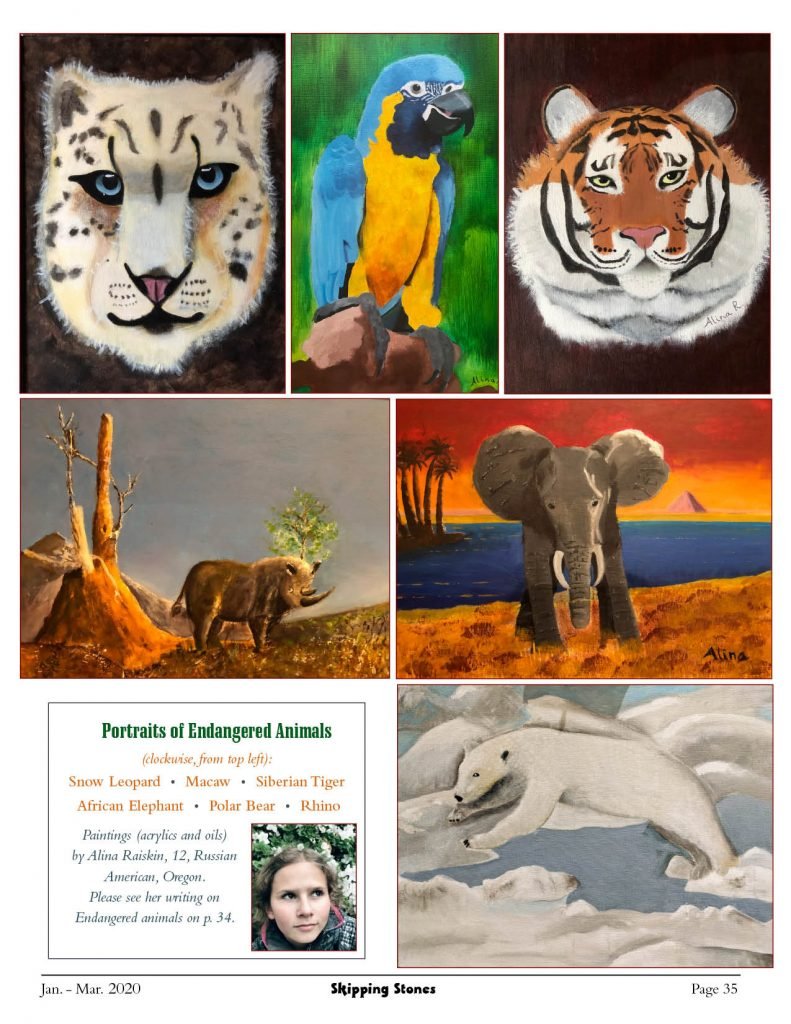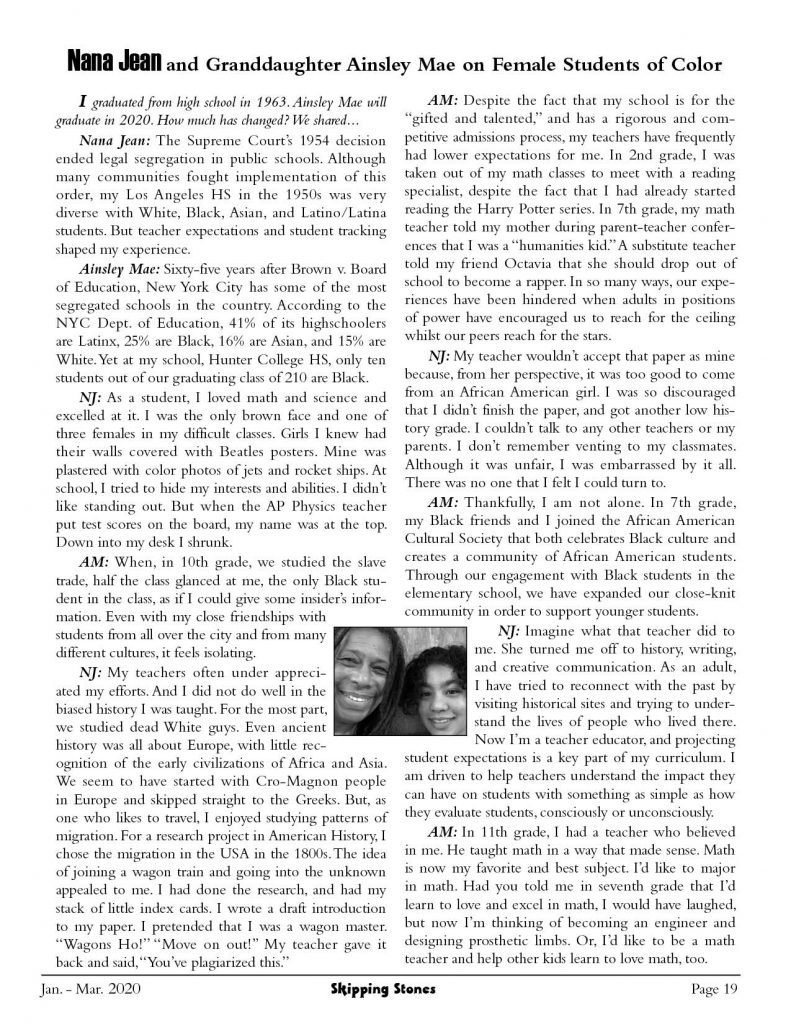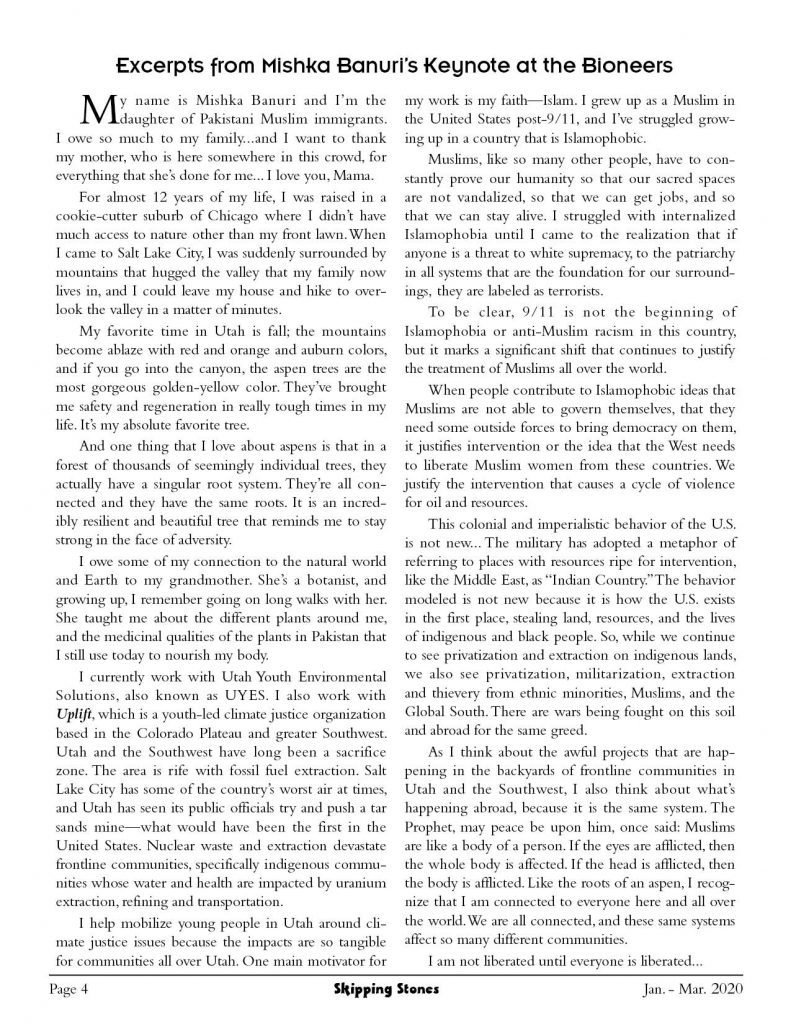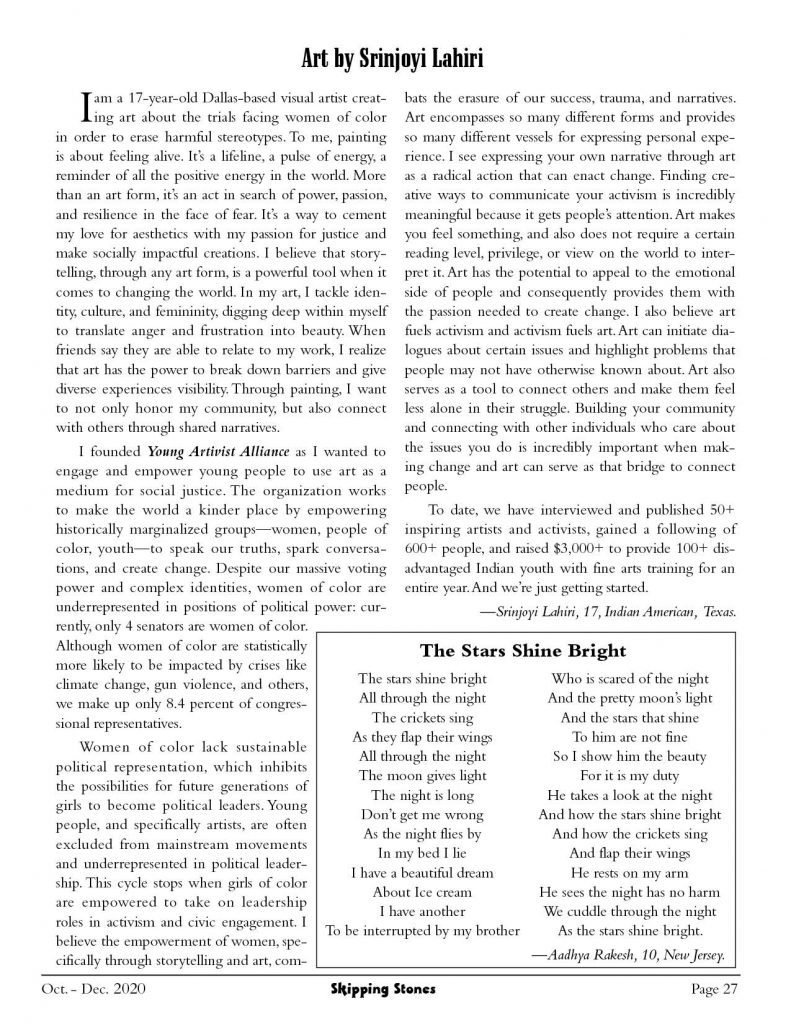
Art by Srinjoyi Lahiri


This artwork adorns the front cover of our Autumn 2020!
Black Lives Matter
Written by Aliya Shetty Oza, grade 7, Mumbai, India
“Dark skin is not a crime and light skin is not a prize.” – Urbanrogue
The human race can adapt under various circumstances that could possibly challenge them and their very own existence. Our strengths combined with our smarts and abilities have risen above these problems generation after generation. Humanity has faced troubles and challenges of all different sorts and origins, ranging from natural disasters, wars, greed and corruption, and more recently a global pandemic.
But I don’t think there is a specific number that could represent the amount of suffering caused by closed minds and clouds of judgment. There will always be factors that differentiate us from animals, one of them being judgment. Judgment is a way to perceive others and the world around us by mental and emotional means.
Judgment can lead to misfortune and simply, chaos. There are thousands being judged every single day because of their race, nationality, culture, skin, gender—to name a few. People have to fight for their rights as citizens of their respective countries and inhabitants of the planet. People must learn to not hate those that are different, but to cherish their diversity. Don’t criticize your differences; celebrate them. Learn from them. History has taught us all about the acts of mankind and how they have affected lives. We let prejudiced thoughts and beliefs like racism, discrimination, inequality, etc. thrive among us so that they settle into our system eventually.
If you scroll through the latest news and more recent topics, you will find dozens of articles and headlines about the brutal murders of innocent, unarmed black people. Sources say that the police officers of the United States were behind most of these deaths. An officer named Derek Chauvin, now infamous due to his bad deeds and acts of consequence, was the killer of an unarmed black man named George Floyd. There have been countless tributes and protests globally to stand up for the black people. As a result, officer Chauvin has been charged with 2nd degree murder and is behind bars because he pinned George Floyd to the ground with his knee pressed on his neck for over 8 minutes. Floyd’s last words were, “Please, I can’t breathe.” Witnesses present that day watched the lights go out in his eyes. How can a police officer, which has sworn to protect the citizens, end up killing one instead.
Covid-19 has taken lives and businesses and continues to do so. It has brought down countries and governments to their knees. It doesn’t distinguish between countries, religions or persons. It has actually reminded us that we are all equal irrespective of our culture, finances, race or gender. The disease treats us all equally, why can’t we treat each other equally?
This pandemic has already ended countless lives. Now we need to come together and help each other. Education, for instance, plays a vital role in our lives and without it there are misunderstandings, problems and worse. Money and finances can also shape a person’s life. If you are privileged, help others. Give your time and importance to helping others that are less fortunate and don’t have the same opportunities that you might. What you give, you receive. Always remember that.
In this unprecedented crisis, it is our collective responsibility to contribute in every way possible. In circumstances where we cannot be of help to others, let us not be the cause that derails the efforts.
Coping with the Current Challenges (Spring 2020 editorial)
These are trying times! Are you feeling the stress that’s going viral? As I write this letter, there are a lot of uncertainties looming on the horizon. All over the world, a number of events and services are being suspended. We are getting tons of emails about ways to cope with the virus that has spread so rapidly on all the continents and in most countries.
We live in a globalized world. Events and issues from one part of the world impact the rest of the world. To contain this virus, governments and institutions have restricted travel, cancelled public gatherings and closed schools and libraries. Everyone’s schedule has been interrupted. Please know that these measures are in the best interest of us all and our human society.
Since no immunization is available for Coronavirus at this time, the best strategy is to slow its spread. That way our health care and social systems are not stretched to their breaking points. We can reduce the risk of getting the virus and spreading it in the community by realizing that for now, prevention is the best cure. To reduce a rapid spread of the virus:
* Wash hands often with soap and water for 20 seconds. Use an alcohol-based hand sanitizer if no water is available.
* Avoid touching your eyes, nose, and mouth with unwashed hands.
* Avoid close contact with those who show the symptoms.
* Stay home if you have a cough, fever, or illness.
* Cover your cough or sneeze with a tissue, then throw it away in the trash. No tissue? Cough into your elbow.
* Clean and disinfect surfaces frequently touched.
Doctors are also suggesting that we follow best practices for social distancing, including staying away from others who are sick, washing hands often, and avoiding crowds. No hand-shakes, kisses, or hugs to greet people. Recommended social distance is six feet.
The Coronavirus is not deadly for most people, especially the young and healthy. If we are helping each other, there is no reason to feel desperate. We have been through tough times, as communities and countries, many times in human history, and we have pulled out of those insurmountable situations. (On pages 24-25, read about the Dust Bowl crisis of the 1930s). We are in this together—as a nation and as the whole world. There is no reason to be in a panic mode even if this COVID-19 epidemic has been called a global pandemic by the WHO (World Health Organization). It just reminds us to spare no efforts to overcome this. Let’s do our part in helping contain it.
One tried and true way to feel hopeful and in charge, is to be involved in doing something positive.
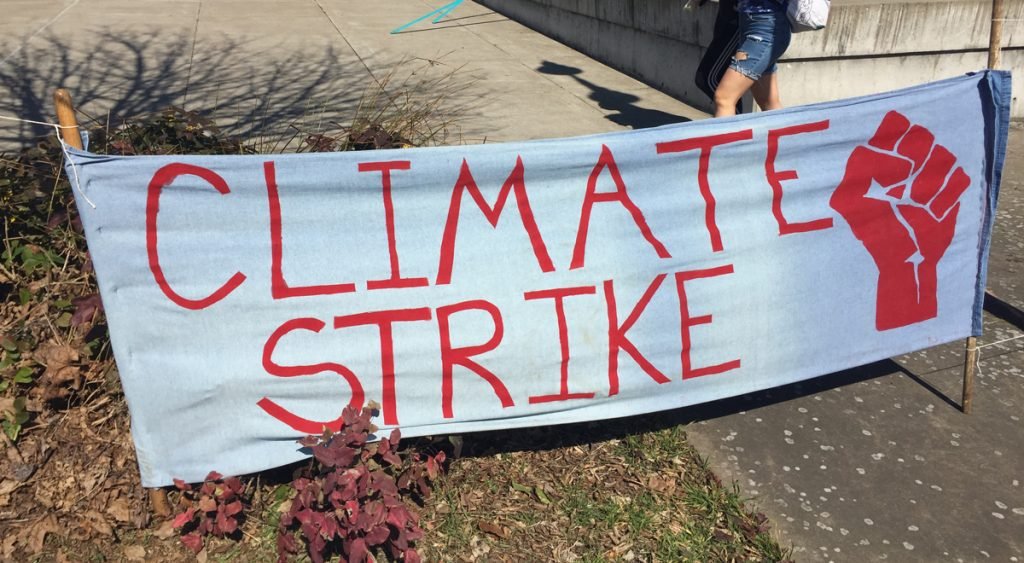
In February, about 60 youth, ages 9 to 18, and their mentors came together for an Environmental Leadership Summit. The weekend was organized by PeaceJam Northwest at the University of Oregon and was focused on the urgent challenges facing the environment we live in. Youth have shown strong leadership around the world in addressing these issues, and the event offered them a chance to inspire and inform each other. There were workshops, action planning using sustainable business models, interactive events, and a keynote address by Kiran Oommen, one of the youth plaintiffs in the landmark climate lawsuit Juliana vs United States brought by Our Children’s Trust. It was an inspiring gathering that encouraged cooperation and community. PeaceJam is an international education organization guided by over a dozen Nobel Peace Prize winners and with programs in 40 countries. Their mission is to inspire young people to create projects at a local level that have a global impact.
In the weeks ahead, you might find that your school is cancelled, and that you are spending days at home. You can think of that time as your “individual study time.” Read books from neighbors and e-books from the library, write stories, learn some new skills like cooking or practice musical instruments, sing, and walk or jog outdoors. Your time at home can be devoted to do things that you always wanted to learn or practice.
Our Spring 2020 issue features nature awareness and nature appreciation. As you browse through you will see scores of nature haiku, many with eye-catching nature art—all by youth like yourself. This issue’s photo essay (pages 16-20) by photographer Paul Dix features many wilderness areas and high mountains that offer a place for nature to thrive. The majestic peaks are symbols of the grandeur of nature. It wouldn’t surprise me if after seeing these breath-taking photographs, your family decides to visit them sometime in the future.
Wishing you good health this year and beyond,
Arun