Category Archives: Religion

Manu and Noah: Strikingly Different, Surprisingly Similar

Manu and Noah: Strikingly Different, Surprisingly Similar

By Sahil Prasad, grade 8, Maryland.

King Manu, the first man according to Hinduism, and Noah, the survivor of the great flood, are two legendary men, who hail from entirely different religions of the world. Yet, these great individuals, surprisingly, shared multiple similarities that would be interesting to dwell upon during these times when religion is the source of divisiveness.

The Great Flood Survivors

First, both Manu and Noah were chosen by their respective Gods to survive a great flood. Their stories are startlingly similar. It is incredible that the two civilizations that these stories originated from were never in direct contact with each other until many centuries later!
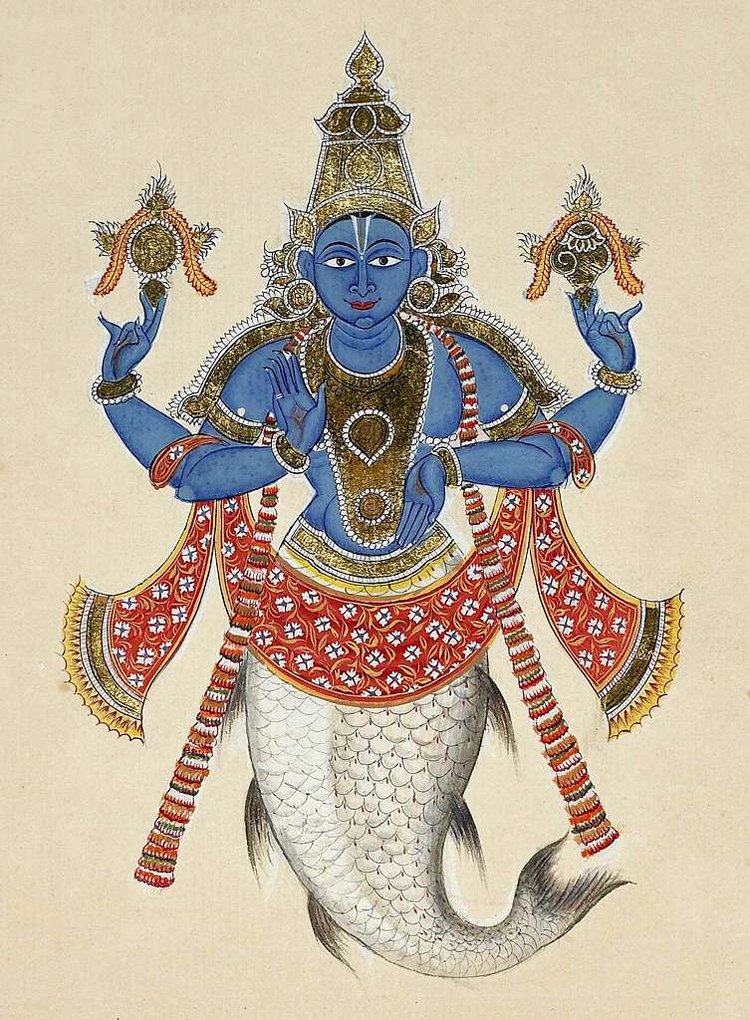
The Matsya or Fish Avatar of Lord Vishnu. Artwork is from the public domain and Wikipedia.

Manu was a sage who dedicated his life to faithfully serving and worshiping Hindu gods. The Lord Vishnu, the preserver in the Hindu trinity, chose Manu to be the survivor of a flood that would cleanse the world. The story goes that Vishnu decided to take the form of a tiny fish, the first of Vishnu’s ten avatars, and said to Manu, “Protect me from my predators and I will reward you.” Manu decided to keep the Vishnu-fish in a pot, which it quickly outgrew, and then in a lake, which also proved to be too small for the fish. Eventually, Manu moved the fish to the ocean. This is where Vishnu assumed his true form and informed Manu about a great flood that was about to occur. To ensure that his faithful follower survived, Vishnu instructed Manu to build an ark or a giant boat with all the animals, seeds, and other essential materials to survive the flood and start a new life. Manu decided to invite the seven holy sages or the Saptarishis to live with him in the new world. Manu and the seven holy sages guided the ark through the giant flood with the help of Vishnu–who led the ship with his horn in his giant fish form–to a peak where they rested until the world was cleansed. Finally, Vishnu came true to his promise and bestowed upon Manu the scriptural knowledge and power. The scriptural knowledge was passed down by Manu’s descendants and still continues to be studied today in the form of the Vedas.

Fun fact: According to B. B. Lal, the former director of the India Archaeology Institute, the flood of Manu approximately occurred as far back as the second millennium BCE.

Now coming to Noah; unlike Manu, the human race already existed in Noah’s world. The old human race was only concerned with money and killing, so God was disappointed with them. He decided to give the humans another chance by having Noah, the only devotee and true believer left on the planet, to be the guardian of a better human race. Noah, like Manu, also built an ark under God’s instructions, which were, “Build an ark of gopherwood, with rooms inside, three decks, and a door. Cover it inside and out with pitch.” (Genesis 6:13-22) Noah’s ark wandered the Earth (with Noah’s family and the various species that he had been instructed to bring with him) for 40 days and 40 nights in continuous rain. Noah traversed the ocean for another 150 days until God directed the boat to Mount Ararat (in present day Turkey) where it halted. Eventually, Noah sent out a dove to find land for them to settle and it came back a week later with an olive branch, which meant that land was out there. Just like to Manu, God made a promise to Noah that he would never flood the Earth ever again.

Harbingers of the Human Race

Manu and Noah were also attributed with ensuring the survival of the human race. After the great flood, Manu made a sacrifice to Brahma, the Creator in the Hindu trinity. He placed sour milk and butter in shallow water and this resulted in a maiden emerging from it, soon to become his wife. Eventually, the human race would start to grow at an exponential rate. Manu then instituted a quintessential set of laws (Laws of Manu) based on the Hindu scriptures that his ten sons and one daughter and subsequently, their descendants had to follow. One of these laws was to divide the population based on their gunas or skill sets. For example, people who were versed in the scriptures would be known as Brahmins. Eventually, humanity split into the solar clan founded by Manu’s sons and the lunar clan founded by Manu’s daughter. According to Hindu scriptures, Manu will be reincarnated when our current universe will be cleansed by Vishnu—in about 186.72 million years according to the Hindu scriptures—and he will be the leader and lawgiver of a more superior race.

In the case of Noah, after the devastating flood, he continued to live with his family and repopulate the Earth. Noah lived until the age of 950 and just like Manu, God helped his family grow rapidly. Just like the descendants of Manu split into the Solar and Lunar Clans, Noah’s descendants also split and settled the world, but they followed a different and more contentious trajectory than Manu’s descendants. Here’s how it played out.

Noah’s great grandson, Nimrod, began to build a colossal structure called the Tower of Babel, which slowly approached the height of the heavens. Citizens thought that Nimrod was building a temple, but it was revealed that reaching the heavens was his motivation all along to prove that he was an equal to God. As a result of Nimrod’s selfish actions, God decided to halt the construction of the Tower by making the workers speak different languages so they wouldn’t understand each other. As a last step, God took his punishment further and decreed that people of the city had to settle all around the world. This is how the world came to be inhabited according to the story of Noah and his family.

So there it is: the story of Manu and Noah. Given the striking similarities between them, some experts argue that they could be one and the same, a theory certainly worth pondering.

—Sahil Prasad, grade 8, Maryland.
 

Ramadan For All

Ramadan for All

By Zanjabila Khadija, age 8, Indonesia.

Asif was going to fast in Ramadan month for the first time tomorrow. He was still five years old. Eating was usually fun for him, so the first fast was a tough challenge for him. That night, he was restless. He wondered what would happen if he didn’t eat his favorite food. Too tired to think about it, he fell asleep at 8 p.m., even though he usually went to bed at 9 p.m. He was too flustered, so he fell asleep early.

In his dream, he found himself in the land of giants. On that land, a lot of giant-sized foods can be enjoyed, such as candy, ice cream, vegetables, fish, fruit, chocolate, and so on. He was full after eating many different food dishes. He laid down when someone’s voice startled him. It turned out that it was not a human voice, but a giant talking candy!

When Asif fell asleep, his mom and dad discussed Asif’s fasting. They tried to find a way so that Asif could fast comfortably without feeling too hungry or bored. His dad said, “What if we bring him a new toy that he can play with and thus get distracted?”

However, his mom said, “No! Asif was bored with toys. What about a pet? Chickens, cats, or fish. Let him choose it by himself!”

Asif’s dad agreed. The next day, Asif woke up very early to eat his pre-fast meal because he was so excited about his first Ramadan. After finishing his meal, his mom and dad asked Asif to pray at dawn. Later in the morning, Asif and his dad went to Nana’s house, a short walk from their house. Nana was his aunt. Nana had eight cats. Some of them were Persian cats, and the others were domestic short-haired cats. Asif was amazed to see those cats. He wanted three cats. He asked Nana, “Aunty, can I keep these three cats?”

“Oh, sure,” said Nana without hesitation.

Asif was allowed to bring one Persian cat and two domestic cats. He forgot his hunger during the month of fasting. He loved them when they jumped around and chased his toys. Also, they did not find any mice at home anymore. Asif named his first domestic cat “Mimi the Nimble” because he was the most agile at catching mice. The second domestic cat was called “Mike the Great Climber.” He loved to climb all the trees in their backyard and bask for hours on the rooftop. The Persian cat was named “Lulu the Groomer.” Almost all day long, she combed her fur with her tongue.

One evening, Asif went to the mosque. The mosque committee would hold an iftar. All people who wanted to break the fast were invited to come. Arriving at the mosque, he saw many people gathered there. He sat in the mosque next to an old man he had never met. The old man told Asif that he was a traveler and was going to the next town by bike. Asif felt very happy every time he broke the fast together with other people at the mosque. He felt warmth even though he didn’t know those people. He saw that rich people would sit on the same floor as the poor. He also saw that all people got the same food. No matter what their ethnicity. He then remembered what his dad had once told him: “All people are equal before God, except for the good deeds they have done.”

When he ate his Iftar meal, he remembered his cats. He thought they should feel the joy of breaking the fast as well. He set aside his empal, a traditional meat dish, for his three cats. After breaking the fast and doing maghrib prayer—an evening prayer, Asif ran home carrying that large piece of empal. As he opened the door, all his cats ran toward him. Lulu and Mimi rubbed their bodies against his legs, while Mike climbed onto Asif’s shoulders. The three cats then partied happily with that meat!

Zanjabila Khadija, age 8, Indonesia. She writes: “I love writing poetry and short stories.” She has won several literary competitions for young writers in Indonesia. In 2024, the Ramadan will begin on Sunday evening, March 10th and end on Tuesday, April 9, 2024 with the festival of Eid al-Fitr. The festival lasts for three days.
Editor’s Note: Islam follows a lunar calendar and hence the Ramadan dates fall on different dates each year. Did you know that in 2030, there will be two Ramadans? The first Ramadan will be in January 2030, and the second one will be observed in the month of December. Also, on Dec. 25, as the Christians celebrate Christmas, the Muslims will be celebrating the festival of Eid!

The Abscission of Perennial Petals

The Abscission of Perennial Petals

By Aniket Dewangen, grade 10, India.


The bougainvillea flowers whistled with the wind. Each of them withered away as two stayed by the coarse and flaky mahogany tree.

My childhood

The image of the god was pleasant and heartwarming. He held a brass flute adorned with a flower and a bead. The arched legs crossed against the drapery of the Dhoti1 and his lips touched the edge of the flute. His gaze was drawn downward to the majestic instrument. Its amygdaloid-like face and beaten-blue complexion were elegant and defined by a sharp jaw. A majestic peacock flower hung above the satiny hair at the crown of his head. The ace-shaped, indigo-colored splotch in the middle was covered by a flurry of green strands that flowed in a rhythm. The Lord Krishna stood there elegantly, displaying a natural aura of benevolence. Next to the defined blue edges was the goddess of devotion and tenderness, Radha. The two gods stood serenely in the centre of the ashram.2 The terracotta figures seemed to be emphasized in the minds of the people standing before me. Two Pandits3 walked towards the idols. They were wearing angharkas (a short coat-like scarf around the stomach). They marched around and began to proceed with the pooja.4 I looked back and scanned the long queue. The line’s shape curled almost like a racetrack. We all soon congregated, pushing forward to get a greater view of the two idols in the spotlight. I couldn’t see much. I just saw the shoulders of men who were agitated. My father, who limped through the crowd was in front. He had polio, and an orthotic device was attached to his legs. He began to walk in discomfort without any space left.

“Are you okay?” My father looked at me. He looked in agony, yet he powered through the line, which was like a Dandi march.5 Paa (father) was a kindhearted man, or at least I thought so, for the majority of my life. Soon the line began to compress, and I could sense the aroma of Rabri and Malpua.6 The glistening white substance dazzled with a pinch of cardamom on top. It was my favorite. My mother standing behind me kept her soft hands on my shoulders as we moved slowly through the long queue. The brass-plated bell rang at a fast tempo and the procession began. The chimes cut the air and rang through my ears. Soon I started to sense that we had come to the beginning of the line. My mother took me in her arms, and I could finally have a better view of the luminescent and vibrant colors. Both the terracotta figures were covered in tinsel. The pandits approached the idols and began to swerve a copper plate that contained an incandescent flame in one of the lamps. The intricate and mesmerizing designs on the bell and the plate were astonishing. The Pandits began to pour a white substance over lord Krishna. The idols were soaked in the thin badam milk.8 The low-pitched sound began to omit and amplify in the chamber. The Chappan Bhog9 had begun. The Chappan Bhog was a tradition during the festival of Janmashtami10 where the graceful gods were lavishly fed. The Pandits sang a harmonious tune and began to pour different things over the idols. I never understood why this happened. My mother told me that the gods were never fed, and this festival would fulfill them. The myriad of assorted foods made my mouth water.

“Now beta,11 ask for what you want most and fold your hands looking up at the terracotta idol,” my mother said in a haste. My hands joined together and pressed against the warm surface of my palms. I closed my eyes. The one wish and the one thing that I sought the most was barely even related to me. “Dear god, since you have had a wonderful meal, it wouldn’t be rude to ask you this small request. Please keep my parents happy, they seem to fight a lot. I want them to be happy and complement each other.” My eyes slowly opened and a hue of blue covered my vision. The voices that were once muffled began to ring in my ears. The same flame came close to me by the copper plate. The Pandit approached me. I leaned forward and raised my hands underneath the fire that rippled diagonally in the presence of oxygen. The Pandit then smiled and took a red-colored pigment mixed with water. He dipped his thumb in the color and put the tilak12 on the center of my forehead as I pulled my hair back. The Pandit took a few rice grains and stuck it at the same red line. Soon after, my focus quickly shifted from the pooja to the prasad.13 The prasad was a small token that was a blessing from the gods. Taking it from one hand was disrespectful, so I layered them both underneath. A green powder-like brittle was poured into my hand. It looked like earthy soil in my hand with other assorted colors sprouting. I dumped it all in my mouth, and the sweet powder dissolved.

We exited the ashram and my father smiled at me. I hugged them both, yet they had some repulsion against each other, like two magnetic poles. I noticed it instantly, but I didn’t understand what caused this tension.

Vexed – pandora’s box

I climbed up the staircase; drops of sweat poured down my body and made my hair oily. I removed my socks and speckles of grass rained down on the entrance mat. I realized a deafening noise was coming from the inside. The voice was stentorian, like the roar of a lion. I looked down at the marbled tiles aligned next to each other like a tessellation. I stepped inside, and the voice was even louder. In the kitchen, there were the sounds of a pressure cooker that emitted a blaze of steam and gas. In the other room was the sound of my mother, whose voice quickly changed from loud to timid. She began to pule and cry querulously. I quietly put my heavy bag in the room and decided not to make her aware of my arrival. I sat by the curb of my bed and silently listened to the conversation. They began to spit out insults in Hindi and the very blunt manner made me cover my ears. The walls became thin like paper, almost turning into the translucent matter. I pulled my kambal,14 over my head. I couldn’t bear to hear my mother sob and weep over the phone. Instantly I began to connect the pieces and realized who she was talking to.

I spent the entire day sitting on the bed. The call had stopped, and she had begun to snivel. I imagined her facial expression and the tone of his voice. “What could have made her cry so much?” I thought in my head as I concentrated on a single point on my cupboard. The scenarios flooded my brain. I began to become more and more anxious about finding out the mere truth. The teary-eyed face emerged from the aperture in the wall. She was perplexed and baffled by my sudden appearance and sat beside me.

“It will all be okay.” The vague statement did not assure me that she was doing fine. Instead, I began to get even more worried. As Maa left my room, I pulled out my drawer and began to nibble on a childhood snack. The packet of sweets besides my belongings would usually be saved after dinner. But at that moment I needed something to relieve the inexpressible pain. I put the hard candy, shaped like a mango in my mouth. The explosion of flavour tingled my mouth with a stiff numbness. The sour hard candy shifted its position from left to right in my mouth, coating it with the orange dye. I leaned on the headboard of the bed and didn’t do anything for the next few minutes.

Paa opened the door. I heard the creak and began to peek from the edge to see his face with a rictus. It emitted a smoldering look that was bold and quite masculine. He put his belongings by the sofa in the hall and called out my name. A sudden sense of anxiety penetrated my skull. I came out, put my hands behind my hips, and sat down on the greyish-white sofa. The conversation started normally and then was weighed down by emotions. I had not anticipated this moment, and I had begun to link the fact that money was a problem at home. Yet this was not even close to my prediction. Instead, I had learned of the disunion of the two pillars in my life. My world collapsed into a black void, and I sat there still in a vegetative manner for the next few minutes. The Pandora’s box had been opened, and I became enraged at this classified information which was unraveled.

The second petal beside the pinker one, began to hold on to the stem with a thread. Almost beginning to detach.

The contrasting white chair

It was PTM (Parent-Teacher Meeting) day. I walked by the person who made me ripe for the harvest. We both stepped inside the room where Mr. Girinath, my math teacher, welcomed us. He wore a checkered T-shirt and had a Vandyke beard with sleek metallic glasses. The three seats were next to each other. I wasn’t nervous about meeting my teachers, but I was bothered by one thing. It lingered in the back of my mind. My sore eyes were filled with gunk. While walking to the meeting, I was tired and pretended to be elated. The teacher began to lecture me about my poor attention span and my slipping grades in class. It didn’t matter to me. At that point, I just looked at the corresponding chair. The virgin white appalled me with its emptiness. I began to stare at it. My skin flaked like the scales of a viper. Soon my focus was disrupted by a concerned look on my mother’s face. She was quite upset with my academic performance. I was then continually lectured about my grades. I didn’t seem to care. I stepped out of the room. My attention was diverted to the other children. Their faces were lit up with ecstatic expressions. I noticed that both their pillars helped in upholding the integrity of their life. That one other pillar that was supposed to be upholding me had vanished. My mother’s sari15 revealed my face, and its fabric emitted a powerful aura. I was beholden to her and grateful because she raised me even when everything seemed to collapse. I hugged her tightly, grasping her back as a tear rolled down my cheeks.

            “I love you Maa,16” I murmured softly.

The mahogany tree stood there alone. The singular petal tarried in like an anchor.

By Aniket Dewangen, grade 10, India. He adds: “My roots have stemmed from the streets of Haryana, and I speak Hindi at home despite being born in the United states. Yet apart from this, I actively enjoy photography and art. I like capturing numerous moments, people and cultures through my Camera, and explore my artistic capabilities with the help of a brush and canvas. A large part of my childhood was seemingly rough and I went through many hardships, but my hobbies and passions made up and brought me relaxation even in distress. This all taught me one thing to stay stronger and push through anything that was to come my way.”

Foot Notes:

1 Dhoti: A white cloth garment with a border, worn in an Indian traditional manner

2 Ashram: A hermitage

3 Pandit: A Hindu scholar

4 pooja: A Hindu ritual of worshipping god

5 Dandi march: Mahatma Gandhi’s famous Salt March—nonviolent civil disobedience in 1930 during the British Colonial Indian rule

6 Rabri and Malpua: Traditional Indian sweet dish made with milk, sugar and condiments

7 Aarthi: A ritual ceremony of waving a lighted lamp during prayers

8 Badam : Almond

9 Chappan Bhog: Offering of 56 food items to Lord Krishna on his birthday (Janmashtami)

10 Janmashtami: Lord Krishna’s birthday festival, usually in August or September

11 Beta: Endearing term for son in the Hindi language

12 Tilak: A mark worn by Hindus on their forehead, especially during festivals

13 prasad: Food that is offered to gods

14 Kambal: A blanket or comforter

15 Sari: A traditional garment worn by women in India; it’s a long, colorful cloth decorated with various designs.

16. Maa: Mother.


Our Buddhist Meditation Class

Hi my name is Seja. I am 10 years old. I live in Wisconsin, and my parents are originally from Sri Lanka. I will tell you about our meditation classes.

My meditation class is usually held once a month, on a Sunday. I get to see my family friends. The class takes place at one of the homes. A Buddhist priest comes to meditate with us and teaches us Buddha’s teachings. We call the priest a Sadhu.

When everyone arrives, we start the meditation. First, we take refuge in Buddha Dhamma Sangha. The first three lines are: “Namo Tassa Bhagavato Arahato Samma Sam Buddhassa.” And we repeat that three times.

After that we recite the five Buddhist precepts, which are:

  • I shall not kill.
  • I shall not steal.
  • I will not be greedy for worldly pleasures.
  • I shall not lie.
  • I will not take intoxicating substances.

Then we do a compassionate meditation. To begin, we say: “May I be well, happy, and peaceful. May I be free from hostilities. May I be free from afflictions. May I be free from distress. May I be capable to overcome all the difficulties in my life. May I live happily and in peace.” We start with ourselves and then wish the same for our parents, siblings, relatives, teachers, friends, and finally, for all the living beings.

After all of that I feel relaxed, calm, and happy. The priest also asks some questions. For example, he asks us to think about other kids around the world, and how hard it is for some of them to get food, clothes, go to school, and so much more. He says that we should feel fortunate for having food, clothes, a good school, etc.

I sometimes think that since I have resources that some people don’t have access to, I should take care of what I have and not waste anything. I should be grateful and not waste what I have, and also donate and help others in need whenever possible.

The priest sometimes gives us books to read. There is one he wrote that I really like. It is called, “Why Mama wasn’t worried.” It is a great story.

After we’re done with the formal part, we serve the priest Sri Lankan food. Until he is done, us kids play a little bit. When the priest is done, we eat next, and then the adults.

When everyone is done eating, the parents and the priest talk a little bit and then we all bow to the priest before he leaves.

This meditation class is very helpful to me. I learn a lot about many things. My favorite part of the class is serving the priest and doing the compassionate meditation.

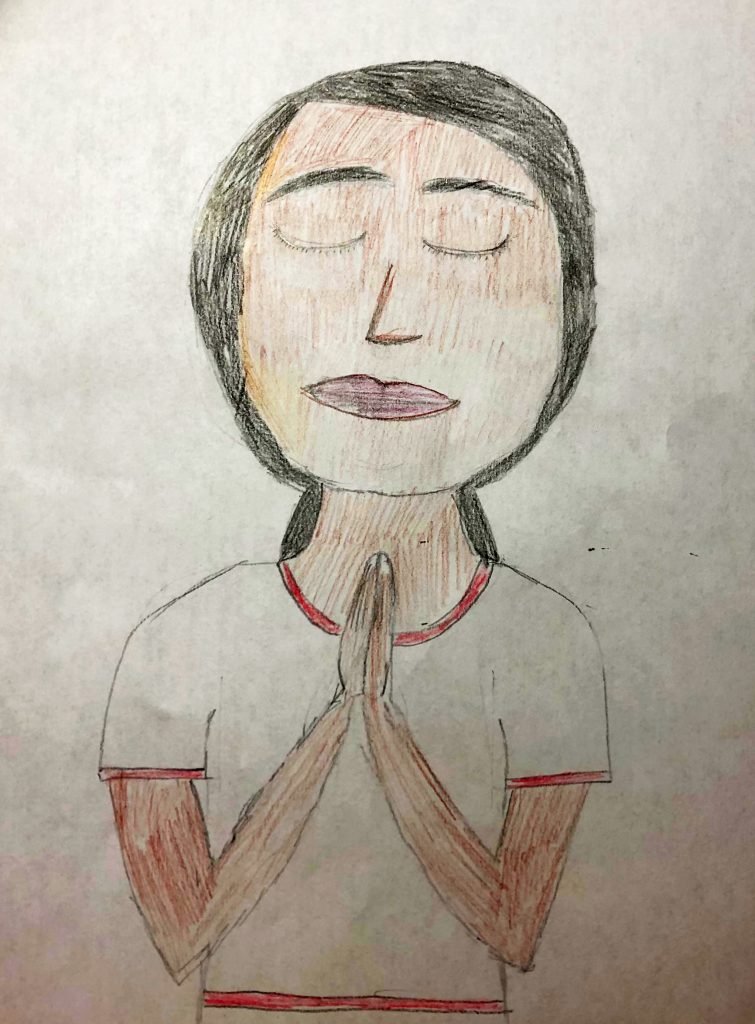
Art and writing by Seja Kularatna, Age 10, Wisconsin.

A Gift

By Chad Glang, Ph.D., Colorado.

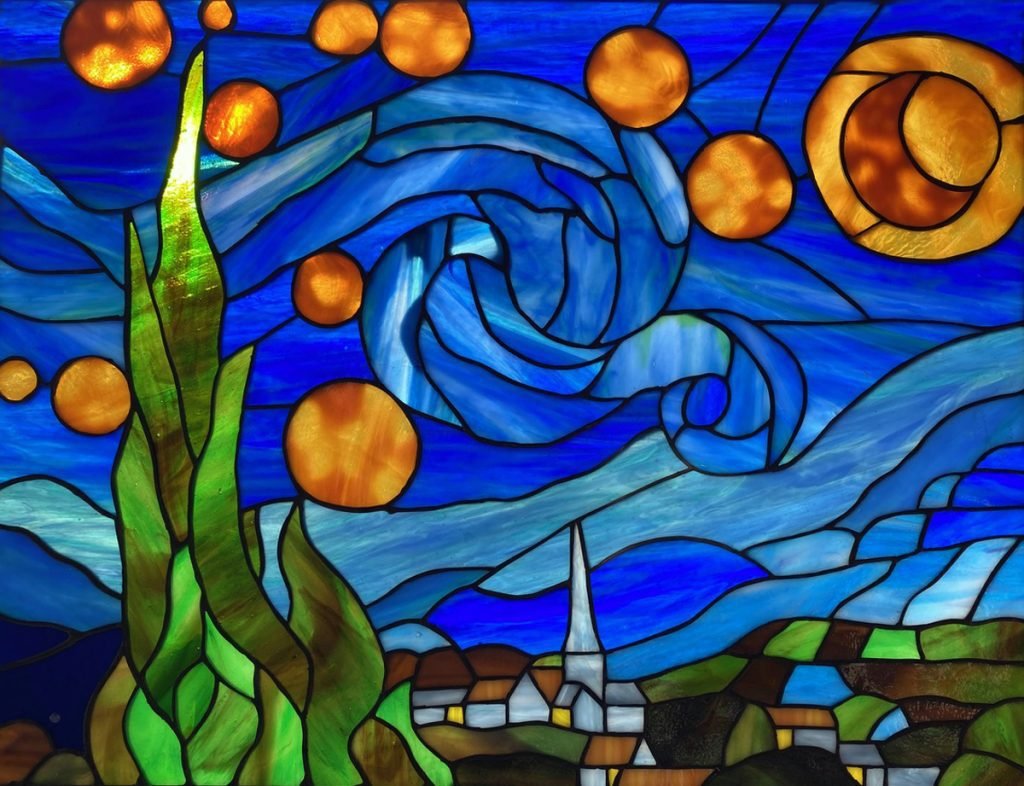
Stained Glass Art by Chad Glang, Colorado.

Someone asked me recently when was it that I first awakened to the spiritual side of life.
 
I have a vivid memory from my time as a student in France. I was 19, and several of us were invited to be companions to kids at a nearby orphanage. In several visits, I connected with a boy of eight. In our final afternoon together he went to his bureau—container of all his worldly possessions. 

He brought out a rare, treasured postage stamp and handed it to me: Un cadeau pour toi, “A gift for you.” 

I was so touched. I pulled out my wallet and found a memento I prized. “Great! We’ll trade,” I said.

His was crestfallen, his eyes filled with tears. “No, not a trade… it’s a gift. I want to give it to you.” I stopped breathing. Oh… I had denied him the experience of giving. In my discomfort with the vulnerability of being the receiver, I’d reflexively moved to equalize the relationship. Unaware, acting out of my own feelings, I’d walked on his feelings… and his dignity. 

More than fifty years later, I am still brought to stillness by this memory. I denied the gift of the stamp; I could not deny the gift of the learning. There’s something more going on here… it’s not just about what my limited, if well intentioned, ego can comprehend.

I didn’t have words for that experience at the time, which was part of its power. Now, the Sanskrit greeting Namaste comes to mind: “The place in me of love and truth and light greets the place in you of love and truth and light.” 

At a given moment, we may be wearing particular hats, like server and served, but we are all in this together…and deep down we are all the same.

—Chad Glang, Ph.D., lives a retired life in Colorado. He works with stained glass, hikes, bikes and camps. He practiced counseling psychology for 40 years. 

Ibn Battuta: The Marco Polo of Islam


By Sahil Prasad, Indian American, Grade 4, Maryland.
 

Wasn’t Marco Polo an amazing explorer? If you agree, you’ll be excited to learn about his Islamic counterpart, the 14th century explorer Ibn Battuta, who traveled 75,000 miles on foot from Timbuktu, Mali to Guangzhou, China (with that distance, you could circumnavigate the globe three times). Impressive, isn’t it, considering that’s how many miles some cars travel in their entire lifetime!

Ibn Battuta was an Islamic explorer whose mission was to travel to every Muslim city in the known world at the time.[1] His legendary taste for adventure started when he took the Hajj (a pilgrimage that Muslims take to Mecca, Saudi Arabia) because after he finished, he really wanted to explore more. Ibn Battuta was born on February 24, 1304 in Tangier, Morocco and he died in 1377[2] in Marrakesh, Morocco after 24 years of exploration! This extraordinary explorer met many fascinating people in his travels like:  a mad sultan in India who tried to kill him, mystics who ate their snakes’ heads of, or jumped in fires to try to put them out, and he met many different followers of Islam, mainly in Asia. He traveled all over the world through continents like Africa, Oceana, and Europe (North and South America were not discovered yet). When he visited some Islamic cities in Europe, the rulers there flooded him with gold and camels because they had a liking for travelers. That’s how Ibn Battuta supported himself on his travels.

Ibn Battuta chronicled his travels in a book called Rilah (The Travels, in English) and because of that, we know so much about Islamic cultures of his time. He gave so much information in his autobiography that it feels like you’re living in an Islamic world of the 14th century.

Marco Polo was a Venetian explorer who traveled all around the Mongol empire under the supervision of the ruler Kublai Khan. Marco Polo was born on September 15, 1254 and he died on January 8, 1324. Kublai Khan developed a very big liking for him and he sent Marco Polo on a series of diplomatic missions throughout the Mongol Empire.

I decided to compare Marco Polo and Ibn Battuta because they have a lot of similarities. Both explorers’ journeys were completely unexpected. For example, Marco Polo just wanted to travel to the Mongol Empire with his father and uncle because they wanted to trade European goods for Asian ones. Who knew that the same young Marco Polo would travel across Asia on tons of missions. Ibn Battuta had a similar series of events that led him to travel.

Ibn Battuta went on the Hajj (the pilgrimage to Mecca) because it was one of the Five Pillars of Islam—five duties that Muslims have to perform during their lifetime, and he was a devout Muslim. That one pilgrimage led to 50 other adventures all around Asia, Europe, and Oceana! That’s the last thing one would expect, isn’t it? Given that the Age of Exploration—where Europeans began to make voyages into the Americas—started a hundred years later.

Another similarity is that both explorers suffered some hard times on their travels. Ibn Battuta crossed a lot of dangerous areas. For example, in Africa, Ibn Battuta had to cross the Mamluks’ [3] territory and they were one of the most feared warriors at the time. Also, Ibn Battuta got sick with fever numerous times, and he had to often take breaks from his travels because of that. Marco Polo also encountered some problems in the desert on the way to the Mongol Empire. For example, he couldn’t find any modes of transportation so he just had to walk the whole way. Marco Polo was robbed by bandits and lost a lot of essential supplies including his diary, which was very important to him.

Lastly, both explorers traveled very long distances. Marco Polo traveled almost everywhere in the Mongol Empire which spanned almost the whole length of Asia! The Mongol Empire was the largest empire in history, so while traveling all over that big empire, he must have covered a very long distance. Ibn Battuta traveled very long distances as well. He traveled more than half of the known world at that time, covering over fifty thousand miles. Also, Ibn Battuta’s average miles per year were 3,000. So if you multiply that by the 24 years of his travels, you get 72,000 miles (his total miles were actually around 75,000)! Didn’t he travel a whole lot?

Ibn Battuta might seem like a superhuman, but like us, he was just an ordinary person. If we dedicate ourselves to a goal with determination and perseverance, we too can be successful like him.

Bibliography

1. David Angus Great Explorers, Naxos Audiobooks, 2003

2. The Adventures of Ibn Battuta: A Muslim Traveler of the 14th century by Ross E. Dunn, University of California Press, 1989

3. Ibn Battuta: The Journey of a Medieval Muslim by Edoardo Albert, Kube Publishing, 2019

4. Extra History by Daniel Floyd, 2008


[1] There are more Islamic cities currently in the world than at the time of Ibn Battuta.

[2] His death day and month are unknown.

[3] A group of slave warriors who lived between the 9th and 19th century in the Islamic world.

Kindness Is Magic

By Lila Drowos, age 10, Florida.

Kindness, whether it’s you being kind to someone, or someone being kind to you, can make you happier and healthier. Even small acts of kindness can change a life and make you feel better. But can kindness also be good for you, the person you’re kind to, and even others around you? Can it keep you healthy and relaxed? What exactly are the benefits of kindness?

The good feelings you get when kindness is happening are created by endorphins, pleasure chemicals that are connected with joy and pleasure, social connection, trust, smiling, laughter, and love, which can also come from doing an act of kindness. Kindness also helps us form meaningful relationships and connections, making strong friendships and bonds with others. Being kind can reduce stress as well, which makes you healthier and calmer, and creates pride, belief and confidence in yourself, and a sense of belonging.

Kindness can also help you learn to appreciate the good things in your own life. It can help you be more grateful. It’s always good to have some gratitude for the good things in your life, rather than focusing on the bad. Kindness can also boost your creativity and help you have a better imagination and ideas which can produce better results in school. It can also reduce the effects of bullying. And there’s the ripple effect, treating others how you want to be treated. If you’re kind to someone, they could go and help someone else, spreading kindness and helping the world become better, happier, and healthier. Witnessing acts of kindness can also produce other chemicals in your body that help lower your blood pressure and improve your overall heart-health. It can also give you optimism and extra confidence, which is extra helpful when you’re anxious or shy in any situation.

Kindness strengthens your heart physically and emotionally and it can help you live longer, and prevent illness. Also, serotonin levels, the feel-good chemicals in our brains are increased in both the person being kind and the person receiving the kindness, as well as anyone who witnesses that kindness.

Kindness is a wonderful way to feel happier and healthier for everyone!

“I am a fifth grade student and I attend a religious day school where I am learning about my Judaism. Being Jewish is really important to me because it connects me to my family and community. I am also learning to speak Hebrew in my school, which is a language traditionally spoken by Jewish people. We have different values and traditions and I am really interested in learning about the history of my people, and how it has shaped our beliefs as a community. 

One of the things that are important in Judaism is our focus on Tzedakah, which is the Hebrew word for charity. Kindness is very important to me and I like to help others. Some of my favorite ways to volunteer and give charity include preparing and delivering food to people that don’t have any, collecting supplies to donate to people in need, and picking holiday presents for families that can’t get them. 

Another important value in Judaism is Tikkun Olam, which means making the world a better place. Helping the environment and protecting it is very important to me as well. I care about sea creatures that get harmed by eating plastic that blew into the ocean, as well as land creatures that may eat trash. Recycling and reducing waste are ways that anyone can help, and take care of our planet, which is very important. 

When I think about what Tzedakah and Tikkun Olam have in common, they are both rooted in kindness. Kindness is a way of achieving a better world and making the planet that we live on a better place. I wrote my essay in honor of World Kindness Day, which was on Friday, November 13th this year. To me, kindness is very connected to my Jewish values and is something I want to teach others about.”

Lila Drowos, age 10, Florida.