Category Archives: Multicultural

Revenge in Rockford: A Chess Story

Revenge in Rockford: A Chess Story

By Aarav Patel, grade 9, Illinois.

I place my rook two spaces up and say, “Check.” A small grin tugs at my lips while those around me sigh in disappointment.

This was my second ever chess tournament and my first played against someone rated higher than me. My dad and I had traveled for one-and-a-half hours to a hotel in Rockford to participate in it. It was a step up from my debut tournament, with an elegant conference room, transformed into a symmetrical chess grid with dozens of rows.

My third opponent was a middle-aged man who seemed to be the type to promote to eight queens and checkmate well after he could’ve won already. Our game started with him consulting his friends in front of me on which opening to play. It was as if the game was not serious to him. He said that he hadn’t lost all day and was not going to start now. His friends laughed, but laughing was the last thing on my mind. I responded with a fake smile, as my body tensed up.

My first ever chess match was against my uncle and aunt when I was in the 2nd grade. I already knew how the pieces moved, but I knew no strategy. As you can imagine, it didn’t end well for me. When they check-mated me, I winced. I tried to figure out what I did wrong. I realized that I was looking only at what the next move would be, not two moves or even three moves ahead. I asked to play again, and this time improved by lasting a whole 10 minutes.

During the years between my first chess tournament in 2nd grade and this, my second chess tournament in 6th grade, I’d joined the school chess club. I’d also achieved a 1,000 ELO chess rating online, achieving true intermediate status. And I started traveling for competitions. Before playing my egotistical opponent, I had won both of my previous games, leading up to the final against him.

At the beginning of the match, I was down a couple of pawns. He stared across the room, as if he were longing to leave. Before the middle-game, he stood up and completely left our board to walk around and watch other matches. I regained an even position after tactically winning two pawns via a pin on his king. At that point he stopped wandering. He leaned back in his chair and rubbed his temples.

It had been a long day. I hadn’t seen the sun for hours and my body was aching from sitting in a stiff, wooden chair. His anxiety gave me the energy to continue being aggressive. After some material trading, we reached the endgame.

The endgame was the longest part of the match. By the time we reached it, nearly all the other games had finished. My opponent shook his head and let out a small sigh.

I recall watching the French Open earlier this year between Carlos Alcaraz and Jannik Sinner. Sinner dominated the competition for hours. He was the world number #1 and Alcaraz came up against multiple championship points. Yet Alcaraz kept coming back. At the end of the grueling five-hour saga, Alcaraz won. How Alcaraz didn’t let the intimidation or the pressure of millions of people get to him was impressive.

I saw him advance his pawn, and I thought back to the game against my uncle and aunt. What could they see that I couldn’t? But this time I saw. I sacrificed my rook to check and move his king into a fatal position. His friends, who had told him which opening to play, surrounded the board. Mouths agape, they stared at it like my friend Austin stares at a quadratic equation. The end was near.

My opponent knew what was going on. He played his next move in disbelief. He leaned into the board, letting the shock seep in. And then, I moved my queen…Checkmate.

By Aarav Patel. He adds: “I am a 9th grader from Illinois. I am Indian-American, and I mainly speak and write in English. I wrote this piece to show how chess has impacted me and shaped my way of thinking. Specifically, it taught me how to stay determined and focused, even when the pressure is on.”
No Phone, No Problem

No Phone, No Problem

By Nasiruddin Hamid, Qadian, Punjab, India.

We all love playing video games, watching funny shorts, and making movies on our smartphones. However, some of us use the cellphones much more than others.

I live in Northern India with my family. After school, my father gives me his cellphone for ten minutes to play games and enjoy SnapChat and YouTube, etc. When those ten minutes turn into 20 or 30 minutes, and then into an hour, I don’t even realize it—but my father does.

Last year, I started avoiding playing outdoors and spending time with my friends. I was using the phone more and more without telling my parents. But my parents never stopped keeping an eye on me.

One day, my father told me when he was a kid, he used to play many outdoor games like Pakadam Pakdai, Baraf Pani, Pitthu Gram, and Addi (see the end note below for a short explanation of these games children play in India). He said, “We didn’t have phones, but we’d read comics and novels in Urdu and English for our pasttime.”

Thinking of those outdoor games and thoughts of reading comics and novels really got me interested. So I made a deal with my dad that he and I would play outside and read books together. He bought me a new bicycle, and now I go riding; he runs beside me while I ride my bicycle, which is quite fun! He also bought me new comics and a few novels, and he reads them with me.

I really like reading the tales of Akbar and Birbal, as well as the stories of Mullah Nasruddin. They are full of humor and wisdom. I must say, I find reading books or riding a bicycle outdoors much more interesting than playing video games or watching YouTube shorts.

Yes, I know cellphones have their own benefits, but as my father says, “They are more useful after a certain age.” We should limit our phone usage. I have read that too much smartphone use can damage our brain cells, affect eyesight, and even our emotional health.

I believe my parents when they tell me that there can be many unforeseen negative impacts of these devices. I always trust them with any issues that come up.

As school age kids, we should use cellphones only for short duration, and under parental supervision and guidance.

By Nasiruddin Hamid, Qadian, Punjab, India.

Notes:

Akbar and Birbal Stories: Akbar was a Mughal emperor who ruled a large region in South Asia that includes modern-day Northern and Central India, Afghanistan, and Pakistan during the 16th century. Birbal was a close advisor and wise minister in the court of Akbar for some 30 years. The Akbar and Birbal stories are not only entertaining but also witty and are widely-read favorites of Indian kids.

Mullah Nasruddin (aka Nasreddin Hodja) appears in countless stories—mostly witty or wise—where he is shown as a (holy) fool that teaches great wisdom to the world. He is considered a Sufi (Islamic) character and he may have actually lived in the 13th century in present day Turkey and may have traveled to many lands as his stories are widely known.

A Short Explanation of the Games:

Pakdam Pakdai: Run and catch game One kid tries to catch others who try to run away.
Baraf Pani: When caught, you freeze like “Baraf” (Hindi word for ice) until someone frees you by saying “Pani” (Hindi word for water)
Pitthu Gram: Players break a stack of seven stones with a ball and then try to rebuild it before getting tagged by the fielders.
Addi: is played with two teams of 5/5 players. One team starts in a circle and tries to reach the end of the field line while the other team chases and blocks the players from reaching it.


Fighting Antisemitism , Fighting Injustice

Fighting Antisemitism, Fighting Injustice

By Donna Nevel, Florida

When I think about how to end antisemitism, I feel grounded in principles I learned from my parents. They taught me to be proud of who I was as a Jewish person but never to think I was better than any other person, group, or community. They showed me by example that caring about antisemitism meant caring about anti-Black racism and all forms of injustice. They lived by these principles always, which inspired my love of being Jewish as well as my desire to participate in movements challenging injustice and for collective liberation.

Antisemitism is generally understood as discrimination against Jews, violence against Jews, or targeting Jews simply because they are Jewish. Sometimes antisemitism is expressed through stereotypes and generalizations about Jews.

Jews come from many different experiences and histories. There are white Jews, Jews of color, and Jews from different parts of the world (my family migrated to the United States from Eastern Europe). Antisemitism does not always look the same for each of these communities and groups; there are differences based on geographies, class and race, intersections with other political identities, and more. 

Some examples of antisemitic violence in recent years in the US include the 2018 massacre of eleven congregants at the Tree of Life Synagogue in Pittsburgh; Jewish cemeteries being destroyed; and people who are visibly Jewish (wearing a skull cap or another Jewish symbol, for example) being attacked.  

The most well-known example of antisemitic violence is the Nazi murder of six million Jews (the Holocaust). In 1933, there were nine million Jews in Europe. By 1945, the Nazis had exterminated approximately two thirds of European Jewry in death camps and through mass murders. The Nazis also targeted and murdered other groups and communities on a racial and political basis, including Roma, Poles, and other Slavic peoples, queer people, those with disabilities, Jehovah’s Witnesses, and communists and members of political opposition groups.

Today, white nationalist violence–which, in many different, harmful ways, targets and denigrates Black people and other communities of color, trans and queer people, immigrants, Muslims, and Jews—is increasingly on the rise in many spheres of our society. White nationalist tactics include the use of conspiracy theories, among other manifestations. Antisemitic conspiracy theories promote notions of Jewish power and control and of Jews as untrustworthy and sinister. 

Ending antisemitism also means understanding what is not antisemitism. False accusations of antisemitism are too often directed at those who criticize the State of Israel and its treatment of the Palestinian population. It is important to know that Palestinians had been living in Palestine for centuries before Israel was established. In that process, 750,000 Palestinians were expelled or dispossessed from their lands and homes. (See more on Israel’s establishment/Zionism and the Nakba in note below.)

Antisemitism is directed at Jews as Jews. Criticism of Israel and/or its ideology is directed at a nation-state. Criticisms of Israel’s ongoing violence against the Palestinian people and the expulsion of Palestinians from their land and homes reflect a commitment to human rights and equal rights—and to what is just. Palestinians, Jews (such as members of Jewish Voice for Peace), and many others are committed to those principles. That is the furthest thing from antisemitism, and it is deeply harmful to suggest otherwise. 

So, how can we participate in ending antisemitism? Antisemitism has its own distinct characteristics—as do other types of discrimination—and is also connected to other forms of racism and injustice that different communities experience. Therefore, thinking about ending antisemitism also means thinking about how to end all types of injustice. We know that fighting injustice against one group while being silent or supporting it against another group will bring justice for no one.

This is what it means to have a commitment to collective liberation—the belief that we all are entitled to live lives with justice and dignity. Collective liberation also means that we have each other’s backs and can count on one another to speak out when anyone or any group faces an injustice.

People of all ages can participate and take action in different ways although we know it is much harder in these repressive times. For students, that might include holding educational workshops (maybe at a community space or in a friend’s home) on pressing topics of interest or encouraging your schools to open up spaces for participation in social justice actions and discussion of issues of social concern (including the ways that false accusations of antisemitism have been used to shut down student protests in support of Palestine).

Throughout history and until now, Jewish people have been part of many movements devoted to their own safety and the safety of all people. Jews have joined together with others who care about the well-being of all our communities to fight against any form of racism and discrimination. For example, Jewish civil rights activists and labor activists joined together with all those committed to civil and human rights and economic justice. The fight against antisemitism is part of that larger struggle for justice.

A Note on Israel’s establishment/Zionism and the Nakba:
Zionism is the primary ideology that drove the establishment of a Jewish-majority nation-state in the land of historic Palestine. As nationalism rose in Europe in the late 19th Century and as antisemitism intensified, Jews responded in a number of different ways. Some Jews, notably Theodor Herzl, considered the father of modern Zionism, thought the solution to antisemitism was Zionism: the establishment of a nation state for Jews in Palestine. During the years leading to 1948, as part of the Zionist movement’s process of colonizing Palestine and establishing Israel, 750,000 Indigenous Palestinians living in Palestine were expelled from their land and homes.  The “Palestinian Nakba (“Catastrophe” in Arabic) refers to the expulsion of over 750,000 Palestinians during the establishment of Israel as a Jewish majority country on land that had a two-thirds majority Palestinian Arab population. The Nakba is present-tense; the displacement of Palestinians and the destruction of Palestinian life has been ongoing for over a century.”    —www.project48.com 

Donna Nevel, a community psychologist and educator, is co-director, with Nina Mehta, of PARCEO, a resource and education center that partners with community groups and institutions seeking to deepen their organizing and educational work for justice. PARCEO has co-created and facilitates workshops on Antisemitism from a framework of collective liberation, from which this piece is drawn.

2025 Civil Rights Art Contest Winners

Hindus for Human Rights Has Announced the

2025 Civil Rights Art Contest Winners!

HIGH SCHOOL DIVISION (Grades 9–12)

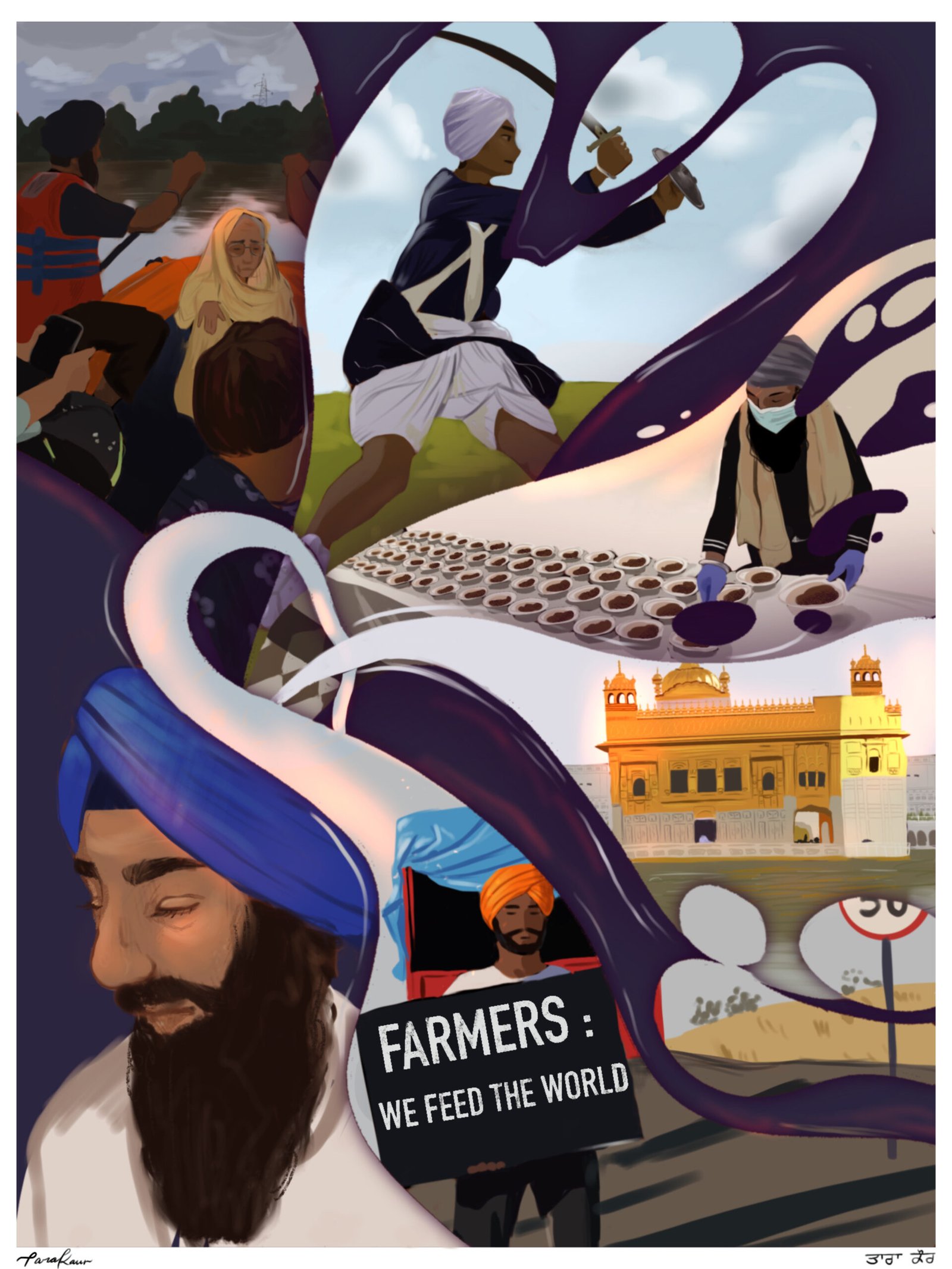
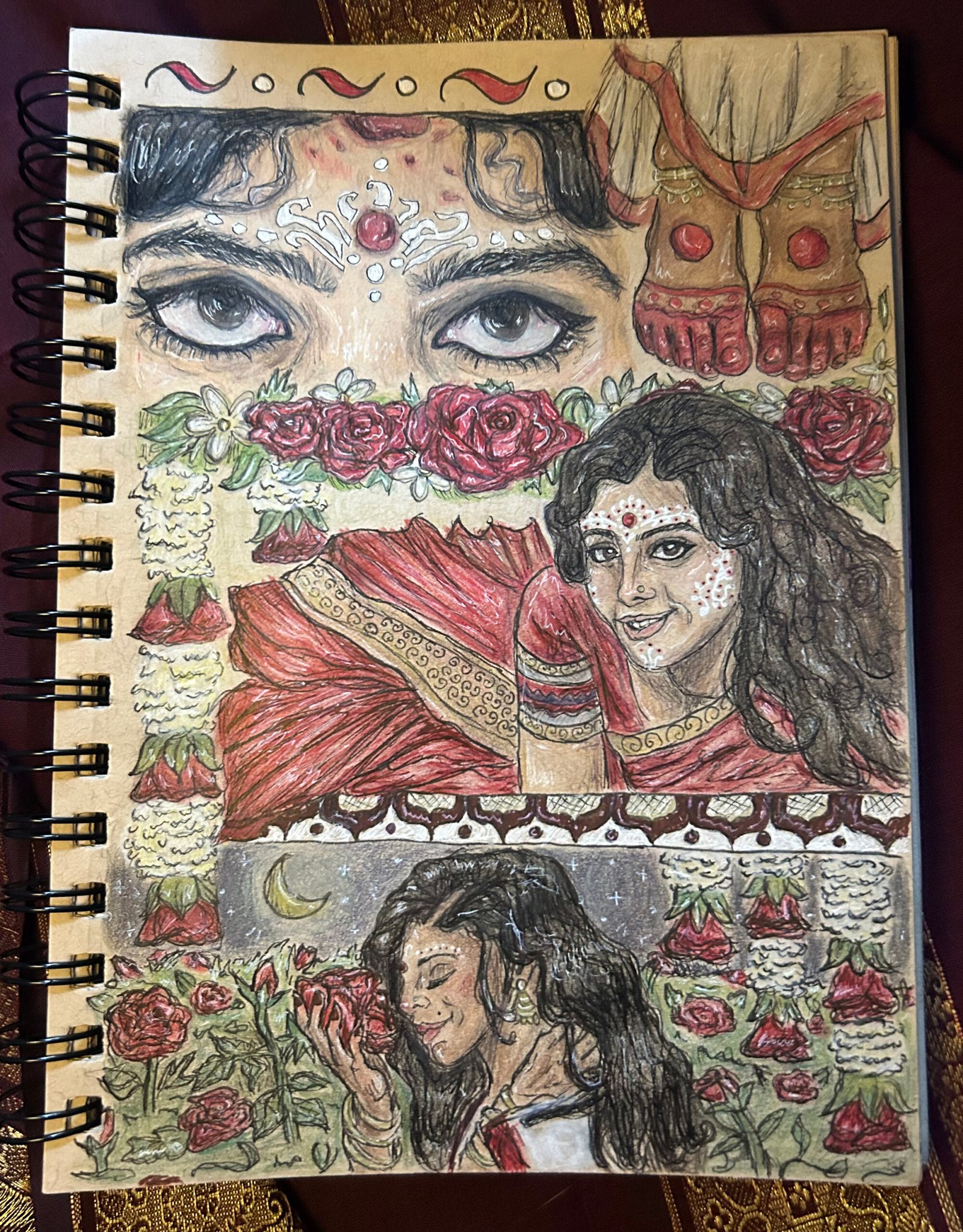
Contest Theme: For centuries, people in South Asia have used art—like folk paintings, music, and dance—to speak out against injustice. These art forms have helped communities resist colonial rule, caste discrimination, gender inequality, and government oppression. How do you see that same spirit alive today?

First Place Winner: 

 “Chardi Kala: Resilience in Action” by Tara Kodial, grade 12, New York.

2nd Place Joint Winners: 

“Roses and Thorns: A Bengali Woman’s Journey in Film” by Grace Saji, gr. 12, California.

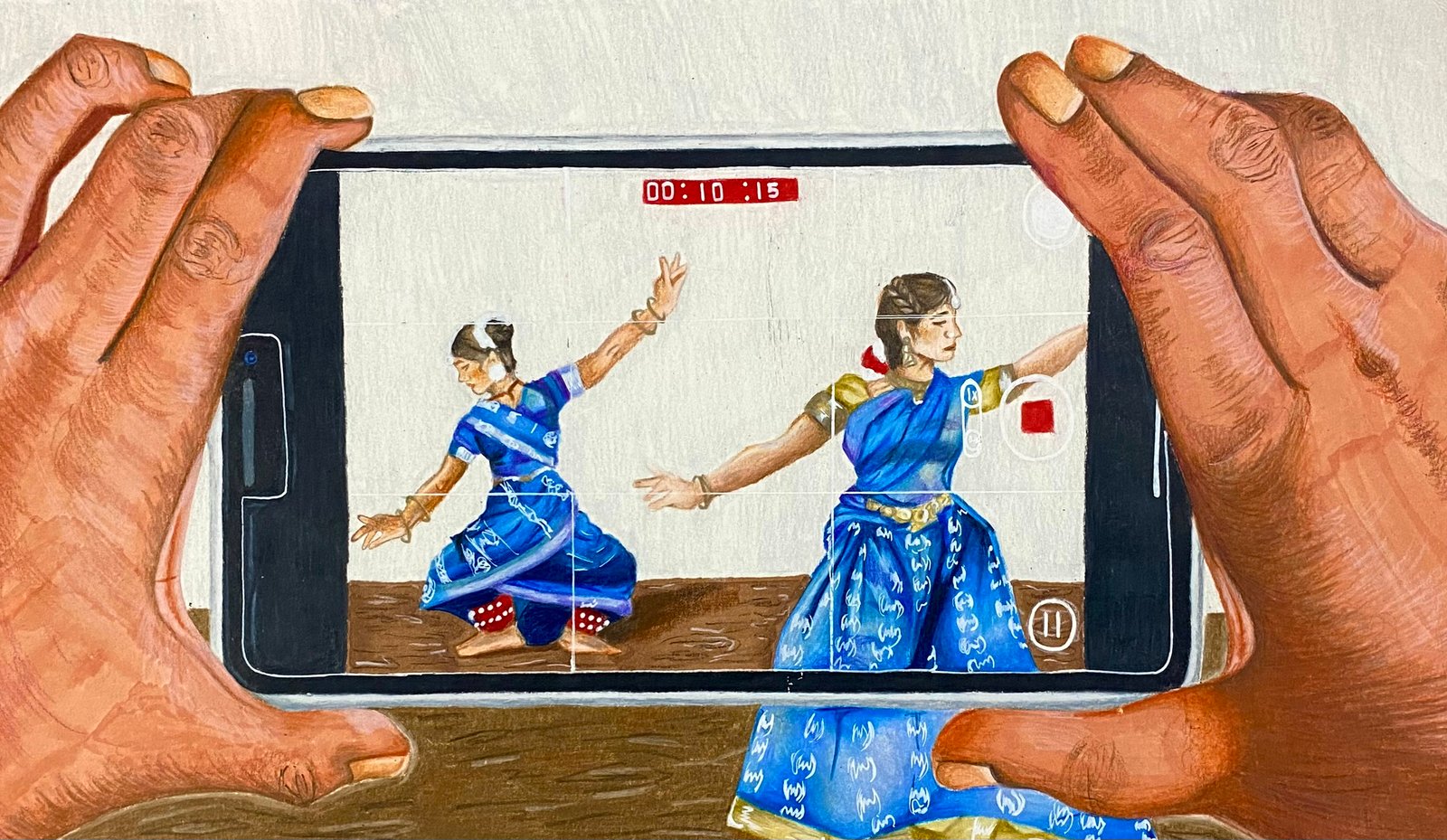
“Dance Captured Through a Screen” by Eshita Lahiry, grade 12, Louisiana.

3rd Place Joint Winners:

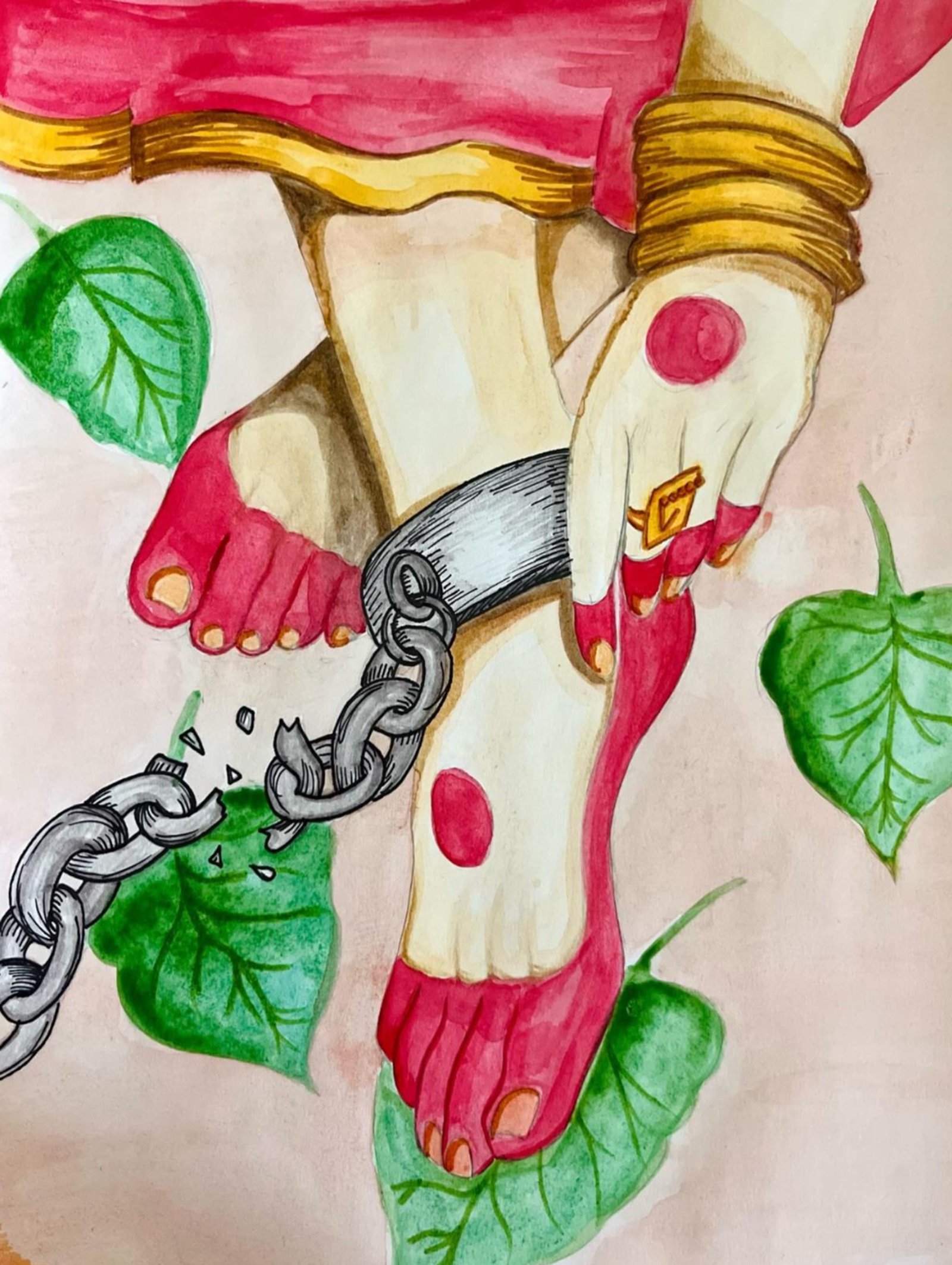
“Dancer Breaking Free” by Aditi Karthik, grade 9, Georgia.

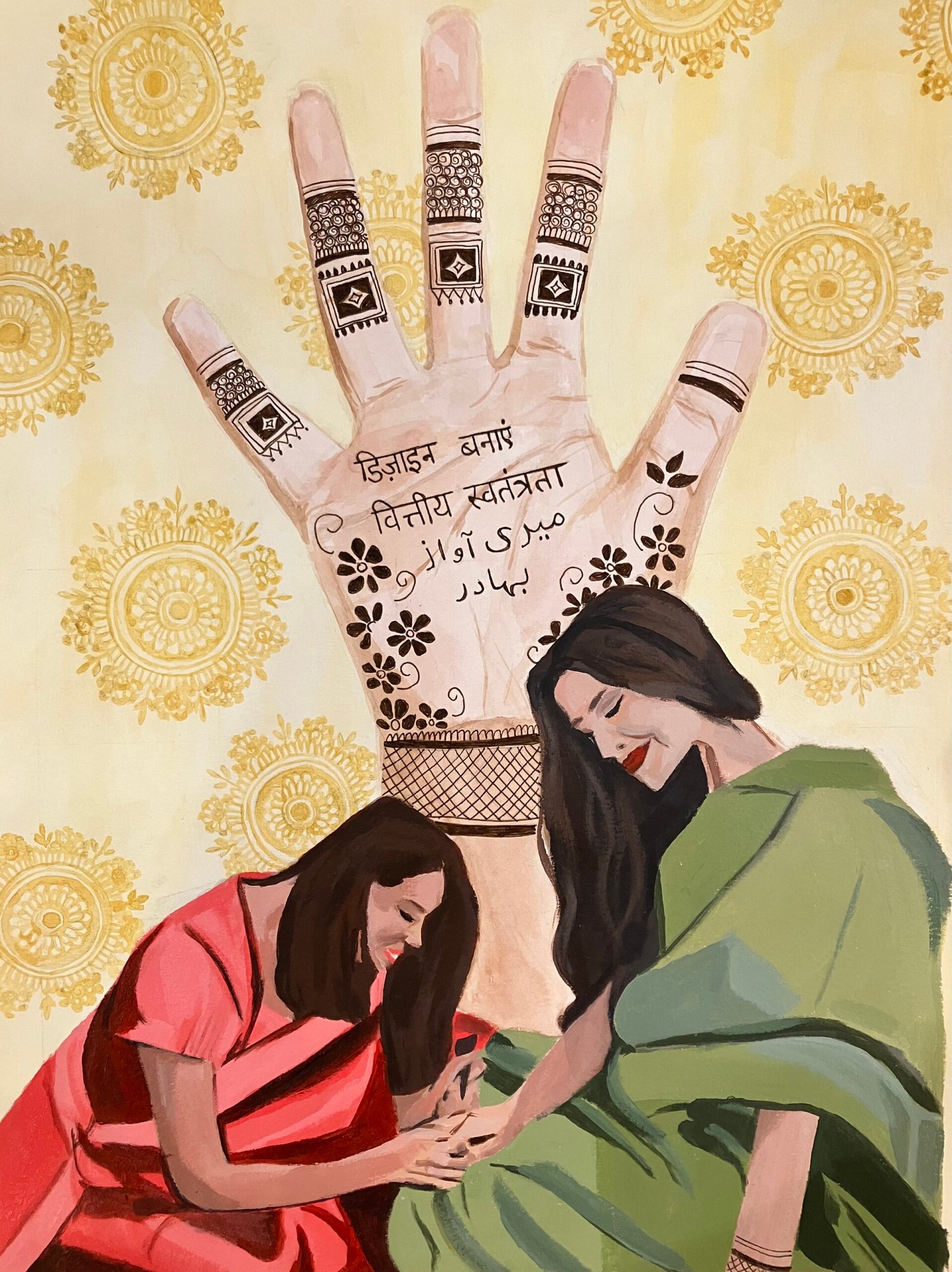
“Financial Freedom Teachings through Mehendi” by Zainab Habeeb, gr. 12, California.

Boy in the Back

By Michael Steel, age 14, grade 9, B.C., Canada

I was always the boy in the back
Letting time slip through my fingers
Watching the cluster and the chatter
Watching and never doing

A silent ghost, never real and never seen
Floating in the cosmos behind my eyes
Breathing in the synthetic suns
And polyester skies
Starry moons of the finest gleaming plastic
Twenty years in the blink of an eye

I saw the other side of the world
From the back of our classroom
The clay people danced before my eyes
Only I could see them move

Watching the constellations of LEDs
Soar brightly over my head
The things I never saw,
But I always believed

I was the boy in the back
Living a thousand ceramic lives
In a thousand spun-glass galaxies
But I was never here at home

—Michael Steel, age 14, is a high school student and published author currently living in Vancouver, British Columbia. He lives with his parents, brothers and ridiculously fluffy cat, Taco. His hobbies include creating arts, reading, writing, and playing Block Blast.

“A” Series of Journeys: The Story Behind the Board

By Kate Han, age 16, from South Korea, studies in Canada.

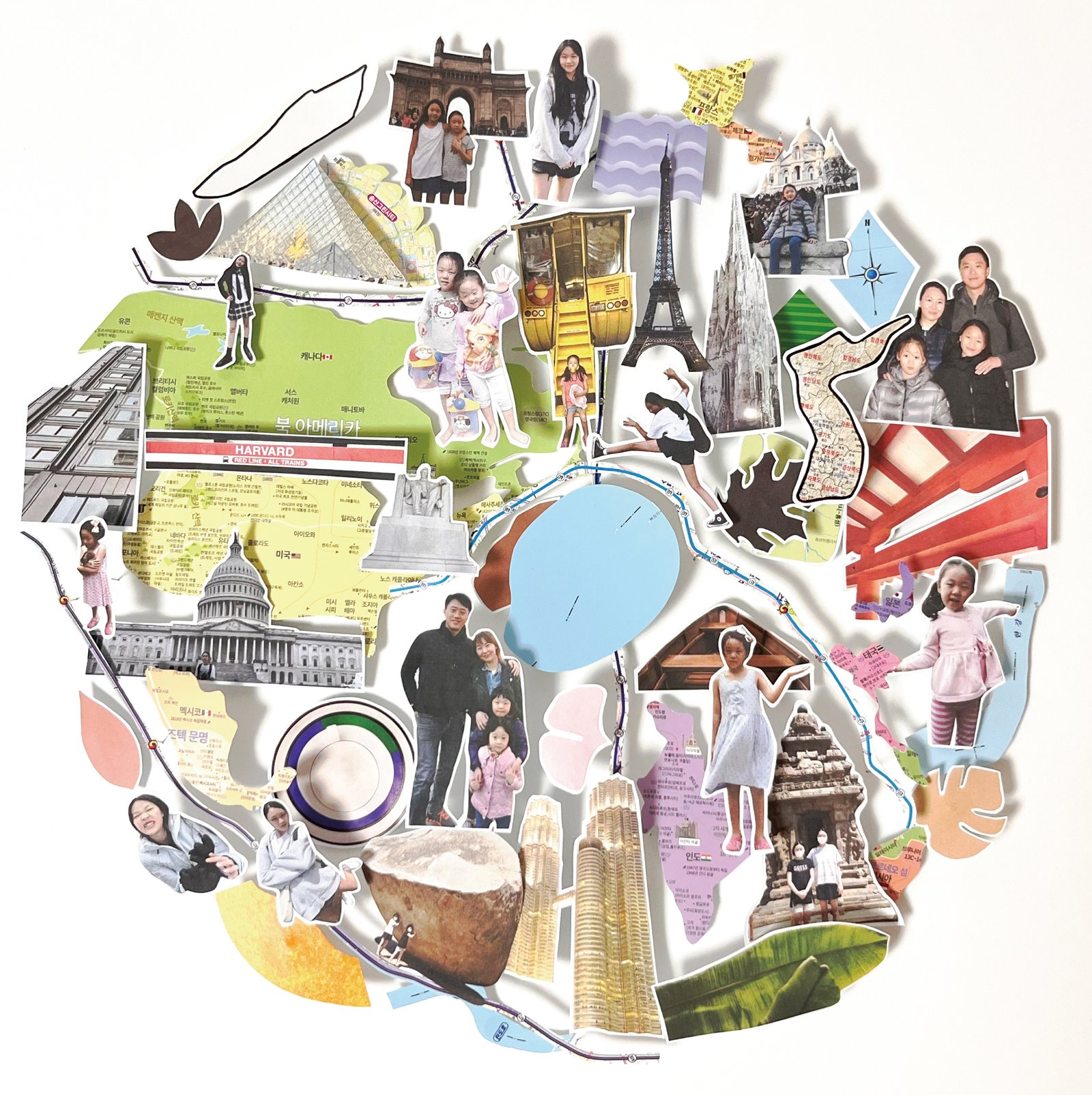
‘A’ Series of Journeys by Kate Han, age 16, Canada.

I’ve always struggled with the question, “Where are you from?” It’s not that I don’t know; the answer has never felt complete. I was born in Korea, spent much of my childhood in India, and now study in Canada. Each country left something inside me, not just as memories but as layers of identity. My artwork (see above) , ‘A’ Series of Journeys, emerged from this sense of fragmented belonging. But without the backstory, I realized the artwork feels like a silent map—colorful but unexplained. This is the narrative behind that map.

From Korea to India: My First Migration

I was five when my family moved from Seoul to Bangalore. What I remember most from those early days was the constant feeling of being “new.” New sounds, new smells, new alphabets. Even at that age, I knew I wasn’t just visiting—I was being asked to live someone else’s normal. In school, I was the only Korean girl. I didn’t speak Kannada or Hindi, and I barely knew English. But children don’t wait for fluency. I played tag with my hands, not my words. I watched others tie their shoes, share lunch, and greet teachers. I mimicked until it became second nature.

India gave me my first lesson in courage: that you can belong without blending in thoroughly. My neighbors wore saris and spoke a language I didn’t understand, but they treated me like family. We celebrated Diwali together, and over time, the questions stopped being “Where are you from?” and started becoming “Are you coming to dinner?”

India didn’t erase my Korean self. Instead, it added to it. I still spoke Korean at home, wrote Hangul in my diary, and celebrated Chuseok with food parcels from my grandmother. But the girl who lit sparklers on the rooftop during Deepavali wasn’t pretending. She was expanding.

Canada: A New Kind of Destination

Years later, I moved again—this time on my own, to a boarding school in Canada. If India was about cultural immersion, Canada was about cultural comparison. I had more words now, and more awareness. I could see how my classmates viewed “Asia” as a single block. I could also see how they saw me: someone exotic, sometimes confusing, occasionally admirable. Someone told me, “Wow, your English is excellent.” It was meant as a compliment, but I felt the space between us widen.

Boarding school life sharpened my understanding of identity—mine and everyone’s. I met friends from Nigeria, Ukraine, Mexico, and Australia. Some had never left their home countries before.

Some, like me, had already moved across continents. We bonded over strange cafeteria food, homesickness, and midnight conversations about who we were becoming.

Canada taught me that identity is not a finished product. It’s in constant motion. You carry your past, but you also build your future with every choice—what you say, how you listen, which memories you protect.

Why I Made the Board

‘A’ Series of Journeys started as a personal project to visualize this idea of motion. I used pins and thread to create intersections, connections, and collisions. Each line on the board represented a person, a place, a story, or a version of myself. The foam base—soft yet firm—symbolized the adaptability I’ve had to develop. The photos marked moments in time that still speak to me. Together, they formed a chaotic and orderly piece, much like my life.

But something felt unfinished. It was only after receiving the Skipping Stones Editor message that I understood why. The board is a conversation starter, but it needs a voice. The images are full of meaning, but only when paired with a story. Without this reflection, the piece may be a decorative design, not a lived experience. That’s why I’m writing this—to give the work its missing voice.

What I’ve Learned

I’ve learned that home is not a location—it’s a rhythm. It’s in how you wake up, how you say goodbye, what you find strange, and what you start calling your own. In India, I learned to listen before speaking. In Canada, I learned to question people’s meaning by saying “diversity.” In Korea, roots can deepen even when far from the soil.

Another lesson: People are much more than the labels we use. The word “immigrant” doesn’t tell whether someone is hopeful or scared. “International student” doesn’t reveal how many languages people hear in their dreams. I’ve learned to ask better questions. Not “Where are you from?” but “What feels like home to you?”

Above all, I’ve learned that my journey is not a detour—it’s the main road. My experiences are not interruptions to everyday life; they are my life. And through them, I’ve gained a sense of the world and a stronger sense of self.

Why This Matters

For young people like me, art is more than expression. It’s a translation. It’s how we turn complexity into something we can share. I hope ‘A’ Series of Journeys speaks to anyone who has felt between places, languages, or versions of themselves. I hope it shows that confusion can lead to clarity and discomfort can lead to growth.

This write-up is not the end of the project—it’s part of it. The series continues as long as I live, move, reflect, and create.

By Kate Han, age 16, grade 11, originally from South Korea, currently studies in a boarding school in British Columbia, Canada.

Taking Care of North Dakota

Taking Care of North Dakota

By Yusuf Dean, 13, North Dakota.

Moving to Harvey, North Dakota felt…different.

I was so used to the bustling streets of Orlando and the nearly constant sound of cars, that in North Dakota everything seemed peaceful and quiet by contrast. Rolling hills for miles around, and only the sound of your car on the highway. Now, Having lived here for almost seven years, I can say that the peaceful and pristine image of North Dakota was nothing but a facade.

The majority of the middle and high school boys here always talk about their big, gas-guzzling trucks, diesel combines, and other farm equipment. They also talk about semis (tractor-trailers) and whether Peterbilt or Volvo is better. My preference for smaller and more fuel-efficient vehicles amuses them.

During recess, a big, loud pickup might rumble by, belching black exhaust, and one of my friends will say, “How’s that smoke treatin’ ya?” It annoys me because, well, they’re just trying to provoke me. Plus, most of the people in my community are totally fine with high fuel emissions and polluting the environment, and they dismiss the fact that these things are contributing to climate change as untrue and silly. I’m pretty good at putting on a neutral mask, but really, when they make comments like this, I’m fuming inside.

One time, my friend Bentley and I were going on a bike ride, so I told him to meet me at my dad’s house. When I met him in our driveway, the garage door was open. Bentley saw my dad’s Mazda CX-90 and said, “That’s a nice looking car!”

“Thanks,” I said.

“Is it an EV?”

“Um…”

“Hybrid?”

“Yeah, it’s a hybrid.”

Bentley rolled his eyes. “Bruh.”

“What?”

“I like it and don’t like it at the same time.”

I instantly knew why. Any car that used any amount of electricity to move was definitely not his type.

“Come on, Bentley,” I said.

“What? It’s a freaking hybrid. No one likes those.”

I clenched my fists. I absolutely hate when someone makes a blanket statement or speaks in absolutes when they’re expressing an opinion that might not be as popular outside of Harvey. “Maybe not anyone here, but I’ve seen countless hybrids and even fully electric cars in places other than NORTH DAKOTA!!!”

In the U.S., the deaths of around 200,000 people each year are linked to poor air quality. If people don’t put in an effort to reduce their carbon footprint, our health and our climate will suffer. Many people in North Dakota think that their gas-guzzling vehicles are better and that EVs are just piles of junk metal with batteries in them that pollute the environment. What they don’t see is that humanity as a whole has to work together to change our transportation system and energy production system; they think that the idea of one’s personal choices helping fight climate change is futile. They are, in part, correct, but not for the reasons they think they are.

The greatest damage being done is not by individuals, but by huge fossil fuel companies, one of them being an oil company based right here in North Dakota. Marathon, the world’s 22nd-largest oil producer (based on 2022 data), is the seventh-largest emitter of greenhouse gas emissions in the oil and gas industry. This means that they are emitting way more greenhouse gases than they should be. Owing to Marathon’s carelessness, Fort Berthold Reservation, right here in North Dakota, has seen several crude oil spills due to broken pipelines that pollute the air and water, and flaming does not completely eliminate the harmful gas emissions produced by the oil.[1] North Dakotans are perfectly capable of showing empathy to their community, so they should not be okay with this.

In fifth grade, Bentley was my best friend. We’d hang out together, go to the pool together, but most importantly, he played a huge role in helping me through my parents’ divorce. He is one of the few kids in my class whose biological parents were separated. He empathized with me and gave me a few tips on what to do in certain situations, like when my parents were fighting, but most of the time, he was just there for me.

Following the pandemic, it was my first year of in-person school since second grade, and I didn’t have any friends. My parents were almost always arguing, and of course, I couldn’t talk to my brother—he was just four! One morning, my dad had shouted at me for forgetting to wash my face, which really hurt my feelings. I knew I’d have to bottle it all up before I got to school because I didn’t want to attract too much attention.

When I got to school, I took a deep breath and went inside to see a large curtain in the corner of the commons area where the seventh-grade boys liked to hang out before class started. I went behind the curtain and there was Bentley; I sat down, put my head in my knees, and started to cry.

“Yusuf, are you okay, bro?” Bentley asked.

“I’m fine.” I said, tears rolling down my face.

“Did your dad say something?”

“Bentley, it’s fine!” I said.

“I’m texting your mom,” he said as he opened his messages app.

I perked up, wiped my face with my sleeve and swiped at his phone, knocking it out of his hand. I put my head in between my knees again and my breath quickened.

He embraced my curled body in a hug, my heartbeat slowed, and the tears on my face began to dry.

We are humans, and we should always help our fellow humans in their time of need. If people here in North Dakota—good people like Bentley—took pride in a cleaner environment and the strength to take on a huge company like Marathon Oil, not only would people on the Fort Berthold Reservation be safer, but we could be proud that North Dakota is a state that takes care of its own.

By Yusuf Dean, age 13, North Dakota. He adds: “I live in the U.S. with my brother and my two Sri Lankan immigrant parents. I don’t speak Sinhalese, but I speak a bit of Spanish as my second language. I value curiosity, especially in children, because it is, in my opinion, the driving force behind learning and ultimately being successful in life. When I moved to North Dakota from Florida seven years ago, I found that while it was very different from the city life I was used to, there were some similarities. My essay is a reflection on one of the sources of tension I’ve encountered in my North Dakota community.”

[1]  Marathon Oil and EPA reach $241 million settlement over Clean Air Act violations in North Dakota | PBS News


A New Chapter of My Life

A New Chapter of My Life

By Angela Xue, age 10, Florida.

Another box. Then another. My black hair, usually silky, was sticky with sweat as I packed up all of my earthly belongings.

“Ming, get ready.” Under my mom’s authoritative voice, a note of trepidation quivered. “We’re about to go to the airport.”

“Ok, fine,” I replied, as reluctantly as I could.

I had lived in the buzzing streets of Shanghai for my whole life. I haven’t taken one step out of the comfort of my country. Now, all the sudden, my parents had decided to move to America, where my dad could find a better job. I’d have to leave all my friends, teachers, and even my tennis coach, who taught me how to swing a racquet before I could write my name. So, as you can see, I absolutely do not want to move to America. But, according to my parents, “Ni zhang da yao sheng huo hao, shiao shi hou yao mian dui tong ku.” That basically translates to, “If you want to live a good life when you are older, then you have to suffer when you are young.” They also said something vague about staying true to yourself and your dreams even when moving to another country—which I never really understood. My dream had always just been to enjoy my life in China.

“Are you ready?” my mom called.

“Yes, just one more thing to pack,” I replied, my heart racing like an F1 driver. I carefully placed my last precious item, a picture of my family and me, into the final box.

Then, I hurried down the stairs. With a heavy heart and dragging feet, I slowly made my way to the door. I tried to savor that short amount of time, but just knew it was going to make me more devastated. I briskly walked into a bluish, gray car with shiny windows. The driver was my Dad’s best friend, Uncle Tong. Yet another friend we would lose when we move to America. The car was about to burst with our luggage—we all held our breath to see if everything would fit until the trunk finally slammed shut over the last suitcase. The driver began to turn the key to start the car and stop my heart, my breath, and everything about my life for all twelve years of it so far. I took one long, regretful look at our apartment as we began to drive away, the engine humming, into my new life.

It’s not an exaggeration when I say the airport was extremely packed when we got there—it buzzed with more people than even the densest street of the crowded city I was born in. The hustle and bustle made me feel like part of a huge ant colony. Just as we made it through the final security checkpoint, an announcer called through the speakers: “Passengers of Flight 224, we will start boarding the plane soon for Miami, Florida.”

After endless hours of being trapped in the sweaty plastic chair along with all the other airplane passengers, finally, that same voice jerked me to attention from the stupor I’d fallen into. “Attention all passengers, please gather your belongings, we are approaching our destination.” We were here, in the dreadful place I had only imagined months before.

I peered out the window. America sure looked less crowded than home, but it was nothing like my home halfway across the globe. People started to file themselves out of the plane, and we followed. When we got to the airport terminal, my dad decided we would sit down and eat lunch. I expected soup dumplings, noodles or roast duck, but instead there were hamburgers and french fries. When I tried the bun, my taste buds were left disappointed by the lack of flavor. As I bit into an over-salted fry, this time, I also bit back tears.

A week later…

My stomach wasn’t just doing cartwheels now: it was double backflips, and handstands. I walked into the front doors of my new school. Everything seemed foreign. The school was a big cement building with newly polished windows, unlike the tinted windows in my old school. Kids turned around to look at me. They started magnetizing into groups and whispering. Suddenly, I was in the middle of the hallway while clusters of other kids gathered on the sides. I caught some people saying, “Who is she?” and, “ Is she a new kid?” I blushed. Then, a strange noise rang out and everybody started walking to different rooms.

Nervously, I cast around for someone to ask. I spotted another kid, who had almond-colored hair and blue eyes, similarly to many of my classmates. What she didn’t seem to have, and which set her apart, was friends. My throat dry, I whispered, “Why’s everybody leaving?”

The girl looked over at me. “They are going to their classes.”

What did that mean? I gave her an inquisitive look. She somehow understood that I was not American and I didn’t speak much English. Then, she all of a sudden said hi in Chinese.

“Ni hao ma?She could speak Chinese?

At my astounded expression, she added, “Wozai xue Zhongwen.” I am learning Chinese.

I don’t know what triggered me to do this, but I started a full-blown conversation filled with laughs and smiles. We smiled at each other and went to our rooms. There! I had found my first friend. Already! Maybe this wasn’t that bad after all.

The rest of the day flew by. Amelia talked and laughed with me and we had a lot of fun. As we walked home together, I felt a warm feeling spread over me. This was the beginning of a new adventure.

By Angela Xue, age 10, Florida. She writes, “Both of my parents are from China and so are my grandparents. I was born in the US. I regularly visit China to see my grandparents every year. I am fascinated by the cultural difference between the two countries. I imagine instead of being born here in the US, if I were born in China, how my life would be different. I sometimes dream about this. In school, I visualize and put myself in the shoes of students who came from China. Their life and perspective must be very different from mine. This multiple culture comparison fascinates me and drives me to write this story about Ming.”


The Notebook of Not-me

The Notebook of Not-me

By Kathy Shen, Age 11, New York. 

On a cloudy Monday morning, Bridgette was doodling in her sketchpad when she felt something hard and rough while reaching for her eraser. She turned and looked down to see a red notebook sitting at the roots of the ancient maple tree, as if it was waiting for Bridgette to pick it up. Bridgette was sure this wasn’t hers—she remembered clearly that there was not a notebook in sight yesterday nor throughout the week. She glanced around, unsure. The notebook looked old, with its leather spine peeling, but a bright red cover that still stood out against the gloomy, grey sky. Curiosity overwhelmed her and she flipped the notebook over to the first line on the first page.

In dainty, cursive handwriting, there was a message on the first line that said, “Write what you wish to be true.”

There was no name, explanation, or any other words on that page. It was as if the notebook had been waiting for her to make a wish.

***

Once Bridgette arrived home, she slipped off her sneakers and ran upstairs to examine the notebook. Through all her classes she was busy wondering if this notebook was a fraud or if it would actually work. She decided to keep it a secret in case anyone accused her of something. Bridgette grabbed her book and placed it on her desk. Tired from all this uncertainty, she took a deep breath and decided to test the powers of this notebook.

With shaky fingers as her pencil hovered over the second page, Bridgette wrote down, “I wish for tomorrow to be sunny.” She waited a while, half expecting something to happen, but the only sounds were the cars driving by outside. She sighed in disappointment as she saw the same old words on the page. Feeling a bit foolish and ready to go into a deep slumber, Bridgette crawled onto her bed with her thoughts racing.

Eventually, the silence rocked her to sleep.

***

The next morning came a little too quickly for Bridgette, as the rays of sunlight blinded her eyes when they opened. The thought of the notebook popped into her mind. Quickly, she jumped out of her bed and grabbed the notebook, flipped to the second page, and now saw a little check mark by her wish.

Bridgette’s heart quickened as she realized that her wish truly came true! Her mind began racing with ideas that she could make happen with the help of this notebook. Rinnnnggggg! Bridgette’s alarm went off, reminding her to get downstairs to leave. She quickly slammed her notebook into her backpack, put on her shoes, and ran down the stairs, eager to start the school day. Slamming the door shut, Bridgette practically skipped her way to school. She realized being friendless would bring her an advantage in keeping her magic notebook a secret.

 ***

As Bridgette walked to her seat, her head buzzed with excitement and she clutched her backpack straps a little tighter than before. If the notebook could change the weather, could it change her whole life?        

That afternoon, during lunch, Bridgette went to the library and sat down at a table. She carefully took her notebook out and flipped to a fresh page to write something new. With her hand no longer shaking, she wrote down the words, “I wish to be popular.” Bridgette stared at the words for a good minute, until the nervous, yet excited flutters left her chest. The bell rang just at that time, and she closed the book, hurrying to class.

The next day, when she walked up the steps, people she had never even seen before greeted her and smiled. At lunch, the cool crew, made up of football players and cheerleaders, insisted that Bridgette sit with them. Chelsea, the head cheerleader, smiled warmly.

“Bridgette! We were just saying how it feels like you’ve always been part of our group.”

Marcus, the quarterback, nodded, “Yeah, it’s like you’ve always belonged here.”

Bridgette blinked, surprised and a little unsure if they really knew her or if this was part of the magic. Even older students complimented her on her hair and style, saying it was so “original and lighthearted.” Bridgette’s hair was let down as always, and she still had her usual outfit of jeans and a t-shirt on. 

By the end of the week, Bridgette had already been invited to three parties, two study meets, and a popular kids group chat. There were all the cheerleaders, student council members, football players, soccer players, and anyone else who was a high member of her school society. However, She realized that people started laughing their lungs out at every joke she made.

“Why don’t scientists trust atoms?” she asked, and then smiled before the room exploded with laughter.

“Because they make up everything!” Bridgette was not sure if she even found this joke worthy of exploding over. She had used it as a test, curious to see what it was like being in the spotlight.

Little by little, Bridgette’s desk stopped being crammed full of sketchbooks and eraser shavings. Instead, it became full of party invitations and bottles of lip gloss. Bridgette finally realized that being popular was smiling all the time, laughing at everything, and performing. She felt as if she had to be “on” all the time. 

***

That night, when Bridgette came home, she went straight to her room and looked at the mirror. The person looking back was not the person who loved to draw or felt calm under the maple tree. The spark in her eyes seemed to have dimmed.

Bridgette sat on the bed, thinking about her wish. Being popular was not what she had imagined. It felt fake, empty, and lonely.

Slowly, she took out the notebook once more. On the next clean page she wrote down her wish:

“I wish to be myself again.”

By Kathy Shen, Age 11, New York. She adds: “I speak both English and Mandarin Chinese, and I come from a Chinese American background. I love storytelling, reading, and especially spending time with dogs, my favorite breed is the Cavalier King Charles Spaniel! Sadly, I do not have one yet.

“What’s important to me is fairness, honesty, and standing up for others. When I grow up, I want to be a judge or a lawyer because I care about justice and helping people. I also enjoy writing stories that explore emotions and choices, and I hope to get better and better at it. Writing helps me express what I’m thinking, and I love using it to imagine different possibilities.”

Between Names

Between Names

By Jane Helen Lee, age 17, South Korea.

I was a collector of languages before I even knew the English word for “language.” I would gently pluck foreign words from overheard conversations and save them like colorful marbles in my pocket—later turning them over, swirling their smooth coolness between my tongue, sounding out hola, nǐ hǎo, 안녕하세요 (annyeonghaseyo). Through the sun-dappled filters of childhood that gently curtained my vision, there was something quietly magical about being able to say “hello” or even just “thank you” to a stranger in their own language. It felt as if I were weaving a thread between myself and someone I might never meet again.

The complicated kanji, hanja, and hangeul forms a patchwork quilt of syllables and syntax, woven from the voices of street vendors, lullabies, movies, and late-night whispers between siblings. Even when I couldn’t understand the meaning, I could feel the emotion behind a sentence—the rise in pitch, then the tremble, then, finally, the laughter tucked like a baby in a swaddle between vowels. Language to me, is and will always be something so achingly human.

But at age eight, I nearly lost my mother tongue.

My first language was Korean, and I learned English at a pretentious little english-only, ridiculously expensive preschool where white teachers would give Korean children names like “Emma” and “Madison.” When I moved to the US at age 6, my mother (omma) was shocked by how fast I forgot that my name was 재인 (Jae-in), not Jane. Suddenly, 엄마 (omma) was mommy and 숙세 (sook-jae) was homework. This shook her and, so, she pulled me out of school for 2 weeks to teach me, to make me re-learn and make sure I never forgot. This is something I thank her for to this day.

I once came across a piece of writing that claimed we are different people to each person we meet. I suppose that is true. To my mother, I am “재인아”, to my dad, I am “peach”, to my brother, I am “누나” (noona), to my classmates, I am “Jane.” I am 寶貝儿 (Bǎobèi er), 헤레나 (hae-le-na), Janie, peanut…, and I could go on forever. But that left me wondering: who am I to myself if all the names and identities I answer to have been lost or borrowed as changing masks to wear when interacting with others? See, when someone calls me “재인아” (jaein-a), I reply “응?” (eung?) or “네?” (nae?) and I’m what you’d describe as mature, and if you discount my horrible posture, maybe even ladylike, but call me Janie and I will change to become ever so child-like. Say “누나” (noona) and I will be strong. But despite being all these things, all these people, at once, I am just me. To me, I have no name, no title. The voice that tells me “ooh you shouldn’t have said that” or “hey, you look kind of good today” has no name for me. The thoughts I think that you will never hear except through the filtered microphone of my many masks do not belong to any one person, they belong to me, the many “me”s that together compose a jar of water made murky with the mixing-ins of paintbrushes tainted with colors from all parts of my life: every memory I have lived, every word I have spoken, and every song I have sung. And I can only hope that my jar, rinsed so many times of all the colors I have lived and palettes I have used, is not a dirty gray.

—Jane Helen Lee is a Korean-American writer currently based in Seoul, South Korea. She has been recognized by YoungArts and the Scholastic Art & Writing Awards for her work across screenwriting, poetry, and fiction and is an alum of the Kenyon Young Writers’ Workshop. Jane also serves as Editor-in-Chief of Unseen, the academic journal of the Korean Youth Honor Society, and finds joy in writing, debating, and volunteering at her local rehabilitation center.

Jane adds: “I am a senior attending high school in South Korea, and pencil was to me, what a Barbie doll was to many others: my dream, and my lighthouse. While dolls came to life in the hands of others, my pencil became an extension of myself. I began writing before I could even speak, creating stories and songs with scribbles, translating the world around me into language. In its easily broken, soft body, I found power; in its worn tip, wisdom. The pencil was my voice when I had none, and my refuge when life felt too loud. Now, that voice continues to guide me as I explore the issues close to my heart through my writing.”