
Category Archives: International

Seeing the World on a Bicycle

Seeing the World on a Bicycle

By Arun Narayan Toké, Eugene, Oregon.

A few weeks ago, I bicycled the east rim of the famous Crater Lake with two good friends of mine. You might ask what’s so special about this bicycle ride?

On two Saturdays in early September, the Crater Lake National Park in Oregon (USA) closes the East Rim Drive to automobile traffic. Only bicycles and hikers are allowed to enjoy this beautiful mountainous landscape. It overlooks the incredibly beautiful, natural 2,000 ft. deep lake that was created about 7,700 years ago, when a volcanic eruption left a huge hole where the Mount Mazama once stood sky high—some 11,000 feet high. Snowmelt and rains over 750 years formed this crystal clear, deep blue lake. After the United States government made this natural landscape and its surroundings into a National Park in 1902, they also built a 33-mile long “Rim Road” at a height of about 7,000 to 8,000 ft. so visitors can appreciate the natural beauty as they drive around the lake to observe the varied vistas of the valleys and the mountains.

Each year, three to five thousand bicycle enthusiasts—young and old—come to ride around the lake on these two Saturdays. Some participants choose to hike or run parts of the scenic road with no shops or commercial activities. Every so often, you come across rest areas with incredible vistas of the lake (see photo above), distant valleys, and many spectacular mountains like the Diamond Peak. The organizers even provide several rest stops offering cold drinking water, snacks, and hot drinks. At one rest stop, someone even served us freshly baked, nutritious cake!
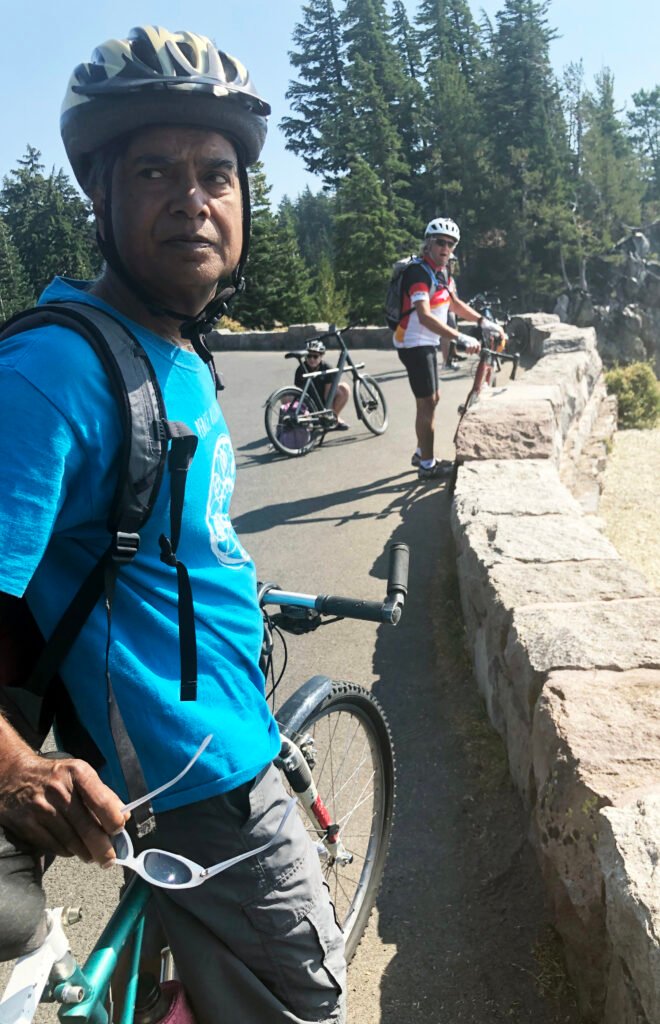
Two years ago, after bicycling a part of the East Rim Road during this event, my friend Daemion and I had hiked a mile down to the lake shore, and took an exhilarating swim in the icy cold waters, and then hiked back to the rim with about 2,000 feet elevation gain. (Daemion is a “pro” at bicycling. A few years earlier, he had bicycled 2,000 kilometers from his hometown on the Southern Oregon Coast to the Grand Canyon National Park in Arizona, and after his Peace Corps volunteering assignment in Sierra Leone, he bicycled over 1,600 kilometers to Ghana before returning back to the U.S.!)

With the popularity of the electric-assist bicycles, senior citizens and others with limited physical abilities are able to participate in this adventure, once reserved for only the “physically-fit” athletes.

This beautiful bicycle ride reminded me of my five month long adventure, several decades ago, when I was young and full of zest for adventure.

* * * * *

As a child, I grew up in Central India…my father had a bicycle repair and rental shop. Naturally, I learned from him how to fix simple repairs like oiling the moving parts and fixing flats in inner tubes. In the U.S., if you take your bicycle with a flat to a bicycle shop, they simply replace the inner tube. But in India, the repair shops actually found the pinhole using a container of water to see where the air was leaking out from the tube, and then vulcanized it. Similarly, when a tire had small hole or break in it due to wear and tear, they’d put a piece of an old tire as a backing to cover the worn out area, rather than replacing the old tire. It was inexpensive and meant for functionality, rather than speed. Only when it was absolutely needed would they put in a new part!

After I moved to Vermont (USA), I acquired a ten-speed bicycle. During my weekends or summer breaks, I didn’t shy away from bicycling 60 miles or so a day, over two or three mountain ridges with steep inclines. And, for the last 30 years in Eugene, my common mode of commute is bicycling. I believe I must have bicycled upwards of 50,000 miles (80,000 Kilometers) over these years.

* * * * *

I have cherished memories of my five-month-long travels by bicycle in Northern Europe. On my return trip to the U.S. in the summer of 1986, I was invited to visit some friends in Germany and in Sweden. After spending a few weeks of summer with my friends in Germany, I went to Stockholm. It was mid-summer and the days were long and warm. I decided spontaneously to buy an old (I’d say, antique), single-speed bicycle for a very reasonable price in the university town of Uppsala and bicycled south to the Stockholm! It was strenuous, of course. But after a couple of days of resting at my friends’ house, I was ready to continue. I had no idea where I’d go, how far I might travel, which way I might take, and for how long!

I set my next destination as Karlstad, the City of Lakes in Southwest-central Sweden. While bicycling in the afternoon, it began to rain. I kept myself dry under a porch roof and after a while when it stopped raining, I continued on. I realized I had not prepared well for the trip—no raincoat, no spare tubes, no bicycle pump, no tools, no tent, no bicycling maps, and no plans. True, I did have a road map of Sweden so I could decide which general direction I might take and what my next immediate destination city might be.

Que sera, sera! Whatever will be, will be! I wanted an attitude of faith and trust. I decided I’d deal with what comes my way, when it does! Since I had not made any big plans, I didn’t feel like I was under any pressure that I had so much more to travel, or that I had so little time left to complete my journey.

When it felt right, I would look for a place to stay—either a youth hostel or, if I was in the middle of nowhere, just sleep under the stars in my sleeping bag. Sometimes, I asked a passerby or a farmer along the rural road if they knew of a place I might stay for the night. Many a times, the farmers offered their barns… but they made sure to ask me if I smoked. When I told them, “No, I do not smoke,” they invited me to use their barn; and usually there was plenty of hay in the barn to make a good padding under my sleeping bag. More likely than not, I was also invited for a morning breakfast of muesli (cereal), yoghurt or kefir (cultured milk), toast, a good cup of coffee, and light conversation. And, then I’d continue on my journey.

At times, I bicycled late into the night… at that high latitude, almost near the Arctic Circle, the sun did not set until almost midnight. As tired as I’d be most days, I slept like a log, and I had no idea what time I woke up. I carried no watch, and in those days, there were no cellphones either. It was a totally carefree way to travel. I had no schedule, no planes or trains to catch, and nobody waiting for me.

My Swedish friends had told me that in Sweden, you could camp out anywhere in the countryside as long as you were not bothering others. If you camped about100 meters away from a home for the night, you’d be fine. I did not see any “No Trespassing” signs anywhere!

Most campgrounds did not charge you to sleep there; but you had to pay for the use of their facilities or restrooms, etc. It being a warm summer season, I was very comfortable sleeping outdoors without a tent; and at times, I found refreshing places to swim. International youth hostels provided a reasonable place to stay and a good morning breakfast. I often bought my supplies in small stores—fruits, vegetables, bread, etc. to keep me nourished. At times, I found patches of wild strawberries and raspberries in the countryside too.

* * * * *

One morning, after a good night’s rest out in the open countryside, I packed my bag and began bicycling. Soon, I rode by a few teenagers sitting on a culvert. They tried to make some conversation in their broken English and invited me to their home. Their mom served me a breakfast of fish curry and rice. They were refugees from Vietnam.

In one small city of may be 20,000 people, when I reached downtown it must have been past 10 p.m., I asked some youth (who looked Indian) hanging out in the town square, if they knew of a youth hostel in the town. They said they didn’t know, but that they were staying in a hotel, and I was welcome to join them. I walked with my bicycle over to their hotel. I found out that they were war refugees from Sri Lanka, and the government had housed them in this hotel. I watched them make hot, spicy curry and rice. Luckily, they had some yoghurt to go with the meal; I don’t think I could have possibly eaten that super hot curry with several tablespoons of red cayenne pepper. We had some good conversations before retiring for the night.

Another evening, it was raining—not very heavy, but a consistent rain. It was too wet to find a dry spot to sleep outside. So I waited out the rain under a roof before continuing on. Finally, when it stopped raining in the wee hours of the morning, I bicycled on towards the town of Holden in Norway until I found a picnic area, and I slept in my sleeping bag on one of the picnic tables; the grass was too wet!

Early that morning, I heard a car pulling into a nearby picnic area. So I figured it was time to roll on. Just as I was about to get out of my sleeping bag, a middle-aged woman from that car came walking to my table and said in Norwegian or Swedish, “Good Morning,” and handed me a hot cup of coffee and some snacks with a smile. And, she went back to her family for their breakfast. What a kind and considerate couple!

* * * * *

I kept going towards Oslo for a while, but decided to head south instead, towards the famous city of Gothenburg. It is the second largest city in Sweden. It’s situated on the Kattegat, an arm of the North Sea. After enjoying swimming at a vast beachside park, I continued south towards Copenhagen in Denmark. I connected with a couple of other cyclists, and we bicycled together for a while. That encouraged me enough to continue on with my bicycle journey. It had become a way of life for me. I pedaled across the southern region of Sweden to Kivik on the Southeastern coast. I was having a light conversation with the owner of a farm and I noticed that they were using a wood pellet stove for heating the farmhouse. During our conversation he realized that not only did I have an engineering background but also that I had written a textbook on Energy and Society, so he invited me to see his wood-chip stove and the heating system. After that he extended an invitation to stay with the family for the weekend. He said they had a birthday party for their daughter the next day and that I might like to experience that.

So, next morning—bright and early—we all walked over to her window to wake her up with a Happy Birthday song in Swedish. And the party was on! I felt like I was a part of their family. I wrote a story of this Swedish Birthday Celebration in English and typed it up on their non-electric typewriter and presented it to the family for their keepsake.

Then I bicycled west towards Malmö and continued over the bridge to Copenhagen, Denmark. While pedaling, my knee was acting up; even a slight uphill was impossible to pedal over. So, when I visited a Danish-Mexican family that I had met during my travels in Sweden, they suggested to rest up for a week with them. After that week of rest, when they suggested that I go north with them to a folk music festival in Aarhus, I was more than happy to accept. This way, they said, I would be able to ride through much of Denmark and get a feel for the country. I bicycled up one of the tallest points, Himmelbjerget (The Sky Mountain) in Denmark (150 meters high!) and then fly down it on my bicycle.

In the rural area of Denmark just north of Holland, while enquiring if there was a youth hostel in the area, an old farmer saw that I was bicycling through Scandinavian countries and invited me to his farmhouse. He also asked an English teacher he knew in the area who had visited the United States to check me out. After talking with me for a while and seeing my valid U.S. passport, he told the farmer that I was to be trusted. And he told me I was welcome to stay with them. The old farmer, close to seventy years, quickly cleaned up a spare bedroom in the house for me. We played a game of chess and ate typical Danish supper with Danish beer. The old man spoke no English and I did not know any Danish; but we had a great time. I was asked to come to a party the next day, but I politely declined.

While bicycling through Denmark, I noticed that I could see the inner tube on my front wheel; the old tire had worn out in a place after traveling more than a 1,000 kilometers. I bought a new tire at a bicycle shop at 5 pm on a Friday evening, just before they closed. They couldn’t put it on until the next working day and I figured I would do it somehow.

As I was bicycling through the city with a tire hanging on the handlebar, a middle-aged man waved me down and asked if he could help me with tools to replace the tire. We walked over to his home a few blocks away and replaced the worn out tire. During our light conversation, when he realized I had been bicycling through several countries, he graciously invited me for supper and an overnight stay. He was a schoolteacher and we shared good conversations on various topics. And, the next morning, I continued on my journey south to Germany, all rested up and refreshed.

* * * * *

Soon, I was bicycling through Flensburg, Germany. I continued on to the large city of Hamburg in Northern Germany, and visited a couple I knew from my trip to Guatemala. They had a new-born child, and I was amazed to see the planning and detailed work they had put in the bedroom for their baby. It was very conducive to a restful sleep. Every night, they read a couple of board books to the baby and turned on soft music to get the baby ready for a good night’s rest. I was included in the whole ritual!

After spending a few days with them sightseeing, I was on my way south. While crossing a bridge over the Elbe River in Hamburg, I saw someone walking about 50 feet ahead. I said to myself, I think I know who she could be. I yelled her name as I bicycled towards her, and sure enough, it was my friend Heike. What a pleasant surprise! We had met on our “Peacewalk Through Central America” a couple of years earlier and walked together over 500 kilometers through Costa Rica and Nicaragua. No wonder, I could tell who was walking ahead!

After a good conversation and quick lunch at an ethnic restaurant, we decided to bicycle on to Frankfurt. Heike needed to go visit her aunt there. She picked up her bicycle from her home, and we were on our way south. After spending a few days with her aunt in Frankfurt, I continued the journey to Heidelburg in Southern Germany. I had left my luggage with my friends there before I had gone to Sweden. After a few days of resting and sharing my experiences with my friends, it was time to begin my return journey.

* * * * *

Much of the time, I was able to bicycle on scenic and safe bike paths along the rivers in urban areas of Germany. In Sweden, Norway and Denmark, the bike paths paralleled the main roads but they were separated by rows of trees or some grassland and therefore, it was less noisy, more pleasant and much safer to bicycle on them. In some larger cities, they even had “Bicycle Only Roads,” with their own traffic lights! Throughout my travels, I felt car drivers were very considerate of bicyclists and pedestrians. They drove carefully so as not to endanger us. Once, I was pleasantly surprised when a big semi (a huge truck) stopped for me to cross the street on my bicycle.

The bicycle lanes and bike baths were free of litter. During my whole trip, not once did I get a flat tire; no nails, no broken glass or sharp objects halted my bicycle journey. My rear tire served me well until almost the end of my 2,500-kilometer journey. Then I discovered a slow air leak in rear tire near Wuppertal, a hilly city south of Dortmund. I rode up and down a steep, long and windy road on my single-speed bicycle. However, while climbing up I was going too slow for the headlamp to shine bright; the generator didn’t work at low speed! Other than that, this 50 plus year-old bicycle gave me no trouble on this long journey that covered parts of Sweden, Norway, Sweden, Denmark, Germany, Belgium, and Holland (the Netherlands). I visited some famous cities like Stockholm, Copenhagen, Hamburg, Bonn, Cologne, Dortmund, Frankfurt, Heidelburg, and Amsterdam. In a few cities, like Bonn (which used to be the capital city then), I even stayed long enough to know the local culture and attractions. This was the most wonderful, educational experience I could have had. It was beyond my imagination and it did not cost me an arm and a leg.

On my return journey, I covered the Netherlands in just a couple of days and arrived in Haarlem, about 25 kilometers west of Amsterdam. I had visited a Christian community in this coastal city some years earlier. So after a few days, I said goodbye to the Netherlands and left on a ferry to the United Kingdom, leaving my bicycle with the Christian community.

* * * * *

Life has taken a different turn since then. I have been publishing Skipping Stones, a multicultural, global awareness magazine for today’s youth for the last 36 years. My European experience was definitely a motivational factor in founding the magazine.

In Germany, Denmark, Sweden, and the Netherlands, like so many other countries on the continent, almost all of the young Europeans I met were bilingual or trilingual! I wanted to promote this concept of multilingualism in Skipping Stones. In the beginning years, many of our published articles, poems, and stories were in two or three languages, side by side. Having grown up using three languages in India, it was normal for me. But not so for many Americans!

Unless you grew up near the Southern border—like in Arizona, Texas or California—where many people do speak both Spanish and English, it’s not common to meet many bilingual people in the United States. Of course, most new Americans and Latin Americans (including Cuban Americans and Puerto Ricans) are fluent in at least two languages. Because I have spent more than a year in Mexico and Central America, I have acquired some ability to communicate in Spanish, and I know first hand, how comfortable it feels to have the language skills of the region you are visiting. Most Indians can vouch to this fact of social life; for we grew up with learning and speaking three or more languages in India. Mahatma Gandhi could speak 14 languages, I have heard!

Recently, as I was about to start writing this article, I came across a news report of Lael Wilcox, an American woman who bicycled around the world—over 18,000 miles (that’s 29,000 Kilometers) in a record 108 days and 12 hours—averaging some 160 miles a day! While my bicycling adventure was nowhere near that caliber, I have acquired a lifetime of experience bicycling through, and immersing myself in, five countries in about five months. I would recommend it to anyone who can take time in life to embark on such a journey. I have met bicyclists like Willy Weir, who have bicycled in many continents and written a few books about their wonderful experiences. One thing for sure, people all over the world are more than pleased to meet and greet adventurous souls, break bread with them, have chai and chat with them, and make them feel welcomed, wherever they are.

Bicycling is an amazing mode of transportation; I cannot say that enough. In today’s world where plane-hopping and automobile travel has become the norm for so many of us, bicycling offers a welcome relief. We can soak in the beauty of life, away from the hustle and bustle of busy airports or crowded lanes of our highways. As we bicycle, often we’re able to stop frequently to have a look at something that calls for our attention, appreciate the beauty that nature has to offer, or to say hello to people we meet along the way. Our carbon footprint is much smaller with the bicycling way of life and travels, and we get more value out of our time and money. Our journey offers us many surprises along the way while we keep our body healthy and fit; our muscles strong and vibrant while we keep on pedaling.

By Arun Narayan Toké, Executive Edior.

Born To Be A Chef: Eileen Yin-Fei Lo

Born To Be A Chef: Eileen Yin-Fei Lo

The Woman Who Taught America How to Cook Real Chinese Food

By Fanny Wong, author, New York.

Standing on the kitchen stool, Yin-Fei could barely see the wok on the stove. Who would expect a five-year-old to cook with a wok and a spatula?

It was Ah Po, Yin-Fei’s grandmother!

“Just the right age to learn cooking,” Ah Po said. “And never have a short temper or use bad words when you are in the kitchen.” She then pointed to a paper image of Jo Kwan, the Kitchen God, and added, “You want Jo Kwan to think well of this family.”

Baba, Yin-Fei’s father, instructed her, “Eat first with your eyes, then with your mind, then with your nose, and finally, with your mouth.”

Luk Gu Jeh, her aunt, was another teacher of hers. “With patience and practice, you can create something that brings happiness and miles of satisfaction,” she told her.

With a family like hers, Yin-Fei was born to be a chef.

Yin-Fei’s skills grew with Ah Po’s instructions.

“Chop the choy sum properly.”

“Stir the fish mixture in one direction to make it stick together.”

“Pour the hot peanut oil and soy sauce on the steamed fish.”

For Yin-Fei, the learning was easy, but finding the joy in cooking was hard.

Too much time cutting and dicing.

Too much time waiting for the oil to be hot enough to stir-fry.

Too much time waiting for the meat to be tender in the braising pot.

But then Ah Po’s birthday changed everything for her.

Yin-Fei was to contribute one dish for Ah Po’s birthday. She picked the White Cut Chicken recipe because in her Chinese culture, a chicken was always cooked for special occasions.

Yin-Fei placed the whole chicken breast side up in seasoned boiling water and covered the pot. When the water returned to a boil, she lowered the heat to simmer, turned the chicken and let it simmer again. She had to time the cooking just right, and allow the chicken to rest in the pot to finish the cooking. Otherwise, the chicken would be overcooked or undercooked.

Yin-Fei lifted the chicken from the pot. She prepared a dipping sauce of soy sauce and ginger. It looked perfect, but did it taste perfect?  

Yin-Fei watched Luk Gu Jeh cut the chicken into bite-sized pieces with a cleaver. Ah Po, surrounded by her family at the table full of many delicious dishes, chose to eat the chicken first. She took a bite, closed her eyes, and chewed it slowly.

Yin-Fei held her breath and waited for Ah Po to finish swallowing.

“Hm….” Ah Po opened her eyes that crinkled with a wide smile and commented, “That was the best chicken I ever had.”

Everyone at the table loved the chicken! Not a single piece was left over! An eleven-year-old girl had made her loved ones happy with her cooking skills! From that moment on, making delicious dishes was her gift to others in the family, a way of showing her love and respect.

Now, she was eager to learn more from Ah Po. She learned that what people ate had to be balanced within their bodies.

Foods such as fish and most vegetables brought them coolness.

Foods such as most meats and some fruits brought their bodies heat.

The combination of these two types of food brought balance and good health to the body.

Yin-Fei learned to cook balanced meals for good taste and good health.

But life was not balanced in their village of Sun Tak. To escape the repressive government in China, 12-year-old Yin-Fei fled with her family to Hong Kong. There, she continued to improve her cooking skills by learning from her aunt. She also learned English in night school and picked an English name for herself—Eileen.

When she was 21, she met an American journalist named Fred Ferretti, and they fell in love and soon married. They moved to New York City. And that was when Yin-Fei’s life took another turn!

Her new in-laws brought her to a Chinese restaurant.

“What is this? This omelet is like an overdone pancake covered with a brown sauce,” she remarked.

“This is egg foo yung, our favorite Chinese dish,” her in-laws said.

From that moment, Yin-Fei had a mission! She wanted to teach Americans how to make good-tasting, authentic Chinese food.

First, she gave her friends Chinese cooking lessons at her home.

“You must write a book!” her friends said.

And she did. Eleven books in all! Each book taught readers how to cook traditional Chinese food at home.

She also taught at cooking schools and appeared in cooking demonstrations on television.

And when a renowned chef invited Yin-Fei to create a dim sum menu for his restaurant and teach his cooks, that’s exactly what she did. She took charge of his cooks!

“No, no, no, do it this way, let me show you.”

If she felt a Chinese restaurant was not up to her standards, she was not shy to say to the chef, “Make it this way, don’t Americanize your food!”

Yin-Fei had found a new passion. She wanted to teach others about how to make good Chinese food.

“Always learn, learn, learn, and never take a short-cut in cooking,” Eileen Yin-Fei Lo told her students. “The food you cook shows your love and respect.”

Yin-Fei became a great chef and a teacher who taught Americans how to cook authentic Chinese food. Born and raised near Canton, the capital of Guandong Province, Cantonese cooking was her specialty.

She taught at The New School in New York City and beyond—from Singapore to Helsinki. Cooking shows on television invited her to demonstrate how to make authentic dishes. She won two International Association of Culinary Professional Awards. Many Chinese food writers that came after her still think of her as the foremost Chinese expert chef.

Yin-Fei passed away at age 85 in 2022, leaving a delectable and mouth-watering legacy.

By Fanny Wong, Asian American author, New York. Fanny has written often on multicultural interest topics and been published in Skipping Stones frequently.

The History of Soccer

The History of Soccer

By Alex O’Hare, age 10, Tennessee.

Even though soccer is played by millions around the globe, we don’t talk about its history very often. So, I am going to introduce you to the history of one of the greatest sports in the world.

Modern soccer was established in England in 1863, when the British founded the Football Association. However, versions of soccer have been played for more than 2,000 years. The ancient Greeks played a ball game call episkyros, which consisted of kicking and throwing a soccer ball on a drawn field. The Romans played a variation of episkyros, called harpastum. Even though this game had rules, they were not very clear. The game of Kemari was introduced in Japan in the 7th century. All a person had to do was keep a buckskin ball in the air with only using their feet. And, during the French Middle Ages, a game called soule was played. It was a combination of soccer and rugby, and was very a savage sport where almost any hit was allowed. The objective was to put a ball in the opponent’s cage.

In the late 1400s, Italy invented calcio fiorentino. It was only played in between Epiphany and Lent, and only by the rich. Even the Popes played it in Vatican City in the 16th and 17th centuries. The objective of the game was to carry a round ball into the opponent’s net. Most of the matches were stopped because of a burst ball or a serious injury. Similar to calcio fiorentino, soccer was played mostly by the rich in the 19th century, but because of urbanization and industrialization, soccer gained popularity with the workers. One of the reasons that soccer gained popularity was that people had Saturdays off, and they didn’t want to do their traditional hobbies anymore, such as badger-baiting. After gaining popularity in England, immigrants started bringing soccer wherever they moved, for example, the United States and continental Europe.

As soccer has changed throughout the years, so has the ball. In the Medieval era, the ball was usually an inflated animal bladder surrounded by leather so it would keep its shape. In 1855, a man named Charles Goodyear designed the first soccer ball; it was made out of vulcanized rubber. Because of this, it was hard and spherical. Then in 1862, H.J. Lindon made one of the first inflated rubber bladders for balls. In 1872, the English Football Association changed the rules and made it so that the ball was spherical and had a circumference of 27 to 28 inches. In 1937, the weight was changed from 13-15 ounces to 14-16 ounces. In the last 30 years, the major difference that has changed the soccer ball is what it is made out of and the panels that make it up. Nowadays, the soccer ball is made up of synthetic leather and has 20 hexagons and 12 pentagons to make a round shape. Today, however old you are determines the size of the soccer ball you use. There are 4 sizes; 1 (mini), 3, 4, and 5. For example, my team, LSC Villa U12, uses a size 4 ball, but when I started playing soccer, I used a size 3 ball.

In addition to the game and the ball changing over the decades and centuries, so did the rules. There were no strict rules for playing, until in 1848, a meeting was held in Cambridge. Before that, if a school team played at another school, the rules could be different. It is interesting that even though the meetings decided that soccer should be a sport played with the feet, some schools still had rules were you could run with the ball in your hands. Because of these rules, soccer became a more civilized sport. Some of the rules include that if you caught a ball, you were awarded a free kick, and if the ball went over a sideline, the player that got the ball first threw the throw-in. No referees were used until 1871 because it was a so-called gentleman’s sport. The captains of each team were the closest thing that there was to a referee; since the captains sometimes disagreed, referees were added so the game would be fair. Eventually, goalkeeper started to become a distinct position, and in 1909, a rule was made that the goalkeeper had to wear a different colored shirt. Then in 1912, a rule came out that only the goalkeeper could touch the ball inside their 18-yard box. Over the years, there have been lots of new rules added to the game, including extra time, penalties, and offside.

Soccer has changed greatly since its beginnings. A sport that started out with almost no rules is now an Olympic sport. In the beginning, only rich people played it, and now a lot of ordinary people play soccer all over the world. As soccer has evolved, the rules have become stricter and the ball more regulated. Soccer has changed just as the world has changed.

By Alex O’Hare, age 10, Tennessee. He adds: “I am Serbo-American. My mom is from the former Yugoslavia, and my dad was born in Connecticut… I speak, read, and write English and Serbian, both in Cyrillic and Latin alphabets. I have been playing soccer since I was almost three years old, and I hope to become a professional soccer player. If that doesn’t happen, I want to become a research doctor, one who doesn’t work in hospitals but labs. I wrote this essay about soccer because I like playing sports and soccer is my favorite one.”

Love in Farsi

Love in Farsi

By Madeleine Kashkooli, age 17, California.

Love in Farsi is nazar
The amulet on the bracelet my aunt gave to me
To protect against the evil eye

Love in Farsi is taarof
The offerings of the host
And the appreciation of the guest
Taarof is steaming ghormeh sabzi, crispy tahdig, and sweet nan-e nokhodchi
It is my relatives making sure I never leave without
Seconds or thirds

Love in Farsi is azizam
The word my relatives call me
It means “my dear,” but I don’t need the translation—I understand
Just from the way they say it

Love in Farsi is jan
It has a similar translation to azizam, but it’s used
Right at the end of a name with no pause in between
When I attach jan to someone’s name, I’m saying:
You and my love for you
Are bound together, one and the same
Inseparable

—Madeleine Kashkooli, 17, high school senior, California.

Madeleine adds: “I wrote this poem in honor of my Persian family. I wanted to capture the beauty of my Persian heritage through different aspects of the culture, such as its language, food, and customs. In particular, I sought to explore how some Farsi words have direct equivalents in English while others require more explanation.”

Grandma 

Grandma

By Jessica Chen, age 16, Shenzhen, People’s Republic of China.

Every Tuesday and Thursday, I go back to our old house to take vocal lessons because the piano is still there. 

Before my class, I always spend some time with Grandma on the eighth floor. She is a lovely old lady, short and chubby, with big eyes and rosy cheeks that look like steamed buns. 

Our whole family was raised under her care. She is like Buddha to us. My brother and I often kneel before her and bow, making her both annoyed and amused. Yes, she is fun. When I badmouth Confucius, she makes me spit on the ground and slap myself three times before letting me off. My cheeks turned red instead.

Today, I went to keep her company again. As I entered, the slippers were neatly arranged at the door, and the TV was on the children’s channel. Grandma was wearing her usual floral shorts. I changed my shoes and adjusted the TV channels while she bent down to place my sneakers in a convenient position for later. 

I collapsed on the sofa and asked Grandma what she had been up to today. Her response was the same as always: got up early, made her bed, cooked, went out to buy groceries, haggled, came home, cleaned, washed clothes, watched TV, cooked again, watched videos (and forwarded some to me), and cleaned the already tidy house once more. But then she raised her voice, saying that a girl sitting so sloppily would be an embarrassment outside. I laughed, saying I looked like a free person. Nonetheless, I put my legs down, leaned over, and hugged her. She couldn’t stand my affectionate gestures and made playful noises in protest. My attention soon drifted back to the TV, lying quietly beside Grandma.

Suddenly, she asked casually, “Kaka, shall I make you some noodles?”

Noodles. I hadn’t had noodles in a long time.

“Sure,” I said.

She got up and went into the kitchen, and I watched her. She bent down to retrieve a pot and bowl from the cupboard, placed them on the stove, filled the pot with water, and turned on the heat. Then she tiptoed to reach into the cupboard above her head, pulling out noodles, salt, soy sauce, and vegetables. 

She kept rummaging, her hands feeling around. I got up and went into the kitchen to ask if she needed help. She told me to stay out of her way, so I stood nearby, watching her. She finally found a small green canister, its surface worn, with some red oil stains on the lid. Curious, I tried to open it to smell, but Grandma smacked my hand away. Apparently, badmouthing Confucius was out of the question, and even smelling condiments was off-limits. I went back to my spot, continuing my time-out.

Grandma put the noodles into the pot and started adding soy sauce and salt to the bowl.

“Add more salt,” I suggested.

She replied, “Eat, eat, eat. You’ll get diabetes when you’re older and won’t be able to eat at all.”

“If I get diabetes, will you take care of me?” I joked.

“Spit, spit, spit! Quick, spit, spit, spit,” she insisted.

“Okay, okay,” I said. The noodles were ready.

She used long, thick chopsticks to pull the noodles from the boiling pot into the bowl, then ladled in some broth. The aroma was incredible, like the intense scent that wafts into your house from a neighbor’s kitchen. I leaned over to smell it, but she stopped me and brought out the green canister. Opening it, I saw it was chili seasoning. My eyes lit up.

“Add more,” I urged.

“That’s enough,” she said.

“I like it spicy. Add more,” I insisted.

“Look at the pimples on your face. Grandma used to have such clear skin,” she sighed.

“Fine, fine,” I relented.

But she still added a heaping spoonful of chili sauce. I grinned at her, but she turned away to avoid my smile. I carried the steaming bowl of noodles to the dining table.

“Let Grandma carry. It’s hot,” she said. Hot or not, I wasn’t going to let her carry it.

I placed the noodles on the table. Grandma came out with chopsticks and a spoon, setting the spoon in the noodles and the chopsticks across the bowl. She pulled out a chair and sat beside me.

I stared at the noodles. They smelled so good, made by Grandma. I looked up to find her watching me.

The noodles lay quietly in the bowl. I gently lifted a few strands with my chopsticks, placing them in the spoon filled with the rich, red broth. I blew on it, and the aroma filled my nostrils. In the steam, I brought the spoon to my mouth.

The hot broth slid down my throat, soaking into each noodle. I lowered my head, using my hair to hide my face as I continued eating. Why did these noodles taste just like they did when I was a kid? The chili sauce was perfect, just like before.

Grandma asked gently, “Is it good?”

My mouth full of noodles, I nodded slightly, “Delicious.”

Perhaps because my mouth was stuffed, she didn’t notice the tears in my voice. That’s good. She’s an emotional person. If I cry, she will, too. I can’t bear to see her cry, especially not because of me.

I tried to keep my sniffles from falling into the noodles while gobbling them down. Grandma watched me quietly.

“Eat slowly. No one is going to take it from you,” she said.

That’s the line I hate most in movies. Why does my hand feel so painfully hot? Grandma, I miss you so much. What will I do when there’s no one to make me these noodles in the future?

—Jessica Chen, 16, is a rising senior at an international school in Shenzhen, China. A passionate playwright and performer, she has written and brought to life several compelling scripts, both in English and Chinese. Jessica also writes film reviews and makes global film recommendations for her school’s news media. In her spare time, she enjoys following soccer and often gets a kick out of the games, whether winning or losing.

Jessica also sent the story in Chinese. Here it is:

《姥姥》

每周的周⼆和周四我都会回搬家前的家去上声乐课,因为钢琴还在那。上课前我都会去下⼋楼去陪姥姥⼀会⼉。她是个可爱的⽼⼈。矮矮胖胖的,⼤⼤的双眼⽪,⼤⼤的眼睛,脸颊像两颗馒头,会变红的馒头。我们全家⼈都是在她的照顾下长⼤的。她像佛祖⼀样。我经常和我哥突然跪在她⾯前拜两下,搞得她又烦又觉得好笑。对,她很好玩。我平时说孔子坏话她还会让我“呸呸呸”,还要让我打⾃⼰三下逼⽃才肯放过我。脸颊红的⼈成我了。

这天,我又去陪她。进门后,拖鞋已经规整的摆放在门⼜,电视上放着少⼉频道。姥姥穿着平时的花裤衩。我换了鞋,去调电视频道,⽽她又弯下⾝⼦把我的运动鞋规整的摆成⽅便⾛时穿的⽅向。我瘫在沙发上问姥姥今天⼲了些什么。又跟每次⼀样的回复:清晨起床叠被⼦,做饭,出门买菜,讨价,回家,打扫,洗⾐服,看电视,做饭,刷短视频,给我转发短视频,又打扫⼀遍已经⼲净了的屋⼦。嗯。但这时她又提着嗓⼦说我⼥孩⼦家家坐的七扭⼋歪要是在外⾯会像什么样。哈哈,像⾃由⼈。但我只是把腿放下了,跨过去“么么哒”了⼀下她。她受不了我这么⾁⿇就“诶诶诶”,哈哈哈。我的注意又很快的被电视夺⾛,安静躺在姥姥⾝边。

这时,她突然很平常的问,“卡卡,我给你做⾯吃好不好”。

⾯。我好久没吃过⾯了。

“好”。

她起⾝⾛进厨房开始捣⿎,我躺在沙发上看她。看她弯腰在柜⼦⾥翻出锅和碗,放到灶台上又往锅⾥加⽔,开⽕烧。接着又踮起脚尖翻开头顶的柜⼦,拿出⾯条、盐、酱油和蔬菜后还在往⾥翻,⼿到处摸。我起⾝⾛进厨房问她需不需要我帮忙,她让我⼀边呆着看别添乱,我就乖巧地在旁边罚站,看她左摸摸右摸摸,摸出了个⼩绿罐。绿⾊的表⾯有些掉⾊,盖⼦外有些红红的油渍。我好奇地想打开闻,被姥姥扇了个⼤逼⽃⼦。不是,我到底做错了啥,骂孔子不⾏,闻个调味的也不⾏。我只好回到刚站在位置继续罚站。

姥姥把⾯下进锅后就开始往碗⾥加酱油和盐。

我说,“盐多放点”。

她说,”吃吃吃⽼了以后得糖尿病看你还吃不吃“。

“我得糖尿病了你来照顾我呗”

“呸呸呸,快,呸呸呸”。“好好好”

我把⾃⼰呸掉了。⾯,也好了。

她⽤粗长的筷⼦把⾯从沸腾的锅⾥捞出来夹到碗⾥,再⽤勺⼉把⾯汤陈进去。⾹。太他妈⾹了。这种⾹就像是隔壁⼩孩⼉家吃饭时从你家窗⾓缝飘进来的浓郁感。我跨到姥姥⾝边想低头闻,她把我打住并拿出了那瓶绿⾊罐⼦。打开,⾥⾯是辣椒调味料。我⼀看就两眼放光

“多加点”

“啧,够了”

“我吃辣啊,多来点”

“你吃,你看看你脸上长的疙瘩,啊,姥姥以前脸⼲净的很”

“哎呀我好好好”

但她还是听我的加了很厚的⼀勺辣椒酱。我开⼼的向她呲⽛,可她却转过头回避了我的笑脸。我⽤⼿端起热腾的⾯条往餐桌⾛。“姥姥端,烫“。

烫,才不让你端呢。

我当没听见,把⾯放在桌⼦上。姥姥这时拿着筷⼦和勺⼦⾛了出来,把勺⼉放进⾯⾥,筷⼦架在碗上。她拉开凳⼦坐在了我旁边的旁边。

我盯着⾯条。好⾹啊,是姥姥做的。我抬起头,姥姥盯着我看。

⾯条在碗中静静地躺着。我⽤筷⼦轻轻挑起⼏楼⾯条放在舀着鲜红粽⾊的汤汁的勺中。我凑近吹了吹,汤汁的⾹⽓扑⿐⽽来。热⽓氤氲中,我将勺⼦送⼊⼜中。

热汤划过我的喉咙,⽽汤汁早已渗⼊每⼀根⾯条。

我低下了头,⽤头发挡住了我的脸颊继续吃⾯。为什么,味道跟⼩时候吃的⾯⼀模⼀样呢。

好好吃的辣椒酱。味道和⼩时候的⼀样。好好吃啊姥姥。

她见我不抬头,关切地问:“好吃吗”?

我的嘴巴被⾯条塞满了,低着点了点头,”很好吃。“

可能是嘴巴被⾯条塞满,并没有让姥姥听出被压抑着的哽咽。也好。她是个⾮常感性的⼈。

我⼀哭,她就会哭。我看不得她哭,更看不得她因为我哭。

我努⼒吸着⿐涕不让它掉进⾯⾥,同时又狼吞虎咽。

姥姥静静地看着我。

她说,”慢点吃,又没⼈跟你抢.“

这是我在影视中最讨厌的台词。为什么突然感觉⼿⼼被烫得好疼啊。姥姥我好想你啊。要是以后没⼈给我做这样的⾯条我该怎么办?

—Jessica Chen, 16, is a rising senior at an international school in Shenzhen, China. A passionate playwright and performer, she has written and brought to life several compelling scripts, both in English and Chinese. Jessica also writes film reviews and makes global film recommendations for her school’s news media. In her spare time, she enjoys following soccer and often gets a kick out of the games, whether winning or losing.

Defiance Through Design

Defiance Through Design:
The Legacy of Filipino Art in Activism and Resistance

By Shloka Chodhari, High School Junior, New Jersey

Abstract:
Resistance against tyranny is a widely discussed topic, especially in light of current global conflicts and elections. My research reveals that Filipino art is deeply intertwined with activism and resistance against foreign rule. It demonstrates the powerful role of Filipino art in the fight to freedom. My article aims to educate readers on this connection, highlighting how indigenous art forms have served as platforms for defiance and cultural preservation for centuries.

The Philippines is a Southeast Asian archipelago consisting of 7,641 islands in the western Pacific Ocean. The country is known for its vibrant cultural tapestry woven from the traditions of its diverse indigenous communities. Prior to the arrival of Spanish colonizers in the 16th century, Filipino art was deeply rooted in animistic beliefs, nature, and mythology. Woven textiles, pottery, and wood carvings showcased motifs and told stories that were passed down through generations. This produced many vibrant patterns and designs that were not only aesthetically beautiful but also served as valuable symbols of protection and good fortune. One such design, the “Sarimanok,” was a mythical bird that frequently appeared on textiles.

IMAGE: Majestic Sarimanok: Symbol of Prosperity and Myth / Photo courtesy by Ruben HC 2017
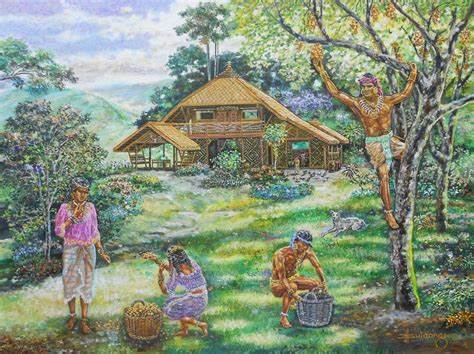
Pre-colonial Filipino art embodied “Kalikasan,” a term used by the indigenous people of the Philippines referring to the interconnectedness between humans and the environment. For example, the intricate ‘okir’ designs and carvings served to remind viewers of the harmonious relationship one has with the world and their ancestors. Unlike in many other indigenous societies, Kalikasan was not fulfilled through a passive or solely spiritual/ religious connection with nature but by actively caring for her physically. Thus, many Filipino art pieces serve to inspire individuals to take a hands-on approach toward preserving and respecting nature. Kalikasan is alive and well today in the Philippines. Environmental activism in the Philippines isn’t just a contemporary response to pollution or climate change but part of a long-standing tradition of actively caring for nature. This is evident in the Writ of Kalikasan within the Constitution of the Philippines, which provides the Filipino people the right to a “balanced and healthful ecology in accord with the rhythm and harmony of nature.”

“Kalikasan: Pre-colonial Filipino art, such as intricate ‘okir’ designs, embodies the deep interconnectedness between humans and the environment.” / Photo Courtesy by J. Bulaong 2020

When Spain arrived, they aimed to Christianize Filipino society, leading to the suppression of indigenous art, which they viewed as inferior and embodying heretical values. In its place, they forced indigenous artists to produce Catholic iconography. They believed that compelling the inhabitants to create Catholic art would not only civilize them but also instill in them Christian virtues.

Despite the suppression, indigenous art persisted, serving as a form of “resistance” against colonization. During this period, the Estilo Hispano-Filipino, a fusion of Spanish and indigenous artistic styles, became prominent across architecture, painting, and sculpture. In architecture, the Estilo Hispano-Filipino style manifested in the construction of churches as well as government buildings where Spanish Baroque elements blended with indigenous architectural techniques and materials.

This fusion acted as a form of resistance to colonization by embedding indigenous culture and motifs into the very Christian imagery that the Spanish sought to supplant indigenous culture with. This led to indigenous culture becoming intertwined with Christianity, making it much more difficult to root out. The Santo Niño de Cebu best illustrates this. It was a 30 cm tall sculpture of the Christ Child holding a globe and a scepter created by Flemish artists. When the ruler of Cebu, Rajah Kulambu, and his wife were baptized, she was christened as Juana and was presented with the Santo Niño. Their baptism marked the first conversions to Christianity in Filipino history. Upon converting, Juana asked for the Santo Niño to take the place of her former idols. Afterward, Ferdinand Magellan, a Portuguese explorer who claimed the island of Cebu for Spain, left, resulting in a 40-year period in which the Santo Niño was left solely in the
hands of the indigenous Filipino people.

When the Spanish returned 44 years later, they found the Santo Niño to have its original clothes replaced with indigenous clothes made specifically for its tiny frame, and the painting from its face and nose had faded a bit. The latter was due to how in indigenous Filipino culture, body parts of religious constructs were touched to initiate the healing powers the natives believed that they possessed.

Original image of Santo Niño de Cebu: A Divine Symbol of Faith and Heritage / Source:Wikipedia
The natives gave it a new origin story with themes and motifs that were undeniably indigenous and lacked a trace of Spanish involvement. Local artists would reproduce many local variants of this sculpture, each including indigenous features, such as rounder faces, flat noses, and specifically shaped eyes. During the struggle for national independence, Filipinos chanted, “Long live the Katipunan! Viva Santo Niño!” In the minds of the Spanish, by introducing images such as the Santo Niño, they sought to rewrite Filipino culture in their own image. This backfired spectacularly when the natives leveraged the universalist pretenses of Christianity to make the Santo Niño their own, rooting their independence movement in the very ideas the Spanish sought to use to control them.

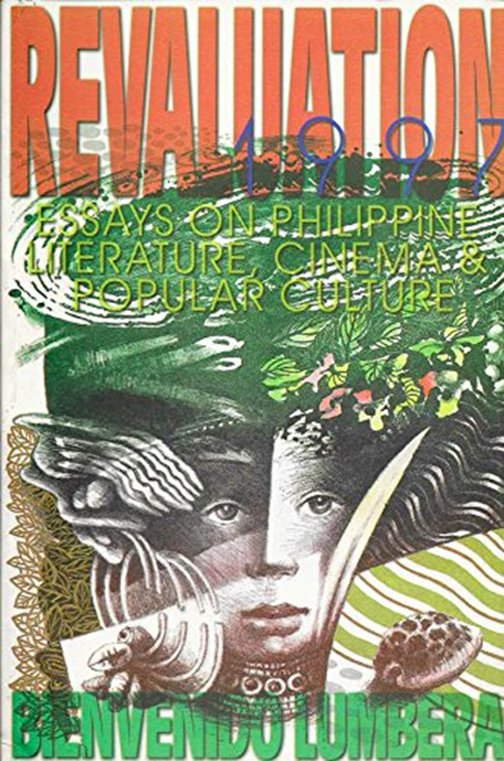
After gaining independence from the United States in 1946, indigenous art forms had a resurgence fueled by a growing sense of cultural identity. However, attitudes towards indigenous arts varied depending on the political climate. During Ferdinand Marcos’s authoritarian rule (1972-1986), many artists faced persecution for their political views, such as Bienvenido Lumbera (1932-2021). Lumbera was a renowned Filipino poet and critic known for his significant contributions to Philippine literature and his critical stance against the Marcos regime. Lumbera’s work revolved around themes of social justice as well as national identity; he was particularly known for his critiques of Marcos’s authoritarian rule. His outspoken
personality and political beliefs led to his imprisonment when Marcos declared martial law. His poems, such as “Tales of the Manuvu,” contain criticisms of the regime’s human rights record. Lumbera’s work, employing symbolism drawn from indigenous Filipino culture, resonated with the masses.

Similarly, Jose Tence Ruiz (1956-), known for his avant-garde style, created many works that criticized the Marcos regime. One of his most notable pieces was called “Brutalism,” which used abstract forms to symbolize the harshness of dictatorship. This infuriated the regime and led to efforts to suppress his works. Bienvenido Lumbera employed most of his art through poetry. The messages of these works of art formed the foundation of resistance movements. Symbolism of indigenous Filipino art through posters and murals was ubiquitous during the People Power Revolution of 1986, during which millions gathered wearing the same color in a mass protest. The themes of resilience through indigenous art allowed for unity amongst the public, leading to the collapse of the regime.

“Exploring Cultural Heritage: Bienvenido Lumbera’s Masterful Blend of Filipino History and Artistic Expression” Publisher: University of Santo Tomas Pub. House, 1997
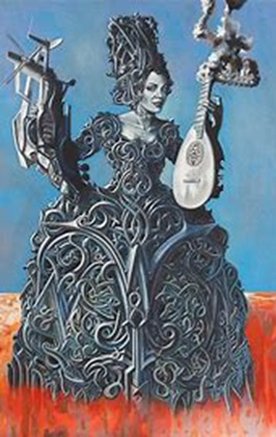
“Royal Decay: José Tence Ruiz’s ‘Granduchess’ Examines the Intersection of Power, Opulence, and Corruption” Lot 622: Jose Tence Ruiz (b. 1958)
The history of Filipino art in resisting tyranny showcases the immense power within the agency of artists. Foreign hegemonic forces often reproduce elements of the cultures they seek to dominate, aiming to legitimize their rule and pacify any aspects of it that could promote resistance. In contrast, native artists resist colonization or tyranny by intentionally incorporating symbols and motifs of their native culture into the art forms of the oppressors. This strategy undermines colonial rule by taking the universal moral
and religious pretensions of the colonizers and turning them against them, leveraging these to preserve particular forms of cultural autonomy. Over time, this autonomy outlasts the colonizers, eventually enabling national liberation.

This enduring legacy of artistic resistance underscores the vital role of cultural expression in the struggle for freedom and self-determination. The strength and adaptability of Filipino society highlight how indigenous art serves as a physical manifestation of every person’s right to freedom.
Author:
Shloka Chodhari, Arts Associate, The Lawrence CXLIII
Editor, Lawrenceville Science Reports, and High School Junior, New Jersey.

Both the author and publisher would like to thank all the artists and art sources for the five reproductions included in this article.

Sources:
Marin, M. (Ed.). (2021). *Transmission image: Visual translation and cultural agency.* Duke University Press
History of Philippine Art | Sutori
PHILIPPINE HISTORY (aboutphilippines.org)
Understanding Authoritarianism and Corruption in the Philippines | Psychology Today
Authoritarian powers are back in the Philippines, here’s how to fight them – Interviews | IPS Journal (ips-journal.eu)
A writer’s truth: The legacy of National Artist Bienvenido Lumbera – University of the Philippines (up.edu.ph)
The Relevant and Irreverent Jose Tence Ruiz—Positively Filipino | Online Magazine for Filipinos in the Diaspora
The Philippine Literature and Arts in the Post-War Era (1946-1972) (sinaunangpanahon.com)
Booklet-Guide-2022-1.pdf (santoninodecebubasilica.org)

Between Gaza and Me

Between Gaza and Me

By Nada Alaloul, age 17, from Rafa, lives in Egypt.

Between all of these
Cold bodies,
Tired faces,
Busy minds
Lost people
There is Nada como yo
Between black and white there’s me
Between sun and moon, there’s a scream
Between hell and heaven, there’re my people under the rubble
Between death and life, there’s a missile
Between war and peace, there’s a border
Between freedom and shackles, there’s the whole world
Between tanks & planes, there’s my family
Between my family & me, there’s an endless cry
Between my happiness & sadness, there’s the news of my city
Between the present and the past, there’s a genocide.
Between death here, and death there
There’s a huge price
I have one heart with
Two separated souls
And I’m a ghost
And I’m completely alone.

I was at home
Now I’m missing my home
Suddenly
I lost my home
I was here and there
But Suddenly
I’m nowhere
My home was bombed
My friend was killed
My sister was scared
And my dad was missed
And all I’m doing here
Is just avoiding to be the
Favorite dish for my sadness
Cuz actually I’m a liar
A big liar
I’m drowning in heavy clouds of sadness
Afraid to confirm
That my happiness is sad
To be with me
My happiness is scared
To be bombed with me
My happiness fooled me
But at least I know
That I couldn’t know
That I’m not happy
Without my sadness
I couldn’t realize
That I want balance
Between black and white
Between my happiness and sadness
To stop being gray
Without my sadness.

So now
I’m under a sky that
Doesn’t target its people
I walk towards the sun but I’ll never be burned
Cuz my soul has been burned once
Before when I left Gaza
Alone

What about you, dear human?
Can you bring me the warmth of the sun?
Not the one over my head
Nor the Egyptian sun which
Burns my bones like
The missiles do against
The tents of my friends
I want the warmth of my family
I’m a ghost and
I’m completely alone

I’m blue, drowning in a
Gray ocean of the fog
Gray, the favorite color of the death in my city
The color that I used to see
Whenever I roam in my ghost city
The color that I used to feel
Whenever the measure between
Death and me is just a path

I have one heart
With two separated souls
I’m a ghost and I’m completely alone
I’m here and there
And suddenly
I’m nowhere
Como Nada como Yo.

By Alaloul, age 17, from Rafa, Palestine, currently lives in Egypt.

Ms. Lauren Marshall, a playwright, musical theater librettist/lyricist, director and teaching artist based in Washington state, adds: “Nada is a remarkable girl from Gaza, now living with relatives in Cairo, Egypt. She participated in the Gaza Heartbeat, a creative writing project that was sponsored by Palestine Charity Team (PCT) in Rafah, Gaza (Palestine), in 2022.

“Nada has a positive outlook despite all that has happened to her! She was evacuated from Gaza in April, 2024. But her family is still stranded in Gaza, displaced from their home, which has been destroyed during this senseless war. Nada, like all of Gaza’s children, has missed an entire year of school as the result of the war. During this time, she has read books, written short stories and poems, taught herself Spanish, taken a business course in Cairo, and volunteered with PCT!”


Being Split

Being Split
By Preston Young, age 10, New York.

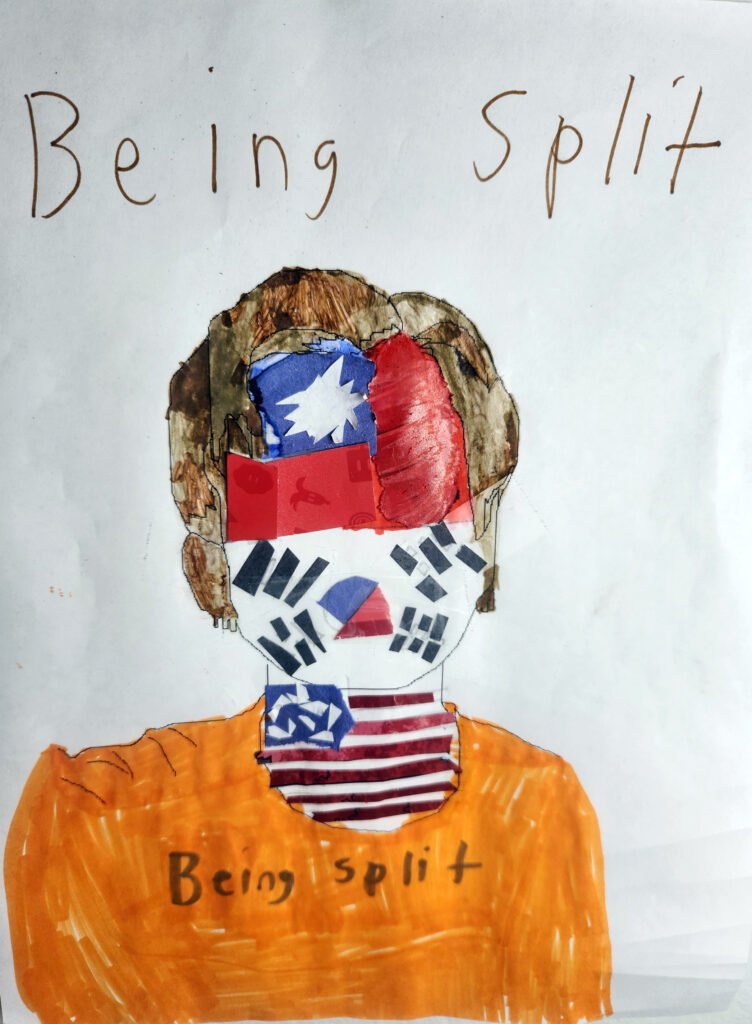
Being Split by Preston Young, age 10, New York

Illustration by Preston Young, 10, New York.

Being split,
Korean and Taiwanese,
I can’t process two different cultures,
It’s hard for me.

On Korean New Year,
I bow to elders and eat Duk Bok Ki (rice cakes).
On Chinese New Year,
I get red envelopes and eat dim sum with herbal tea.
I call my Korean grandparents Halmoni and Haraboji;
Ah ma, I call to my grandma who is Taiwanese.

The Taiwanese flag has red, white and blue.
The South Korean flag has those colors too.
The American flag has them too, oooh!

Being split,
Korean and Taiwanese,
Sometimes people don’t understand me.
When my friends talk about their one culture,
I want one of my other cultures to be unseen.

I try to tell my friends over and over;
I scream and I shout and whisper over their shoulder.
They never understand when I say,
 I am both Korean and Taiwanese!
They look confused and annoyed like fleas.

Sometimes I wonder if being Korean and Taiwanese is right for me.
I sit there and think until I can finally see,
I am special with being multicultural,
Being Korean, Taiwanese, and American,
Can all fit in my soul.

Being split,
Korean, Taiwanese, and American is hard.
But the three cultures,
Are forever in my heart!

By Preston Young, age 10, New York. Preston adds: “My mom is Korean and my dad is Taiwanese. I was born in the USA. I speak English but I am learning how to write, read and speak Korean because my friends at school can speak fluently, and I want to be able to communicate with them. My dream is to become an author and entertain kids. I was inspired to write this poem because when I am in school people always assume that I am full Korean or full Taiwanese. Sometimes people think I’m Chinese but I always correct them. I wanted to express how I feel and what that makes me feel like. I made a collage out of construction paper and some magazine clippings with markers to show my feelings about being split in three different cultures.”

The Presidency 

The Presidency 

There have been 45 presidents of the United States. The current one, number 46, has a similarity to all but one of his predecessors. They are all White, and all 46 are male. Asian Americans have been in the country since the 1800s, and have come nowhere close to the presidency. Could someone of Eastern Asian ethnicity ever become president of the United States?

Loyalty is an act of faith in which you do not betray or desert your cause no matter the circumstances. I believe most of the issues faced by Asian Americans are to do with loyalty. When using a search engine to research, the question, “Are Asian Americans loyal to the United States?” it distributes a plethora of discussion posts, disagreements, newspaper articles and more. For example, in a survey conducted by the Asian American Foundation of over 4,000 U.S. citizens, 32 percent agreed with: Asian Americans are more loyal to their perceived country of origin than to the U.S. I find this response disgusting and shocking. These questions and polls are not done on Irish Americans, Italian Americans, Norwegian Americans or African Americans; who whilst facing an uphill struggle in many areas, they would not be questioned if they are serving another country. Where does the questioning of  loyalty of this specific ethnic group come from? 

As an Asian American, I have not felt any urging for ongoing loyalty toward any country other than the U.S. In fact, Asian Americans have contributed to the United States as much as others. So what causes this unique form of discrimination? I believe one of these reasons is fear. For decades, the U.S. has been the world’s global superpower, with no country since the fall of the Soviet Union coming close. Over the course of recent years though, China has grown and empowered their economy, as well as modernized their military to the extent where there is a possibility of them overtaking the U.S. in a decade. Politicians, media pundits, and some American people are fearful of losing their global hegemony. I believe this fear has spilled into affecting Asian Americans citizens. The buildup of tension between China and the U.S has led to a buildup of tension against Chinese and other Eastern Asian ethnicity.

The coronavirus began November of 2019, and has only escalated this recurring issue. When the matter is brought up to classmates, all point directly to China as the one to blame. About 1.4 billion people populate the country of China, fingers pointed to every single one. During the coronavirus pandemic, the quantity of Asian American hate crimes increased rapidly. People of various Eastern Asian ethnicities were affected by this as well. The differences between Asian and American cultures itself is a leading cause, as we human beings tend to point fingers at those most different to us. For example, there is a mass of cuisine differences between Asians and Americans. Asian cuisine is based mostly on older type traditional recipes, including foods considered exotic to others. American cuisine is based highly on dishes from other ethnicities, although are home to modern dishes. 

In addition to these previous points, whilst all nations have fostered racism, The United States has had government policies introduced specifically pushing these racist policies. When schools were divided into white and black, Asian Americans found themselves questioning where they belong. Asian Americans were not mentioned in the laws themselves, as if they were forgotten and the law makers didn’t know they existed. This sense of idea of being an “other” or not being a part of the nation itself I believe still carries on to modern society.

In conclusion, I do not believe an Asian American could ever become president. As much as we as the Asian American community continue to integrate ourselves with the nation, humans will always find a way to exclude parts of our people and treat them as outsiders. Asian Americans are constantly challenged on our trustworthiness, loyalty, and dedication to this country. Attempts to prove ourselves feel disregarded by the same continuous subgroup of people. I truly hope to be proven wrong in my lifetime. 

Author’s Note:

            In the past few weeks, the political climate has changed. Vice President Kamala Harris has become the Democratic Party’s nominee for the President of the country. She is half African American, and half Indian. Despite this sudden change, I still stand by my previous assertion. My piece is focused on Eastern Asian ethnicities, and their uniquely questioned loyalty to the  nation. Kamala’s nomination is what I believe to be a step forward in our nation, due to her being female as well as a woman of color. However, due to the still-rising tensions with China, as well as the Coronavirus-19 pandemic, I still believe an East Asian American could not currently be elected the president.

—Abigail Lee, Age 12, Grade 7, Illinois. She writes: “I have a passion for writing. I enjoy reading realistic drama stories. I am socially conscious about Asian American discrimination in our country, in particular since the Coronavirus Pandemic. I am an Asian American, born as well as raised in Illinois. My essay focuses on my belief that an East Asian American could never become president due to racial discrimination.”


Summer Olympics: Paris, France 2024

Summer Olympics: Paris, France 2024

The 2024 Summer Olympics will take place in Paris, France later in July. Thousands of international level athletes from many countries will participate in this once every four year, global sports event.

Right now, the 2024 Olympic U.S. Track & Field Team trials are being held right here in Eugene, Oregon, where Skipping Stones is based. Selections for the U.S. Gymnastics Team are currently being held in Minneapolis, Minnesota, and the U.S. Swim Team trials were held last week in Indianapolis, Indiana to select the best swimmers.

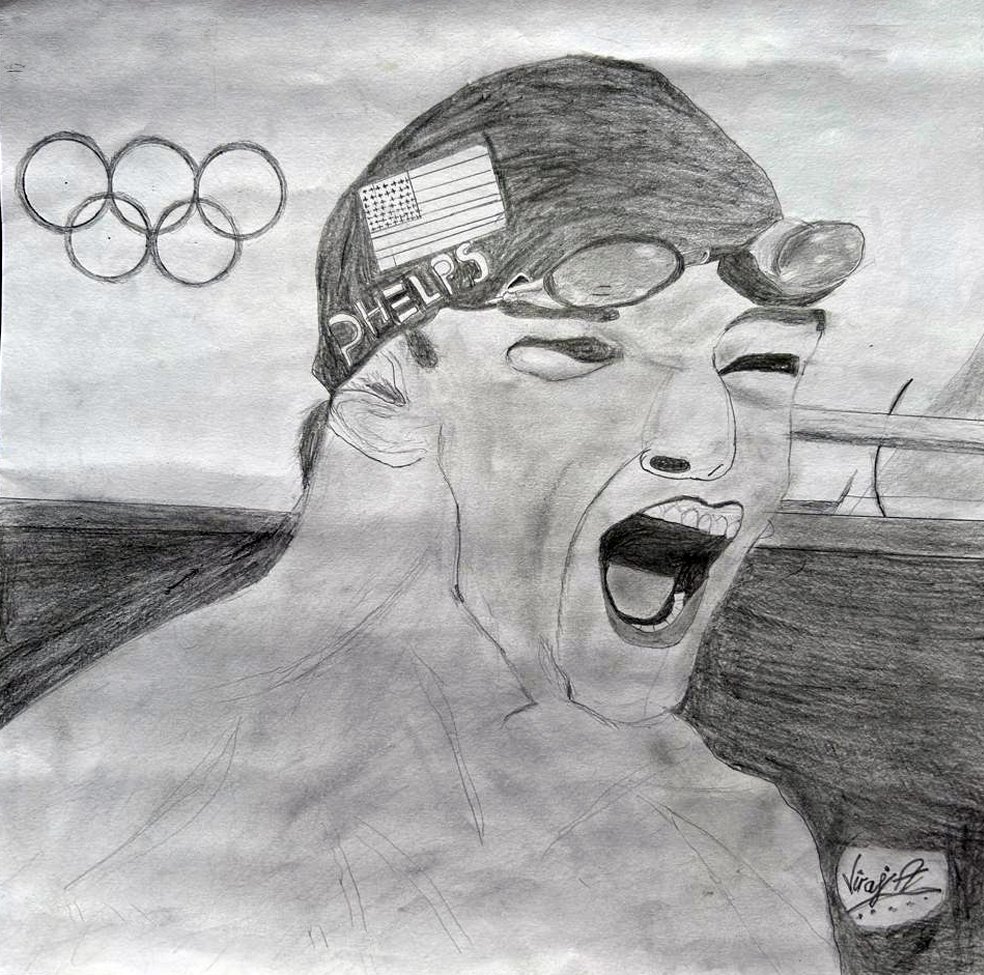
Swimmer Michael Phelps represented the United States in the Summer Olympics in 2000-2016. He has earned a record 28 Olympic medals, including 23 gold! Here is a portrait of Michael drawn by Viraj, a ten-year old student in Mumbai, India.

Now all eyes are on Paris! Who will be the next Michael Phelps? Who will get the gold medals in the dozens of different sports and games—athletics, basketball, running, volleyball, and so many other events.

—editors

Michael Phelps, Aquatic Superhero

“It was a great delight to draw a sketch of the most successful American swimmer, Michael Phelps, whose Olympic records are simply commendable and unimaginable, especially for a ten-year old boy like me!
When I read a few articles about him, I was awe-struck as I wondered how a boy who was so naughty and hyperactive in his younger days eventually discovered his strength in his weakness. He is a true inspiration for children like me, particularly those who had a tremendous phobia of water and have now been able to overcome the fear and have seriously taken up the sports to pro level.
His astonishing world record in multiple events, and more importantly the mental toughness that he exhibited, was proved when he spoke about his sheer sacrifice of holidays, birthdays, Christmas and his relentless hard work exhibited in the pool. How right he is, but trust me, very difficult to inculate!
Nonetheless, there is lot to learn from this incredible guy; man of great accomplishments.
So, this is a small token of huge respect to our “Aquatic Superhero” on his upcoming birthday on 30th June, from this tiny, little Indian boy.”

—Viraj Ajgaonkar, Grade 6, Mumbai, India.