Category Archives: Family and Community

The Alchemy of Love

The Alchemy of Love

By Satish Kumar, Editor Emeritus, Resurgence
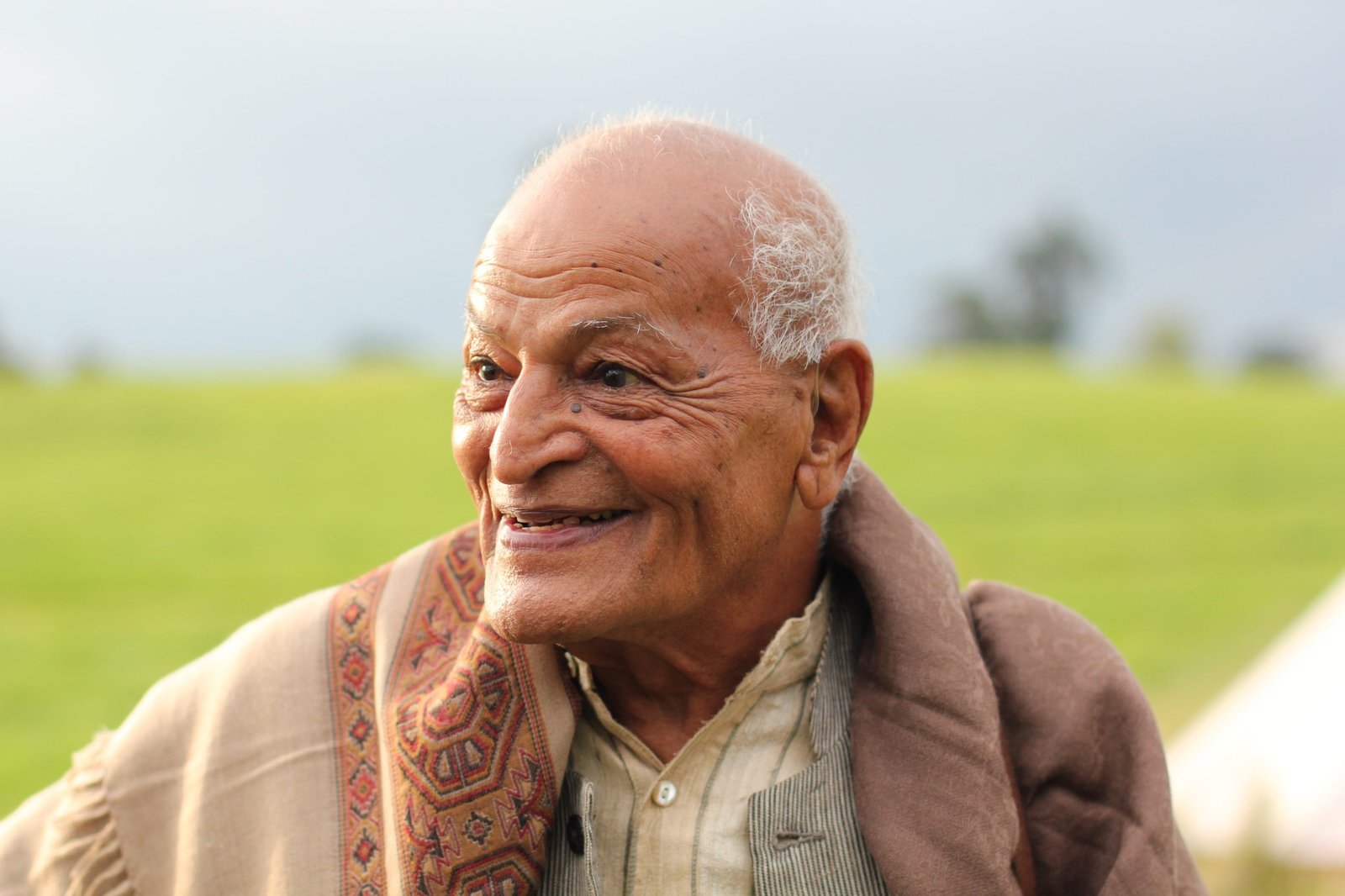
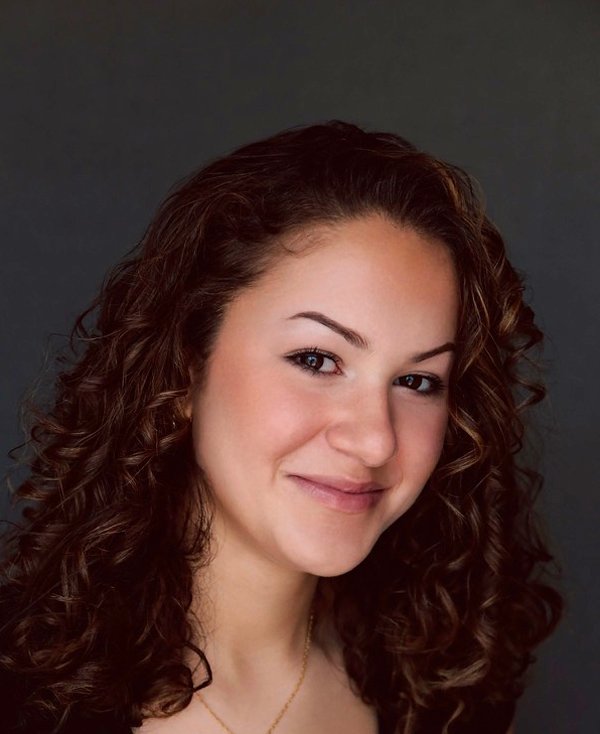
Satish Kumar, Editor Emeritus, Resurgence. Photo by: Daniel Elkan


“I have decided to stick to love; hatred is too great a burden to bear.” 

– Martin Luther King Jr.

Love is all very well, but can we love Vladimir Putin?

I am often asked this question, and I always give the same response, which is to say we must love Putin in order to transform him and save millions of innocent lives. Only love, I tell people, has the power to transform Putin. 

The Sufi poet Rumi wrote:

By love the bitter becomes sweet, 
By love copper becomes gold, 
By love pain becomes healing. 
And to this, I would add:
By love enemies become friends. 

This, then, is the true potential in the alchemy of love and in adopting love as a verb.

Wars and weapons can kill, but they cannot transform. And, of course, before one can kill some ‘undesirable’ person, one might kill thousands, if not hundreds of thousands of innocent people. In wars, millions are made homeless and become refugees. Schools, hospitals and homes are destroyed. Roads, railways and historic buildings are decimated. The price of food and fuel goes up. And it is those living in poverty who will suffer the most. In modern military operations, it is impossible to avoid civilian casualties.

Saddam Hussein and Osama bin Laden were killed, but before they died how many ordinary men, women and children lost their homes or their lives? How many soldiers on both sides were killed, wounded or forever traumatised? And after all the deaths and destruction, what was achieved? Nothing! Afghanistan is still ruled by the Taliban, and Iraq is still in chaos. If the greatest military power in the world, the United States, could not win a war after 20 years of fighting in Afghanistan, what hope is there for either side to win the current war in Ukraine?

If there is a lesson to be learned from the experience of recent wars such as those in Vietnam, Korea, Iraq and Afghanistan, then the lesson is simple and clear: wars are not only futile, but they are also obsolete; they neither transform tyrants nor accomplish peace. 

Nations have waged wars and practised hatred for hundreds of years and have failed miserably in their stated goals. The UK tried to conquer Afghanistan but failed, Russia tried to rule Afghanistan but failed, America tried to establish a friendly government in Afghanistan by military means but it too failed.

So now let them all try love. 

It is easy to love someone who is reasonable and agreeable, who is good and gracious. But to love someone who behaves in a narrow-minded, arrogant and selfish way requires real courage and strength. Making peace with Putin would be a sign of strength, not of weakness.

We need to understand that those who behave badly do so because they have not themselves been loved. The poet W.H. Auden wrote, “Those to whom evil is done do evil in return.” 

The path of love is taken by the brave and not by the faint-hearted. The real test of love is to love your enemy. Love conquers all. Amor vincit omnia. 

War prolongs conflict, but love resolves conflict. Love is as logical as it is magical. Love makes miracles. 

History is full of violent systems: slavery, apartheid, sexism, Nazism, colonialism, casteism and many more unpleasant ‘isms’. Some people think that communism is evil. Others think that capitalism is evil. And if we always take the path of confrontation and opposition in order to overcome these undesirable systems and to defeat our opponents by war, we are simply pouring fuel on the fire and then hoping to extinguish it.

Wise leaders have often proclaimed that the ends cannot justify the means. Noble ends must be pursued and accomplished by noble means – which include love and nonviolent resistance. There is no way to peace: peace is the way.

Mahatma Gandhi is believed to have said, “There are many causes I would die for. There is not a single cause I would kill for.”

We have witnessed the success of nonviolent resistance. Gandhi and the Indian struggle for independence, Martin Luther King and the peaceful campaign against racism in America, Nelson Mandela and the anti-apartheid movement, the Truth and Reconciliation Commission in South Africa. These are some utterly inspiring examples of nonviolent action founded on love. These movements brought about a change of heart leading to a change of regime. These movements were founded on the humility of hearts, on generosity of spirit and on an unconditional love for humanity. 

Love is letting go of ego and arrogance. To love is to accept the multiplicity of systems and the diversity of truths. Love is to live and let live. Love and selfishness do not go together. Love celebrates unity, ego imposes uniformity. Love embraces diversity; ego causes division. Love lets a thousand flowers bloom; ego wants a monoculture. Ego is driven by self-interest, love looks for common interest. Ego seeks separation, love likes relationship. Ego engages in self-seeking, love seeks mutuality and reciprocity. Ego leads to war, love leads to peace. Ego creates contradiction, love creates conciliation.

If we want peace, prosperity and happiness, then love should be a way of life for all of us. It is through love that we find meaning in our lives. The art of love needs to be learned and practised every day. As we nourish our bodies with food every day, so we can nourish our souls with love every day. Love is food for the soul. Love is the essence of life: love of ourselves, love of each other, love of people and love of Nature. No one, not even Putin, is our enemy. I would say the same thing to Putin: Ukrainians are not your enemies, Europeans and Americans are not your enemies. Only through friendship can the whole of humanity protect its common interests. 

Wars cause climate catastrophe. The production of weapons, the constant flying of military planes and the use of other military vehicles, including tanks, require huge amounts of fossil fuel. After the war is over, further fossil fuels are needed to rebuild destroyed buildings and damaged infrastructure. In war people suffer and Nature suffers. In war no one wins and everyone loses.  

War leaders sit comfortably in the Kremlin or in the White House. Soldiers suffer. Society suffers. War is pointless. War is unnecessary. War is uncivilised. War is hell. War is out of date. There is no other act as bitter, as traumatic and as stupid as war. War is immoral and irrational, whoever initiates it. 

Ukrainians blame Putin, Putin blames Ukrainians. But love takes us beyond this blame game. It takes two to fight a war and it takes two to make peace. But politicians of all persuasions seem to have lost the art of making peace. They seem to have forgotten the statesmanship, the statecraft and the craft of true diplomacy that are always rooted in deep love.

Nations know how to conquer the moon. They know how to destroy our precious planet Earth with nuclear weapons, not once but a hundred times over. But the presidents and prime ministers of Europe, the US and Ukraine don’t seem to know how to talk with Putin and help him see the futility of war and inspire him to seek peace! Nor does Putin seem to know how to befriend his neighbours like the Ukrainians and make them feel safe. What is the point of all this progress, what is the benefit of all this education and all the scientific achievements if the graduates of Oxford and Cambridge, Harvard  and Yale, Moscow and Beijing don’t know how to establish harmony among nations and peace among people?

Politics without wisdom is a very dangerous thing, and sadly, politicians do not know how to be true statesmen, ambassadors do not know how to be true diplomats, and religious leaders do not know how to practise love as a verb. Governments of all colours spend billions and trillions of dollars, roubles and euros in preparation for war while many of their citizens are homeless, jobless and hungry, living on food provided by food banks. 

I am a pacifist and a peacemaker. I do not excuse Putin for attacking Ukraine. But I want Ukraine and the supporters of Ukraine, as well as the Russians and their supporters, to rise above their narrow national interests and seek the common interest of the whole of humanity.

Love safeguards the interests of everyone. 

The consequences of wars are so tragic that we need to avoid them in all circumstances. Like the medical profession, politicians need to take an oath to do no harm. No harm to self, no harm to other human beings and no harm to Nature. If such an oath were to become an integral part of international law, Putin could not attack Ukraine. The USA could not attack Iraq. 

Hugely militarised nations live in constant fear and insecurity, forgetting that true security resides in trust, not tanks. Only the power of love can free them from fear of the other. 

When wars become unpopular, leaders are compelled to negotiate and compromise. Neither side gets their way. Both sides are forced to find a mutually acceptable solution. Why could they not do this in the first place? Why not find a negotiated agreement instead of all the deaths and destruction?  Peace is common sense, but conflicts and common sense don’t go together. Unfortunately, common sense is no longer so common!

If we harbour hatred for Putin in our hearts, we are victims of our own hatred. Therefore let us choose love in place of hatred. Hatred is not good for us. Our true self-interest and our true security are both embedded in love, not in hatred. This is tough love. I call it Radical Love. I know I am being an idealist, but the way of the pragmatists is causing chaos. So why not give idealism a chance? 

So yes, we need to love Putin, and we can love Putin. If we loved Putin, he would have no excuse to go to war. Love is unconditional, unlimited and abundant. Love is for all. Let us bring a monsoon of love to Moscow and soften the dry soul of Putin.

My message to Putin is the same:  Stop war and try love.

And my message to Europeans and Americans is the same:  Stop adding fuel to fire.

It is time to bring the rain of love, forgiveness and peace to the fire of war in Ukraine—a war that should never have been started. 

—Satish Kumar is the recipient of the Goi Peace Award 2022. His new book, Radical Love, is published by Parallax Press and is available now from www.resurgence.org/shop

This article was first published in Resurgence & Ecologist Issue 337, March/April 2023. Used with permission. All rights to this article are reserved to The Resurgence Trust. To buy a copy of the Resurgence magazine, read further articles or find out about the Trust, visit www.resurgence.org
Andy’s Birthday Surprise

Andy’s Birthday Surprise

By Astaire R. Greenberg, retired librarian, New York.

Andy loved to read. Even when he was a baby, his mother would hold him on her lap and show him picture books. The best part was when his mom or dad tucked him into bed and read to him.

Wherever he went he always took along a book. When he went to his big brother’s baseball game, everyone watched the players. Not Andy! He sat on the benches and looked at his books. Even at barbecues, he would eat his hot dog so quickly, and gulp down his drink, so he could look at his books again.

At the beach, Andy would go into the water for a few minutes, but then, he would hurry back to his blanket to continue reading. It was such an exciting time for Andy because now he was starting to sound out the words by himself!

Everywhere that Andy went, he carried a blue and white backpack. All of his friends put water, a snack, or games in their backpacks. Not Andy! He put in books—lots and lots of books. There were so many books, and his backpack was so heavy, that sometimes he couldn’t even stand up straight! His dad figured out a way to help Andy. Together, they built a little cart. They worked very hard on this and had lots of fun doing this together. It was the perfect size to carry all of his books. They painted the cart blue, and in big white letters, they wrote,“ANDY’S AMAZING BOOKS.” His friends helped him decorate the cart with bright and colorful designs. They all thought it was so cool, which made Andy feel soproud. He and his dad did a great job with the cart.

Mrs. Rivera, his teacher, allowed Andy to leave his cart in the back of the classroom. When the children finished their work, they were allowed to go to see what books were in the cart for that day. There were usually books about space, soccer, animals, children from around the world, and many more. Every storybook interested Andy. He wanted to learn about EVERYTHING!

Saturday was Andy’s favorite day of the week. That was the day that he went to the public library with his parents. His mom asked Alex to empty the cart, so there would be room for all the new books. He couldn’t wait to visit the library to see Mrs. Hamilton, the librarian. She was so friendly and helpful. She always showed him the new books in the children’s section. After filling the cart, he asks his mom, “Can I get a library card today?” To which she replies, “Not yet!” After visiting the library, Andy and his family had pizza for lunch. It was hard for Andy to eat his pizza and look at a book, but that never stopped him from trying. Every morning when Andy woke up, he would ask, “Is today Saturday?” So, his mom and Andy decided to put up a calendar on the wall. Together, they put a red circle around all of the Saturdays in the month. This way, Andy could check the calendar every morning.

Andy asked, “On which Saturday am I going to get my very own library card?” His mother explained that he had to wait until he was five years old. She said, “Andy, we only have four more Saturdays to go.” Andy couldn’t wait to get his own library card! Soon, he would have it, and his name would be in big letters on the top. There were so many books in the children’s section. How was he ever going to finish reading all of them?

Andy’s birthday was almost here. He invited his best friend, Terrell, to his party because they had so much fun together. His mother also sent out invitations to his other friends: Luis, Maria, Jada, Jordan, Shaquille, and Matt.

COME TO ANDY’S 5TH BIRTHDAY PARTY
PLACE: Andy’s House
DATE: Saturday, March 5
TIME: 1:00 P.M.
ANDY’S PARENTS HAVE A VERY SPECIAL SURPRISE GUEST COMING

When Andy woke up on that Saturday morning, he was all excited to have his birthday party. He was now five years old. He helped his mom and dad decorate the family room with colorful streamers, plenty of balloons, and pictures of Andy’s favorite books. When it was almost time for the party, all of his friends came. They played games, had snacks, and ate birthday cake. Imagine, a cake with five candles!

Suddenly mother stood up, clapped her hands, and got all the children to be very quiet. She said, “As you all know, Andy LOVES books. We wanted to do something very special for him, so we invited a surprise guest.”

A woman came through the door, and it was Mrs. Hamilton, the town librarian. Andy was so excited.

Mrs. Hamilton smiled at the children and said, “Boys and Girls, I am so thrilled to be here. I know how much Andy loves books and reading books teach you so much. They are friends to you. Andy hopes that all of you will start coming to the library with him every Saturday. Think of all the fun we will have together.”

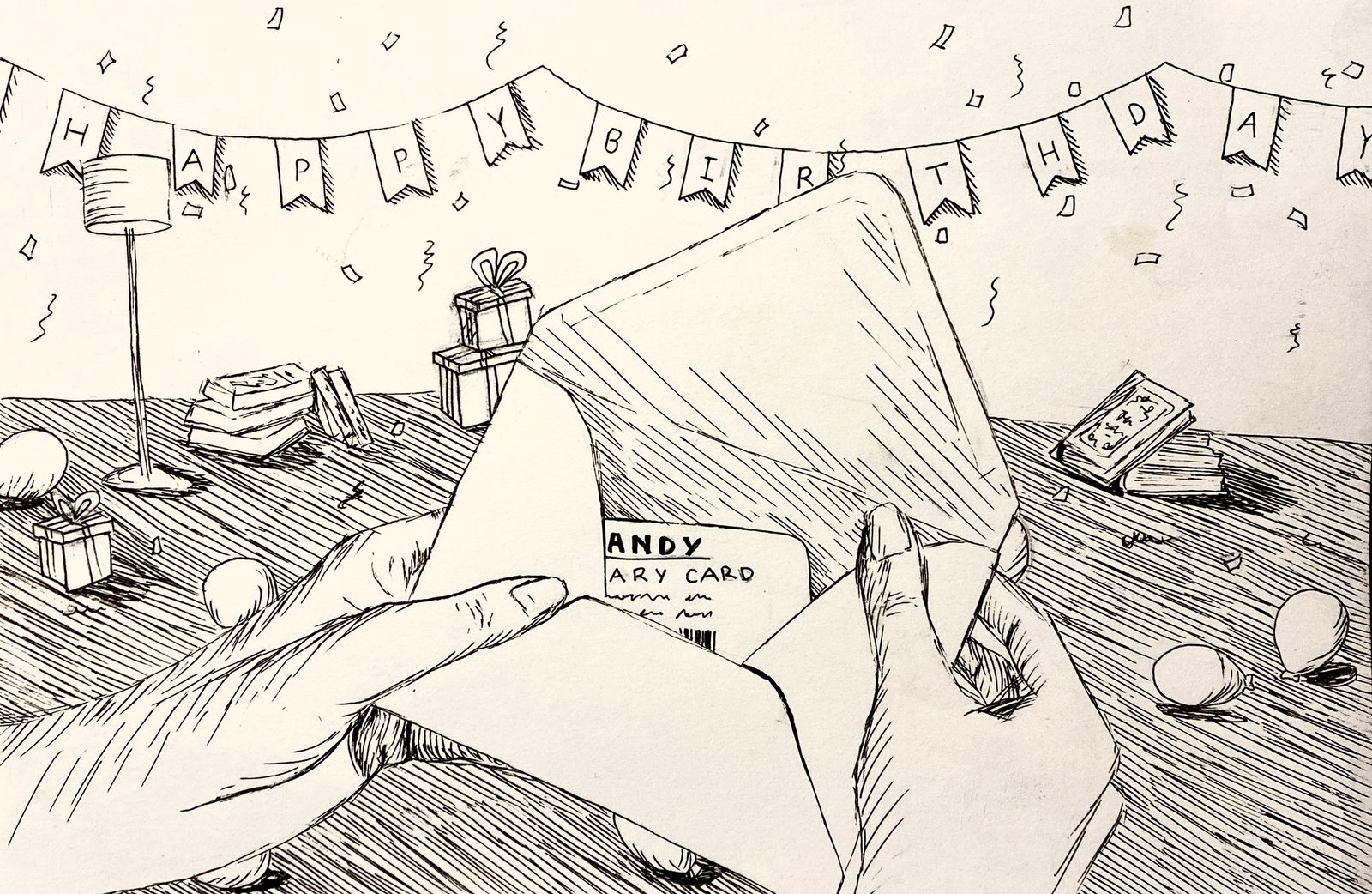
She then gave Andy and each of his friends a white envelope that had each one’s name on the front. She said, “Andy, why don’t you open yours first.” Andy jumped up and clapped his hands. He was so excited. He opened the envelope and there was a Library Card! His name was on top in great big Letters. ANDY!

Then all the children ripped their enveloped open and what a surprise: each one had received their very own library card with their names printed on it.


Oh, how happy Andy was! He said, “This is the best birthday gift I have ever had! It’s great to be five! Now I have my very own library card. And the greatest thing is—all my best friends got library cards too. We can all go to the library together every Saturday.”

Mrs. Hamilton said, “And I can read all the wonderful books to all of you, and then you can check out books to bring them home.”

All the children stood up, made a circle around Mrs. Hamilton and Andy, and they all danced around them and shouted, “Hooray for Books! Hooray for Andy.”

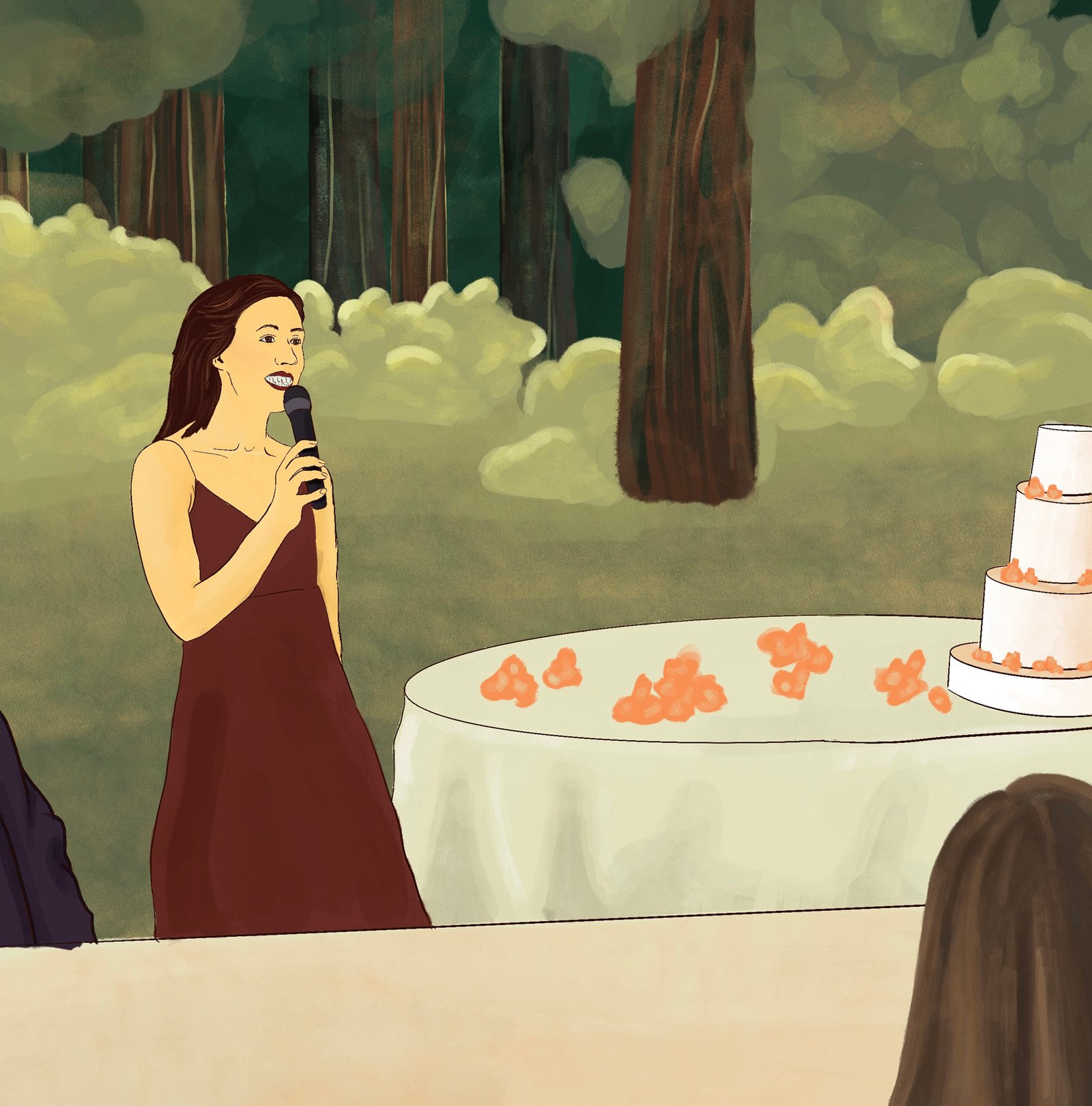
—Astaire R. Greenberg, retired librarian, New York. Illustration by Katherine Han, h.s. senior, Texas.

Weaknesses in the U.S. HealthCare System

What I Perceive as Weaknesses in the U.S. HealthCare System:

 An Analysis from a Personal Point of View 

By Samantha Bean, High School senior, Vermont

My mother has an autoimmune disorder and was diagnosed at 4 years old. There is still no cure for autoimmunity, so it has been a 46-year-long process of appointments, labs, tests, scans, procedures, and surgeries. Doctors she has seen have not given her a diagnosis or clear course of treatment, so she lives day to day, just trying to manage her pain and symptoms. From the experience of a daughter who has been along this journey with her, I have seen how inefficient and unaccommodating the healthcare system can be and want to share my insight and experience. 

As a citizen wanting to take action with any issue, I believe it is important to first educate myself about what is already being done. 

In July of 1965, President Lyndon B. Johnson signed the Medicare and Medicaid Act, also known as the Social Security Amendments of 1965. It established both Medicare and Medicaid health insurance programs for the elderly and people with low income. Next, the Affordable Health Care Act is a comprehensive health reform law enacted in March of 2010. Its goal is to make affordable healthcare available to more people, provide consumers with subsidies, expand the coverage of adults below 138% of the federal poverty level, and support innovative medical care delivery methods to lower the cost of healthcare

An important program in place is the Hospital Readmission Reduction Program (HRPP). This program, under the Affordable Care Act Initiative, requires centers for Medicare and Medicaid Services to reduce payouts to care facilities that experience excessive patient readmissions. 

Finally, an important foundation to recognize is the Commonwealth Fund. This foundation supports independent research on health care issues and makes grants to promote better access, improved quality, and greater efficiency in health care, particularly for society’s most vulnerable: people of color, low income, and the uninsured. 

Overall, it seems that what is being done is not accessible to all people. The programs, acts, and foundations claim they reduce healthcare costs and give people access to health care, but a research study by the Commonwealth Fund showed that from “March 28 through July 4, 2022, 43% of working-age adults surveyed were inadequately insured. This figure includes “…23% that were underinsured where their benefits did not give them access to affordable care.” There are many reasons for this, but one includes how health care providers are unwilling to run into obstacles when trying to bill Medicaid or Medicare, leaving only a handful of doctors that accept this type of insurance. Various surveys, like one by the Medicaid and CHIP Payment and Access Commission (MACPAC), showed that providers are significantly less likely to accept Medicaid or Medicare. This specific study showed that physicians were less likely to accept new patients insured by Medicaid or Medicare, an average 64.75% acceptance, compared to private and much more expensive insurance, 90% acceptance (MACPAC June, 2021).

As a part of my research, I interviewed a physical therapist that works in the Sarasota, Florida area. He has worked as a private physical therapist who does not accept insurance and controls his own rates. But, he has also worked as a physical therapist at a hospital, where he often saw first hand how insurance coverage affected patients’ care. The therapist tries to make his practice more accessible for most people who may need his help. He keeps his prices at a level that he is comfortable charging, even though there are providers that charge significantly more in an attempt to attract high earning clients. He is also building a digital service into his practice that reduces costs without sacrificing quality of care for people who have undergone ACL* surgery. In doing so, he can charge lower rates while delivering a great outcome for his clients, which makes it a feasible option even for those who do not make a lot of money. 

In my interview, the physical therapist said that a weakness of the healthcare system is that the quality of care seems to be highly variable from one hospital to the next, and even from one provider to the next. The quality of care, he says, is also dependent on your insurance coverage and your ability to pay for the care you need. He says that insurance companies make themselves a “middleman” in healthcare payments and make massive profits in that role. They have the ability to promote or approve certain procedures and reject payment for others, which takes some of the power of decision-making away from the provider and patient, sometimes with minimal regard for the best interest of the customer or patient. He also says that the added administrative workload that insurance places on the healthcare system comes with huge costs. He recognizes the need to ensure that the healthcare system is not overwhelmed with unnecessary services, but there are huge barriers and costs introduced in these processes. He has “more questions than clear answers, but when I see the profits that insurance companies pull in by acting as gatekeepers in healthcare, I have to wonder if all that money could be put to better use in other hands.” 

I think this was a really important part of this interview. With any issue, progress will not occur without asking questions, doing research, and recognizing what is already being done. As an active citizen, it is important to recognize this. Like I mentioned before, I am not writing to propose a solution. I am writing to express my concerns and share some insight I have gained with my personal experience.

While I have been an active part of my mom’s experience, especially in the last few years, there are many elements of her story that I was unaware of. So, I asked her a series of general and personal questions about her experience and what she thinks the weaknesses in the healthcare system can be. Because of her extensive experiences, she provided insight on what she thinks would shift our healthcare system to being stronger, efficient, and accommodating for all people. 

It is still undetermined what health, environmental, societal, cultural, or dietary factors can affect or cause autoimmunity. Her experience as a patient and the research she had done has informed her opinion that there is a mind-body connection that doctors could be overlooking. The Myth of Normal, a book by Dr. Gabor Maté, emphasizes how the problem is that doctors are not educated on the mind-body connection, as it would force them to go beyond medical history and break boundaries of treatment protocol. Currently, there are only short-term solutions to autoimmune symptoms, symptoms that are very diverse and unpredictable. This also results in duplicated tests that end up costing a significant amount of money. In her experience, autoimmune disorder patients are tossed around from doctor to doctor, not getting any closer to how the patient feels and what might be going on, making patients feel like their experience is not valid or real. In this way, doctors project their own inadequacy. 

She made an interesting point about a “team approach” when it comes to doctors’ care. When someone is diagnosed with an autoimmune disorder, regardless of doctors understanding, there should be more communication rather than just sending patients to specialists who are unable to see the big picture behind what is going on in the body. 

Next, we discussed the costs of insurance and treatments. She most often pays for tests and procedures with cash and she recognizes that this is a privilege, however; her insight shows her knowledge on both sides, as in recent months, she has had to use Medicaid for increased tests and procedures. Interestingly, when paying cash, she was scheduled right away because it guaranteed a direct payment. With insurance though, she first has to find somewhere that accepts her insurance and get authorization from the insurance company, even if the doctor orders it. Even after all of this, insurance companies have the right to say they will not pay for something. The medical system, unfortunately, has proved to be a money-making business where your level of insurance or ability to pay cash determines your level of care. Insurance costs only become expensive if you become sickly, as it is more profitable to keep people sick. 

Who’s keeping the doctors accountable for their level of care based on your ability to pay? Micheal Pollan, the narrator of the documentary, Food Inc., said in his book, In the Defense of Food, that “much lip service is paid to the importance of prevention, but the healthcare industry, being an industry, stands to profit more handsomely from new drugs and procedures to treat chronic disease than it does from a wholesale change (Pollan, M., In the Defense of Food, 2008).” 

Another point my mom made was that with no underlying illnesses and only regular checkups, a person may spend $2,000 a year on the care itself, but their insurance premium alone is probably close to $1,000 a month. Where is all that money going? When you pay cash, prices are significantly less than they pay with insurance. A fee should be a fee, but since insurance is a business, patients are often treated like business propositions, not human beings. Furthermore, why do pharmacies charge differently? With GoodRX, you can save up to 80% on your prescriptions. Where is the money difference being absorbed and who is getting paid? 

My mother’s insight is significant because even outside of being an autoimmune disorder patient, she has noticed the weaknesses in the healthcare system as a whole. Talking specifically about food and nutrition, an interesting point she made was how health should be followed like a story. Doctors need to be educated to treat people from the very beginning about a healthy lifestyle. If we are what we eat, how can we be healthy if we are not taught from the beginning how to maintain a healthy diet? 

Another point that Micheal Pollan made in his book was how chronic diseases are often affiliated with genetics or demographics, “however; the Western diet and lifestyle, and more specifically, industrialization, has heavily affected the rates of chronic disease like cancer and heart diseases.” This implicitly brings up the idea of how we might be too concerned with supporting a system that is broken rather than strengthening the system from the ground up to promote health and care for all people. Are we more focused on sustaining people’s health or short-term treatments for their medical problems? 

There is clearly a problem, and I think it is my right to question what is being done, or more yet, what is not being done. I believe this is a critical issue that affects far too many people. But in order to progress, it is crucial that we look logically at what is happening in our healthcare system. It is time to strengthen the system and get to the root of the problem, rather than making short-term fixes that only support the system as it is. 

By Samantha Bean, High School Senior, Vermont.

*ACL: The anterior cruciate ligament (ACL) is one of the key ligaments that help stabilize the knee joint. ACL is commonly torn during sports that involve sudden stops and changes in direction.

New Year’s Resolution

New Year’s Resolution

By Vajra Vanukuri, age 11, grade 6, California.


Eleven-year-old Kristina shouted on the phone. Vera, her mother, packing lunches for her two children, heard the shouting and dashed to Kristina. Kristina gave her the phone. Kristina was talking to her father at his doctor’s office in Moscow, Russia. 

“Vlad, why is Kristina shouting?” began Vera in Russian.

“Vera, this afternoon I must attend a conference at her school. But I cannot be there. I have an important meeting.”

“How can you do this!” she asked.

“Why don’t you attend?” he replied.

“How can I go?”

“You are not going to a forest. You’ll be fine!”

“I know, but I can’t speak English properly. It’s an ironclad rule at her school.”

“You can manage. GO!”

She turned to Kristina, “Kristina, your father is busy. I will come instead of him.”

Kristina shouted, “Mother, you can’t speak English. How can you come to the conference? NO!” She plowed through her mother and ran sobbing. But Vera convinced Kristina. As there was no option, she agreed and left for school. 

Vera was depressed. She felt that if only she knew English, she could avoid such situations. But how is it possible for me to learn English while balancing so many tasks? Suddenly, she realized that Andrei was getting late, so she got him ready and walked him to school.

In the afternoon, Vera attended the conference at the school. All the teachers and staff were cordial to Vera. Kristina kept shushing her mother. All she said were phrases like, “You are embarrassing!”, “Stop talking!”, and “You do not know English!” Ignoring her daughter’s comments, Vera managed to keep her cool and finished the meeting. 

After delivering a cake to a customer Vera went home to start dinner. At home, she asked her mother-in-law where Kristina was. She said that Kristina had gone to study with her friends. While they were talking, Kristina walked in. 

Vera asked, “Why did you go out? You can study at home, you know!”

“I have doubts about English Literature. Can YOU clarify them?” Kristina said with an arrogant tone.

Vera went to the kitchen as she sobbed quietly. Everyone thinks that kids are innocent. Is this the definition of innocence—hurting parents with an inconsiderate tone?

At dinner, Vera explained Kristina’s deplorable behavior to Vlad. But he chuckled and said, “Well, if you knew English, Kristina would not have to suffer like this.” Then he added, “This food is delicious. At least you are good at something!”

That night, Vera was tossing and turning as she thought about her hurt feelings. Like father, like daughter. If my husband won’t respect me, then how can my children respect me? I must learn English. But how is it possible with all my responsibilities? 

*  *  *

As the months went, Vera’s nephew in London was engaged. One day, she got a call from her sister in England. Her sister pleaded Vera to come and help her with the wedding arrangements. 

Vera said, “Margarita, I’d love to come, but you know that I am balancing a tight schedule.” But as Margarita requested over and over again, Vera agreed. 

When Vera asked Vlad if they could go, Vlad said, “I could get a week off. I can come with the kids for the marriage. You could go now and help your sister.” 

Vera worried, but Vlad said that his mom would take care of the kids.

To get to London alone was a challenge for Vera. Finally, she arrived at her sister’s home. Margarita greeted her with a warm welcome. After two days, it was New Year’s Eve. Margarita hosted a party for the bride’s family. It was really boring for Vera because she could not understand their English conversation. Then, the topic about New Year’s Resolutions came. Vera heard the words but didn’t know what to say. So, she kept quiet. 


Illustration by Katherine Han, age 18, high school senior, Texas.

That night, she was thinking: Why can’t I make a resolution? What should it be? Then, an idea struck her head. I will learn English. All night, she tried to figure out how to learn English. 

The next day, she saw an advert from LCC, The London Language Center, on the TV. They offered English classes to newcomers. 

After her sister left, Vera called their number and gathered all the information. In the afternoon, when she went to the LLC, the receptionist said,

“The class is a four-week course; it starts in ten minutes. If you want, you can join it.” Vera paid the fee and sat in the class.

Vera didn’t tell anyone about this. Every day, she managed to attend the class when the family was away. She followed every single detail. While commuting, she’d read anything in English. She tried to communicate with her classmates in English. The instructor was impressed and encouraged her immensely. 

Sometimes, Vera shared her food with her classmates. They loved her cooking and appreciated her. One day, she told them of her small cooking business. The instructor said that she was an entrepreneur. Everyone clapped and cheered for Vera, and praised her. That made her very happy.

One day, Margarita’s daughter, Victoria, was coming back from college and saw Vera on the street. She asked her of her whereabouts. Vera explained the whole story and requested Victoria to keep it a secret. Victoria promised Vera that she’d help fulfill her New Year’s resolution. Vera received English movies from Victoria and watched them in free time. She used every single opportunity she could to immerse herself. 

Vera was extremely busy and tired with all the wedding preparations and her English classes. As the wedding approached, Vlad and the children came to England. Vera was happy to see her children but worried about attending her classes. Victoria noticed her stress and asked, “Why are you looking so worried?”

“How can I attend the classes when everyone is home?”

“How many days are left?”

“Three days!”

“Don’t worry. I’ll see what I can do to help.” 

The next day, Victoria went to LLC and arranged video classes for Vera. For the next two days, Vera attended her class in the bathroom! But the final test was on the actual wedding day. The test was a five-minute speech in English. If they did well, the students would receive a certificate of graduation. 

Vera decided she not to attend the test. At night, Victoria noticed her sadness. “What’s wrong?” asked Victoria.

“I can’t attend the test because of the wedding. This is the end of the line for me,” said Vera. 

That night, Victoria thought of an idea. Next morning, she called LLC and talked to the instructor. 

Everyone was running around with joy as they busily rushed to prepare for the big gathering. Depressed, Vera also got ready. As the wedding ceremony began, she saw her teacher and classmates in the hall.

During the dinner, it was time for family members to make toasts to the bride and the groom. After Margarita, Victoria encouraged Vera to say something. Everyone started encouraging her. Before she could speak, Vlad intervened, “My wife does not know English…” 

But Vera interrupted him, “Vlad, may I speak?” And before he could respond, she stood and started:

Meera … Kevin … Marriage is a beautiful thing. It is a special friendship between two people who are equal. Sometimes, couples don’t know how the other one feels. Family can never be judgmental. Family should never put you down, should never make you feel small. Family is the only one who will never laugh at your weaknesses. Family is the place where you will always get care and friendship. Meera and Kevin, I wish you all the best. Thank you.” 

After the speech, everyone gave a round of applause except Kristina and Vlad. They both felt shameful for having belittled Vera. 

The instructor stood and said, “Vera, you passed and have graduated from the four-week English course of LLC. Excellent job!”

“How is it possible?” Vera asked.

“Victoria convinced me to grade you here. It is a surprise for you,” the instructor said.

“Thank you, Victoria, for helping me fulfill my Resolution,” said Vera.

“I know you worked very hard for this. You are great!” said Victoria.

Kristina and Vlad went to Vera and apologized. Vera was so happy she had fulfilled her New Year’s Resolution. 

The family went back home to Moscow after a few days. Vera now feels, With determination, anything is possible.” 

—Vajra Vanukuri, age 11, grade 6, California. He adds: “I enjoy reading and I have a passion for writing stories. I like playing Soccer. I also practice Yoga, and Taekwondo, currently in the green belt. I aspire to be an environment and human rights lawyer when I grow up.

Illustration by Katherine Han, age 18, high school senior, Texas.

Peace in Ukraine

Peace in Ukraine

Could we find a peaceful resolution to this conflict based on the Swiss model?

Recently I was on a Christian retreat in Switzerland with a group of young people. We were in a room overlooking Lake Geneva and the majestic Alps, yet everyone was worried about war in Ukraine. One of the young people present, a Swiss woman named Anne-Marie, appeared very sad to see so much suffering in Ukraine. “Ordinary families in their thousands are losing their homes and becoming refugees,” she said.

“The Americans fought wars in Vietnam, in Iraq and in Afghanistan. What did they achieve? Nothing!” another woman, Christèle, said. “What hope is there for the Russians and the Ukrainians to find any solution by killing one another?  This is so stupid! In the end they have to find a solution by negotiation. If they are going to talk and negotiate after so much killing and so much destruction why don’t they do that before those killings and before all that suffering?” 

“This is common sense, but common sense is no longer common!” came from the back of the room. It was a man called Michael who spoke. He added: “Of course in the end they have to find common ground and some common interest through negotiations. The Ukrainians and the Russians have to live next to each other. They are neighbours. They cannot change their  geography and their location!”

Anne-Marie answered: “Ukraine is a small country living beside a nuclear-armed Russia. Therefore Ukraine should not give Russia any excuse for aggression. Ukraine could and should follow the Swiss model.”  I was intrigued by this, so I asked her what she meant. She said: “Our country is not a member of NATO. We are not in the European Union. We are not in the Eurozone. We have our own currency. Yet we are able to trade with Europe as well as with the rest of the world. Why can’t Ukrainians do the same? Our country was neutral in the first world war and the second world war. Why can’t Ukrainians remain neutral and friendly with all countries? Switzerland has no enemies. All countries are our friends! That is what I call the Swiss model.”

“But hasn’t there been a long-standing dispute between the central government of Ukraine and its Russian-speaking population of the east and the south?” I asked. “Hasn’t there been an ongoing civil war between the Ukrainian-speaking and the Russian-speaking parts of the country? How do you bring reconciliation between them?”

Anne-Marie said: “Again they need to follow the Swiss model. We have four national languages – German, French, Italian and Romansh. They are all official Swiss languages. Ukraine could make Ukrainian and Russian two equally important official languages. Linguistic diversity should be celebrated. Multiple languages bring cultural richness. In Switzerland a large proportion of administrative functions are decentralised. We have 22 self-governing cantons. Each one of them has a great deal of autonomy. Many national issues are settled by referendum. Our prime ministers or presidents are not so important. Do you know who the president or prime minister of Switzerland is?”

“No, I don’t,” I replied.

“Why should you know?” responded Anne-Marie. “This is the Swiss model. Our constitution doesn’t give a huge amount of power to the central government. We live peacefully within our country and peacefully with our neighbours. Why can’t Ukraine do the same? War is not a solution.”

“But the Ukrainians say that this is ‘Putin’s war’,” I said. “The US and European governments, as well as much of the western media, believe that this is Putin’s war. What do you say to them?”

“It takes two to tango!” Anne-Marie replied. “The Russians blame the Ukrainians, and the Ukrainians blame the Russians. We have to rise above the blame game if we want peace. Both parties need to compromise! The word ‘compromise’ is misunderstood. In fact it is a positive concept. It means ‘promising together’. When two warring sides come together, they must stand on the middle ground and find their common interest and agree together, and then it is a true compromise.”

Anne-Marie took a deep breath. After a moment’s pause, she said: “I want to see the children of Ukraine united with their parents. I want to see millions of refugees going back to their homes. I want to see the old and the sick being taken care of. War is futile. No one will win. Everyone will lose. What is the point?” 

I was impressed by Anne-Marie’s account of the Swiss achievement in creating a peaceful, multilingual and multicultural country. I thought that this could be the way to peace not only in Ukraine, but in the whole world. 

We looked out at Lake Geneva and the amazing Alps. They were totally at peace! And in their subtle ways they too were calling for peace. 

—Satish Kumar is the Editor Emeritus of Resurgence Magazine, published from United Kingdom. He is the author of Pilgrimage for Peace, available from www.resurgence.org/shop Photo of Satish Kumar by Daniel Elkan. This article has been reproduced with permission from Resurgence & Ecologist Magazine, Issue #335.


Reflection

Reflection


“RUN” she said to her child, before her voice drowned out.

There was a moment of silence, before another shot fired

The little boy crouched behind a rock and waited

For he longed to return home, but knew he couldn’t 


Amidst the chaos, the bloodshed, the violence and the terrors

He remained calm, as calm as can be

He stared into a puddle filled with muddy red water

And it showed him the world; our world, of uncertainty 


Screams of horror echoed through the alleys

The dead lay scattered on the roads

There was aggression, there was unimaginable loss 

There was fear, but no signs of remorse 


But the shrieks were deafened and the wallows silenced

By his plea for justice, and his cries for help 

For the little boy of tender seven (or eight perhaps)

Merely longed to be anywhere else 


He might have been you, he might have been me 

Leaving everything behind, being forced to flee 

To seek asylum in a place unknown to him 

To escape his home, become a refugee 


But the little boy stood

Stood firm, like a boulder

He had found courage, even when the darkness reflected before him

He held on tight to his reality, for he knew if he didn’t 

He’d find himself slip into a world much colder  

—Aliya S., age 13, grade 8, Mumbai, India.

The Navajo Code Talkers

THE NAVAJO CODE TALKERS

On July 26, 2001, President George W. Bush awarded the Congressional Gold Medal—the highest civilian medal Congress bestows—to the original 29 Navajo code talkers. Four of the five living code talkers and family members of the deceased code talkers attended the ceremony. These Native Americans had been successful in relaying secret military messages using Navajo words from nature during World War II that the Japanese were never able to decode. (1)

Sixty-five years earlier, the Navajos’ language ability was brought to the attention of the Marines by Philip Johnston. Johnston was aware the Japanese were easily breaking the American military codes. He was a missionary’s son who had grown up on a Navajo reservation. He knew that the Choctaw language had been successfully used to encode messages in WWI, which the Germans were unable to decipher. He realized that he Navajos’ unwritten language could also become an undecipherable code against the Japanese. (2)

Twenty-nine young Navajos were sworn into military duty. They trained at Camp Pendleton and then were tasked with developing an unbreakable code using their native language.  They developed an unwritten Navajo dictionary of military terms which were committed to memory.

The Navajos did not have words for military terms. Instead, these Native Americans used words of nature with which they were very familiar. The types of airplanes became names of birds. Think of a chicken hawk (GINI) diving for its prey. Does this bird make you think of a dive bomber? Have you ever watched an eagle

(ATSAH) pluck its food and then soar through the air with it? It acts much like a transport plane. Think of how a hummingbird (DA-HE-TIH-HI) flits in and out of the flowers. This action is similar to that of a fighter plane. (3)

The code talkers were able to transmit and decode the messages with incredible speed and accuracy. Some 400 code talkers eventually were deployed with the six Marine divisions. Thirteen of these Native Americans were killed in action.

When a code talker sent a message in his native language, the recipient would translate the message into English words. The first letter of each word then formed the message. When the Marines on Iwo Jima raised the flag on Mount Suribachi, the code talkers relayed the message in the Navajo code. Translated into English it read: “sheep-uncle-ram-ice-bear-ant-cat-horse-itch.” (SURIBACHI) (4)

The code talkers sent their messages over portable radios they carried in the field. Some of these messages identified planes. Other dispatches told pilots where to drop bombs. Many gave lists of needed supplies. The Navajos always found a way to make their language work for whatever code was needed for these messages.  Their language skills made a significant difference in the battles of Iwo Jima, Guadalcanal, Tarawa, and Peleilu. (5)

The code talkers’ efforts were so successful the unbreakable code was kept classified until 1968. A movie, Windtalkersreleased in 2002, chronicled the challenges and successes of these heroes. Ironically, the use of their language had previously been banned by the U.S. Government in an attempt to assimilate the Native Americans into the general population.                   `

Why was their language so successful as a code? Navajo was a little-known and little-used language. It was difficult for anyone to know the language other than a person brought up in the oral tradition of a Navajo.  They were very familiar with words from nature and readily changed military terms to well-known words.

The code talkers, with their remarkable Navajo language ability, were heroes in the South Pacific Islands, although it took over 60 years for this acknowledgement to be made public. Their heroic actions and patriotic sacrifices were finally recognized by a grateful nation.

By Annie Laura Smith, writer, Alabama. This article was first published by Ms. Smith in Kidz Chat.

November is the annual Native American Heritage Month, and it calls our attention to the culture, traditions, and achievements of the original inhabitants and of their descendants in the Americas. The official designation of November as National Native American Heritage Month in the U.S. was signed into law in 1990.

SIDEBARS

NAVAJO CODE TALKERS AIRPLANE TYPES* (6)

AIRPLANES

BIRDS

NAVAJO LANGUAGE

Bomber plane

Buzzard

JAY-SHO

Dive bomber

Chicken Hawk

GINI

Fighter plane

Hummingbird

DA-HE-THI-HI

Observation plane

Owl

NE-AS-JAH

Patrol plane

Crow

GA-GHI

Torpedo plane

Swallow

TAS-CHIZZIE

Transport plane`

Eagle

ATSAH


NAVAJO CODE TALKERS SHIP TYPES* (6)

SHIPS

ANIMALS/FISH/INSECTS

NAVAJO LANGUAGE

Battleship

Whale

LO-TSO                     

Cruiser

Small whale

LO-TSO-YAZZIE              

Destroyer

Shark

CA-LO                       

Mine sweeper

Beaver

CHA 

Mosquito boat

Mosquito 

TSE-E                       

SubmarineIron fish

BESH-LO

REFERENCES

1. Vogel, Steve, “For Navajos, an Award of Gratitude, Washington Post, July 27, 2001, p. B03.

2. “Navajo Code Talkers: World War II Fact Sheet” 

3. Rosenberg, Jennifer, “Navajo Code Talkers (Part 2)  

4. Lockard, Vicki8, “Code Talkers”   http://www.turtletrack.org/Issues00/Co06032000/CO_06000000_Codetalk.htm

5. Navajo code talkers of WWII.”  http://ks.essortment.com/navajocodetalk_rjxq.htm      

(6)  Navajo Code Talkers’ Dictionary,  http://groups.msn.com/WWIIHobiests/codetalkersguide.msnw

Remembering Kwanzza

Remembering Kwanzza

I announced,  “Happy Kwanzza!”

Out of a genuine gesture

Of brotherhood

Without doubting whether I should

To a fellow stranger

Who was not in my brown

Skin

He was filled with wonder when

The words spilled out of my mouth

And asked, “Are you talking to me?”

Of course I am, I replied

It IS about unity and building

Relationships

“Oh!” he said with a startled look

Passing along the surprise in his

Eyes to the multi-heritage child

Whose hand he held

“Happy Kwanzza!” she erupted

Breaking the quiet stillness in 

The check-out line

Barely old enough to speak or

Understand

—maggie d., African American poet, Washington.

Making Peace in Corona

Making Peace in Corona

During 2020, when Corona struck and classes were split into pods and cast outdoors, where were you and what were you studying? 

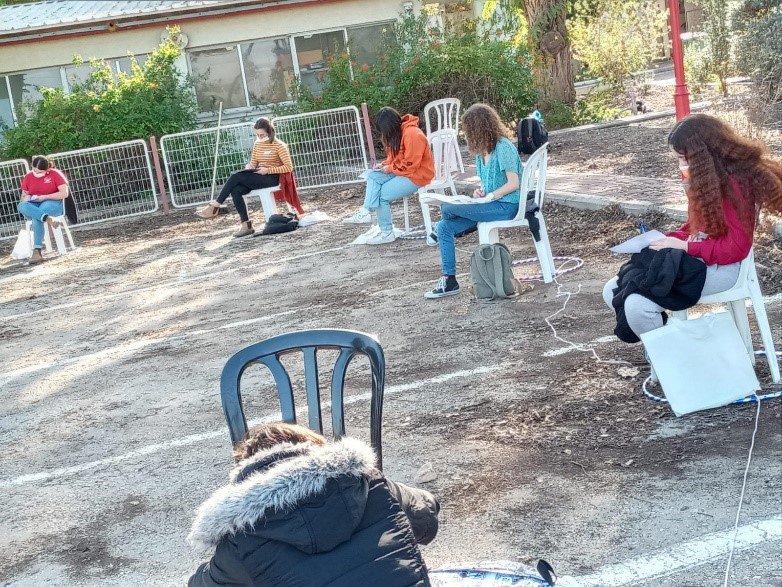
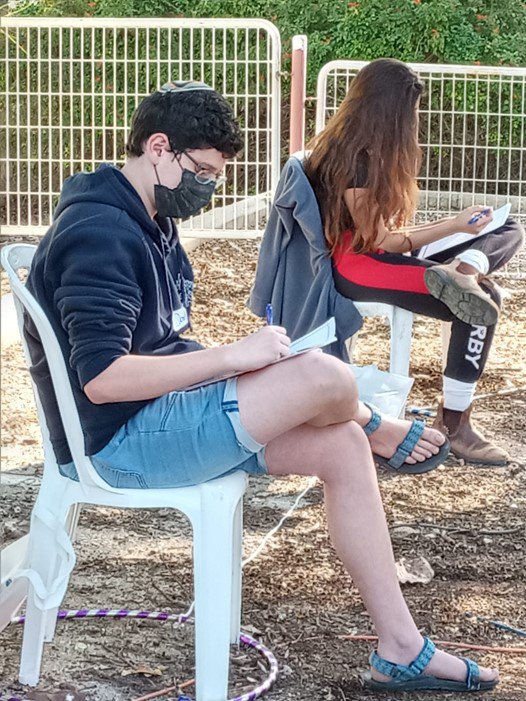
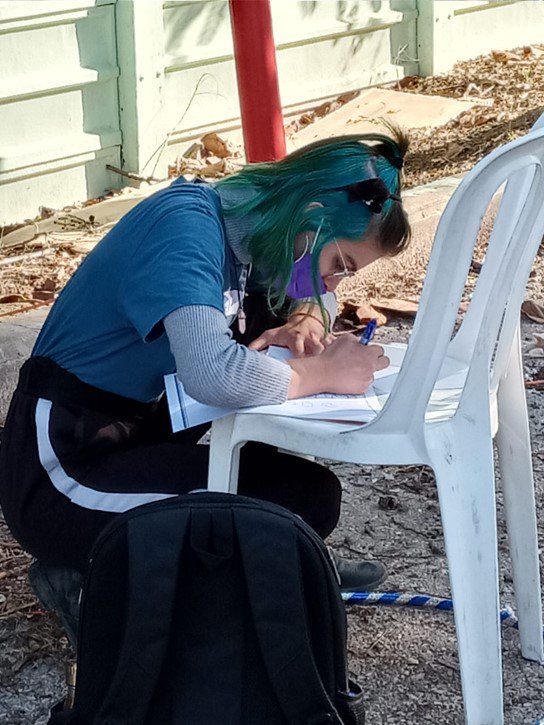
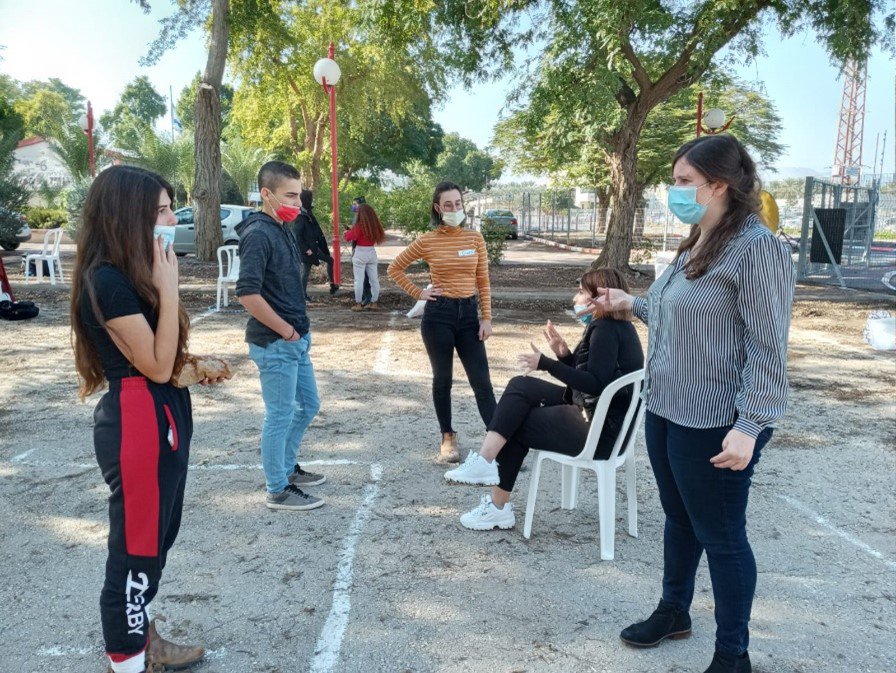
One group of students on a kibbutz in Northern Israel was learning how to make peace. Facilitated by the Jerusalem Peace Builders, fifteen teenagers with varying degrees of piercings, torn jeans and loud colors in their hair, sat in an enormous circle in the old staff parking-lot-turned-makeshift-classroom adapted for the pandemic. 

Jerusalem Peace Builders (JPB) is an interfaith organization that brings together youth from different backgrounds, from Jerusalem, Israel, Palestine, and the United States, to create meaningful encounters. The first session is held separately at each school so students can start to build important dialogue skills such as active listening and empathy before meeting each other. 

This workshop began by exploring personal identity. They asked questions like, ‘Who are you?’ ‘What makes you unique?’ Important questions for teens who are about to get to know kids seemingly so different from themselves.


Just before the lunch break, the group played a game. Sarah, one of the facilitators, a quiet, young woman with silky, dark hair and skin, and deep brown eyes, sat inside the circle. The other facilitator, Yardena, taller and chattier, asked the questions and recorded the answers on a portable white board.

Where was Sarah from? What languages did she speak? How much education did she have? What did she study? Was she married? Did she have kids? 

What kind of assumptions do we make about people upon meeting them?

At first glance, it was hard to peg Sarah. She was most definitely from the Middle East, but nothing about her appearance, her accent, or even her name, indicated whether she was more likely to be Arab or Jewish. 

As Yardena posed the questions, students’ answers spanned the spectrum. She was from Egypt, from France, from Jerusalem, or maybe Ashkelon. She spoke English, Hebrew, and maybe Arabic. Perhaps Italian. She was a teacher, a lawyer, or a social worker. 

Michael had been a student the year before in the ninth grade English-speakers club. Wild haired with thick glasses and fiercely competitive, English came easily to Michael and he was used to winning. When he attended his first Model UN last year, he walked away with second prize. “It’s easy,” he said after with a wink and a dismissive wave of his hands. “You just need to speak a lot and pretend you know what you’re talking about.”

Michael was sure he had this game. He pulled his teacher aside. “She’s Arab, right?” It made sense since it was a coexistence workshop and Yardena, Sarah’s partner, was clearly Jewish.

Still, Michael fell into all the traps: If she was Arab, she must be poorly educated. But she was so articulate, so she must be wealthy and worldly, with some foreign Arab Passport. Jordan? Egypt? Certainly not Palestinian.

When Sarah shared that she was in fact Palestinian, Michael’s face twisted. He didn’t always take kindly to being corrected, but there was no denying who she was. As it turned out, she was from East Jerusalem, and had no passport at all. 

“Well, that’s a choice,” Michael shot back. “East Jerusalem Palestinians don’t WANT Israeli passports because they don’t accept the State of Israel.”

“There are Palestinians like that,” Sarah conceded, “But many people like me want them so we can live a normal life. Unfortunately, the passports are not easy to get. After we apply for a passport, it can take years to receive an answer from the government, and then fewer than half of the requests are even approved. Without a passport, I’m not a citizen of any country. I’m not free to travel anywhere in the world.” 

Michael’s second assumption was also shattered. “Palestinians are the most educated Arab population in the world. Especially the women,” Sarah said.

“Really?” Michael raised his thick eyebrows till they reached his fluffy mop of hair.

Sarah’s smile was more conciliatory than cynical. “Well sure. We can’t travel and there aren’t so many jobs. What else do we have to do with our lives? So, we study.”

Michael didn’t speak again as Sarah answered the rest of their questions. She wasn’t married, no kids. She’d been studying physics, but when she got involved with JPB, she decided to dedicate her life to helping promote co-existence. She loved traveling to schools and meeting students with such different backgrounds than hers and sharing her story. 

During the break, several students stayed to chat with Sarah, foregoing their lunch and only free time. She patiently answered their questions and asked some of her own. The rest of the day the students continued to explore identity. They were asked to map out all the things that made them who they were and highlight those that defined them best. As they discovered, how they define themselves—dancer, student, good friend—changed depending on the day or the situation, or their stage of life. 

At the end of the session, students were asked to share something they were taking away from the day. When it came to Michael’s turn, the other kids stepped in close, eyebrows raised in anticipation of his witty, cynical remarks.

Michael glanced down and then looked at Sarah. He smiled and joined his hands together in a rare gesture of gratitude. “Today I learned that I don’t know everything, and that’s okay.”

The next day, three ninth graders were diagnosed with Corona and the whole school went home for what would be the next eight months. To the great dismay of both teachers and students, their first JPB workshop was their last. 

But Covid has taught us at least two important things. First, we’re all in this together. Second, we must constantly adapt to an ever-changing world. 

Sarah gave up her whole career path to pursue peace. And Michael was able in one day to rethink everything he believed about people. What have you learned in Covid? And how do you plan to use it to change the world?

       —Emily Singer, Israel. She adds: “I am a writer and English teacher in Northern Israel, where I have a special passion for bringing students together from different ethnic, religious and cultural backgrounds to help them appreciate diversity and develop important negotiation and peace-making skills… In 2018, I published my first children’s novel, “Gilgul I: Re-Dedication.”  

In Search of Cool

Summer is here

They say heat is good for

Tomatoes

And wiggling toes in warm

Sand

But ants are trying to tell us

Something

Diligently building mounds of

Dirt between cracks in

Sidewalks

It is going to be a scorcher

I think

I do not want to be a prisoner of

The Sun I hum

Left to find a place to hide from

The hurting burn

City shade is sparse

Do you hear the asphalt whispering

Beware of the sweltering black

Streets?

By maggie d., African American poet, Washington.