Category Archives: Asia

Holi: Chaotic Colours

Holi: Chaotic Colours*

By Elaine Elizabeth Jinto, age 14, India.

the scorching sun, burns out
all the bitter feelings as we
gather at the small maidan,**
at the end of our
busy street, a maidan which
is dusty, dirty, dry just
like how we feel after,
the chaotic year we had

the oldest clothes in each
household are donned today by
all, showcasing the chaotic year
that has just gone by

then we drench each other
with fresh water, washing away
all the pain, worries, grief
and sorrow, that has stuck
to us like the burrs
In the grass in our
little maidan, washing away the
last, chaotic year we had

then we grin, feeling much
better and get our Holi,
powdered colors and throw it
at each other and after
we are done with our
simple game, our clothes are
a riot of colour, and we
Are ready for the chaotic
year we will be having.

Elaine Elizabeth Jinto, age 14, India. She adds: “I am originally from the Indian state of Kerala, but I was born and raised in Bengaluru, Karnataka, and I am going to 9th grade next year. I can speak Malayalam, Tamil, Hindi, and Kannada, along with English. I started writing in 3rd grade, beginning with a poem about a playground… I serve as the Editor-in-chief of our school magazine… I understand the impact writing has when it comes to spreading the right messages.

“…my poem is about the Holi festival in India. It is one of my favorite festivals, and it is a time when friends and foes enjoy splashing color and water on each other. It is a time of joy and new beginnings. I love playing Holi with my friends and family and eating pani puri at the end of the day. The poem is 29 lines long and has a challenging restraint. Each line has exactly 5 words.

“I love writing and reading about everyday things that I can relate to. I generally do not follow a strict form in my poems, because I get more room for creativity… Through my poems and prose, I like to give voices to those silent and mundane events that play a huge role in our everyday lives… I am so happy I am getting a chance to share them with the rest of the world.”

Editor’s Notes:
The festival of Holi celebrates the triumph of good over evil and it marks the arrival of spring and the end of winter in India. This year, it was celebrated on March 12th and 13th.
* In India, English words are generally written using British spellings; colour in place of color (in America), for example.
** Maidan: an open space in a city or neighborhood, usually it’s a bare or grassy ground, and it is used for sports, games or large gatherings.

A Simple Act of Kindness

A Simple Act of Kindness

By Maya and Arjun Govindaraj, both aged 17, Chennai, India.


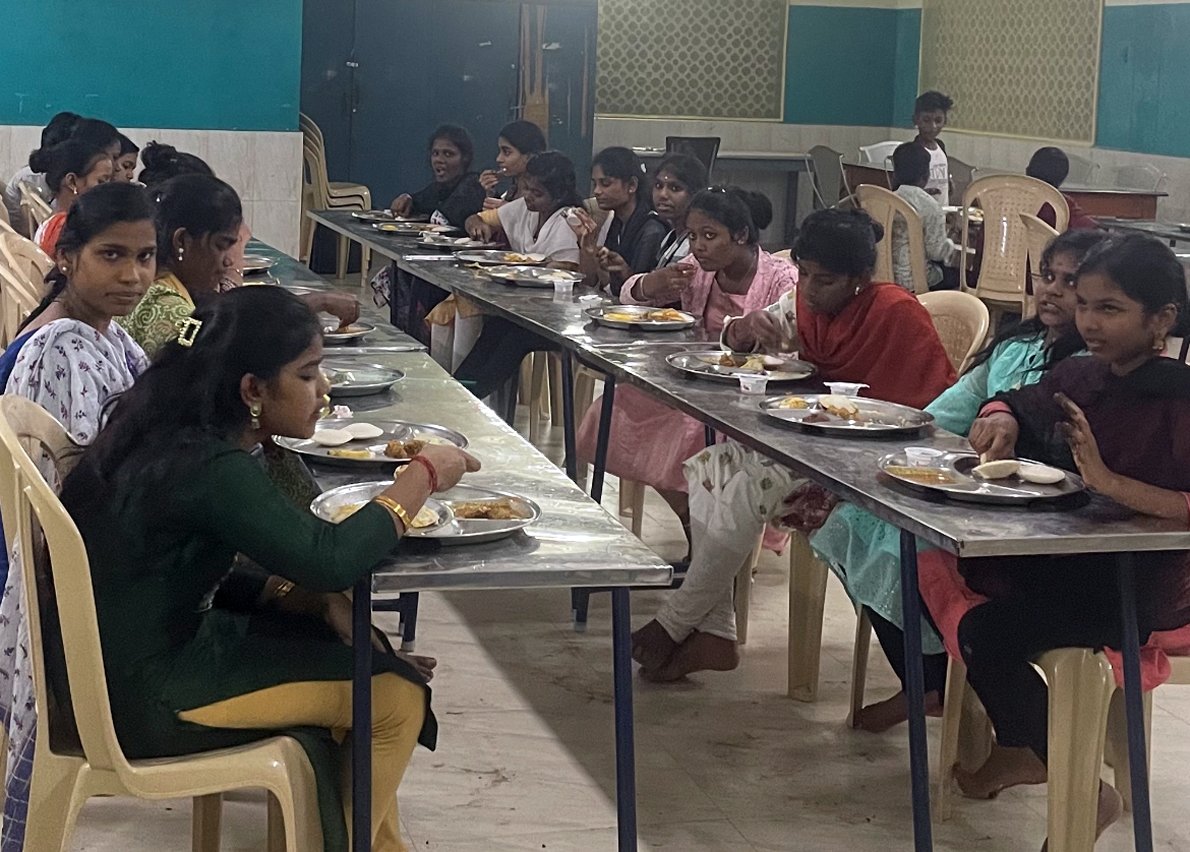
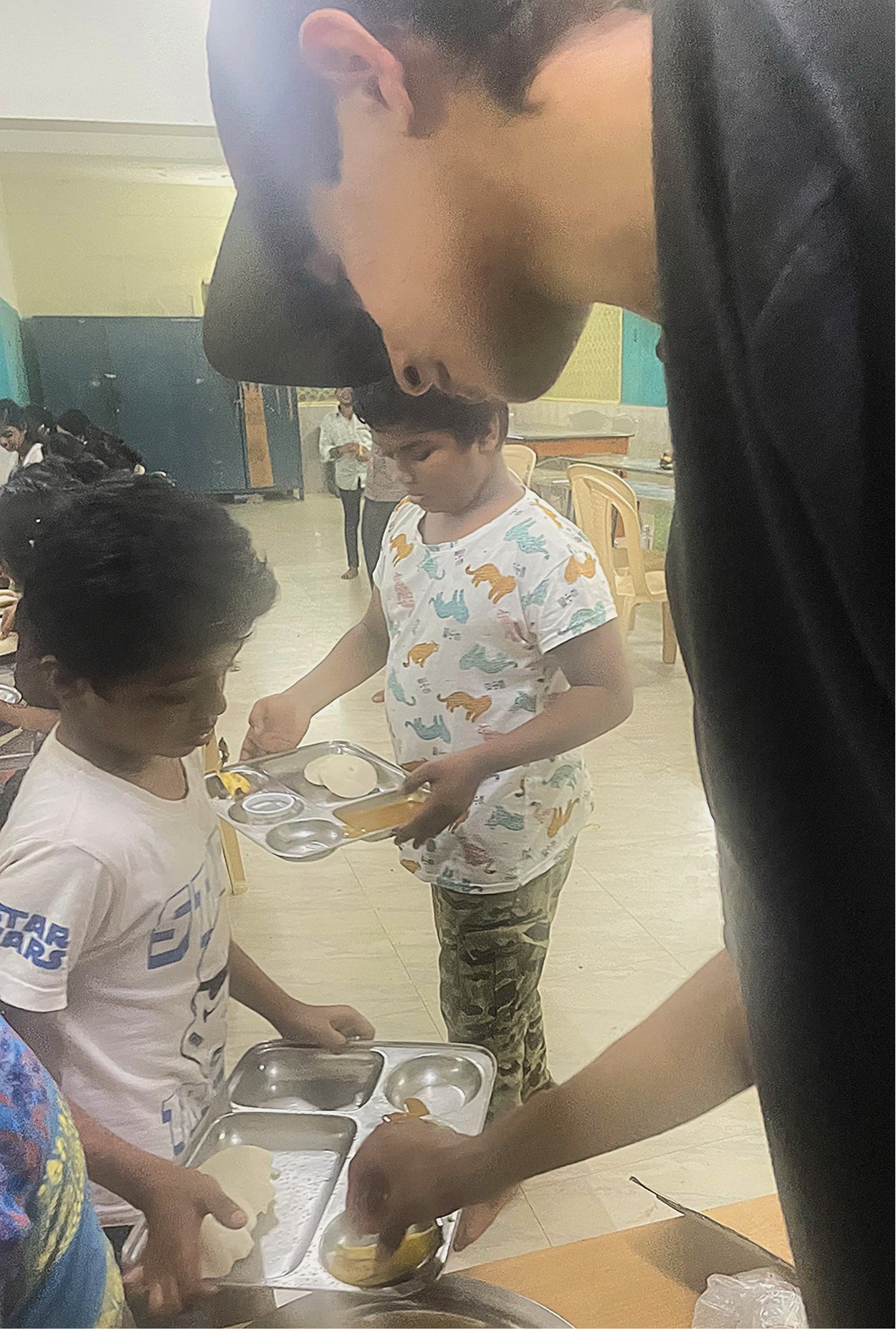
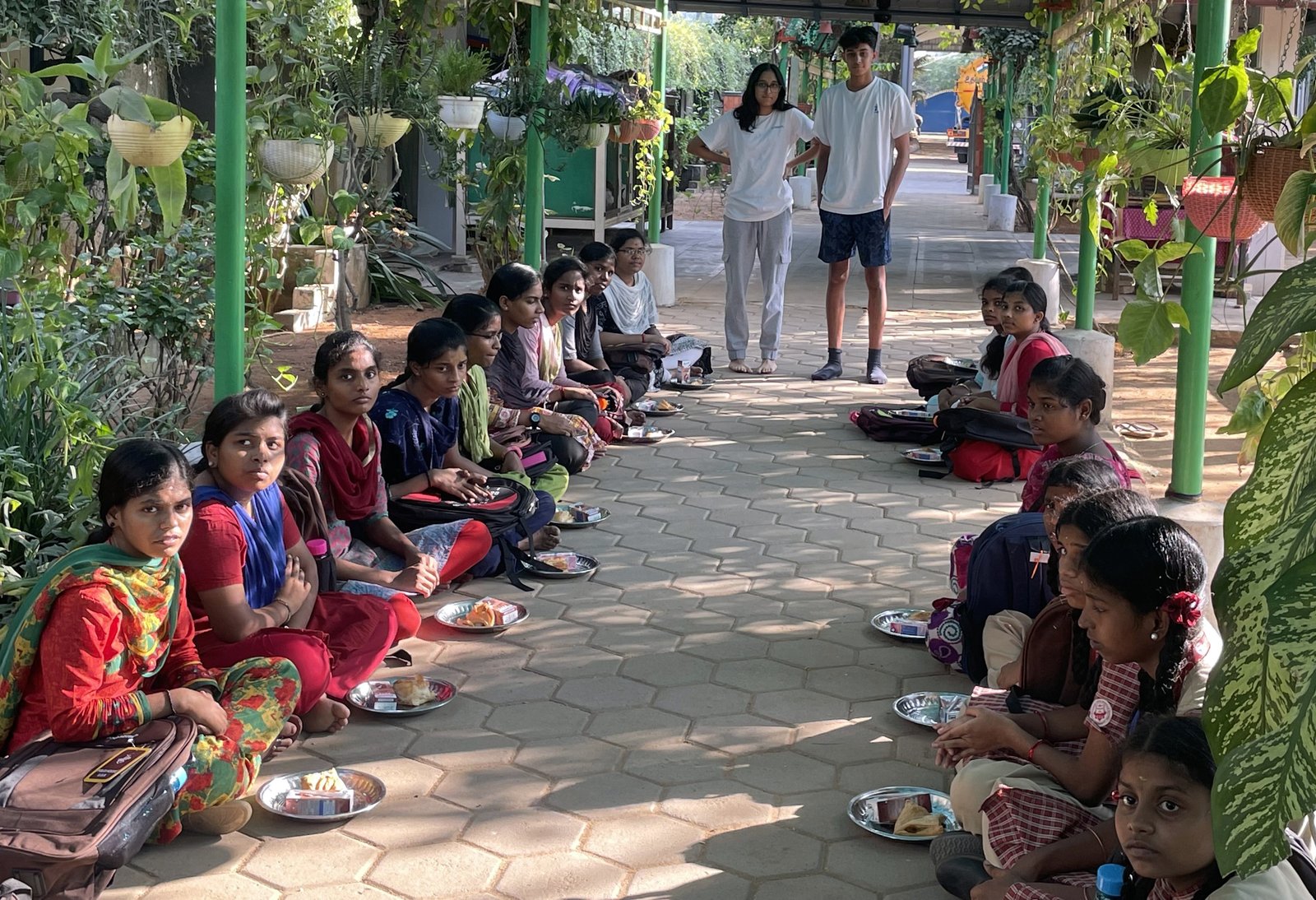
Our dad grew up in Chennai, India. He has always told us stories about how he struggled to reach great heights. When we were leaving the children’s home after serving dinner, we will never forget the way he looked at those kids with tears in his eyes and said in Tamil, the local language, “Study hard and you can be very successful someday.”

India is the second most populated country in the world with some 158 million children below the age of six. There are 30 million orphaned and abandoned children and according to figures published by SERUDS*, and the numbers have increased since 2020. Majority of these children are girls because they are considered a ‘burden’ in their communities. Less than 1% of the abandoned children are in childcare institutions, 91% of which are run by non-government organizations. Many end up living on the streets, begging for food, or are forced into child labor.

Our interest in community service started in Pre-K when we packed shoe boxes during Christmas, to send to kids in developing countries. Our parents always encouraged us to help people in need and took us to volunteer during school holidays. We moved to Chennai from Houston, Texas in January 2023 so my mom could care for her elderly parents, and during our time here, we have witnessed firsthand the harsh realities of poverty.

Our school involves us in many service activities that teach us about environmental and social issues and the value of collaboration, social awareness, respect, and empathy. We were able to interact with our host community through the Discovery Program and volunteer through the Seva (service) Program. Although we come from different backgrounds, teaching the local underprivileged children, and playing with them after school we developed a bond with them and realized how happy they were to spend time with us. All children need is unconditional love, opportunities to play and learn, and a sense of belonging.

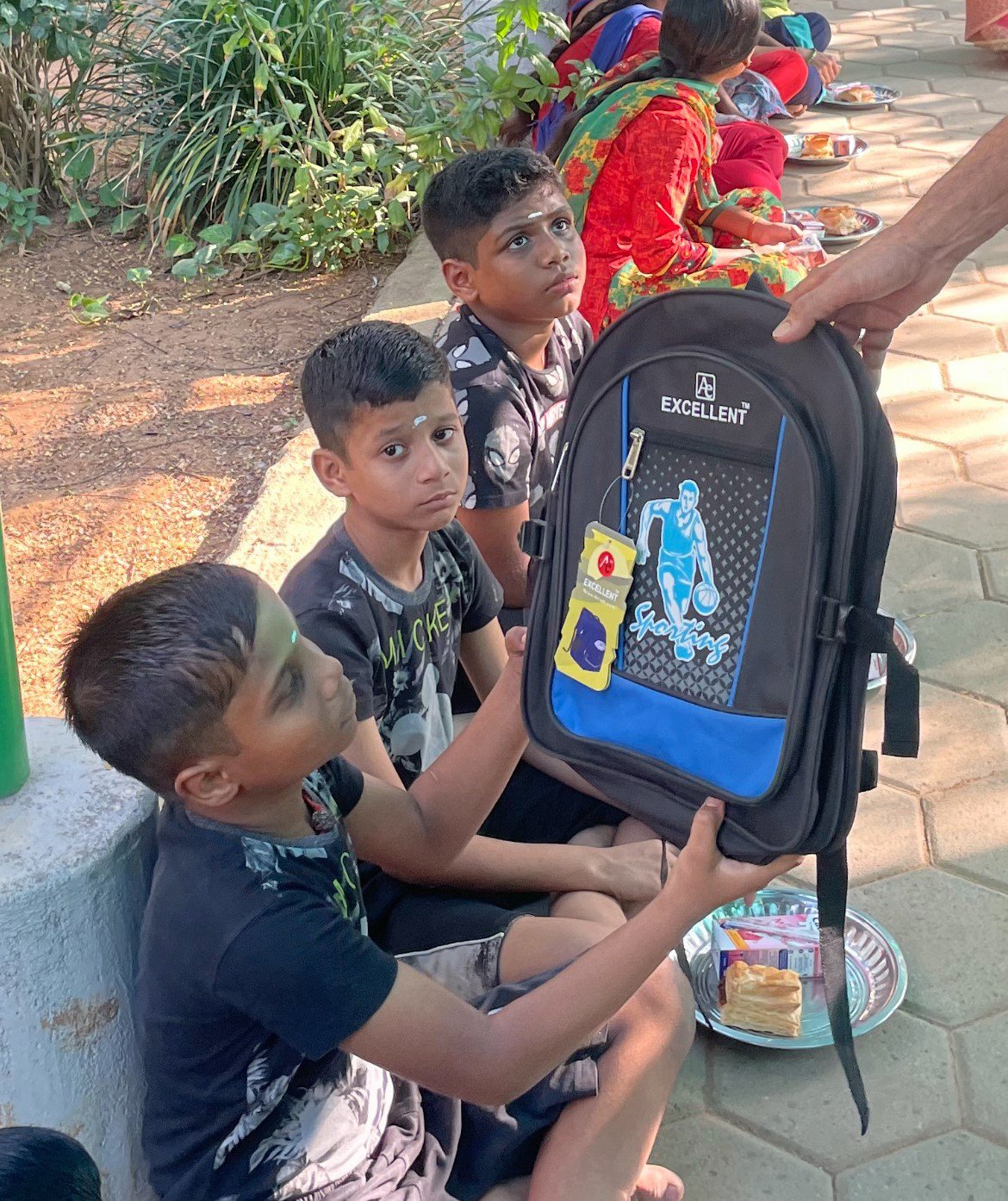
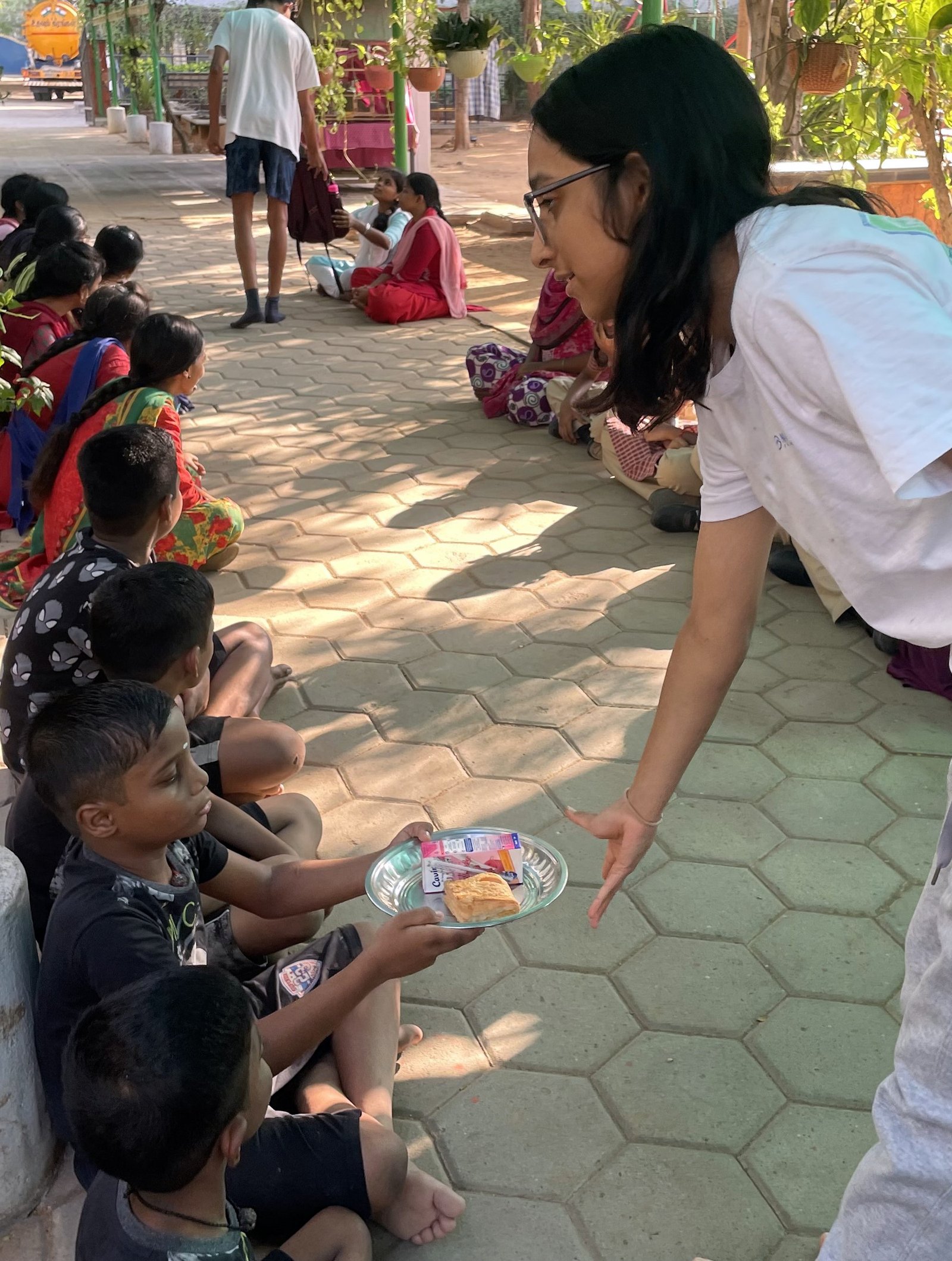
Seeing the amount of poverty that’s around us, and learning about the challenges these kids face in accessing a healthy meal and a good education inspired us to do something to show them that we do care. So, we bought backpacks, filled them with school supplies and gave them to 20 orphaned children along with evening snacks. We also served dinner to 60 children in a children’s home.

What we did were simple acts of kindness, but like Mother Teresa (the famous Nobel Peace Prize winning nun who lived and worked in and around Kolkata, India) had said, “We know only too well that what we are doing is nothing more than a drop in the ocean. But if the drop were not there, the ocean would be missing something.” To see the kids living alone without the love of parents and companionship of siblings is heartbreaking. Spending time with them we came to realize the privileges we take for granted and how fortunate we are to have a loving and caring family that meets all our needs.

The joy reflected in their eyes on receiving a simple backpack and the smile on seeing a small cup of ice cream made our hearts swell with pride, and although they have nothing, they were kind enough to offer us in return the power of their collective prayers as thanks.

We will be heading back to Houston, Texas soon, but what we have learned and experienced in the past two years in Chennai, will forever be etched in our minds, and we hope to continue to visit these children and share with them what we can.

As tech savvy Gen Z’s, it is our duty to use the power of social media to tell the stories of these children and to initiate global dialogues around the issues they face so we can find them the resources to face challenges and bounce back from adversity to fulfill their dreams of a better tomorrow.

* https://serudsindia.org/orphans-the-forgotten-children-of-india/ (From Sai Educational Rural & Urban Development Society, SERUDS) https://serudsindia.org 

—Maya and Arjun Govindaraj are Indian American siblings, both aged 17, and from Texas. They are currently studying at the American International School in Chennai, Tamil Nadu in South India.

Why I Hate Writing Essays

Why I Hate Writing Essays

By Neel Archis-Manish, age 17, Michigan.

It’s the fault of a rigid and purely grade-based public education system. I’m talking about why in today’s world, writings in schools have become a series of boring, formulative, information-stacked essays instead of genuine pieces of creations. I’m not blaming the public school teachers who simply mean well and are horribly underpaid. No, I blame historical education practices.

As a fourth year high school student in the US, I have written many essays in my ELA classes that respond to a specific prompt, include quoted sources, and require annotations on the side. All this basic system does is it makes me hate writing. I hate to say it, but it’s true.

I used to LOVE writing. I wrote poetry (it wasn’t great) and short stories (it was a laughing matter) and started writing my biography several times (I swear I’m going to get past Chapter 1 some day). But no matter how bad it all was, at least writing it didn’t kill my soul a little bit every time.

Language is a powerful tool that can be used to build empires and destroy them. Words are mightier than the sword not because nobody uses swords anymore, but because humans have the right to use words freely. High schoolers are so worried about their Grammarly scores and the 11:59 PM deadline that they often forget the importance of being present as a writer in their writings.

Quoted sources from all across the internet are great, and so are annotations. But neither helps an individual grow as an individual writer. The ‘classics’ we read in our English classes today weren’t classified as classics because they contained a well-researched bibliography, they were titled ‘classics’ because they were written from the deepest emotions from a true heart.

Formality kills humanity. Sure, you could decide to put on a fancy shirt and a suit and a tie and act like a functioning human being to charm yourself into some high-paying corporate job that covers dental insurance, but then what’s the difference between you and a slightly good-looking robot? Feelings are what humans have been doing best since the dawn of time. Let’s not forget our origins.

Love, respect, kindness, greed, envy, jealousy, selfishness, selflessness, humility, humanity, power, hunger, disgust, fear, sadness, anxiety, awkwardness, joy, pride, shame, disappointment, calmness, rage, confusions, desire, and so many more HUMAN emotions and feelings the world possesses. Why are adults teaching kids to bury all of them deep inside and instead turn to writing informative 2000-word essays about a global issue that then students pretend to care about for the sake of getting an A on a summative assessment?

I used to spend hours and hours reading books of mystery, fantasy, and historical fiction. I loved the feeling of being lost in a world where the real words ceased to exist. I loved the feeling of having to imagine, to create, and to be surprised. I used to come up with my own characters when reading stories about people. I used to make up landscapes and roam across Rome and Romania. I don’t do that anymore.

Writing based on information as opposed to human nature has killed the excited kid inside of me that once upon a time lived happily ever after. I’ve stopped reading books for fun. I’ve stopped being excited to enter a library and find a good book and open it in the middle and smell the smell of the fresh paper. I’ve stopped scribbling terrible poetry and weird short stories and unfinished memoirs on scraps of paper.

I once wanted to be one of those writers who wrote the first line of the first chapter of their first hit book on a napkin in a small bistro in a corner of a small town. I don’t want to do that anymore. Now, I just want to turn in my essay before 11:59 PM on the day of the submission deadline.

—Neel Archis-Manish, age 17, Michigan. He adds:

I was raised in Pune, Maharashtra, India in a house with two decent parents (they’re great!), a sister whom I hate passionately (it’s just a sibling relationship: I would give her my kidney, but not my phone charger), and a loving grandmother who’s cooking is, in one word, divine.

Growing up, I went to a Marathi-Medium school and learned Marathi (my mother tongue), Hindi, and English. When I was 15, my dad was fortunate to get an inter-company transfer. So in the midst of the Covid-19 Pandemic, our family relocated to Michigan in the United States of America.

I am currently enrolled at a good public school where I am able to make my Indian ancestors happy by performing well in academics, all while doing what I now love most: theatre. I am now the President of our school’s Drama Club. I participate (act, student direct, and head publicity and programs) in three productions each year, write and perform for our social justice theatre troupe, and have won numerous awards by doing forensics (competitive public speaking). Life is good.

I LOVE comedy. I have watched and re-watched and re-re-watched a ton of comedy sitcoms and TV shows. If you’re looking for someone to understand and laugh with you on niche Saturday Night Live references, I am your guy. Laughter is simply the best medicine, even when you’re not ill.

Currently, I’m looking at colleges and thinking about what I want to do. I’m at a point where ‘what do you want to be when you grow up’ is a legitimate question and not what an adult uses as an ice-breaker when talking to a child. Anyway, I’m fairly certain that I want to become a Secondary English Educator. Which led me to look into writing and publishing opportunities.

Save Them Bears

Save Them Bears

By Ya-Ting Yu, Taiwan

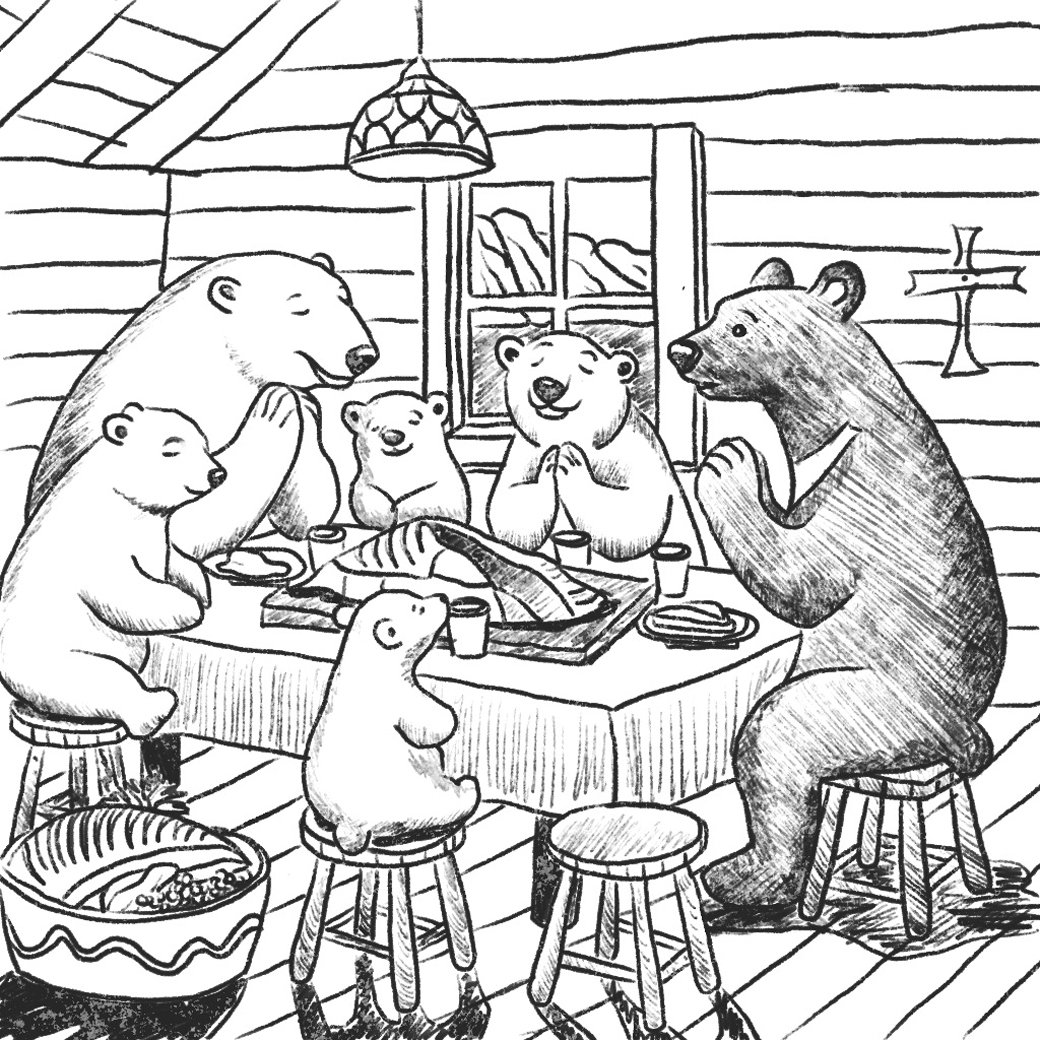
Black Bear recently moved north for climate change research. During the festive season, Black Bear’s colleague, Polar Bear, invited him to her family dinner. “No Bear should be alone on Christmas Eve,” she said when she heard the un-partnered Black Bear planned to hibernate in his cave. With no excuse to say no, Black Bear obliged.

That evening, Black Bear arrived at Polar Bear’s home with a basket of cloudberries in his paws. He’d agonized over the gift, unsure what to bring. Though he’d seen Polar Bear’s lunch boxes: ringed seals, whale carcasses, geese eggs, he still preferred chestnuts and persimmons. Honey and beetle larvae were rare treats he savoured after long hours of foraging through data at the lab, but to be inclusive, a value Polar Bear emphasized, he chose cloudberries, safe for vegans, vegetarians, and the nut-allergic.

Polar Bear’s family welcomed Black Bear warmly, hugging, kissing and thanking him profusely for the cloudberries. Flustered by the sudden physical contact, Black Bear forced a courteous smile and awkwardly patted Polar Bear’s Mom’s back, relieved when she finally let go of his paw. It was his first time receiving kisses from complete strangers. Where he came from, in the East, Bears rarely even shook paws, sniffing was usually as close as they got.

But their habitat differences didn’t stop there. For an occasion like Christmas Eve, Polar Bear’s family usually indulged in seal and whale fat. Vegetation was more for decoration, except for the hippie Cousin who’d recently turned vegan to combat the melting ice.

Before dinner, the family gathered in prayer positions, bowing their fluffy heads to say grace. Black Bear, unfamiliar with their faith, looked from left to right at the table and hurried to mimic their gestures.

“Amen,” Black Bear echoed, a pace too slow.

“Do Bears in your forest also celebrate Christmas?” Polar Bear’s Mom asked.

Black Bear scratched his ear. “I guess so? But it’s more of a time when Bears hunt for deals—shopping sprees, fancy meals. We don’t get the day off, you see. Lunar New Year, now that’s a feast worth hibernating in Taiwan.”

“Oh, are you from Taiwan?” Polar Bear’s Aunt leaned closer, her snout twitching. “My son volunteered to build homes for the poor children in rural parts of your forest. Right, Cubby? He, sorry—they have an igloo architectural license.”

Mortified, Polar Bear injected, “Auntie, Cousin went to Thailand, not Taiwan.” Her fur bristled as she glanced at Black Bear.

“That’s cool,” Black Bear said. “But igloos? My Sun Bear friend told me they melt once the volunteers take off. At the end, it seems easier for them to sleep in trees.”

“In trees!” Polar Bear’s Aunt gasped. “Son, you must go back and build them un-meltable igloos next time. The poor cubs. Just imagine—they don’t even have blackout curtains!” She sighed sympathetically and turned to Black Bear. “Do you have blackout curtains in Taiwan? Don’t tell me you also sleep in trees.”

“Oh no,“ Black Bear said with an uneasy laugh. ”Mostly caves or tree cavities. The only time I climb trees is when I’m hungry—for honey and bee larvae. Have you tried them?”

“Bee larvae? That sounds disgusting,” Polar Bear’s Cousin said, wrinkling their nose, unfazed by Polar Bear’s death glare across the table. “Thailand fed us Pad Thai and Green Curry every day.”

“Son,” Polar Bear’s Uncle rumbled as he lumbered over with a platter of barbecued seal fat. “Don’t you know Formosan Black Bears are battling Giant Pandas to protect their territory? What propaganda are you watching all day on TikTok? Read the news.”

Polar Bear’s Aunt sniffled. “I heard about that conflict. Is that why you left, Black Bear? It must be so dangerous back home. Don’t worry. Stay here in the Arctic as long as you want. We’ll sponsor you.”

No longer able to tolerate her extended family’s political incorrectness, Polar Bear tried to stir the conversation. “So, Black Bear, how’s your research? Any insights to share?”

“Yes, actually,” Black Bear said. “Before coming here, I thought Taiwan did a terrible job on climate change initiatives. Sure, we mostly rely on fossil fuels, but imagine squeezing Australia’s population into an area the size of Switzerland. Add typhoons and earthquakes to the mix. Our islands need to generate energy for millions and the semiconductor industry, which, by the way,” he added, fixing his gaze on Polar Bear’s Cousin, “powers your AI, EVs, solar panels, and wind turbines. Charity case, eh?”

A beat of silence followed as Polar Bear’s family exchanged looks. The Cousin shifted in their seat, ears flattening. Minutes passed. Polar Bear cleared her throat.

“Did you know Taiwan is smaller than many of our icebergs?” she asked, her voice tentative, like a kind schoolteacher. “Every Bear does what they can with what they have. And really, isn’t that what this is about? Climate change affects us all—even those big-headed humans. Here we are, just bears trying to adapt.”

She surveyed her family, looking each in the eye, and finally at Black Bear. “And if Black Bear can adapt to seal fat and bear kisses, maybe we can try a little harder too.”

For the first time that evening, Black Bear felt the tension in his shoulders ease, melting faster than glaciers. Maybe he didn’t fully belong in the Arctic yet, but any bear could find a caring companion who understood, even in this icy corner of the world. He leaned in to sniff the barbecue seal fat and said, “Hold up. Let me get my soy sauce.”

Story and illustration by Ya-Ting Yu is a Taiwanese writer based in Taipei, with roots stretching to Toronto and Edinburgh. Writing in English as her second language, she weaves themes of identity and belonging, drawing on her background in counseling and psychology to tell the stories of East Asian expatriates and international students.

Save Them Bears was inspired by my own experience as a Taiwanese expat, navigating the nuances of cultural assimilation and identity. I hope to highlight how cultural misunderstandings can be wrapped in well-meaning gestures. By anthropomorphizing the characters, I aim to create a story that is somewhat ‘trigger-free’ yet thought-provoking.

Hazel Lee, Chinese American Fighter Plane Pilot

Hazel Lee, Chinese American Fighter Plane Pilot

By Fanny Wong, New York

Race you to the corner!” Hazel challenged the boys.

The boys groaned, but maybe, just maybe, they could beat her this time.

They didn’t. Beaten again by this scrawny young girl. She also played handball and cards with them. Guess who won?

Hazel’s parents, immigrants from China, met and married in Portland, Oregon. Hazel, the third of eight children, lived with her family in Portland’s Chinatown. It was the only community the Chinese were allowed. The children went to Chinese school on Saturdays to learn to their language and culture.

Hazel was good at writing and speaking Chinese, but a traditional Chinese girl she wasn’t. Her voice was too loud, her laughter too boisterous. She was handy and fixed things around the house. Not ladylike at all.

When Hazel was a teenager, a friend took her up in a biplane at an air show. Her eyes danced, face flushed, and her heart raced with excitement as the plane lifted off. The rumbling motor and whirring propellers were music to her ears. She was as free as a bird high up in the sky. Hazel’s dream soared with the plane. She knew she belonged in the cockpit of a plane.

Now that she had a dream, she had to find a way to make it come true.      

First, she had to find a job after graduating from high school in 1930. The only job she could find was as an elevator operator in Liebes department store in downtown Portland. Up and down she took customers from floor to floor. She stuck to the boring job her job to save money for flying lessons.

Hazel’s parents turned pale when she enrolled in a flight school in 1931. It was not what a woman did. It was not what a young Chinese woman did. What would the Chinese community think of their daughter!

“You’re not afraid of the water, you’re not afraid of the wind!” her mother lamented. It was her way of saying Hazel was not scared of anything. Eventually, her parents let her try something different, be someone different from what the Chinese community expected of her.

Hazel went through the same training as the men at the Chinese Aviation School in Portland. The mind-boggling controls, dials and levers did not intimidate her. She lived for the moment when the plane swooped like a swallow over sea and land. The higher the plane soared, the freer she was.

Hazel passed all the flight tests in a year and received her pilot license in 1932. At that time, only one percent of American pilots were women. In those days, people thought a woman should not fly a plane. How could a woman handle an emergency? Too emotional! Too nervous! And whoever heard of a Chinese female pilot? Hazel couldn’t find a pilot job.

In response to Japanese aggression against China in 1932, Hazel journeyed to China, hoping to join the Chinese Air Force. But again, she was frustrated that it did not accept women pilots. In the end, she settled in Canton and flew for a private airline.      

After returning to the United States in 1938, Hazel waited for years before she could prove herself. In 1942, during WWII, when male pilots fought overseas, the military needed more pilots at home. Some 25,000 women applied for the program. In 1943, with 35 hours of flying time and a medical exam, Hazel was one of 1097 women pilots accepted by the new Women Airforce Service Pilots Program (WASP) to prove their skills.

Like the other trainees, Hazel had to pay her way to Sweetwater, Texas for training. Their pay was $259 a month, with no benefits. She was among the select few and the only Chinese. For six months, in the dusty and hot Avenger Airfield, she endured sand in her hair, snakes and spiders even indoors. But she learned to fly different military airplanes, parachuting and making emergency landings. She studied all the parts of the plane, rudder bar, stick and struts. When she learned to take apart the engine and put it back together, she was as proud as if she had won a trophy.

One time, Hazel’s instructor made an unexpected loop. Her seat belt did not work properly. She fell out and parachuted safely. On the ground, she dragged the parachute behind her all the way back to the airfield. The incident didn’t faze her.

Another time, Hazel’s plane’s engine cut out in mid-flight. She made an emergency landing in a wheat field in Kansas. A farmer chased her, thinking the Japanese had invaded Kansas. She convinced him that she was flying in a U.S. flight program. Hazel knew no matter how American she was she would be looked at differently. But this incident did not discourage her. No, she might look like the enemy, but she was thoroughly American.

Easy-going Hazel made many friends. At 31, she was eight to ten years older than the rest of her classmates. They soon forgot she looked different, that she was the only Chinese they knew. Her calm, fearless piloting skills impressed them. They loved her irrepressible sense of fun, as when she wrote their nicknames in Chinese on their planes with lipstick. Her personality bubbled over like a pot of soup. Her friends knew she was nearby when they heard her laugh, “Heeyah! Heeyah!”

Although Hazel graduated from the WASP program in 1943, the U. S. Government did not allow women in combat roles at the time. Instead, being one of the best graduates, she was chosen for Pursuit School at Brownsville, Texas. There, she trained with 134 other graduates to fly fighter planes, such as the Pursuit and the P-51 Mustang, high powered single-engine jet planes. After the training, she delivered the new planes from factories to airfields all over the North America. If anything was wrong with them, she was among the first to know.

Hazel accepted dangerous missions, such as flying in open cockpit planes in the winter, shivering in many layers of clothing. Another dangerous job was flying a plane that served as a “tow.” A large target sleeve was attached behind her plane for gunners to practice shooting from the ground. She cringed when bullets whizzed by the cockpit, but she kept flying these dangerous flights. Sometimes, after the practice flight, she found holes in the tail of the plane.

Hazel crisscrossed the country in wartime to deliver planes that would be used in combat. She flew seven days a week, bone-tired, but proud of her non-combat role in wartime and took every challenge in strides.

As Hazel zoomed cross the sky, she wished her Chinese community could see her in an unconventional job, and doing it well!

On Thanksgiving Day, 1944, Hazel delivered a plane-a P-36 King Cobra from Niagara Falls, New York to Great Falls, Montana. As her lane approached the airfield, a plane above her lost radio control reception. The pilot did not know the position of Hazel’s plane. The two planes collided and burst into flames. The other pilot had non-life-threatening injuries., but Hazel died of her wounds two days later.

Because the WASPs flew military planes as civilians, they received no military benefits. Hazel’s family had to pay for her remains to be shipped home. After resistance from the River View Cemetery in Portland to bury a Chinese person there, Hazel’s family sought help from an Oregon senator, who appealed to the White House. The cemetery relented and Hazel was buried in a gentle grassy slope. Her grave marker was a polished slab of red granite with a winged diamond etched above her name, a symbol of the silver WASP wings pinned on the uniforms of American women who flew in WWII.

In 2004, the State of Oregon inducted Hazel into the Aviation Hall of Honor. Hazel and the other WASP pilots would not be recognized with military status until 1979. In 2009, President Obama awarded surviving and deceased pilots the Congressional Gold Medals.

Comfortable in a career dominated by men, Hazel not only lived her dream but proved a woman could fly a fighter plane as well as any man. She didn’t expect to make history. As the first Chinese American women to fly for the U. S. military, she was doing what she loved, for a country she loved.  

—Fanny Wong, Chinese American Author, New York. She is a frequent contributor to Skipping Stones Magazine.

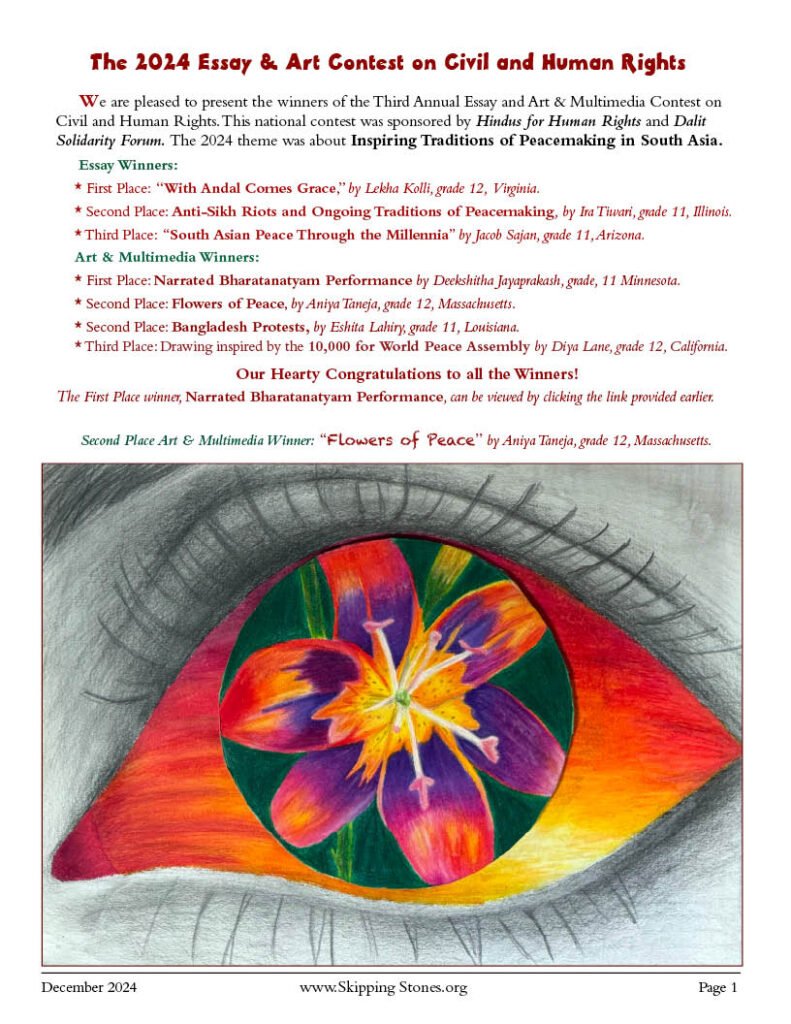
HHR’s 2024 Essay, Art & Multimedia Contest Winners

Hindus for Human Rights and Skipping Stones announce the
2024 Essay, Art & Multimedia Contest Winners!

This year’s contest invited students in grades 6-12 to explore the inspiring traditions of peacemaking in South Asia and its diaspora. We asked young writers and artists to reflect on the question, “As a South Asian, what traditions of peacemaking do you find inspiring?”

Violence and conflict have long been a part of South Asian and South Asian diaspora history, literature, and storytelling, but so have different versions of peacemaking. The contest invited students to take inspiration from any South Asian history, literature, poetry, peace activists, or peace movements that focus on concepts or ways to address peace, justice, and democracy.

The contest received a diverse array of essays, artwork, and multimedia submissions showcasing a wide range of South Asian histories, movements, and traditions that advocate for harmony, justice, and democracy. These submissions were heartfelt, creative, and thought-provoking, demonstrating the power of young voices in envisioning a more peaceful world.

Our Hearty Congratulations to all the winners!

Essay Winners:
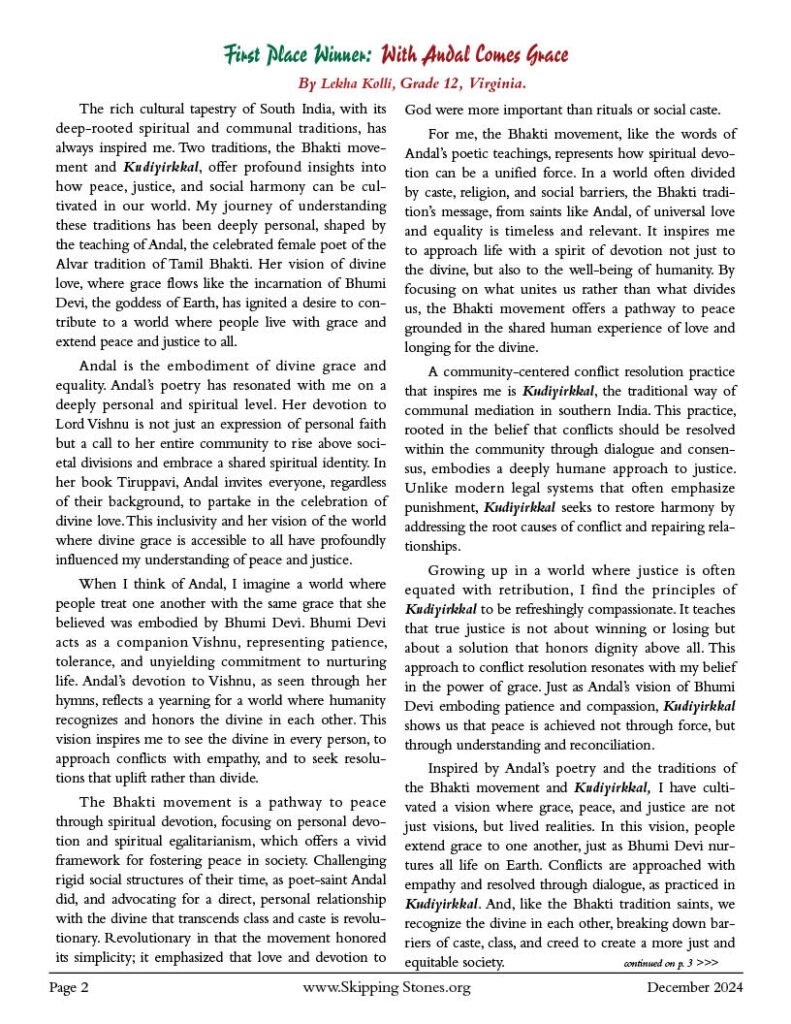
* 1st Place: “With Andal Comes Grace” by Lekha Kolli, grade 12, Virginia.
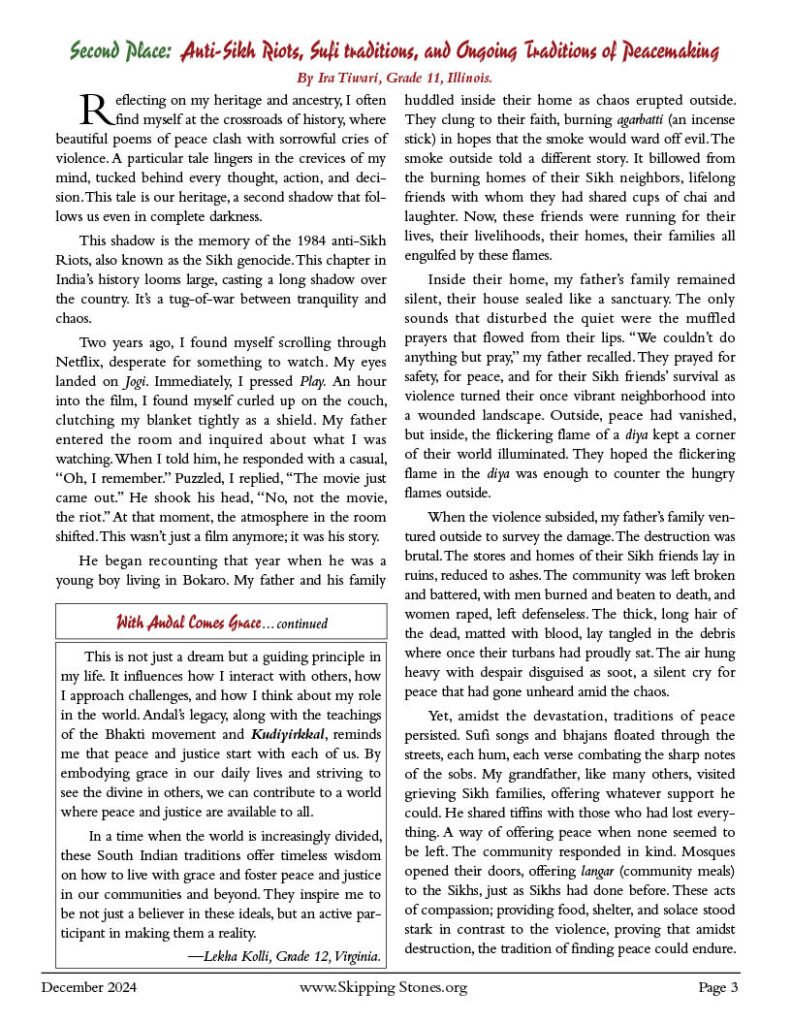
* 2nd Place: Anti-Sikh Riots and Ongoing Traditions of Peacemaking by Ira Tiwari, grade 11, Illinois.
* 3rd Place: “South Asian Peace Through the Millennia” by Jacob Sajan, grade 11, Arizona.

Art & Multimedia Winners:
* 1st Place: Narrated Bharatanatyam Performance by Deekshitha Jayaprakash, grade, 11 Minnesota. (Please click on the link to view the performance!)
* 2nd Place: Flowers of Peace Illustration by Aniya Taneja, grade 12, Massachusetts.
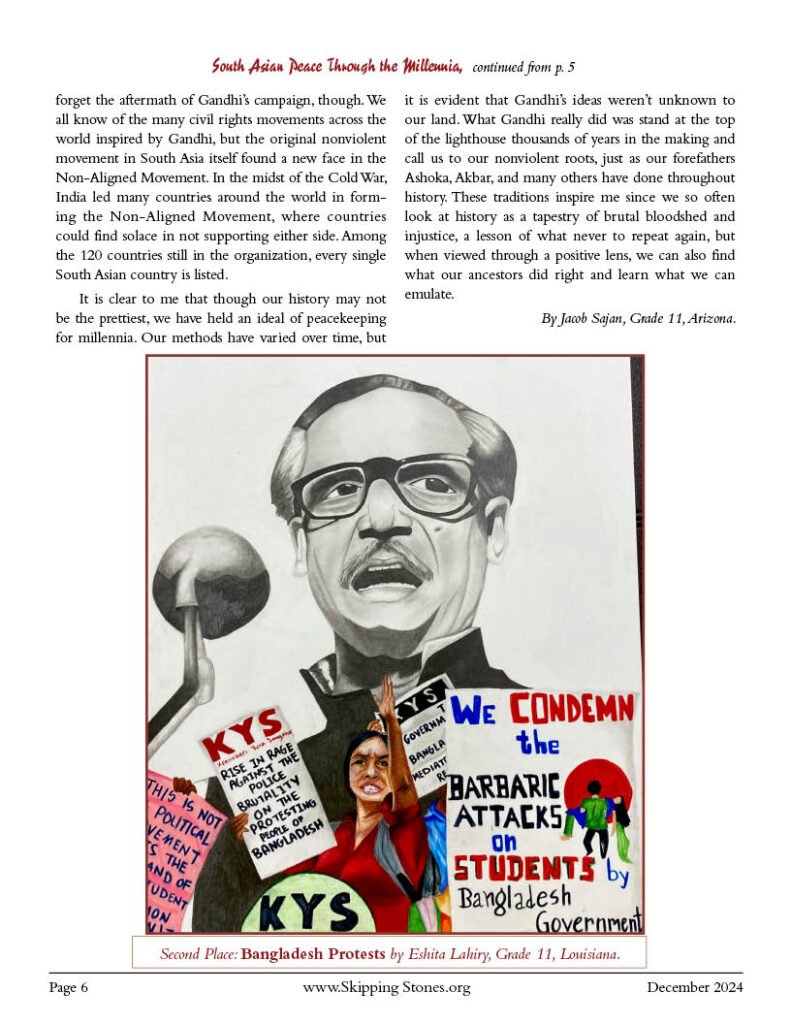
* 2nd Place: Bangladesh Protests by Eshita Lahiry, grade 11, Louisiana.
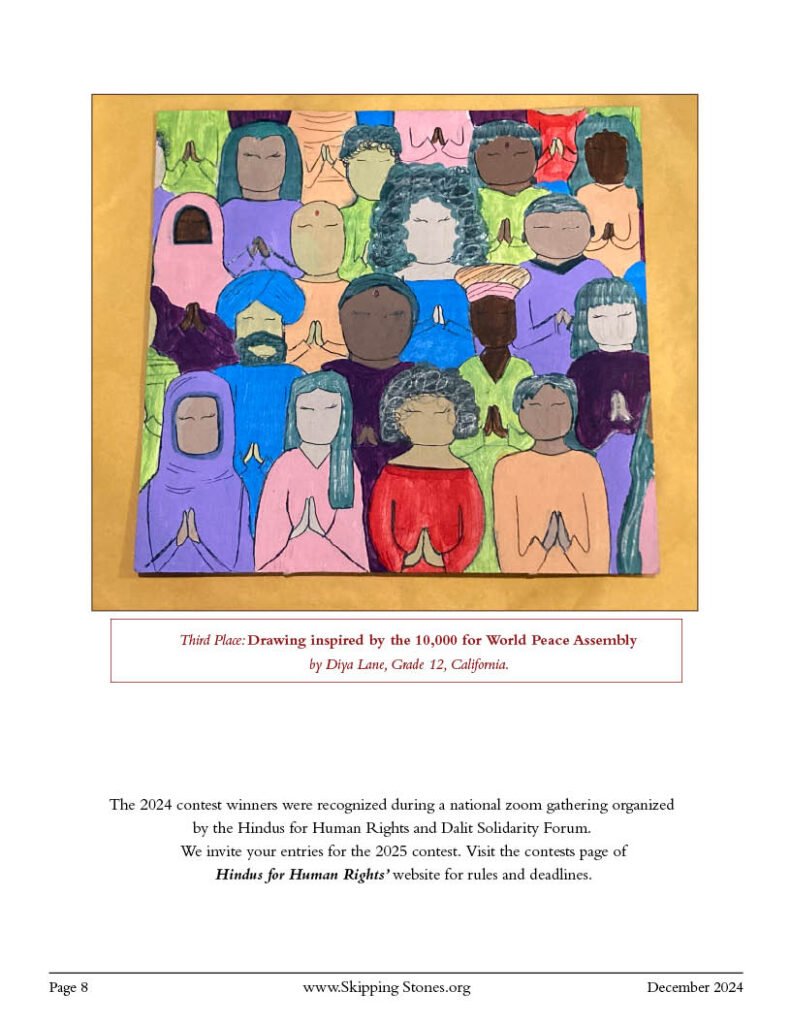
* 3rd Place: Drawing inspired by the 10,000 for World Peace Assembly by Diya Lane, grade 12, California.

Download the Winning Entries (This is a 5 MB file) by clicking here!


Sustainable Shorelines: Keeping our Beaches Clean

Sustainable Shorelines: Keeping our Beaches Clean

By Maya Govindaraj, age 17, from Texas, is currently studying in Chennai, India.

Plastic is Destroying our World!

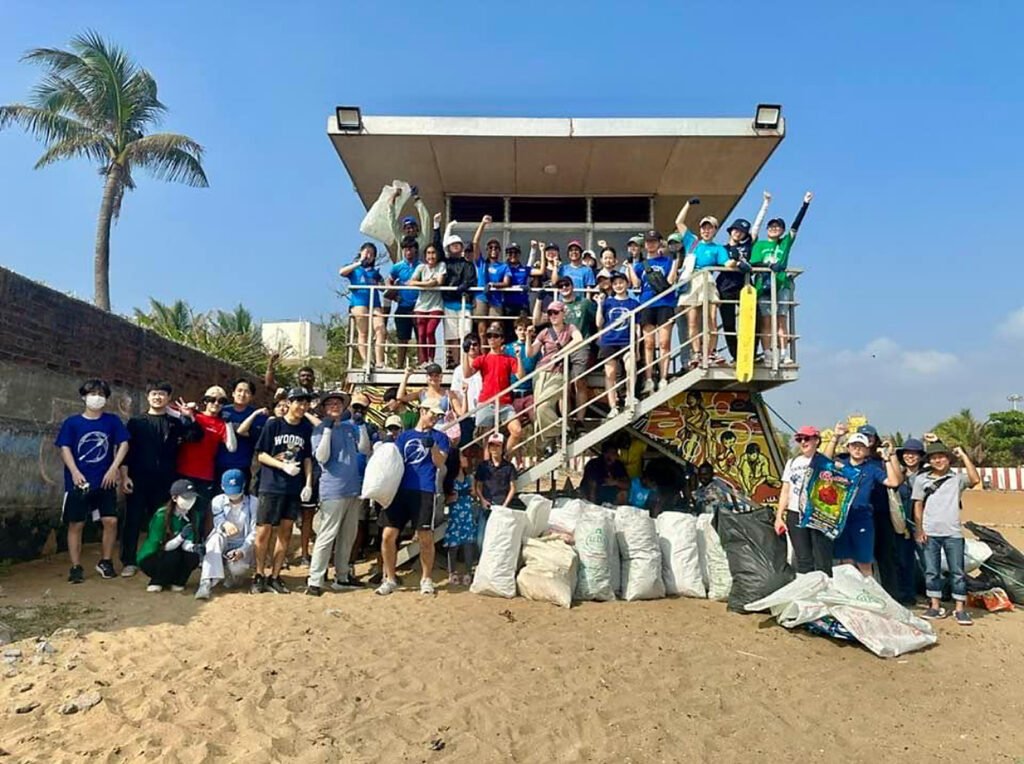
Beaches are vital ecosystems that support diverse marine life. However, the beauty of beaches is increasingly threatened by pollution, littering, and unsustainable human activities. According to global health experts, “Ocean pollution is posing threats to human health that are great and growing. It is causing disease, disability, and premature death in countries around the world today.” My journey from the beaches of Galveston, Texas, to the shores of Chennai, India, brought me face to face with the complexities of beach cleanliness. By participating in a local beach cleanup event, I gained insight into the challenges facing beach conservation efforts. Galveston beach in Texas is known for its wide stretches of sand, warm water, and opportunities for activities like swimming, and sunbathing. Chennai, on the other hand, is a coastal city in India, situated along the Bay of Bengal with beaches stretching for several kilometers and known for its lively atmosphere, with vendors selling snacks and toys, and locals enjoying various activities like kite flying and cricket. While efforts are being made to maintain cleanliness along the Galveston beaches by local authorities; in Chennai, cleanliness efforts on beaches have faced challenges. Although local authorities and environmental groups are trying to address cleanliness issues it is difficult due to high population density, inadequate waste management, and limited public awareness and participation in conservation efforts.

Participating in a Beach Clean-up Event

By conducting an online survey among Chennai residents who frequent the beach, I was able to gather valuable insights regarding their attitudes and behaviors toward littering and beach cleanliness. Although the survey demographics skewed towards 68% female respondents, with the majority holding at least a high school or higher education degree, a unanimous consensus emerged among them. They emphasized the importance of maintaining beach cleanliness to protect marine life, reduce health risks, preserve the natural beauty of the shoreline, and promote tourism. They advocated for proper waste disposal in designated bins, the use of reusable items over disposables, educational projects to raise awareness, and active participation in organized beach clean-up efforts. According to respondents, the primary factors contributing to litter accumulation include irresponsible behavior, entrenched cultural attitudes towards littering, inadequate provision of waste bins, and insufficient efforts by authorities to address cleaning needs.

Beaches are valuable natural assets that deserve our protection and stewardship. By adopting responsible behavior, supporting local initiatives, raising awareness, and advocating for policy changes we should all play a part in keeping beaches clean to ensure improved health and well-being and their preservation for future generations.

Footnotes:

  1. Texas Disposal Systems. “Ocean Pollution: Causes, Effects, Prevention | TDS.” Texas Disposal Systems, 2 Feb. 2024, www.texasdisposal.com/blog/ocean-pollution-causes-effects-and-prevention.
  2. Landrigan, P J, et al. “Human Health and Ocean Pollution.” Annals of Global Health, vol. 86, no. 1, 2020, p. 151, doi:10.5334/aogh.2831.
  3. “Beach Cleanups, MarineBio Conservation Society.” MarineBio Conservation Society, www.marinebio.org/conservation/ocean-dumping/beach-cleanups.

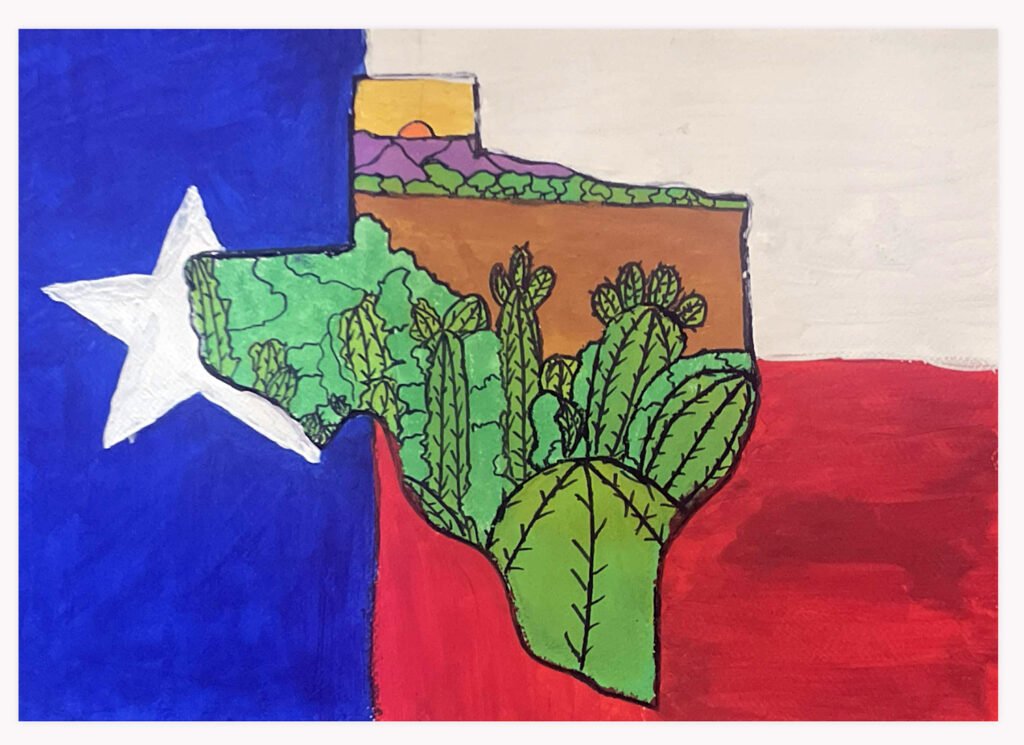
    Texas, the Lone Star State. By Maya Govindaraj, age 17.

    Editor’s Note: Please also read the article, My Indian Memories by Maya’s brother Arjun, also published today!

    About the Authors:
    Arjun and Maya are 17-year-old twins at the American International School in Chennai, India. As USTA-ranked tennis players, they love sports and have won medals in South Asian Interscholastic Association competitions. Both serve as Student Ambassadors, bridging cultural gaps through orientation and wellness programs. Passionate about community service, they have both worked with various organizations. They also have co-founded the non-profit Mission BE A Resource, securing grants to support disadvantaged children. Arjun is a tech enthusiast with a love for outdoor adventures, while Maya enjoys helping elementary school teachers and expressing her creativity through art.

My Indian Memories

My Indian Memories

By Arjun Govindaraj, age 17, from Texas, currently studying in India.

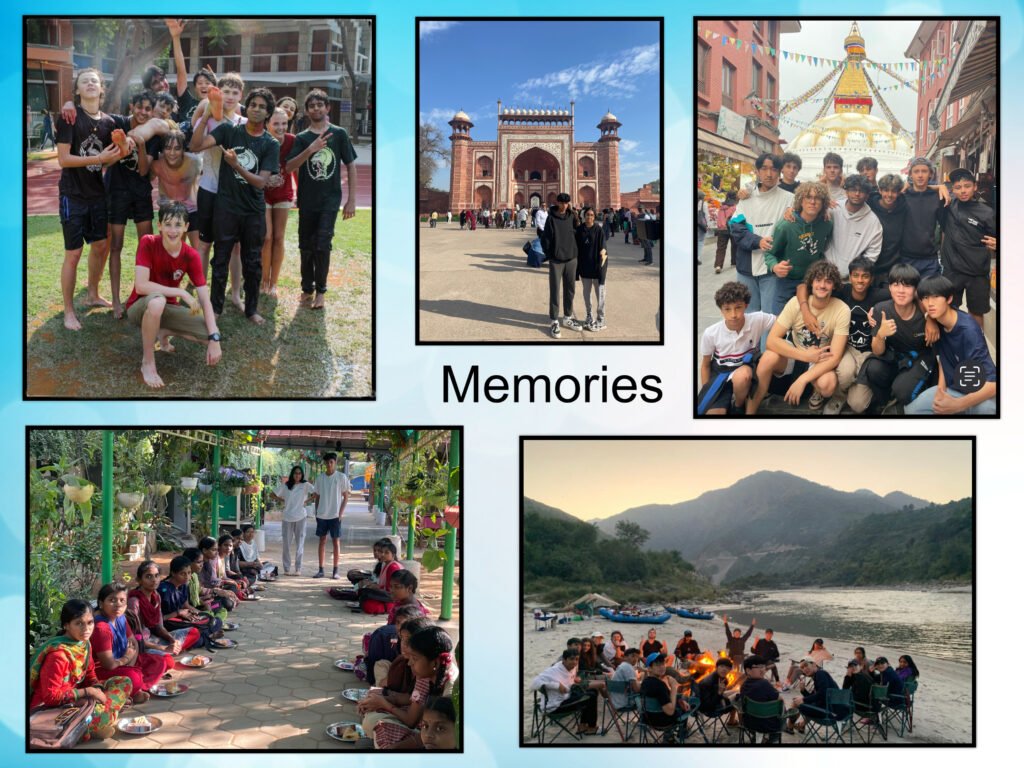
The first picture is of us celebrating Holi at school where we throw colors and water at each other and have fun. Holi is the Festival of Colors, a celebration that marks the arrival of spring. It is an occasion filled with laughter, music, and dance, where everyone, regardless of age, comes together to play with colors and enjoy festive food. Classmates and teachers share in the excitement, creating beautiful memories and promoting unity and love. Holi not only celebrates the beauty of diversity but also encourages forgiveness and the strengthening of bonds among people. We also celebrated Diwali, the Festival of Lights, symbolizing the victory of light over darkness and good over evil by dressing up in Indian clothes, sharing sweets, and participating in traditional games.

Second picture is of us visiting the Taj Mahal, located in Agra, India, built by Emperor Shah Jahan in memory of his wife, Mumtaz Mahal. Designated a UNESCO World Heritage Site, its stunning white marble architecture, carvings, and beautiful gardens attracts millions of visitors each year, and symbolizes the cultural heritage of India. We also explored the monuments of Delhi, the bustling streets of Mumbai, and the tranquil foothills of Dehradun with its cascading waterfalls. Exploring the streets of Coimbatore, we were amazed by the warmth of its people and the aromas of its bustling markets, while the ancient wonders of Mahabalipuram reminded us of a bygone era of art and architecture. Through these diverse experiences, we have come to cherish our rich culture and landscapes that make our world a truly remarkable place.

The third picture is of my team visiting Kathmandu, Nepal, for the South Asian Interscholastic Association (SAISA) soccer tournament. It was an incredible experience representing AISC against 11 member schools. The atmosphere of Kathmandu, with its rich culture and breathtaking landscapes, added to the excitement of the tournament. Throughout the events, I not only had the opportunity to showcase my skills and win medals but also learned invaluable team-building skills and the importance of fair play. Each match brought us closer as teammates, creating lasting friendships and unforgettable memories that extended beyond the games. The spirit of camaraderie and sportsmanship was truly inspiring, making this trip an enriching experience both on and off the field.

The fourth picture captures a heartfelt moment as we distribute school supplies and a meal to underprivileged children. Following the popular custom in India, they sit on the ground to share their meal, and their smiles of gratitude warmed our hearts as we handed out new backpacks filled with school supplies. In a country where overpopulation and poverty are pressing issues, we felt a profound sense of purpose in being able to contribute, even in a small way, to their education and well-being. This experience taught us invaluable lessons about empathy and compassion, reminding us of the importance of supporting one another and making a difference in the lives of those in need. Acts of service can build connections, bring hope, and inspire change.

The final picture is from our school trip, “Discover India,” which became one of the main highlights of my educational journey. These immersive week-long expeditions across India went beyond traditional classroom learning, offering a rich tapestry of experiences that allowed us to explore local cultures in depth. Each annual school excursion helped us develop essential teamwork and outdoor survival skills. From camping under starlit skies to navigating thrilling rafting/ surfing adventures, every journey nurtured resilience and adaptability while fostering a profound appreciation for the natural world. These unforgettable experiences shaped not just our knowledge but also our connections with one another and the environment.

Editor’s Note: Please also read Sustainable Shorelines by Arjun’s sister Maya, also published today!

About the Authors:
Arjun and Maya are 17-year-old twins at the American International School in Chennai, India. As USTA-ranked tennis players, they love sports and have won medals in South Asian Interscholastic Association competitions. Both serve as Student Ambassadors, bridging cultural gaps through orientation and wellness programs. Passionate about community service, they have both worked with various organizations. They also have co-founded the non-profit Mission BE A Resource, securing grants to support disadvantaged children. Arjun is a tech enthusiast with a love for outdoor adventures, while Maya enjoys helping elementary school teachers and expressing her creativity through art.

Memories of Dumplings

Memories of Dumplings

By Julia Qi, educator, Nevada.

I remember a time when steaming dishes of dumplings were laid out before me on the dining table. I was five years old, and a bowl of Chinese vinegar with two drops of sesame oil sat under my nose, eagerly awaiting the three hot dumplings that my grandma would soon drop in.

She’d always break the dumplings in half for me so my little fingers could navigate my chopsticks, and that day, I was the pride and joy of my family for devouring a total of nine dumplings.

That was the last time I remembered looking at a plate of dumplings without fear—at least until recently.

Somewhere along the way, food transformed into something I avoided. Any plate became a conversion of fat-protein-carbs in my eyes. The rich fat on decadent, red-braised pork belly remained untouched on my plate, and even my mom’s delicious stir-fried dishes were secretly rinsed off in the sink before I’d attempt to pick away at them. Passing by bakeries consumed me with conflict for the rest of the day because they looked so, so delicious. I wanted a taste so bad, but no, I couldn’t.

What my family saw as a “glow-up” before college was, in reality, my refusal to cook with salt or oil. I limited myself to raw foods for weeks and pretended I had simply outgrown my love for my childhood favorite foods. Steering clear of soup dumplings, BBQ skewers, and hearty pots of Chinese stew, I opted instead for bland salads and spinach smoothies.

The restriction ate away at me as I started college. I refused to eat before drinking water to “avoid” the calories. Despite the arrays of dishes in the dining halls, I spent 90% of my time at the salad bar, and the rest of the time lurking in the dessert section mustering the occasional courage to nibble a cookie. The additional walking in New York City resulted in me rapidly losing weight my first semester, which, as I anticipated, was celebrated not only by my peers, but also by my family.

My mother’s beauty was hard to miss. She’s a slender petite woman with voluminous curly hair, big bright eyes, and her classy fashion choices were always a topic of envy. She taught me the meaning of strength, independence, and courage as I saw her create the life she wanted for us in America. When she bought her first house in 2019 after 13 years of moving here, those walls represented something only immigrant parents can really understand. Her words were, “I just wanted to give you a home.” What she meant was, this is something that is finally ours. In a place where we had to start over, we had something that finally belonged to us.

My mom imparted many invaluable lessons growing up, but our culture also taught us that a woman’s beauty is paramount. Despite her exhaustion our first few years in the states from working consecutive night shifts and still managing to get up in time to wake me, cook breakfast, and take me to school, my mom maintained her elegant appearance. She always reminded me that as immigrants, we must pay extra attention to how we looked; we shouldn’t give anyone a reason to look down at us. My naturally tan complexion contradicted the porcelain-white Chinese beauty standard, and the fixation on my appearance naturally grew towards my weight as I got older. While genetically slender, my mom and her three sisters dreadfully feared weight gain. As I rounded out my teenage years, comments about my weight, what I was eating, and what I was wearing gradually took up a dangerous amount of space in my head.

Eating disorders are addictions. You’re stuck in a cycle, and even though you know it’s bad for you, you don’t know how to stop. Years of restriction led to an overwhelming preoccupation with food, which manifested in binging, then overcompensating by purging. The painful details of my four-year struggle with bulimia are oddly blurry, numbed by a filter of shame as I walked around hiding this part of me that I despised but couldn’t let go.

In a culture where famine was still a childhood memory for many, food was not meant to be wasted. Food was nourishment, and the idea of intentionally restricting or purging would have been absurd to those like my grandparents who grew up in the countryside and never had enough to eat for their four little girls. Northeastern Chinese stews were hearty, crafted to keep hunger at bay. Buns and baos were designed to fill you up for hours. My actions were completely at odds with what I was taught, which is likely why I wouldn’t touch my favorite foods for years, at least without bringing it back up.

This past March, I visited my family in China for the first time in six years. There was a stillness unlike earlier springs. The winter chill overstayed its welcome, seemingly in response to my grandpa’s passing just a few weeks prior.

My grandpa always requested peanuts with his dumplings, sometimes a Tsingtao beer, if my grandma allowed it. He liked sauerkraut or chive filling, since meat was hard on his dentures, which made clicking sounds when he chewed. This time around, we bought giant sauerkraut dumplings from the morning market made of purple forbidden rice. My grandma still broke them in half for me, except only one giant dumpling could fit in my bowl. This time, I couldn’t eat nine, but I ate until I was full, and over the memories of my grandpa’s clicking and the warmth of my belly filling up, I found solace.

—Julia Qi, received her undergraduate degree a few years ago, Nevada.

a castle of words

a castle of words

By Kevin Zhang, age 16, Shenzhen, People’s Republic of China.

I shall gather your
words into a castle
of shards

and walk (barefoot
into it
like a king

into his final
breath) and
I shall blow life

into them and
watch as they
flutter between

me and you
like dancing
elephants

By Kevin Zhang, age 16, Shenzhen, People’s Republic of China. Kevin is a junior at BASIS International School PLH. He is an Honorary Junior Fellow of the John Locke Institute and serves on the PLATO Student Advisory Council. Kevin enjoys boating, collecting rocks, and learning about other cultures.