Author Archives:

A Stronger, Happier Self through Teen Friendships

A Stronger, Happier Self through Teen Friendships

By Kayla C., California.

One Sunday last spring, my friends and I gathered at my house to work on the poster and decide the food for a cultural food festival at my school. We blasted music on our devices, screaming, laughing, and joking—having the time of our lives. Jolie kept slipping on the floor, causing us to all laugh, so I got her some slippers (she still tripped.) After Jolie came out of the bathroom, Elle knelt and proposed to her with a toy flower, and got rejected. (Elle married Leyla instead.) Later, we went for ice cream and drowned it in sprinkles. It was fun to spend time together and work on a project we all cared about. We could easily engage in conversation and have fun while doing so. Friendships like these make us feel wanted, supported, and free to be who we are. Teenage friendships are vital because they can help you become a better person.

Teens talk more about their social life with friends than their parents. They see them nearly every day at school, online, and outside of school. Teens spend more time going and being at school than they do at home. School is where teens make the most friends and their social life revolves around. The result is that they see their friends more than their family, allowing them to understand better and deepen their bonds. Teens and their friends’ type of humor, experiences, and age all affect how they interact with one another, so they feel more comfortable talking to one friend versus another based on how much they trust them. In the article, Having A Best Friend In Your Teenage Years Could Benefit You For Life, Chen writes, “…unwavering support acts as a kind of protective buffer against insults to your self-worth or feelings of depression. That can be especially beneficial during adolescence, a formative period when peer feedback has extra gravity.” (https://www.npr.org).

When someone requires reassurance and company, their friends act as supportive and protective beings that help them re-assess their self-esteem. The result is that teens feel more confident in themselves and trust their friends to be there for them when needed. They develop more trust in them and feel they can rely on them when they’re struggling, so teens often talk about their problems with their friends rather than family.

We need close friendships in middle and high school because quality friendships can help develop your self-confidence over time. “The significance of adolescent friendships seems to lie not in the number of friends a person has, but in the strength of a close friendship. Popularity isn’t important; it’s the true knowing and being known by another person that provides a teen with critical life skills that will serve him well for years to come.” (https://www.arnoldpalmerhospital.com).

A friendship is more important in quality than quantity. If you were to pick between having more friends but not as close versus only one friend whom you are very close to, it’s an obvious choice. Friends help teens realize they are recognized and loved for who they are and understand and accept their differences. “When the researchers evaluated the participants at the conclusion of the study, the ones who had close, emotional links showed improvement in their levels of anxiety, depression, and self-worth. In other words, they reported less depression and anxiety and more self-worth at 25 than they had at 15 and 16.”

Friends with close bonds lasted for not only a long time but helped both re-evaluate and boost their self-worth and confidence. The links they’ve formed kept them connected, allowing them to build trust and help each other through difficult times. Emotional support can guide a happier life and continued virtuous friendships. All that said, the question remains: how do we make the kind of friendships that change our lives for the better?

The most important part of having healthy, long-lasting friendships is effort. You must put in the work for the friendship to thrive because this is your friendship with your friends. Around Christmastime, my friend, Akhila, gave gifts to our whole friend group as a way to say, “Hey, I appreciate you, thank you for being my friend and making my day better every day.” It showed us that she cares, and it makes us feel happy when we’re in her presence. Each gift was different—she knew what we liked and spent her own time finding a gift for us. She paid attention to the little facts about us and found a gift that related to our interests or hobbies.

When it comes to friendships, race, gender, or cultural background don’t necessarily play a significant role in whom you can become friends with. As long as you find someone enjoyable, and comfortable and safe to be around, that’s considered a friend. One of my friends came out last year, and our friend group all accepted and supported them for who they are. Even our classmates outside of the friend group accepted them. To keep any friendships or relationships alive, you need to make sure everyone is cared for, and show that you are making an effort to sustain the friendship.

One of the greatest gifts in my life is my friends. They support me when I’m feeling low, are fun to have around and feel comfortable around me. During our teenage years, we grow more distant from our parents and feel more self-aware. Having good friends we can rely on can help us later in life because we will have less stress, anxiety, and increased confidence. Friends are important in our lives because they can encourage us to be our best selves.

—Kayla C., California. She adds: “… I can speak primarily English and Chinese. The most important aspects of my life are my friends, family, my pet, and the moments I share with them. I hope to live a fulfilling, but also simplistic lifestyle in the future. The people around me who look down on teen friendships and believe they can ruin relationships with your parents inspired me to write this piece.”
A Simple Act of Kindness

A Simple Act of Kindness

By Maya and Arjun Govindaraj, both aged 17, Chennai, India.


Our dad grew up in Chennai, India. He has always told us stories about how he struggled to reach great heights. When we were leaving the children’s home after serving dinner, we will never forget the way he looked at those kids with tears in his eyes and said in Tamil, the local language, “Study hard and you can be very successful someday.”

India is the second most populated country in the world with some 158 million children below the age of six. There are 30 million orphaned and abandoned children and according to figures published by SERUDS*, and the numbers have increased since 2020. Majority of these children are girls because they are considered a ‘burden’ in their communities. Less than 1% of the abandoned children are in childcare institutions, 91% of which are run by non-government organizations. Many end up living on the streets, begging for food, or are forced into child labor.

Our interest in community service started in Pre-K when we packed shoe boxes during Christmas, to send to kids in developing countries. Our parents always encouraged us to help people in need and took us to volunteer during school holidays. We moved to Chennai from Houston, Texas in January 2023 so my mom could care for her elderly parents, and during our time here, we have witnessed firsthand the harsh realities of poverty.

Our school involves us in many service activities that teach us about environmental and social issues and the value of collaboration, social awareness, respect, and empathy. We were able to interact with our host community through the Discovery Program and volunteer through the Seva (service) Program. Although we come from different backgrounds, teaching the local underprivileged children, and playing with them after school we developed a bond with them and realized how happy they were to spend time with us. All children need is unconditional love, opportunities to play and learn, and a sense of belonging.

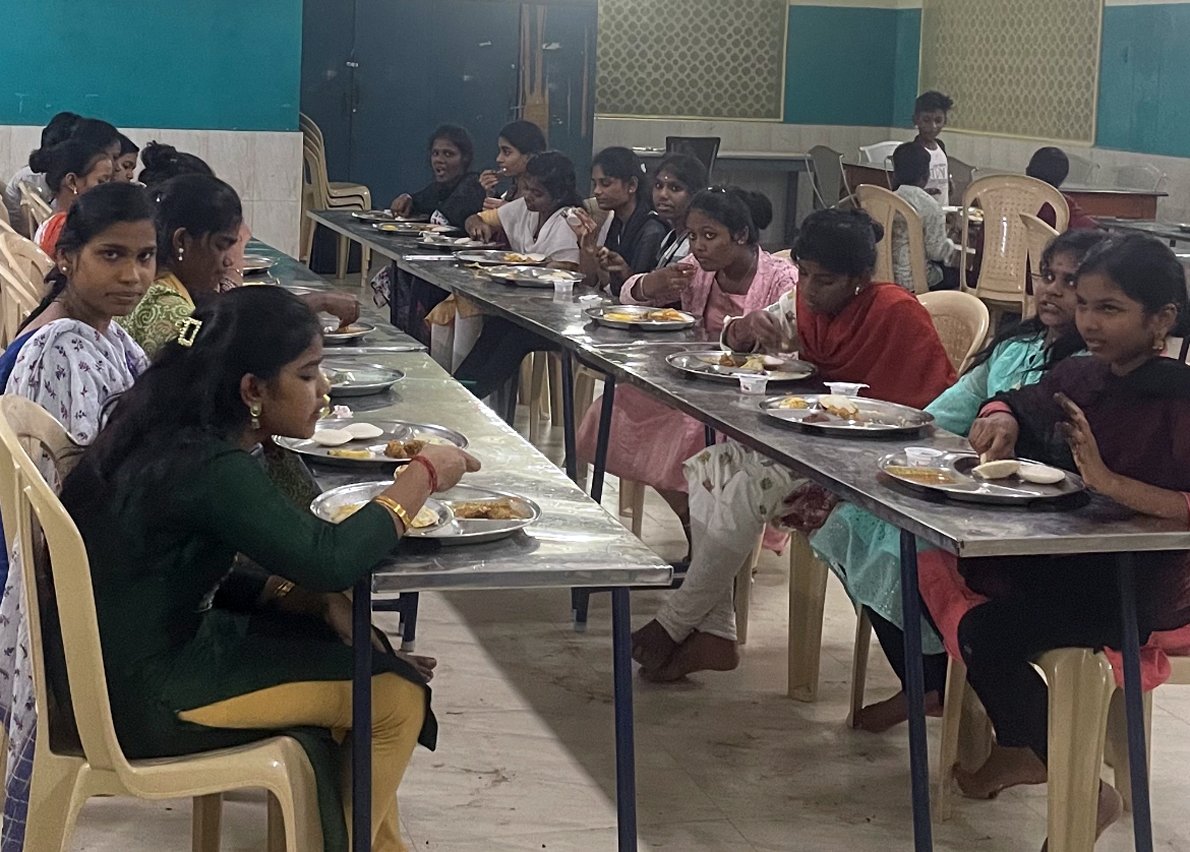
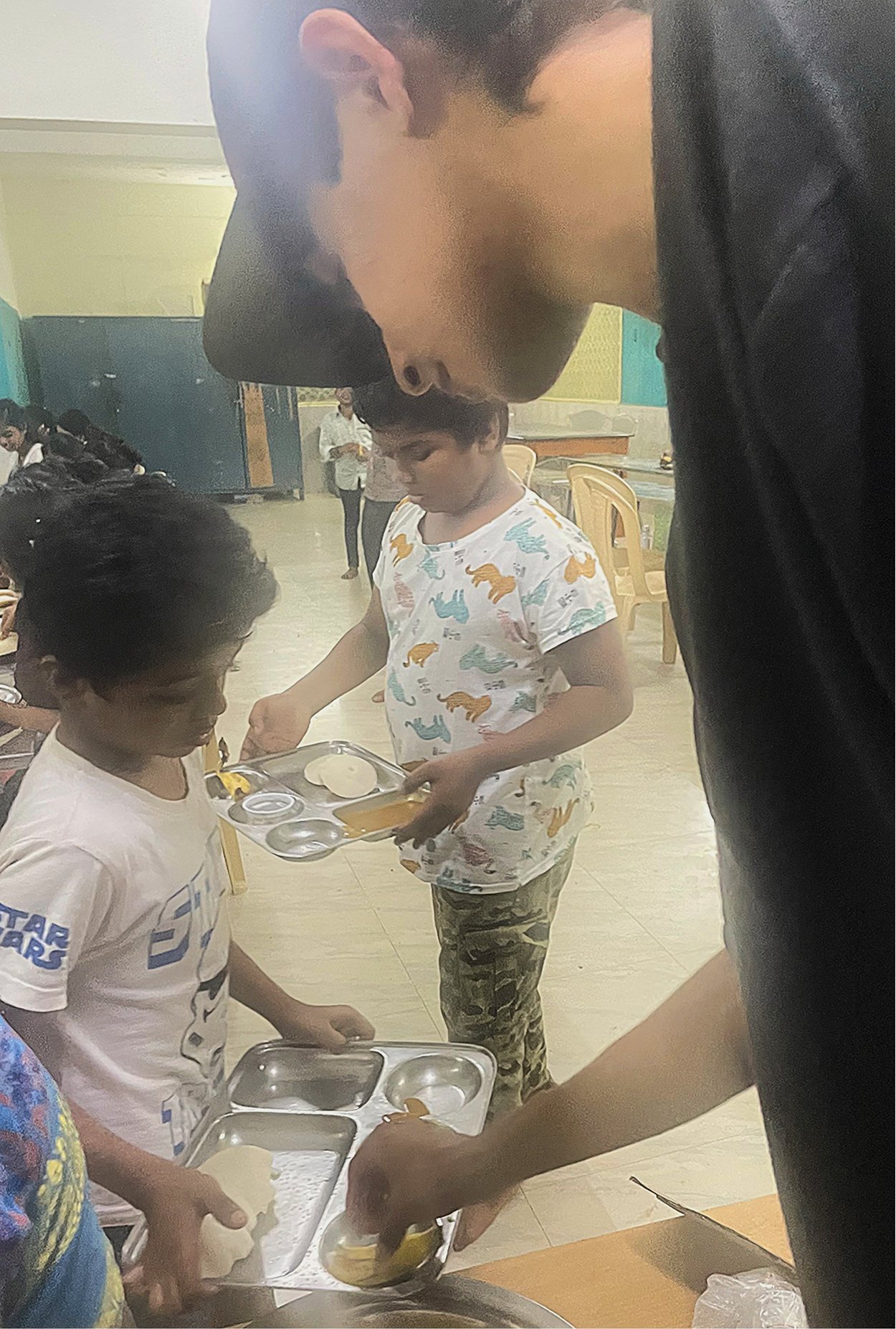
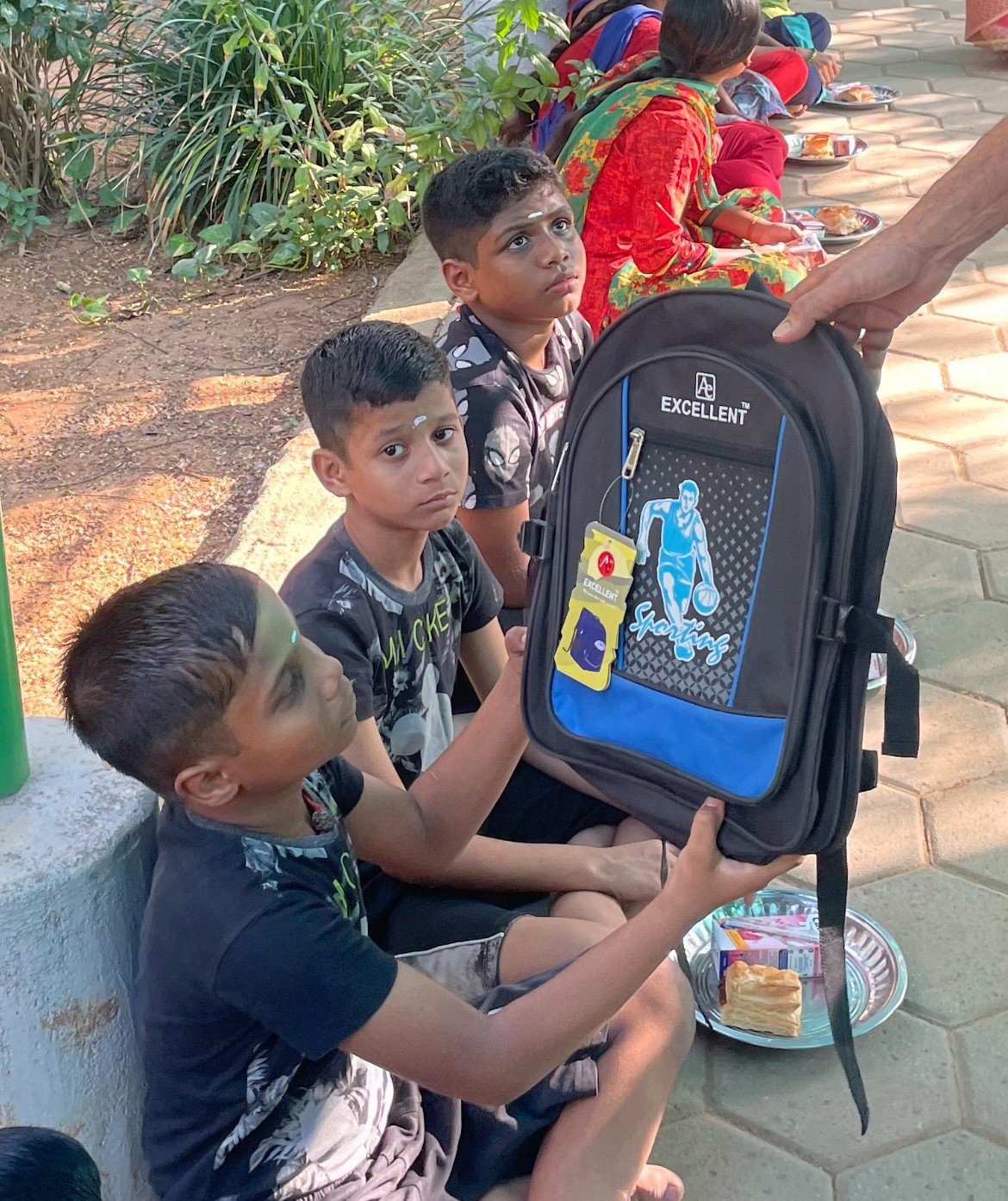
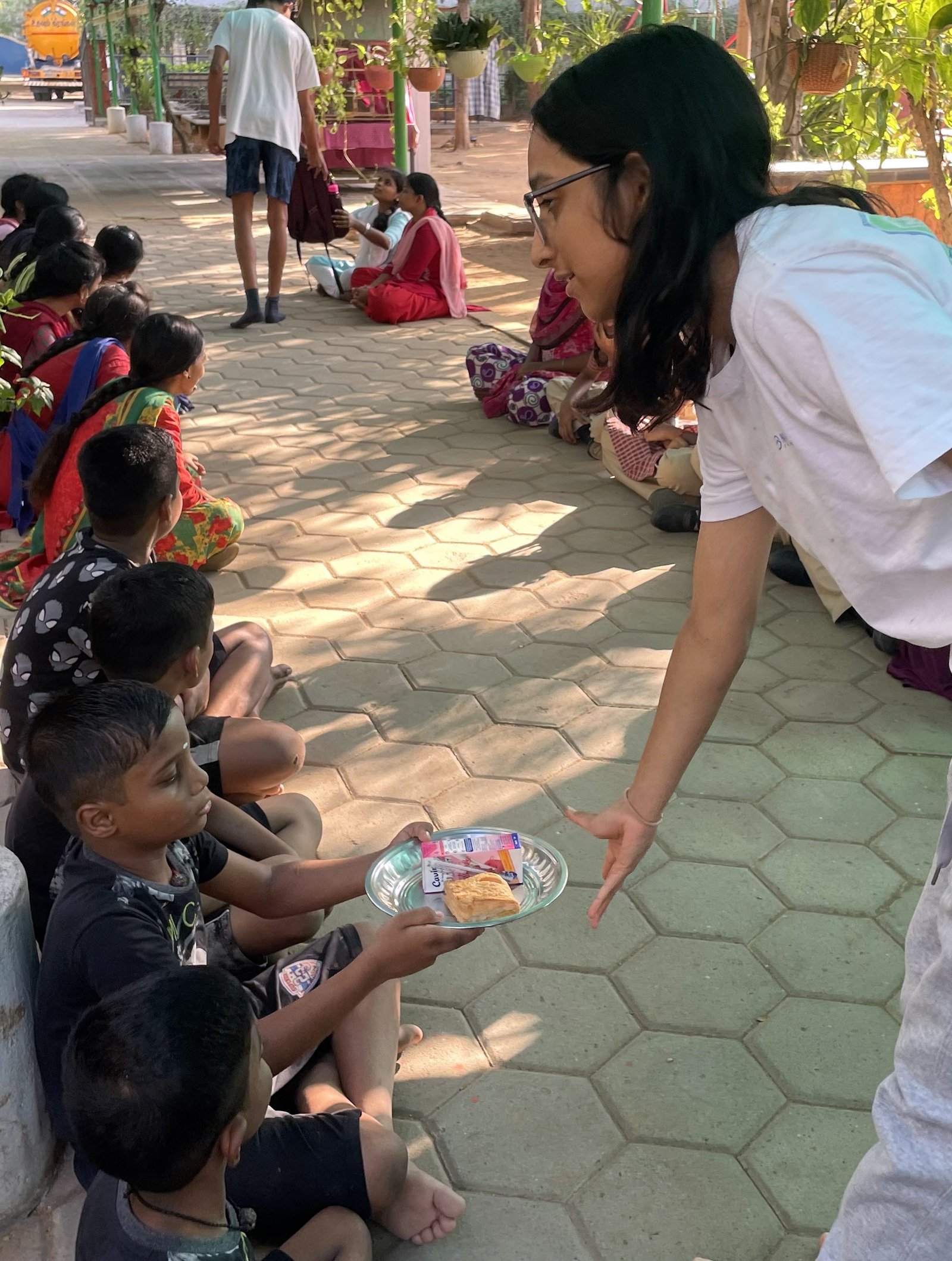
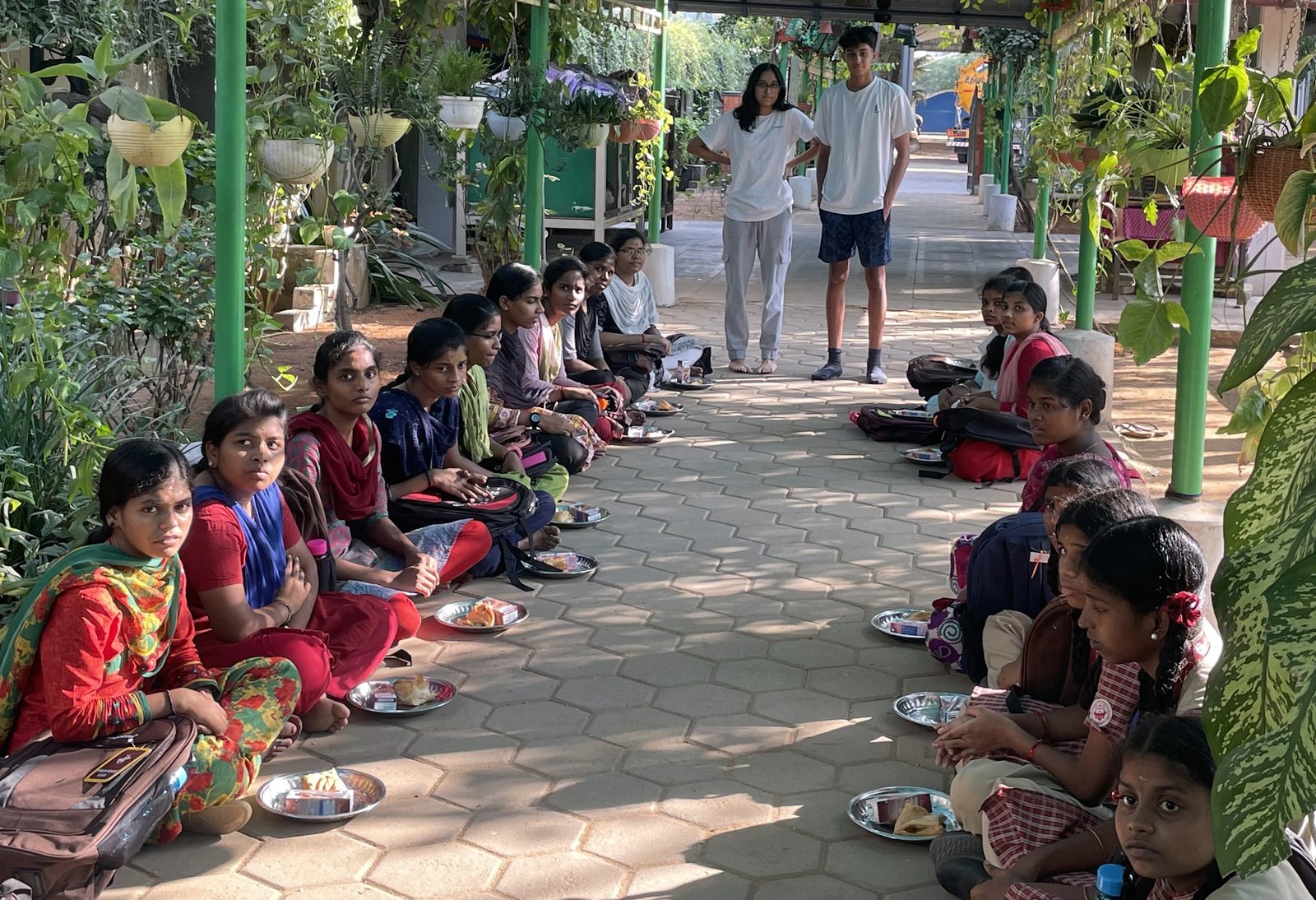
Seeing the amount of poverty that’s around us, and learning about the challenges these kids face in accessing a healthy meal and a good education inspired us to do something to show them that we do care. So, we bought backpacks, filled them with school supplies and gave them to 20 orphaned children along with evening snacks. We also served dinner to 60 children in a children’s home.

What we did were simple acts of kindness, but like Mother Teresa (the famous Nobel Peace Prize winning nun who lived and worked in and around Kolkata, India) had said, “We know only too well that what we are doing is nothing more than a drop in the ocean. But if the drop were not there, the ocean would be missing something.” To see the kids living alone without the love of parents and companionship of siblings is heartbreaking. Spending time with them we came to realize the privileges we take for granted and how fortunate we are to have a loving and caring family that meets all our needs.

The joy reflected in their eyes on receiving a simple backpack and the smile on seeing a small cup of ice cream made our hearts swell with pride, and although they have nothing, they were kind enough to offer us in return the power of their collective prayers as thanks.

We will be heading back to Houston, Texas soon, but what we have learned and experienced in the past two years in Chennai, will forever be etched in our minds, and we hope to continue to visit these children and share with them what we can.

As tech savvy Gen Z’s, it is our duty to use the power of social media to tell the stories of these children and to initiate global dialogues around the issues they face so we can find them the resources to face challenges and bounce back from adversity to fulfill their dreams of a better tomorrow.

* https://serudsindia.org/orphans-the-forgotten-children-of-india/ (From Sai Educational Rural & Urban Development Society, SERUDS) https://serudsindia.org 

—Maya and Arjun Govindaraj are Indian American siblings, both aged 17, and from Texas. They are currently studying at the American International School in Chennai, Tamil Nadu in South India.

Why I Hate Writing Essays

Why I Hate Writing Essays

By Neel Archis-Manish, age 17, Michigan.

It’s the fault of a rigid and purely grade-based public education system. I’m talking about why in today’s world, writings in schools have become a series of boring, formulative, information-stacked essays instead of genuine pieces of creations. I’m not blaming the public school teachers who simply mean well and are horribly underpaid. No, I blame historical education practices.

As a fourth year high school student in the US, I have written many essays in my ELA classes that respond to a specific prompt, include quoted sources, and require annotations on the side. All this basic system does is it makes me hate writing. I hate to say it, but it’s true.

I used to LOVE writing. I wrote poetry (it wasn’t great) and short stories (it was a laughing matter) and started writing my biography several times (I swear I’m going to get past Chapter 1 some day). But no matter how bad it all was, at least writing it didn’t kill my soul a little bit every time.

Language is a powerful tool that can be used to build empires and destroy them. Words are mightier than the sword not because nobody uses swords anymore, but because humans have the right to use words freely. High schoolers are so worried about their Grammarly scores and the 11:59 PM deadline that they often forget the importance of being present as a writer in their writings.

Quoted sources from all across the internet are great, and so are annotations. But neither helps an individual grow as an individual writer. The ‘classics’ we read in our English classes today weren’t classified as classics because they contained a well-researched bibliography, they were titled ‘classics’ because they were written from the deepest emotions from a true heart.

Formality kills humanity. Sure, you could decide to put on a fancy shirt and a suit and a tie and act like a functioning human being to charm yourself into some high-paying corporate job that covers dental insurance, but then what’s the difference between you and a slightly good-looking robot? Feelings are what humans have been doing best since the dawn of time. Let’s not forget our origins.

Love, respect, kindness, greed, envy, jealousy, selfishness, selflessness, humility, humanity, power, hunger, disgust, fear, sadness, anxiety, awkwardness, joy, pride, shame, disappointment, calmness, rage, confusions, desire, and so many more HUMAN emotions and feelings the world possesses. Why are adults teaching kids to bury all of them deep inside and instead turn to writing informative 2000-word essays about a global issue that then students pretend to care about for the sake of getting an A on a summative assessment?

I used to spend hours and hours reading books of mystery, fantasy, and historical fiction. I loved the feeling of being lost in a world where the real words ceased to exist. I loved the feeling of having to imagine, to create, and to be surprised. I used to come up with my own characters when reading stories about people. I used to make up landscapes and roam across Rome and Romania. I don’t do that anymore.

Writing based on information as opposed to human nature has killed the excited kid inside of me that once upon a time lived happily ever after. I’ve stopped reading books for fun. I’ve stopped being excited to enter a library and find a good book and open it in the middle and smell the smell of the fresh paper. I’ve stopped scribbling terrible poetry and weird short stories and unfinished memoirs on scraps of paper.

I once wanted to be one of those writers who wrote the first line of the first chapter of their first hit book on a napkin in a small bistro in a corner of a small town. I don’t want to do that anymore. Now, I just want to turn in my essay before 11:59 PM on the day of the submission deadline.

—Neel Archis-Manish, age 17, Michigan. He adds:

I was raised in Pune, Maharashtra, India in a house with two decent parents (they’re great!), a sister whom I hate passionately (it’s just a sibling relationship: I would give her my kidney, but not my phone charger), and a loving grandmother who’s cooking is, in one word, divine.

Growing up, I went to a Marathi-Medium school and learned Marathi (my mother tongue), Hindi, and English. When I was 15, my dad was fortunate to get an inter-company transfer. So in the midst of the Covid-19 Pandemic, our family relocated to Michigan in the United States of America.

I am currently enrolled at a good public school where I am able to make my Indian ancestors happy by performing well in academics, all while doing what I now love most: theatre. I am now the President of our school’s Drama Club. I participate (act, student direct, and head publicity and programs) in three productions each year, write and perform for our social justice theatre troupe, and have won numerous awards by doing forensics (competitive public speaking). Life is good.

I LOVE comedy. I have watched and re-watched and re-re-watched a ton of comedy sitcoms and TV shows. If you’re looking for someone to understand and laugh with you on niche Saturday Night Live references, I am your guy. Laughter is simply the best medicine, even when you’re not ill.

Currently, I’m looking at colleges and thinking about what I want to do. I’m at a point where ‘what do you want to be when you grow up’ is a legitimate question and not what an adult uses as an ice-breaker when talking to a child. Anyway, I’m fairly certain that I want to become a Secondary English Educator. Which led me to look into writing and publishing opportunities.

Save Them Bears

Save Them Bears

By Ya-Ting Yu, Taiwan

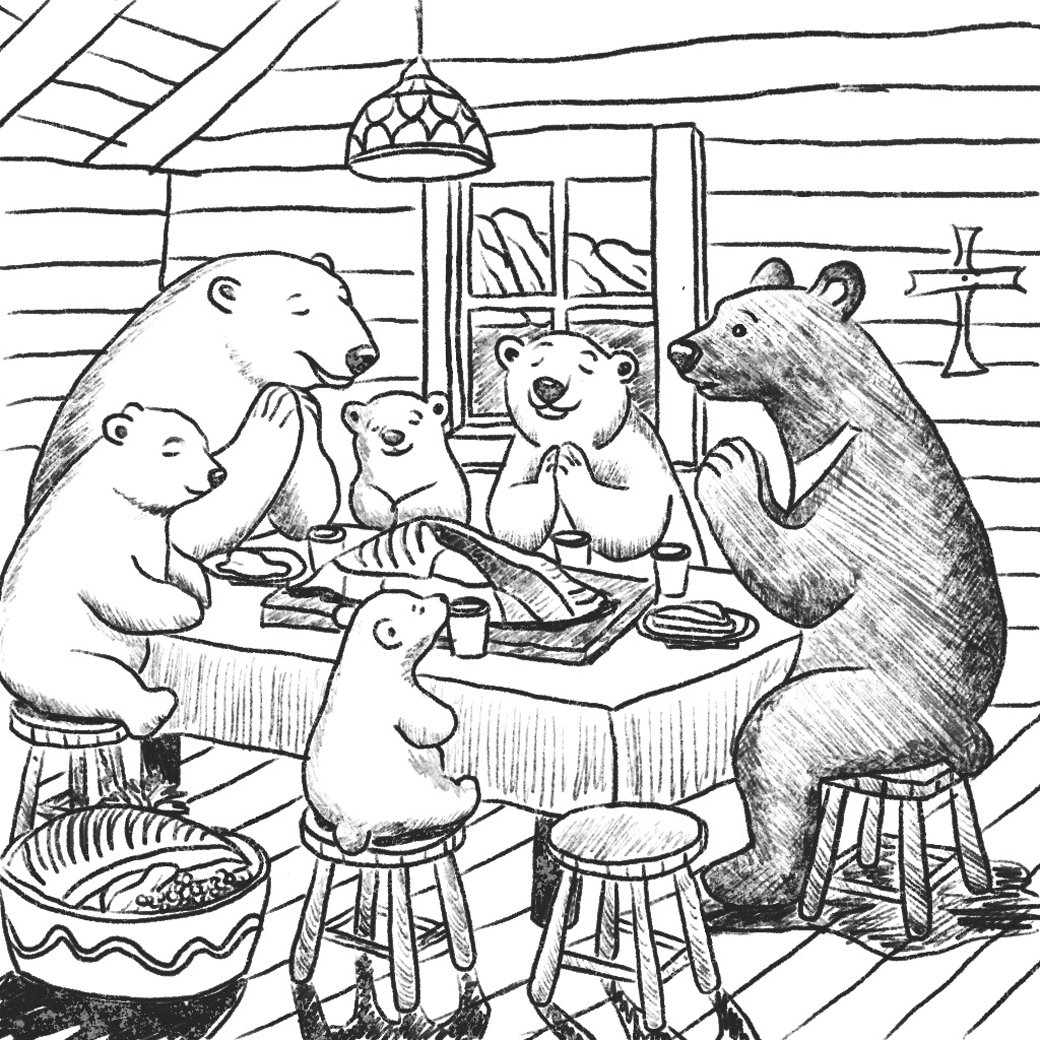
Black Bear recently moved north for climate change research. During the festive season, Black Bear’s colleague, Polar Bear, invited him to her family dinner. “No Bear should be alone on Christmas Eve,” she said when she heard the un-partnered Black Bear planned to hibernate in his cave. With no excuse to say no, Black Bear obliged.

That evening, Black Bear arrived at Polar Bear’s home with a basket of cloudberries in his paws. He’d agonized over the gift, unsure what to bring. Though he’d seen Polar Bear’s lunch boxes: ringed seals, whale carcasses, geese eggs, he still preferred chestnuts and persimmons. Honey and beetle larvae were rare treats he savoured after long hours of foraging through data at the lab, but to be inclusive, a value Polar Bear emphasized, he chose cloudberries, safe for vegans, vegetarians, and the nut-allergic.

Polar Bear’s family welcomed Black Bear warmly, hugging, kissing and thanking him profusely for the cloudberries. Flustered by the sudden physical contact, Black Bear forced a courteous smile and awkwardly patted Polar Bear’s Mom’s back, relieved when she finally let go of his paw. It was his first time receiving kisses from complete strangers. Where he came from, in the East, Bears rarely even shook paws, sniffing was usually as close as they got.

But their habitat differences didn’t stop there. For an occasion like Christmas Eve, Polar Bear’s family usually indulged in seal and whale fat. Vegetation was more for decoration, except for the hippie Cousin who’d recently turned vegan to combat the melting ice.

Before dinner, the family gathered in prayer positions, bowing their fluffy heads to say grace. Black Bear, unfamiliar with their faith, looked from left to right at the table and hurried to mimic their gestures.

“Amen,” Black Bear echoed, a pace too slow.

“Do Bears in your forest also celebrate Christmas?” Polar Bear’s Mom asked.

Black Bear scratched his ear. “I guess so? But it’s more of a time when Bears hunt for deals—shopping sprees, fancy meals. We don’t get the day off, you see. Lunar New Year, now that’s a feast worth hibernating in Taiwan.”

“Oh, are you from Taiwan?” Polar Bear’s Aunt leaned closer, her snout twitching. “My son volunteered to build homes for the poor children in rural parts of your forest. Right, Cubby? He, sorry—they have an igloo architectural license.”

Mortified, Polar Bear injected, “Auntie, Cousin went to Thailand, not Taiwan.” Her fur bristled as she glanced at Black Bear.

“That’s cool,” Black Bear said. “But igloos? My Sun Bear friend told me they melt once the volunteers take off. At the end, it seems easier for them to sleep in trees.”

“In trees!” Polar Bear’s Aunt gasped. “Son, you must go back and build them un-meltable igloos next time. The poor cubs. Just imagine—they don’t even have blackout curtains!” She sighed sympathetically and turned to Black Bear. “Do you have blackout curtains in Taiwan? Don’t tell me you also sleep in trees.”

“Oh no,“ Black Bear said with an uneasy laugh. ”Mostly caves or tree cavities. The only time I climb trees is when I’m hungry—for honey and bee larvae. Have you tried them?”

“Bee larvae? That sounds disgusting,” Polar Bear’s Cousin said, wrinkling their nose, unfazed by Polar Bear’s death glare across the table. “Thailand fed us Pad Thai and Green Curry every day.”

“Son,” Polar Bear’s Uncle rumbled as he lumbered over with a platter of barbecued seal fat. “Don’t you know Formosan Black Bears are battling Giant Pandas to protect their territory? What propaganda are you watching all day on TikTok? Read the news.”

Polar Bear’s Aunt sniffled. “I heard about that conflict. Is that why you left, Black Bear? It must be so dangerous back home. Don’t worry. Stay here in the Arctic as long as you want. We’ll sponsor you.”

No longer able to tolerate her extended family’s political incorrectness, Polar Bear tried to stir the conversation. “So, Black Bear, how’s your research? Any insights to share?”

“Yes, actually,” Black Bear said. “Before coming here, I thought Taiwan did a terrible job on climate change initiatives. Sure, we mostly rely on fossil fuels, but imagine squeezing Australia’s population into an area the size of Switzerland. Add typhoons and earthquakes to the mix. Our islands need to generate energy for millions and the semiconductor industry, which, by the way,” he added, fixing his gaze on Polar Bear’s Cousin, “powers your AI, EVs, solar panels, and wind turbines. Charity case, eh?”

A beat of silence followed as Polar Bear’s family exchanged looks. The Cousin shifted in their seat, ears flattening. Minutes passed. Polar Bear cleared her throat.

“Did you know Taiwan is smaller than many of our icebergs?” she asked, her voice tentative, like a kind schoolteacher. “Every Bear does what they can with what they have. And really, isn’t that what this is about? Climate change affects us all—even those big-headed humans. Here we are, just bears trying to adapt.”

She surveyed her family, looking each in the eye, and finally at Black Bear. “And if Black Bear can adapt to seal fat and bear kisses, maybe we can try a little harder too.”

For the first time that evening, Black Bear felt the tension in his shoulders ease, melting faster than glaciers. Maybe he didn’t fully belong in the Arctic yet, but any bear could find a caring companion who understood, even in this icy corner of the world. He leaned in to sniff the barbecue seal fat and said, “Hold up. Let me get my soy sauce.”

Story and illustration by Ya-Ting Yu is a Taiwanese writer based in Taipei, with roots stretching to Toronto and Edinburgh. Writing in English as her second language, she weaves themes of identity and belonging, drawing on her background in counseling and psychology to tell the stories of East Asian expatriates and international students.

Save Them Bears was inspired by my own experience as a Taiwanese expat, navigating the nuances of cultural assimilation and identity. I hope to highlight how cultural misunderstandings can be wrapped in well-meaning gestures. By anthropomorphizing the characters, I aim to create a story that is somewhat ‘trigger-free’ yet thought-provoking.

Pamela and the Patient Cactus

Pamela and the Patient Cactus

By Chuck Curatalo, New York.

“I’d better hurry!” said Pamela, dashing down the stairs. Her loose shoes clunketty-clunked down the wooden steps.

“Slow down,” said Mother. “And tie those shoes like a good first grader.”

“But Mom, I just cannot be late for school today. Miss Jones is teaching science. Science is about animals and other things,” she recited before gulping down her milk and dashing out to the bus stop.

“Today we will begin learning about plants,” said Miss Jones as she began the lesson. “Plants are living things—just like you and me. Let’s make a collection of plants for our Show and Tell. Then we can learn how they live and grow.”

“But Miss Jones, how can a plant be like us? It does not have a mouth and a nose.”

Miss Jones laughed. “Be patient. We will soon find out. But for now, be patient.

“Patient?” What does that mean?” wondered Pamela, dashing for her lunch box.

The next day Mr. Smith, the florist, led Pamela and her mother through a long greenhouse filled with plants of all sizes. Suddenly Pamela noticed a strange, funny-looking one with no leaves at all, just a short, fat, and fuzzy-looking stem. Pamela touched it. “Ouch!” she said. “It pinched me.”

“That’s a cactus plant,” said Mr. Smith. “You felt its needles.”

Pamela looked closer. “Why does it have needles?” she asked.

“Why don’t you take it to school and find out?” Mr. Smith answered. “This cactus is called a saguaro (sah-WAH-row). That’s only one of the many amazing things about it. But you must be very patient”—

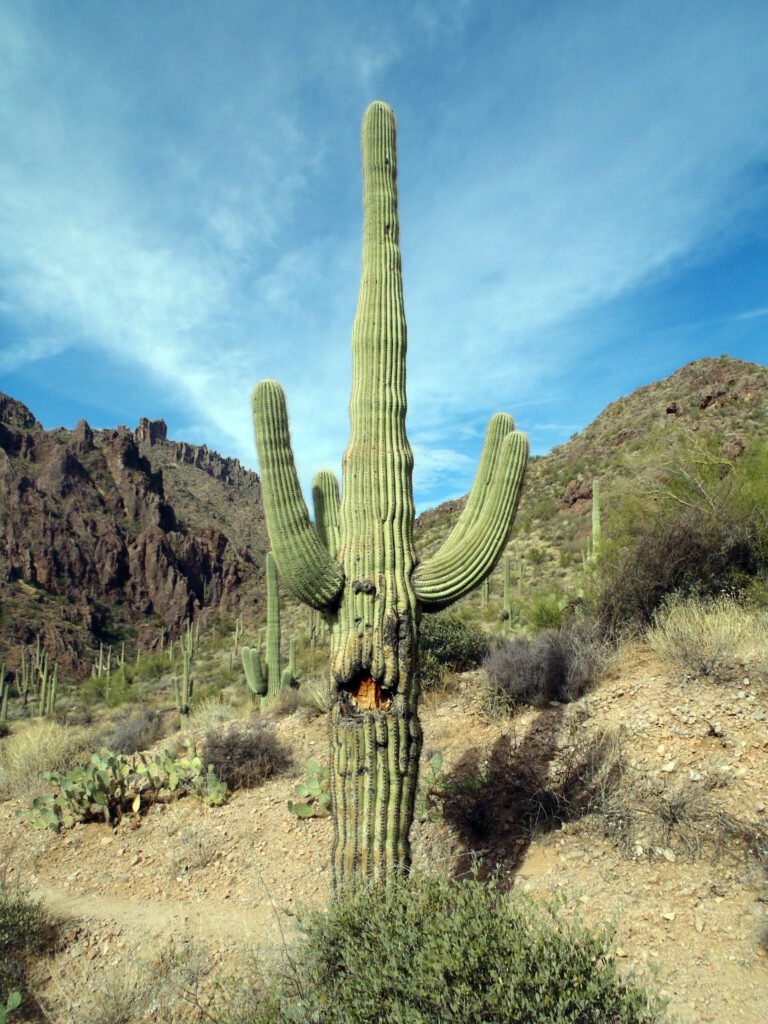
Sonoran Desert Landscape with a Saguaro, among other Desert Plants. Photo: Arun Toké.

“Oh, Mommy!” interrupted Pamela. “The kids won’t believe needles grow on plants.”

The next morning Pamela placed her cactus on the window ledge next to the bigger plants. “Can you see the needles?” Pamela asked her friend Bobby, holding a magnifying glass close to the plant.

“Wow!” said Bobby. “They look humongous.”

“You can touch them if you want,” said Pamela. “But be careful.”

“Ouch!” said Bobby. 

“I told you to be careful,” Pamela laughed.

Days went by but Pamela’s cactus did not seem to grow—no matter how much she watered it. “Oh, Mommy I’m afraid the boys and girls will start making fun of my little plant,” cried Pamela.

“The saguaro is growing. It’s just taking its time. It is not always in a big hurry like you,” said Mother. “When it does finally grow—something wonderful happens.”

“What is it, Mommy?” asked Pamela.

“Be patient, and you will, see?” she answered.

“Mommy, what does patient mean?”

“It means you must wait a long time for something to happen and you must not complain. The saguaro is waiting patiently for something amazing to happen!”

“O.K. Mommy,” answered Pamela, wiping her tears away.

Days went by and the cactus still did not seem to grow. But Pamela tried to be patient. “Are you growing?” she asked calmly.

One day Miss Jones showed the class a book about cactus plants. “My tiny cactus isn’t even in here,” said Pamela, as Miss Jones flipped the pages.

Then Miss Jones pointed to a giant cactus with huge, thick arms. “Now here’s a picture of what Pamela’s cactus will someday look like”—

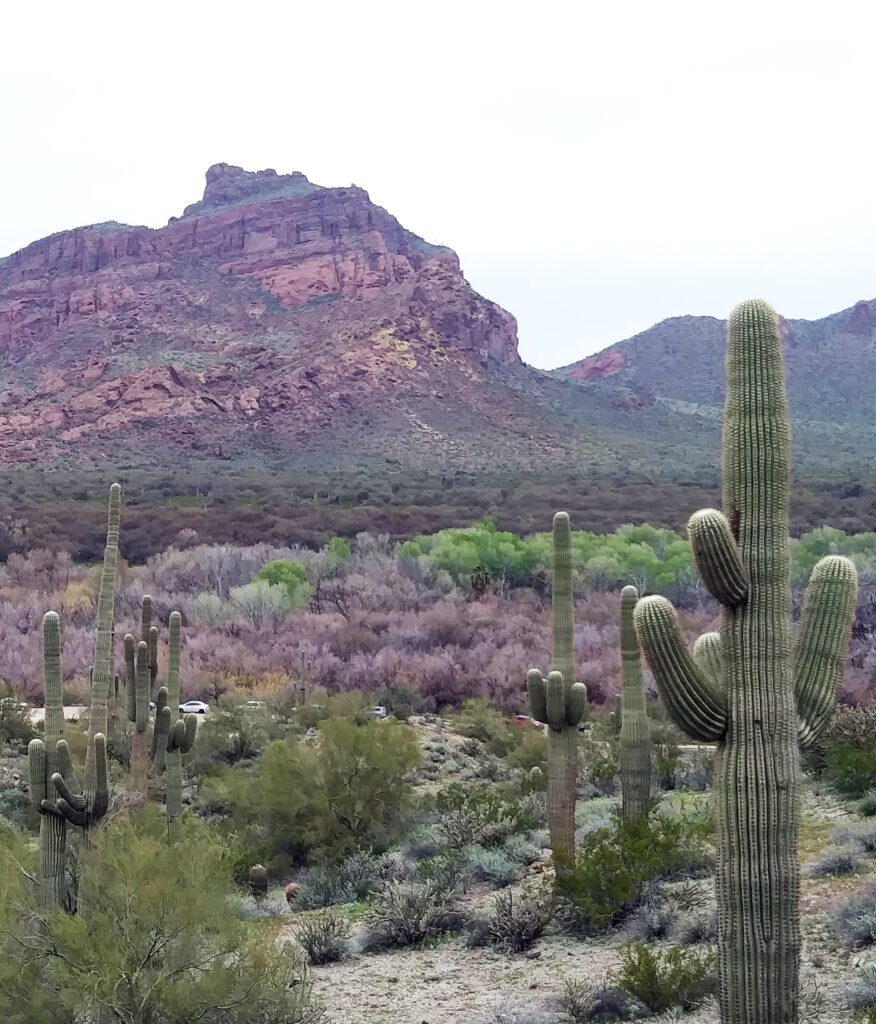
Saguaros in the Saguaro National Park, Arizona. Photo: Arun N. Toké

“It looks like a giant fork!” interrupted Bobby.

Everyone laughed, except Pamela. “But Miss Jones, that can’t be a saguaro. It is so big!”

“Yes, it is very big, Pamela. It is 50 feet tall,” explained Miss Jones. She held up a ruler. “It takes 50 of these to reach its top. And it is a saguaro—just like your plant.”

“But why is that saguaro so big?” Pamela asked. “My saguaro has not grown at all. And it does not even have one teeny-tiny arm!”

Miss Jones smiled. “That’s because this 50-ft. saguaro is over 200 years old”—

“Two hundred years?” said Pamela. “Isn’t that a long, long time?”

“Yes, it is,” answered Miss Jones. “Your saguaro is only about six years old.”

“Six years old?” said Pamela. “I’m also six years old.”

Miss Jones smiled again. “Just think, boys and girls, it will take 25 years before Pamela’s saguaro is as tall as she is. But in 200 years it will be taller than our school. And can you believe this plant started from a seed as tiny as a period in this book?”

“A-maz-ing!” said Pamela. “That is why Mommy said the saguaro was patient. It takes time to grow. But when it grows, it grows!

“Indeed, it does, Pamela,” replied Miss Jones. “And it has lovely flowers that grow on the ends of its arms”—

“Miss Jones!” interrupted Bobby. “Can I make a hole in the roof so Pamela’s cactus can get really big?” Everyone had a good laugh.

That night Pamela had a wonderful dream…

While sitting on the window ledge, the cactus began to grow and grow. Before Pamela could count to ten, the cactus was as tall as she. Before she could count to 20, it was peeking through the hole Bobby Briggs had made in the roof. And it kept on growing—up past the big oak tree on the busy school playground.

Then the giant sprouted mighty arms that stretched out and out. They started to bend—straight up to the sky! Pretty flowers with white petals and golden centers began blooming on each tip.

By the time Pamela could count to 30, the giant began shedding its petals. They went dancing and swirling in the air like giant snowflakes. The children ran around and around, trying to catch them.

Not long after her dream ended, Pamela heard Mother’s knock. “Time to get up, Sweetheart.”

“Wow! What a dream!” said Pamela, tossing her covers. She knew it would take a long, long time for her cactus to grow big and strong. “I’ll just have to be patient—like my saguaro!” she decided, taking the time to tie her shoelaces before going down the stairs.

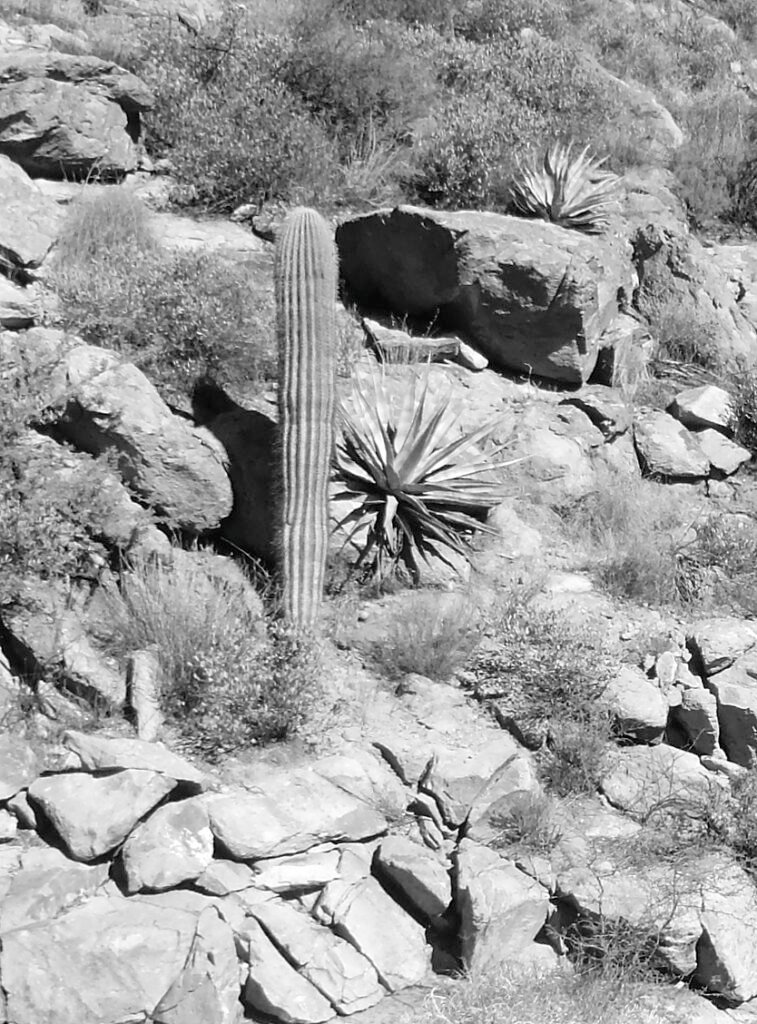
Saguaro along a Hiking Trail in the Superstition Mountains area of Arizona. Photo: Nathan Toké.

By Chuck Curatalo, New York. Mr. Curatalo retired after teaching for 33 years. He instilled an appreciation for other cultures of the world in his elementary grade students. He has been also interested in teaching children about the wonders of the Southwest. He is a collector of Hopi Kachina dolls and has toured many historic pueblos. He is a published author.

The Cliffs of Moher, Ireland

The Cliffs of Moher, Ireland

Text and photos by Roi J. Tamkin, Atlanta, Georgia

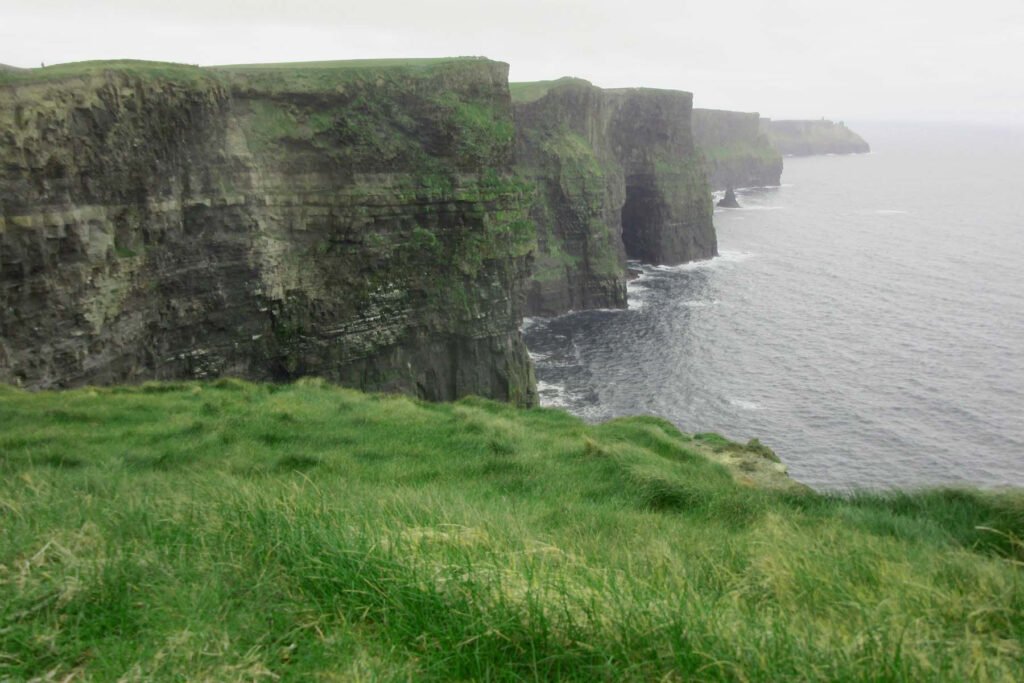
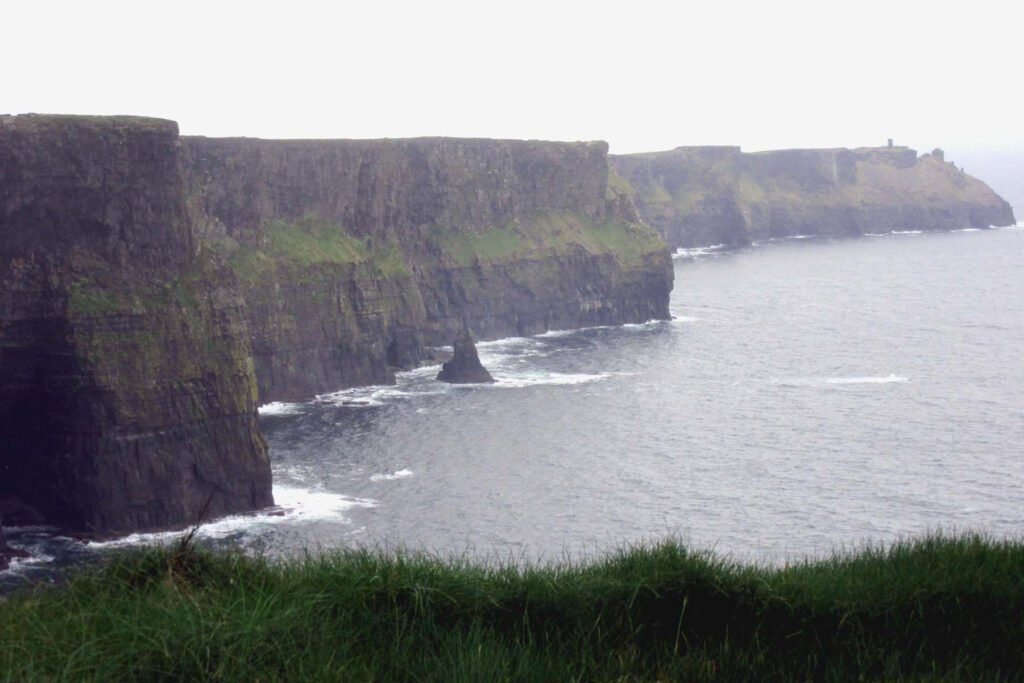
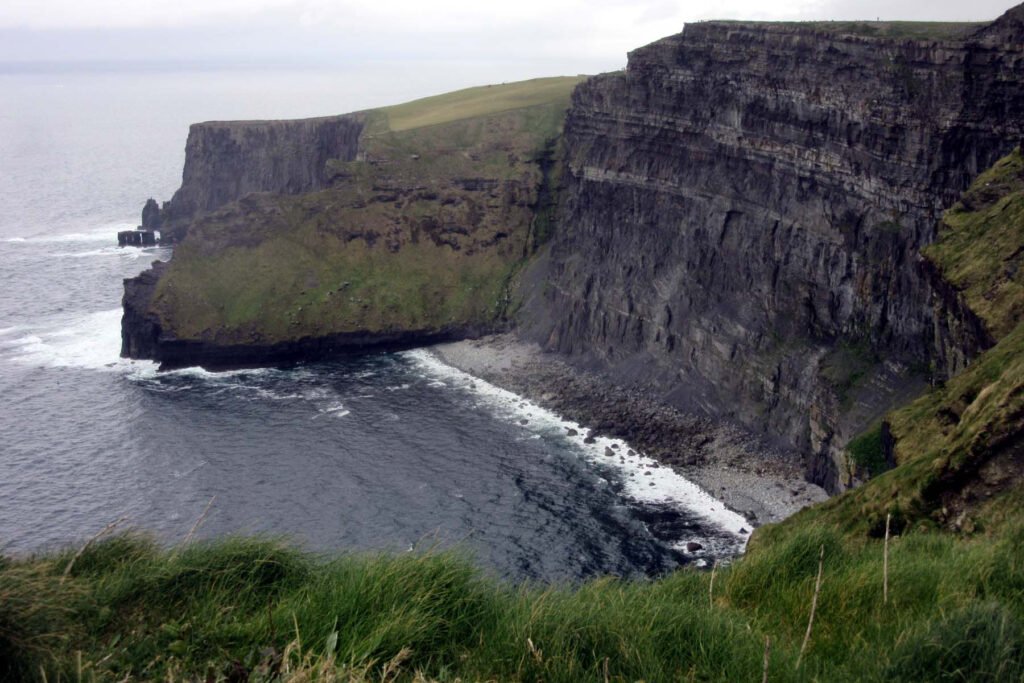
I visited the Cliffs of Moher on a recent trip to Ireland. Although the day was windy and chilly, I couldn’t help but marvel at the size of the steep, dark cliffs. I watched in awe as the wild waves of the Galway Bay crash into the tall, rocky walls.

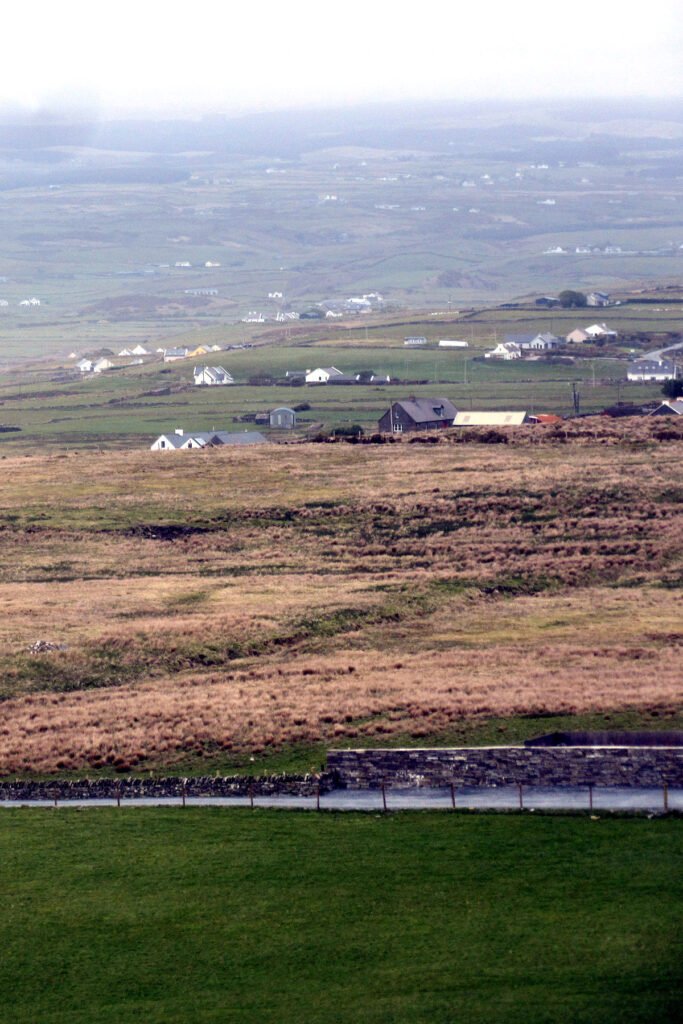
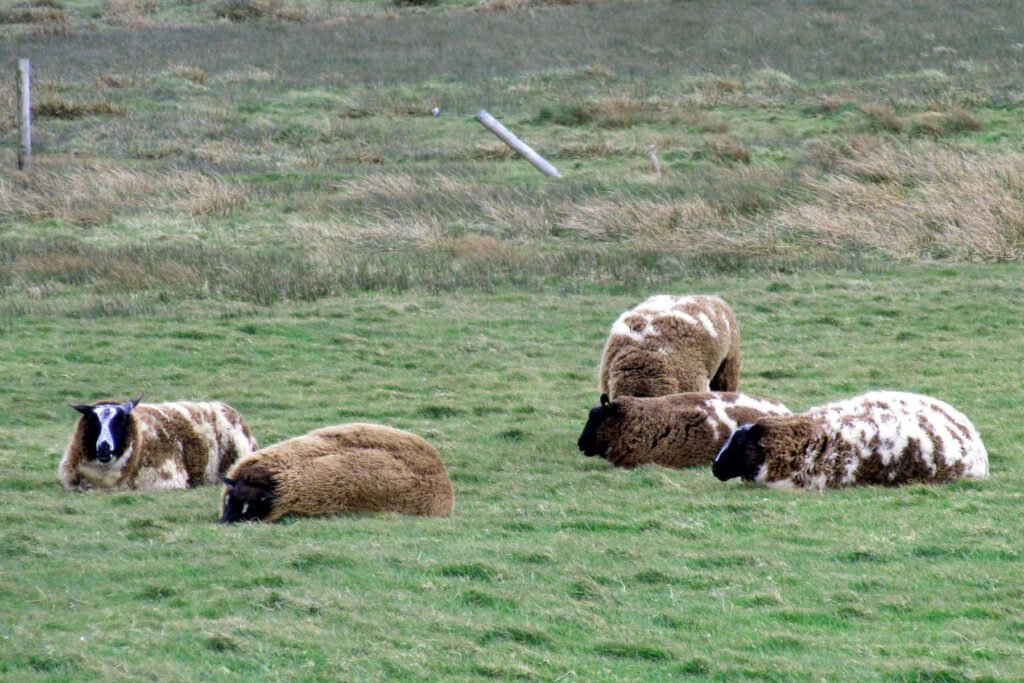
This geological wonder is located in the southwest part of the Burren Region of County Clare. The cliffs stretch for nine miles. They stand 702 feet tall at O’Brien’s Tower and fall to over 200 feet at some points. The town of Doolin is nearby, and visitors can walk to town on a trail at the visitor’s center. You’re bound to see lots of sheep as you walk the trail.

The cliffs are the most visited tourist site in Ireland with 1.5 million tourists a year.

The cliffs were formed 326 million years ago from sediment deposited at the end of a river. Layer upon layer of sediments turned into Namurian shale and sandstone. Now these dark colored cliffs are subject to erosion due to wind and sea. Portions have crumbled into the water creating sea stacks.

The national landmark has been designated an Important Bird Area as those craggy cliffs are home to many species of birds including puffins and razorbills. When I visited, every bird looked like a gull to me. They flew from their homes burrowed into the rock face and headed out to see to find fish to eat.

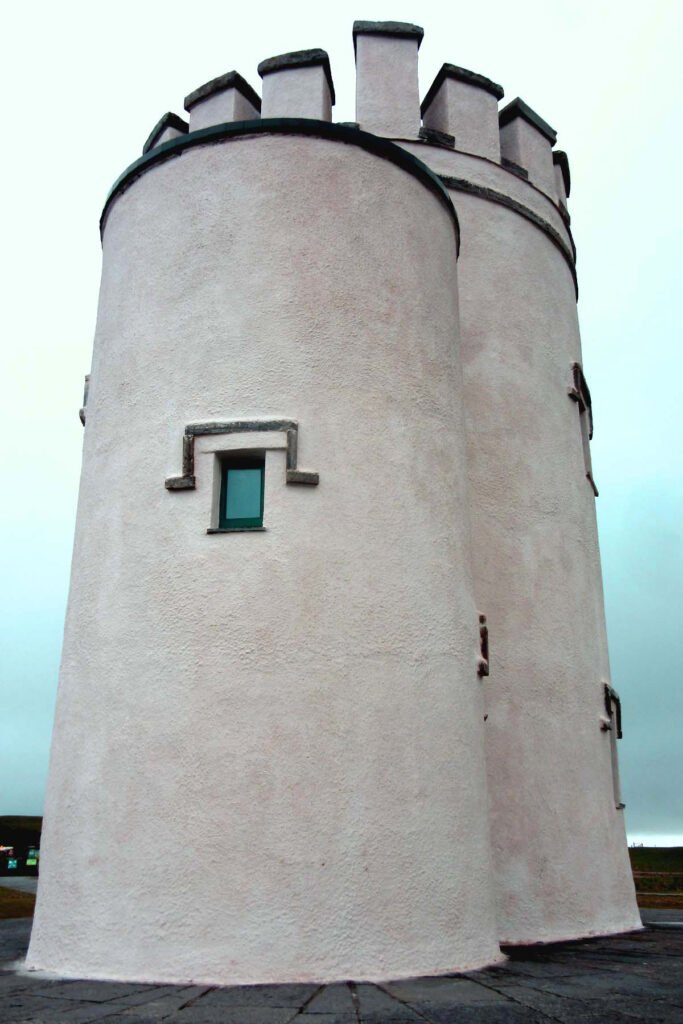
A popular attraction is O’Brien’s Castle. Built in 1835 by Sir Cornelius O’Brien, people climb the steps for spectacular views of the Aran Islands across the Bay. There is disagreement as to the purpose of the Castle, but it has been a tourist hit right from the beginning.
The best time to visit is early in the morning. The morning hours afford the best view of the islands and surrounding land. I arrived in the afternoon, and even though the sun was high in the sky, it was extremely cold and windy. I only had twenty minutes of clear views of the ocean and the bright green grass atop the cliffs. Before long, the fog rolled in, and I could not see anything more than a foot from my face. Walking along the tops of the cliffs became dangerous, and I had to keep my eyes glued to the person walking in front of me for safety. The fog came in so quickly and so thick that I decided it was time to visit the museum inside the visitor’s center.

There are many different one-of-a-kind geological structures on the island of Ireland. The Cliffs of Moher tell the story of the passage of time. It took millions of years to build up the cliffs, and now erosion is tearing them back down to sediment. A visit to the Cliffs will last in your memory: the contrast of colors between the murky walls and the emerald green grass; the woolly sheep grazing nearby; and the mystery of O’Brien’s Tower all add up to an amazing day by the sea.
Text and photographs by Roi J. Tamkin, a photographer based in Atlanta, Georgia.

Run

Run

By Chris Cooper, author and poet, New Jersey.

The scariest thing about life is that there is no finish line,
so you never really know where or how far you have to go.
Living out each day, assessing the past and present while eyeing the future,
we choose directions based on impulse and prudence, decisions that guide the run.

And it starts out like a sprint with fast-twitch ambition and energized strides,
until fatigue sets in, forcing a recalculation,
an adjustment to the race; a realization that it’s actually a marathon,
requiring both stamina and endurance, a steadier pace.

And subconsciously, we’re convinced tomorrow is expected,
assuming there’s always another day, more time to catch up.
But you never really know if there’s a lifetime ahead,
another mile to go, or if you’re experiencing your last conscious breaths,
and maybe that’s the beauty of it all.

—Chris Cooper is the author of the 2024 debut novel Crazy by Conscious from Anxiety Press. He writes, “I created this poem to convey different aspects of the human condition with varying linguistic elements. I hope to one day be content without feeling the existential need to constantly create.”

My Mom’s Frying Pan

My Mom’s Frying Pan

By Aadya Agarwal, grade 8, New Jersey.

They asked my mom, “What inspires you, Ms. Anne?”
Pat came her reply, “It sure is my frying pan.”
Her crisp reply left them confounded.
After all, she clearly left the Sun and the Moon grounded.

My mom was sure of her inspiration.
And this is what she offered as her explanation.

“Frying pan might look like a plain Jane tool.
But look! how, its emptiness itself makes it useful.
It tells me that nothing really belongs to you.
You are just a medium to pass things through.
You must clean yourself of the smallest residue.
So that you are ready to receive something new.”

“Frying pan has taught me to choose to be humble.
Go through and show up after every rough and tumble.
Seasoning through slow and high heating.
Strengthening through scratches and beating.
And not to suffer from any self-pity.
Be assured that you are where you are meant to be.”

Mom further said, “For me, frying pan is an unsung beauty,
That creates complex dishes through its simplicity,
And keeps my family fed by doing its duty.”

By Aadya Agarwal, grade 8, Princeton Day School, Princeton, New Jersey.

Lifestyle Medicine—The Six Pillars of Health

Lifestyle Medicine—The Six Pillars of Health

By Dr. Charlie Ross, Oregon

One of the youngest specialties in medicine, Lifestyle Medicine, places emphasis on the root causes of our chronic illnesses.

The Six Pillars of Lifestyle Medicine are:

  1. What we eat
  2. How we move throughout the day
  3. The chemicals we choose to consume
  4. How we deal with stress
  5. How we sleep  
  6. Our social connections

Of all premature deaths, 40% are attributable to these three factors: tobacco use, poor diet, and alcohol consumption

  1. Tobacco Use: 18.1% (About one in seven people still smoke.)
  2. Poor diet and physical activity: 16.6% (About three out of four people eat too little fruits and vegetables, and about four out of five people do not get enough exercise.)
  3. Alcohol consumption: 2.5%

Let’s explore how to focus more attention on the root causes of what brings us health or what leads to disease.

  1. What We Eat:  Looking around the world (especially, in the Blue Zones, where people are the healthiest and live the longest) the evidence points to eating a more unprocessed whole plant food diet as the healthiest choice. The healthiest diets incorporate fruits and vegetables, whole grains, legumes, and some nuts and seeds. Fiber in the food that allows our good bacteria (in our microbiome) to produce chemicals like butyrate (which decreases inflammation) and serotonin (that reduces anxiety and depression).

Did you know that FIBER is only found in plant foods? There is no fiber in animal foods. So, increasing the amount of whole plant foods in your diet will add to your overall health. To help you understand better the food choices and how to get a variety of plant foods in your diet, you might want to download the free app “Dr. Greger’s Daily Dozen” on your smartphone. Or you might choose to do the free “21-day Vegan kickstart” program suggested by Physicians Committee for Responsible Medicine, PCRM. (Visit: www.pcrm.org).
The best evidence-based book is How Not To Die, by Michael Greger MD.

  1. How We Move Throughout the Day—or the lack of physical activity—is the fourth leading risk factor for global mortality. There are several types of exercises for us to consider:
    • Aerobic/endurance exercise (large muscles movement for sustained period)—lowers risk of all-cause mortality
    • Strength or resistance exercise—muscles contract against an external resistance—with the goal of increasing lean body mass and muscle strength and endurance
    • Flexibility exercise—range of motion that is possible at a joint
    • Balance exercises—static and/or dynamic exercises—decrease in falls and injuries like fractures

Any amount of activity is better than no activity. A physically active person engages in at least 150 minutes per week of moderate to vigorous physical activity. Moderate exercise elevates your heart rate but allows you to comfortably talk whereas vigorous exercise makes it difficult for you to speak more than a few words at a time due to increased breathing effort. Sitting for prolonged periods of time leads to lessening of life expectancy. Keep your sitting times no longer than 50 to 60 minutes without a five-minute movement break. An excellent resource book on the benefits of exercise is: Spark, by John Ratey MD.

  1. The Chemicals We Choose to Consume: Tobacco, alcohol, and street drugs continue to take a toll on our health. Prescription drugs, like opioids and side effects from other prescription drugs also exact a toll. Toxins from the not-regulated supplements and even plastic material (endocrine disruptors) found in foods like fish are potentially health damagers. The book Salt, Sugar, Fat: How the Food Giants Hooked Us, by Michael Moss is a good read to help your understanding about why we choose what we choose.
  2. How We Deal with Stress: Stress can be helpful (if not overwhelming) or harmful. A stressor is a situation, circumstance, or stimulus that is perceived to be a threat. This threat alters homeostasis in the body.
    Categories of stressors: There are four types of streesors.

    Psychological: thoughts, beliefs, or perceptions;
    Physiological: illness, infection, disease, or hunger
    Social: major life changes, personal conflicts, or financial insecurity
    Bio-ecological: weather, pollution, food additives, or chemicals

  • Health effects of chronic stress: Impaired immune function, inflammation, decreased bone density, problems with memory, increased appetite, weight gain, abdominal fat deposition, insulin resistance, increased glucose, cholesterol, and triglycerides, increased blood clotting, Impaired wound healing, poor sleep, pain and fatigue, poor mood, adoption of less healthy habits, decreased longevity (telomere shortening), and etiology of many chronic diseases, including hypertension, type 2 diabetes, and heart disease.
  • How to Manage the Pathological Stress Response:
  • Breathing tools: Lengthening exhale breath, Abdominal breathing
  • Movement: Physical fitness, yoga, Tai chi, Qigong
  • Meditation
  • Connecting with Nature
  • Self-expression: Playing a musical instrument, singing, creating art, or dancing
  • Community Engagement: Volunteering for meaningful causes, quality time with family and friends, spiritual or religious activities
  • Reading self-help books and websites
  • Massage
  • Listening to music
  • Light therapy
  • Mental health and Nutrition: Fried foods, refined grains, and sugary products are associated with increased rates of major depression and anxiety disorders, A plant-based dietary pattern with no meat, fish, or eggs in a randomized, controlled trial showed a significant improvement in depression symptoms in just two weeks. Fruit and vegetable consumption has been associated with improvement in depression, anxiety, higher productivity, and higher optimism.
    A wonderful resource book to get started in this area is: The Mayo Clinic Guide to Stress-Free Living, by Amit Sood MD

5. How we sleep: Average sleep is 7 hours a day, but 20% adults sleep less than 6 hours. Short sleep duration has increased in all age groups. 60 million people in U.S. have frequent difficulty sleeping (but only 10% seek professional help)

  • Indirect costs of Insomnia: Presenteeism (people at work but not productive), Increased risk of long term disability, Mistakes, errors, and accidents
  • There is no recognized objective test for how much sleep a person needs
  • Healthy sleep duration and quality as well as circadian physiology promote improved health; Lower cortisol and glucose levels, greater insulin sensitivity, higher daytime leptin and reduced food-seeking behaviors, lower sympathetic tone, greater nighttime peripheral perfusion, increased stamina and faster cardiovascular recovery time.
    A Recommended Resource: Why We Sleep by Matthew Walker, PhD is a very good book resource on this topic.

6. Our Social Connections: A Harvard study concluded that our relationships matter! Our relationships and how happy we are in those relationships has a powerful influence on our health. Taking care of your body is important but tending to your relationships is a form of self-care also. Childhood nurturing plays a significant role in midlife thriving. Marital happiness and social connectedness moderate our health and happiness.

  • Social Networks: Being part of a social network improves longevity
  • Positive Psychology Interventions
    Counting our blessings everyday (e.g. thinking of three things you are thankful for)
    Expressing gratitude and appreciation (e.g. what challenges did you manage this week?)
    Savoring the pleasant things in life (e.g. taking five minutes a day to savor a particular activity)
    Writing down how we want to be remembered (I want people to remember me for…)
    Connecting and interacting with others regularly in person, not solely or mainly through social media (Belonging to family, social groups, sport groups, spiritual groups, etc.)
    Regularly practicing acts of kindness (how do you feel afterward?)
    Doing activities that feel meaningful (Reflect on what makes this activity meaningful)
    Thinking of one’s happiest days frequently (Look at photos and think about emotions experienced)
    A Recommended Resource:
    Together by Vivek Murthy MD is one of the best reads on social connection.

If you have an interest in learning more about any of the above these six pillars of health, feel free to connect with me at cataniaross@msn.com. I am retired medical practitioner, and I do not charge to help you along on your journey toward improved health.

Wishing you the very best of health to you in 2025 and beyond,

By Charlie Ross DO, DipABLM. Certified Lifestyle Medicine Physician, Osteopathic Medical Practitioner. Website:  www.livelifestylemedicine.com

Art by Leicie Tonouchi, Age 14, Hawaii

Art by Leicie Tonouchi, Age 14, Hawaii

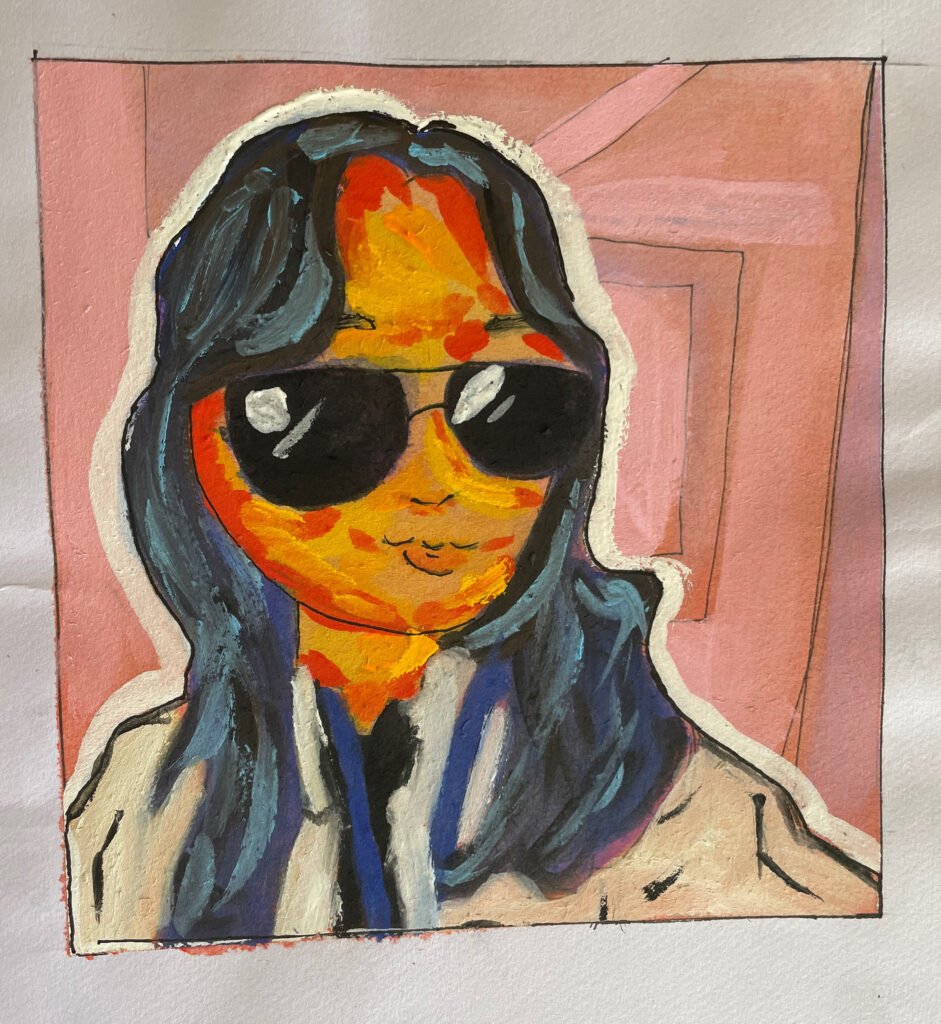
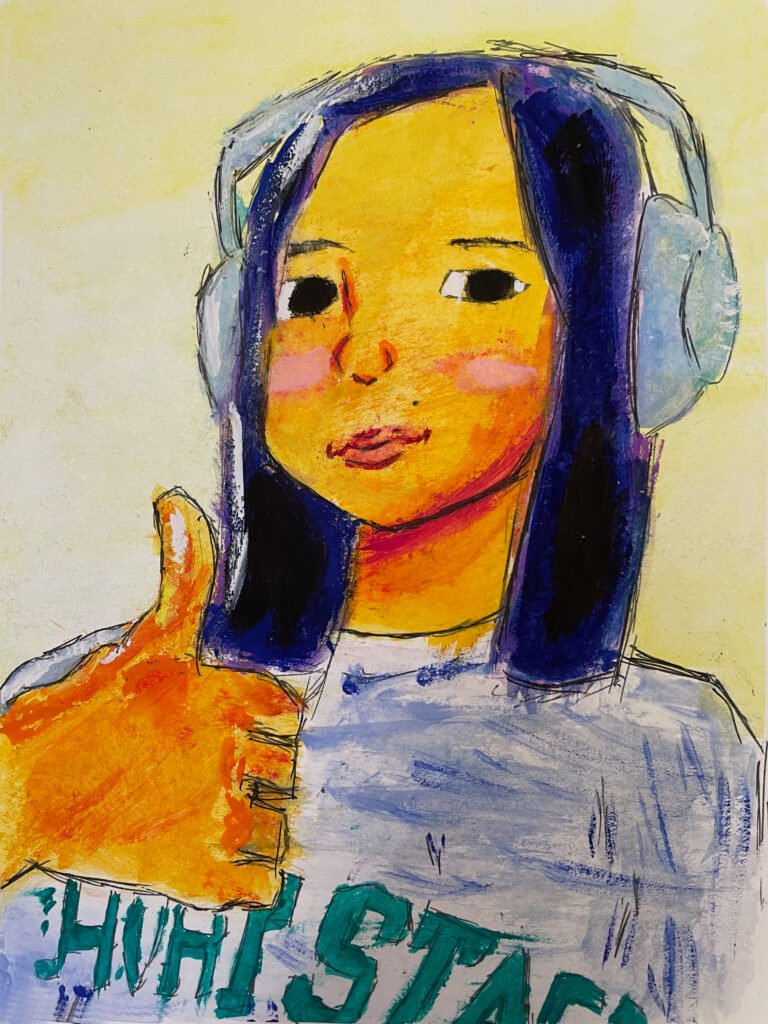
“Keila is too cool for school. I painted Keila in ink and gouache.”

“Cassie has positive vibes. I painted Cassie in ink and gouache.”

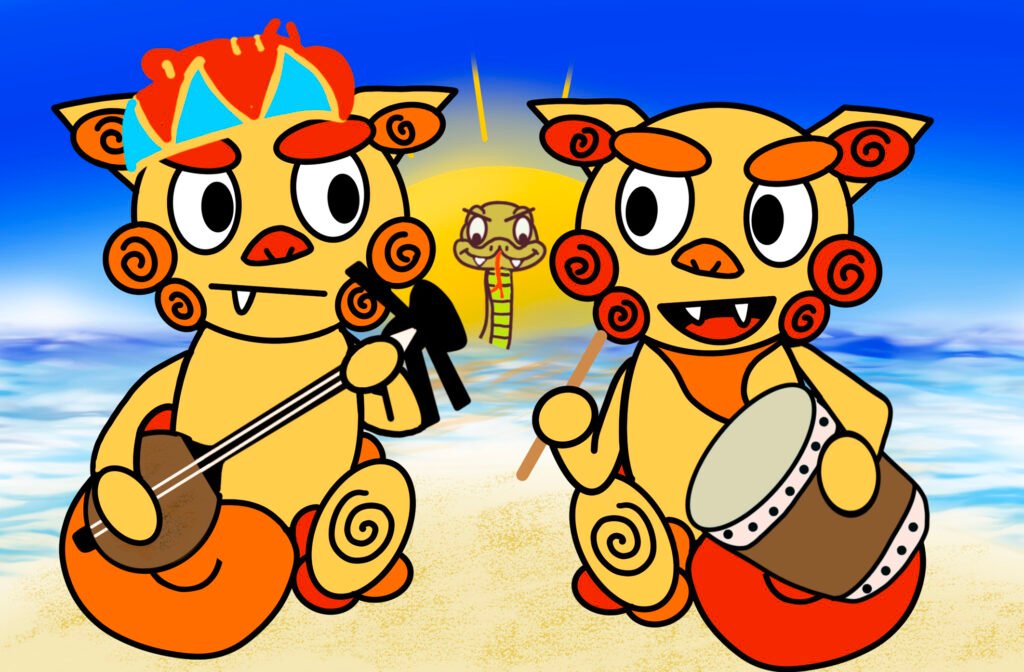
“This is my interpretation of the classical Okinawan story called “The Legend of the Shisa.” I drew this digitally using Procreate.”

The Legend of the Shisa

Retold by Leicie Tonouchi, Age 14, Hawaii.

A long time ago in Okinawa, Japan, the villagers were partying at the beach when out of nowhere they saw something big—a serpent from the sea!

The serpent began to terrorize the village. One of the villagers looked at the Shisa (Okinawan lion dog) statue and prayed for help and miraculously the Shisa statue became alive! The Shisa battled the serpent and chased it back into the ocean. The villagers cheered as their homes had been saved. When everyone was safe, the Shisa turned back into a statue again. This is why in every home in Okinawa, people have two Shisa statues in each household. A male Shisa with an open mouth to scare away the evil spirits and a female Shisa with a closed mouth to keep in the good energy.