Author Archives:

The King of Maragor

The King of Maragor

Based on a Jataka Tale

By Christina G. Waldman, New York

The Lord of Jataka strode pensively up and down his marble-floored chamber, stroking his short, stubby beard. Any minute now Sahbasad, his most trusted advisor, would come through the curtained doorway. Perhaps then his troubled mind would find relief.

He had not been Lord of Jataka long. Indeed, it had only been six months since his father had sent him to this far-away city to try to restore it to its former prosperity. True, six months was not long, but there was much reason for despair.

He had wanted to make Jataka the shining star of all his father’s cities. Yet, he feared, it was nothing more than a laughingstock.

“My Lord.” Sahbasad peered through the velvet curtain.

“Sahbasad.” The king’s face brightened at the sight of his friend. “Come, sit here beside me and dispel the gloom from this room. Tell me, have you made your way among the common folk as I asked you to do these past weeks?”

“Yes, my Lord.”

“Good. And what have you learned?”

Sahbasad took a deep breath. “Your Highness, I fear you will not like what I have to say.”

“Out with it, Sahbasad. I must know.”

“Very well, then. None of your plans for improvement are being carried out. The libraries and museums you have commissioned to be built exist only on paper. The lovely gardens you and I designed have no gardeners to tend them. The statues of great men and women you ordered to be carved sit unformed in blocks of marble. Oh, my Lord, it is indeed pitiful!”

“And what do the people do, then?” cried the Lord. “The farmers—surely they must be harvesting their crops so there will be food for the winter?”

“My Lord, I’m afraid no crops were planted,” said Sahbasad.

The Lord grew alarmed. “This is worse than I thought. What is this evil that has paralyzed my people?”

“No one will speak of it.”

The king’s sharp glance pierced Sahbasad. “But you must speak of it. We grew up together, before fate called us to different roles. I trust no one as much as I trust you. Now tell me, what is it the people fear so?”

Sahbasad began boldly but ended in a whisper: “Though none dare say his name, it is the—the—King of Maragor.”

“The King of Maragor!” exclaimed the Lord. “What do you know of him?”

“It is said he is very evil, a king of darkness, who will bring to naught any good the people try to accomplish. Instead of venturing out to work for their bread, they cling to the little they have, scraping their grain barrels for one last measure of porridge. They fear that Maragor will send his villainous horsemen to trample any field they plant.”

The Lord fumed. “Sahbasad, I want you to take whatever men, horses, and provisions you need, and travel to the Kingdom of Maragor. Find out all you can about him: how he lives, what he eats, what music he likes, whom he trusts—everything! Take one hundred witnesses with you. When you find him, tell him that I, the Lord of Jataka, am not afraid to say his name.”

Sahbasad trembled. “Must I, Lord?” Knowing the answer, he rose and was gone.

Ten years passed. The Lord of Jataka’s people had not prospered. More and more, the Lord shut himself up in his palace, for it hurt him to see how they suffered. Though children were hungry, most farmers still refused to till the soil, for why plant what Maragor’s horsemen would only destroy?

Finally, one day, as the Lord strode up and down with worry, a visitor was announced.

“Sahbasad! At last you have returned, my friend. We are both grizzled and gray. Come, sit here beside me. Tell me about Maragor.”

“My Lord,” Sahbasad began reluctantly. “What I have to say will surprise you. I hope it will not anger you.”

“What is it, Sahbasad?”

Sahbasad bowed his head. “I have not found him.”

“What!” cried the Lord.

“It is true. My men and I have searched for ten long years, but we never found him. In fact, I am certain he does not even exist.”

“Oh! Perhaps you found his villainous horsemen?”

“Not a trace.”

“Then, my people have been deceived.”

“It appears so, my Lord,” said Sahbasad.

The Lord’s brow furrowed in thought. Then he slowly smiled. “Sahbasad, were you afraid to undertake this mission?”

“Oh, yes.” Sahbasad shuddered.

“But, now you have learned that what you feared was not real.”

“It appears so, my Lord,” said Sahbasad, with a slight smile.

The Lord jumped to his feet excitedly. “Sahbasad, would you swear to what you’ve just told me?”

Sahbasad handed the king a parchment scroll. “I, and a thousand witnesses have done so.”

“A thousand!”

“Yes, they are all standing in your courtyard,” said Sahbasad.

The Lord hastened to his window. Sure enough, his courtyard was filled with people.

“Sahbasad,” said the Lord, “take up pen and parchment. Write these words to my people:

“My Beloved People:
It has been sworn to me by a thousand witnesses that
THERE IS NO KING OF MARAGOR.
For many years, we have let fear of this imaginary king paralyze us.
Our enemy was not Maragor, but our fear.
Signed,
The Lord of Jataka.”

“Make copies of this proclamation and post them on every pillar in the land. But first, my faithful friend, kneel before me.”

Sahbasad knelt, amazed. The Lord touched his shoulder and knighted him, saying, “No, Sahbasad, you have not failed. By your valor and devotion, you have succeeded. You have proven this fearsome phantom-king to be made of thin air. You have thrown back the veil of darkness and opened the door to a sunlit garden of possibility. From now on we are truly brothers. Go.”

With tears in his eyes, Sahbasad rose, embraced his king, and set out to proclaim his message of hope.

—Christie Waldman grew up in a small town in Illinois. She first wanted to be a published writer when she was seven years old. Her short story for children, “Something to Look Forward To,” can be read online at Ember: A Journal of Luminous Things (Oct. 2021). 

https://read.emberjournal.org/christina-g-waldman/something-to-look-forward-to/

Author’s Note:

The source for this story was Josephine Saint-Hilaire,  “Parable of the King of Maragor,” first published in English in her book, On Eastern Crossroads: Legends and Prophecies of Asia (New York: Frederick A. Stokes Co., 1930). © The Agni Yoga Society, New York.

 http://agniyoga.org/ay_en/On-Eastern-Crossroads.php
 

Dear New Yorker

Dear New Yorker,

It’s a little weird how you are standing in the middle of Fifth Avenue. Anywhere else in the world your yellow shirt would help you stand out, but here, in this jungle of concrete, you run the risk of being camouflaged in a sea of yellow street cabs. I appreciate your confidence though, a trait one needs in order to be considered a New Yorker. And in the city that never sleeps, anything is possible. From the time of New Amsterdam on the southern tip of the island, New York has been a land of new possibilities, welcoming groups that were otherwise shunned from society. The first Jewish community in the new world stepped foot on the island in 1654, finding a refuge, a place where they could live in relative peace. Flash forward to the past two centuries and millions of immigrants have flooded through Ellis Island. Not all of them have stayed in New York, some moved throughout the country establishing roots in other communities, but one constant remains, each one got their start in this great city. Imagine the sight. Lady Liberty standing proud on the Hudson. Give me your tired and poor. So yes, anyone is welcome in New York as long as you are brave. Even you, an idiot who is standing in the middle of the road.

Love,

C.

“I have enjoyed all types of writing during my high school career, but specifically enjoy writing creative
nonfiction. This summer, I plan on attending a young writers workshop where I hope
to improve my storytelling skills and collaborate with some of the best young authors from
across the country and around the world. In college, I would like to major in English and
concentrate or minor in creative writing at an institution that values literary fields.”

A Joyous Celebration

A Joyous Celebration

By Janelle Tang, age 17, United Kingdom

As children, our mother instilled in my brother and me the value of acquiring life skills. “It sets you apart,” she would say. While my brother chose the path of mastering musical instruments, I gravitated towards the realm of languages. Growing up in a multilingual household where Mandarin, Cantonese, and English intermingled, it felt natural to continue exploring new linguistic possibilities.

Languages fascinated me. I was captivated by the way words gracefully rolled off tongues, the enchanting melodies embedded within different accents, and how each language seemed to unlock a door to an entirely new world, no matter how challenging they were to learn.

Eager to venture beyond Asian languages, it was my mother who suggested French as a suitable starting point. The elegance and poetic charm of the language quickly mesmerized me. The melodic flow and the way the words effortlessly danced off my tongue evoked a thrilling sensation, fuelling my desire to delve deeper into its intricacies. Interestingly, despite my passion and aptitude for it, French proved to be the language that took the longest to fully grasp. Nevertheless, I persisted with unwavering determination to expand my linguistic repertoire.

After realizing that Spanish wasn’t the right fit for me, I found myself immersed in the fascinating world of German. Its harsh and dynamic phonetics stood in stark contrast to French, yet it intrigued me on a profound level. Being enrolled in a German-speaking school accelerated my progress, and within two years, my command of German surpassed my years of studying French. As time passed, I added Latin, Ancient Greek, and Japanese to my linguistic arsenal. Collecting foreign books became a cherished ritual, serving as stepping stones towards mastery of these languages, even if they held little practical use in everyday conversation. Opening those books and facing new words to memorize was often the most challenging part of my week, and I confronted frustration and annoyance regularly. Yet, I learned to embrace these moments as an integral part of the learning process.

While claiming mastery of these languages would be premature, I am confidently navigating the path toward proficiency. Learning languages has opened a realm of possibilities for me. It has enabled me to connect with individuals from diverse backgrounds, bridging cultural gaps through the power of communication.

By reading literature in its original form, I savour the subtleties and nuances that can be lost in translation. Traveling to different countries, I navigate unfamiliar territories with familiarity, immersing myself in local customs and traditions. Language has transcended being merely a skill or a means of communication—it has shaped my worldview. It has allowed me to perceive things through different lenses, appreciate the beauty of diversity, and comprehend that language is not just a tool, but a gateway to empathy and understanding.

In essence, speaking multiple languages is not a mere accomplishment; it is a joyous celebration of the rich tapestry of human expression. For me, it serves as a powerful tool to forge connections with others on a profound level, where humanity unites in a shared pursuit of compassion, harmony, and mutual respect.

By Janelle Tang, age 17, United Kingdom. She is a rising senior at Wycombe Abbey School in England. In addition to languages and writing, she is also interested in arts and is the Head of History of Art Society at her school. Her two paintings will be added to in the ART BY YOUTH section.

Polly Bemis: A Pioneer Chinese Woman in the Northwest

Polly Bemis

Pioneer Chinese Woman in the Northwest

By Fanny Wong, New York

In 1872, on a pier in Portland, Oregon, an eighteen-year-old Chinese girl waited. She had been smuggled to America, far away from her village in China.

My father was so poor he sold me for two bags of seeds for the next planting!

The girl closed her eyes and saw the image of bamboo that grew near her old home.

I am like a bamboo. A bamboo bends in the wind. I will bend but not break.

“Gong Heng!” A Chinese man called out.

The girl’s eyes flew open.

“I’m taking you to your master in Warren, Idaho,” said the man.

For nine days, the man led the pack train of mules on mountainous trails to the mining town. For nine days, Gong Heng gazed in wonder at the majestic Northwest wilderness. It helped soothe her worries.

What’s going to happen to me?

In Warren, the mules plodded down a rutted street to a saloon. A stranger hoisted the girl from the mule and announced to the people around, “This is Polly.”

Gong Heng wondered who they were talking about. Soon, she realized that Polly was her new name in this strange new land.

I was born in the year of the ox. I am stubborn and hard working. I will survive and I will go home.

Polly’s owner was an old Chinese man.He put her to work in the saloon. Men came to gawk at the one Chinese girl in town, and stayed to drink and play cards. She served drinks, cleaned tables, and swept floors. Her presence made her master’s saloon different from the others in town, including the one next door, owned by kind Charlie Bemis.

Sometimes Charlie heard trouble brewing in her master’s saloon. He would march over to break up a fight and stay to talk to the cheerful young girl who worked so hard and always had a smile on her face.

Soon Polly, a fast learner, could understand and speak some English.

One night, Polly swept the saloon after the last customer had left. Something on the floor caught her eye. It glittered. It gleamed. It was a gold nugget. She slipped it into her pocket.

A miner must have dropped it when he paid for his drinks with gold dust or a nugget.I may find some more.

On rare nights, she did spy gold dust, flakes and even nuggets. Even though she knew it would take years to scrounge enough gold to buy her freedom, there was hope on the saloon floor.

Month after month passed. Polly was always doing something to save money to buy her freedom. Charlie taught her how to work with gold. Polly made trinkets out of nuggets and sold them. She learned to make bread, stew, sauerkraut, fruit preserves, and other foods the miners liked.

“I learn right along,” she said to Charlie, pointing to her head.

Then everything changed. Polly’s master died. The girl who had been sold for two bags of seeds was now a free woman.

What’s going to happen to me?

 Polly had a big decision to make.

Should I buy passage back to China with my money? A Chinese friend wrote letters for me but I haven’t received any answer from my parents. Have they forgotten me? Where do I belong?

Even though there was a lot of discrimination against Chinese people in America, life in China for a young woman from a poor family was even worse. Polly made up her mind to stay. But what would she do? Where would she live?

At that time, a Chinese person could not buy property. Charlie could, with Polly’s money. He bought a boarding house for her. Before long, Polly’s boarding house was a popular place for people who passed through or miners who stayed longer. She was a good listener to their tales of woe and troubles.

Soon, Polly had woes of her own. Mining towns were violent places. Charlie got shot in the cheek.

“Will he make it?” Polly’s voice shook.

“I’m sorry, Polly. I’ve done all I could,” the doctor said. “Just make him comfortable till the end.”

It was then that Polly realized Charlie meant more to her than just a friend.

“Charlie won’t die. You see, I take care of him.”

Week after week, Polly nursed Charlie back to health. She packed herbs over the wound. She made nutritious soups to help him get strong. With Charlie’s recovery, Polly gained respect from the community for her loyalty and nursing skill.

Everyone in Warren knew Polly. Women were few and they were generally not respected. But this Chinese woman was trustworthy, kind and cheerful.

Charlie and Polly were married after his recovery. Soon after, Charlie took her by boat eighteen miles up the Salmon River. The land Charlie wanted to buy at the bottom of the canyon was flat enough to make a homestead.

“Well, what do you think?” Charlie asked.

“I love this wild place,” Polly said. “Need hard work.”

With her blessing, Polly and Charlie became the first to settle by the Salmon River. They kept chickens, a dog, a cow, and a few horses. Using farming skills learned from her childhood in China, she nurtured the soil and coaxed cabbage, beans, corn, and fruit trees to grow strong and bountiful.

Polly hauled water from the river. She fed the animals. She chopped wood. Although life was not easy on this rugged patch of land, she was content. The babble of the river and the wildlife around her soothed her.

Charlie and Polly lived an isolated life until Peter Klinkhammer and Charlie Shepp settled across the river. The new neighbors became best friends. They took Polly’s produce as well as their own to Warren to sell and buy necessities, such as coffee, soap, thread and fishing gear.

She made friends with prospectors who passed her homestead. “I feed you a good meal.”

This five-foot tall Chinese pioneer, brown and wrinkled from the sun and age, became a folk legend. Journalists and visitors traveled to see this feisty woman who told them her improbable life story.

One day, in the summer of her 28th year on their homestead, Polly was fishing on the banks of the river.

Fire! She saw smoke licking out the upstairs window of the room where Charlie was bedridden. Her heart raced as fast as her feet to save Charlie.

“Hurry, Peter!” she shouted to her neighbor as he crossed the river on a boat. Peter and Polly carried Charlie down the stairs through the smoke.

After the fire, Charlie and Polly stayed with the neighbors. Sadly, Charlie died several months later. Lost in grief, Polly again wondered. What’s going to happen to me?

She closed her eyes and saw the image of the bamboo that grew in her village.

I am like a bamboo. A bamboo is strong and it bends in the wind. I will bend but not break!

“Can you build me a small cabin right where the old one was?” Polly asked her neighbors.

“American soil in my fingernails; here to stay.”

Polly’s neighbors built her a small cabin on the same spot of the burned home. She lived there alone for ten years, a pioneer to the end.

Polly had found her place in the world in the wilderness of the Northwest. A girl who was sold for two bags of seeds became a pioneer woman!

Author’s Note:

Gong Heng was born in China in 1853. Her farming family was rich enough that Gong Heng’s feet were bound. At that time, foot binding was still practiced in China. Women with small feet were thought be feminine. Girls as young as five or six, from well-to-do families, had bindings on their feet to prevent them from growing. It was a painful process and the feet became grossly deformed.

When Gong Heng’s family fell into hard times, her mother released the binding so the girl could help in farming. Her feet were already deformed and never grew to full size. As a result, her gait was an unusual rolling one.

During the late 19thcentury, many Chinese women were brought to the United States, mostly against their will. Gong Heng was one of them. When she was a young teenager, a prolonged drought ruined the harvests, and the countryside was overrun by bandits. In desperation, her family sold her to a group of bandits for two bags of seeds for the next planting. She was their slave until she was sold to a woman who smuggled her to the United States.

A Chinese man in Warren, Idaho, probably bought Gong Heng sight unseen through a middleman. Now known as Polly in Warren, she was very resourceful and hard working. She learned the cooking styles and customs of White folks. She was renowned for her kindness and nursing skills. To the White residents and miners of Warren, Polly was an eyeopener. They were accustomed to the poor Chinese miners who lived in shacks in another part of the town. Polly was feisty, cheerful and intelligent. Unlike the dancing girls in the saloons, she was a woman they respected.

Still, America didn’t seem like home to her until her husband, Charlie Bemis, bought a small piece of land by the Salmon River in 1922. It was there that Polly became a pioneer woman, living off the land and making it a home.

At the age of 80, Polly suffered a stroke. Her neighbors took her to a hospital in Grangeville 87 miles away. But she died and was buried in Grangeville. Fifty-four years later, her remains were exhumed and reburied next to her home on the Salmon River.

Polly never could become a citizen of the United States, even by marriage. In 1943, ten years after her death, the law that denied naturalization to Chinese immigrants was repealed.

At the time of her death, she was well-known in Idaho. Journalists wrote about her. Polly’s restored cabin is now listed in the National Register of Historic Places, and she was inducted into the Idaho Hall of Fame in 1996. Her belongings are displayed in the Idaho State Museum. Polly had become a legend.

Bibliography

Elsensohn, M. Alfreda, Idaho Chinese Lore, Idaho Corporation Of Benedictine Sisters Cottonwood, Idaho. 1993

Wegars, Priscilla, Polly Bemis, Caxton Press, Caldwell, Idaho. 2020

http://americansall.org/legacy-story-individual/polly-bemis (accessed 2-9-2021)


A City of Thieves

A City of Thieves

“What we call casual poetry—verses written on kitchen napkins, often forgotten—reminds us that poems are a natural part of human expression… or at least, they should be. My hope is to capture the antagonistic nature of humanity in the 21st century. How does one capture such corruption on paper? The ethics of industries and modern work culture are major topics of debate. What good is individualism if it leads to the downfall of one’s well-being? Each poem is a cry from humanity. The pieces explore the lives of various people and their environments. Both a billionaire oil company CEO and a burned-out office worker have a connection to their environments. My hope is to preserve the fleeting present. Each poem follows how industrial, political, and economic changes have influenced humanity as a whole. The poems are meant to bring attention to the peculiarities… or struggles of various people.”

—S.R., age 16, Connecticut.


It is May and I’m still jobless.

I thought this city was meant to give birth to dreams.

What dreams, they can only devise schemes.


I would rent out a place

But penny tosses and angry bosses consume my day.

I wonder if they truly hold up to their promises of Agony… obliteration. 


The pencil taps

Or the ticking of my twelve-dollar watch

Has room for little patience in their world.

I fantasize about what to say.


Like a parakeet reciting words to catch bait,

I revise my questions.
For how many times,

Who is to say?


They close the door on the poor man in white.

Goddammit,

A university degree

And I’m just as broke as that streety?  


My friends from home don’t bother to pick up the Phone.

Ring, Ring, oh shoot,

My phone bill is laying on the floor.


Why bother trying to restore the old?

A long-neglected Porsche,

Yeah, I think that’s who I am.


What is all this brooding for?

I am writing home

As if even my own mother remembers my name.

Don’t worry they say,

“You’ll get your own place someday!”

—S.R., age 16, Connecticut.

Mr. Liberation Theology

Mr. Liberation Theology


The house of sand you built at last.

Tell me, friend, do you think it will withstand a world so vast?


You wrecked sandcastles just to build signs seeking justice.

Children sleep out in the cold.

Oh heavens watching above, is this justice?


The blanket the child holds onto is an oasis.

Its warmth mimics that of a home so far away.

The desert was his home; a long-forgotten friend.

Every wind feeds him the false promise of freedom.


What do they know?

What do they know of the sun’s kiran* when mother would feed us šāy.*


USA!

Is that how they play?

The warplanes outnumber the birds.

Children close your eyes, they are fighting for pay.


You cannot hide in this world.

You are solely bare, exposed, naked even!

What man was born with cloth? Point me to him and then I will abandon my home.


And though you can drink your coffee

So black, filling up the glass

That same coffee will stare you back.

Black is the oil you pull from a land so boundless.


Who is brave enough to claim the desert as his own?

You can not rule. You fool!

Many tried and failed to seize this land.

For centuries it stands, unbroken by your nuclear adornments.

For the Desert is a lion, no simple house cat.


He who dares to challenge shall be left broken in the end.

The pools of oil have all dried up;

Your thirst can never be quenched.


* Kiran: ray;    šāy: thick creamy top layer on boiled milk

By S. R., age 16, Connecticut. She adds:

“What we call casual poetry—verses written on kitchen napkins, often forgotten—reminds us that poems are a natural part of human expression… or at least, they should be. My hope is to capture the antagonistic nature of humanity in the 21st century. How does one capture such corruption on paper? The ethics of industries and modern work culture are major topics of debate. What good is individualism if it leads to the downfall of one’s well-being? Each poem is a cry from humanity. The pieces explore the lives of various people and their environments. Both a billionaire oil company CEO and a burned-out office worker have a connection to their environments. My hope is to preserve the fleeting present. Each poem follows how industrial, political, and economic changes have influenced humanity as a whole. The poems are meant to bring attention to the peculiarities… or struggles of various people.”


Stand OUT

Stand OUT

Smart
Smarter
Smartest
That’s all they care about in this test
Your Creativity doesn’t matter
Your Hardwork doesn’t matter
the Blood sweat and tears you put in doesn’t matter
It’s all about the score in the end
This toxic cycle of making us believe
Believe this is what we have to do to fit in
Fit in with society
Fit in with the crowd
Fit into the jigsaw puzzle
When you’re your very own work of art
For how long does this go on
For how long does this cycle go on
This cycle of blending us all together as one
Until we’re broken and bleeding pieces
Working together in blurred masses
Towards a goal that was never ours
Stop
Make it all stop
Stop making us believe we’re jigsaw pieces
Stop making us believe that we’ve got no choice
No voice
That we cannot be a counterpoise
That we’re nothing more than a mere small voice
Stop making us believe we aren’t our own masterpieces
Stop making us believe that we’ve got to fit in
When we were born to stand out

Likhita Makam is a 15-year-old Indo-American high school student living in India. She has been published in youth newspapers and literary magazines. She’s an avid reader and is up for a poetry discussion at all times. She hopes to inspire people of all ages with her words.

While the World was Fixated on the Folly of Billionaires

While the World was Fixated on the Folly of Billionaires…

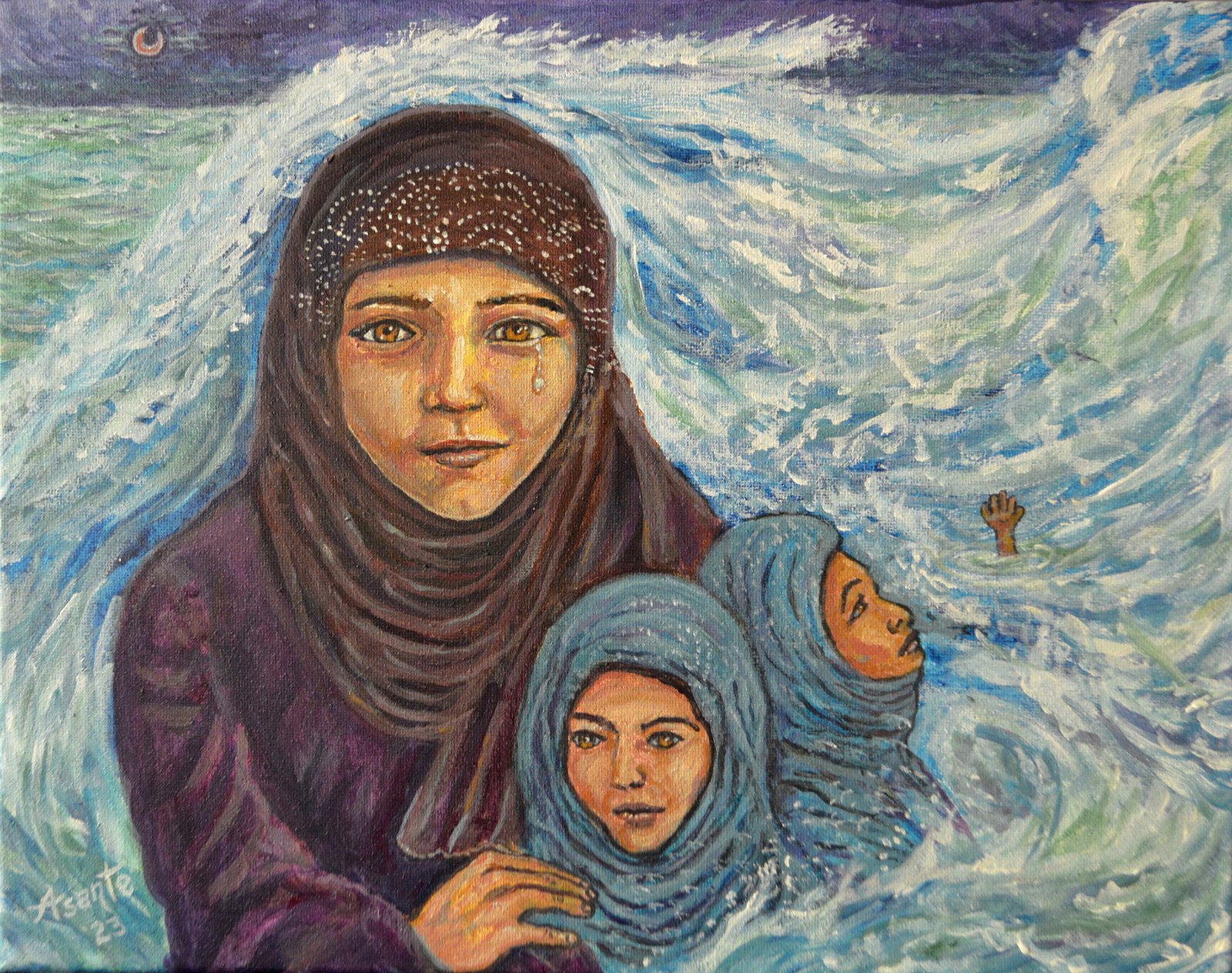
So many of us are mesmerized by the plight of billionaire folly, yet our society is turning a blind eye to the very real horrors of the world’s refugees, seeking survival. While the billionaire submersible was imploding last month reminding us all of the power of our oceans’ depths, and an oft-absent respect for the power of nature, a ship crowded with refugees sunk near the coast of Greece and as many as 700 women and children drowned. The officials in boats did nothing to help, they simply watched in the as the refugees drowned. So much of this world’s politics and cruelty are so reprehensible… so much cruelty when there could be compassionate sharing and life saving help! This new painting insisted on coming into the world. I cannot and art will not be silent on the insanity of this all!!!

You can read an insightful article by Amy Goodman & Denis Moynihan in Democracy Now! https://www.democracynow.org/2023/6/23/greece_migrant_shipwreck_media_coverage

Art and words by Asante Riverwind, artist, Eugene, Oregon.

Consumption

Consumption 

By Lucy Jones, age 15, Wales, U.K.

I wish to consume every piece of media that adorns the Earth
Every book, film, and song
Every day I panic, thinking about how little time I have
How little in my minuscule life I can truly consume
I wish to cry every tear and smile every smile
I wish to feel the most harrowing heartbreak and the most jovial joy
I wish to travel the world
I wish to play every game
I wish to meet every person 
In all my wishing, I never seem to take action
In all the endless possibilities, I take after none of them
In the end, all I do is wait
I wait for the right moment
Just the right book
Just the right film
Just the right person
When all I wish for is everything, I achieve nothing.

—Lucy Jones, Age 15, Wales, United Kingdom.


Pinckney Island National Wildlife Refuge

Pinckney Island National Wildlife Refuge

By Roi J. Tamkin, Georgia.

A great way to experience nature and the outdoors without traveling to remote parts of the country is a visit to a National Wildlife Refuge. There are 588 National Wildlife Refuges, or NWRs, across the United States alone. Chances are very good there’s a NWR near you.

NWRs are managed by the U.S. Fish and Wildlife Service. Their number one priority is to protect native species. Their second big purpose is recreation. NWRs are great for outdoor hiking, exploring and fishing. If you live near a refuge by the water, you can even go boating. The Fish and Wildlife Service manages land and water resources to create the optimal environment for all the plant and animal species that call these refuges home.


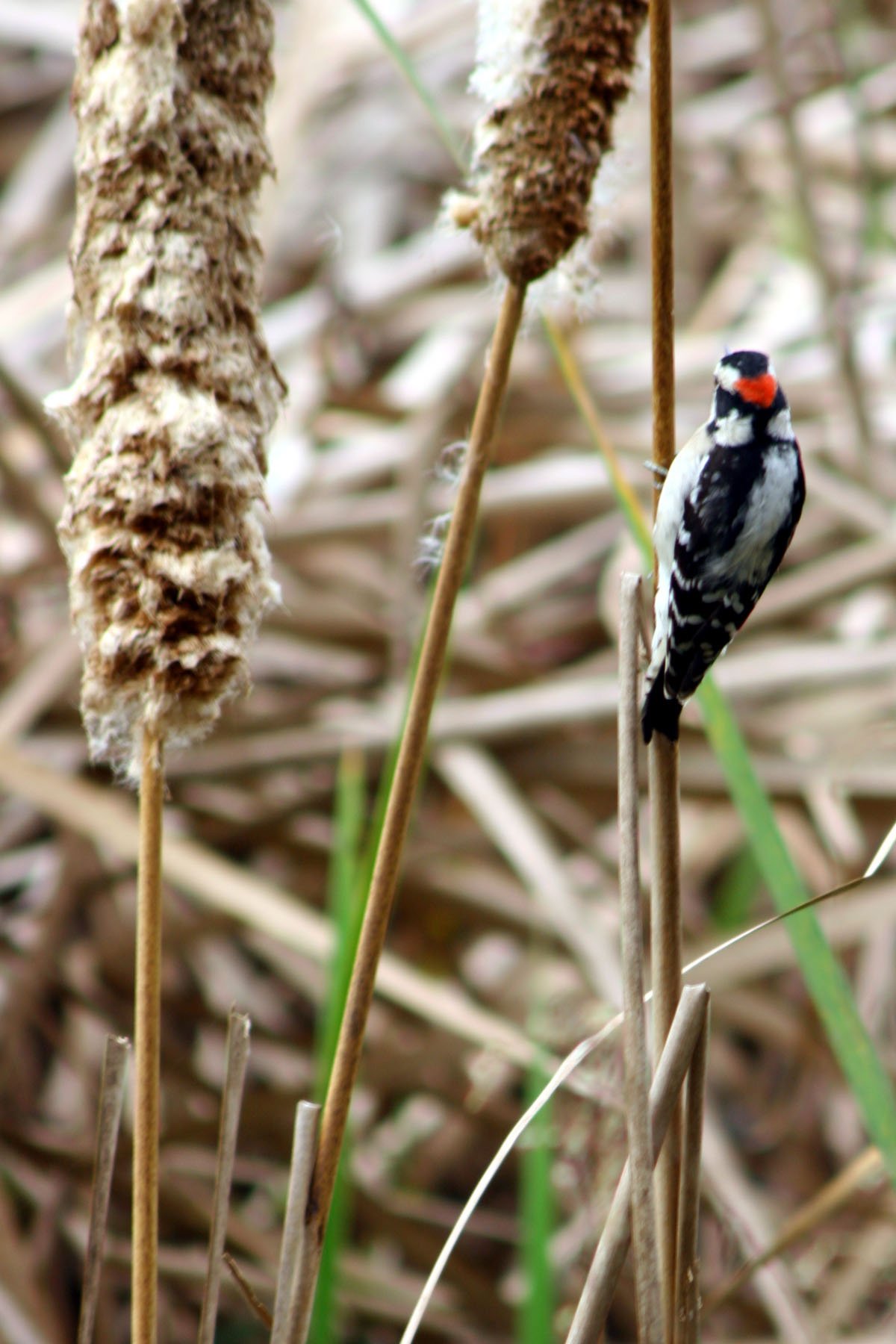
Downey Woodpecker in Cattails

I recently visited Pinckney Island off the southern coast of South Carolina. This NWR is part of a chain of islands along the Atlantic Flyway that attracts thousands of birds each year. The island is an important rookery for coastal birds.

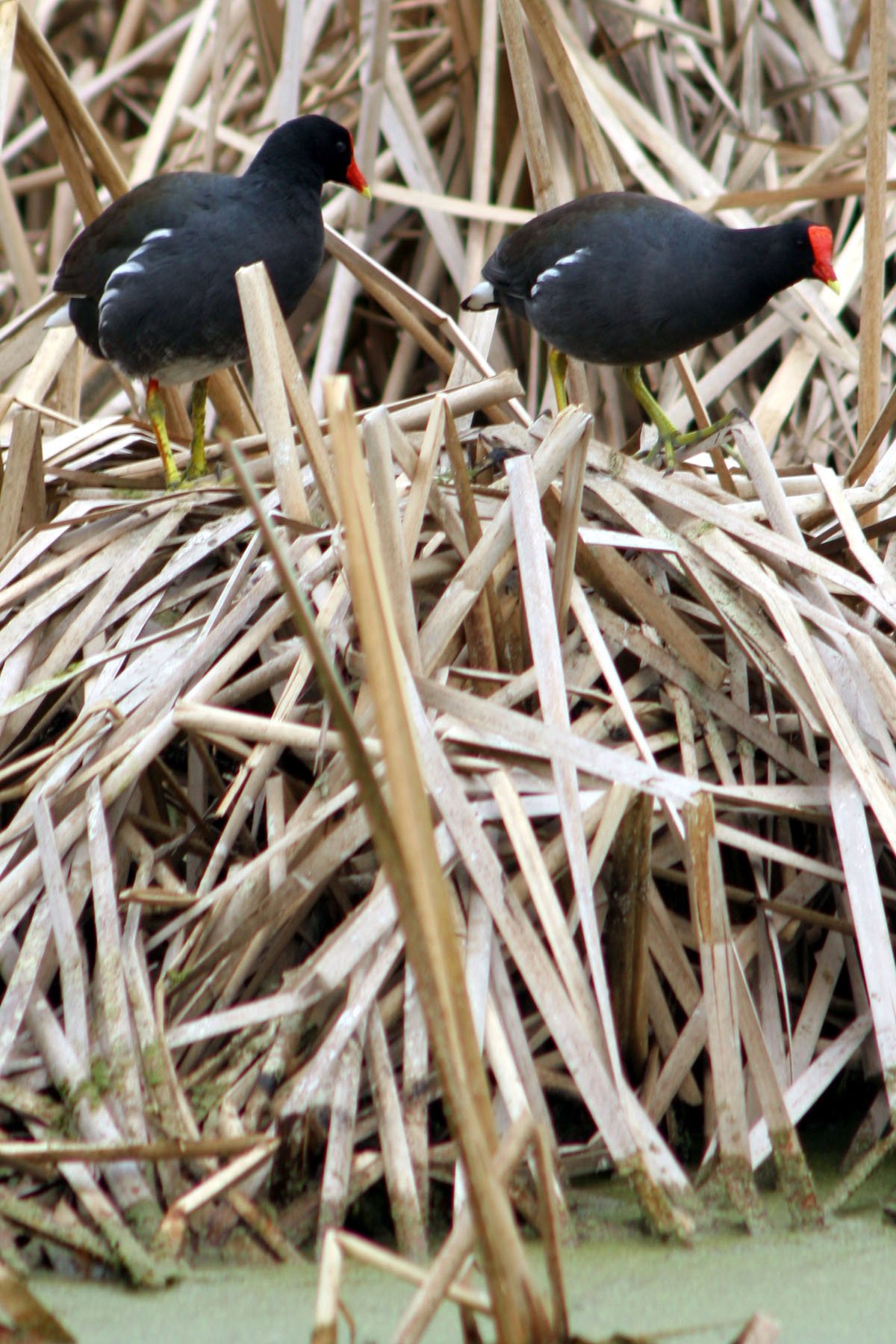
Common Moorhens on their Nesting Site

Pinckney Island is named after the Revolutionary War veteran Major General Charles Cotesworth Pinckney who purchased the island to grow cotton. The refuge was established in 1975 and consists of 4,035 acres and includes many small islands around Pinckney, the largest one. These islands support a wide variety of plant and animal life found in South Carolina. 

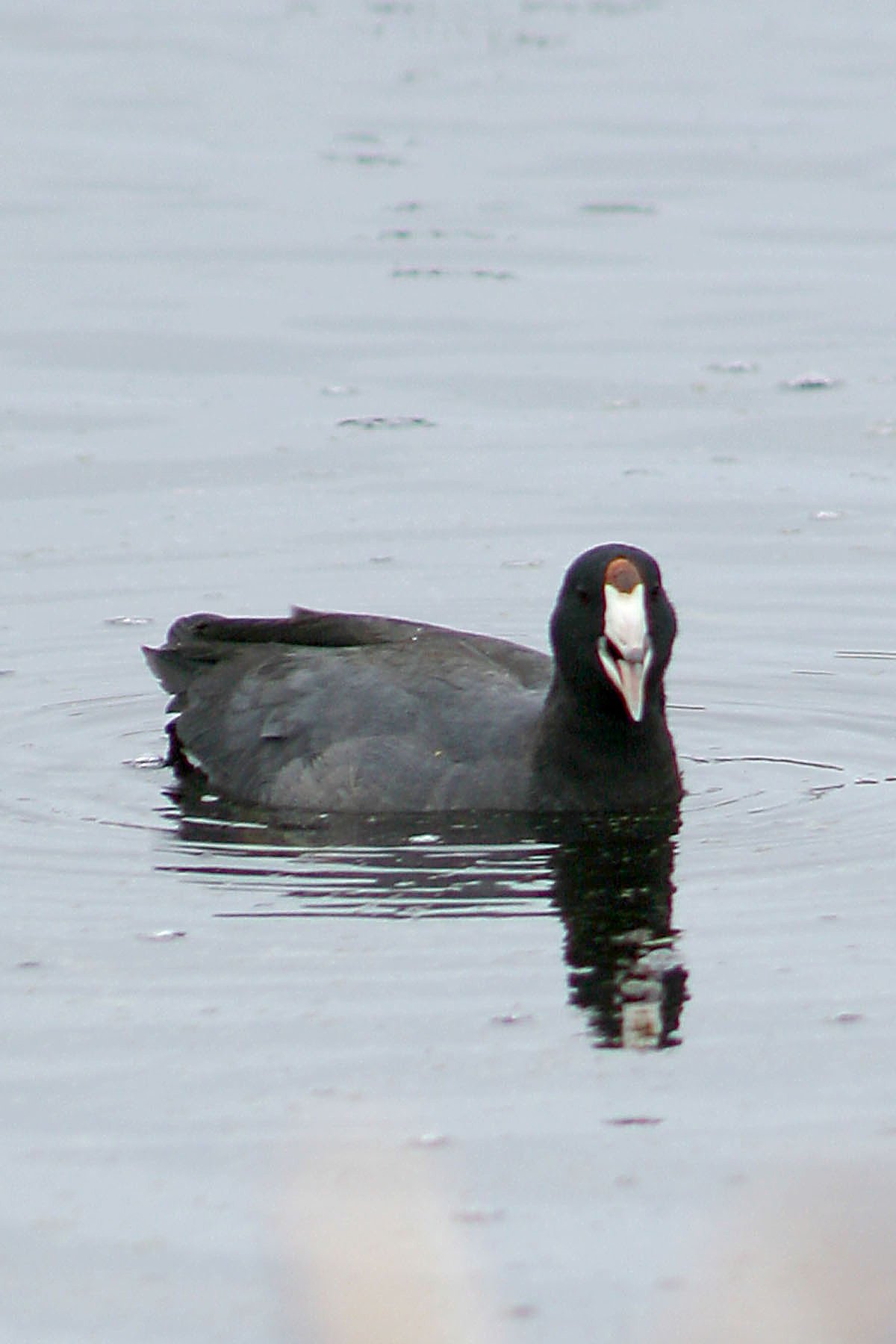
A Coot

During my visit to Pinckney, I saw plenty of moorhens and coots in the freshwater ponds on the island. I also saw three very large alligators in one pond. That’s three too many for me! White-tailed deer roam the island, but are hard to find since they generally avoid people.

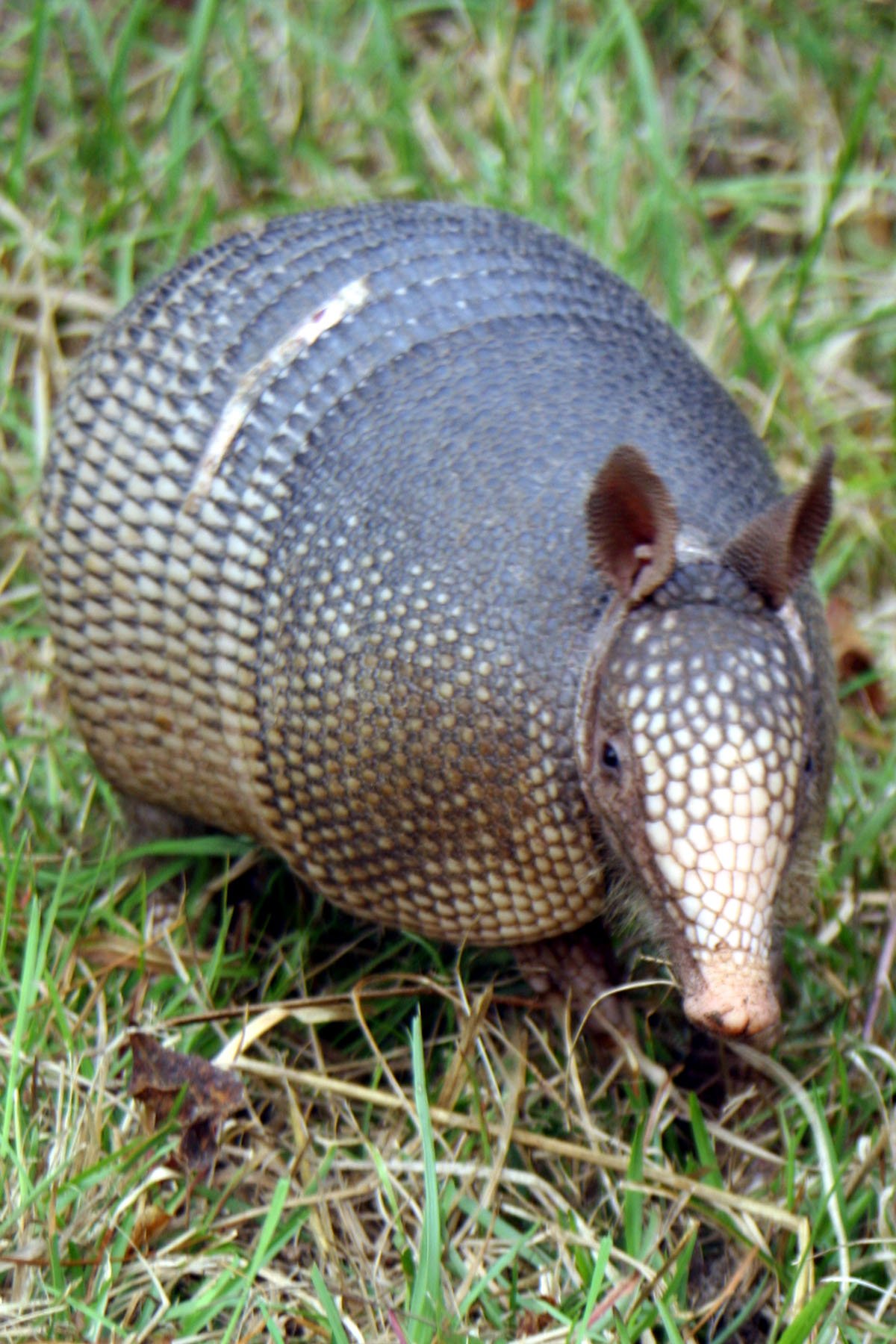
A Friendly Armadillo

But a friendly armadillo did come out of the brush to visit me. I also saw dolphins in the creek running along the eastern side of the island. There is also a historical shell mound built by Archaic Indians 4,000 years ago. Sadly, it is covered up by centuries of vegetation, but you can still walk to the spot where the mound is located. Nearby Hilton Head Island has a preserved mound you can visit and learn about the ancient people that migrated through the coast of the southern U.S.


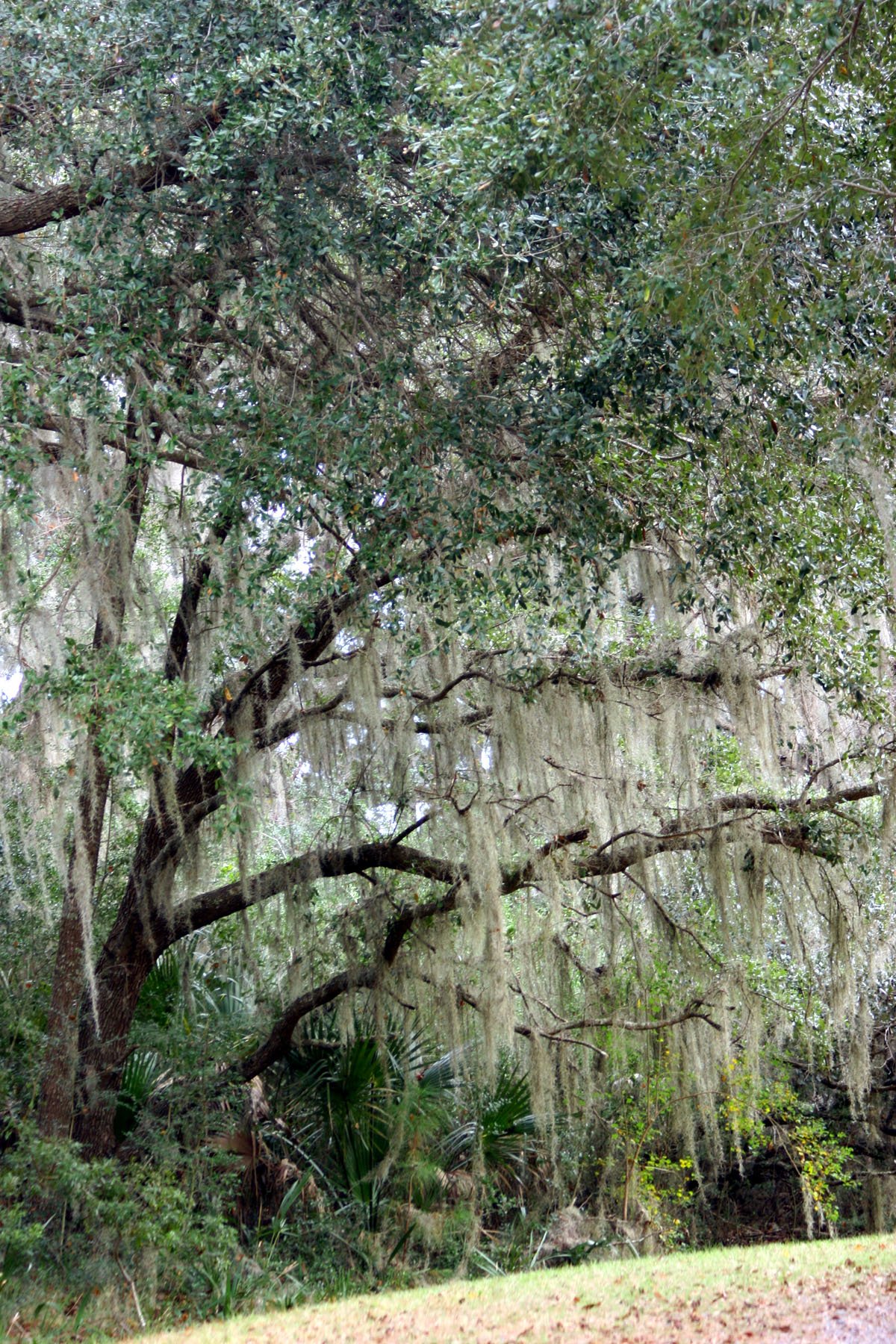
Spanish Moss on Oak Trees

The NWR near you may not have alligators or 4,000-year-old relics, but it may have something unique to where you live. Check your local maps or do a search for a wildlife refuge near you and enjoy a day outdoors with nature.

—Roi J. Tamkin is a photographer based in Atlanta, Georgia.