Author Archives:

“Looksmaxxing” and Toxic Beauty Standards

“Looksmaxxing” and Toxic Beauty Standards

By Colin Wu, high school junior, California.

Earlier this year, one of my close friends got very wrapped up in the looksmaxxing community, a growing online community that strives for the ideal body and flawless face. He started calling people out that he didn’t find attractive, bullying and fat-shaming them. He shunned and looked down on his peers who didn’t have the “perfect body”—6’ 0” tall, six-pack abs and huge biceps. The looksmaxxing community targets young males and females and influences their ideas about beauty in a toxic way. Looksmaxxers are part of an online community that has gotten inside our heads and inside our homes and it needs to be stopped before more people get hurt.

Social media has had a huge effect on younger people’s feelings about their appearance. In a New York Times op-ed titled, “Toxic Beauty Standards Can Be Passed Down”, Alexandra D’Amour writes, “There’s a nickname for tweens and teenagers who have been influenced by social media to get into skin care: Sephora Kids. Johanna Almstead, a fashion industry friend, tells me that in her local mothers group chat, nearly every mom had “Skincare, skincare, skincare!” on the holiday gift lists they were given—by their fifth graders.”

Younger children requesting skincare products as gifts is alarming. It suggests that they have a problem with their appearance and are using skincare to fix it. It also shows the influence social media has on the youth now, whereas, when I was in fifth grade, I wanted video games and Legos. D’Amour also says, “A recent video on TikTok that has garnered more than eight million views features a 28-year-old woman showing her “raw,” procedure-free face, meaning no Botox or fillers. As some women and girls cheered on her bravery, others were left horrified. “Praying I’ll never look like that,” one comment reads. This comment shows the ways in which social media has defined beauty for future generations. While sharing their “raw” face makes some people proud, others are disgusted by its imperfections.

Parents, who also contribute to the focus on skincare in young people, can make this situation better. D’Amour writes, “And yet, if a mother’s insecurity can fuel her daughter’s own self-loathing, a mother’s radical self-love might just protect and even heal her daughter from a toxic culture.” D’Amour believes the influence that parents can have on their children can be more positive than negative. Parents who are able to teach their kids to love their appearance may help their children stay away from bad communities. D’Amour says, “When I ask the few friends who haven’t gotten Botox why they haven’t, they tell me it’s because they love how their mothers are aging and how they embrace it. They don’t fear aging because their mothers don’t (or didn’t).” Older generations of mothers who are secure about their appearance influence younger generations by making them realize it’s best to accept and love themselves for who they are. Coming from a family in which no one had any kind of procedure, my parents and grandparents have taught me self-worth and have made me love myself for who I am.

People today are growing up in toxic cultures that lead them to accept unnatural beauty standards. D’Amour warns us that, “Gen Z-ers are being introduced to the idea of starting treatments early as preventive treatment. They are growing up in a culture of social media that promotes the endless pursuit of maintaining youth—and at home, some of them are watching their mothers reject aging with every injectable and serum they can find.” Gen Z-ers are still growing and many are still in puberty. By attempting to slow or stop the natural aging process, young people seek out treatments that could alter and change the way they look when they’re fully grown. While it can physically harm Gen Z-ers, the mental effects can also cause significant harm. They are oblivious to the ways in which buying treatments connects their self-worth to their beauty. The consequences of children being influenced by skincare culture could mirror the harm caused by previous toxic cultures. D’Amour points out that “The anti-aging craze comes with the same toxicity as diet culture does.” Diet culture influenced people to want to be skinnier. Anorexia was a large issue and resulted in many people hurting themselves to obtain the ideal body image. Similar to diet culture, the anti-aging culture puts pressure on young people to strive for unhealthy and unattainable beauty.

My friend was too invested in the looksmaxxing community. As he tried to achieve his ideal body image, his obsession led to him putting down and hurting others. While there are positive aspects of social media, these negative parts harm younger people who are vulnerable when it comes to their appearance. Even though my friend was putting others down, this community was also harming him, by ruining friendships. Some unlucky teens have to deal with crazy parents, who put their own insecurities on their children and reaffirm toxic cultures that enforce unrealistic beauty standards. Other teens can be affected in positive ways, if parents or role models teach them to accept themselves. In the future, if we want to feel good about ourselves, we must embrace our natural appearance and develop self-worth that is grounded in loving ourselves.

—Colin Wu, h.s. junior, California. Colin adds: “I am a Chinese and Burmese American, whose first language is English, and I am currently learning to speak and write Mandarin. My family, education, health, and religious beliefs are most important to me. I am very interested in environmental sciences and engineering. I was inspired to write this essay because of the harm this community has done to friends of mine.”
A Friend That Never Was

A Friend That Never Was

By maggie d., Washington.

Except for Erica and I
The playground was empty
And our laughter could be
Heard miles away
“Not it! Not it! You are it!”
She yelled
Beginning a game of tag

Seconds later
A white car arrived to
Pick her up
The driver was someone
I never saw before
“No matter,” I whispered
With a shrug
Resting my mind on
Tomorrow’s joy

But the next day’s gladness
Did not show
Angrily she blurted
“My Mom said you are a monkey
And I do not play with
Monkey girls!”

A bucketful of tears
Streamed down my cheeks
As I stared into an
Unfamiliar face at the
End of a fence
Making me wince
When she wrapped my hand
Around her light peach
Fingers and asked
“Will you be my friend?”

—maggie d., African American poet and educator, Washington.

Nature’s Quest

Nature’s Quest:
Geocaching Adventures for Young Explorers

By Carol Thompson, EdD., Georgia

Have you ever wished you could go on a real-life treasure hunt? Well, guess what? There’s a super cool outdoor activity called geocaching that lets you do just that! It’s like a secret mission where you get to explore nature, find hidden treasures, and enjoy quality time with your family.

What is Geocaching?

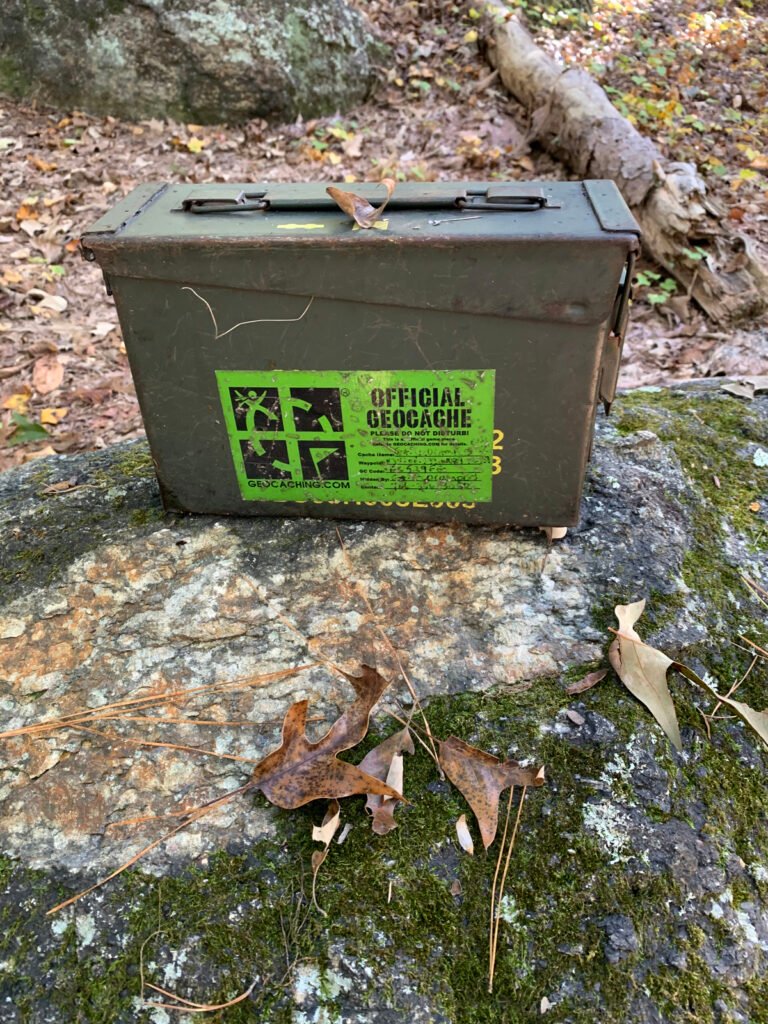
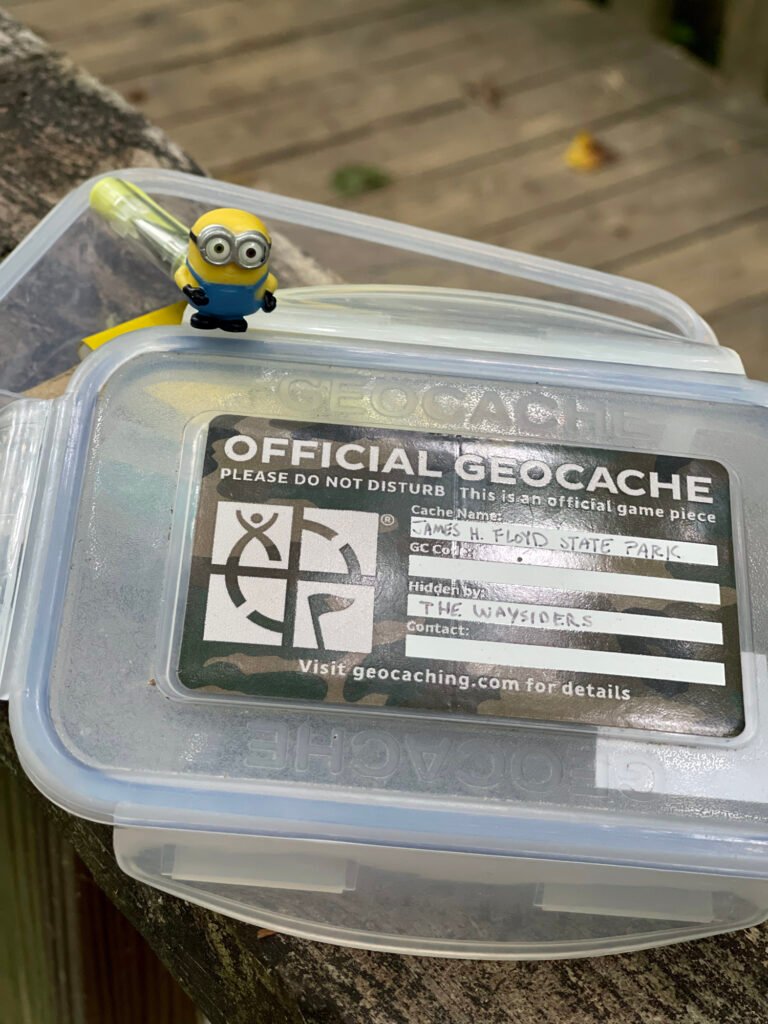
Geocaching is a modern-day treasure hunt using GPS devices or smartphones. People all around the world hide small containers, called geocaches, “cache” for short, in various outdoor locations, from parks to forests to urban areas. These hidden treasures can be found using GPS coordinates, which guide you to the exact spot where the geocache is waiting to be discovered. It is very similar to hide and seek with small goodies to locate. Who doesn’t like a good game of hide – go – seek?

How Do You Geocache?

Getting started with geocaching is easy and doesn’t require a lot of fancy equipment. All you need is a GPS device or a smartphone with a geocaching app installed. You can find many free apps designed just for kids to make the adventure even more exciting.

  1. Choose Your Geocache:  Use the app to pick a geocache near you. Look for ones with easy difficulty levels at first, so you can get the hang of it. The app will give you the cache basics, like size, difficulty, and terrain. It also sometimes gives you hints, photos, and date of the last find. The challenge is on!
  2. Follow the Coordinates:  The GPS coordinates provided by the app will lead you to the general location of the geocache. Once you get close, use your keen observation skills to find the hidden treasure. Depending on the app, sometimes your GPS will even vibrate when you are close.
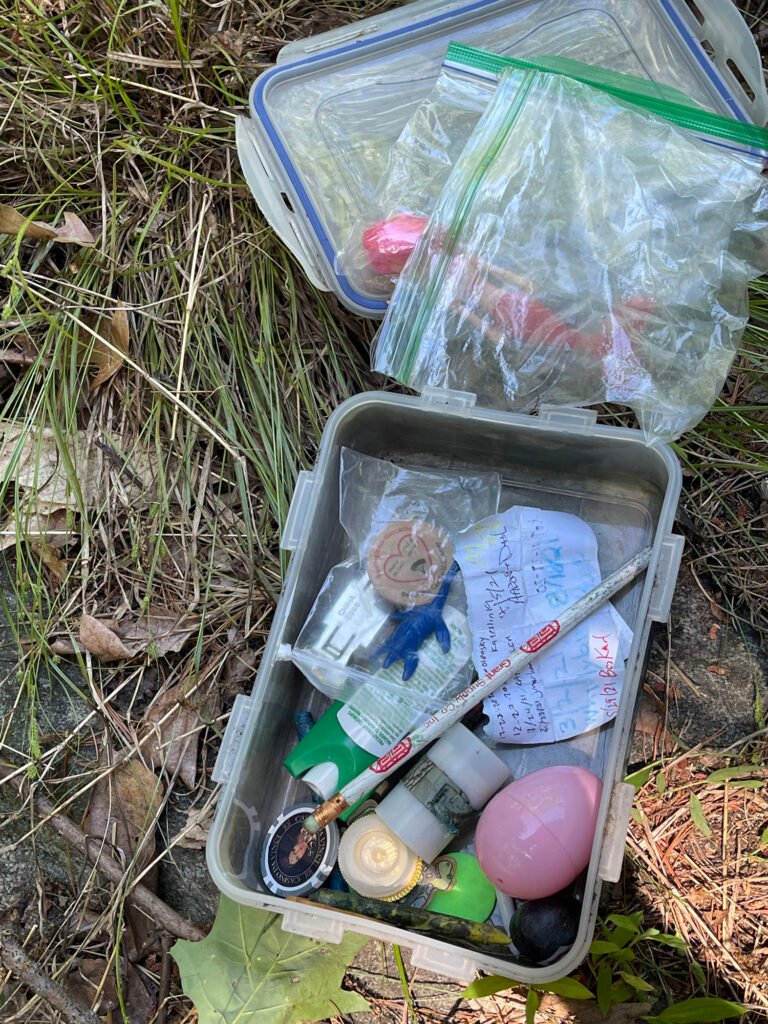
  3. Discover the Treasure:  When you find the geocache, open it carefully. Inside, you might find small toys, stickers, or other fun items. Remember, if you take something, you should leave something of equal or lesser value for the next adventurer. Another reminder is that the cache shouldn’t be moved so that the next treasure seeker can find it using the same coordinates. Bask in your discovery and take the time to look around.
  4. Log Your Discovery:  Many geocaches have a logbook where you can write your name and the date of your discovery. Sometimes the log is digital only and requires you to log via your app. It’s like leaving your mark on the treasure map and letting other treasure seekers know that you were successful.

What are the Different Types of Caches?

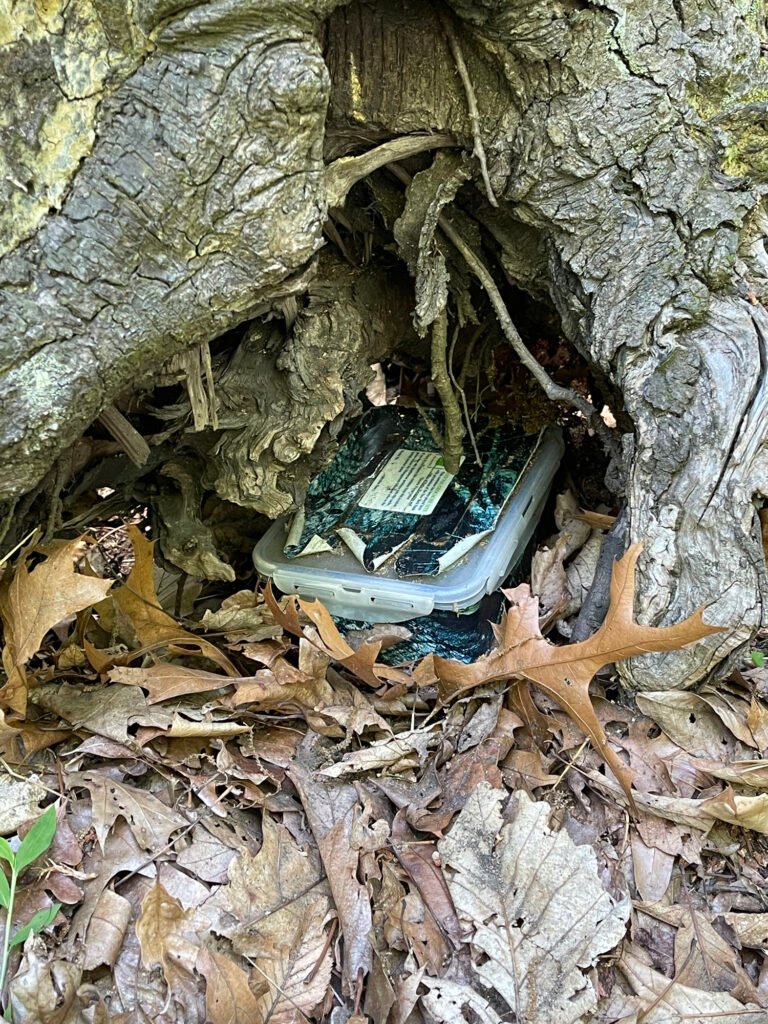
Geocaching has a cache for every adventurer! “Micro” and “small” caches are perfect for inside city settings where space is limited like magnetized under a park bench. “Traditional” caches are more likely to be tucked inside natural hideaways like under a huge Oak Tree with coordinates specific to a wildlife area. “EarthCaches” add an educational twist, exploring geological wonders. “Virtual” caches offer interactive challenges, and “gadget caches” combine tech and ingenuity for a modern treasure hunt where the caching pirate must figure out a specific puzzle to unlock the container. Each cache type ensures geocaching is a diverse and thrilling adventure, catering to a wide range of interests and skills.

Connecting with Nature

Geocaching is not just about finding treasures; it’s also a fantastic way to connect with nature away from screens and gadgets. As you follow the GPS coordinates, you’ll explore beautiful parks, serene forests, and other outdoor wonders. You might come across flowers, insects, wildlife, or even some cool geological features—all part of Mother Nature’s amazing creation. It’s a chance to appreciate the beauty of the world around you while having a blast with your friends and family. Geocaching is a thrilling adventure, a friendly competition, and a great way to get outside and see lots of different things. Get ready for your first of many geocaching expeditions!

A Note of Caution

As always, for safety reasons, we highly recommend that you should have a trusted adult (a parent, for example) with you on your geocaching adventures. 

—Carol Thompson, EdD., Georgia. Carol is an experienced author with a diverse portfolio, including the “Mr. Wiggle” series published by McGraw Hill, Inc. She has also published numerous magazine articles.

The Presidency 

The Presidency 

There have been 45 presidents of the United States. The current one, number 46, has a similarity to all but one of his predecessors. They are all White, and all 46 are male. Asian Americans have been in the country since the 1800s, and have come nowhere close to the presidency. Could someone of Eastern Asian ethnicity ever become president of the United States?

Loyalty is an act of faith in which you do not betray or desert your cause no matter the circumstances. I believe most of the issues faced by Asian Americans are to do with loyalty. When using a search engine to research, the question, “Are Asian Americans loyal to the United States?” it distributes a plethora of discussion posts, disagreements, newspaper articles and more. For example, in a survey conducted by the Asian American Foundation of over 4,000 U.S. citizens, 32 percent agreed with: Asian Americans are more loyal to their perceived country of origin than to the U.S. I find this response disgusting and shocking. These questions and polls are not done on Irish Americans, Italian Americans, Norwegian Americans or African Americans; who whilst facing an uphill struggle in many areas, they would not be questioned if they are serving another country. Where does the questioning of  loyalty of this specific ethnic group come from? 

As an Asian American, I have not felt any urging for ongoing loyalty toward any country other than the U.S. In fact, Asian Americans have contributed to the United States as much as others. So what causes this unique form of discrimination? I believe one of these reasons is fear. For decades, the U.S. has been the world’s global superpower, with no country since the fall of the Soviet Union coming close. Over the course of recent years though, China has grown and empowered their economy, as well as modernized their military to the extent where there is a possibility of them overtaking the U.S. in a decade. Politicians, media pundits, and some American people are fearful of losing their global hegemony. I believe this fear has spilled into affecting Asian Americans citizens. The buildup of tension between China and the U.S has led to a buildup of tension against Chinese and other Eastern Asian ethnicity.

The coronavirus began November of 2019, and has only escalated this recurring issue. When the matter is brought up to classmates, all point directly to China as the one to blame. About 1.4 billion people populate the country of China, fingers pointed to every single one. During the coronavirus pandemic, the quantity of Asian American hate crimes increased rapidly. People of various Eastern Asian ethnicities were affected by this as well. The differences between Asian and American cultures itself is a leading cause, as we human beings tend to point fingers at those most different to us. For example, there is a mass of cuisine differences between Asians and Americans. Asian cuisine is based mostly on older type traditional recipes, including foods considered exotic to others. American cuisine is based highly on dishes from other ethnicities, although are home to modern dishes. 

In addition to these previous points, whilst all nations have fostered racism, The United States has had government policies introduced specifically pushing these racist policies. When schools were divided into white and black, Asian Americans found themselves questioning where they belong. Asian Americans were not mentioned in the laws themselves, as if they were forgotten and the law makers didn’t know they existed. This sense of idea of being an “other” or not being a part of the nation itself I believe still carries on to modern society.

In conclusion, I do not believe an Asian American could ever become president. As much as we as the Asian American community continue to integrate ourselves with the nation, humans will always find a way to exclude parts of our people and treat them as outsiders. Asian Americans are constantly challenged on our trustworthiness, loyalty, and dedication to this country. Attempts to prove ourselves feel disregarded by the same continuous subgroup of people. I truly hope to be proven wrong in my lifetime. 

Author’s Note:

            In the past few weeks, the political climate has changed. Vice President Kamala Harris has become the Democratic Party’s nominee for the President of the country. She is half African American, and half Indian. Despite this sudden change, I still stand by my previous assertion. My piece is focused on Eastern Asian ethnicities, and their uniquely questioned loyalty to the  nation. Kamala’s nomination is what I believe to be a step forward in our nation, due to her being female as well as a woman of color. However, due to the still-rising tensions with China, as well as the Coronavirus-19 pandemic, I still believe an East Asian American could not currently be elected the president.

—Abigail Lee, Age 12, Grade 7, Illinois. She writes: “I have a passion for writing. I enjoy reading realistic drama stories. I am socially conscious about Asian American discrimination in our country, in particular since the Coronavirus Pandemic. I am an Asian American, born as well as raised in Illinois. My essay focuses on my belief that an East Asian American could never become president due to racial discrimination.”


Eons of Thought

Eons of Thought
By Manvi Gupta, recent high school graduate, M. P., India

In the cosmos, who determines the designs?
Who creates the stars, and who draws the line?
Am I the actor in a predestined play,
Or am I the narrator who holds the quill, forming the best story ever told in a way?

Can a single drop of rain question the ocean’s mighty
Or does it become one with the sea and lose its identity?
Am I the architect of fate,
Or in this riddle of existence are we all the same?

What is a fallen tree to the deafening silence of the forest with no ear?
Is my existence only validated when heard loud and clear?
If I am hidden in the darkness, does the sun brightly shine?
Is the universe but a reflection, of my consciousness divine?

Does the dart of time travel straight, or can it arch or sway?
If tomorrow mutters a secret, what would today say?
Is the present, past and future nothing but the illusion of my mind,
Or are they the stepping stones to the actuality we bind?

Can we discover the fringe of the universe, the origin of space?
Is there a creator, a composer, in this celestial embrace?
Or is it but a Möbius strip, a limitless twist,
In the loom of existence, does beginning or end exist?

In this universe, am I a free thinker,
Is my mind the sole philosopher,
Or is it but a fragment of a lone troubled lad?
In this shore of existence, we are but a grain of sand.

—Manvi Gupta, just graduated from high school, Madhya Pradesh, India. She adds: “I’m someone who is passionate about building ideas from the ground up and constantly learning, with a deep love for creative writing.”

Friendship

Friendship

A real friend is pleasant sigh
To breathe, that money just can’t buy.
It’s something held by you and I,
Steadfastly, now that love is nigh.

A good friend will cover your back
And cheer you up when joy you lack.
Someone who shows they really care
So much for you by being there.

Friendship is like warm bread with jam,
When I’m accepted as I am.
It is never harsh or pressured.
And kindness always is observed.

And friendship is a two way street.
Our get togethers, short and sweet
And often, as a good friend said,
To me the joy unlimited.

With soft and subtle ecstasy,
Like sharing a good joke with glee.
Embracing with a great bear hug.
Dispelling heartache with a shrug.

Friendship is a hand-knit sweater
Bracing me against the weather.
Friendship is sitting by a fire.
Telling tales that keep getting higher.

And a good friend is forgiving
Of whatever trials life does bring.
Always accepts you as you are,
Together we will travel far.

—Jon Bush, author and artist, Massachusetts.

Embracing the Unknown

Embracing the Unknown

By Maggie D., Washington.

Her smile was as great
Big and beautiful as
A sunrise above the
Grand Canyon
Gripping the
Stars and Stripes
The Pledge of Allegiance
Was softly spoken
Without a hint of hesitation
Her human spirit
Held onto a future
Hope
Of making her free
From the tyranny
She once experienced
With a salute to her
Deepest desires of what
She was about to
Become

—Maggie D., retired educator and African American poet, Washington.

Summer Work

Summer Work

By Maggie D., Washington

Summer time is here
Gardens to tend
Money to spend
For back to school
Clothes
That are not too old
Bought at the thrift store
Some will need mending
Others will profit from
Two washes
My gosh
Summer is passing
As quick as a wink
When I think of the
Days disappearing among
The harvested corn
And winter squash

—maggie d., retired educator and African American poet, Washington. She adds: “Summer Work errupted from memories of my grandmother’s farm in Oklahoma.”

Smoky Skies

Smoky Skies

By Joyce Lazarus, Ph.D., Massachusetts.

Note: This is a fictional story, based on actual events. The names have been changed to protect the identities of the plaintiffs.

Rachel sits down on a riverbank, shaded by a giant cottonwood. Its silvery leaves turn in the breeze, shielding her from the stifling August sun. She stares at sunburnt grasslands and distant blue hills on her ranch in Montana, where her family has been ranching for generations.

Something catches her eye. She looks toward the west and sees plumes of dark smoke rising, reddening in the afternoon sun. Dark, billowing clouds are filling the sky, blotting out sunlight.

“Dad, do you see the smoke?” Rachel calls to her father.

“No. Where is it?”

Rachel starts running toward the smoke. She spots a wildfire in the distant hills, its orange flames devouring the withered forest. With no rain for the past three weeks and a severe heatwave, there is little they can do to stop wildfires from spreading. She already knows of twenty-five other fires this summer, less than fifty miles from their ranch.

How long before one of these wildfires reaches their ranch? How can they stop fires that spread so quickly, whipped up by winds?

The look on Dad’s face tells Rachel how concerned he is.

“Let’s hose down the house and barn,” he says. “We’ll bring in the cattle and horses.”

Rachel learned about climate change when she was eleven and thought it was something she could do nothing about. Now thirteen, she feels her stomach twisting into knots, panic surging. Her whole ranch could be destroyed! How can she stop something so powerful?

Every year there are more storms, droughts, wildfires, heatwaves―every kind of natural disaster. Rachel understands that burning coal and other fossil fuels are a major cause of climate change, but most people she knows do not want to admit this. They shrug their shoulders, saying, “Let nature run its course. We’ll get through this crisis like we always have.”

Many people do not see things as Rachel does. When she learned in science class that humans have only about seven years to act before irreversible harm is done to the Earth, it hit her very hard. She knows the feeling of smoke caught in her throat, of dense gray smog blocking out sunlight. She is just a teenager, but if teens don’t try to solve this climate crisis, who else will?

Rachel has nightmares about fires sweeping across her ranch. She sees herself racing to save her family, horses, cattle, and little dog, Felix. She wakes up covered in sweat.

 ***

She isn’t the only teen in Montana worried about climate change. Since joining a climate action club, Rachel has gotten to know Nora. Nora tells her that every time she hears about wildfires, it feels like getting punched in the stomach. When Nora watched Greta Thunberg on TV, speaking at the United Nations, asking world leaders, “How dare you?” it took her breath away. This was the first time someone close to her age expressed the anger and determination to do something that Nora felt.

Later that month, Nora brings her exciting news.

“There is a law firm, Rachel, “Our Children’s Trust*,” that can help us sue the State of Montana for not protecting us against climate disasters. I plan to join the lawsuit.”

“Really?”

“The state constitution says that all Montanans are entitled to a clean and healthful environment. When fossil fuel companies drill into the land, polluting the air and water, they disregard what science has been telling us for decades about dangers to the environment.”

“What do we need to do?”

“We should sign up as plaintiffs, to explain in court how climate change has harmed us, then talk about our fears for the future. We’ll tell our lawyer, Janet Olsen, what disasters might occur if we don’t act soon.”

“You’ve convinced me, Nora. I’ll join!”

“Your story is much more persuasive than mine, Rachel. Your ranch has come close to being destroyed by wildfires! Why don’t you represent our group and I’ll give interviews to the press? We’ll work together to win this case!”

Rachel, Nora, and fourteen other teens join the lawsuit against the State of Montana.

***

While Janet Olsen prepares arguments for the trial, Nora gives interviews to the press. Articles soon appear in newspapers all over the country. TV news anchors speak of “the kids who are leading the way to save the US from climate catastrophe.”

Rachel Heller gives her name to the lawsuit, “Heller v. Montana,” since her story makes the strongest case for acting quickly.

After three long years, their lawsuit makes it to court―the first time in US history that a kids-led climate lawsuit goes to trial.

***

One hot June day in Helena, Montana, the trial begins.

Teens stand up in court one after another to tell the judge how climate change is harming them.

Sara, sixteen, says that her life as a member of the Diné Tribe is completely tied to nature.

“We tell many stories to our people,” Sara says. “We can only tell a Coyote story if there is snow on the ground. But the time left to share these stories is getting shorter, with so little snow in winter. What will happen to our stories when there is no more snow?”

Lilian, from the Crow Tribe, speaks about a summer tradition, Crow Fair, with its rodeo, traditional dances, and parades. Because of intense heat, the fair was cancelled this year.

“If you miss Crow Fair, you’ve missed something that’s part of your identity,” Lilian says. “We’re taught that we have three mothers: your natural mother, your home, and Mother Earth. Taking care of all three is our responsibility.”

Rachel, Nora and others stand up and talk about the harm caused by climate change.

The judge thanks everyone for their testimony.

***

One day in July, the judge announces that she has reached a verdict. All sixteen plaintiffs file into the court and nervously sit down.

The judge reads: “We find the plaintiffs’ arguments for protecting Montana from the harmful effects of climate change to be convincing. We rule in favor of the sixteen plaintiffs.”

Loud cheers and applause greet the children as they leave the courthouse. Nora and Rachel lift their fists, crying, “We are heard! We are heard!”

Rachel later says to Nora, “We can’t save the planet by ourselves, but we took a first step. Others will follow.”                             

—Joyce Lazarus, Ph.D., Massachusetts. is a retired French professor and an author of a number of books.  A grandmother to three children, Joyce has also published several children’s stories. She adds: “I feel inspired by my three grandchildren, and am concerned about the growing climate crisis that their generation will face.  My hope is that young people, like the characters in this story, will find ways to mitigate the threat of climate change, to protect and preserve our precious Earth… My aim in writing this story is to show young people that they can help make a difference by recognizing that they are stewards of the environment.”

* Our Children’s Trust is a national nonprofit based in Eugene, Oregon. Their mission statement reads: “Our Children’s Trust is a non-profit public interest law firm that provides strategic, campaign-based legal services to youth from diverse backgrounds to secure their legal rights to a safe climate. We work to protect the Earth’s climate system for present and future generations by representing young people in global legal efforts to secure their binding and enforceable legal rights to a healthy atmosphere and stable climate, based on the best available science.
“We support our youth clients and amplify their voices before the third branch of government in a highly strategic legal campaign that includes targeted media, education, and public engagement work to support the youths’ legal actions. Our legal work—guided by constitutional, public trust, human rights laws and the laws of nature—aims to ensure systemic and science-based climate recovery planning and remedies at federal, state, and global levels.”
To learn more about them, please visit: https://www.ourchildrenstrust.org


Seven Stars to Guide Us

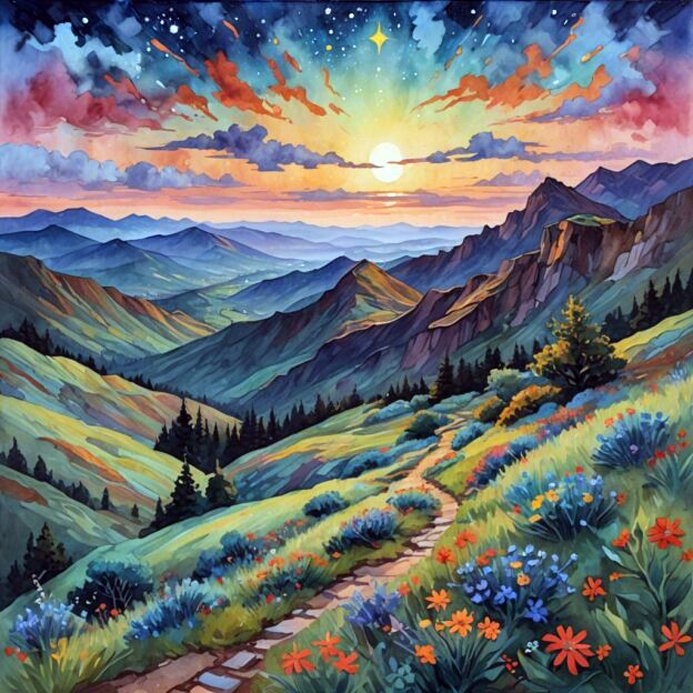
Illustration by AI + Dennis Rivers.

Seven Stars to Guide Us

Here are seven stars to guide us,
inspired by the Prayer of St. Francis,
and focused on the inward path of every heart:

FOR THE SAKE OF MY OWN WELL BEING
AND FOR THE SAKE OF EVERYONE’S WELL BEING…

1. This moment and this day
may I walk the path
from blind anger to calm awareness.

2. This moment and this day
may I walk the path
from obsessive resentment
to expansive forgiveness.

3. This moment and this day
may I walk the path
from paralyzing fear
to courage inspired by love.

4. This moment and this day
may I walk the path
from doubt about external security
to faith in the Power of Life within me,
the same Power that makes all things new.

5. This moment and this day
may I walk the path
from the isolation of seeing everyone as a threat,
to the community of embracing everyone as kin.

6. This moment and this day
may I walk the path,
from embarrassment and humiliation
in the eyes of others
to remembering that we are all evolving stardust,
capable of turning every mistake
into an opportunity to grow.

7.  This moment and this day
may I walk the path, from a disappointed
and wounded sense of entitlement,
to a deepening gratitude for the whole wide world,
for Breath, and Earth, and Sky and Life.

For each breath can be received
as an amazing gift from the Universe,
waiting to be transformed
through our journey into the Light
into something kind, creative and beautiful.

May we begin
with this present breath!

By Dennis Rivers. Illustration by AI + Dennis Rivers. 2024 
Public Domain ;  EarthPrayer.net/prayer-evolving/seven-stars/